You want a .308 AR-10 that runs on a piston system, and you don't want to spend four grand to get one. That's a reasonable ask, but the market makes it harder than it should be. Most factory piston AR-10s sit well above the $2,000 mark. The LWRCI REPR MKII runs north of $4,200. The HK MR762A1 ranges from $3,899 to $6,899 depending on the model. The POF-USA Revolution lands in the $2,700 range. The reality is that true short-stroke piston AR-10s from major manufacturers are premium-priced platforms, and finding one under $2,000 means either rethinking what "piston AR-10" means to you or accepting that the pickings are genuinely thin.
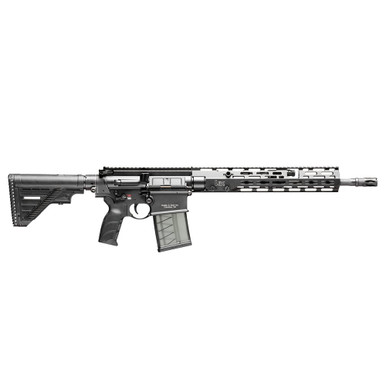
Heckler & koch HK MR762A1 Deals
Prices may change. May contain affiliate links.

Here's the deal: after combing through current production piston-driven .308 rifles, there simply aren't enough factory piston AR-10s that meet the under-$2,000 constraint to fill a traditional buyer's guide. Rather than pad a list with rifles that don't qualify or pretend direct-impingement guns are piston guns, this guide covers what actually exists in the piston AR-10 space, which options come closest to the budget, and what DI alternatives deliver comparable performance for the money. If you're set on a piston operating system in a .308 platform, you need to understand the full landscape before you buy.
Quick picks
POF-USA Revolution .308 Best piston AR-10 closest to the budget ceiling (still above $2,000)
Ruger SFAR Best lightweight DI alternative under $1,000
Springfield Armory Saint Victor .308 Best mid-range DI value under $1,500
Diamondback DB10 .308 Best entry-level DI AR-10 under $1,100

At a glance
How we chose
The title says piston AR-10s under $2,000, and the honest answer is that the market doesn't cooperate with that specific combination. The selection process started by identifying every factory-complete piston-driven AR-10 currently in production and checking real-world pricing against the $2,000 ceiling. The LWRCI REPR MKII, widely regarded as one of the best piston .308 platforms available, prices at $4,485 to $4,616 depending on configuration. The HK MR762A1 sits at $4,479. The POF-USA Revolution, the most accessible piston .308, still lists above $2,700.
Rather than mislead anyone, the approach here is transparency. The POF-USA Revolution gets included because it's the closest a factory piston AR-10 gets to the $2,000 line and represents the entry point into piston .308 territory. The remaining picks are direct-impingement AR-10s that genuinely fall under $2,000 and deliver the reliability, accuracy, and value that most shooters are actually chasing when they say they want a piston gun. The criteria across all picks: manufacturer track record, reliability reputation, serviceability with commonly available parts, and real-world accuracy reports from reviewers who've actually put rounds downrange.
May contain affiliate links.
One more thing worth addressing directly: the reason most people want a piston AR-10 is cleaner operation, cooler running under sustained fire, and easier suppressor use. Those are legitimate advantages. But a well-gassed DI .308 with an adjustable gas block gets you 80% of the way there for half the price. The system matters more than the part, and understanding what you're actually solving for will save you money or help you justify spending more.
The picks
POF-USA Revolution .308
Best for: piston-driven .308 performance (above the $2,000 budget but the most affordable factory piston AR-10 available)
POF-USA Revolution .308
May contain affiliate links.
POF-USA Revolution Gen4 6.5 Creedmoor
May contain affiliate links.
The POF-USA Revolution is the piston AR-10 that comes closest to the $2,000 mark, though it doesn't actually cross it. Street pricing puts the piston 16.5-inch rifle configuration around $2,800 to $2,866 based on current dealer stock, with a list price of $2,990. That's a significant overshoot of the budget, but there's genuinely nothing below it in the factory piston .308 space. If you're committed to a piston operating system in a .308 AR platform, this is where the conversation starts.

What makes the Revolution worth the premium over DI alternatives is POF-USA's engineering approach to the specific thermal challenges of .308. The short-stroke piston system vents gas forward rather than back into the receiver, which keeps the action cleaner and cooler through extended firing sessions. That matters more with .308 than 5.56 because the larger cartridge generates significantly more heat and propellant gas. Under sustained fire, a DI .308 accumulates carbon and heat in the receiver much faster than a DI 5.56. POF addresses this with their heat-dissipating barrel geometry and NP3 coating across the bolt carrier group and internal components. The E2 dual extraction system helps with reliable case extraction even when the chamber gets hot.
The Revolution comes in 16.5-inch rifle and 12.5-inch pistol configurations, both chambered in .308 Winchester / 7.62 NATO. It uses SR-25/POF pattern magazines. POF also makes a Gen4 Revolution DI variant in 6.5 Creedmoor with a 20-inch barrel, though that pushes the price even further north. For the shooter who plans to run suppressed, shoot long strings, or simply wants the cleanest-running .308 AR available, the Revolution's piston system is purpose-built for exactly that use case. The question is whether the roughly $1,700 premium over a good DI AR-10 is justified by your specific shooting demands.
Pros
Short-stroke piston system keeps the receiver significantly cleaner than DI under sustained .308 fire
NP3 coating and E2 dual extraction address .308-specific thermal management
Heat-dissipating barrel geometry designed for the higher thermal output of .308
Available in both 16.5" rifle and 12.5" pistol configurations
Cons
Priced well above $2,000 (approximately $2,733 to $2,769 for the rifle)
Heavier than comparable DI platforms due to piston components
SR-25/POF magazine pattern may limit magazine compatibility versus DPMS-pattern alternatives

Ruger SFAR
Best for: lightweight .308 performance at the lowest price point

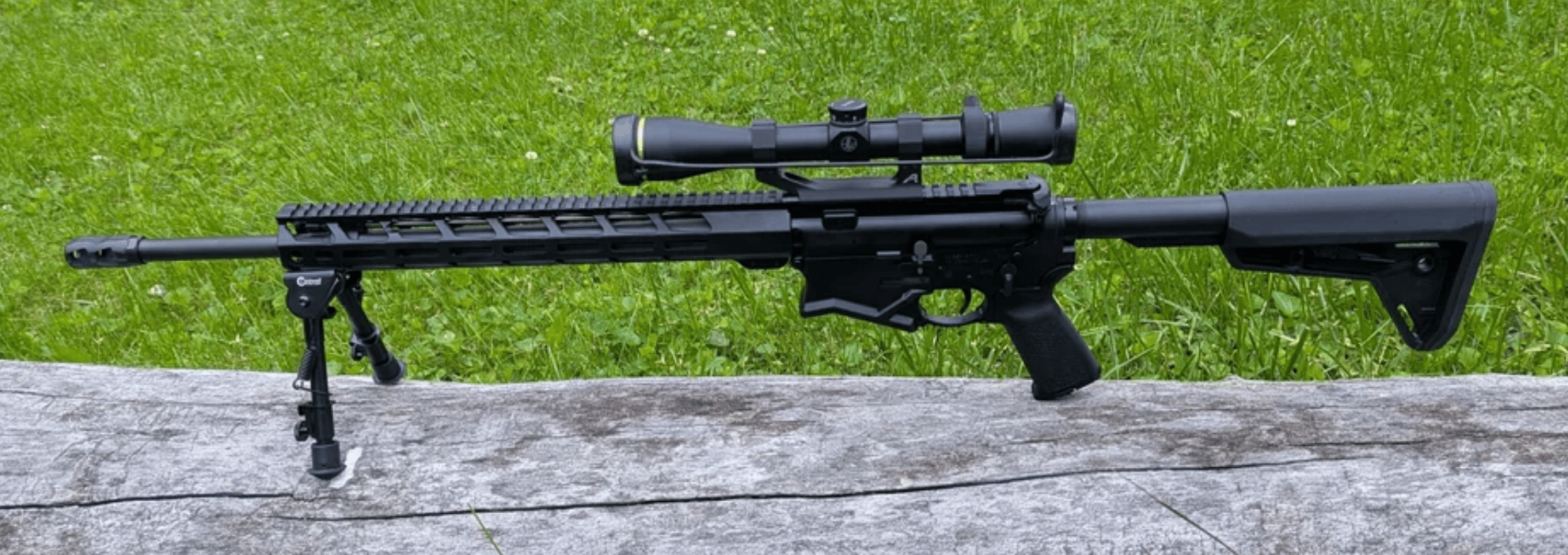
The Ruger SFAR flips the script on what an AR-10 should weigh and cost. This is a direct-impingement gun, not a piston, but it addresses one of the core reasons people look at piston systems: the desire for a .308 that doesn't handle like a boat anchor. The SFAR's small-frame design is almost identical in size to a traditional 5.56 AR-15, coming in under 7 pounds. That's lighter than many AR-15s, let alone .308 platforms. At a street price around $980, it's also one of the most affordable AR-10s from a major manufacturer.
Ruger's engineering on the SFAR goes deeper than just shrinking the receiver. The bolt and barrel extensions are CNC-machined from high-strength super alloy steel that outperforms traditional C158 bolts. Tapered lug geometry strengthens the breech to support the higher pressures of short-action cartridges. The bolt carrier assembly uses a chrome-lined 8620 steel carrier with a nitride-processed gas key staked in place, and the titanium firing pin has been DLC-coated for extended service life. These aren't marketing features. They're the engineering decisions that let Ruger build a smaller, lighter .308 receiver that still handles bolt thrust safely.
The 16-inch barrel with a direct-impingement gas system won't stay as clean as a piston gun over hundreds of rounds, but for the shooter who needs a .308 for hunting, general range work, or a do-everything large-caliber AR, the SFAR punches well above its price. The weight savings alone change how the rifle handles in the field. For sub-$1,000, getting this level of refinement from a manufacturer with Ruger's support infrastructure is hard to argue against.
Pros
Under 7 pounds, nearly AR-15 weight in a .308 platform
Street price around $980 makes it one of the most affordable quality AR-10s
High-strength super alloy bolt and barrel extensions engineered for .308 pressures
Small-frame design handles like an AR-15
Ruger's established warranty and customer service
Cons
Direct impingement, not piston operated
Small-frame design means limited parts compatibility with standard AR-10 components
Lightweight profile barrel may heat faster under sustained fire

Springfield Armory Saint Victor .308
Best for: mid-range DI value with purpose-driven features

Springfield Armory Saint Victor .308 Deals
Prices may change. May contain affiliate links.

Magpul MOE Stock Deals
Prices may change. May contain affiliate links.
The Saint Victor .308 sits in the middle ground between budget AR-10s and the premium tier. Springfield built this around a 16-inch lightweight profile barrel that keeps the overall weight at 7.8 lbs, which is respectable for a .308 AR. The nickel boron-coated flat trigger is a notable inclusion at this price point. Most AR-10s in this range ship with standard mil-spec triggers that feel like dragging a boot across gravel. Springfield's fire control group is noticeably better, and trigger quality directly affects practical accuracy more than almost any other component on the rifle.
This is a direct-impingement gun, so you're not getting piston cleanliness. What you are getting is a well-sorted .308 platform from a manufacturer with deep roots in the rifle market. The Saint Victor has earned a reputation as a reliable mid-level AR-10, and the original Saint Victor .308 (now discontinued) fell in the $1,000 to $1,499 MSRP range. The V2 variant is currently in production with an MSRP of $1,649, so check which version you're looking at before purchasing.
The Saint Victor makes sense for the shooter who wants a .308 AR that works well out of the box without requiring immediate upgrades. The trigger, the lightweight barrel profile, and the overall build quality put it in a different class than true budget options, while staying well under the $2,000 ceiling. It won't run as clean as a piston gun over a long training day, but for hunting, occasional range sessions, and general .308 duties, the engineering is solid.

Pros
Nickel boron-coated flat trigger included from the factory
7.8 lbs keeps it maneuverable for a .308 platform
16" lightweight profile barrel balances handling with ballistic performance
Springfield Armory's established dealer network and support
Cons
Direct impingement, not piston operated
The original model has been discontinued; V2 variant is current production
No adjustable gas block from the factory on the standard model
Diamondback DB10 .308
Best for: entering the AR-10 platform without overspending

Diamondback DB10 .308 Deals
Prices may change. May contain affiliate links.
The Diamondback DB10 is the budget entry point for .308 AR-10 ownership. It's a direct-impingement platform, and it doesn't pretend to be anything more than a solid, functional .308 at a price that makes the platform accessible. The 16-inch variant uses a mid-length gas system with a light-profile 4150 chrome-moly barrel. Capacity is 20+1 with standard magazines.
Diamondback has built a reputation as a standout in the AR-10 market for buyers who want to get into the .308 platform without the financial commitment of a $2,000-plus rifle. The DB10 won't have the refinement of a Saint Victor's trigger or the weight savings of a Ruger SFAR, but it functions, it feeds, and it puts .308 rounds where you point it. For a first AR-10, a truck gun, or a platform you plan to upgrade over time, the DB10 gives you a working foundation. Available in multiple configurations including 16-inch and 18-inch barrels, .308 Winchester, and 6.5 Creedmoor variants, plus various Cerakote finishes through distributor exclusives.
The spec that actually affects function on a budget AR-10 is the barrel and the gas system tuning. The DB10's 4150 chrome-moly barrel is standard fare, and the mid-length gas on a 16-inch .308 is appropriate. If you're planning to run suppressed or want to tune recoil, adding an aftermarket adjustable gas block is a worthwhile upgrade down the road.
Pros
Most affordable entry point into the AR-10 platform
Mid-length gas system on the 16" barrel is appropriately gassed for .308
4150 chrome-moly barrel is a proven material for the price point
Multiple configurations and finishes available
20+1 capacity
Cons
Direct impingement, not piston operated
Factory trigger will likely be the first upgrade most shooters want
Fit and finish won't match rifles at double the price
No adjustable gas block from the factory
The piston premium: why it costs what it costs
Real talk: piston AR-10s cost more because they're genuinely more complex to engineer and manufacture. A short-stroke piston system adds a piston, an operating rod, a gas block with a piston cup, and often an adjustable regulator. These components need to be precisely timed to cycle the heavier .308 bolt carrier reliably across a range of ammunition weights and pressures. The engineering tolerance is tighter than a DI system, where the gas tube is essentially a passive conduit.
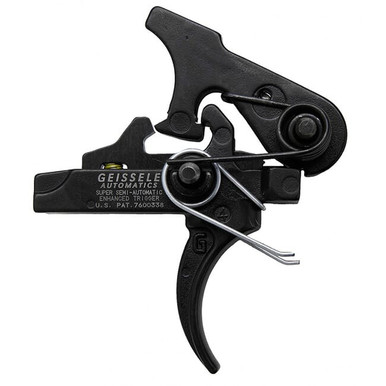
Geissele SSA-E Two-Stage Trigger Deals
Prices may change. May contain affiliate links.
The LWRCI REPR MKII illustrates this well. It runs a patented short-stroke gas piston system with a 10-position tunable gas block, a monoforge upper receiver with an integrated rail base, a Geissele SSA-E two-stage trigger, fully ambidextrous controls, and a cold hammer-forged barrel (the 6.5 Creedmoor model features a spiral-fluted barrel). The 16.1-inch 7.62 NATO variant weighs approximately 9 to 10.4 lbs depending on the source, and the 6.5 Creedmoor model with a 20-inch barrel comes in at 11.8 lbs. That weight includes the piston system's reciprocating mass, which is one of the tradeoffs. The REPR MKII has a sub-MOA reputation even with the 16.1-inch barrel, and the self-regulating piston runs clean and suppressor-friendly. But you're paying $4,215 to $4,497 for that package.
The POF-USA Revolution sits lower on the price ladder but still above $2,700. Its piston system vents gas forward, keeping the action cleaner, and POF's NP3 coating and heat-dissipating barrel geometry are specifically targeting the thermal management challenges of sustained .308 fire. These aren't gimmicks. They're engineering solutions to real problems that .308 DI guns face under high round counts.
The gap between the cheapest piston .308 (the Revolution at ~$2,733) and the most expensive DI .308 on this list (the Saint Victor V2 at under $2,000) is roughly $700 to $1,000. That delta buys you cleaner operation, cooler running, and easier suppressor integration. Whether that's worth it depends entirely on how you shoot.
Build notes: the conversion path
There's a third option that some shooters explore: buying a DI AR-10 and converting it to piston operation with an aftermarket kit. Superlative Arms manufactures piston conversion kits for the AR platform. Their kits allow conversion from direct impingement to piston operation without excessive modifications to the original system. They also make adjustable gas blocks with a bleed-off venting feature that doesn't foul and corrode like direct restriction set screws.
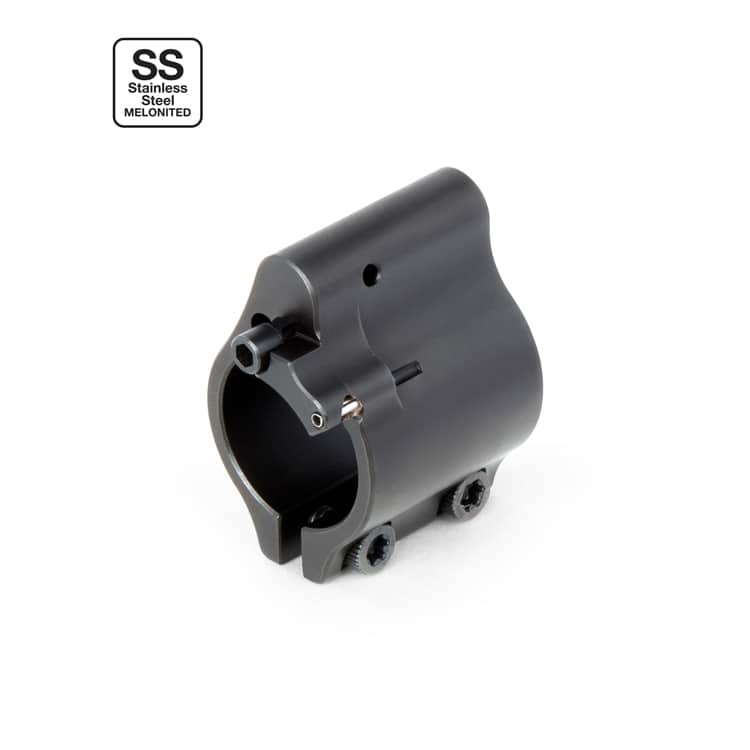
Superlative Arms Adjustable Gas Block Deals
Prices may change. May contain affiliate links.
However, Superlative Arms' piston conversion kits are designed for the AR-15 platform specifically. Converting an AR-10 to piston operation is a significantly more complex undertaking due to the higher bolt thrust, heavier carrier, and different gas system dynamics of the .308 cartridge. This isn't a drop-in weekend project for most shooters, and reliability concerns with DIY piston conversions on .308 platforms are real. If you go this route, expect to spend time tuning and testing before you trust the system.
How to choose
Start with how you actually shoot. If you're putting 200 rounds downrange on a Saturday, running suppressed, or training in courses where the rifle gets hot, the piston premium starts to justify itself. If you're hunting, shooting 40 to 60 rounds at the range, and cleaning your rifle afterward, a DI gun with an adjustable gas block does the job for a fraction of the cost.
Weight matters more than most people admit before they carry a rifle all day. The Ruger SFAR at under 7 pounds handles like a different category of firearm compared to a 10-pound REPR MKII. If you're hunting from a stand, weight is less critical. If you're moving through brush or shooting positional stages in a match, every pound counts.
The trigger is the part nobody upgrades first but should. The Saint Victor ships with a nickel boron-coated flat trigger that's noticeably better than mil-spec. The Diamondback DB10 will almost certainly need a trigger swap to reach its accuracy potential. Budget $100 to $200 for a good drop-in trigger if your chosen rifle doesn't come with one.
Suppressor plans change the calculus significantly. A piston gun handles the additional backpressure from a suppressor more gracefully than most DI guns. If you're building around a suppressor, the POF-USA Revolution's piston system and adjustable gas are purpose-built for that role. A DI gun can work suppressed with an adjustable gas block, but you'll be managing more carbon in the action and potentially dealing with overgassing issues.

Don't chase piston operation as a status symbol. Chase it as a solution to a specific problem. If your shooting volume and use case don't create the problems that piston systems solve, a well-built DI AR-10 under $1,500 will serve you better than a mediocre piston gun at $3,000.
Common mistakes
Buying a piston AR-10 without understanding the weight penalty is the most common regret. Piston systems add reciprocating mass to the bolt carrier group and overall weight to the rifle. A 9 to 10-pound rifle before optics, loaded magazine, sling, and light becomes an 11 to 12-pound system fast. Handle one before you commit.
Palmetto state armory PSA PA-10 Gen 3
May contain affiliate links.
Assuming all AR-10 magazines are interchangeable will cost you frustration. The AR-10 market splits between DPMS-pattern and ArmaLite-pattern receivers, and some manufacturers like POF use SR-25/POF pattern magazines. Verify magazine compatibility before you buy a stack of PMAGs.
Skipping the adjustable gas block on a DI AR-10 is leaving performance on the table. The .308 cartridge generates enough gas that most factory gas ports are oversized to ensure reliability across all ammo types. An adjustable block lets you tune down to the minimum gas needed for reliable cycling, which reduces felt recoil, bolt carrier velocity, and wear on the system. The PSA PA-10 Gen 3 includes one from the factory. Most others don't.
Mounting a quality optic on a cheap mount defeats the purpose of buying a good rifle. A .308 AR generates more recoil impulse than a 5.56, and a mount that can't hold zero under that repeated stress will have you chasing your groups. Spend appropriately on the mount.
Next steps
Before purchasing, handle the rifle if at all possible. Weight on a spec sheet and weight in your hands are different experiences, especially with .308 AR-10s that can vary by 3 to 4 pounds across models.
If you're buying a DI gun and plan to add an adjustable gas block later, confirm the barrel's gas block journal diameter before ordering. Most AR-10 barrels use a .750" journal, but verify rather than assume.
Once you have the rifle, run 200 rounds of your intended ammunition through it before changing anything. Function check before anything else. Note any failures to feed, failures to eject, or unusual ejection patterns. If you have an adjustable gas block, start with it fully open and close it down incrementally until you find the minimum gas setting that reliably locks the bolt back on an empty magazine. That's your baseline. Open it one click from there for your reliability margin.
Zero at 100 yards with match-grade ammunition to establish what the rifle is actually capable of, then switch to your duty or hunting load and confirm point-of-impact shift. A .308 AR-10 that holds 1.5 MOA with good ammo is a solid performer regardless of whether it runs on a piston or gas tube. The system matters, but the fundamentals matter more.