
You're looking at the AK market in 2026 and wondering why the shelves look the way they do. WASRs pushing past $1,000. Zastava M70s treated like they're the last imports that'll ever arrive. Russian guns trading at collector prices. 5.45x39mm practically extinct on the commercial market. The AK-pattern rifle didn't disappear overnight. It got squeezed out over decades by a layered series of import bans, sanctions, and regulatory decisions that most buyers never paid attention to until the rifle they wanted was gone.
This isn't a history lecture for its own sake. Understanding why the AK market looks the way it does right now tells you what's actually worth buying, what might get cheaper, and what's never coming back. The supply picture is shifting again in 2026, with a proposed ATF rule that could reopen imports from several former Soviet countries while keeping Russia locked out. That changes the calculus for buyers and collectors in ways that matter.
The ban timeline that built this mess
The American AK market didn't collapse from a single event. It eroded through a half-century of compounding restrictions, each one removing a source country or a category of firearm from the import pipeline.

Norinco AK Deals
Prices may change. May contain affiliate links.

AK-47 Deals
Prices may change. May contain affiliate links.
AR-15 Deals
Prices may change. May contain affiliate links.

AK-74 Deals
Prices may change. May contain affiliate links.
May contain affiliate links.
Kalashnikov Concern rifle
May contain affiliate links.
Chinese AK variants were the first major casualty. When imports of Chinese firearms were banned, those rifles became instant collector pieces. Prices climbed steadily, and anyone who'd bought a Polytech or Norinco AK found themselves sitting on an appreciating asset. That pattern would repeat with every subsequent ban.

The 1994 Federal Assault Weapons Ban prohibited the manufacture, transfer, possession, importation, and sale of specific semi-automatic configurations, as well as large capacity magazines, for a decade. While it sunset in 2004, it established the regulatory framework that states like California, Connecticut, and New York would adopt and expand on their own. As of 2026, multiple states maintain comprehensive bans that specifically name AK-47 variants alongside AR-15 pattern rifles, prohibiting sale, transfer, and in some cases possession of firearms with certain feature combinations like detachable magazines paired with pistol grips or folding stocks.
The 2014 sanctions following Russia's annexation of Crimea targeted Kalashnikov Concern directly. American companies were prohibited from importing new Kalashnikov products into the United States. The Treasury Department specified that existing owners could keep or resell their Kalashnikov firearms, but new transactions with the company would violate the sanctions. The market response was immediate. Atlantic Firearms, a major AK distributor, sold more than 400 Russian guns in just a couple of days before selling out entirely. Retailers across the country reported panic buying as consumers recognized the pattern from the Chinese ban years earlier.
Then came 2021. The permanent Russian arms import ban didn't just affect rifles. It choked off the ammunition supply that made AK ownership affordable. Prior to 2021, Russian manufacturers were estimated to account for as much as 40 percent of the ammunition sold in the United States. Steel-cased 7.62x39mm from Wolf, Tula, and Barnaul had been the cheapest centerfire rifle cartridge available to American consumers. When that pipeline closed, prices soared, and the practical economics of owning an AK changed overnight.

The 5.45x39mm situation is even worse. With Russia heavily sanctioned and Ukraine's domestic production entirely consumed by its own defensive war, the global commercial supply of 5.45x39mm has practically evaporated. If you own an AK-74 pattern rifle, you're sitting on a gun that's increasingly difficult and expensive to feed.
What the 2026 ATF proposed rule actually means
A proposed rule published in the Federal Register on May 6, 2026, document number 2026-08911, could reshape the import landscape significantly. The rule proposes to remove the list of former Soviet countries from which ATF currently denies applications to permanently import most firearms and ammunition, leaving only the Russian Federation as the proscribed country of origin.
Read that again. Countries like Kazakhstan, Georgia, and Uzbekistan, which have been lumped in with Russia on the proscribed list, could potentially become legal sources for firearms and ammunition imports. The comment period for this proposed rule is slated to close on July 6, 2026.

The administrative objective is to harmonize ATF regulations with the Department of State's International Traffic in Arms Regulations. But the practical market implications are significant. Kazakhstan and Uzbekistan both have manufacturing infrastructure rooted in Soviet-era production. Georgia has its own arms industry. If these countries are removed from the proscribed list, importers could potentially source AK-pattern rifles and, critically, ammunition from factories that were built on the same technical specifications as Russian plants.
This doesn't mean Russian AKs are coming back. The proposed rule explicitly maintains the Russian Federation as a proscribed country. Kalashnikov Concern products remain banned. But it could mean new sources of 7.62x39mm ammunition and potentially new-manufacture AK-pattern rifles from countries that have been locked out of the American market for years.
The entire AK market has been on an upward cost trajectory for several years now, at least for quality mil-spec imports. If new import sources open up, that trajectory could flatten or even reverse for ammunition. For rifles, the effect would depend entirely on what these countries are actually manufacturing and in what quantities.
Range notes: the ammo problem is the real problem
A rifle you can't afford to shoot is a safe queen, not a tool. The 7.62x39mm price increase since 2021 has fundamentally changed the value proposition of AK ownership. Before the Russian import ban, you could run steel-case through a WASR all day for roughly the cost of .22 LR from a decade ago. Those days are gone. Whether the ATF's proposed rule brings relief depends on whether former Soviet states can spin up commercial ammunition production at scale. That's a big "if" with a timeline measured in years, not months.
What's actually available right now
The AK market in 2026 has consolidated around a handful of manufacturers. Some are imports, some are domestic, and the quality spread between them is wider than most people realize. Here's where things stand with the rifles that are actually on shelves.
Century Arms WASR-10 Deals
Prices may change. May contain affiliate links.
Zastava ZPAP M70 Deals
Prices may change. May contain affiliate links.
Kalashnikov USA KR-103 Deals
Prices may change. May contain affiliate links.

AK-103 Deals
Prices may change. May contain affiliate links.

Palmetto State Armory GF3 Deals
Prices may change. May contain affiliate links.

Arsenal SAM7R Deals
Prices may change. May contain affiliate links.
Century Arms Draco Tactical 7.62x39mm Deals
Prices may change. May contain affiliate links.
Century arms RAK-1 enhanced trigger group Deals
Prices may change. May contain affiliate links.
B5 Systems SOPMOD stock Deals
Prices may change. May contain affiliate links.

Hogue grip with finger grooves Deals
Prices may change. May contain affiliate links.

US Palm free-float M-LOK handguard Deals
Prices may change. May contain affiliate links.
May contain affiliate links.
Kalashnikov USA Viskov 7.62x39mm
May contain affiliate links.
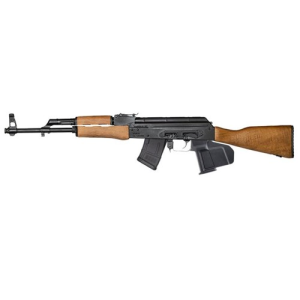
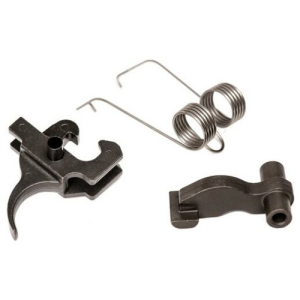
The Century Arms WASR-10 remains the baseline import AK. Manufactured by Romania's Cugir Arms Factory and imported by Century Arms, who modifies them for compliance and improvements, the WASR-10 is a true AKM-pattern rifle with a stamped receiver. It's chambered in 7.62x39mm with a 16.25-inch barrel, comes with a side optic mount, AKM-pattern furniture, and Century's RAK-1 enhanced trigger group. Weight runs around 6 pounds 13 ounces on actual scales, though Century's website lists 7.5 pounds. Street prices have been running around $949, though some vendors have pushed past $1,100. The WASR has to comply with 922(r), which means certain parts get swapped to US-made components during the import process. It ships with a 30-round US Palm magazine.

But WASR pricing tells a bigger story. Forum discussions from AK communities show users tracking significant price increases on Cugir-manufactured products. Pre-ban Maadi AKMs, another import that dried up when Factory 54 closed down in 2024, are now trading at $3,000 to $5,000. The entire import AK segment has been climbing, driven by the same supply-and-demand dynamics that hit Chinese AKs decades ago.
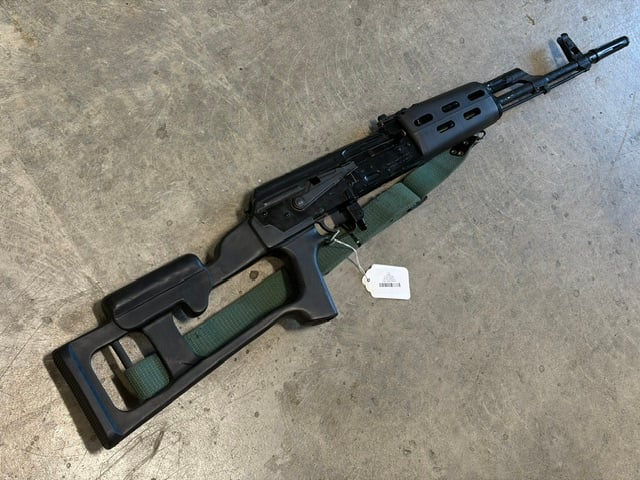
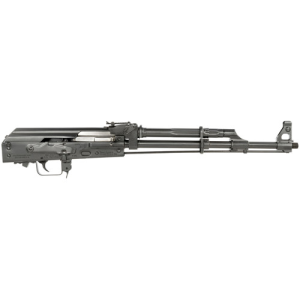
The Zastava ZPAP M70, imported from Serbia, has become arguably the most popular AK variant in the American market. Its distinguishing feature is an RPK-style bulged trunnion, which uses a heavier 1.5mm stamped receiver. The M70 designation dates to 1970, when the Yugoslav government approved the M64A for serial production as the AP M70. Zastava's dominance in the current market is straightforward: Serbia isn't on any proscribed list, Zastava has maintained consistent import volume, and the rifle's build quality hits a sweet spot between price and durability. The bulged trunnion is genuinely overbuilt for a semi-auto rifle, borrowing from the RPK light machine gun design, which means the receiver and front trunnion interface should outlast the barrel by a wide margin.
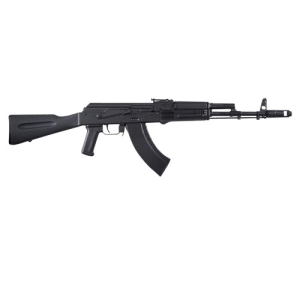
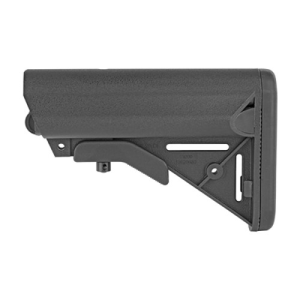
On the domestic side, Kalashnikov USA has established itself as the primary American manufacturer building to Russian specifications. KUSA was formed specifically because Russian-made Kalashnikov rifles cannot be imported due to sanctions. Their KR-103 is built on AK-103 specifications with a chrome-lined barrel and a stamped receiver, with the barreled action available in either a button barrel or cold hammer-forged barrel option. The company has continued expanding its lineup, with the recently introduced Viskov 7.62x39mm rifle building on the KR-103's platform and adding a B5 Systems SOPMOD or Bravo folding stock, mil-spec buffer tube and castle nut, Hogue grip with finger grooves, and an extended charging handle. The Viskov represents KUSA's push toward a more modernized, accessory-friendly AK platform.
One warning on KUSA: scam websites have been spoofing the Kalashnikov USA brand. A fraudulent site using a domain similar to the official kalashnikov-usa.com has been reported, with scammers requesting Zelle payments. If you're buying direct, verify you're on the actual KUSA domain.
The Palmetto State Armory GF3 sits at the budget end of the domestic AK market. American-made with hammer-forged trunnions and bolt, it accepts standard AK magazines without fitment issues, has a side-rail mount for optics, and typically stays under $800. For a first AK or a rifle you plan to run hard without worrying about collector value, the GF3 has proven itself as a functional platform.

The Arsenal SAM7R represents the premium end. Bulgarian-made with a milled receiver rather than stamped, it's the flagship for buyers who want the strongest possible AK action. Milled receivers are heavier and more expensive to produce, but they're essentially indestructible under semi-auto use. Arsenal rifles have their own supply constraints, as Bulgarian production capacity is finite and military contracts take priority over commercial exports.
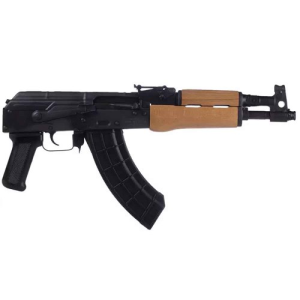
Century Arms also produces the Draco Tactical, a pistol-format AK chambered in 7.62x39mm with a 7.5-inch barrel. At 27.5 inches overall with a weight of 6.9 pounds unloaded, it ships with a Strike Industries bi-folding pistol brace, US Palm free-float M-LOK handguard, linear compensator, enhanced safety bolt hold open, the RAK-1 trigger, and a Picatinny rail integrated rear sight. MSRP sits at $1,049.99. The Draco platform has been popular as an SBR conversion base, though the pistol brace configuration keeps it accessible without NFA paperwork in most jurisdictions.
The state-level patchwork
Even if you find the AK you want at the right price, state law might have something to say about it. As of 2026, several states maintain comprehensive assault weapons bans that specifically name AK-47 variants. California prohibits the manufacture, import, sale, and transfer of AK-47 style rifles along with other semi-automatic firearms with certain feature combinations. Connecticut, New York, and other states have similar restrictions, generally targeting semi-automatic rifles with detachable magazines combined with features like pistol grips.

The legal landscape is actively shifting, though. In July 2026, the Third Circuit struck down New Jersey's ban on assault firearms and its restrictions on large-capacity magazines, holding that the restrictions violated the Second Amendment. This was the first time a federal circuit court invalidated a state assault weapons ban on Second Amendment grounds, creating a significant conflict with decisions from other circuits that upheld similar laws. The Supreme Court has agreed to hear challenges to laws in Cook County, Illinois and Connecticut that restrict AR-15 platform and similar semi-automatic rifles, granting certiorari in Viramontes v. Cook County and consolidating related cases.
Rhode Island passed an assault weapons ban on June 26, 2025, that takes effect July 1, 2026, making it illegal to purchase, sell, transfer, or manufacture defined assault weapons, though firearms lawfully acquired before that date are grandfathered for continued possession.
The net effect: your ability to buy an AK-pattern rifle depends not just on what's available nationally but on which state you're in and which direction the courts are moving. The Supreme Court's decision to take up these cases could reshape the entire regulatory framework, but that resolution is likely months or years away.
Common mistakes in the current AK market
The compressed supply and rising prices have created an environment where buyers make expensive errors. Here are the ones that come up most often.
May contain affiliate links.
Overpaying for "investment grade" imports without understanding what drives collector value. A WASR-10 at $1,100 is an overpriced shooter, not an investment. The rifles that appreciate are the ones that can never be imported again: pre-ban Chinese Polytechs, Russian Saigas, and now the Maadi AKMs. A currently-imported Romanian rifle will only become collectible if Romania stops exporting, and there's no indication that's imminent.
Buying a 5.45x39mm rifle without a plan for ammunition. The global commercial supply has practically evaporated. Unless you've already stockpiled ammunition or have a reliable source, you're buying a rifle you can't feed. The proposed ATF rule change could theoretically open up new 5.45 sources from former Soviet states, but that's speculative and wouldn't produce results for years even if finalized.
Ignoring 922(r) compliance on imported rifles. Every imported AK sold in the US has had certain parts swapped to American-made components to meet the required parts count. This is already handled by the importer on new rifles like the WASR-10, but if you're buying used and the previous owner swapped parts back to foreign-made originals, you could be holding a non-compliant firearm. It's rarely enforced at the individual level, but it's worth understanding what's been changed and why.
Falling for scam websites. The KUSA spoofing situation is a symptom of a broader problem. When demand outstrips supply and certain models are hard to find, scammers fill the gap with fake storefronts. If a deal requires Zelle, cryptocurrency, or any non-reversible payment method, walk away. Buy from established dealers or directly from verified manufacturer websites.
Conflating "loose tolerances" with reliability. The idea that AKs are reliable because they're loosely built is an oversimplification that leads people to accept genuinely out-of-spec rifles. AK tolerances are generous in specific areas by design, particularly in the gas system and bolt carrier fit, which allows the action to function when fouled or dirty. That's different from a rifle with a canted front sight base, an oversized gas port, or a bolt that doesn't headspace correctly. Quality control matters, and not all manufacturers hold the same standards.
Build notes: what to check on any AK purchase
Whether you're buying a WASR, a Zastava, or a KUSA, the inspection process is the same. Check headspace with go and no-go gauges before you fire it. Look at the front sight base and gas block alignment; canting is the most common QC issue on imported AKs and while a slightly canted sight can be compensated for with windage adjustment, a severely canted gas block affects reliability. Examine the rivets on the receiver, particularly the ones securing the front and rear trunnions. They should be properly formed, centered in their holes, and free of cracks. Cycle the bolt manually and feel for smooth travel. A new AK will be stiff, but it shouldn't bind or require excessive force. Check magazine fit with at least two different magazines; AK magazine dimensions vary between manufacturers, and a rifle that won't reliably lock and feed from standard-spec magazines has a receiver or magazine well issue.

Function check the safety and trigger before anything else. The safety lever should positively engage in both the safe and fire positions without excessive play. With the safety on, the trigger should not release the hammer. Rack the bolt, put the safety on fire, pull the trigger, hold it back, rack the bolt again, and slowly release the trigger. You should feel and hear the disconnector reset. If any of that doesn't work cleanly, the rifle goes back to the seller.
The market trajectory
The AK market in the United States is being shaped by forces that have nothing to do with the rifle's actual merits as a platform. Import restrictions, geopolitical sanctions, ammunition supply disruptions, and state-level bans have collectively made AK ownership more expensive and more complicated than it was even five years ago.
Domestic manufacturers like Kalashnikov USA and Palmetto State Armory have stepped in to fill part of the gap, and in 2026 the quality of American-made AKs has reached a point where they're genuinely competitive with imports on function and reliability. The KUSA KR-103 and Viskov, the PSA GF3, and even Century's domestic production have matured past the early days when "American-made AK" was a punchline. But they can't replicate the specific character of a Cugir-built WASR or the overbuilt feel of a Zastava M70, and they certainly can't replace the Russian and Chinese rifles that are never coming back.
The proposed ATF rule change on proscribed countries is the most significant potential shift in years. If finalized, it could open ammunition and possibly firearms imports from Kazakhstan, Georgia, and Uzbekistan while keeping Russia locked out. That won't bring back Saigas or Izhmash-marked rifles, but it could meaningfully address the ammunition cost problem that has made 7.62x39mm ownership progressively less practical since 2021. The comment period closes July 6, 2026. If you have an opinion on whether former Soviet states should be removed from the proscribed list, that's your window.
For right now, the practical move is straightforward. If you want an AK and you're in a state that allows it, buy the rifle that fits your budget from an established manufacturer and stockpile ammunition when you find it at reasonable prices. The WASR-10, Zastava ZPAP M70, KUSA KR-103, and PSA GF3 are all proven platforms with different strengths. Don't buy based on panic. Don't buy based on investment speculation unless you genuinely understand what drives collector value in this market. And run a full function check and headspace verification before you put a single round through it. The system matters more than the rollmark.