The CZ 600 platform: what it actually gets right (and where it stumbles)
CZ replaced the 557 and the beloved 550 with the 600 series, and the reaction was... mixed. Some people saw a modern push-feed action with a mini Mauser claw extractor and thought CZ had finally caught up. Others saw the loss of the full-length controlled-feed claw and the set trigger, and felt like CZ had abandoned what made their bolt guns special. Both camps have a point.
Here's the deal: the CZ 600 isn't trying to be a 550 with a facelift. It's a ground-up redesign built around modularity, and the recently announced 600+ line doubles down on that with a user-swappable barrel system. Whether that matters to you depends entirely on what you want a bolt rifle to do. If you're hunting whitetail at 200 yards, you probably don't need to swap barrels. If you want one action that runs .223, 7.62x39, .308, and 6.5 Creedmoor across different configurations, the 600 platform starts making a lot of sense.
This piece breaks down the action design, the individual model variants, how the 600 compares to its obvious competitors, and where the platform genuinely excels versus where it needs a second generation to mature. No fluff about CZ's heritage in Uherský Brod. You already know they make good guns. The question is whether this particular gun earns a spot in your safe.
The action: what changed and why
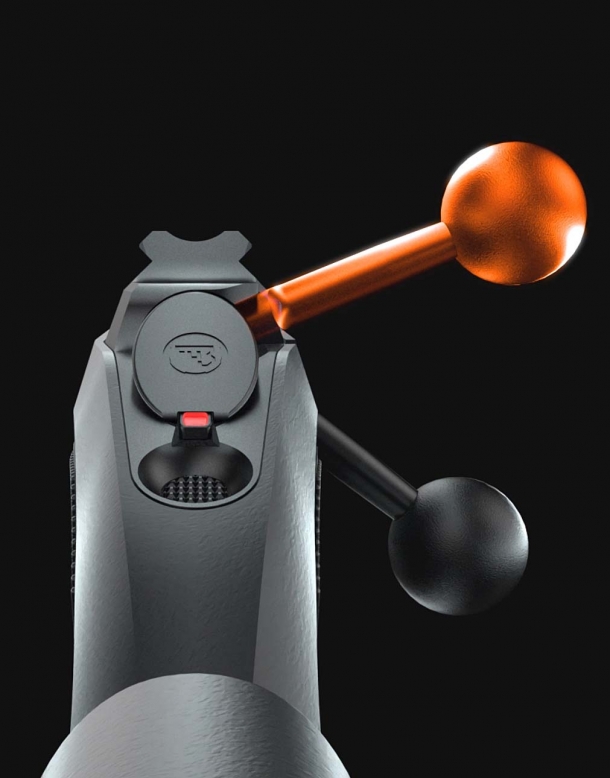
The CZ 600 runs a two-lug, push-feed bolt with a 60-degree throw. That shorter throw is the first thing you'll notice if you're coming from a Remington 700 pattern action (90-degree lift) or even the old CZ 550 (also 90 degrees). Cycling is noticeably faster, and the bolt clears a mounted scope with more room to spare. It's a meaningful ergonomic improvement, not a marketing bullet point.
The extractor is a mini Mauser-style claw; not the full controlled-round-feed claw of the 550, but not a tiny Sako-style spring plunger either. It grabs the case rim early in the feed cycle, which gives more reliable extraction than a pure push-feed design, though it won't strip a round from the magazine and control it all the way into the chamber the way a true CRF action does. For hunting in cold weather with gloves, or running the bolt hard under stress, this is a reasonable middle ground. For dangerous game in Africa? You'd still want a true CRF, and CZ knows that; which is why the 550 Safari Magnum stayed in production as long as it did.
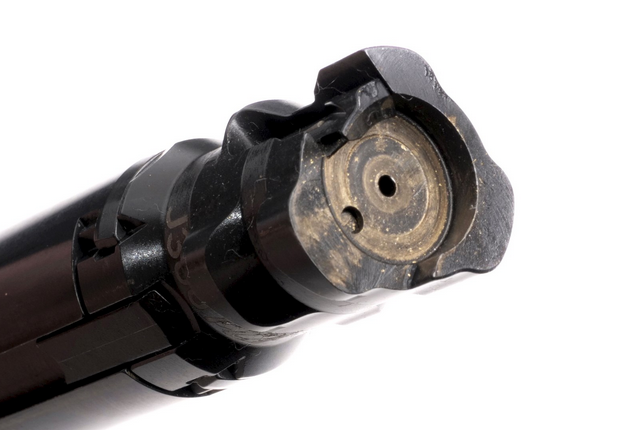
The bolt body is fluted, which saves a small amount of weight and looks good, but the real functional improvement is the firing pin fall time. CZ redesigned the striker assembly to be faster than the 557's, which contributes to better lock time. Lock time; the interval between the sear releasing and the primer getting struck; matters for precision because it reduces the window where shooter movement can influence the bullet's exit. The 600's lock time is competitive with the Tikka T3x, which has been the benchmark in this price range for years.
One thing that raised eyebrows: the 600 uses a polymer trigger guard and bottom metal assembly on most variants. On the Alpha and American models, the magazine well is polymer. The magazines themselves are detachable and proprietary; they're not AICS pattern. This was a deliberate choice by CZ, and it's one of the platform's more controversial decisions. AICS magazines are an industry standard for a reason: they're widely available, well-proven, and you can find them from multiple manufacturers. Going proprietary means you're locked into CZ's supply chain for spare mags. The magazines themselves work fine; they're a single-stack design, the feed lips are steel-reinforced, and they insert and release cleanly. But if CZ ever discontinues a specific magazine variant, you're hunting the aftermarket.
The safety is a two-position toggle on the right side of the receiver, behind the bolt handle. It locks the firing pin but doesn't lock the bolt, so you can cycle the action with the safety engaged. This is the correct design for a hunting rifle. Being able to unload with the safety on is a basic functional requirement, and CZ got it right.
Build notes: the trigger
The trigger is adjustable for pull weight, from roughly 2.2 to about 4 pounds depending on the variant. Out of the box, most examples seem to ship around 3 to 3.5 pounds. It's a single-stage design; no creep to speak of on well-adjusted examples, with a clean break. It's not a Timney or a TriggerTech aftermarket unit, but it's genuinely good for a factory trigger. The old 550 had that beautiful set trigger (pull the trigger forward to set it for a hair-light release), and its absence here is felt by CZ purists. But the 600's standard trigger is more practical for most shooters. Set triggers are wonderful on a bench. They're a liability when you're shivering in a tree stand with cold fingers.
The model lineup: picking the right 600
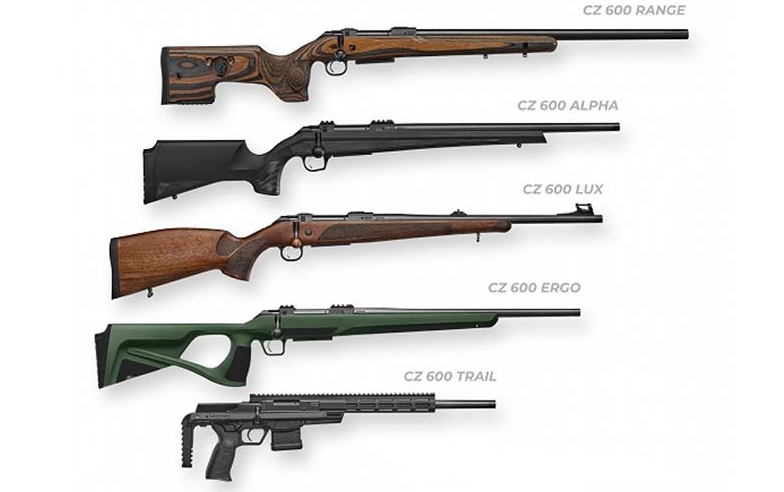
CZ has done something smart with the 600 series; they've differentiated the models by actual use case rather than just wood grade and barrel length. Each variant has a distinct stock geometry, barrel profile, and chambering selection that targets a specific type of shooter. Here's how they break down.
CZ 600 Alpha
This is the entry point and, honestly, the one most people should look at first. It ships with a Turkish walnut stock, a cold hammer-forged barrel, and a threaded muzzle. Chamberings include .223 Remington, .224 Valkyrie, .308 Winchester, .30-06, 7.62x39, and 6.5 Creedmoor, among others. Barrel lengths vary by chambering; the .223 and 7.62x39 run 16.2 inches, while the .308 and .30-06 get 20-inch tubes.
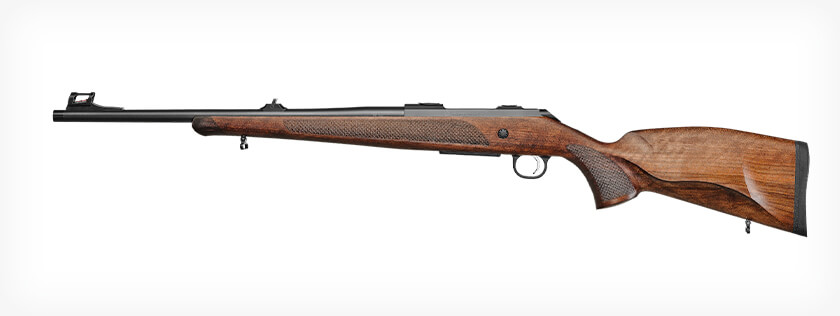
The Alpha's stock has a straight comb and a fairly neutral grip angle. It's not a thumbhole target stock, and it's not a traditional Monte Carlo hunting stock. It splits the difference, which means it works acceptably well for both offhand snap shots and settled prone shooting, but it doesn't excel at either. The length of pull is 13.4 inches, which fits most average-build adults without issue.
Accuracy reports from multiple sources put the Alpha in the 1 to 1.5 MOA range with quality factory ammunition. That's honest hunting accuracy; you'll hit the vitals on a deer at 300 yards without drama. Sub-MOA groups are achievable with handloads and careful technique, but the Alpha isn't a benchrest rifle and doesn't pretend to be. The barrel profile is a medium sporter contour, which means it heats up faster than a heavy barrel and will walk shots during extended strings. For a hunting rifle that fires one to three shots at game, this is irrelevant. For a range toy you're putting 50 rounds through in an afternoon, it matters.
Weight runs about 6.3 pounds bare, depending on chambering. Add a scope, rings, and a sling and you're looking at roughly 8 pounds ready to hunt. That's middle of the road; lighter than a Bergara B-14 HMR, heavier than a Kimber Mountain Ascent.
CZ 600 American
The American variant targets the traditional hunting rifle market. It gets a higher-grade walnut stock with a more sculpted cheekpiece, a Pachmayr-style recoil pad, and a slightly different barrel contour. Chamberings overlap significantly with the Alpha but tend toward the classic hunting calibers; .308, .30-06, 6.5 Creedmoor, .300 Winchester Magnum.
The real difference here is the stock geometry. The American has a higher comb and a more pronounced palm swell, which makes it more comfortable to shoot from field positions. The trigger guard area is slightly more refined. Functionally, the action is identical to the Alpha; same bolt, same trigger, same magazine system. You're paying more for wood quality and ergonomic refinement, not mechanical improvement.
If you're buying a rifle to sit in a gun cabinet and come out for deer season, the American is the prettier choice. If you're going to beat it up in a truck or drag it through brush, the Alpha's plainer stock is easier to live with.
CZ 600 Trail
This is the interesting one, and it's where CZ took a real swing. The Trail comes in a black polymer chassis with a PDW-style folding stock, an M-LOK forend, and chamberings that include 7.62x39 and .223 Remington in short-barreled configurations (16.2 inches). It also comes in .308 and 7.62x39 with longer barrels depending on the specific SKU.
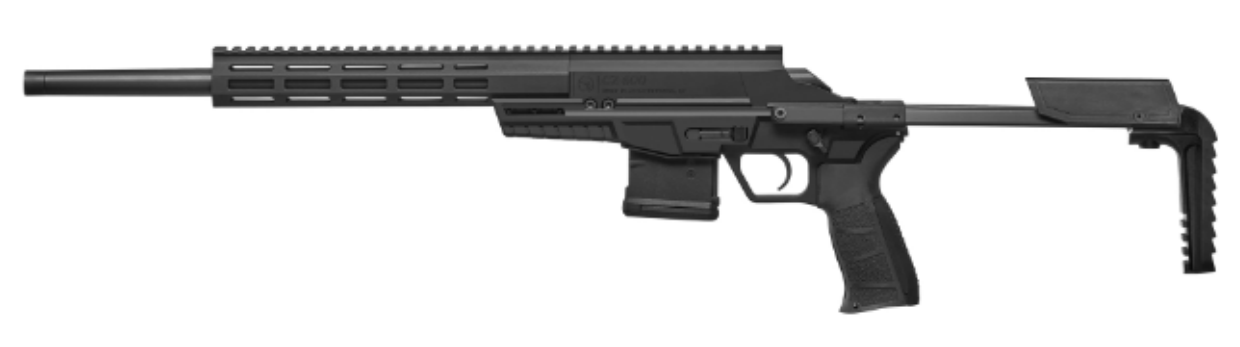
The Trail in 7.62x39 is basically CZ asking the question: what if you wanted a bolt-action rifle that feeds from affordable steel-case ammo and looks like it belongs in a truck gun rack? The 7.62x39 chambering is genuinely practical; the cartridge is effective on deer-sized game inside 200 yards, the ammo is cheap for practice, and the bolt action eliminates the reliability concerns that plague some semi-auto platforms with steel-case fodder. Extraction is positive and consistent because the bolt's mechanical advantage is enormous compared to a gas-operated system.
The folding stock is polarizing. It shortens the overall length dramatically for storage and transport; folded, the Trail is compact enough to fit in a large backpack. Unfolded, the length of pull is adjustable. The cheek weld on a PDW stock is never going to match a proper rifle stock, though. If you're trying to shoot groups at 300 yards off a bipod, the Trail's stock will frustrate you. For its intended role; a truck gun, a ranch rifle, a compact backcountry companion; the compromises make sense.
The M-LOK forend accepts lights, bipods, and other accessories without the weight penalty of a Picatinny quad rail. The barrel is threaded, so you can run a suppressor or a muzzle brake. The whole package weighs around 6 pounds bare, which is light for a chassis rifle.
CZ 600 Range
The Range is the precision-oriented variant. It ships with a heavier barrel profile, an adjustable cheekpiece stock (polymer, not chassis), and chamberings focused on long-range cartridges: 6.5 Creedmoor, .308 Winchester, and .224 Valkyrie. Barrel length is typically 24 inches.
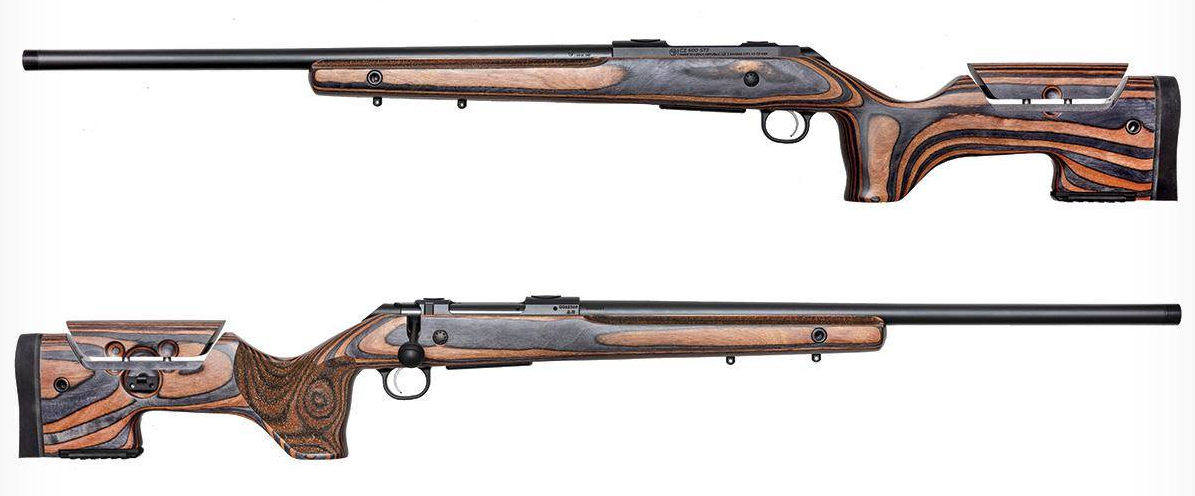
The heavier barrel makes a real difference for sustained accuracy. Where the Alpha's sporter barrel might open groups up after five or six rounds, the Range's profile holds point of impact more consistently through longer strings. The adjustable cheekpiece lets you dial in proper eye-to-scope alignment, which matters enormously for consistent precision. A stock that doesn't fit your face means your eye sits differently behind the scope every time you mount the rifle. That inconsistency shows up on paper at 300 yards and beyond.
The Range is CZ's answer to the Bergara B-14 HMR and the Howa 1500 in a KRG Bravo chassis. It's not quite at that level of aftermarket support; you can't drop the 600 Range action into a Manners or McMillan stock without modification; but the out-of-box accuracy is competitive. Expect honest 1 MOA or slightly better with match-grade ammunition in 6.5 Creedmoor.
CZ 600 Ergo
The Ergo is the European-style variant with a thumbhole stock, designed primarily for the European sporting and hunting market. The thumbhole design provides a very consistent grip and excellent trigger control, but it's slower to mount from a low-ready position. If you're shooting from a high seat or a blind, where you have time to settle into the rifle, the Ergo's ergonomics are excellent. For walk-and-stalk hunting where you need to snap the rifle up quickly, a conventional stock is faster.
The 600+ system: switch barrels done right?
In 2025, CZ announced the 600+ line, which adds user-swappable barrels to the platform. The concept isn't new; Blaser has done it for decades, and Savage made barrel swaps relatively easy with their barrel nut system. But CZ's implementation is notable because it's designed to maintain headspace without requiring gauges or a gunsmith.
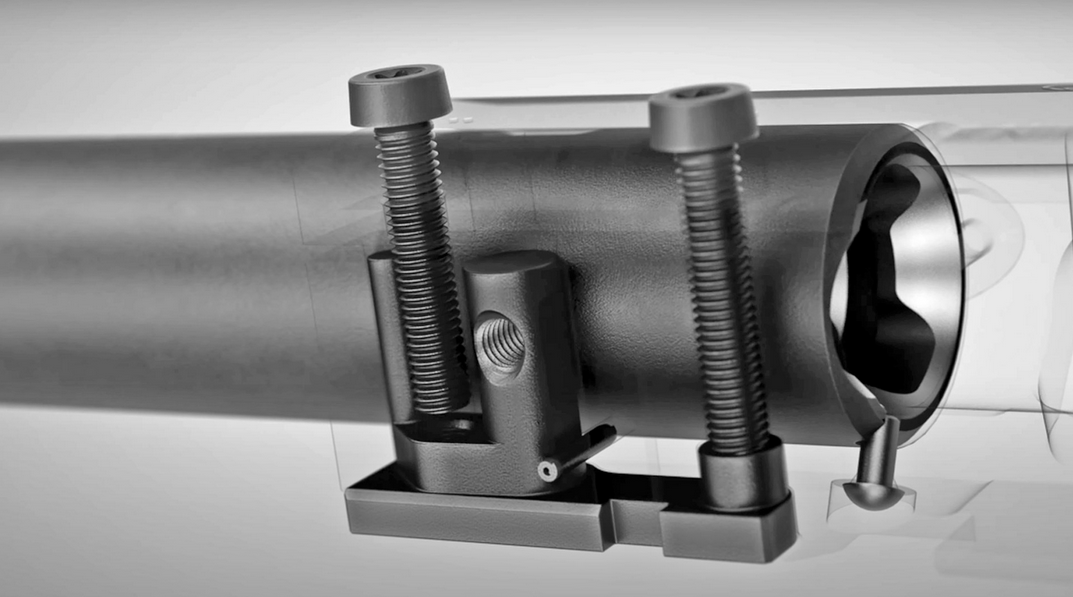
Here's how it works: the barrel locks into the receiver via a proprietary interface that indexes the barrel's position precisely. When you swap barrels, the headspace; the critical distance between the bolt face and the chamber; is set by the barrel itself, not by how far you thread it in. Each barrel is headspaced at the factory to the 600+ action spec, so when you install it, the headspace is correct by design. You don't need to check it with go/no-go gauges every time, though doing so periodically is still smart practice.
The practical benefit is real. One receiver, one trigger, one stock; and you can swap between .223 Remington, .308 Winchester, 6.5 Creedmoor, 7.62x39, and .300 Blackout (among others) by changing the barrel and the bolt head. The bolt head swap is necessary because different cartridge families use different bolt face diameters. The .223 and 7.62x39 share a bolt face size, as do the .308 and 6.5 Creedmoor. So you'd need two bolt heads to cover the full range of chamberings, plus the appropriate barrels and magazines.
The 600+ Trail variant in .300 Blackout is particularly interesting for suppressor users. A 16.2-inch barrel in .300 BLK with a bolt action is about as quiet as you can get without going subsonic in a semi-auto. The bolt action eliminates the sound of the action cycling, and the .300 BLK was designed from the ground up to work with suppressors. It's a niche use case, but it's a compelling one.
The switch-barrel system does add cost. Each additional barrel runs a meaningful fraction of what the base rifle costs. You're not saving money compared to buying separate rifles unless you're swapping between three or more chamberings. Where you do save is in familiarity; same trigger, same stock fit, same manual of arms across all your chamberings. That consistency has value, especially for hunters who want one rifle that handles everything from varmints to elk.
How the 600 stacks up against the competition
The CZ 600 doesn't exist in a vacuum. It's competing against several well-established bolt-action platforms in the $700 to $1,200 street price range. Here's how it compares to the rifles you're probably also considering.
CZ 600 Alpha vs. Tikka T3x Lite
The Tikka T3x has been the default recommendation in this price range for years, and for good reason. Its action is glass-smooth, the single-stage trigger is excellent, and accuracy out of the box is consistently sub-MOA with good ammo. The T3x also benefits from enormous aftermarket support; stocks, triggers, bottom metal, barrel options from dozens of manufacturers.
The CZ 600 Alpha's action is good but not quite as smooth as the Tikka's. The Tikka's bolt glide is almost frictionless, while the CZ has slightly more resistance during cycling. Both triggers are excellent. The CZ's advantage is its extractor; the mini Mauser claw is more positive than the Tikka's plunger-style extractor, which matters in cold weather or with sticky cases. The CZ also has a threaded muzzle on most variants, which Tikka doesn't always include.
Where the Tikka wins decisively is aftermarket support. If you want to drop your action into a KRG Bravo, a Manners stock, or any other aftermarket chassis, Tikka compatibility is nearly universal. The CZ 600's footprint is unique, and aftermarket options are still limited. If you buy a CZ 600, you're largely living with the stock it came with unless you're willing to do custom inletting work.

Savage rifle Deals
Prices may change. May contain affiliate links.
CZ 600 Range vs. Bergara B-14 HMR
The Bergara B-14 HMR is the 600 Range's most direct competitor. Both are precision-oriented bolt rifles with heavy barrels, adjustable stocks, and chamberings focused on 6.5 Creedmoor and .308. The Bergara uses a Remington 700 footprint action, which means every trigger, stock, chassis, and bottom metal made for the R700 pattern fits the B-14. That's a massive ecosystem.
Accuracy is comparable; both rifles are capable of sub-MOA performance with match ammunition. The Bergara's barrel is made by the same Spanish barrel-making operation that supplies premium barrels to several other manufacturers, and barrel quality is consistently excellent. The CZ's cold hammer-forged barrel is also very good, but hammer-forged barrels occasionally show slightly more variation in bore consistency than button-rifled or cut-rifled barrels.
The Bergara wins on aftermarket flexibility. The CZ wins on action refinement; the 60-degree bolt throw and the mini Mauser extractor are genuinely better features than what you get on the B-14's R700-pattern action. If you plan to upgrade extensively over time, buy the Bergara. If you want a rifle that's closer to "done" out of the box, the CZ 600 Range is the smarter pick.
CZ 600 Trail vs. Ruger American Ranch
Both rifles target the compact, utility bolt-action market. The Ruger American Ranch in 7.62x39 uses Mini-30 magazines (Ruger proprietary), has a 16.12-inch barrel, and comes in at a lower price point. It's lighter, simpler, and has been on the market longer.
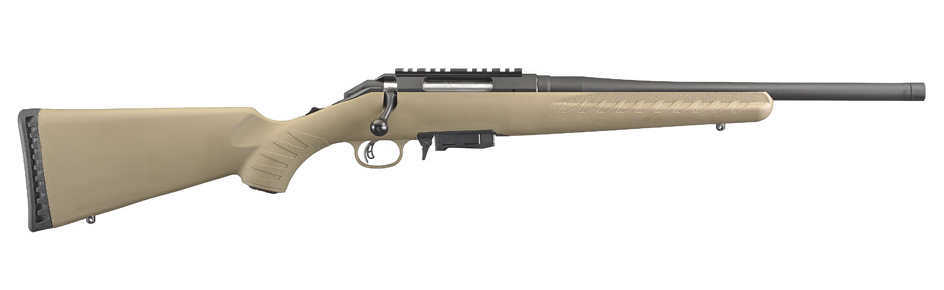
The CZ Trail is a more refined rifle in almost every measurable way. The trigger is better, the action is smoother, the stock is more adjustable, and the M-LOK forend adds real modularity. The Ruger's advantage is price and simplicity; it's a no-frills tool that works. The CZ is what you buy when you want the same basic concept executed at a higher level.
CZ 600 Alpha vs. Howa 1500
The Howa 1500 is the sleeper in this segment. Its action is overbuilt, the two-stage HACT trigger is excellent, and accuracy is consistently impressive for the price. Howa barrels are hammer-forged and tend to shoot very well. The 1500 also fits into most Remington 700 stocks and chassis with minor modification, giving it better aftermarket support than the CZ.
The CZ 600 has the edge in bolt feel and extraction reliability. The Howa's bolt is smooth but has a heavier lift, and its extractor is a spring-loaded plunger type. For a pure hunting rifle where you're firing one to five shots, both are excellent. For a rifle you'll cycle rapidly or use in harsh conditions, the CZ's extractor design is preferable.
Common mistakes and troubleshooting
Every platform has its quirks. The CZ 600 is no exception.
The magazine seating issue is the most commonly reported complaint. The proprietary detachable magazines can be finicky about insertion angle. If you try to slam them straight up like an AR magazine, they sometimes won't lock. The correct technique is to insert the front lip first, then rock the rear upward until it clicks. Once you learn the motion, it's fast and reliable. But it's not intuitive if you're coming from an AICS-pattern system.
Scope mounting on the 600 requires attention. The receiver is drilled and tapped for Remington 700-pattern bases on most variants, but the screw spacing isn't identical to a true R700. Some bases fit perfectly; others need slight modification. Check compatibility before you buy rings and bases. CZ sells their own branded mounts, which obviously fit, but the selection is limited compared to what's available for R700-pattern rifles. Warne, Talley, and EGW all make bases confirmed to fit the 600 series.
Stock contact with the barrel has been reported on some early-production Alpha models. The walnut stocks can shift slightly with humidity changes, and if the barrel channel is tight to begin with, the stock can contact the barrel and affect point of impact. The fix is simple; relieve the barrel channel with sandpaper until you can slide a dollar bill freely between the barrel and the stock from the receiver to the forend tip. This is a five-minute fix, but you shouldn't have to do it on a rifle in this price range.
Bolt disassembly for cleaning is straightforward but requires reading the manual. The bolt comes apart differently than a Remington 700 or a Tikka. There's a specific sequence involving rotating the shroud and depressing the firing pin. Do it wrong and you'll launch the firing pin spring across the room. Do it right and it takes ten seconds. Just read the instructions the first time.
Ammunition sensitivity in the 7.62x39 chambering is worth mentioning. The 600 Trail and Alpha in 7.62x39 are designed to handle the full spectrum of 7.62x39 ammo, including steel-case imports. Extraction with steel case is positive thanks to the bolt's mechanical advantage. However, some shooters have reported that the tightest groups come from brass-cased hunting loads like the Hornady SST, while steel-case practice ammo opens groups to 2-3 MOA. This is normal; steel-case ammo is manufactured to looser tolerances and uses harder primers. The rifle isn't malfunctioning; the ammo is just less consistent.
What the 600 gets right that nobody talks about
The barrel threading is standard on virtually every 600 variant. This seems minor until you realize that many competing rifles in this price range either don't thread the barrel or charge extra for it. If you own a suppressor; or plan to; having factory threading with a proper thread protector saves you $150-200 at a gunsmith.
The 60-degree bolt throw genuinely matters for scope clearance and cycling speed. If you've ever bloodied a knuckle on your scope's eyepiece bell while working a 90-degree bolt, you understand. The 60-degree lift keeps your hand below the scope's profile on every cycle. It's one of those features that sounds incremental on paper but changes how the rifle feels in practice.

The cold hammer-forged barrel is CZ's bread and butter, and they do it well. Hammer forging work-hardens the steel, which generally extends barrel life compared to button-rifled barrels of the same contour and chambering. For a hunting rifle that might see 500 rounds in its lifetime, barrel life is irrelevant. For a range rifle in .308 that might see 3,000-5,000 rounds, the hammer-forged barrel should maintain accuracy longer.
The trigger, as mentioned, is genuinely good. Adjustable down to around 2.2 pounds, clean break, minimal overtravel. Most competing rifles in this price bracket ship with triggers that are adequate but not impressive. The CZ 600's trigger is impressive. It doesn't need to be replaced with an aftermarket unit, which saves you $100-150 and the hassle of installation.
Range notes: what you'll actually notice
The first thing that stands out when cycling the bolt is how short the throw feels. Coming from a Remington 700 or an old Mauser 98, the 60-degree lift feels almost like a straight-pull action. It's quick, and it encourages you to keep your cheek on the stock while cycling; which is exactly what you want for fast follow-up shots.
Recoil management varies by model. The Alpha in .308 with its 6.3-pound bare weight kicks noticeably harder than a Bergara B-14 HMR in the same chambering, simply because it's lighter. Physics doesn't care about brand names; a lighter rifle in the same cartridge produces more felt recoil. The Range model, being heavier, tames recoil better. If you're recoil-sensitive, factor weight into your model choice.
The Trail's folding stock has noticeable play when extended. It's not sloppy, but there's a slight wobble at the hinge that you can feel when you press your cheek into the stock. For precision work, this is a limitation. For its intended use as a compact utility rifle, it's acceptable. Just don't expect benchrest rigidity from a folding PDW stock.
Feeding from the magazine is smooth once you learn to load the magazine correctly. The single-stack design means rounds need to be pressed straight down, not angled in. If you angle them, the case rim can hang up on the feed lips. Load them straight, and they feed into the chamber without drama.
The trigger breaks clean at the weights CZ advertises. There's no mush, no stacking, no grit. Pull straight back and it breaks like a glass rod. The reset is short and tactile. For a factory trigger, this is as good as it gets without stepping up to a Savage AccuTrigger or spending extra on a Timney.
Where the platform needs to mature
No rifle platform is perfect at launch, and the CZ 600 has areas where the second generation (or the 600+ update) needs to improve.
Aftermarket stock and chassis options are still thin. The CZ 600's action footprint is unique, and as of now, only a handful of manufacturers make drop-in stocks or chassis for it. If you want to run your 600 action in an MDT or an XLR chassis, you're either waiting for those companies to add CZ 600 compatibility or paying for custom inlet work. This is the single biggest competitive disadvantage against the Tikka T3x and any Remington 700 pattern rifle.
The proprietary magazine system limits flexibility. AICS-pattern magazines are available everywhere, in multiple capacities, from multiple manufacturers. CZ 600 magazines are available from CZ. That's it. If CZ ever has a supply chain hiccup; and every manufacturer does eventually; you're stuck.
The polymer bottom metal feels adequate but not confidence-inspiring on a rifle that otherwise has excellent fit and finish. The trigger guard flex slightly under hard grip, and the magazine release, while functional, doesn't have the positive click of a steel or aluminum unit. This is a cost-saving measure, and it shows.
Long-range precision is good but not best-in-class. The 600 Range will shoot MOA or slightly better, which is excellent for hunting and recreational long-range shooting. But if you're competing in PRS or NRL-style matches, you'd be better served by a Bergara B-14 HMR in a chassis, a Tikka T3x in a KRG Bravo, or a Howa 1500 in an MDT setup; all of which have deeper aftermarket support for the kind of iterative upgrades competitive shooters make.
Making the most of your 600
If you've bought a CZ 600 or you're about to, here's how to get it running at its best.
Start with a proper bore break-in. Clean the barrel thoroughly before your first range session; factory preservative oil needs to come out. Fire one round, clean, fire one round, clean, repeat for five rounds. Then fire three-round groups with cleaning between groups for another fifteen rounds. This isn't superstition; hammer-forged barrels can have minor tooling marks in the bore that smooth out during the first few dozen rounds. Breaking in properly lets those marks polish out without building up copper fouling in the rough spots.
Zero at 100 yards with the ammunition you plan to hunt or compete with. Don't zero with cheap practice ammo and assume your hunting loads will hit the same point. Different bullet weights, velocities, and bearing surface lengths produce different points of impact. Zero with what matters.
After zeroing, shoot a five-round group at 100 yards, let the barrel cool completely, then shoot another five-round group. If both groups center on the same point, your barrel is free-floating properly and your stock isn't shifting with heat. If the second group walks; especially vertically; check for barrel-to-stock contact. Fix it before you blame the rifle.
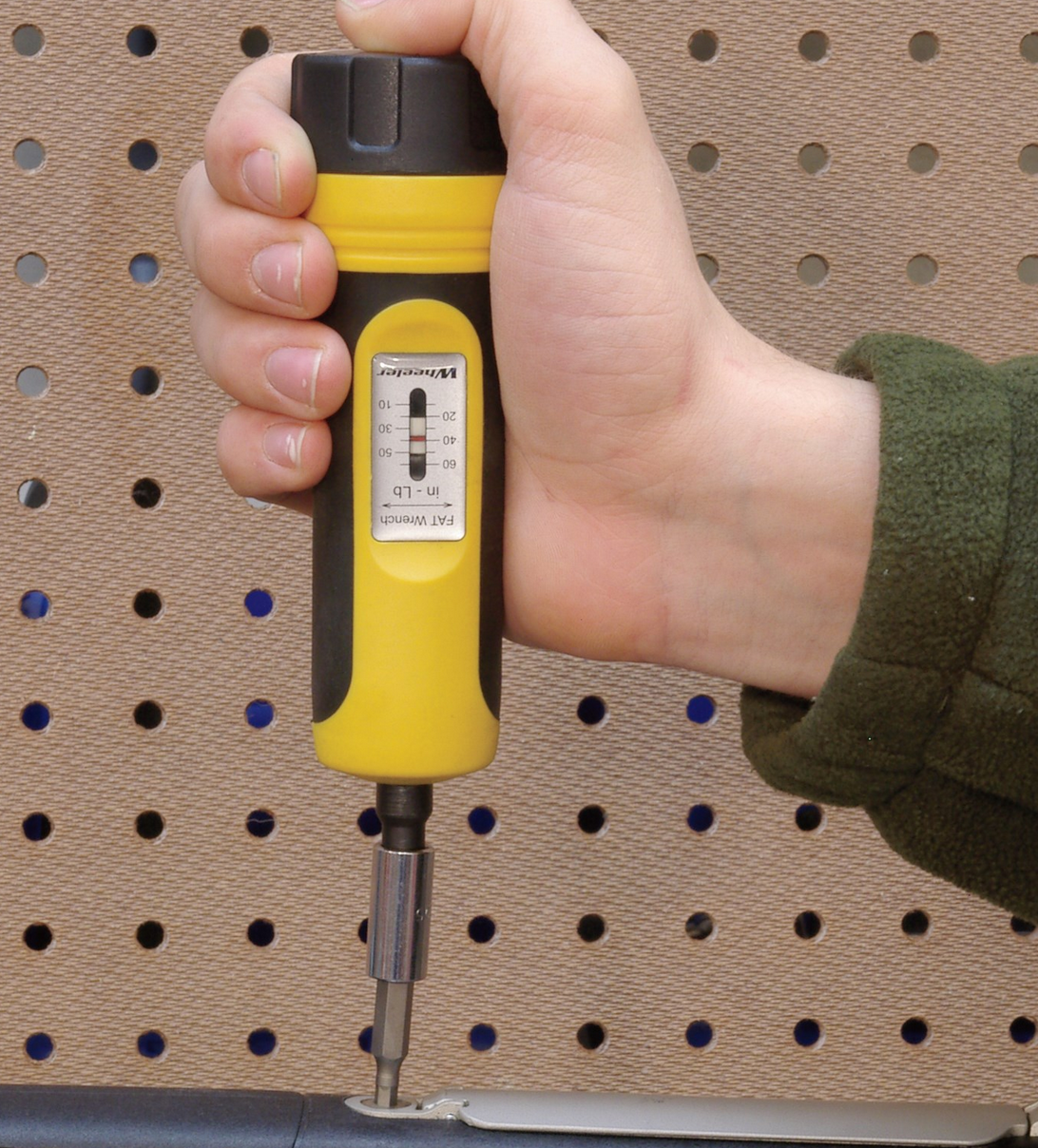
Torque your action screws to CZ's spec (check the manual; it varies by model, but most are in the 40-45 inch-pound range for the front screw and 25-30 for the rear). Over-torquing can stress the stock and actually reduce accuracy by introducing uneven pressure on the action. Under-torquing lets the action shift in the stock. Use a torque wrench, not a guess.
For the 600+ barrel swap system, run a headspace check with a go gauge after your first barrel swap, even though the system is designed to self-headspace. Verify once, trust the system after that. If the go gauge doesn't close, something is wrong with the barrel interface; contact CZ. If a no-go gauge closes, stop immediately. Headspace problems are not something you troubleshoot at the range.
Finally, function-check everything before you hunt. Load a full magazine, cycle every round through the action without firing, and confirm that each round feeds, chambers, extracts, and ejects cleanly. Do this with the ammunition you'll carry in the field. A malfunction at the range is an annoyance. A malfunction when a bull elk is standing broadside at 250 yards is a story you'll tell with regret for the rest of your life.
The CZ 600 is a serious bolt-action platform with genuine engineering merit. It's not the best at any single thing, but it's good at almost everything, and the 600+ barrel swap system adds a dimension of versatility that most competitors can't match. Buy it for what it is; a modern, modular bolt rifle with an excellent trigger and a smart action design; and you won't be disappointed. Just buy an extra magazine or two while they're in stock.