You're staring at three optic types and trying to figure out which one actually makes you faster and more precise on the gun. Red dots, holographic sights, and LPVOs all claim to be the right answer, and they're all correct depending on the question you're asking. The problem is that most comparisons lean on spec sheets and ignore what happens when you're running a timer or trying to make a hit at 300 yards under stress.
This breakdown focuses on where each optic type genuinely excels and where it falls apart. Not marketing claims. Not brand loyalty. The actual speed, accuracy, and practical tradeoffs that show up at the range, in competition stages, and in real-world defensive contexts. By the end, you should know exactly which optic type fits your shooting and why.
The decision you're actually making
The core question isn't which optic is "best." It's which tradeoff you can live with. A red dot gives you the fastest possible target acquisition at close range with virtually zero learning curve. A holographic sight does something similar but uses fundamentally different technology that changes the reticle experience, battery math, and cost. An LPVO tries to do everything, covering close-quarters speed and mid-range precision in a single package, but it weighs more, costs more, and demands better fundamentals to run well.

Your shooting context determines the answer. A home defense carbine that never leaves the house has completely different requirements than a competition rifle that sees steel at 5 yards and paper at 300 in the same stage. A patrol rifle needs to positively identify threats at distance, which changes the equation entirely. The optic is the interface between you and the target. Everything else is housing.
Quick comparison: the specs that matter
Here's what separates these three optic types on the metrics that actually affect your shooting:
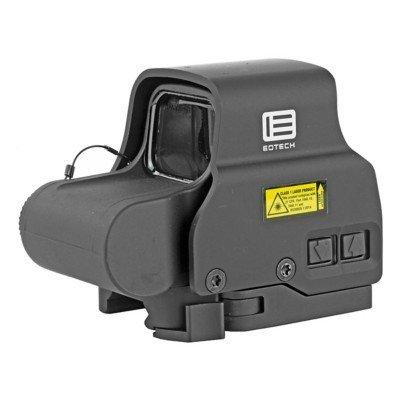
EOTECH EXPS2 Deals
Prices may change. May contain affiliate links.
The battery life gap between red dots and holographic sights is enormous. A red dot running an LED can last years on a single battery. The EOTECH EXPS2 gets roughly 600 hours. That's the difference between leaving your optic on continuously and needing a battery management plan. LPVOs split the difference: the illumination drains faster than a red dot, but the etched reticle still works with a dead battery, which is a genuine advantage neither of the other two types can claim.
Ballistics of speed: close-range acquisition
On paper vs under recoil, the speed differences between these optic types are real but narrower than most people assume at close range.
Red dots are the benchmark for acquisition speed inside 50 yards. No eye box to find, unlimited eye relief, both-eyes-open shooting that feels completely natural. You bring the gun up, the dot is there, you press the trigger. The simplicity is the feature. Common dot sizes for rifle use sit around 2 MOA, which covers about 2 inches at 100 yards. That's small enough for reasonable precision at moderate distance but visible enough to pick up fast during transitions.
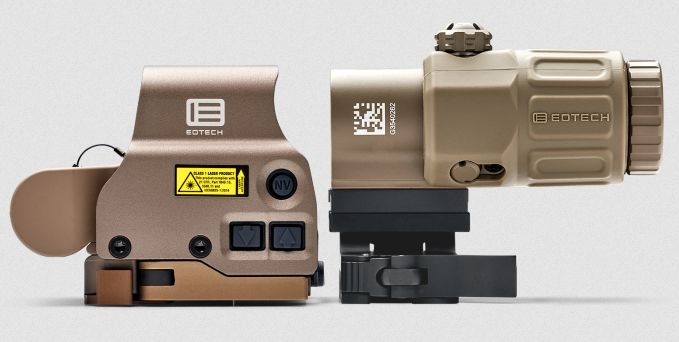
Holographic sights perform similarly at speed. The EOTECH's 68 MOA ring with a 1 MOA center dot is specifically designed for rapid acquisition: the large ring catches your eye immediately, and the center dot refines the aiming point. For shooters with astigmatism who see red dot LEDs as starbursts or smeared blobs, holographic reticles often appear cleaner because the laser-generated hologram interacts with the eye differently than a reflected LED. That's not a universal fix, but it's a documented advantage for a meaningful percentage of shooters.
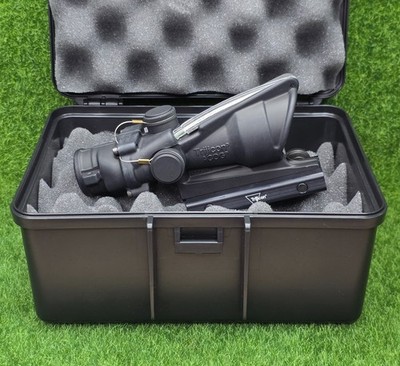
LPVOs at 1x can approximate a red dot's speed, but there's a catch. Even well-designed "true 1x" LPVOs still require proper eye relief and alignment. You have to get your head in the right spot behind the scope to see a full, undistorted image. Under stress, when your cheek weld breaks or you're shooting from an awkward position behind a barricade, that eye box becomes a real limitation. If the spec sheet says "1x," verify it. Many LPVOs show slight edge distortion at their lowest setting that a red dot simply doesn't have.
What you'll actually notice
The speed gap between a red dot and an LPVO at 1x shows up most clearly in two scenarios: shooting from unconventional positions (around cover, from retention, off-hand transitions) and during fast target transitions where your head position shifts. In a controlled standing position with a solid cheek weld, a practiced LPVO shooter can be nearly as fast as a red dot shooter. Remove the controlled conditions, and the red dot's forgiveness becomes obvious.
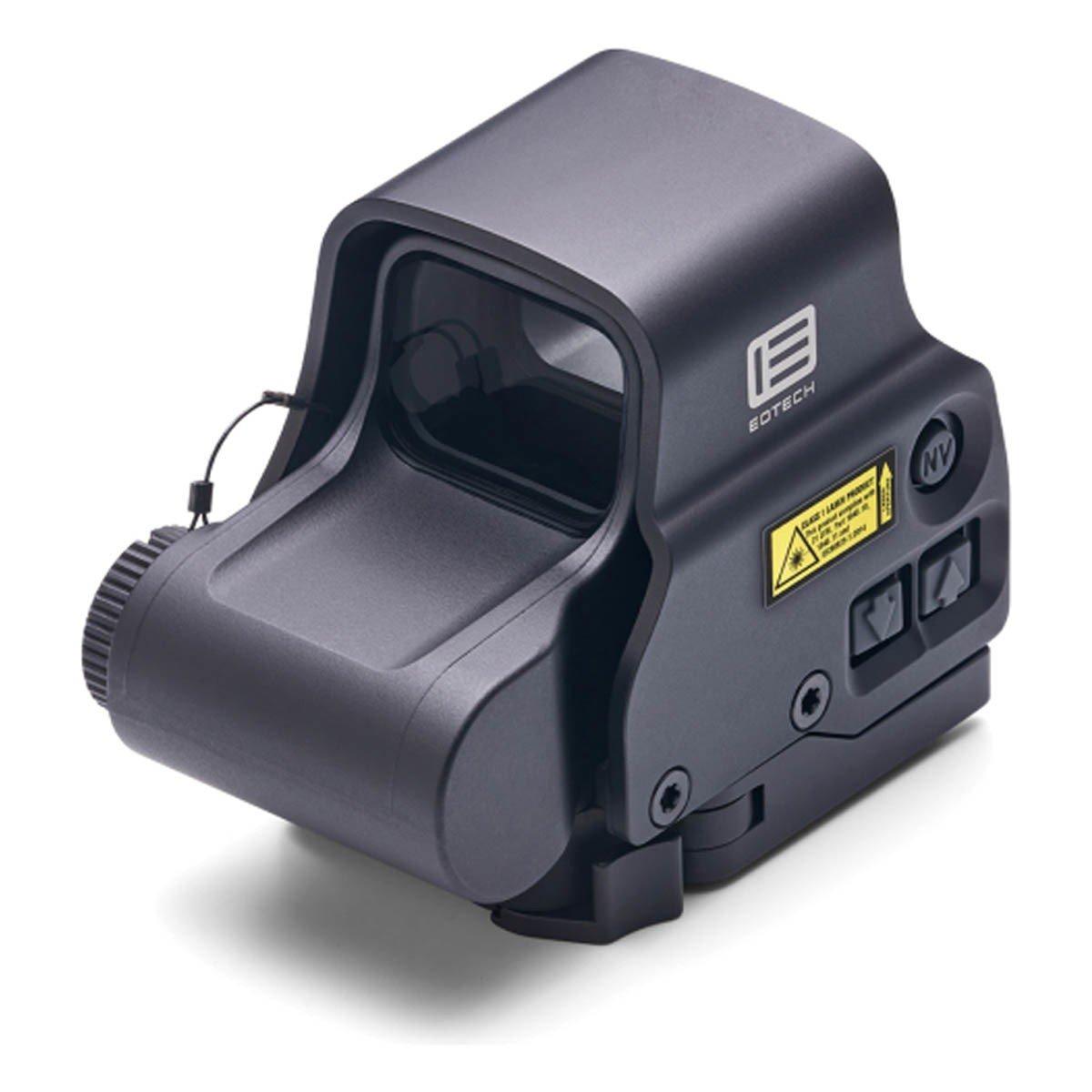
EOTECH EXPS3 Deals
Prices may change. May contain affiliate links.

Holographic sights split the difference in a different way. They're as fast as red dots for acquisition, but they weigh roughly twice as much as a micro red dot and burn through batteries dramatically faster. The EOTECH EXPS3 weighs 11.2 oz. An Aimpoint Duty RDS weighs 3.8 oz. That's over 7 oz of difference that changes the balance of your rifle and adds up over a long day of shooting or carrying.
Accuracy at distance: where magnification earns its weight
This is where the LPVO justifies its existence. Red dots and holographic sights are both 1x optics. Past 100 to 150 yards, you're relying entirely on your naked visual acuity to identify targets and make precise shots. A 2 MOA dot covers 6 inches at 300 yards. You can still hit things, but you can't see them clearly, and you certainly can't read wind indicators or use holdover references with any precision.
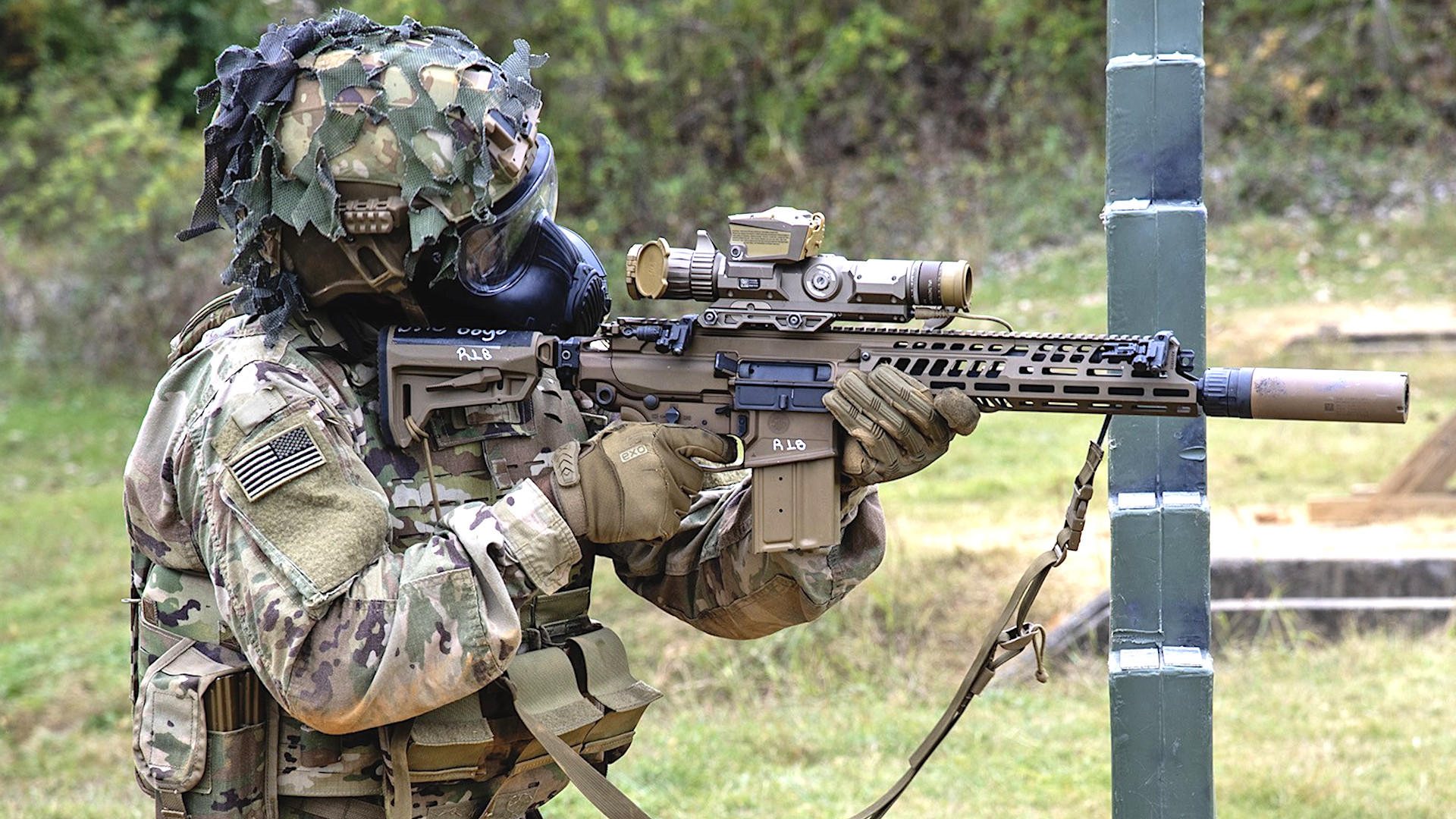
An LPVO at 6x or 8x transforms that engagement. Target identification at 300 to 600 yards becomes practical. Reticle subtensions for bullet drop compensation become usable. Wind holds become something you can actually execute rather than guess at. For competition stages that mix close steel at 5 to 25 yards with paper targets at 100 to 300 yards, a 1-6x or 1-8x LPVO on a 34mm tube with an illuminated reticle covers that full range. True 1x is critical on the close stages, and magnification is critical on the far ones.

First Focal Plane LPVOs add another layer. In an FFP scope, the reticle changes size as you adjust magnification, which means the ballistic holdovers and measurement hash marks are mathematically accurate at every zoom level. That's a significant advantage in timed competitions where you might engage targets at different distances without time to dial turrets. Second Focal Plane scopes keep the reticle the same size regardless of magnification, which can feel cleaner at 1x but means your holdovers are only calibrated at one specific power setting.
The red dot plus magnifier combo tries to bridge this gap. A flip-to-side 3x magnifier behind a red dot gives you occasional distance capability while preserving true 1x performance when the magnifier is stowed. Total weight ends up roughly equal to a light LPVO. The tradeoff: you're limited to 3x (or 6x with some magnifiers), and the eye box with the magnifier engaged is tight. It's a legitimate option, but it doesn't replace the continuous magnification range of an LPVO for precision work past 200 yards.
Use cases: matching the optic to the job
Home defense and CQB
Red dot. This isn't even close. An AR-15 LPVO at 1x is functional for home defense, but it adds weight and demands a repeatable cheek weld that stress can break. A red dot is lighter, faster, simpler, and works from any position you might find yourself shooting from inside a building. Battery life measured in years means you can leave it on and forget it. The Aimpoint PRO runs 30,000 hours of continuous use, meaning you change batteries every few years and never worry about whether your optic is live.

Aimpoint PRO Deals
Prices may change. May contain affiliate links.
If you want the larger reticle window of a holographic sight for home defense, it works, but you're paying significantly more for an optic that needs more frequent battery changes. The practical speed advantage over a red dot in a hallway is negligible.
Competition: 3-gun and multi-gun
LPVOs dominate here, and it's not because they're trendy. Stages mix close-range speed with mid-range precision, and the ability to run 1x for close steel and dial up to 6x or 8x for distant targets on the same stage is a genuine competitive advantage. LPVOs are the undisputed king of multi-gun and practical rifle competitions where target distances vary wildly from stage to stage.
The most competitive setups pair an LPVO with an offset-mounted micro red dot. Instead of dialing the LPVO back to 1x for close targets, the shooter cants the rifle slightly and uses the red dot. This eliminates the LPVO's eye box penalty at close range entirely. It's more setup than a casual shooter needs, but for a rifle that demands maximum versatility, it's extremely effective.
A BDC reticle calibrated for the specific load you're running (55 to 77 grain in 5.56 NATO or .223 Remington) can simplify verified holds at distance and shave seconds off stage times compared to guessing holdovers with an unmagnified dot.
Patrol and law enforcement
This role demands positive target identification at distance, which pushes the decision toward either an LPVO or a red dot with magnifier. The NRA's law enforcement training division now teaches instructors on all three optic systems: pistol-mounted optics, rifle-mounted red dots, and LPVOs. That tells you something about where the profession is heading. The ability to zoom in and confirm what you're looking at before making a shoot/don't-shoot decision is not optional in a law enforcement context.

Red dots remain standard on many patrol rifles because of their simplicity and the reality that most law enforcement engagements happen at close range. But the trend toward LPVOs in LE reflects the understanding that magnification isn't just about accuracy; it's about identification.
Hunting
If you're running an AR-platform rifle for hunting, the LPVO makes the most sense for most scenarios. Magnification helps with positive target identification, which matters for both legal and ethical reasons. An illuminated LPVO reticle is valuable for low-light hunting conditions during legal shooting hours when you need to clearly see what you're aiming at. The etched reticle working without battery power is a practical safety net in the field where a dead battery could mean a wasted trip.

Red dots work fine for brush hunting or driven game at close range, but they limit you past 100 yards in a way that most hunters will find frustrating.
Logistics: cost, availability, and long-term ownership
Cost tiers
Quality red dots start around $120 to $150. The Sig Sauer Romeo5 Gen II sits in that entry range and performs well above its price point. Mid-tier red dots like the Aimpoint Duty RDS run around $460 to $650 depending on configuration. The Aimpoint PRO, a proven patrol optic, typically lists around $512.
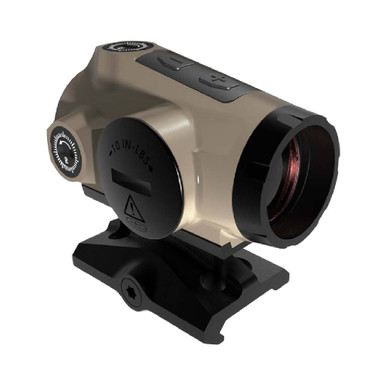
Sig Sauer Romeo5 Gen II Deals
Prices may change. May contain affiliate links.
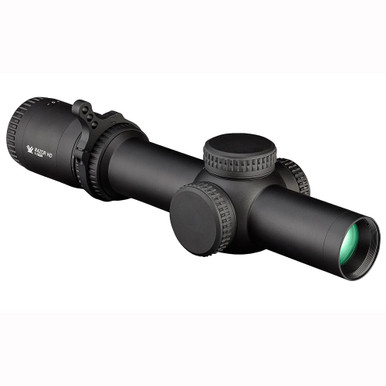
Vortex Razor HD Gen III 1-10x24 Deals
Prices may change. May contain affiliate links.
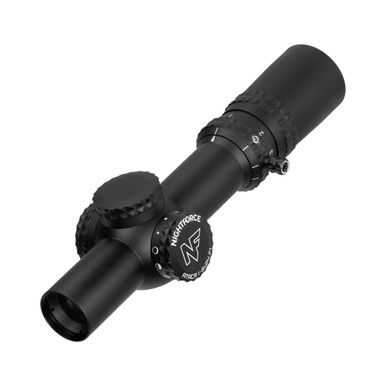
Nightforce ATACR 1-8x24 F1 Deals
Prices may change. May contain affiliate links.
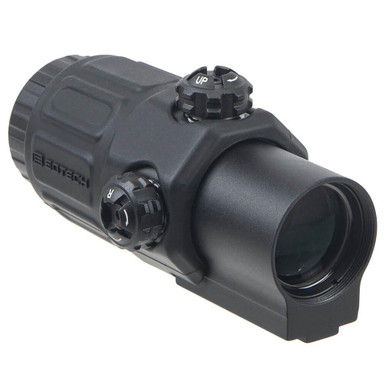
EOTECH G33 magnifier Deals
Prices may change. May contain affiliate links.
Primary Arms SLx 1-6x24 Gen IV
May contain affiliate links.
Vortex Strike Eagle 1-6x
May contain affiliate links.
Holographic sights carry a premium. The EOTECH EXPS2 runs roughly $610 to $699 depending on the retailer, and the EXPS3 with night vision compatibility pushes into the $750 to $815+ range depending on the variant and source. Add a G33 magnifier for the classic flip-to-side combo, and you're looking at $1,215 to $1,420 total.
LPVOs span the widest price range. The Primary Arms SLx 1-6x24 Gen IV enters around $350 and punches well above its weight with the ACSS reticle system. The Vortex Strike Eagle 1-6x sits in a similar bracket. Step up to the Vortex Razor HD Gen III 1-10x24 and you're looking at an MSRP of $3,999.99, with street prices typically ranging from roughly $2,449 to $2,799. The Nightforce ATACR 1-8x24 F1 hits $2,800. The glass quality, turret precision, and reticle sophistication scale with price, but the jump from a $350 LPVO to a $2,500 one doesn't represent a 7x improvement in practical performance for most shooters.
Battery life reality
Battery life claims vs real-world use: red dots win this category by an enormous margin. Leaving a quality red dot on continuously for years is a legitimate strategy. The Aimpoint PRO's 30,000-hour rating means roughly 3.4 years of always-on use. Holographic sights at 600 hours need to be turned off between sessions, and you need spare batteries accessible. LPVO illumination at 100 to 500 hours is a bonus feature, not a primary aiming system, since the etched reticle functions without power.
Weight and mounting
Red dots at 3 to 6 oz barely change your rifle's handling. Holographic sights at 11 oz start to matter. LPVOs at 14 to 24 oz (with mount) meaningfully shift the balance of your carbine forward and add over a pound to the total package. For a rifle you carry all day, that weight compounds. For a rifle that lives in a safe and comes out for range days, it's less relevant.

Mount quality matters more with LPVOs than with red dots. A $30 mount on a red dot will probably hold zero. A $30 mount on an LPVO will not. Budget for a proper mount when you're pricing an LPVO setup.
Common mistakes and troubleshooting
Buying an LPVO and never training at 1x is the most common waste of money. If you only shoot at the range from a bench at 100 yards on max magnification, you've bought an expensive fixed-power scope with a heavy housing. The LPVO's value comes from using the full magnification range under time pressure. Practice transitions between power settings.
Ignoring the eye box problem with LPVOs leads to frustration. If you mount an LPVO and can't quickly find a full sight picture when you shoulder the rifle, your stock length, cheek riser height, or mount position needs adjustment. The optic isn't broken; your setup is.
Choosing a holographic sight for battery life is backwards. If always-on capability and long battery life are priorities, a red dot is the correct choice. Holographic sights earn their place through reticle design, night vision compatibility, and astigmatism performance, not endurance.
Overspending on a red dot while underspending on an LPVO is a pattern worth avoiding. A $150 red dot from a reputable manufacturer will hold zero and last. A $150 LPVO will have poor glass, unreliable tracking, and a "1x" setting that isn't really 1x. The quality floor for functional LPVOs is higher than for red dots.

Skipping the magnifier option because it seems like a compromise is a mistake for some shooters. A red dot plus flip-to-side 3x magnifier gives you true 1x performance that no LPVO can match, plus enough magnification for most practical engagements inside 300 yards. The eye box with the magnifier engaged is tighter than a standalone LPVO, but the 1x experience without it is unbeatable.
Which to choose: scenario-based guidance
If your rifle is primarily for home defense or CQB inside 100 yards, choose a red dot. The Aimpoint Duty RDS or Aimpoint PRO are proven choices. The Sig Sauer Romeo5 Gen II works well on a budget. Lighter, faster, simpler, and years of battery life.
If you shoot competition stages that mix close and mid-range targets, choose an LPVO. The Primary Arms SLx 1-6x24 Gen IV with its ACSS reticle is the value benchmark. The Vortex Razor HD Gen III 1-10x is the performance benchmark. Add an offset micro red dot if you want to eliminate the 1x eye box penalty entirely.
If you need night vision compatibility and run NODs, the EOTECH EXPS3 with its 20 brightness settings is purpose-built for that role. Red dots with NV-compatible settings exist, but the EOTECH's reticle design and NV integration are the standard for a reason.
If you want one optic for a general-purpose carbine that does range days, occasional hunting, and sits ready for home defense, an LPVO in the 1-6x or 1-8x range covers the most ground. You give up some close-range speed compared to a red dot, but you gain capability at every distance past 100 yards.

If you have astigmatism and red dots look like smeared stars, try a holographic sight before giving up on unmagnified optics. The laser-generated hologram in an EOTECH often appears cleaner to astigmatic eyes than an LED-reflected red dot. Alternatively, a prism optic with an etched reticle sidesteps the issue entirely.
If budget is the primary constraint and you need to cover close and mid-range, the red dot plus magnifier combo gives you the most flexibility under $400 total. True 1x when you need speed, 3x when you need to reach out.
The final call
There's no single correct answer across these three optic types because they're solving different problems with different engineering. Red dots maximize speed and simplicity at the cost of distance capability. Holographic sights trade battery life and cost for reticle sophistication and NV compatibility. LPVOs trade weight and eye box forgiveness for the ability to do almost everything in a single optic. Mount whichever one matches your actual shooting requirements, zero it properly, and then run it hard enough to find its limits before you decide whether it's the right tool. The timer and the target don't care about spec sheets.