
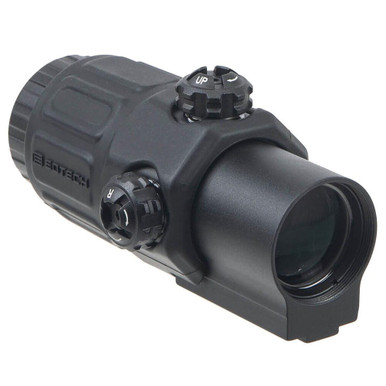
EOTECH and Unity Tactical just released a factory-assembled holographic hybrid sight that bundles the EXPS3-0, the G33 magnifier, the Unity FAST FTC OMNI Mount, and the UNITY FAST Optic Riser into a single SKU. It's called the HHS UNITY I, and the pitch is simple: stop buying these four components separately, stop worrying about compatibility, and get a pre-integrated system at a 2.26-inch centerline height that's ready to mount.
EOTECH G33 Deals
Prices may change. May contain affiliate links.

If you've been running an EXPS3 with a G33 behind it on a standard flip-to-side mount, or you've been eyeing the Unity FAST ecosystem but didn't want to piece it together, this is the product EOTECH built for you. The real question isn't whether these are good components individually. They've all been around. The question is whether the factory integration and the specific mount design justify the $1,599 MSRP, and what this system actually solves compared to the alternatives you could assemble yourself.
What the HHS UNITY I actually is
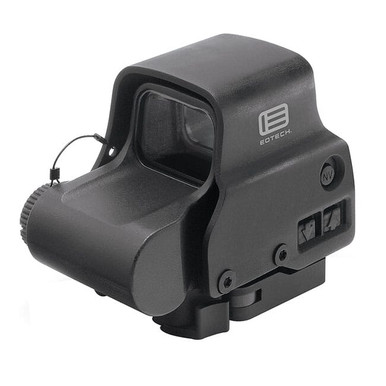
The HHS UNITY I pairs EOTECH's EXPS3-0 holographic weapon sight with the G33 3x magnifier, mounted using Unity Tactical's FAST FTC OMNI magnifier mount and FAST Optic Riser. All four components come in one box, pre-configured and ready to install on a MIL-STD-1913 rail. The system ships in either Black or Tan, with part numbers HHS1 FTCU-BLK and HHS1 FTCU-TAN respectively.
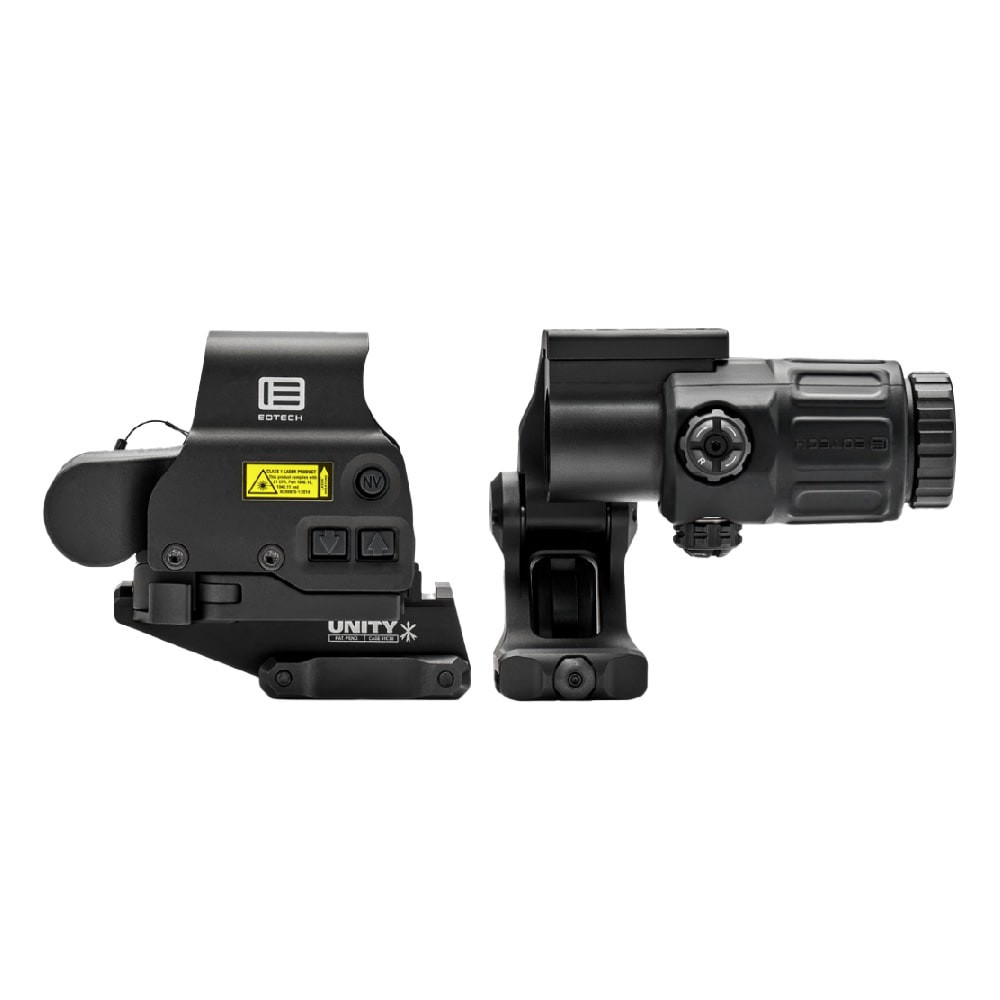
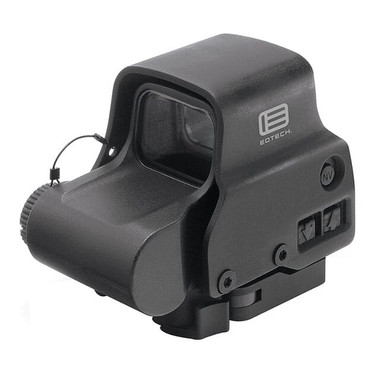
This isn't a new optic or a new magnifier. The EXPS3-0 is the same battle-proven holographic sight with its 68 MOA ring and 1 MOA center dot, side-button controls compatible with night vision devices and magnifiers, and the adjustable lockable quick-detach lever that's been standard on the EXPS3 for years. The G33 is the same 3x fixed magnifier with 2.2 inches of eye relief. What's new is the packaging: EOTECH is now selling these as a complete system with Unity's mounting hardware integrated from the factory, eliminating the assembly variables that come with buying components separately.
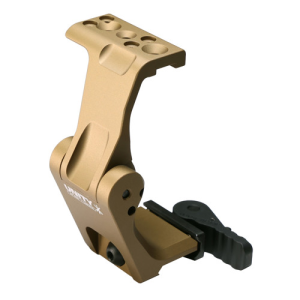
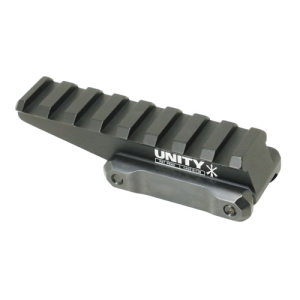
The mounting system is the centerpiece of this collaboration. Unity's FAST FTC OMNI mount uses a flip-to-center mechanism rather than the traditional flip-to-side design most shooters are familiar with. When you disengage the magnifier, it stows below the optical sight plane and within the footprint of the receiver, rather than hanging off the side of the gun. The FAST Optic Riser attaches to the EXPS3 using two clamp screws for more permanent positioning, while the FTC OMNI mount includes a low-profile integrated FAST QD lever for the magnifier.

Key specs at a glance
Night vision compatibility is built into the EXPS3 platform. The side-mounted buttons keep your hands clear of magnifiers and NV devices, and the 10 NV brightness settings are designed specifically for use with Gen 3 NVGs, with compatibility across Gen 2 and Gen 3 devices. The system is submersible to 33 feet, which puts it in line with what you'd expect from the EXPS3's existing waterproofing spec.
EOTECH EXPS3-0 Deals
Prices may change. May contain affiliate links.
What's actually new here
Nothing about the individual components has changed. The EXPS3-0 is the EXPS3-0. The G33 is the G33. The FTC OMNI mount is the same mount Unity has been selling separately. What EOTECH and Unity have done is formalize the combination into a single product with a single part number, a single warranty path, and factory-level quality control on the integration.
That matters more than it sounds like it does. Anyone who's assembled an HHS-style setup piecemeal knows the variables: making sure the riser height matches the magnifier mount height, confirming the FTC OMNI is torqued correctly to the magnifier, ensuring the optic riser is seated properly on the rail with consistent screw tension, and checking that the magnifier's optical axis aligns cleanly with the holographic sight's window when deployed. None of this is rocket science, but it's a stack of small decisions that can introduce problems if you're not paying attention.

The factory integration removes those variables. You get components that have been assembled and checked together before they ship. For a duty gun or a rifle that needs to work on demand without fiddling, that has real value.
The other thing that's functionally new is the market positioning. EOTECH has sold HHS kits before, the HHS I through HHS V and others, but those used EOTECH's own Switch-to-Side (STS) mounting system. This is the first time EOTECH has shipped a factory HHS with a third-party mount system, and specifically with Unity's flip-to-center design. That's a meaningful endorsement of the FTC mechanism over EOTECH's own flip-to-side hardware.
Unity FAST FTC OMNI Mount Deals
Prices may change. May contain affiliate links.
The flip-to-center difference
The FTC OMNI mount is the key differentiator from previous HHS kits and from most aftermarket magnifier setups. Traditional flip-to-side mounts swing the magnifier 90 degrees to one side of the receiver when stowed. This creates two problems: the magnifier hangs off the side of the gun where it can snag on gear, slings, barricades, and vehicle interiors, and depending on the mount, it can partially occlude your peripheral view or create an asymmetric weight distribution.
Unity's flip-to-center mechanism swings the magnifier forward and down, parking it below the sight plane and within the receiver's footprint. The magnifier ends up hanging upside down beneath the optic, which keeps it out of the way and prevents the adjustment knobs from contacting the receiver. A force-to-overcome detent holds the magnifier in both the deployed and stowed positions. Transitioning between them is a firm rotation using the magnifier body itself as the handle. No secondary levers, no fine motor skills required.

The practical benefit is a lower-profile stowed position with no side protrusion. If you're moving through doorways, transitioning in and out of vehicles, or working around barriers, the magnifier isn't catching on things. And when it's stowed, your holographic sight picture is completely unobstructed. No partial occlusion from a magnifier body sitting off to one side.
Who this is for
EOTECH positions the HHS UNITY I for shooters who need rapid transitions between close-quarters and distance engagements. That's the standard magnifier use case, but the specific configuration points toward a few user profiles.
Unity FAST Optic Riser Deals
Prices may change. May contain affiliate links.
The 2.26-inch centerline height is the giveaway. This isn't a traditional co-witness height. It's designed for a heads-up shooting posture that works better with helmets, plate carriers, night vision goggles, gas masks, and communications headsets. If you're shooting in full kit with a helmet-mounted NVG, the higher centerline means less neck craning to get behind the optic. EOTECH and Unity both explicitly call out compatibility with helmets, night vision, and communication gear as advantages of the 2.26-inch height.

That said, the 2.26-inch height has become increasingly popular even among shooters who don't run NODs. The more upright posture reduces neck strain during extended range sessions and promotes better situational awareness because your head isn't buried behind the gun. If you've been running a standard-height EXPS3 and found yourself wanting to try the taller mounting position, this system gets you there without sourcing a separate riser.
The factory integration also makes this attractive for anyone building a duty or patrol rifle who wants to minimize setup time and potential assembly errors. Buy one box, mount it, zero it. No compatibility research, no separate orders from three different companies, no wondering if you grabbed the right riser height.
Glass notes
The EXPS3-0's holographic reticle is a 68 MOA ring surrounding a 1 MOA center dot. The ring is fast for close-range acquisition and the center dot gives you precision at distance when the G33 is deployed. At 3x, the reticle subtensions hold true because it's a holographic projection, not a wire reticle that magnifies with the image. The 1 MOA dot stays 1 MOA at 3x. The ring stays 68 MOA. This is one of the genuine advantages of holographic technology over a red dot behind a magnifier, where the dot blooms to 6 MOA or more at 3x and can obscure small targets.

The G33's 2.2 inches of eye relief is tight. That's the reality of compact magnifiers. You need consistent cheek weld and head position to maintain a full, usable image through the magnifier. At the 2.26-inch centerline, your head position will be slightly different than at standard height, so expect a brief adjustment period if you're transitioning from a lower mount. The eye box tells the real story here, and it'll take some live fire to dial in your natural head position with the taller setup.
Battery life is rated at 1,000 continuous hours at brightness setting 12 at room temperature. That's the EXPS3's standard rating. In real-world use, if you're running higher brightness settings outdoors in bright conditions, expect less. If you're running NV settings at night, expect more. The CR123 battery is a single cell, which keeps the sight compact but means you should keep spares accessible.
Availability and price
The HHS UNITY I was announced in August 2026 with an MSRP of $1,599. It ships in two SKUs: HHS1 FTCU-BLK for Black and HHS1 FTCU-TAN for Tan. At least one retailer has listed the Tan version at $1,625, slightly above MSRP, though availability appears limited at launch with some retailers showing out-of-stock status.
EOTECH G43 Deals
Prices may change. May contain affiliate links.
EOTECH G45 Deals
Prices may change. May contain affiliate links.
Vortex VMX-3T Deals
Prices may change. May contain affiliate links.
Vortex Micro 3X Deals
Prices may change. May contain affiliate links.
Sig Sauer Juliet 3X Deals
Prices may change. May contain affiliate links.
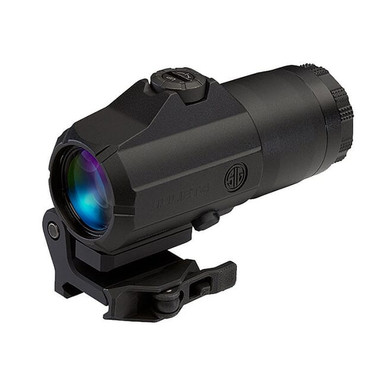
Sig Sauer Juliet 4X Deals
Prices may change. May contain affiliate links.
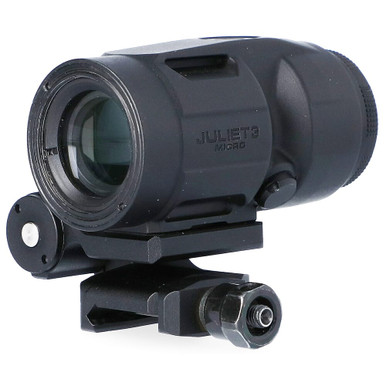
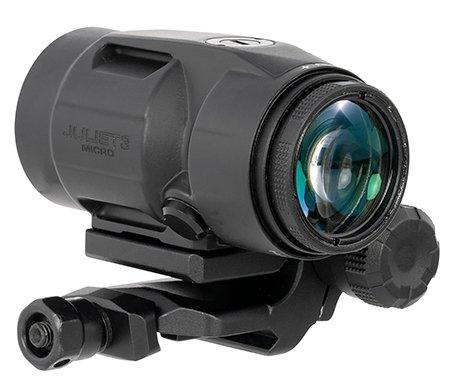
Sig Sauer Juliet Micro 3X Deals
Prices may change. May contain affiliate links.
To put the price in context, consider what the components cost individually. The EXPS3-0 typically runs around $670 at street price, discounted from an $815 MSRP. The G33 magnifier with its STS mount sells in the $550-575 range at street price. The Unity FAST FTC OMNI mount in its standalone form runs approximately $264, and the FAST Optic Riser adds more on top of that. Add those up and you're in a similar neighborhood to the $1,599 MSRP, possibly even above it depending on where you source each piece. The bundled system isn't necessarily saving you money on components, but it's saving you the time, effort, and risk of assembling them yourself.

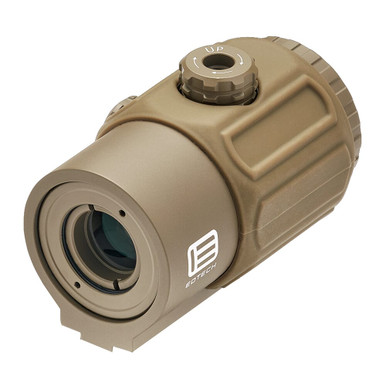
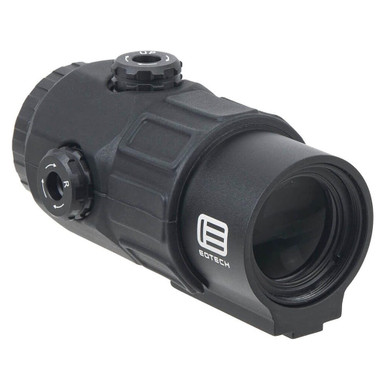
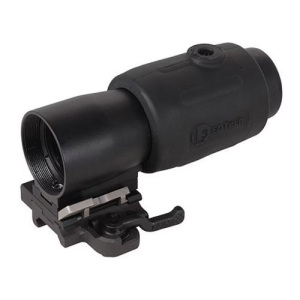
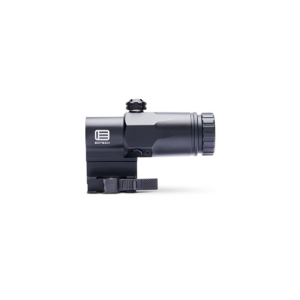
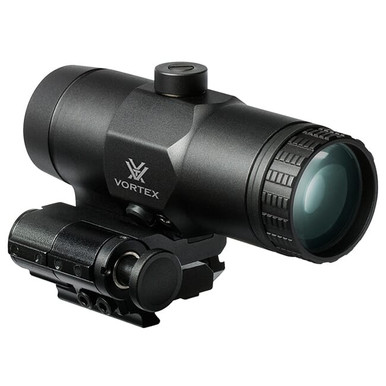
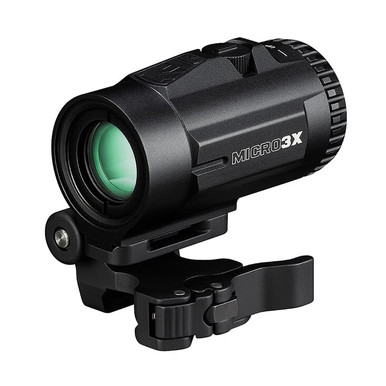
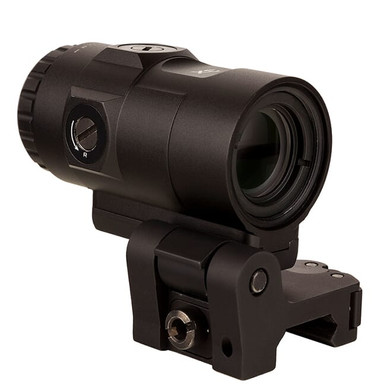
The FTC OMNI mount on its own is compatible with a wide range of magnifiers beyond just the G33. It works with all EOTECH magnifiers (G23, G30, G33, G43, G45), the Vortex VMX-3T and Micro 3X, the Trijicon 3X MAG-C, and Sig Sauer Juliet 3X, 4X, and Micro 3X. If you already own the OMNI mount and want to swap magnifiers later, you have options. But the HHS UNITY I ships specifically with the G33.
How it compares to other setups
The most direct comparison is EOTECH's own existing HHS kits that use the standard STS (Switch-to-Side) mount. The HHS V, for example, pairs the EXPS3-4 with the G45 5x magnifier on a flip-to-side mount. It's a different magnification and a different reticle (the -4 has a different dot pattern), but the key mechanical difference is the mounting system. The STS mount swings the magnifier to the side. The FTC OMNI stows it below center. If snag-free stowage matters to your use case, the Unity mount is a clear upgrade.
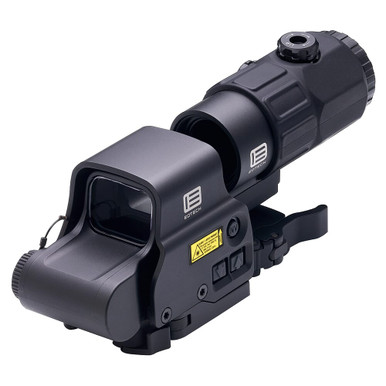
EOTECH HHS V Deals
Prices may change. May contain affiliate links.
EOTECH EXPS3-4 Deals
Prices may change. May contain affiliate links.
Another comparison worth considering is the Arisaka Magnifier Mount High, which positions magnifiers at 2.26", 1.93", and 1.54" optic centerline heights and uses a unique pivot system. Arisaka's mount is compatible with the G33, G43, and G45, and it allows stowage at 90 or 180 degrees. At 180 degrees, iron sights remain visible and unobstructed. The Arisaka takes a different approach to the same problem: it doesn't flip to center, but the 180-degree stow position keeps the magnifier within the receiver profile if you're willing to give up the rail space behind the optic. The Arisaka mount is priced at $195 without a magnifier, making it a less expensive mount option if you're building piecemeal and prefer the unique pivot mechanism.
Then there's the DIY approach: buying an EXPS3-0, a G33, and the FTC OMNI mount separately. You end up with the same components. The differences are assembly responsibility, potential for mismatched finishes between components from different production runs, and the lack of a single-system warranty path. For a lot of shooters, piecing it together is fine. For others, especially those buying for a department or unit, the single SKU simplifies procurement.
It's also worth noting that Amazon and other marketplaces are flooded with budget FTC-style magnifier mounts from brands like HATSEN, priced around $63-66, with other budget options from various brands running as low as $35-44. These are 2.26-inch centerline mounts with flip-to-center mechanisms that claim compatibility with the G33, G43, and G45. The price difference between a $65 clone and the $293 Unity FAST FTC OMNI is stark. The Unity mount is machined from 7075-T6 aluminum with Type III hardcoat anodizing and carries a lifetime warranty. The budget alternatives use varying materials and quality control standards. Price doesn't predict durability on its own, but the Unity mount has an established track record in hard-use environments that the clones haven't proven.
Common mistakes and things to watch
Magnifier alignment is the most common issue with any HHS-style setup, and it doesn't go away just because the system comes pre-assembled. After mounting the HHS UNITY I to your rail, verify that the G33 is centered behind the EXPS3 window when deployed. Even factory-assembled systems can shift slightly during shipping or after the first few deploy-stow cycles. If the magnifier's image appears off-center or you're seeing vignetting on one side, the magnifier's position in the FTC OMNI mount may need minor adjustment.

The 2.26-inch height changes your zero. If you're moving from a standard-height EXPS3 setup to this system, your existing zero will not transfer. The mechanical offset between bore and optical centerline is different, which affects point of impact at every distance. Zero the system fresh after mounting. Don't assume your old data applies.
The FAST Optic Riser uses two clamp screws for what EOTECH describes as more permanent attachment. That means it's not a QD setup for the holographic sight itself. The magnifier has the QD lever on its FTC OMNI mount, but the EXPS3 on its riser is intended to stay put. If you need to pull the entire system quickly, you'll be working the magnifier's QD and the EXPS3's own quick-detach lever separately. Plan your removal sequence accordingly.
Eye relief at 2.2 inches on the G33 is unforgiving. If your stock length of pull isn't dialed in for the 2.26-inch centerline height, you'll fight the eye box every time you engage the magnifier. Adjust your stock before you zero. A quarter inch of LOP change can make the difference between a full sight picture and a tunneled, shadowed mess.
Battery life of 1,000 hours sounds generous until you realize that's at setting 12 out of 20 daylight settings, at room temperature. Cold weather reduces CR123 output. Higher brightness settings drain faster. If you're running this in a duty context, establish a battery change schedule based on your actual brightness setting and operating environment, not the nominal spec.
Range notes
The transition from 1x holographic to 3x magnified is the whole point of this system, and the FTC mechanism changes the ergonomics of that transition compared to flip-to-side mounts. With a traditional STS mount, you push the magnifier laterally. With the FTC OMNI, you rotate it forward and down. The motion is different and takes some repetition to make automatic. Run dry transitions before live fire. Get the force-to-overcome detent into your muscle memory so you're not thinking about it under time pressure.
What you'll notice at the range: the stowed magnifier sitting below the sight plane is genuinely less intrusive than a magnifier hanging off to the side. Peripheral awareness through and around the holographic sight improves because there's no mass protruding laterally. This is most noticeable during close-range drills where you're moving between targets quickly and your eyes are processing the space around the reticle, not just through it.
At distance with the G33 engaged, the 68 MOA ring frames targets naturally at 100 yards and the 1 MOA dot allows for precise holds. The holographic reticle doesn't degrade through the magnifier the way a red dot's apparent size blooms. That's not new information for anyone who's used an EOTECH behind a magnifier before, but it's worth restating because it's the core optical advantage of this platform over a red dot plus magnifier combination.
The 26.3-ounce total system weight is not light. That's over a pound and a half on the top of your rail. Compare that to a standalone EXPS3-0 at roughly 11 ounces and you're adding significant mass for the magnifier and mounting hardware. Weight forward of the receiver affects balance and handling, particularly during transitions and sustained holds. If weight is your primary concern, a magnifier setup may not be your best option regardless of manufacturer.
Open questions
No independent testing data exists yet for the HHS UNITY I as a complete system. The individual components have track records, but the specific combination hasn't been through the kind of long-term abuse testing that would confirm whether the factory assembly holds up better than a user-assembled version over thousands of rounds and hundreds of deploy-stow cycles. The force-to-overcome detent in the FTC OMNI mount is a wear item by nature. How it performs after 5,000 or 10,000 transitions in a factory-assembled unit versus a user-assembled one is an open question.
The operating temperature range of -40°F to 140°F covers extreme conditions on paper, but holographic sights have historically shown some reticle behavior changes at temperature extremes. Battery performance in cold weather is also a known variable with CR123 cells. If you're planning to run this system in genuinely cold environments, real-world battery life testing at your operating temperature would be worth doing before you depend on it.
There's also the question of whether EOTECH will expand this collaboration to include other magnifier options. The G43 is shorter and lighter than the G33, and the G45 gives you 5x magnification. A factory HHS UNITY kit with the G45 would be a different proposition entirely for shooters who want more reach. Whether those SKUs are coming is unknown, but the FTC OMNI mount already supports all EOTECH magnifiers, so the mechanical compatibility is there.
Finally, the $1,599 MSRP puts this system in direct competition with quality LPVOs in the 1-6x or 1-8x range. An LPVO gives you variable magnification through a single optical path with no transition mechanism to manage. The tradeoff is eye box sensitivity at 1x, weight distribution differences, and the speed penalty of dialing magnification versus flipping a magnifier. Neither approach is universally better. They solve the same problem differently, and your shooting context determines which solution fits.

What to do next
If you're buying the HHS UNITY I, mount it on a properly torqued rail, confirm the riser and FTC OMNI mount are seated without play, and zero the EXPS3 at your preferred distance with the magnifier disengaged. Then engage the magnifier and verify your zero holds at distance. Any shift between magnified and unmagnified zero indicates an alignment issue that needs correction before you trust the system.
Run at least 50 deploy-stow cycles before your first range session to break in the force-to-overcome detent and build familiarity with the rotation arc. Then run transitions under time on a shot timer: engage target at 10 yards with holographic only, deploy magnifier, engage target at 100 yards. The transition time is your benchmark. If it's slower than your current setup, figure out why before you commit to the system.
Mount it. Zero it. Then evaluate.