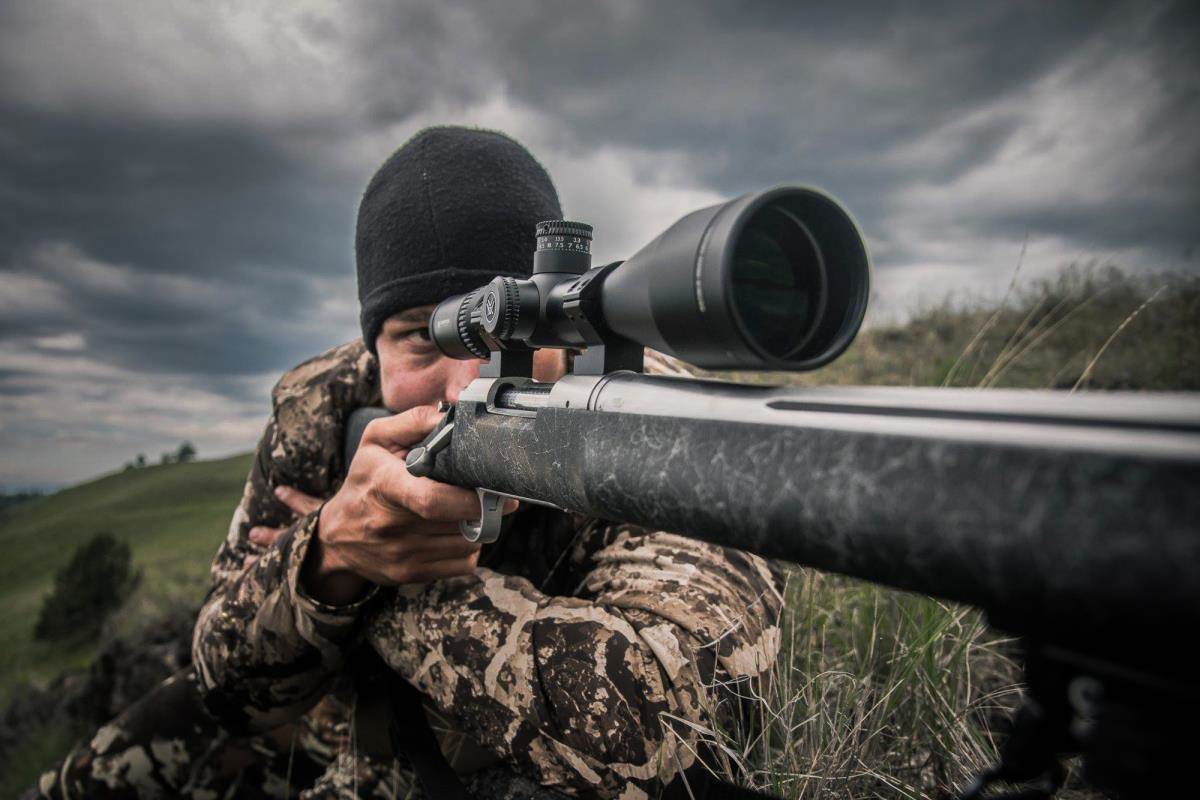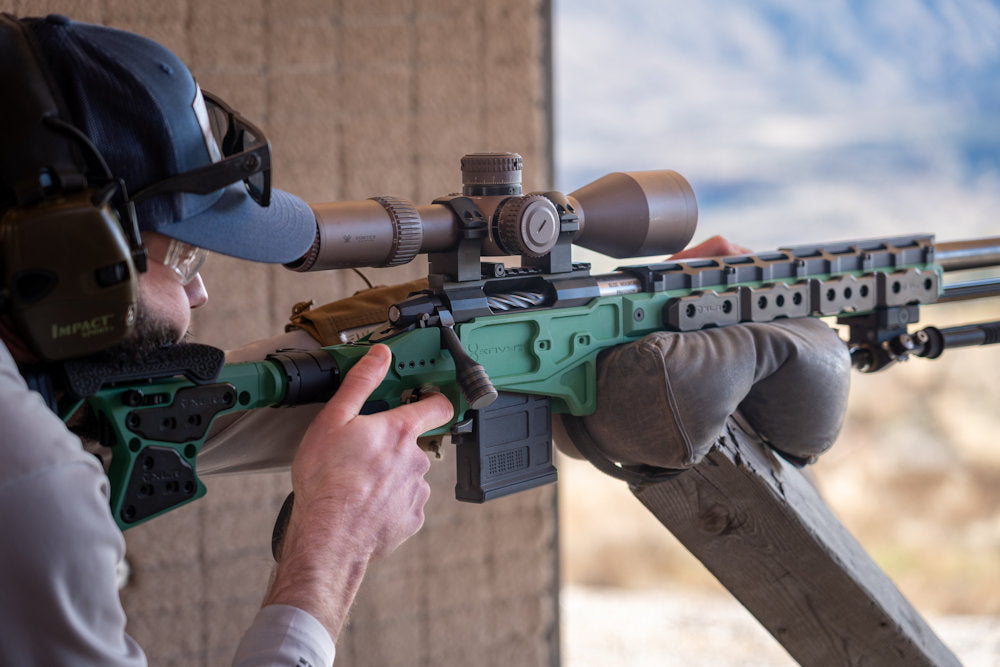
You're staring at two very different philosophies mounted on a Picatinny rail. On one side, a fixed 4x prism scope that hasn't fundamentally changed its design in decades. On the other, a variable-power optic that can go from 1x to 6x, 8x, or even 10x with a twist of the power ring. The LPVO has dominated the conversation for years now, and even the U.S. military is shifting toward variable optics. So why does the ACOG keep showing up in serious discussions about fighting rifles?
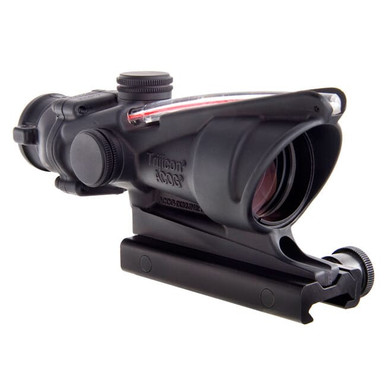
Trijicon ACOG TA31 4x32 Deals
Prices may change. May contain affiliate links.

The answer isn't nostalgia. It's that the ACOG solves a specific set of problems so well that no LPVO has fully replicated the solution, even with all the magnification flexibility in the world. But that doesn't mean the ACOG is the right call for everyone, and pretending otherwise would be dishonest. The real question isn't which optic is "better" in some abstract sense. It's which set of tradeoffs matches how you actually use your rifle.
This breakdown covers the specific areas where each design wins, where each falls short, and how to make the call based on your actual shooting rather than forum hype.
The decision you're really making
This isn't just a magnification question. If it were, the LPVO would win by default and we'd all move on. The real decision involves weight, complexity, durability, speed of use under stress, and how much you're willing to manage your optic versus just pointing it and shooting.
The ACOG, specifically the TA31 4x32 pattern that most people picture, is a fixed prism scope. One magnification setting. No power ring. No battery on the standard models. The reticle is etched into glass and illuminated by a combination of fiber optics (daylight) and tritium (darkness). You mount it, zero it, and it works for years; tritium has a half-life of 12.32 years, meaning it dims to half brightness at that point rather than stopping, and Trijicon warrants the tritium lamp to glow for 15 years. There's almost nothing to adjust, nothing to break internally, and nothing to forget to turn on.
May contain affiliate links.

An LPVO gives you variable magnification, typically 1-6x on the lower end and 1-8x or 1-10x on higher-end models. At 1x, you get something close to a red dot experience with both eyes open. Crank it to 6x or 8x, and you've got enough magnification for positive target identification and precision holds at extended range. The tradeoff is more glass, more moving parts, more weight, and a battery-powered illuminated reticle that needs management.

Both are legitimate tools. The question is which tool fits your job.
Quick comparison: ACOG 4x32 vs typical 1-6x LPVO
The numbers tell part of the story, but the experience of actually running each optic tells the rest. Weight creep on an LPVO is real once you add the mount, throw lever, and lens caps. The ACOG's short eye relief on the 4x32 models is a genuine complaint that doesn't show up on a spec sheet until you're behind the gun.
Ballistics of the design: what each optic actually does to your shooting
Magnification and target identification
The ACOG gives you 4x all the time. No more, no less. That's enough magnification to positively identify targets and make precise shots out to 500 meters with the BDC reticle, which is calibrated for standard military loads and has marks out to 800 meters. The Army's M150 Rifle Combat Optic, which is accurate out to 800 meters with its bullet drop compensator, was initially fielded to help sharpshooters engage longer-range targets, and it's been in service since the contract was announced in October 2007.
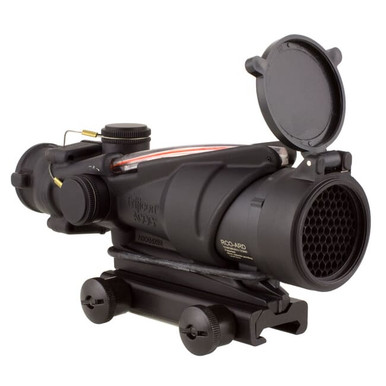
Army M150 Rifle Combat Optic Deals
Prices may change. May contain affiliate links.
Sig Sauer Direct View Optic
May contain affiliate links.

An LPVO at 6x gives you 50% more magnification at the top end, which matters for target ID at distance. But here's the part that gets overlooked: you have to be on 6x to get that advantage. If your power ring is set to 1x or 3x when you need to identify something at 400 yards, you're fumbling for the throw lever while the guy with the ACOG is already reading the situation at 4x. The "what power am I on?" problem is not theoretical. Under stress, with gloves, in awkward shooting positions, managing a power ring adds a step that the ACOG eliminates entirely.
The Army's recent contract with Sig Sauer for a Direct View Optic specifically cited the desire for variable power magnification that combines close-quarter capability with the ability to detect, recognize, identify, and precisely engage targets at extended ranges. Task & Purpose reported the DVO's capability at up to 600 meters. That's a real operational need. But it's worth noting that the military is solving a problem that exists because they were previously issuing two separate optics: the RCO for 500-meter targets and the Close Combat Optic for 300-meter targets. The LPVO consolidates two roles. Whether you need both roles consolidated depends entirely on your use case.
Close-quarters performance
This is where the LPVO has its clearest advantage. A true 1x setting with an illuminated dot gives you something that functions like a red dot sight: both eyes open, fast target acquisition, minimal parallax. The best LPVOs from Nightforce, Vortex, and Primary Arms deliver genuinely usable 1x performance that approaches a dedicated red dot.
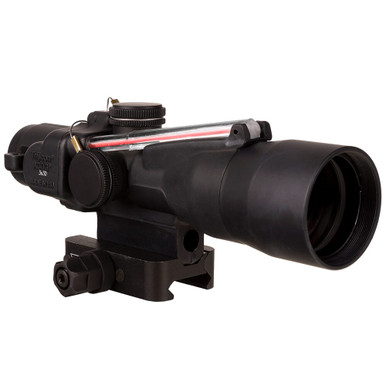
Trijicon ACOG TA33 3x30 Deals
Prices may change. May contain affiliate links.
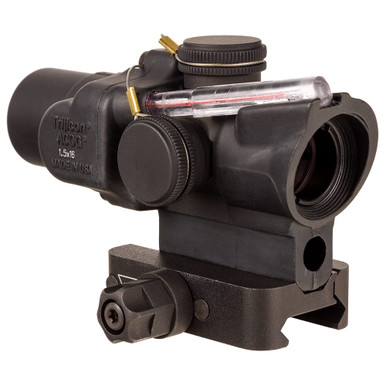
Trijicon ACOG TA44 1.5x16 Deals
Prices may change. May contain affiliate links.
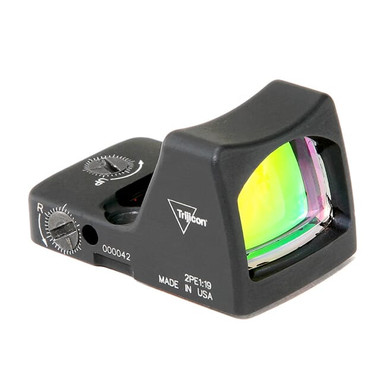
Trijicon RMR Type 2 Deals
Prices may change. May contain affiliate links.
The ACOG at 4x is not a CQB optic. Trijicon's answer to this is the Bindon Aiming Concept, where you shoot with both eyes open and the brain dynamically switches between the unmagnified image from the non-dominant eye during movement and the magnified image from the dominant eye once the weapon steadies on target. It works, but it requires practice and it's not as intuitive as a true 1x red dot experience. The TA33 3x30 with a piggyback RMR is Trijicon's hardware solution: a fixed prism for distance work with a miniature red dot on top for close-range speed. The TA44 1.5x16 is another approach, giving you the widest field of view of any ACOG model with enough magnification to be useful but low enough to be fast.

The honest assessment: if your primary concern is CQB performance with magnification available when needed, the LPVO wins that specific fight. If you mostly need 4x and can train around the close-range limitation using the Bindon concept or a piggyback dot, the ACOG handles it.
Eye box and forgiveness
The eye box tells the real story about how an optic performs when you're not in a perfect shooting position. The ACOG TA31's eye relief sits around 1.5 inches, which is shorter than most shooters prefer. Get your head position wrong and you'll see scope shadow or lose the image entirely. The TA11 3.5x35 is specifically noted for having a friendlier eye box, which is one reason it remains popular despite the slightly lower magnification.
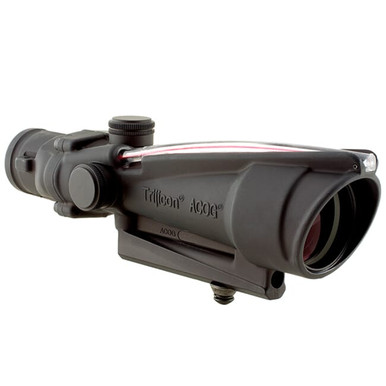
Trijicon ACOG TA11 3.5x35 Deals
Prices may change. May contain affiliate links.

LPVOs have their own eye box challenges, particularly at maximum magnification. At 6x or 8x, the eye box tightens and scope shadow becomes an issue, especially in unconventional shooting positions. At 1x, the eye box is typically generous. The problem is that eye box quality varies enormously across the LPVO market. A Nightforce ATACR 1-8x at $2,800 will have a dramatically better eye box than a budget 1-6x at $400. Price doesn't always predict performance, but with LPVOs, the eye box is one area where spending more genuinely buys you something.
On paper vs under recoil, the ACOG's fixed prism design means the eye box doesn't change. You learn one head position and it stays consistent. With an LPVO, your eye box shifts as you change magnification, which means your cheek weld and head position need to adapt. This is a learned skill, and it's one more thing to manage under stress.
Glass notes: what you'll actually notice
The ACOG's glass quality is genuinely excellent. Multi-coated lenses in a fixed prism design tend to produce a bright, clear image because there are fewer glass elements for light to pass through compared to a variable-power scope. In low light, the difference shows. The fiber optic strip on top of the TA31 gathers ambient light to illuminate the reticle during the day, and the system self-regulates brightness based on available light. That self-regulation is mostly a strength, but it has a quirk: in very bright conditions with the fiber optic strip exposed to direct sunlight, the reticle can become extremely bright and wash out. Conversely, in deep shade, it can dim more than you'd like.
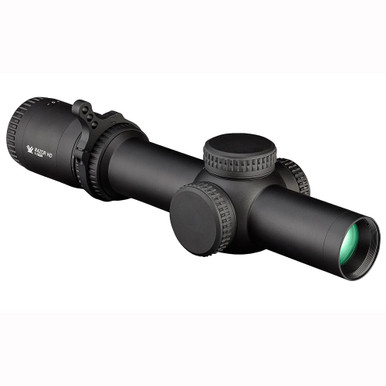
Vortex Razor HD Gen III 1-10x24 Deals
Prices may change. May contain affiliate links.

LPVOs with illuminated reticles give you manual brightness control, which means you can dial the dot to match conditions. The best LPVOs, like the Vortex Razor HD Gen III 1-10x or the Nightforce ATACR 1-8x, deliver glass quality that competes with or exceeds the ACOG. But those are $1,900-$3,100 optics. At the $400-$800 LPVO price point, the glass quality gap compared to an ACOG is noticeable, particularly in edge-to-edge clarity and chromatic aberration.
The reticle is the interface. Everything else is housing. The ACOG's BDC reticle, calibrated for specific cartridges, gives you holdover points without touching turrets. Most quality LPVOs also use BDC or mil/MOA tree reticles, but there's a focal plane consideration. Second focal plane LPVOs only have accurate BDC holds at one specific magnification (usually max power). First focal plane LPVOs maintain accurate holds at any magnification but can have reticles that appear too small at 1x or too thick at max power. The ACOG sidesteps this entirely because there's only one magnification setting, so the reticle is always correctly scaled.
Trijicon recently expanded the ACOG reticle lineup by adding an MRAD chevron tree reticle to four models: the 4x32 TA31, the 4x32 TA02, the 3.5x35 TA11, and the 3.5x35 TA110. This gives shooters who prefer MRAD-based holdovers an option beyond the traditional caliber-specific BDC patterns.
Use cases: where each optic earns its place
The duty rifle and hard-use builds
If your rifle lives in a vehicle, gets banged around in training, and needs to work every single time without babying, the ACOG remains one of the most rational choices available. The forged 7075-T6 aluminum housing and fixed prism design with minimal moving parts create a nearly indestructible sighting system. Trijicon states the ACOG is proven to withstand recoil from .22 LR to .50 BMG. There's a documented case from military testing where a manufacturer's rifle blew up during evaluation and the mounted ACOG was still functional despite two-thirds of the front lens being blown off.
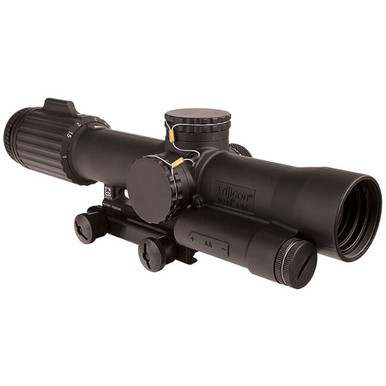
Trijicon VCOG 1-8x28 Deals
Prices may change. May contain affiliate links.

No battery means no dead battery at the worst possible moment. No power ring means no wrong magnification setting. No electronics means nothing to short out in rain, dust, or salt spray. For a fighting optic that you don't constantly manage, the ACOG's set-and-forget simplicity is hard to beat.
That said, the military itself is evolving past fixed 4x for general issue. The Marines contracted Trijicon for 19,000 VCOG 1-8x28 variable optics as the Squad Common Optic, and the Army awarded Sig Sauer a contract for a Direct View Optic with 1x to 6x variable magnification. The institutional shift toward LPVOs reflects a real operational need for versatility across engagement distances. But it also reflects the resources of military organizations that can train soldiers extensively on more complex optics and replace them when they break.
Home defense and property defense
For a rifle that sits in a safe and needs to work immediately when grabbed, the ACOG's battery-free illumination and zero-maintenance design have obvious appeal. But 4x magnification inside a house is a lot. The Bindon Aiming Concept helps, but a red dot or an LPVO at 1x is genuinely faster for room-distance engagements. If your defensive scenario includes both indoor and outdoor distances, such as rural property defense, the ACOG's 4x becomes more practical.
Competition
Most competitive shooting formats favor the LPVO's flexibility. Being able to dial down to 1x for close targets and up to 6x or higher for distant stages gives a measurable advantage in formats that test across multiple distances. The ACOG is a fixed solution in a variable problem set. That said, some shooters run fixed prism optics in competition specifically because the simplicity reduces cognitive load. One less thing to think about between stages.

Hunting
A fixed 4x with a BDC reticle works fine for hunting at reasonable distances, and the ACOG's durability handles rough field conditions well. But most hunters benefit from variable magnification: low power for moving through brush, higher power for identifying game and making precise shots. An LPVO or a traditional variable hunting scope is the more practical choice for most hunting applications.
Logistics: cost, maintenance, and long-term ownership
Upfront cost
The Trijicon ACOG TA31 retails for $1,199-$1,815 depending on the specific variant. That puts it in the same price territory as mid-to-high-tier LPVOs. A Vortex Razor HD Gen III 1-10x24 has an MSRP of $3,999.99, though it can be found for around $2,499.99 at Primary Arms. A Primary Arms PLxC 1-8x sits at $999.99-$1,749.99, depending on whether you go SFP or FFP. A Trijicon Credo HX 1-8x28 goes for $2,006.00 at retail, though it may be found for less at other retailers. At the budget end, a Swampfox Arrowhead 1-6x has an MSRP of $395.

Primary Arms PLxC 1-8x24 RDB Deals
Prices may change. May contain affiliate links.
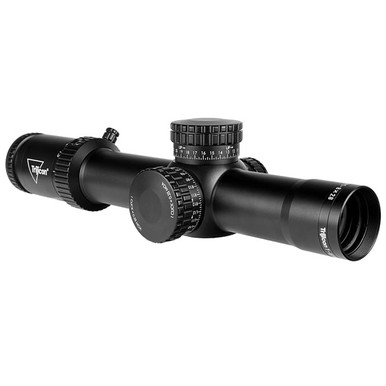
Trijicon Credo HX 1-8x28 Deals
Prices may change. May contain affiliate links.
Swampfox Arrowhead 1-6x24 SFP
May contain affiliate links.
Cosmic Tactical Saturn 4x32
May contain affiliate links.
The $300 question: can you get comparable fixed 4x prism performance for less than an ACOG? Yes. Alternatives like the Cosmic Tactical Saturn 4x32 at $299.95 deliver the same basic concept: fixed 4x, etched BDC reticle, fiber optic illumination, nitrogen-purged housing. The price gap between a Saturn and a TA31 reflects tritium illumination, the forged 7075-T6 housing, military pedigree, and the costs Trijicon absorbs from military contracts, government compliance documentation, and tritium handling licenses. Whether those extras justify a roughly $900 premium depends on whether you need genuine military-grade durability or just want a solid fixed prism scope.
Long-term maintenance
The ACOG's tritium has a half-life of roughly 12 years. After that, the low-light reticle illumination dims significantly and eventually requires refurbishment. Over a 15-year ownership period, factoring in tritium refurbishment, total ACOG TA31 cost runs $1,400-$2,100. The LED-powered ACOG models (like the TA02) sidestep this by using a single AA battery with user-adjustable brightness, but they trade the battery-free advantage.
LPVOs run on batteries, typically CR2032 or CR123A depending on the model. Battery life varies from hundreds to thousands of hours depending on brightness setting. The ongoing cost is trivial, but the maintenance requirement exists. You need to check batteries, carry spares, and remember to turn the illumination off. The etched reticle on most quality LPVOs remains visible without battery power, so a dead battery doesn't leave you without an aiming point, just without illumination.
Barrel life and ammunition considerations
This isn't directly an optic question, but it affects the total system. The ACOG's BDC reticle is calibrated for specific loads, typically M855 or M193 for 5.56 NATO variants. If you change ammunition, your BDC holds shift. An LPVO with a mil or MOA reticle tree gives you more flexibility across different loads because you're working with angular measurements rather than cartridge-specific drop predictions. If you reload or switch between different factory loads frequently, the LPVO's reticle system is more adaptable.
Common mistakes and misconceptions
The ACOG's eye relief issue gets exaggerated, but it's real. The 4x32 TA31 has short eye relief that some shooters genuinely hate. Before committing $1,200+, try to get behind one on a mounted rifle. The TA11 3.5x35 has a friendlier eye box and is worth considering if the TA31's eye relief is a dealbreaker.
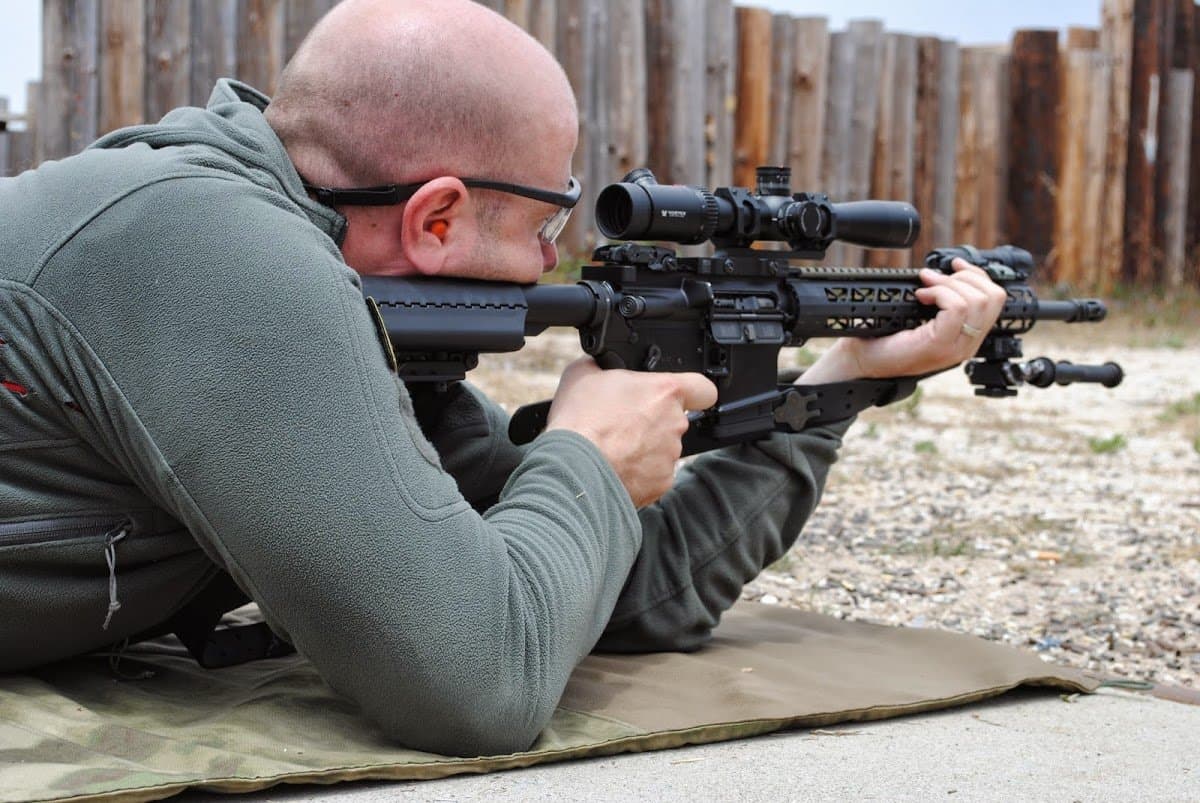
Treating LPVO 1x like a red dot is a mistake. Even the best LPVOs don't perfectly replicate a true red dot's speed and eye box forgiveness at 1x. The Nightforce ATACR 1-8x comes close, but it costs $2,900+. Budget LPVOs at 1x often have noticeable fisheye distortion, scope shadow at the edges, and parallax that a $200 red dot doesn't have. If CQB speed is your primary need, a dedicated red dot with a magnifier will outperform most LPVOs at 1x.
Weight comparisons need to include the full system. An ACOG with mount might run 16-17 ounces. An LPVO with mount, throw lever, and lens caps can easily hit 25-30 ounces. That's a meaningful difference on a rifle you carry all day. The LPVO weight penalty is the single most underappreciated factor in this comparison.
Assuming more magnification is always better ignores the cost of complexity. Every feature on an LPVO is a potential failure point or a decision that must be made under stress. The power ring is the most obvious example, but turret management, parallax adjustment on higher-end models, and battery status all add cognitive load. The ACOG's simplicity isn't a limitation of old technology. It's a deliberate design choice that eliminates variables.
Forgetting about the piggyback option sells the ACOG short. The TA31 or TA33 with a Trijicon RMR mounted on top gives you a two-sight solution: fixed magnification for distance and a true red dot for close range. Special Operations Forces started doing this in Afghanistan and Iraq by field-modifying their ACOGs with small red dots on top, and Trijicon eventually made it a factory option. This setup weighs less than most LPVOs and gives you dedicated close-range and distance capability without the compromises inherent in a variable-power design.

Specific optics worth evaluating
Fixed prism / ACOG category
The Trijicon TA31 4x32 is the benchmark. Forged 7075-T6 housing, dual illumination (fiber optic + tritium), BDC reticle calibrated for 5.56 NATO. The classic service-carbine answer that's been in continuous military service since the Marines adopted it between 2004 and 2005. Short eye relief is the main complaint.

Trijicon ACOG TA02 LED 4x32 Deals
Prices may change. May contain affiliate links.
The Trijicon TA11 3.5x35 trades a half-power of magnification for a friendlier eye box and wider field of view. If you prioritize comfort behind the gun over that last bit of magnification, this is the smarter ACOG choice.
The Trijicon TA02 LED 4x32 keeps the ACOG's ruggedness but replaces the fiber optic/tritium system with an LED powered by a single AA battery. Six adjustable brightness settings and NV compatibility. You lose battery-free operation but gain manual brightness control.
The Trijicon TA33 3x30 with piggyback RMR gives you the two-sight solution without LPVO weight. 3x fixed magnification for distance, RMR on top for close range. Popular with shooters who want dedicated capability at both ends rather than a compromise in the middle.
LPVO category
The Nightforce ATACR 1-8x24 F1 is the benchmark for duty-grade LPVOs. First focal plane, true 1x performance with red-dot-level brightness, ED glass, and Nightforce durability. 21 ounces. $2,800-$2,900.
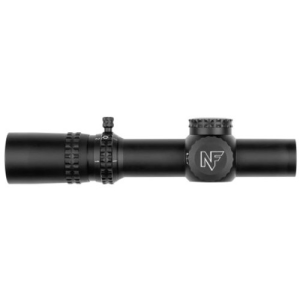
Nightforce ATACR 1-8x24 F1 Deals
Prices may change. May contain affiliate links.

The Vortex Razor HD Gen III 1-10x24 gives you the most magnification range in a proven package. First focal plane, 21.5 ounces, $2,000-$2,200 street price. The 10x top end provides significantly more capability at distance than a 1-6x, but the weight and size reflect that.
The Primary Arms PLxC 1-8x24 RDB hits a strong performance-to-value point at $1,749.99 with a weight of 16.95 ounces, making it one of the lighter 1-8x options available. First focal plane with Primary Arms' ACSS reticle system.
The Swampfox Arrowhead 1-6x24 SFP enters at $349 with push/pull locking turrets, multiple reticle options, and CR2032 battery illumination. At 20.36 ounces and 10.67 inches, it's a budget entry that punches above its price point for shooters who want LPVO flexibility without a four-figure investment.
Which to choose: scenario-based guidance
If your rifle is a fighting tool that gets thrown in vehicles, dragged through training, and needs to work with zero maintenance, buy the ACOG TA31 or TA11. The set-and-forget simplicity, battery-free illumination, and near-indestructible housing justify the price for this specific role. The military is moving toward LPVOs, but they also have logistics chains that replace broken optics. You probably don't.
If you need true 1x performance for close-quarters work and variable magnification for distance, and you're willing to accept the weight and complexity tradeoffs, buy an LPVO. The Nightforce ATACR 1-8x if budget is no constraint, the Vortex Razor Gen III or Primary Arms PLxC for strong value at the $1,750-$2,100 range, or the Swampfox Arrowhead if you're working within a tighter budget.
If you want the ACOG concept without the ACOG price, the Cosmic Tactical Saturn 4x32 at $299.95 delivers fixed 4x prism performance with an etched BDC reticle and fiber optic illumination. You're giving up the tritium low-light capability, the forged 7075-T6 housing, and the military pedigree. For range use, hunting, competition, and home defense, that tradeoff makes financial sense.
If you want both close-range speed and fixed magnification without LPVO weight, look at the TA33 3x30 with a piggyback RMR or the TA11 with an offset micro red dot. This two-sight approach gives you dedicated capability at both ends of the distance spectrum, weighs less than most LPVOs, and eliminates the power-ring management problem.
If you're building a competition gun that needs to cover multiple distances in a stage, the LPVO wins. Variable magnification is a measurable competitive advantage in formats that test across distance ranges.
If you have astigmatism, the etched reticle in any prism scope, ACOG or otherwise, will likely look cleaner than a projected red dot or holographic reticle. This alone can be a deciding factor.
The honest final call
The ACOG isn't still relevant because of nostalgia or because shooters are stuck in 2005. It's relevant because simplicity, durability, and reliability are features, not compromises. The fixed prism design eliminates variables that LPVOs introduce, and for specific use cases, eliminating those variables matters more than having a power ring.
But the LPVO is dominant for a reason. True 1x capability, variable magnification for target ID, and reticle systems that support precision at distance are genuine advantages that the ACOG can't match within a single optic. The Marines contracted 19,000 VCOGs. The Army is fielding a variable-power DVO. The institutional direction is clear.
Mount it. Zero it. Then evaluate. Whichever direction you go, run a box drill to verify tracking, shoot it from awkward positions to test the eye box under real conditions, and spend time in low light to see how the reticle actually performs when the sun drops. The spec sheet gets you to the short list. Range time makes the decision.