
Two years ago, spending under a grand on thermal meant accepting grainy, 160x120 resolution sensors that could barely distinguish a coyote from a fence post at 150 yards. That's not the case anymore. Chinese sensor manufacturers have driven 384x288 and even 640x480 cores down to price points that would've seemed absurd in 2023, and the major thermal brands are in a genuine race to undercut each other. The result is a sub-$1000 thermal market that actually functions for hunting, property management, and predator control rather than just serving as an expensive novelty.
But cheaper sensors don't automatically mean better optics. The flood of budget thermal has also brought a wave of mediocre products with impressive spec sheets and disappointing real-world performance. Refresh rate numbers get inflated, detection range claims assume laboratory conditions, and "12-micron sensor" has become a marketing buzzword divorced from what it actually means for image quality. The question isn't whether you can buy thermal for under $1000. You absolutely can. The question is which ones are worth the money and which ones will leave you squinting at a blob that might be a hog or might be a warm rock.
This piece covers what the 2026 price war has actually delivered in terms of usable thermal optics, what specs matter versus what's noise, and which specific units deserve your money depending on whether you need a handheld monocular, a clip-on, or a weapon-mounted scope.
The sensor specs that actually matter
Every thermal optic listing leads with sensor resolution, pixel pitch, and NETD. Here's what those numbers mean in practice and which ones you should weight heavily.
Sensor resolution is the pixel count of the thermal detector. At this price point, you'll mostly see 256x192, 384x288, and occasionally 640x512. The jump from 256 to 384 is significant and noticeable. You get meaningfully better target identification at distance, and the image looks less like a thermal smear. The jump from 384 to 640 matters too, but at sub-$1000 prices, a 640 core usually means sacrifices elsewhere: smaller objective lens, lower refresh rate, or cheaper housing. A well-implemented 384 sensor with a quality germanium lens will often outperform a cheap 640 unit in real conditions.
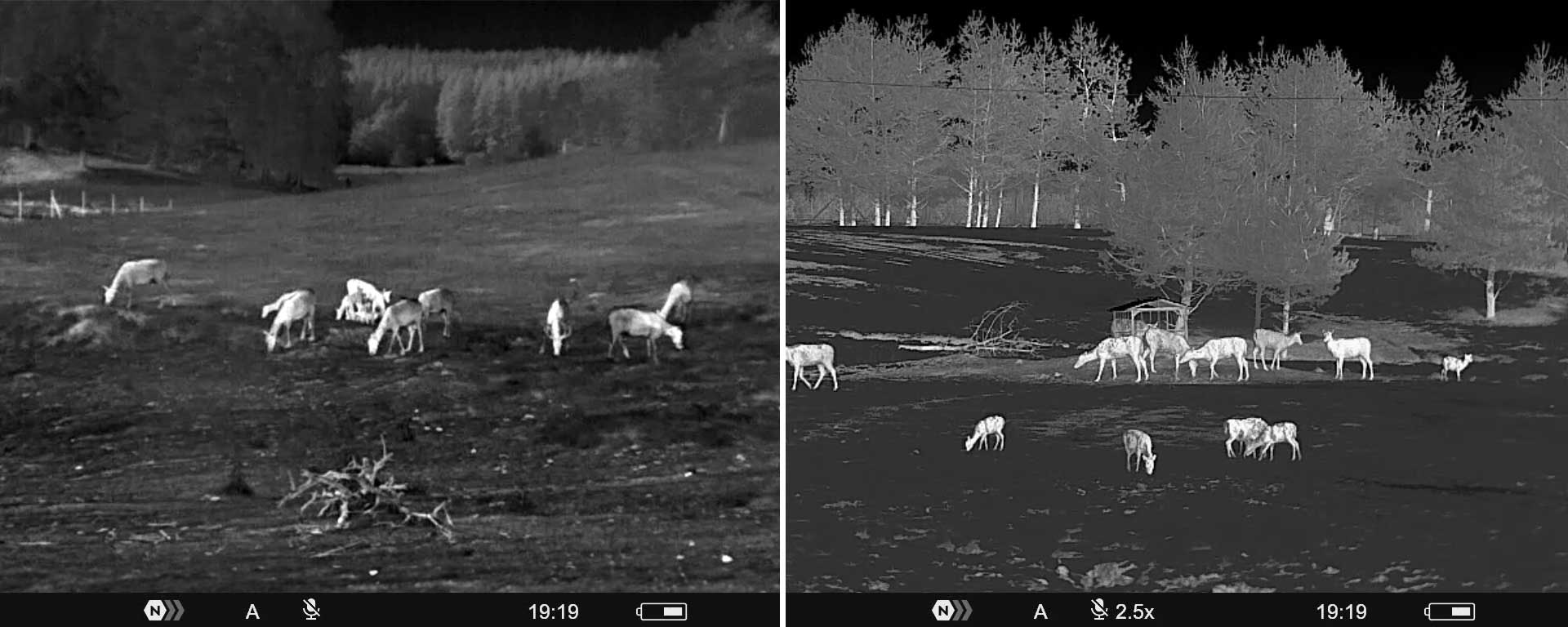
Pixel pitch, measured in microns, describes the physical size of each detector element. Smaller pitch (12 micron) means more pixels can fit on a given sensor size, which generally translates to a more compact optic. Larger pitch (17 micron) sensors tend to have better sensitivity per pixel because each element captures more thermal energy. The 12-micron marketing push has been aggressive, but 17-micron sensors aren't obsolete. In cold weather or when trying to detect subtle temperature differences, that extra sensitivity per pixel helps. Don't let anyone tell you 12 micron is automatically superior.
NETD (Noise Equivalent Temperature Difference) measures how small a temperature difference the sensor can detect, expressed in millikelvins. Lower is better. Under 40mK is solid. Under 25mK is excellent. This spec matters more than most buyers realize because it directly affects how well you can distinguish a living target from its background when ambient temperatures are close. A 50mK sensor on a warm summer evening when ground temps and animal temps are similar will show you a much muddier image than a 25mK sensor in the same conditions.
Refresh rate is listed as 50Hz on most units at this price point. Some budget models drop to 25Hz. The difference shows up when you're scanning or tracking a moving animal. At 25Hz, the image stutters and lags noticeably. At 50Hz, it feels smooth enough for real-time use. Don't buy a 25Hz thermal for weapon-mounted use. For handheld scouting, it's tolerable but not ideal.
The spec that matters here but rarely gets listed: the quality of the germanium objective lens. Germanium is what makes thermal lenses expensive, and budget optics often cut corners with smaller or lower-quality elements. A 35mm germanium objective will gather substantially more thermal energy than a 19mm, which directly affects detection range and image clarity regardless of sensor resolution. Bigger objective equals better performance, full stop, but also a bigger and heavier unit.
What $500 to $700 buys in handheld monoculars
The handheld thermal monocular market under $1000 has gotten genuinely competitive. These aren't weapon-mounted, so recoil resistance isn't the primary concern. What matters is image quality, ergonomics, battery life, and whether you can actually identify what you're looking at before deciding to stalk closer or set up a shot with a separate weapon optic.
Pixfra Ranger R635E
May contain affiliate links.
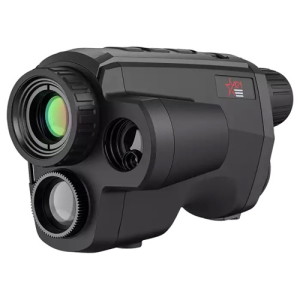
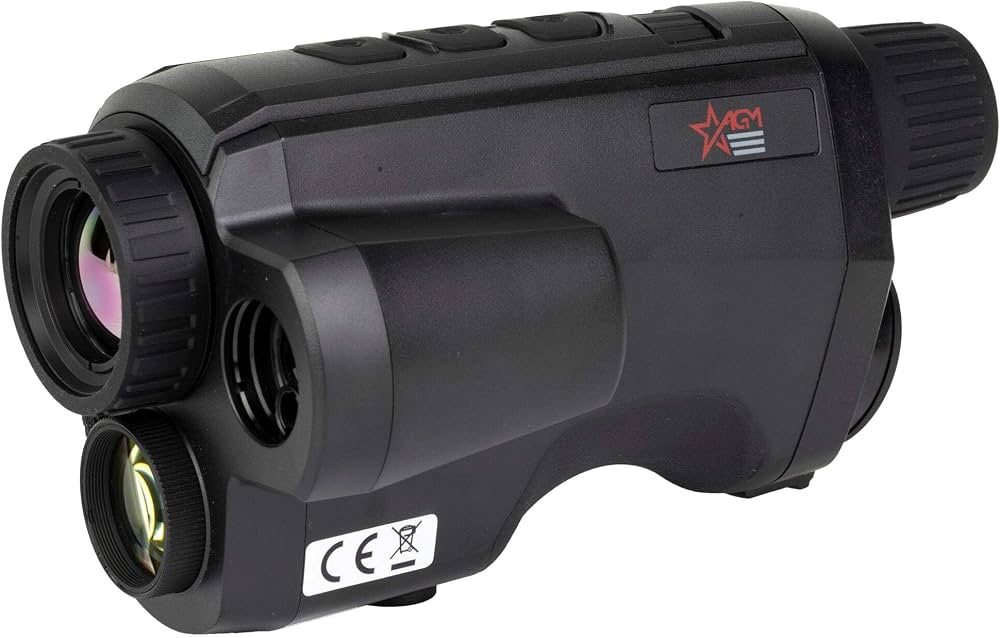
The AGM Fuzion TM25-384 sits in this range with a 384x288 sensor, 12-micron pixel pitch, and a 25mm objective lens. It runs at 50Hz and includes both thermal and visible-light cameras with image fusion capability. The fusion mode overlays thermal signatures on a visible-light image, which helps with orientation in complex terrain. Detection range on a human-sized target is claimed around 1300 yards, but realistic identification range where you can tell species and posture is closer to 300-400 yards. That's typical for a 25mm objective at this resolution. The form factor is compact enough for a jacket pocket, and battery life runs around 5-7 hours on the internal rechargeable cell.
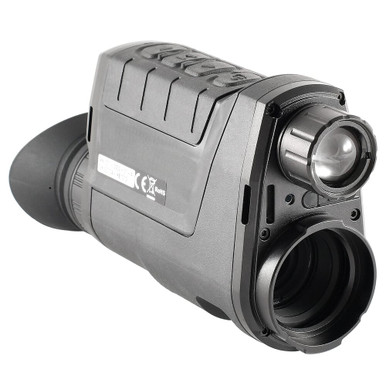
InfiRay has pushed hard into this space with the Cabin series. The Cabin CBL25 packs a 384x288 sensor with a 25mm lens and 12-micron pitch. What sets InfiRay apart at this price point is their image processing algorithms, which tend to produce cleaner, higher-contrast images than competitors using the same underlying sensor hardware. The onboard recording capability is useful for documenting hunts, and the unit accepts external battery packs for extended sessions. The user interface is straightforward with physical buttons rather than a touchscreen, which matters when you're wearing gloves at 2 AM.
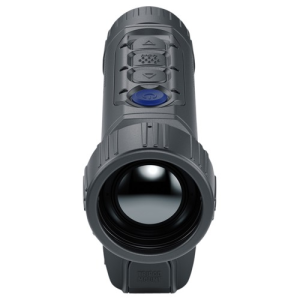
Pulsar's Axion 2 XQ35 remains a strong contender despite being on the market for a while now. It runs a 384x288 sensor with a 17-micron pitch and a 35mm objective. That larger objective lens makes a real difference in detection range and image brightness compared to the 25mm units. Pulsar's image processing is mature and reliable, and the Stream Vision app integration works well for sharing your thermal view with a phone. The trade-off is size and weight; it's noticeably bulkier than the AGM or InfiRay pocket-sized units.
Pixfra has emerged as a legitimate budget player with the Ranger R635E. It runs a 640x512 sensor at 12 microns with a 35mm objective, which is a remarkable spec sheet for the price. The 640 resolution combined with the larger objective means genuine identification capability out past 400 yards. The catch is that Pixfra's image processing and build quality don't quite match Pulsar or InfiRay. The housing feels lighter, the buttons less tactile, and the image, while detailed, can appear noisier in challenging conditions. But for pure value per pixel, nothing else in this bracket competes.
Glass notes: handheld monoculars
The real-world difference between these units shows up in two scenarios. First, scanning open terrain at dusk when ground temps are still elevated. The units with better NETD specs (InfiRay and Pulsar tend to lead here) will show you animals against warm backgrounds more clearly. Second, trying to identify an animal in timber at 200 yards. This is where the 640 resolution of the Pixfra pulls ahead of the 384 units on pure detail, even if the image processing isn't as polished. Pick based on your primary use case: if you're scanning open fields for coyotes, prioritize NETD and lens size. If you're trying to spot hogs in thick brush at moderate range, resolution wins.
Weapon-mounted thermal scopes under $1000
This is where the price war gets interesting and where the stakes are higher. A thermal scope has to survive recoil, hold zero, and give you a usable image quickly enough to take an ethical shot. The bar is higher than for a handheld, and cutting corners has real consequences.
InfiRay Halo HL13
May contain affiliate links.
DNT Optics Hydra HS335
May contain affiliate links.
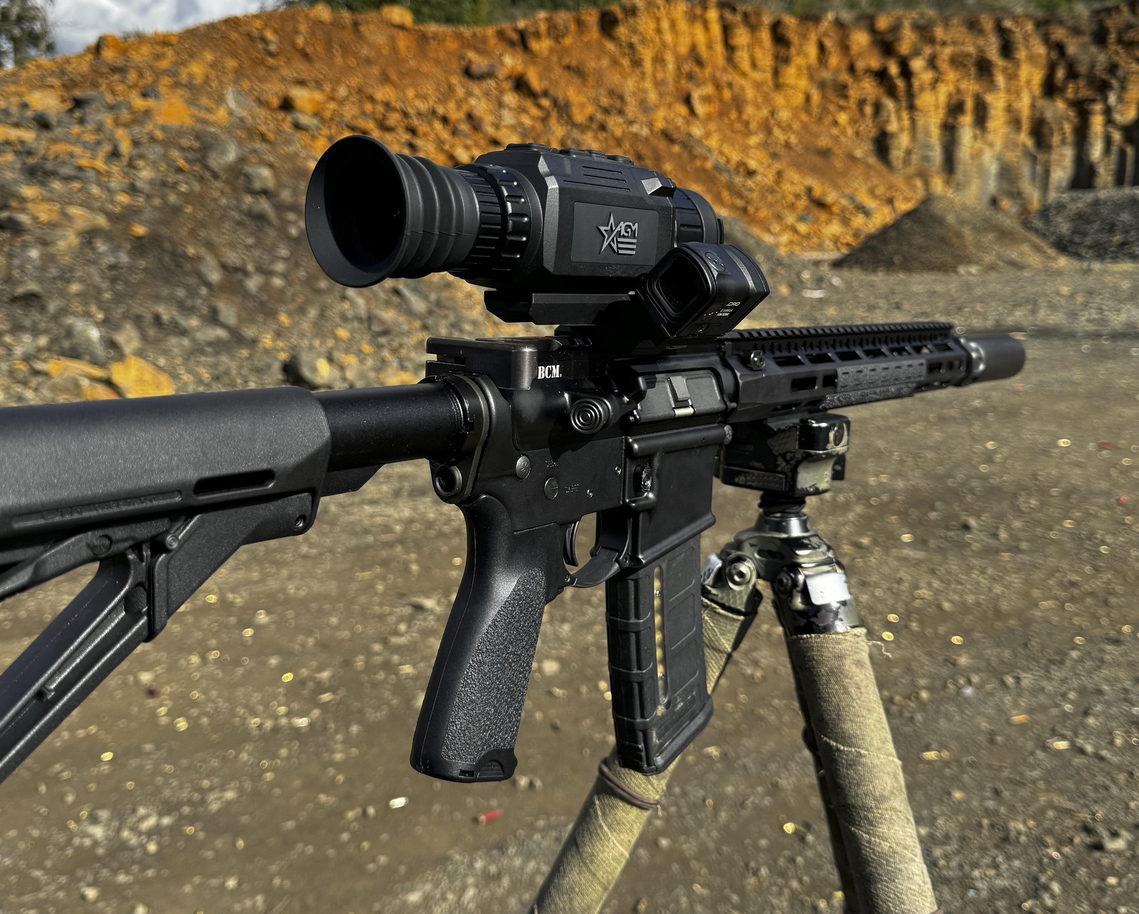
The AGM Rattler TS25-384 is one of the most commonly recommended budget thermal scopes. It runs a 384x288 sensor with a 25mm objective and 50Hz refresh rate. The housing is reasonably robust, and it holds zero on calibers up to .308 without issues. The onboard ballistic calculator is basic but functional. Where it falls short is eye relief consistency; the display can wash out slightly if your head position shifts, which happens under recoil. The 25mm objective also limits your effective identification range. Realistic shots on positively identified targets top out around 200-250 yards for coyote-sized animals.
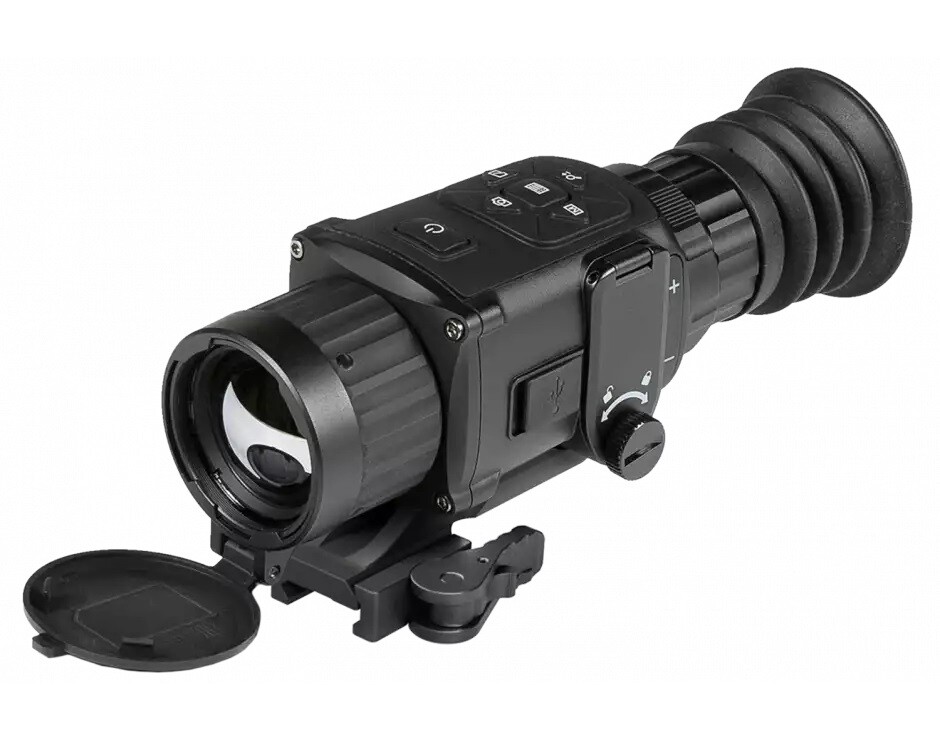
The AGM Rattler V2 TS35-384 steps up to a 35mm objective while keeping the same sensor. That extra 10mm of glass makes a meaningful difference in both detection range and image quality. You'll get usable identification out to 300-350 yards on coyote-sized targets. It's heavier and longer than the TS25, obviously, but if you're mounting it on a rifle that's already set up for predator hunting, the added bulk is a non-issue. The V2 designation also brought improved image processing over the original Rattler series.
InfiRay's Halo HL13 is a compact thermal scope that's been gaining traction. It uses a 384 sensor with a 13mm objective, which sounds tiny, and it is. This is designed for close-range work: hog hunting inside 150 yards, home defense scenarios, or mounting on a shotgun for pest control. The image is clean but the small objective limits range severely. Don't expect to identify anything past 200 yards. What it does well is provide a lightweight, compact thermal weapon sight that doesn't turn your rifle into a top-heavy mess.
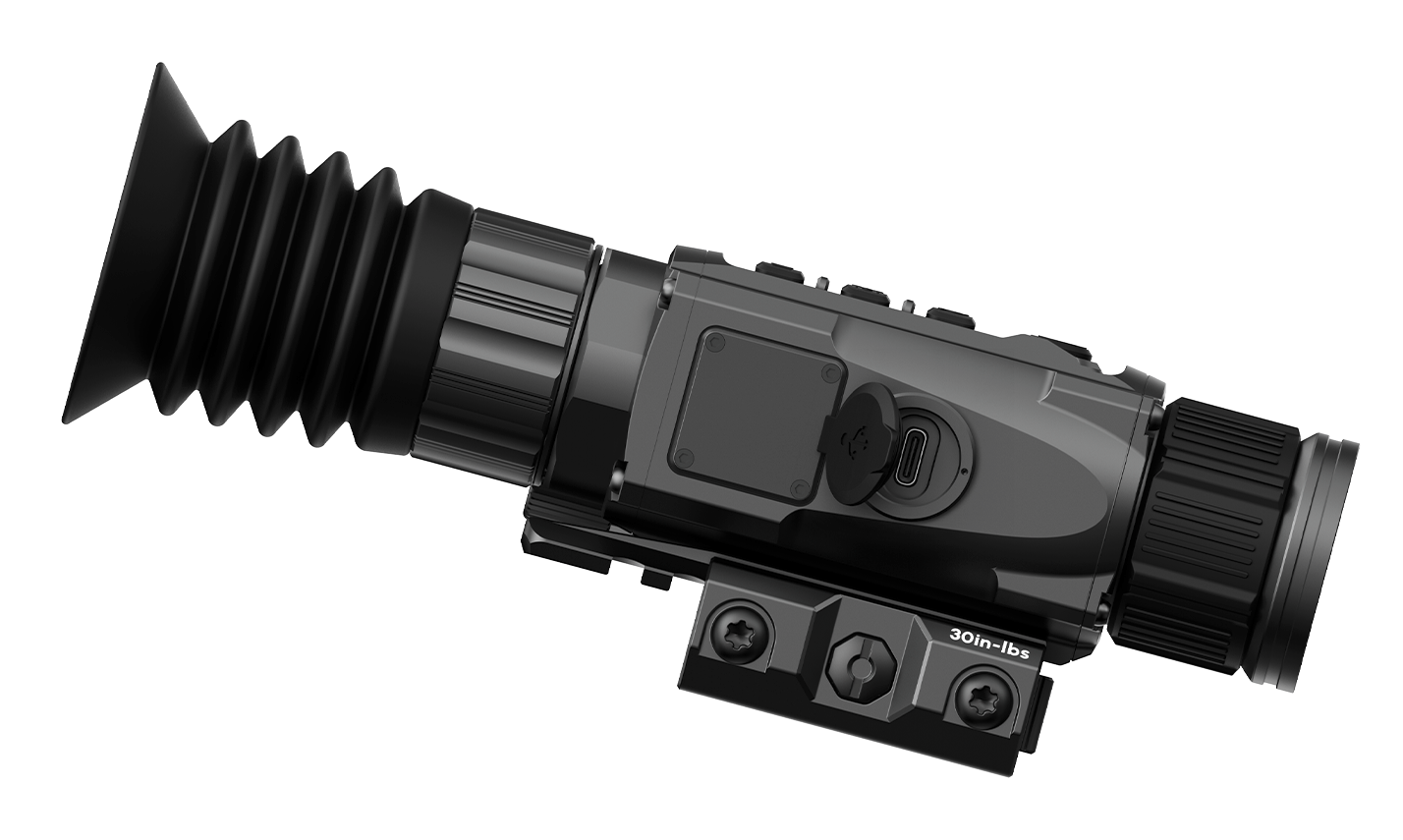
The DNT Optics Hydra HS335 deserves attention because of its versatility. It's a 384x288, 35mm unit that functions as a standalone scope, a clip-on in front of your existing day optic, and a handheld monocular. Three roles from one device. The clip-on functionality is particularly valuable because it means you can keep your existing rifle setup and zero, then add thermal capability without re-zeroing. Build quality is solid, and the multi-function design means you're getting more utility per dollar than a dedicated scope. The trade-off is that it doesn't excel in any single role the way a purpose-built unit would. As a standalone scope, the eye relief and reticle options are more limited than the AGM Rattler. As a clip-on, it adds significant length and weight to the front of your rifle. As a handheld, it's bulkier than dedicated monoculars. But if you can only buy one thermal device and need flexibility, this approach makes sense.
Range notes: weapon-mounted thermals
The tracking test to run with any thermal scope: zero at 100 yards, then walk your turrets 10 MOA up, 10 right, 10 down, 10 left back to your original zero. Shoot a group. If you're back on your original point of impact, the turrets track properly. If not, you have an optic that will drift as you make adjustments, and that's a problem you can't fix with better technique. Budget thermal scopes are more likely to have tracking issues than their $3000+ counterparts. Test before you trust.
Recoil tolerance is the other critical factor. The Rattler series has a solid track record on .308 and below. Running thermal on magnum calibers or heavy-recoiling platforms at this price point is risky. The sensor connections and display elements in budget thermals aren't always built to handle repeated heavy impacts. Stick to moderate calibers or accept that you might be replacing the optic sooner than expected.
Clip-on thermals: the overlooked option
Most buyers default to thinking about standalone thermal scopes or handheld monoculars, but clip-on thermal devices that mount in front of your existing day scope deserve serious consideration, especially at this price point.
Bering Optics clip-on thermal
May contain affiliate links.
The logic is simple: you've already spent money on a quality day optic with good glass, reliable turrets, and a reticle you trust. A clip-on thermal unit projects a thermal image through your existing scope, letting you use your familiar setup in darkness. You keep your zero, your eye relief stays the same, and you can remove the clip-on for daytime use without changing anything about your rifle.
The DNT Hydra mentioned above functions as a clip-on. Dedicated clip-on units from Bering Optics and a few other manufacturers also exist in this price range, though options thin out quickly below $1000. The main limitation of budget clip-ons is image quality degradation. You're projecting a thermal image through additional glass elements, and any optical imperfections in the clip-on get amplified by your day scope's magnification. At 4x through your day scope, a mediocre clip-on image becomes a noticeably mediocre clip-on image. At 1x or 2x, it's more forgiving.
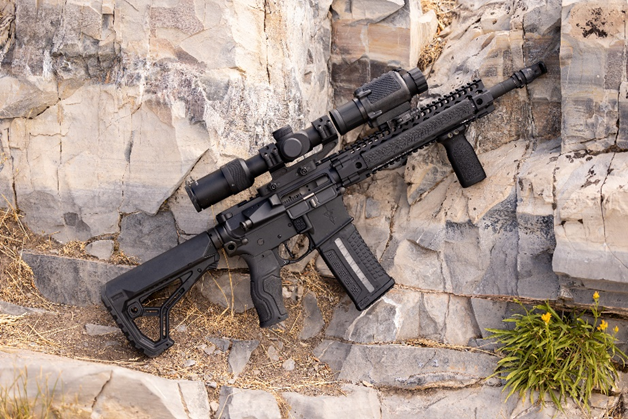
If you go the clip-on route, keep your day scope at low magnification when using thermal. The clip-on's sensor resolution is the bottleneck, and cranking your day scope to 10x won't reveal more thermal detail. It'll just magnify the pixels.
| Product | Type | Sensor Resolution | Pixel Pitch | Objective Lens | Key Strength | Key Limitation |
|---|---|---|---|---|---|---|
| Pulsar Axion 2 XQ35 | Handheld Monocular | 384x288 | 17 micron | 35mm | Mature image processing, reliability, strong detection range | Noticeably bulkier and heavier than pocket-sized competitors |
| AGM Fuzion TM25-384 | Handheld Monocular | 384x288 | 12 micron | 25mm | Thermal/visible fusion mode, compact pocket-friendly size | Realistic ID range only ~300-400 yards |
| InfiRay Cabin CBL25 | Handheld Monocular | 384x288 | 12 micron | 25mm | Superior image processing algorithms, cleaner/higher-contrast images | N/A |
| Pixfra Ranger R635E | Handheld Monocular | 640x512 | 12 micron | 35mm | Best resolution-per-dollar, ID capability past 400 yards | Noisier image, lighter build quality, less tactile buttons |
| AGM Rattler TS25-384 | Weapon-Mounted Scope | 384x288 | N/A | 25mm | Holds zero on .308 and below, solid track record | Eye relief inconsistency, effective ID tops out ~200-250 yards |
| AGM Rattler V2 TS35-384 | Weapon-Mounted Scope | 384x288 | N/A | 35mm | Usable ID to 300-350 yards, improved image processing over V1 | Heavier and longer than TS25 |
| InfiRay Halo HL13 | Weapon-Mounted Scope | 384x288 | N/A | 13mm | Compact and lightweight, ideal for close-range/shotgun use | ID range limited to ~150-200 yards |
| DNT Optics Hydra HS335 | Scope / Clip-On / Handheld | 384x288 | N/A | 35mm | 3-in-1 versatility (scope, clip-on, monocular) | Doesn't excel in any single role; bulkier as handheld, limited eye relief as scope |
Common mistakes with budget thermal
Buying based on detection range claims is the most frequent error. Detection range means the optic can tell you something warm exists in that direction. It doesn't mean you can identify what it is. Identification range is typically one-third to one-half of detection range, and recognition range (telling a coyote from a dog) is even shorter. A unit claiming 1500-yard detection range might only let you positively ID a coyote at 350 yards. That's the number that matters for ethical hunting.
Ignoring battery strategy costs people time and frustration in the field. Some budget thermals use proprietary internal batteries that can't be swapped. Others use standard 18650 cells or CR123As. If you're running thermal for extended sessions, swappable batteries are almost mandatory. An internal rechargeable that lasts 4 hours sounds fine until you're on hour three of a night hunt with animals just starting to move. Carry spares. Buy units that let you swap cells without tools.
Expecting daytime scope performance from thermal is a mindset problem. Thermal shows heat signatures, not visual detail. You won't see antler points, fur patterns, or facial features. You'll see a heat blob shaped roughly like an animal. Learning to read thermal images takes practice, and the lower the resolution, the more interpretation is required. Spend time scanning known animals at known distances before relying on thermal for shot decisions.
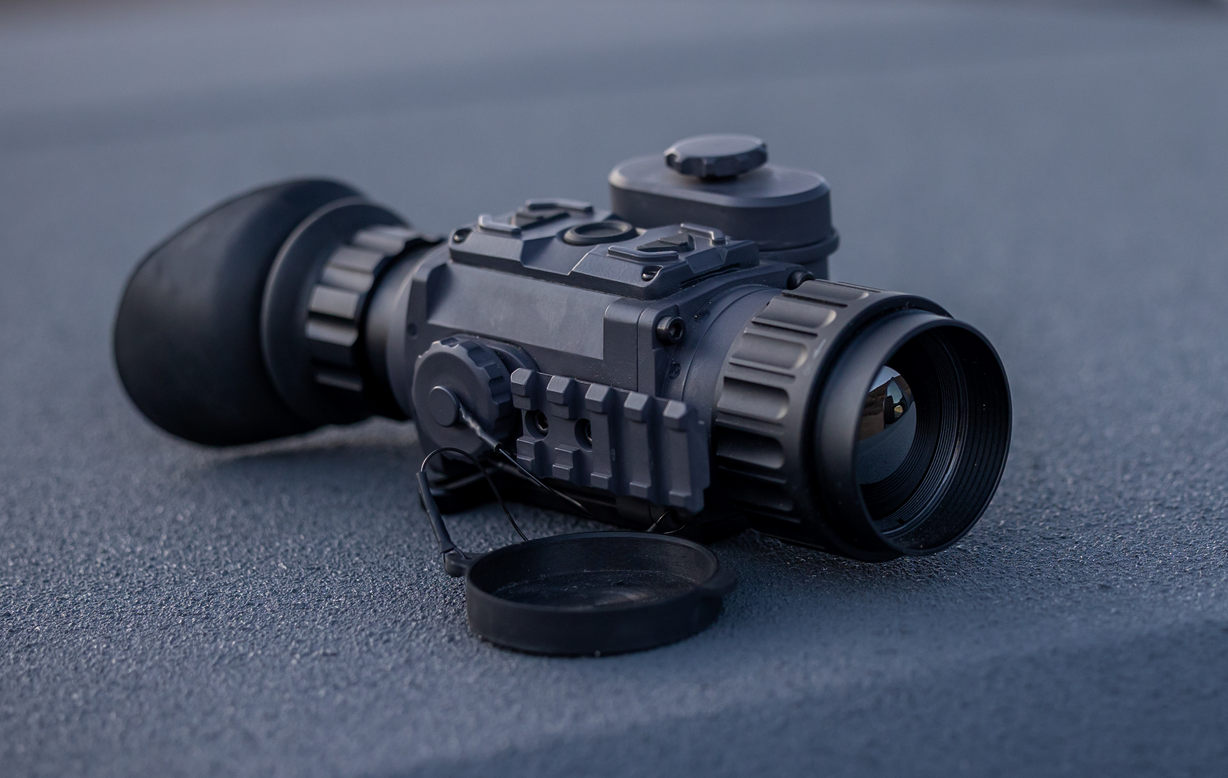
Mounting thermal scopes with cheap rings or on picatinny rail sections that aren't properly torqued will cause zero shift that gets blamed on the optic. Budget thermal scopes are more sensitive to mounting errors because the reticle is electronic and any physical shift of the housing moves everything. Use quality rings, torque to spec, and apply threadlocker.
Skipping firmware updates is surprisingly common. Most modern thermal optics receive firmware updates that improve image processing, fix bugs, and sometimes add features. Pulsar, InfiRay, and AGM all push updates through their respective apps or desktop software. A unit running launch firmware might perform noticeably worse than the same unit running current firmware. Check for updates before forming opinions about image quality.
The $300 question: monocular plus day scope vs. dedicated thermal scope
For many hunters, the smartest sub-$1000 thermal setup isn't a thermal scope at all. It's a quality thermal monocular in the $400-600 range paired with the day scope or red dot you already own and trust.
The workflow: scan with the monocular, identify and locate your target, then transition to your rifle and existing optic for the shot. This works well for predator calling setups where animals are coming to you at known distances. It works less well for spot-and-stalk scenarios where you need to maintain eyes on a target while moving and shooting.
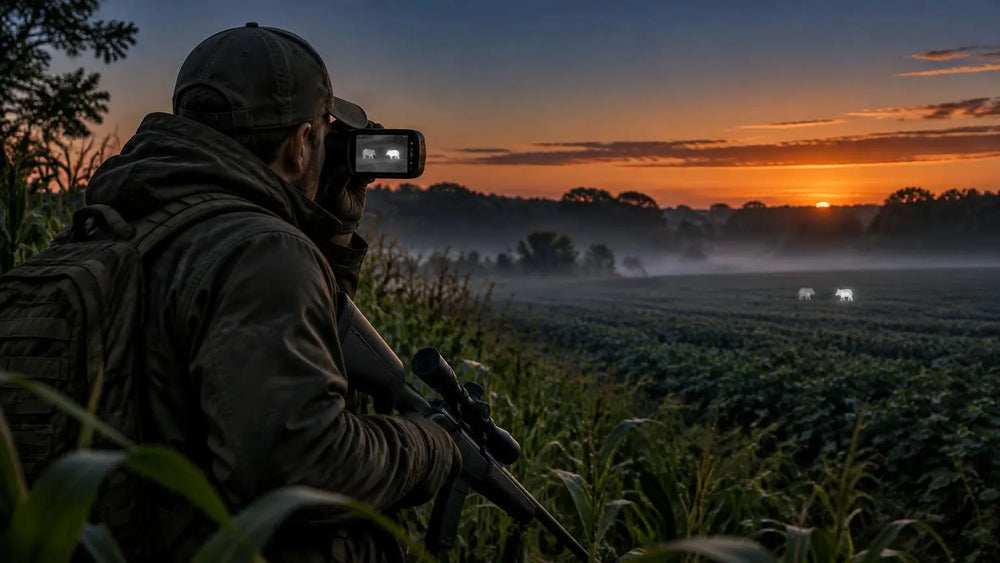
The advantage is that your shooting optic is purpose-built for shooting. Good glass, reliable turrets, proper eye relief. Your thermal monocular is purpose-built for scanning and identification, with a wider field of view and no need to survive recoil. Each tool does its job well rather than one tool doing both jobs adequately.
The disadvantage is the transition time. Switching from monocular to rifle takes seconds, and in those seconds a coyote can move, turn, or bolt. For hog hunting over bait where animals are stationary and close, the transition is a non-issue. For calling coyotes that might give you a 5-second window, a weapon-mounted thermal eliminates that gap.
Your hunting style dictates the right answer here more than any spec comparison can.
Specific units worth your money right now
For handheld scanning and scouting, the Pulsar Axion 2 XQ35 remains the benchmark for reliability and image quality in this bracket. The 35mm objective and Pulsar's mature image processing make it the safest bet. If you want maximum resolution per dollar and can tolerate slightly rougher build quality, the Pixfra Ranger R635E with its 640x512 sensor punches above its weight on raw detail.
For weapon-mounted use on a dedicated predator or hog rifle, the AGM Rattler V2 TS35-384 hits the right balance of image quality, durability, and usability. The 35mm objective gives you enough range for realistic hunting shots, and the platform has enough track record that known issues have been addressed through firmware and hardware revisions.
For maximum flexibility on a budget, the DNT Optics Hydra HS335 does three jobs with one purchase. It won't be the best scope, the best clip-on, or the best monocular you can buy, but it'll be a competent version of all three, and that versatility has real value if you're trying to figure out how thermal fits into your hunting before committing to specialized gear.
For close-range weapon-mounted use where size and weight matter, the InfiRay Halo HL13 keeps your rifle handy and maneuverable. Just respect its range limitations and use it for what it's designed for: shooting inside 150 yards in conditions where you've already identified your target.
What to do after you buy
Mount it. Zero it. Then evaluate. Seriously. Too many thermal optics get returned or trashed online because someone powered it on indoors, looked at their wall, and declared the image quality terrible. Thermal needs temperature differential to produce a useful image. A climate-controlled room where everything is the same temperature will look flat and featureless on any thermal unit regardless of price.
Take it outside at dusk when the ground is still warm from the sun but the air is cooling. Scan tree lines, fence rows, and open areas. Look for animals you can visually confirm with your eyes or a separate optic. This teaches you what different animals look like on your specific unit at various distances. A deer at 200 yards on a 384 sensor looks different than you might expect if your only reference point is YouTube videos shot through $5000 units.
Run the turret tracking test on any weapon-mounted thermal before you hunt with it. Confirm zero at your primary hunting distance, not just at 50 yards. Thermal ballistic reticles are calibrated for specific cartridges and loads, so make sure yours matches what you're actually shooting.
And update the firmware. It takes ten minutes and might meaningfully improve your image quality. The 2026 budget thermal market is delivering real capability that didn't exist at these prices even 18 months ago. The hardware is there. Make sure the software is keeping up.