You're staring through your scope at 12x, the reticle looks sharp, the target looks sharp, but when you shift your head a half inch behind the eyepiece, the point of aim moves. You just watched parallax error happen in real time. And if you don't understand what caused it or how to fix it, you're chasing groups that aren't actually groups; you're chasing optical error masquerading as mechanical inconsistency.
Parallax is one of those topics where most shooters either overthink it or ignore it entirely. The ones who ignore it usually shoot at distances and magnifications where it doesn't matter much. The ones who overthink it are spinning their side focus knob obsessively at 100 yards with a 4x scope. Both camps could use some clarity. This piece answers every common question about parallax adjustment, what it actually is, when it matters, when it doesn't, how to use it properly, and which scopes handle it well.
If you walk away with one thing, make it this: parallax adjustment isn't a focus knob, even though it sharpens the image. It's an error-correction mechanism. Treat it that way.
What parallax actually is (and isn't)
Parallax error in a rifle scope happens when the image of the target and the reticle aren't on the same focal plane. When they're on different planes, moving your eye behind the scope causes the reticle to appear to shift relative to the target. That apparent movement is the error. It means where you think you're aiming isn't precisely where the bullet will go.
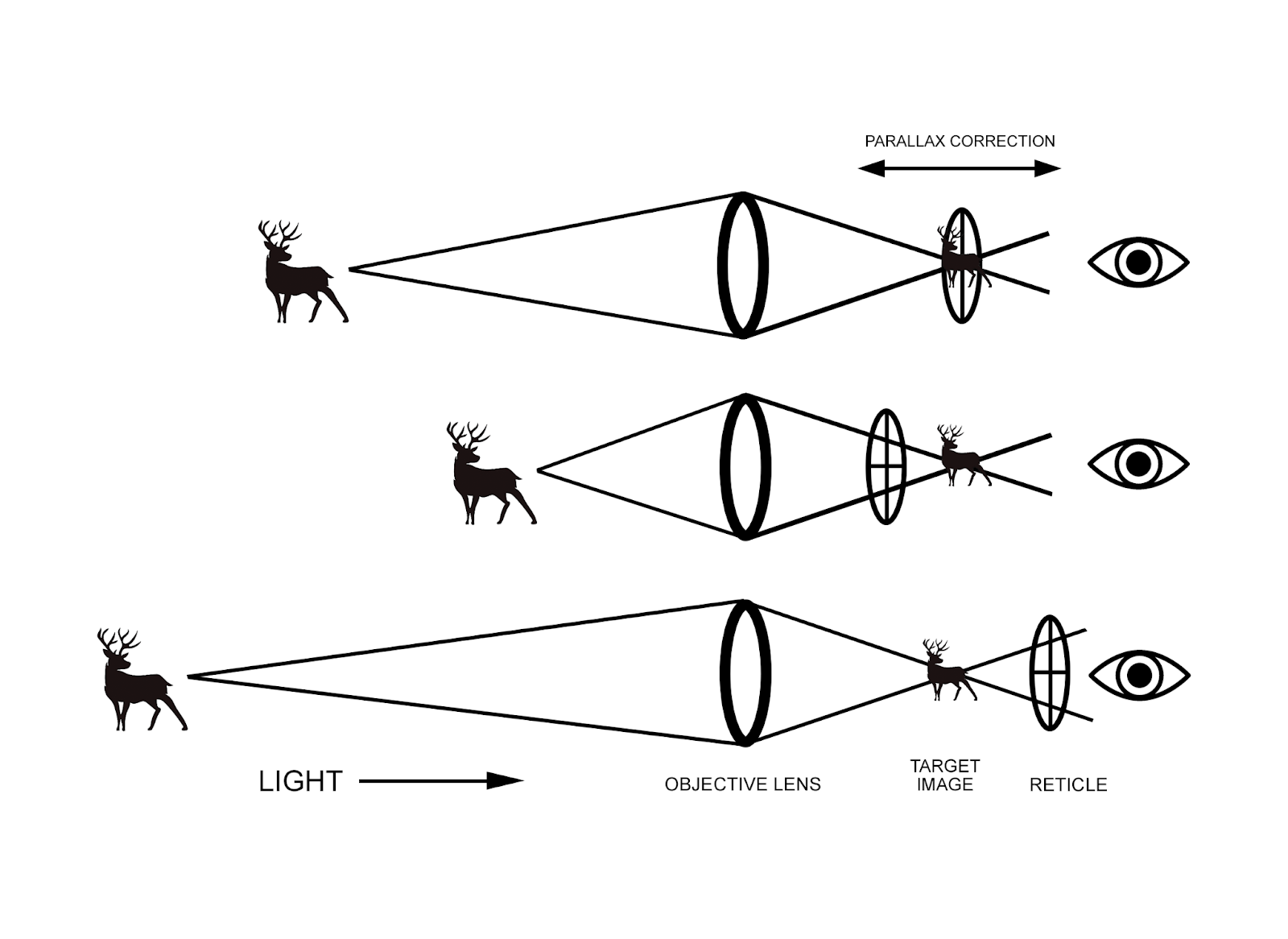
Think of it like holding your thumb up at arm's length and closing one eye, then the other. Your thumb appears to jump against the background. That's parallax, two different viewing angles producing two different apparent positions of a closer object against a farther one. In a scope, the "closer object" is the reticle, and the "farther object" is the target image formed by the objective lens. If those two things aren't sitting on the same optical plane inside the scope, any head movement introduces aiming error.
Here's the critical distinction: parallax error is not the same as the image being out of focus. You can have a sharp image with parallax error present. You can also have a slightly soft image with zero parallax error. They're related, adjusting parallax often sharpens the image as a side effect, but they're not the same phenomenon. The sharpness is a bonus. The error elimination is the point.
How much does parallax error actually move your point of impact?
This is the question that determines whether you should care. The answer depends on three variables: the distance to the target, the magnification you're using, and how much your eye position varies behind the scope.
At 100 yards with a scope set to 4x and a consistent cheek weld, parallax error might shift your point of impact by a fraction of an MOA, maybe a quarter inch. That's inside most rifles' mechanical accuracy. You'd never notice it. At 600 yards with a scope cranked to 18x and an imperfect cheek weld, that same uncorrected parallax could move your apparent point of aim by 2 or more inches. Now it matters.
The general rule: parallax error becomes significant as magnification increases and as distance increases. At low magnification and short to moderate range, it's negligible for most shooting. At high magnification and long range, it can be the difference between a hit and a miss on a small target. Precision rimfire shooters at 50 yards care about it too, because they're shooting tiny groups at high magnification where even a quarter MOA of optical error is unacceptable.
A practical benchmark: if you're shooting at targets where 1 MOA precision matters, and you're using magnification above 10x, parallax adjustment earns its place on the scope. Below that threshold, a fixed parallax setting is usually fine.
Fixed parallax vs. adjustable: what's the difference?
Most scopes below about $300 and most low-magnification scopes come with a fixed parallax setting. The manufacturer sets the scope to be parallax-free at a specific distance, usually 100 yards for centerfire rifle scopes, 50 yards for rimfire scopes, and sometimes 150 or 200 yards for scopes intended for longer-range hunting use.
"Parallax-free" at that distance means the target image and the reticle sit on the same focal plane when the target is at that specific distance. Move the target closer or farther, and some parallax error creeps back in. How much depends on the magnification and how far you are from the factory-set distance.
Adjustable parallax scopes let you dial out that error at any distance within the adjustment range, typically from about 10 yards (or sometimes 25 or 50 yards) out to infinity. The adjustment mechanism comes in two forms: adjustable objective (AO) and side focus.
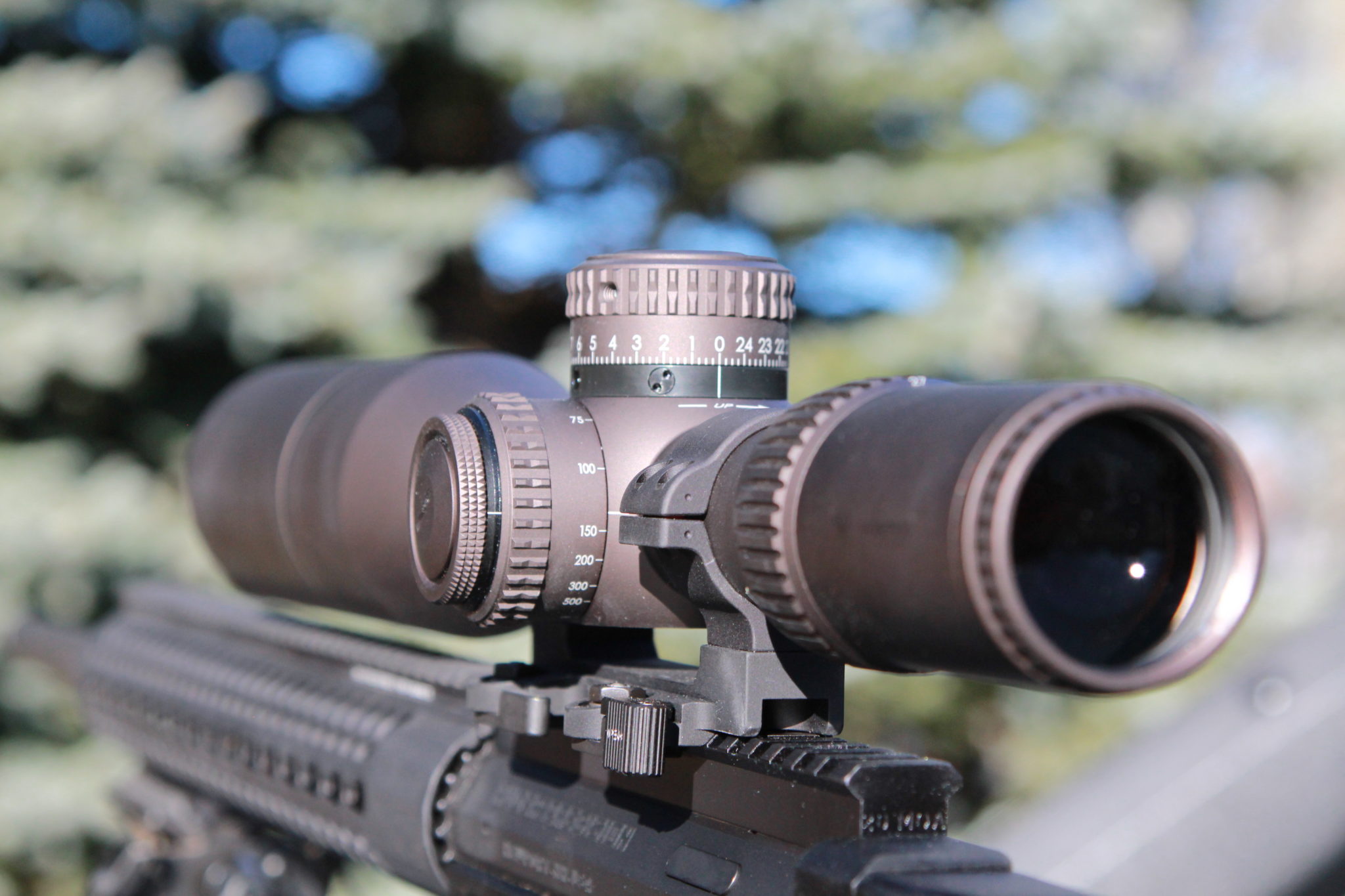
Adjustable objective scopes have a ring on the objective bell, the front of the scope, that you rotate to set the parallax distance. Side focus scopes have a turret-style knob on the left side of the scope body, opposite the windage turret. Both do the same thing optically. The difference is ergonomic.
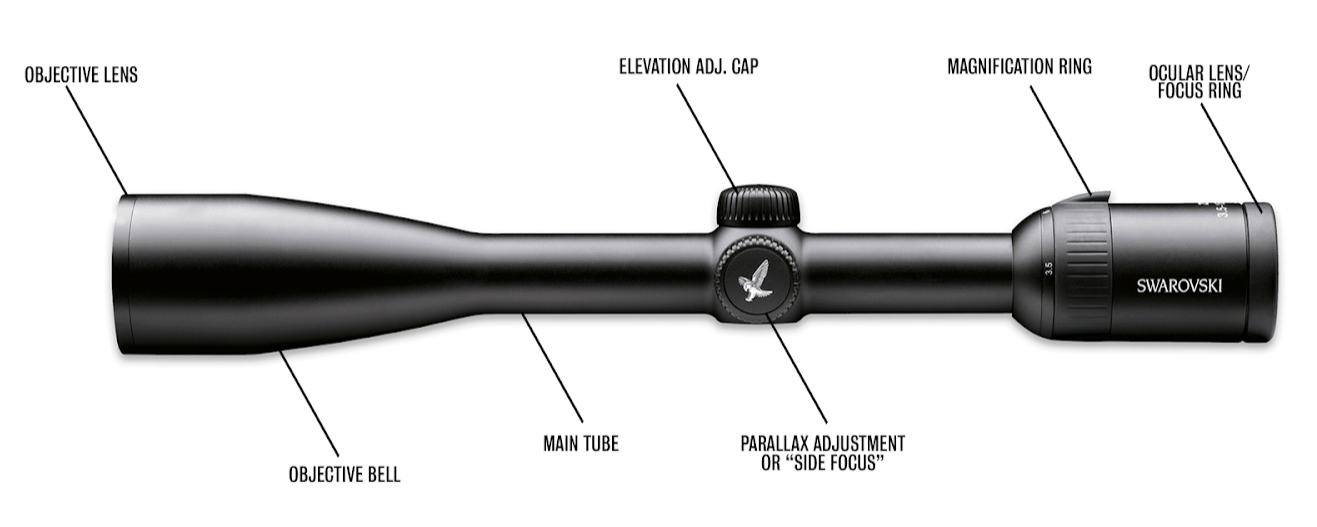
Side focus won the ergonomic war decisively. Reaching forward to the objective bell to adjust parallax while maintaining a shooting position is awkward at best and impossible in some positions. The side focus knob sits right where your support hand can reach it without breaking position. Nearly every modern precision or tactical scope uses side focus. AO is still around on some budget scopes and older designs, but it's being phased out of new production at most price points.
When you don't need parallax adjustment
Not every scope needs it, and not every shooter should pay for it. Here's when a fixed parallax scope is perfectly fine:
Hunting at moderate range with a variable scope in the 3-9x or 4-12x range, shooting at game-sized targets inside 400 yards. The vital zone on a deer is roughly 8 to 10 inches. Parallax error at these magnifications and distances, even with a fixed 100-yard parallax setting, rarely exceeds 1 MOA. You'll never notice it on an animal. The scope's fixed parallax setting handles this use case well.
Shotgun optics and scout scopes. Low magnification, short to moderate range, fast target acquisition. Parallax isn't a meaningful variable here.
Red dot and holographic sights. These are effectively parallax-free by design at all practical distances (most are specified as parallax-free beyond about 50 yards). The emitter projects the dot onto a plane that moves with your eye, which is why you can shoot with both eyes open and the dot stays on target regardless of head position.
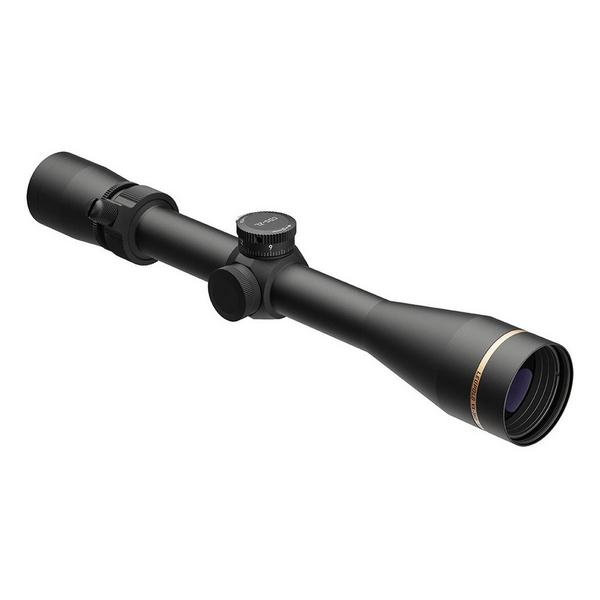
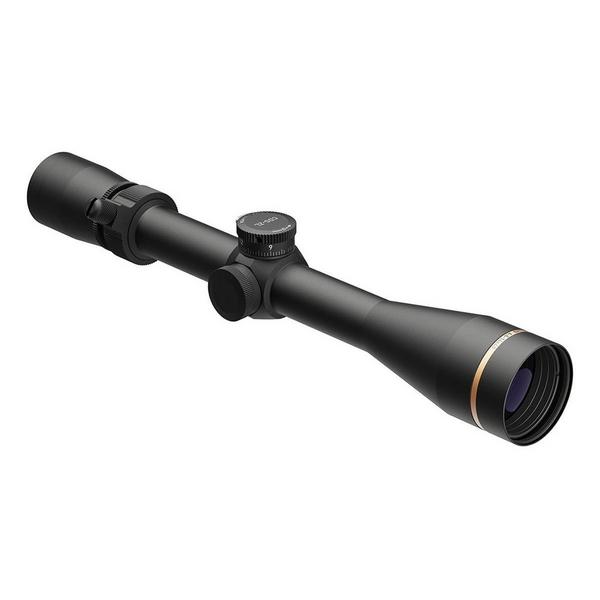
The Leupold VX-3HD line is a good example of scopes that skip adjustable parallax on the lower-magnification models and include it on the higher-magnification versions. The 3.5-10x40 has a fixed 150-yard parallax setting. For what that scope is designed to do, hunt medium to large game at typical rifle distances, that's the right call. Adding a side focus knob would add cost, complexity, and another thing to fiddle with for zero practical benefit in that use case.
When you absolutely need it
Precision rifle shooting at any distance. If you're shooting groups, reading wind, and trying to put rounds into sub-MOA clusters, parallax error is a variable you need to control. Period. Every precision rifle scope worth buying has adjustable parallax.
Long-range hunting beyond 400 yards. Once you're stretching past the distance where your scope's fixed parallax setting was calibrated, and you're using enough magnification to make the shot, uncorrected parallax starts eating into your margin. A scope like the Vortex Viper PST Gen II 5-25x50 or the Athlon Helos BTR Gen II 6-24x50 includes side focus parallax for exactly this reason.
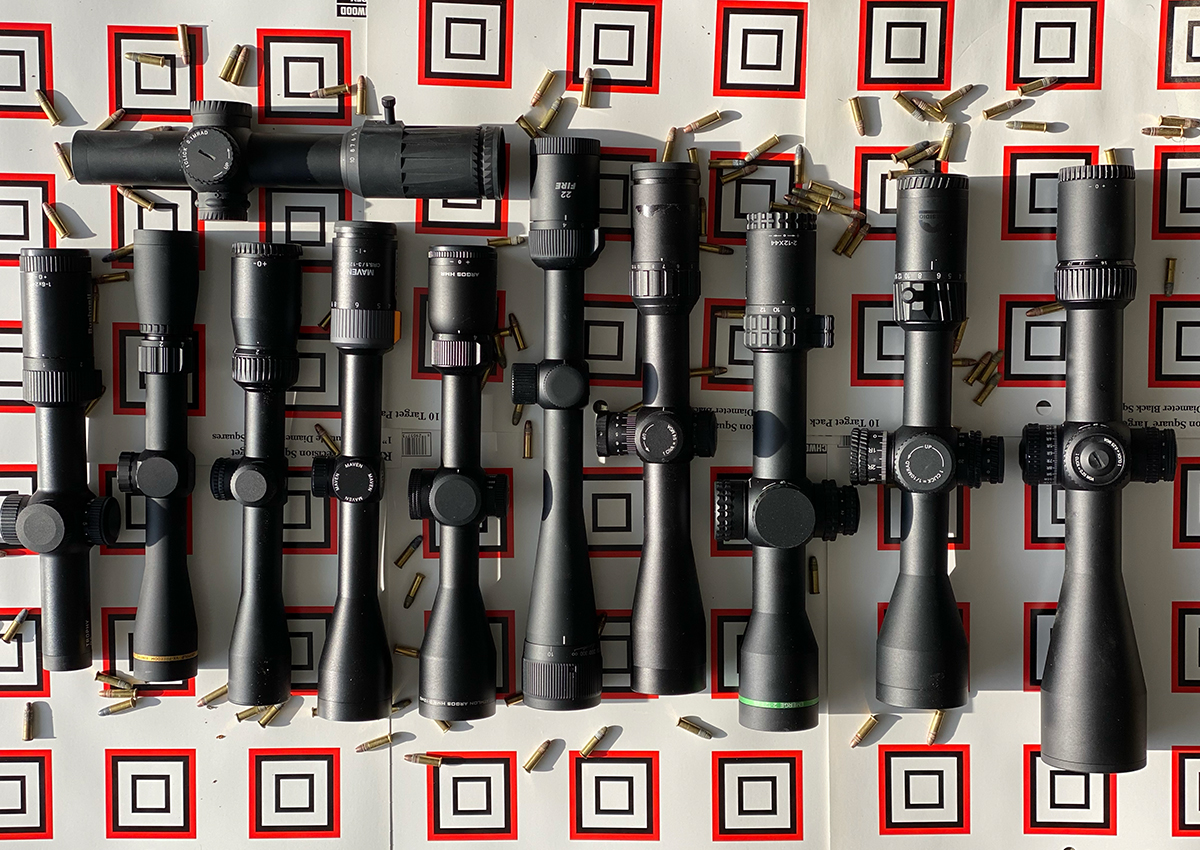
Precision rimfire and air rifle shooting. These disciplines demand extreme accuracy at short distances with high magnification. A fixed 100-yard parallax setting on a scope used at 50 yards on a rimfire rifle will produce noticeable parallax error at 15x or 20x magnification. Rimfire-specific scopes are parallax-adjustable down to 10 yards for this reason.
Benchrest competition. If you're measuring groups in thousandths of an inch, every source of error matters. Parallax adjustment isn't optional here, it's fundamental.
How to actually adjust parallax correctly
Here's where most shooters get it wrong. They treat the parallax knob like a focus ring: spin it until the target looks sharp, then stop. That gets you close, but it's not the correct procedure.
The right method:
First, look through the scope at the target at your shooting distance. Don't touch the parallax knob yet. Instead, move your head slightly, up, down, left, right, behind the eyepiece while watching the reticle against the target. If the reticle appears to shift or swim relative to the target, parallax error is present.
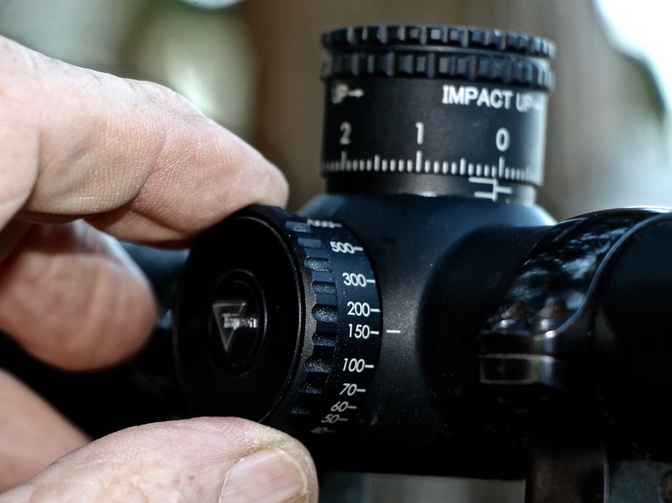
Now, turn the parallax knob slowly. You're not looking for the sharpest image. You're looking for the setting where the reticle stops moving relative to the target when you shift your head. That's the parallax-free point for that distance.
Often, the sharpest image and the parallax-free point coincide. But not always. If they don't, prioritize the parallax-free point over image sharpness. A slightly softer image with no parallax error is more accurate than a razor-sharp image with the reticle wandering.
Range notes
At the range, here's a quick drill. Set up at 100 yards. Crank your magnification to max. Aim at a small, well-defined target, a one-inch dot works well. With the rifle solidly supported (bags, rest, or bipod), look through the scope and slowly move your head side to side behind the eyepiece, about a half inch each direction. Watch the reticle against the target dot. If the crosshair moves off the dot, adjust the parallax knob and repeat until the reticle stays planted on the dot regardless of where your eye sits in the eye box.
Now do it again at 200, 300, and 400 yards if you have the range. You'll notice the parallax setting changes at each distance. This is normal and expected, the parallax knob is distance-dependent. The numbers printed on the knob (50, 100, 200, 300, ∞) are approximations. Don't trust them as gospel. Use the head-movement test at each distance to find the actual parallax-free point.
One more thing: always adjust the eyepiece (diopter) first, before touching the parallax knob. The diopter focuses the reticle to your eye. The parallax knob focuses the target image onto the reticle's focal plane. If your diopter is wrong, your parallax adjustment will be off because you're compensating for two errors at once. Set the diopter by pointing the scope at a blank, bright surface (the sky works) and adjusting until the reticle is perfectly sharp. Then leave it alone.
Does adjusting parallax change your zero?
No. Adjusting the parallax knob does not move your zero. The parallax mechanism moves internal lens elements to bring the target image onto the reticle's focal plane. It doesn't tilt or shift the reticle itself. Your point of impact should not change when you adjust parallax.
However, and this trips people up, if you've been shooting with significant parallax error and an inconsistent cheek weld, your groups will tighten up once you eliminate the parallax. That might make it look like your zero shifted, because the group center may consolidate to a slightly different point than where your scattered group was averaging out. The zero didn't change. Your aiming consistency did.
If adjusting your parallax knob does produce a noticeable, repeatable shift in point of impact, something is wrong with the scope. The parallax mechanism may be mechanically interfering with the erector tube. That's a warranty issue, not a technique issue.
The numbers on the parallax knob are lying to you (sort of)
Not lying exactly, but they're approximations. The distance markings on a parallax knob, 50, 75, 100, 150, 200, 300, ∞, are calibrated at the factory under controlled conditions. Temperature, altitude, and manufacturing tolerances all affect where the actual parallax-free point falls relative to those markings.
It's common for a scope's parallax knob to read "100" when the actual parallax-free point is at 85 or 115 yards. This doesn't mean the scope is defective. It means you should use the head-movement test to find the true parallax-free point at each distance rather than blindly trusting the numbers.
Some higher-end scopes have more accurate parallax markings than budget scopes. The Nightforce ATACR and the Vortex Razor HD Gen III tend to be pretty close. Budget scopes can be off by 20% or more. Either way, the test is the same: move your head, watch the reticle, adjust until it stops moving.
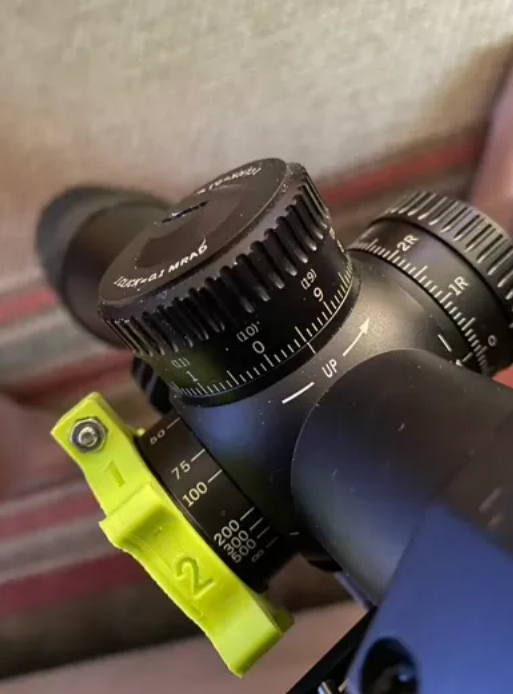
This is also why experienced precision shooters often put small tape marks or reference points on their parallax knobs at known distances after confirming the actual parallax-free settings at those ranges. The factory markings become starting points, not final answers.
Side focus vs. adjustable objective: the full comparison
Both mechanisms accomplish the same optical task. The differences are practical.
Side focus places the parallax knob on the left side of the turret housing. You can reach it without changing your shooting position. It's intuitive, it works like another turret. Most side focus knobs have good tactile feedback and enough range of motion for fine adjustment. The downside is that side focus adds mechanical complexity inside the scope body, and on some cheaper scopes, the side focus mechanism can feel gritty or have a dead zone where turning the knob doesn't produce any optical change.
Adjustable objective places a ring around the objective bell at the front of the scope. It's mechanically simpler and can be more precise on some designs because the ring has a larger circumference, giving you more adjustment per degree of rotation. The downside is ergonomic: you have to reach forward to the objective bell to adjust it. On a bolt gun in a prone position, that means breaking your shooting position. On a rifle with a long action and a scope mounted forward, it's even worse.
For any scope you'll use from a shooting position where breaking position costs you time or consistency, which is most precision shooting, side focus wins. AO is acceptable on a benchrest gun where you set the parallax before the string of fire and don't touch it again, or on a budget scope where the manufacturer chose AO to keep costs down.
Five common mistakes with parallax adjustment
Treating the parallax knob as a focus knob
Already covered this, but it bears repeating because it's the most common error. The parallax knob will sharpen the image as a side effect, but sharpness isn't the goal. Elimination of reticle movement is the goal. Adjust for zero reticle movement, not maximum sharpness.
Adjusting parallax before setting the diopter
The diopter (eyepiece focus) must be set first. If your reticle isn't focused to your eye, you can't accurately assess whether the target image and reticle are on the same focal plane. Set the diopter once, lock it if your scope has a locking ring, and then adjust parallax at each distance as needed.
Obsessing over parallax at low magnification
At 4x or 6x, parallax error is minimal even with a fixed-parallax scope. The lower the magnification, the more forgiving the eye box and the less apparent reticle movement you'll see. If you're hunting with a 3-9x scope at 5x, don't worry about parallax. Worry about shot placement fundamentals.
Never checking parallax at your actual shooting distances
You confirmed parallax at 100 yards. Great. But you're shooting a PRS match with stages at 300 to 800 yards. The parallax setting that eliminates error at 100 yards won't eliminate it at 500. You need to adjust at each distance, or at least confirm that the error at your shooting distance is within acceptable limits. Get in the habit of checking parallax as part of your pre-shot routine at each new distance.
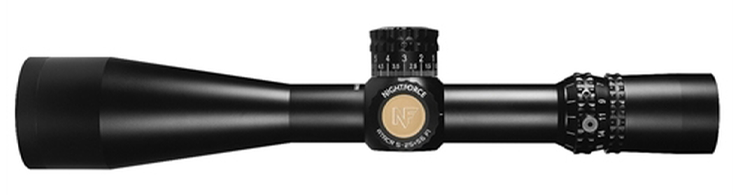
Assuming all scopes at the same price point have equally good parallax mechanisms
They don't. The smoothness, precision, and accuracy of a parallax adjustment mechanism varies significantly between manufacturers and even between product lines from the same manufacturer. A Vortex Viper's side focus feels different from an Athlon Midas's side focus, which feels different from a Primary Arms PLx's side focus. Some have dead spots. Some are gritty. Some have so little resistance that they move under recoil. Handle them before buying if you can.
Parallax and first focal plane vs. second focal plane scopes
This comes up a lot, and the answer is simpler than most people expect. Parallax adjustment works the same way regardless of whether the reticle is in the first focal plane (FFP) or second focal plane (SFP). The mechanism moves the target image to align with whichever focal plane the reticle sits on.
Where it gets interesting is how parallax error manifests differently in each type. In an FFP scope, the reticle changes size with magnification, it gets bigger as you zoom in and smaller as you zoom out. Because the reticle subtensions are always accurate at any magnification, parallax error at high magnification shows up the same way: reticle movement against the target when you shift your eye.
In an SFP scope, the reticle stays the same apparent size regardless of magnification, but the subtensions are only accurate at one magnification (usually max). Parallax error in an SFP scope can be slightly harder to detect at lower magnifications because the reticle covers more of the target relative to the image size, masking small amounts of apparent movement.
The takeaway: adjust parallax the same way on both types. The head-movement test works regardless of focal plane. But be aware that SFP scopes at lower magnifications can hide small amounts of parallax error that become visible when you zoom in.
Specific scopes and how they handle parallax
Here's a look at five scopes across different price points and how their parallax systems perform in practice.
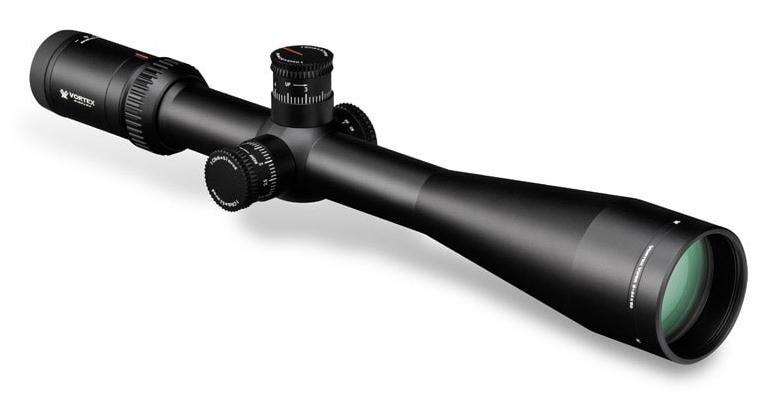
Vortex Viper PST Gen II 5-25x50
Side focus parallax, adjustable from 25 yards to infinity. The knob has a good amount of travel and reasonably accurate distance markings. The mechanism is smooth with no dead spots on most examples. At max magnification, parallax adjustment is critical, 25x will show you every fraction of an MOA of error. This scope's side focus is well-suited to its intended use as a precision rifle optic. The markings tend to be accurate within about 10% at most distances, which is better than average for its price class.
Athlon Helos BTR Gen II 6-24x50
Side focus parallax, 25 yards to infinity. The Helos BTR Gen II has a slightly stiffer parallax knob than the Vortex, which some shooters prefer because it's less likely to drift under recoil. The distance markings are in the same accuracy ballpark as the Viper PST Gen II. The knob has good tactile detents at the marked distances, though the adjustment between detents is smooth enough for fine-tuning. For a scope in this price range, the parallax system is well-executed.
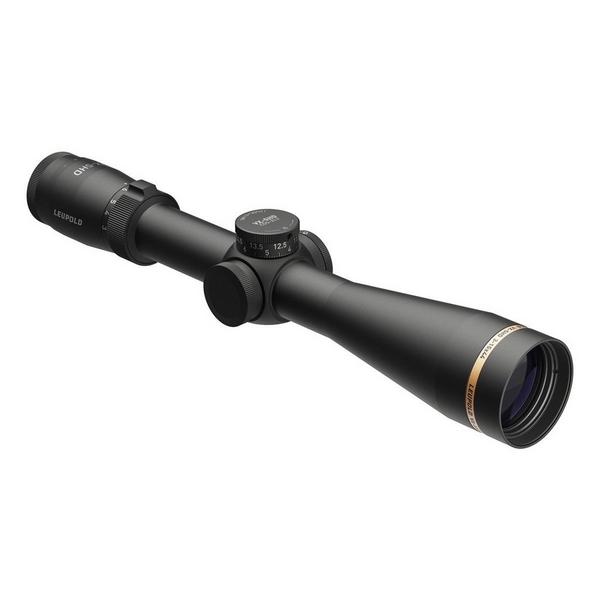
Leupold VX-3HD 4.5-14x40
Side focus parallax on the 4.5-14x40 model (lower-magnification VX-3HD models have fixed parallax). Adjustable from 50 yards to infinity. Leupold's parallax mechanisms have historically been smooth and reliable, and the VX-3HD continues that. The range of adjustment starting at 50 yards is fine for centerfire use but won't work for rimfire shooters who need parallax correction inside 50 yards. The distance markings are reasonably accurate. The side focus knob is on the smaller side compared to tactical scopes, which fits the hunting-oriented design but can be fiddly with gloves.
Primary Arms PLx 6-30x56
Side focus parallax, 20 yards to infinity. The PLx line punches above its price point in several areas, and the parallax mechanism is one of them. The knob has a wide range of travel with smooth, consistent resistance throughout. At 30x magnification, you need precise parallax control, and this scope delivers it. The distance markings are approximate, as with any scope, but the mechanism itself allows fine enough adjustment that you can dial in the parallax-free point precisely at any distance.
Budget AO example: a typical 6-24x50 with adjustable objective
Many budget scopes in the sub-$200 range still use adjustable objective parallax. The ring on the objective bell works, but the markings are often significantly off, sometimes by 25% or more at longer distances. The adjustment can feel gritty, with inconsistent resistance as you rotate the ring. It gets the job done if you use the head-movement test rather than trusting the markings, but the ergonomic penalty of reaching forward to adjust it is real. If you're shopping in this price range and parallax adjustment matters to your shooting, look for a side focus model even if it costs a little more.
Does parallax matter for hunting?
The honest answer: usually not much, but sometimes yes.
For typical big-game hunting inside 300 yards with a scope in the 3-9x to 4-12x range, parallax error is a non-factor. The vital zone on a deer, elk, or similar game animal is large enough that the small amount of parallax error present at these magnifications and distances won't cause a miss. The fixed parallax setting on a hunting scope handles this fine. You have far bigger variables to worry about, wind, range estimation, shooting position stability, and trigger control.
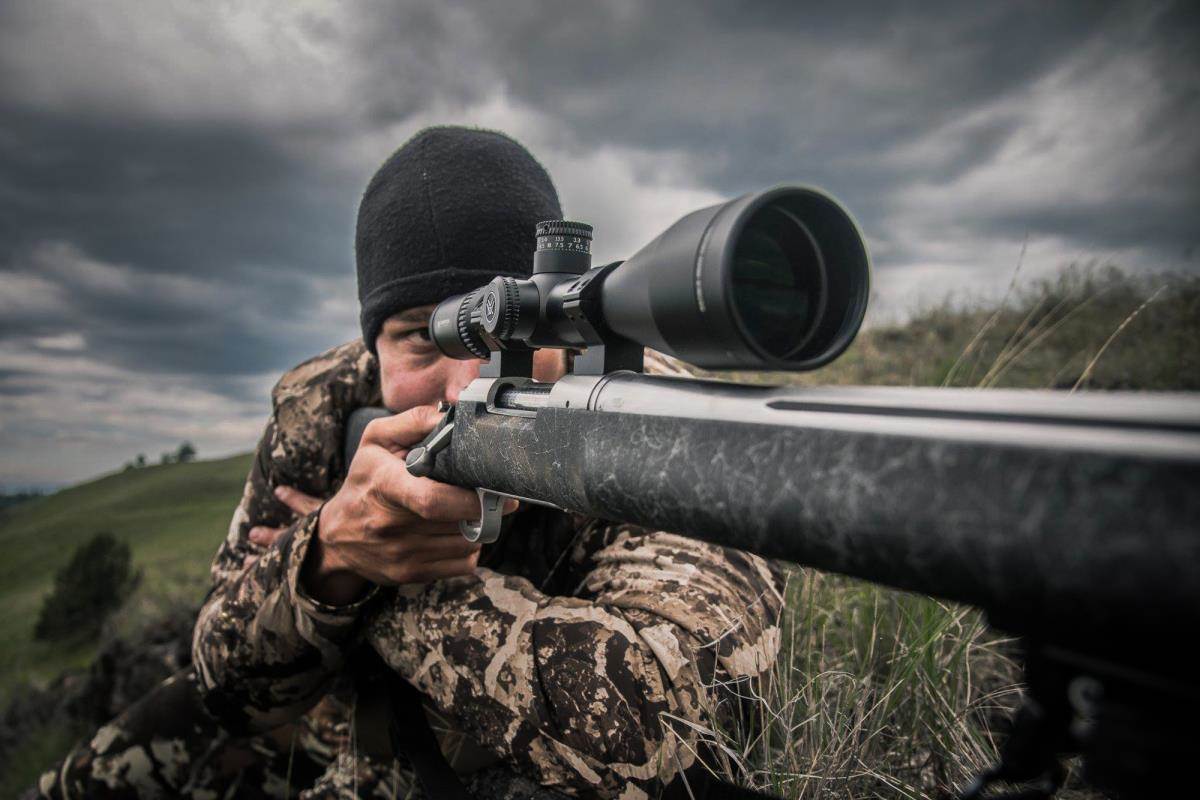
Where it starts to matter for hunters: western hunting at extended range, where 400 to 600+ yard shots on mule deer, antelope, or elk are realistic possibilities. If you're carrying a scope with 18x or 20x max magnification and taking shots at those distances, parallax adjustment becomes a legitimate accuracy tool. This is why higher-magnification hunting scopes, the Leupold VX-5HD 3-15x44, the Vortex Razor HD LHT 3-15x42, and similar, include side focus parallax. They're designed for hunters who might need precision at distance.
The practical question for hunters is whether adding parallax adjustment adds enough benefit to justify the additional weight, cost, and complexity. For a walk-around whitetail scope that tops out at 9x or 12x, the answer is no. For a long-range western hunting scope that you'll use at 15x+, the answer is yes.
Does temperature affect parallax?
Yes, though the effect is subtle enough that most shooters won't notice it under normal conditions. Temperature changes cause the metal and glass components inside the scope to expand or contract slightly, which can shift the parallax-free point. A scope that's perfectly parallax-free at 200 yards in 70°F conditions might show a small amount of parallax error at the same distance in 20°F conditions.
How much? On a well-built scope, the shift is usually less than half an MOA across a 50-degree temperature swing. On cheaper scopes with less thermally stable materials, it can be more. Precision shooters who compete in varying conditions sometimes re-check parallax during a match as the scope warms up in the sun or cools down in shade.
For most practical purposes, hunting, recreational precision shooting, even club-level competition, temperature-induced parallax shift is below the noise floor of other error sources. But if you're shooting a PRS match in January in Wyoming and the temperature drops 30 degrees between your morning and afternoon stages, it's worth a quick parallax check.
What about parallax on LPVOs?
Low-power variable optics, the 1-6x, 1-8x, and 1-10x scopes used on AR-platform rifles and carbines, almost universally have fixed parallax settings, typically at 100 yards. And that's the right design choice.
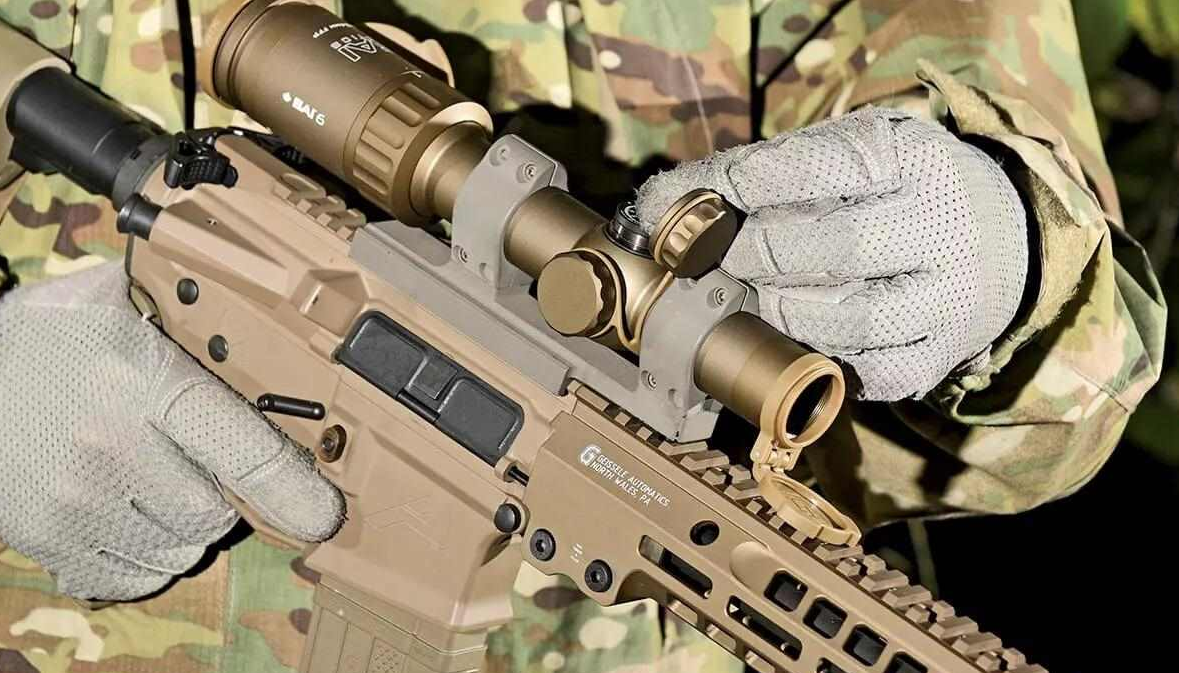
At 1x, parallax error is essentially zero regardless of distance. The scope is functioning almost like a red dot at that magnification. At 6x or 8x, parallax error at distances other than the fixed setting is present but small, usually well under 1 MOA, which is within the accuracy envelope of what these scopes are designed for (fast shooting, close to moderate range, combat-sized or steel targets).
An LPVO with adjustable parallax would add a knob that serves almost no practical purpose for the scope's intended use case while adding weight, cost, and one more thing to accidentally bump. The few LPVOs that extend to 10x start to push into territory where parallax might occasionally matter at distance, but even then, the typical use case, an AR-platform rifle shooting inside 500 yards, doesn't demand it.
If you're looking at an LPVO and wondering why it doesn't have a parallax adjustment, that's why. It doesn't need one.
The relationship between magnification and parallax sensitivity
This is worth understanding because it explains why some scopes need parallax adjustment and others don't.
Higher magnification amplifies everything, the target image, the reticle, and any error between the two. A 1 MOA parallax error at 4x is barely perceptible. The same 1 MOA error at 20x is obvious and annoying. It's not that the error is physically larger at higher magnification; it's that the magnification makes it visible and significant relative to the target size and the precision you're trying to achieve.
This is why the parallax adjustment threshold roughly tracks with magnification. Scopes maxing out under 10x or 12x can get away with fixed parallax. Scopes above 14x or 16x almost always include adjustable parallax because the error at those magnifications becomes impossible to ignore for precision work.
There's a corollary here for variable-power scopes: if you have a 6-24x scope with side focus parallax, and you've dialed the parallax out at 24x for a given distance, it's also corrected at 6x for that same distance. The parallax-free point is distance-dependent, not magnification-dependent. But the visibility and significance of any remaining error is magnification-dependent. So if you're shooting at 6x and can't be bothered to fine-tune the parallax, the error that's present will be much less impactful than if you were at 24x.
How to test a scope's parallax system before buying
If you can handle the scope in a shop or borrow one, here's what to check:
Rotate the parallax knob through its full range. Feel for smooth, consistent resistance. Dead spots, where the knob turns but nothing happens optically, indicate a poorly made or worn mechanism. Gritty spots suggest debris or poor machining. Excessive looseness means the knob might drift under recoil.
Check the range of adjustment. Does it go down to 10 or 25 yards? That matters for rimfire and air rifle use. Does it reach infinity? Some budget scopes top out at 500 yards, which limits their utility for long-range shooting.
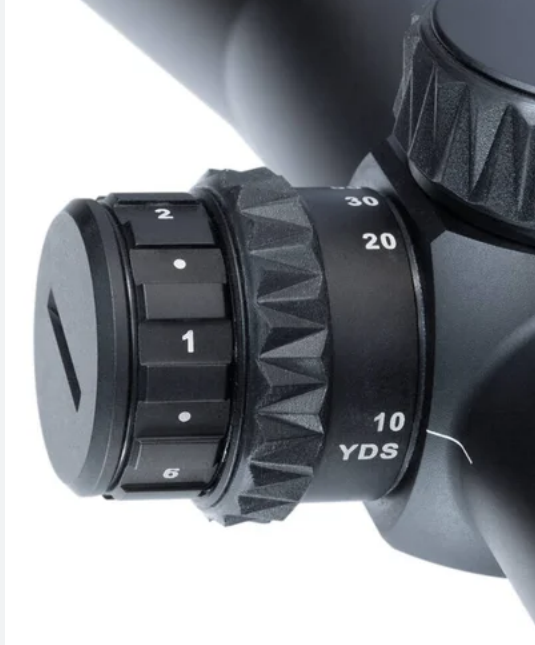
Look at the distance markings. Are they clearly marked and spaced far enough apart for fine adjustment? A knob where the markings for 100 and 200 yards are only 5 degrees of rotation apart doesn't give you much room to fine-tune. Better scopes spread the markings across more rotation, giving you finer control.
If possible, mount the scope and look through it at a known distance. Use the head-movement test to verify that the parallax adjustment actually eliminates reticle movement at the marked distance. If the knob reads 100 yards but you're looking at a target at 100 yards and the reticle still moves when you shift your head, the markings are off. That's not necessarily a dealbreaker, you can learn the actual settings, but it tells you something about the scope's quality control.
A quick word on reticle focal plane and parallax interaction
Some shooters worry that FFP reticles, because they change size with magnification, are more susceptible to parallax error. They're not. The reticle sits on the first focal plane regardless of magnification, and the parallax adjustment brings the target image to that plane. The size change of the reticle is a function of the magnification system, not the parallax system. They're independent.
What can happen with FFP scopes at very low magnification is that the reticle becomes so small that it's hard to see, which makes it harder to detect parallax error using the head-movement test. But the error isn't larger, it's just harder to see. At higher magnification where you'd actually care about parallax precision, the reticle is large enough to evaluate properly.
SFP reticles don't change size, so the head-movement test looks the same at all magnifications. The subtensions are only accurate at one magnification, but that's a holdover/ranging issue, not a parallax issue.
Setting up your scope from scratch: where parallax fits in the process
Parallax adjustment is step three in a four-step scope setup process. Getting the order wrong creates compounding errors.
Step one is mounting and leveling. The scope needs to be properly mounted in quality rings at the correct eye relief, with the reticle perfectly level relative to the rifle's bore. A canted reticle introduces tracking errors that no amount of parallax adjustment will fix. Use a leveling kit or a bubble level on the scope and the rifle's action to get this right.
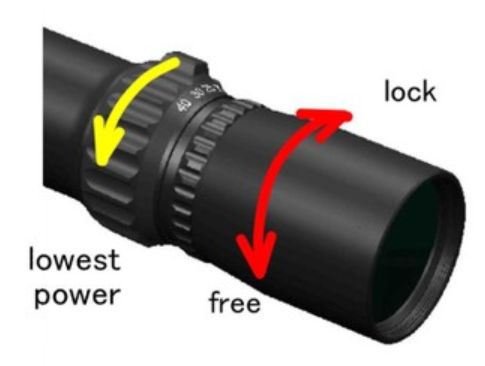
Step two is diopter adjustment. Point the scope at a bright, featureless background, the sky or a blank wall. Glance through the eyepiece briefly (don't stare, your eye will accommodate and compensate, giving you a false reading). Adjust the diopter ring until the reticle is crisp and black with no fuzziness. Lock the diopter ring if your scope has one. This setting is specific to your eye and shouldn't need to change unless your vision changes.
Step three is parallax adjustment. Now that the reticle is focused to your eye, you can accurately assess whether the target image is on the same focal plane. Use the head-movement test at your shooting distance. Adjust the parallax knob until reticle movement is eliminated.
Step four is zeroing. Bore sight or use a laser bore sighter to get on paper, then fire groups and adjust the turrets to move the point of impact to your desired zero distance. Parallax should be set for your zeroing distance before you start shooting groups, because uncorrected parallax during zeroing will spread your groups and make it harder to determine your true mechanical zero.
What to do next
Go to the range with your scope already mounted and the diopter set. Bring a target with a small, high-contrast aiming point, a one-inch black dot on white paper works perfectly. Set up at 100 yards with the rifle solidly supported.
Crank the magnification to maximum. Look through the scope and deliberately move your head a half inch in each direction behind the eyepiece. Watch the reticle against the dot. If it moves, adjust the parallax knob and repeat until it doesn't. Note where the knob actually sits versus what the marking says. Write it down or mark the knob.
Now move to 200 yards and repeat. Then 300. Build a personal reference card for your scope's actual parallax settings at known distances. This takes 20 minutes and gives you data you'll use every time you shoot at distance.
If your scope doesn't have adjustable parallax and you're shooting at distances and magnifications where you can see the reticle moving during the head-movement test, you have two options: accept the error as part of your accuracy budget (which is fine if it's small enough for your purpose), or upgrade to a scope with parallax adjustment. The test tells you whether you need to make that call. Mount it, zero it, then evaluate.