
You're building or upgrading an AR and the question is the same one it was three years ago, except the gear has gotten better on both sides. Do you run an LPVO, or do you run a red dot with a flip magnifier behind it? The answer hasn't become universal. It's become more nuanced, because the optics in both camps have improved enough that the wrong choice for your specific use case is the only real mistake you can make.

This isn't a specs-dump comparison. The goal here is to give you a framework for deciding based on how you actually shoot, what distances matter to you, and what tradeoffs you're willing to live with on the rifle you're building right now. Both setups cover the 0 to 300 yard carbine envelope. They just get there through completely different engineering decisions, and those differences matter more than most forum arguments acknowledge.
The core thesis is simple: the red dot plus magnifier is a speed-first system with modularity as a bonus, and the LPVO is a precision-tools-always-available system with optical unity across its magnification range. Neither is universally better. But one of them is almost certainly better for your build, your shooting, and your budget.
Why this debate matters more now than it did in 2022
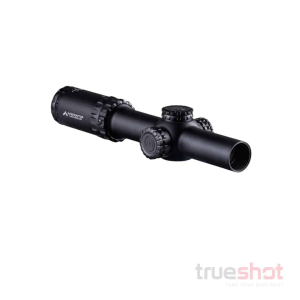
The LPVO market in 2026 has changed substantially from even a few years ago. Primary Arms, Vortex, Sig Sauer, Arken, and Athlon have flooded the category with first focal plane glass, daylight-bright illumination, and genuinely durable construction that would have cost $2,000 in 2018. The entry point for a usable LPVO has dropped to roughly $350 for something like the Primary Arms SLx 1-6x Gen IV, and the mid-tier now includes legitimate FFP options like the Primary Arms GLx 1-6x Gen II at around $549. That compression has made the LPVO accessible to shooters who previously couldn't justify the price.
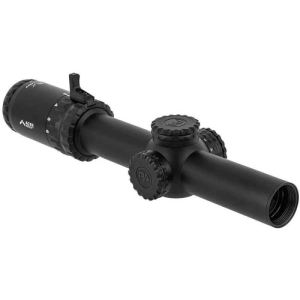
Primary Arms SLx 1-6x Gen IV Deals
Prices may change. May contain affiliate links.
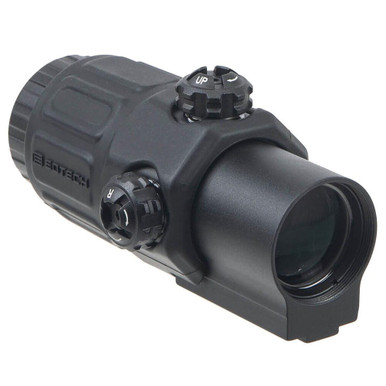
EOTech G33 Deals
Prices may change. May contain affiliate links.
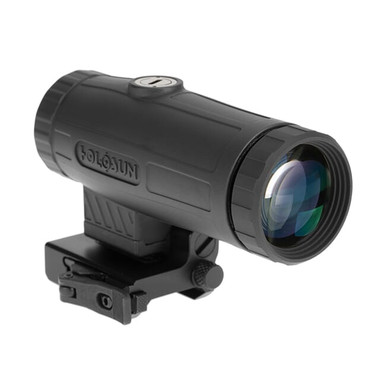
Holosun HM3X Deals
Prices may change. May contain affiliate links.
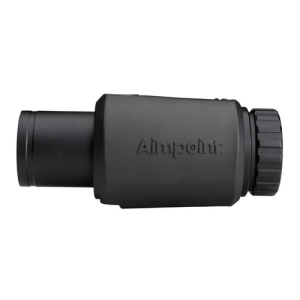
Aimpoint 3X-C Deals
Prices may change. May contain affiliate links.
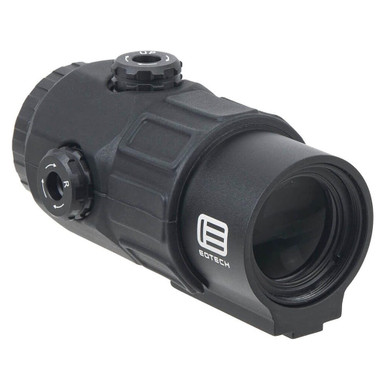
EOTech G45 Deals
Prices may change. May contain affiliate links.
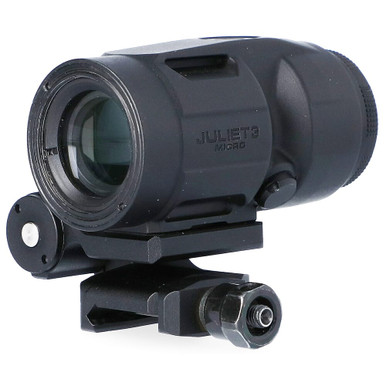
Sig Sauer Juliet 3 Deals
Prices may change. May contain affiliate links.
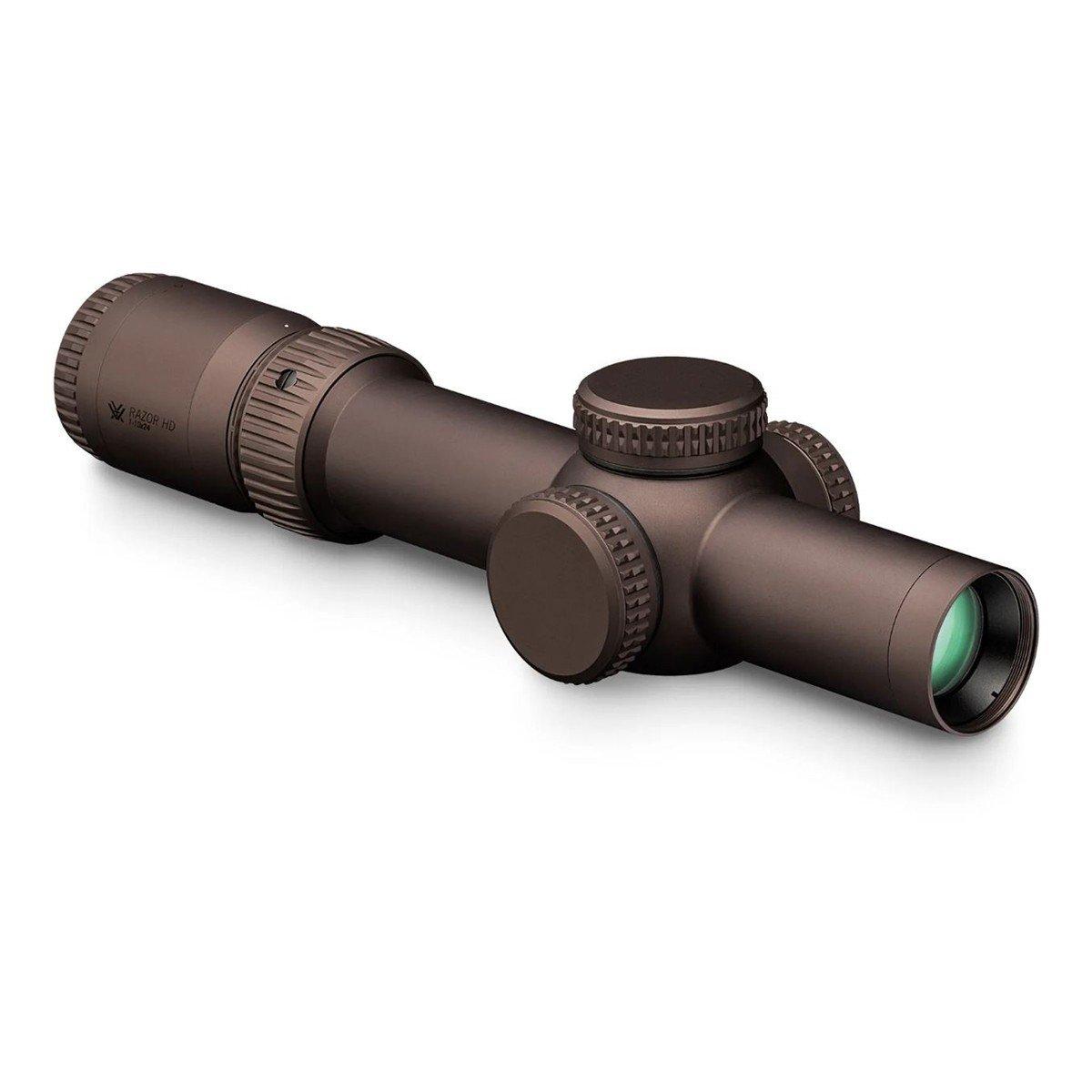
Vortex Razor HD Gen III 1-10x Deals
Prices may change. May contain affiliate links.
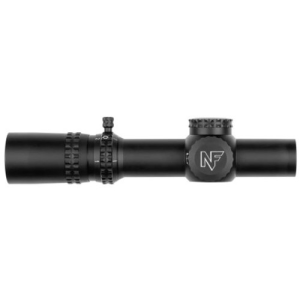
Nightforce ATACR 1-8x24 F1 Deals
Prices may change. May contain affiliate links.
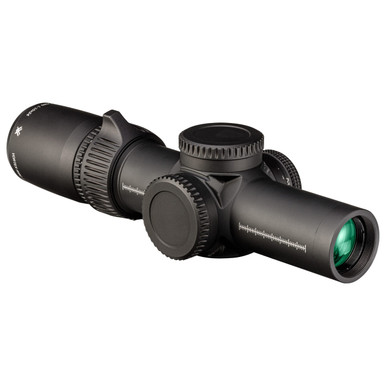
Vortex AMG 1-10x24 FFP Deals
Prices may change. May contain affiliate links.
Primary Arms GLx 1-6x Gen II
May contain affiliate links.
On the magnifier side, the options have expanded too. The EOTech G33 and G45, Aimpoint 3X-C, Holosun HM3X, and Sig Sauer Juliet 3 all represent mature, well-tested products. The G33 weighs 10.6 oz with its mount and has 2.2 inches of eye relief. The Aimpoint 3X-C comes in at 7.8 oz with a 6-degree field of view. These aren't compromised accessories anymore. They're purpose-built optical tools that have been refined over multiple generations.
Meanwhile, at the top end, Vortex introduced the AMG 1-10x24 FFP, a scope developed upon request from elite forces such as U.S. SOCOM and the British SAS and Royal Marines. Those units set the baseline for zero retention, optical performance, and extended operational durability during its development. The Nightforce ATACR 1-8x24 F1 remains the benchmark premium LPVO at 21 oz and roughly $2,800 to $2,900 depending on the variant. And the Vortex Razor HD Gen III 1-10x continues to be the gold standard for shooters who want 10x in a practical package, with an MSRP of $3,999.99 and street prices running about $2,449 to $2,499. The ceiling for LPVO performance has never been higher, and the floor has never been lower. That's what makes this decision harder and more worth thinking through carefully.
The speed argument: where the red dot plus magnifier wins
A red dot with a magnifier behind it is two separate optics living on the same rail. The red dot stays at true 1x. The magnifier, typically 3x, sits behind it on a flip-to-side mount that swings out of the way instantly when you don't need it. The close-range speed advantage here is real and measurable, not just theoretical.

The unlimited eye relief of a red dot means both-eyes-open shooting with almost zero head position sensitivity. You present the rifle, the dot is there, you press the trigger. There's no tube to look through, no eye box to find, no magnification ring to verify. For inside-the-house distances, for transitions in competition, for any scenario where fractions of a second on the first shot matter, the red dot is faster. That's not controversial. It's physics.
Where things get interesting is the transition. Flipping the magnifier into place takes roughly 0.8 seconds on a well-practiced setup like the EOTech G33. That's not nothing. If you haven't put significant dry-fire time on the mechanical transition, the speed advantage of the combo is on paper, not on the clock. The magnifier also introduces its own eye box demands. The G33's 2.2 inches of eye relief means you need consistent cheek weld when the magnifier is deployed, and the 7.3-degree field of view narrows your world compared to what you see through the naked red dot.
The modularity argument is legitimate too. If you know you'll be working exclusively inside tight structures for a training session or a specific scenario, you can detach the magnifier entirely to shed ounces. That flexibility doesn't exist with an LPVO. Your scope weighs what it weighs, all day, every rep.
Range notes
What you'll actually notice at the range with a dot-plus-magnifier setup is how natural the unmagnified shooting feels and how deliberate the magnified shooting becomes. The transition between those two modes isn't seamless the way spinning a magnification ring is. It's binary: you're at 1x or you're at 3x (or 5x with something like the G45). There's nothing in between. For some shooters and some use cases, that binary switch is exactly right. For others, it's a limitation.
The precision argument: where the LPVO wins
An LPVO gives you a reticle with holds and reference marks, and you can dial magnification as distance or target size changes. The reticle is the interface. Everything else is housing. And the LPVO's reticle does more work than a red dot's single aiming point ever can.
Nightforce MIL-XT reticle Deals
Prices may change. May contain affiliate links.
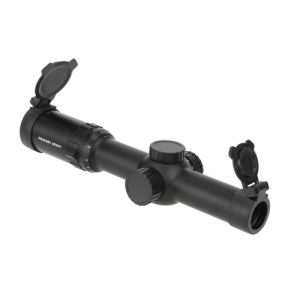
Primary Arms ACSS reticle Deals
Prices may change. May contain affiliate links.

At 6x, 8x, or 10x, you're identifying targets, reading wind indicators, and placing precise shots with holdover references that are built into the glass. With a first focal plane reticle, those references stay accurate across the entire magnification range. With second focal plane, they're accurate at one specific magnification, usually the highest. Either way, the LPVO gives you tools that a magnified red dot simply doesn't have. A 3x magnifier behind a 2 MOA dot gives you a magnified 2 MOA dot. It doesn't give you windage holds, BDC references, or ranging capability.
The optical clarity argument matters too. An LPVO is a unified optical system designed from the ground up for consistent image quality across its magnification range. A magnifier behind a red dot is amplifying whatever the red dot projects, including any distortion, dot bloom, or optical artifacts. The pairing works well with quality components, but it's fundamentally different from looking through purpose-ground glass at 6x.
For shooters who regularly engage targets past 200 yards, who need positive identification at distance, or who want the ability to make precise shots on small targets like steel plates at 300 to 400 yards, the LPVO is the more capable tool. The reticle-based holds in systems like the Primary Arms ACSS or the Nightforce MIL-XT give you information that no dot-plus-magnifier setup can replicate.
The weight and balance question: it's not what you think
Conventional wisdom says the LPVO is heavier. That's not always true.
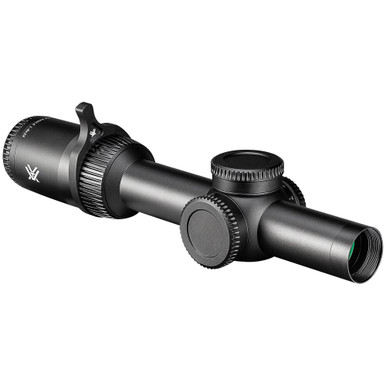
Vortex Strike Eagle 1-8x FFP Deals
Prices may change. May contain affiliate links.
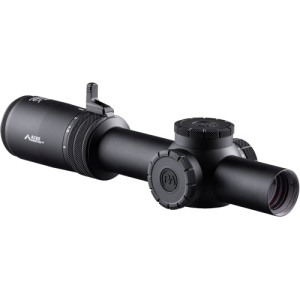
Primary Arms PLxC 1-8x Deals
Prices may change. May contain affiliate links.
A red dot plus a 3x magnifier on a QD mount can reach roughly 16 to 18 oz of combined optics weight before mounts. A mid-tier LPVO in the same footprint often comes in around 14 to 16 oz. The Primary Arms SLx 1-6x weighs about 17.9 oz. The Vortex Strike Eagle 1-8x FFP runs about 23.9 oz with a 30mm tube. The Primary Arms PLxC 1-8x comes in at 16.95 oz. If you're building a carbine for movement-heavy applications, the LPVO can actually be the lighter choice, depending on which specific products you're comparing.

But weight is only half the equation. Balance matters more than total ounces. Two separate optics on the rail create a different balance profile than a single optic. The magnifier sits further back, the dot sits forward, and the combined footprint eats more rail space than a single LPVO in a cantilever mount. If your rifle already feels front-heavy from a long handguard, weapon light, and suppressor-ready muzzle device, adding two optics and two mounts can make the handling worse in ways that the scale doesn't capture.
The practical takeaway: if you care about weight, weigh the actual systems you're considering, mounted, with all hardware. Don't assume one category is lighter than the other.
The eye box tells the real story
This is where the LPVO's weakness lives, and it's the single biggest factor that drives people toward the dot-plus-magnifier setup.
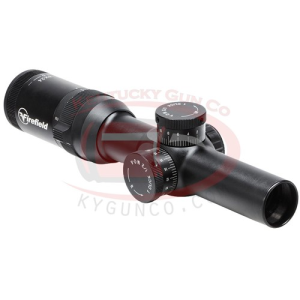
Firefield LPVO Deals
Prices may change. May contain affiliate links.
An LPVO has a demanding eye box at higher magnifications. At 1x, most modern LPVOs are reasonably forgiving, but "reasonably forgiving" still isn't the same as a red dot's essentially infinite eye box. At 6x or 8x, you need your eye in a specific position behind the scope to see a full, clear image. If your cheek weld shifts under recoil, during a position transition, or because you're breathing hard after a sprint, the image darkens or disappears. That's not a defect. It's how tube optics work. But it's a real performance factor that matters under stress.

The dot-plus-magnifier setup has its own eye box issues when the magnifier is deployed, but when the magnifier is flipped to the side, the red dot is completely forgiving. That split personality is the core appeal of the system: you get no-compromise close-range speed when you need it, and you accept some compromise at distance when you flip the magnifier in.
LPVOs at the premium end have significantly better eye boxes than budget models. The Nightforce ATACR 1-8x, the Vortex Razor HD Gen III 1-10x, and the Vortex AMG 1-10x24 were all designed with eye box forgiveness as a primary engineering target. But you're paying $1,900 to $3,999 or more for that forgiveness. At the $300 to $700 tier, expect the eye box to be noticeably tighter, especially above 6x.
Counter-arguments worth taking seriously
There are a few objections to the framework above that deserve honest engagement.
The first is that LPVO "true 1x" has gotten good enough to match a red dot for close-range speed. Some shooters argue this, and modern LPVOs at 1x are dramatically better than they were five years ago. But the physical constraints of aiming through a tube add variables that a red dot doesn't have. In close quarters, those variables cost fractions of a second. The gap has narrowed, but it hasn't closed. If your primary use is CQB-distance work with occasional need for magnification, the dot-plus-magnifier still has the edge up close.

The second objection is that the magnifier setup is "good enough" at distance to replace an LPVO. At 3x through a quality magnifier like the G33 or Aimpoint 3X-C, you can absolutely make hits at 200 yards and beyond. But "making hits" and "having the optical tools to make precise, repeatable hits with holdover and wind references" are different things. The magnifier amplifies the dot. It doesn't add reticle features. If your shooting is primarily inside 200 yards with only occasional need to reach further, the magnifier setup is genuinely good enough. Past that, the LPVO's reticle advantage compounds with every yard.
The third objection is that the LPVO plus offset red dot setup makes this entire debate obsolete. This hybrid approach, running an LPVO as the primary optic with a small red dot mounted at a 35 to 45 degree offset or on a piggyback mount above the scope, gives you both a magnified precision channel and a fast close-range channel. The LPVO handles identification and confirmation; the offset dot handles speed and orientation. It's a legitimate system that military and competitive shooters increasingly run. But it adds cost, weight, complexity, and training requirements. The offset dot doesn't replace the LPVO; it supplements it. And you need practice with the transition between the two sight channels to actually realize the speed benefit. For shooters who are willing to invest that training time, it's arguably the best of both worlds. For everyone else, it's an expensive way to add a sight you don't practice with enough.
Common mistakes to avoid
Buying a cheap magnifier and expecting premium performance. The optical quality of the magnifier matters enormously. A poor magnifier will amplify dot distortion, introduce its own parallax issues, and have an eye box so tight it's barely usable under any kind of stress. The Holosun HM3X is the floor for a usable magnifier. Below that price tier, you're gambling.
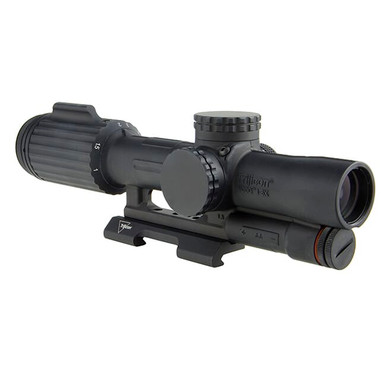
Trijicon VCOG Deals
Prices may change. May contain affiliate links.

Forgetting the mount cost for an LPVO. A quality cantilever mount is required to position an LPVO correctly on AR-15 platforms. Standard rings won't give you proper eye relief. Budget $100 to $250 for a mount that won't shift zero, and factor that into your total system cost. The hidden cost of mounting hardware is the most common budget surprise for first-time LPVO buyers.
Not confirming magnifier alignment. A mismatch between the magnifier and the red dot causes a parallax-like offset. After mounting, confirm that the magnifier's optical axis is aligned with the red dot's emitter. This isn't a set-and-forget step. Check it after any mount adjustment.
Choosing magnification range based on maximum number rather than realistic use. A 1-10x LPVO sounds great until you realize you spend 90% of your time between 1x and 4x. Every jump in magnification range adds weight, tightens the eye box at the top end, and often compromises 1x performance. For home defense, three-gun, patrol work, and hunting out to 400 to 500 yards, 6x is enough. Jumping to 1-8x buys roughly 33% more magnification at the cost of weight, a 34mm tube on most designs, and tighter eye relief at the top end.
Assuming durability is equal across price tiers. Modern LPVOs from Trijicon, Vortex, Nightforce, and Leupold pass MIL-STD-810G drop and immersion testing. The USMC's Trijicon VCOG is forged from a 7075-T6 aluminum housing specifically for combat use. Budget optics don't necessarily fail, but they haven't been tested to the same standards. If hard use is in your future, factor durability testing and warranty support into your decision.
Five setups worth comparing
These represent the realistic tiers where most shooters are making this decision.
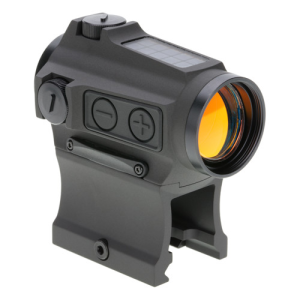
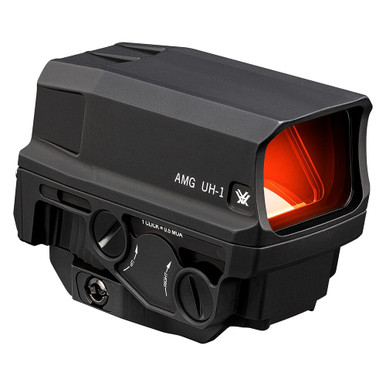
Vortex UH-1 Deals
Prices may change. May contain affiliate links.
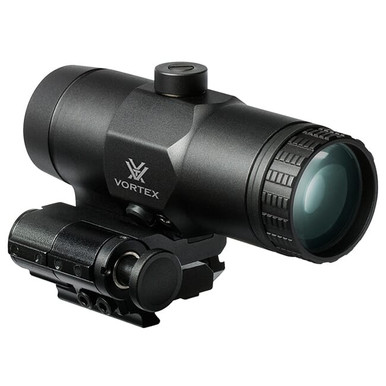
Vortex VMX-3T Deals
Prices may change. May contain affiliate links.
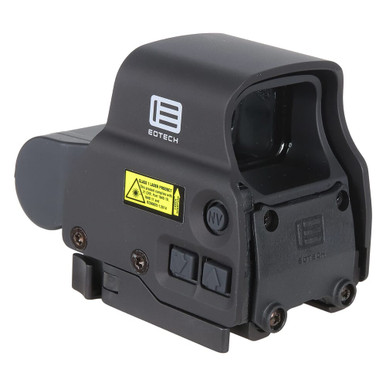
EOTech EXPS3 Deals
Prices may change. May contain affiliate links.
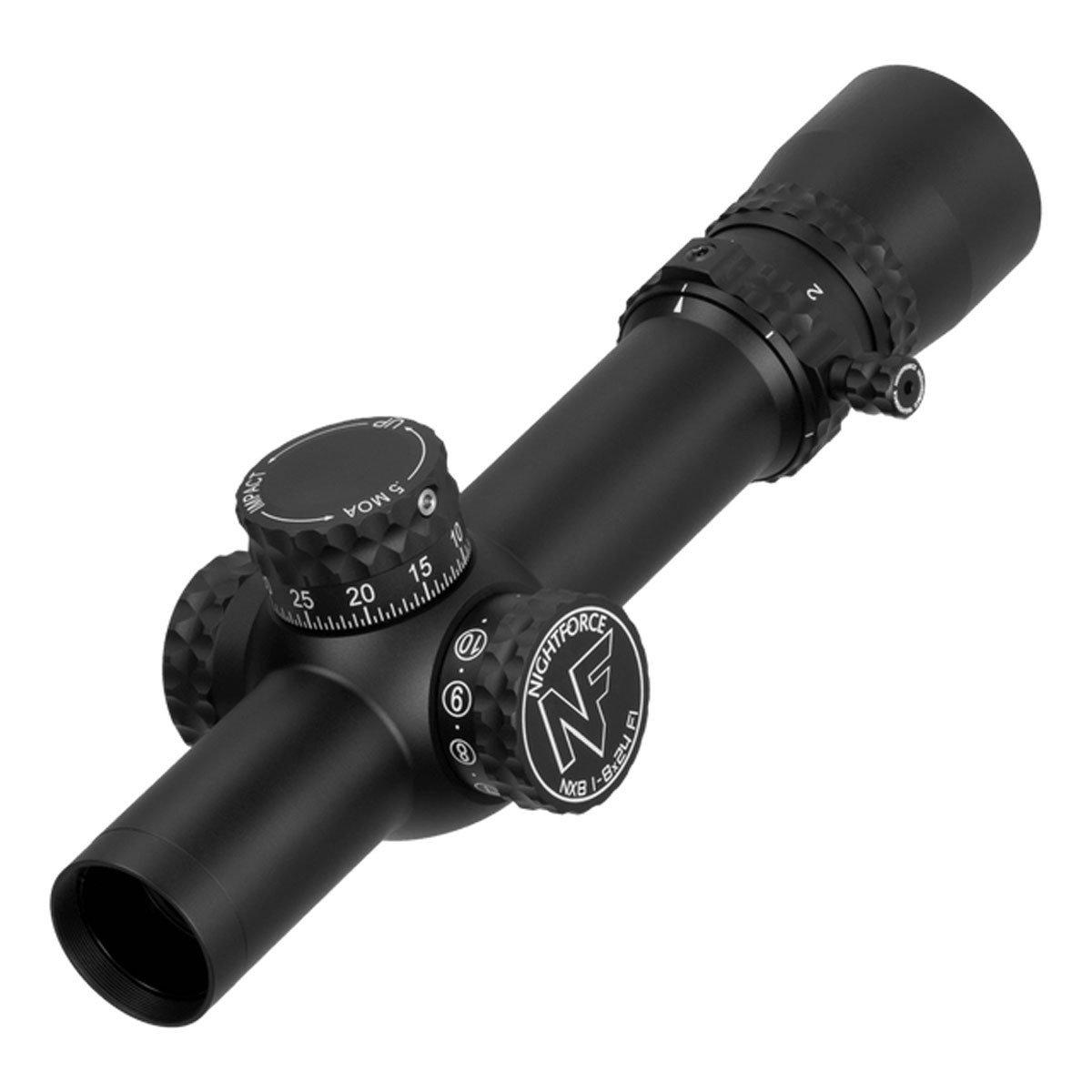
Nightforce NX8 1-8x24 F1 Deals
Prices may change. May contain affiliate links.
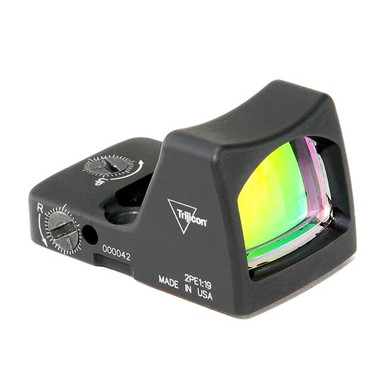
Trijicon RMR Deals
Prices may change. May contain affiliate links.
Primary Arms ACSS Raptor M6 reticle Deals
Prices may change. May contain affiliate links.
Scalarworks mount Deals
Prices may change. May contain affiliate links.
The budget LPVO option is the Primary Arms SLx 1-6x Gen IV with the ACSS Nova reticle, weighing about 17.9 oz. It's one of the lightest entry-level LPVOs, and the ACSS reticle system gives you holdover references that justify choosing an LPVO over a dot-plus-magnifier in the first place. The 1x has noticeable fisheye distortion and the magnification ring runs stiff, but the glass is functional and the reticle does real work at 6x. Street price sits at $349.99 across reticle variants.
The budget dot-plus-magnifier option pairs the Holosun HE503CU with the Holosun HM3X. The HM3X is the best compact, lightweight magnifier at its price point, and the 503CU gives you a reliable dot with shake-awake and solar backup. Combined system weight is competitive with the SLx, and you get genuinely fast 1x performance with a usable 3x option when you need it. Combined price runs around $450.

The mid-tier LPVO is the Primary Arms GLx 1-6x Gen II with the ACSS Raptor M6 reticle at about $549. This is the winner of the sub-$1,000 LPVO category in 2026 according to multiple reviewers, delivering FFP glass and daylight-bright illumination at half the price of equivalent performance three years ago. For shooters who want an LPVO and don't want to spend over $600 on the optic alone, this is the one to beat.
The mid-tier dot-plus-magnifier setup runs the Vortex UH-1 holographic sight with the VMX-3T magnifier, coming in around $700 combined. The UH-1's holographic reticle is cleaner under magnification than most reflex dots, and the system gives you genuine holographic performance without going to EOTech pricing.
The premium dot-plus-magnifier is the EOTech EXPS3 paired with the G33 magnifier. The EXPS3 has ten dedicated night vision settings that don't bloom under NV, and the 68 MOA ring handles CQB work while staying precise enough for distance. The G33 is the magnifier most other magnifiers are measured against, with 3x magnification, 10.6 oz with mount, and 7.3-degree field of view. Combined price runs around $1,279 to $1,400. The EXPS3 is also NV-compatible, which matters if night vision is in your future.
At the premium LPVO tier, the Vortex Razor HD Gen III 1-10x24 at roughly $2,500 street price (with an MSRP of $3,999.99) and the Nightforce ATACR 1-8x24 F1 at roughly $2,800 to $2,900 represent the current ceiling for practical LPVO performance. The Razor Gen III weighs 21.5 oz and gives you 10x in an FFP package. The ATACR weighs 21 oz and is the optic that won the USSOCOM S-VPS contract, commonly fielded by SOCOM units including Green Berets alongside the Vortex Razor HD Gen II/III, which has seen service with Delta Force, Marine Recon, and other special operations elements. If budget isn't the constraint, these are the LPVOs that make the strongest case against ever needing a separate magnifier.

What to do next
Pick the system that matches your primary use, not the one that covers the most theoretical scenarios. If your AR is mostly a 0 to 100 yard rifle and you want the fastest possible close-range performance with the option to reach out occasionally, the dot-plus-magnifier is your setup. If your AR needs to work consistently from 50 to 400 yards with reticle-based precision tools always available, the LPVO is your setup. If you're genuinely split, ask yourself one question: do you value always-ready speed or always-available reticle utility? That's the tie-breaker.
Once you've chosen, mount it, zero it, then evaluate. Zero the red dot at 50/200 and confirm magnifier alignment to avoid parallax drift. Zero the LPVO per the reticle manufacturer's recommended distance, confirm turret tracking with a box test, and spend time at both 1x and max magnification before you form an opinion. Either system rewards practice. Neither system rewards buying and immediately judging from the bench.
How this makes you a better shooter
The real value of thinking through this decision carefully isn't the gear. It's the clarity about what you're actually trying to do with your rifle. A shooter who understands why they chose an LPVO over a dot-plus-magnifier, or vice versa, trains more deliberately, zeros more precisely, and spends less time second-guessing equipment at the range. The optic is a tool. Matching the tool to the job is the skill. Everything after that is trigger time.