The Army just made the most significant small-arms caliber change since it adopted the M16 in the 1960s. After sixty years of 5.56×45mm NATO, the Next Generation Squad Weapon (NGSW) program selected SIG Sauer's 6.8×51mm cartridge; commercially known as the .277 SIG Fury; as the new common round for the XM7 rifle and XM250 automatic rifle. The stated reason is simple: defeat modern body armor at combat distances. The practical implications are anything but simple.
This isn't a minor ballistic tweak. The 6.8×51mm operates at chamber pressures nearly double those of 5.56 NATO, pushes a heavier projectile faster and farther, and demands an entirely new family of weapons, optics, and logistics chains to support it. Soldiers carrying this system will carry fewer rounds for more weight. The rifle is heavier. The recoil is sharper. And the Army is betting that the lethality gains justify every one of those trade-offs.
Whether you're an NCO trying to understand what's about to land in your arms room, a Guard soldier wondering if you'll ever see these things, or a civilian shooter curious about the .277 Fury on the commercial market, the caliber shift matters. Here's what actually changed, why, and what it means at the squad level.
The problem 5.56 was never designed to solve
The 5.56×45mm NATO cartridge entered widespread U.S. military service with the M16 during the Vietnam War. The logic at the time was sound: a smaller, lighter, faster round meant soldiers could carry more ammunition, shoot with less recoil, and still deliver lethal effects inside typical jungle engagement distances of 300 meters or less. The M193 ball round pushed a 55-grain projectile at roughly 3,250 feet per second from a 20-inch barrel. It was devastating at close range due to its tendency to yaw and fragment in soft tissue.
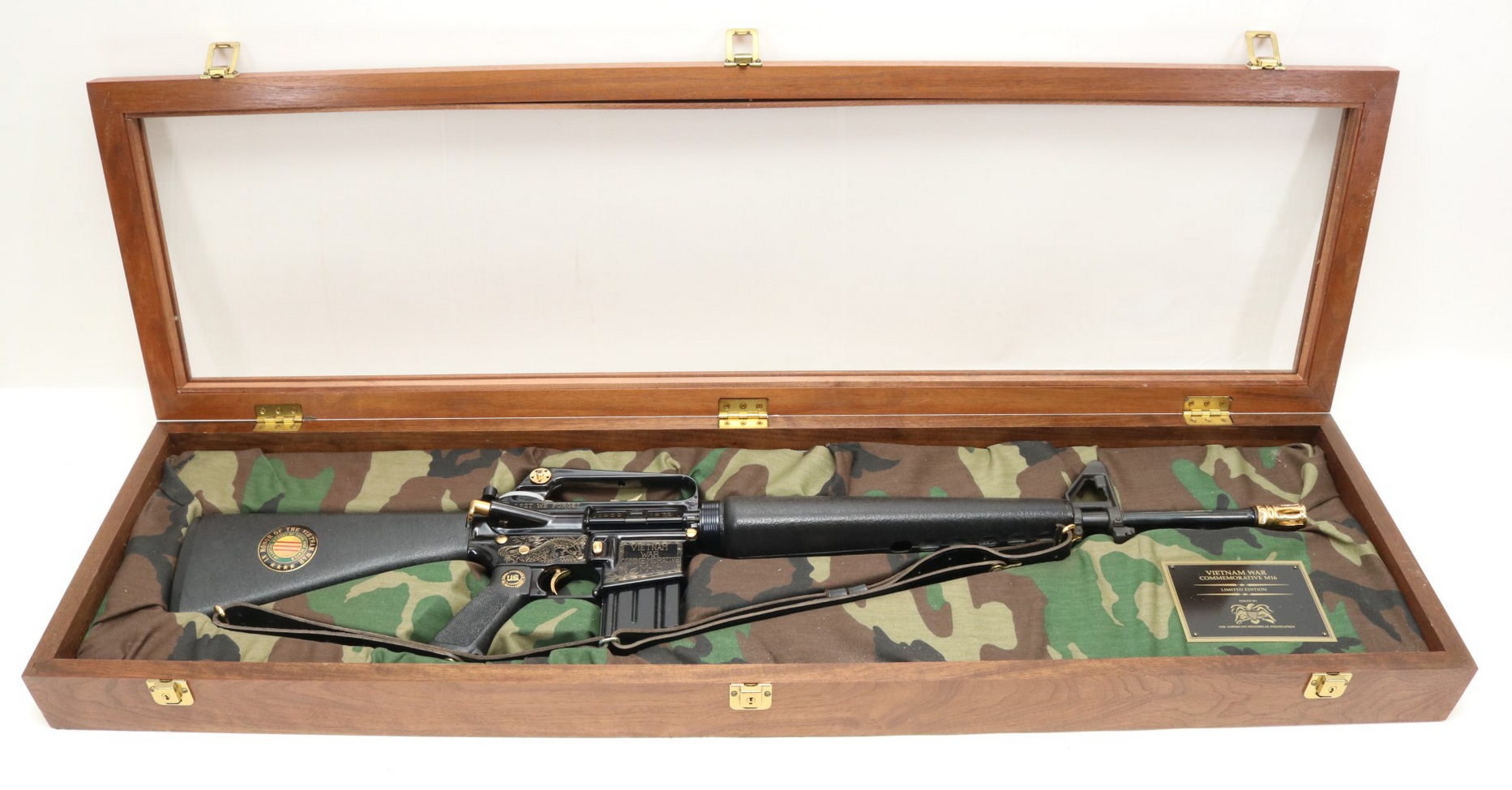
Over the decades, the cartridge evolved. The SS109/M855 round bumped the bullet weight to 62 grains with a steel penetrator tip, improving performance against light barriers and extending effective range. The M855A1 Enhanced Performance Round, fielded in 2010, pushed that further with a copper slug and hardened steel penetrator, improving terminal performance and barrier penetration significantly. M855A1 is genuinely excellent ammunition, arguably the best 5.56 ball round ever fielded by any military.
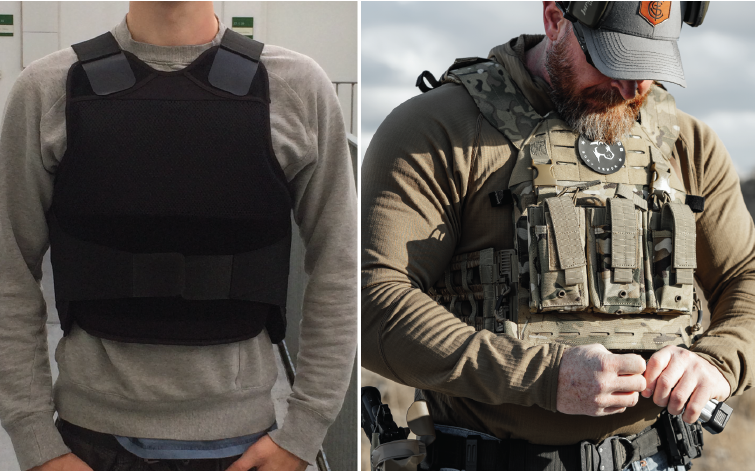
But the fundamental physics of 5.56 haven't changed. You're still working with a .224-caliber projectile in the 62- to 77-grain range. Muzzle energy from an M4A1's 14.5-inch barrel tops out around 1,300 foot-pounds. By 500 meters, that energy has dropped below 400 foot-pounds, and the bullet is struggling to defeat anything harder than a PASGT helmet. Against Level IV ceramic plates, the kind of body armor that near-peer adversaries are now fielding in quantity, 5.56 is not getting through. Not at 100 meters, not at 50.
That's the problem. The threat changed. Body armor proliferated. Russian Ratnik kits, Chinese plate carriers, even non-state actors with access to commercial Level IV plates, the battlefield assumption that your rifle round will incapacitate on a center-mass hit is no longer safe. The Army looked at the next twenty years of potential conflict and decided that a round designed to wound unarmored conscripts in triple-canopy jungle wasn't going to cut it against armored infantry in open terrain.
What the 6.8×51mm actually is
The 6.8×51mm is not a warmed-over 6.8 SPC. That's the first misconception worth killing. The 6.8 Remington SPC, developed in the early 2000s for SOCOM, shares nothing but a rough bore diameter with the new cartridge. The 6.8×51mm is a fundamentally different animal built around a case technology that didn't exist when the SPC was designed.
The cartridge uses a hybrid case, SIG's patented design features a stainless steel base mated to a brass body. This allows the case to handle chamber pressures of approximately 80,000 PSI, compared to roughly 62,000 PSI for 7.62×51mm NATO and about 55,000 PSI for 5.56 NATO. That's an enormous jump. For context, most commercial rifle cartridges operate between 55,000 and 65,000 PSI. The 6.8×51mm is running pressures that would turn a standard bolt-action receiver into shrapnel.
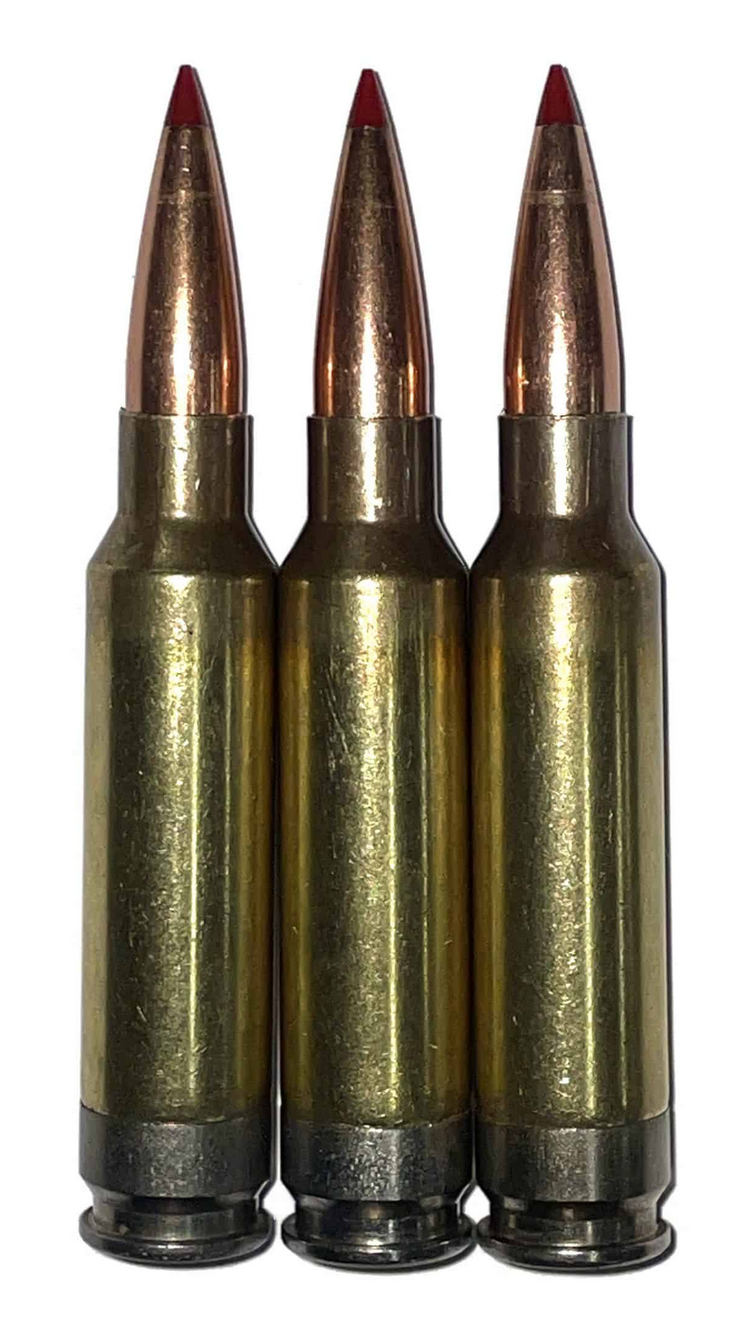
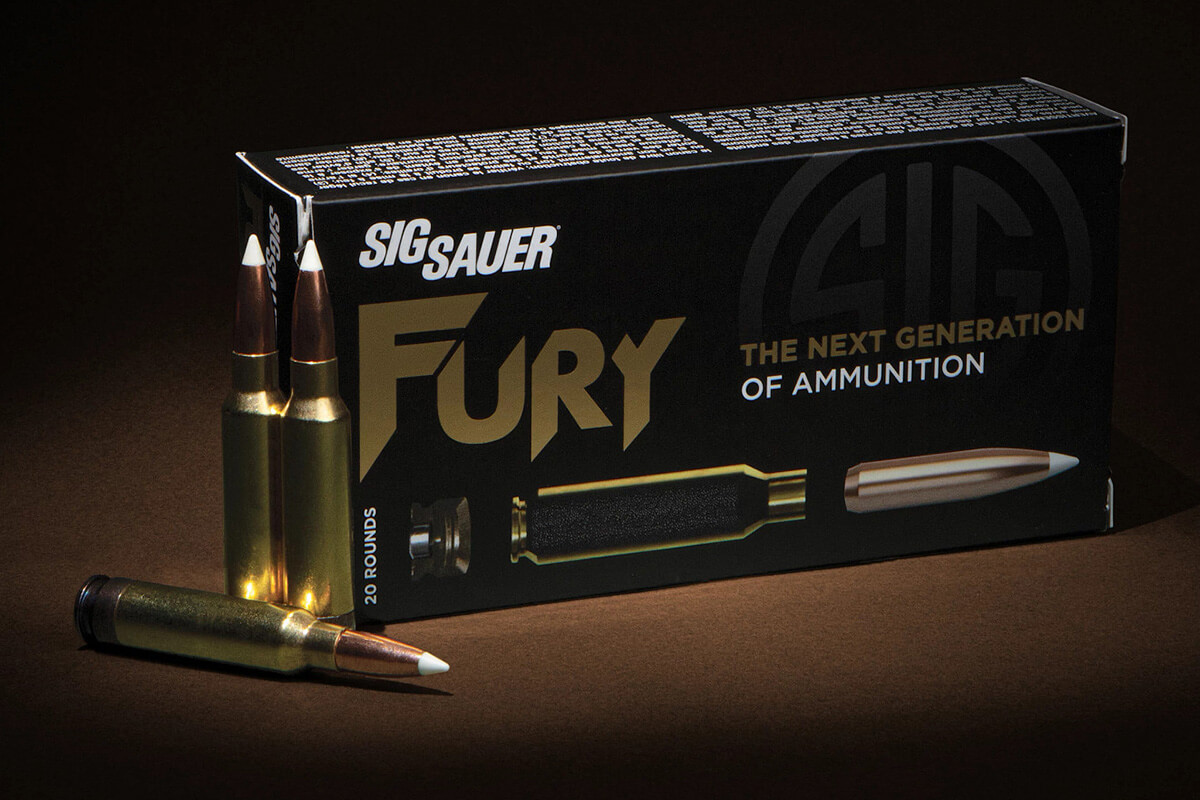
That pressure is the whole trick. It's what allows a .277-caliber (6.8mm) 135-grain bullet to leave the muzzle of the XM7's 13-inch barrel at approximately 2,800 feet per second, generating around 2,350 foot-pounds of muzzle energy. From a 16-inch barrel, the length used in SIG's commercial MCX Spear, velocity climbs to roughly 3,000 fps, and energy approaches 2,700 foot-pounds.
Here's the factoid that makes civilians' eyes go wide: the 6.8×51mm from a 13-inch barrel produces energy comparable to a 7.62×51mm NATO round from a 22-inch barrel. It's stuffing .308 Winchester energy into a platform barely larger than an M4. That's what 80,000 PSI buys you.
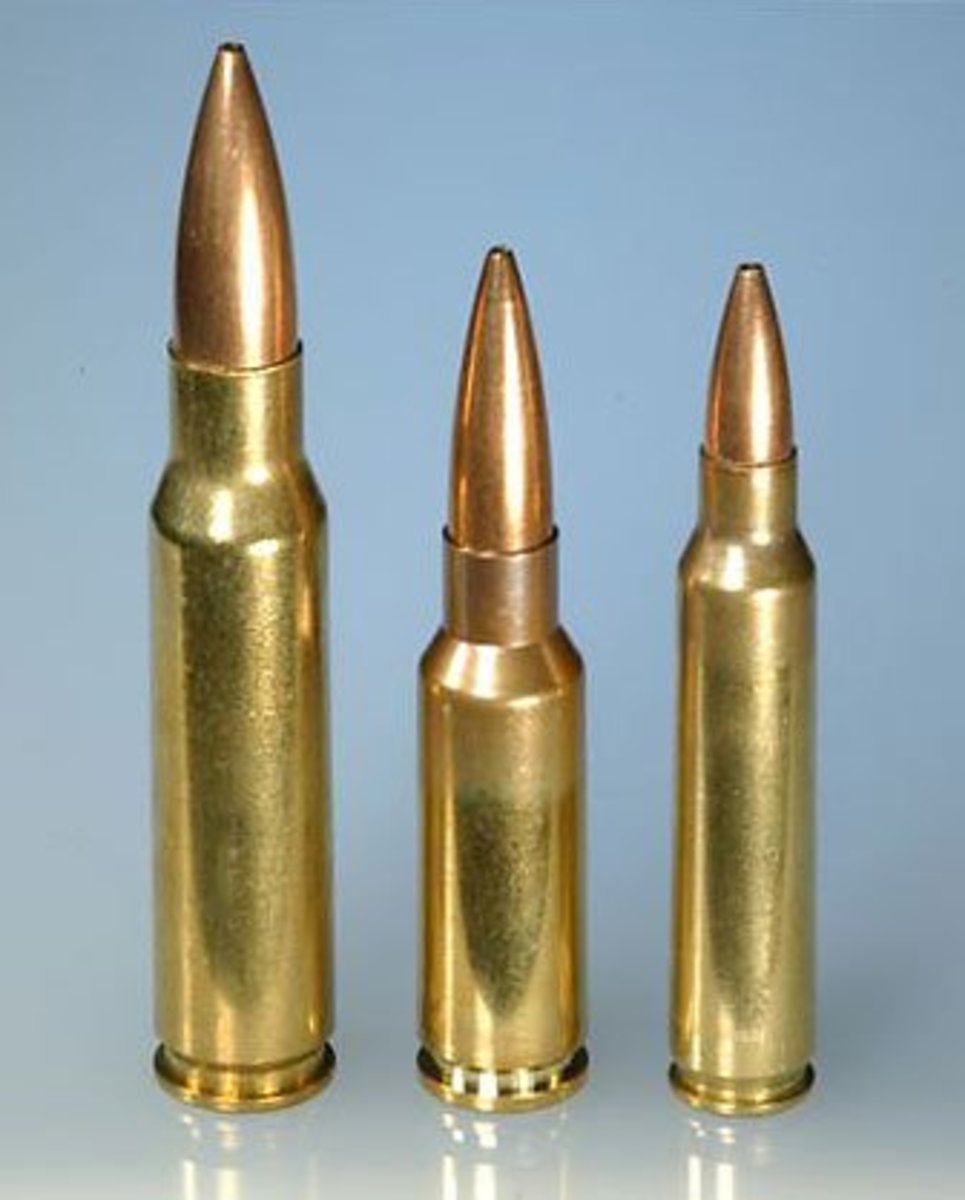
The bullet itself is a .277-caliber 135-grain projectile with a high ballistic coefficient, SIG's commercial loading uses a hybrid open-tip match design. The military projectile specifics remain largely controlled, but the general parameters are known: it's optimized for both long-range ballistic performance and terminal effect against hard barriers. The combination of velocity, mass, and sectional density gives the 6.8×51mm the ability to defeat Level IV body armor at distances where 5.56 and even 7.62 NATO cannot.
Winchester .308 Winchester cartridge Deals
Prices may change. May contain affiliate links.
The hybrid case, explained
The stainless steel case head is the engineering that makes this possible. Brass is a wonderful cartridge case material, it's malleable, it obturates (seals) the chamber well, and it's easy to manufacture. But brass has a yield strength ceiling. Push chamber pressures past a certain point and the case head will fail catastrophically. That's why conventional cartridges are pressure-limited.
SIG's solution was to use steel where the pressure is highest (the case head and web area) and brass where malleability matters (the body and shoulder). The two metals are joined in manufacturing. The result is a case that can handle pressures roughly 30% higher than anything brass alone could manage, while still extracting reliably from a semi-automatic action.
There's a cost. Literally. The hybrid cases are significantly more expensive to produce than conventional brass. They're also heavier, each loaded round weighs more than a comparable 7.62 NATO cartridge. The Army has acknowledged that a lighter, cheaper all-brass or bi-metal case is the long-term goal, but the hybrid case is what's fielded now. Whether industry can deliver a conventional case that handles 80,000 PSI remains an open engineering question.
The numbers side by side
Raw ballistic comparison tells most of the story. These figures use military barrel lengths and standard ball ammunition:
| Specification | 5.56×45mm NATO (M855A1) | 6.8×51mm (XM7 load) | 7.62×51mm NATO (M80A1) |
|---|---|---|---|
| Bullet weight | 62 gr | ~135 gr | 130 gr |
| Barrel length (service weapon) | 14.5 in (M4A1) | 13 in (XM7) | 22 in (M240) / 16 in (M110A1) |
| Muzzle velocity (approx.) | 2,970 fps | 2,800 fps | 2,800 fps (22-in) |
| Muzzle energy (approx.) | 1,311 ft-lbs | 2,350 ft-lbs | 2,260 ft-lbs (22-in) |
| Max effective range (point target) | 500 m (M4A1) | 600+ m (XM7) | 800 m (M240) |
| Chamber pressure | ~55,000 PSI | ~80,000 PSI | ~62,000 PSI |
| Cartridge weight (loaded) | ~12.3 g | ~22 g | ~25.4 g |
| Magazine capacity (standard) | 30 rd | 20 rd | Belt-fed |
A few things jump off the chart. The 6.8×51mm nearly doubles the muzzle energy of 5.56 while matching or exceeding 7.62 NATO from a barrel nine inches shorter. That's the headline. But the cartridge weight is the counter-headline, each 6.8×51mm round weighs roughly 80% more than a 5.56 round. A basic combat load of 210 rounds of 5.56 (seven 30-round magazines) weighs about 5.7 pounds in ammo alone. The same weight budget buys you roughly 117 rounds of 6.8×51mm. Even with the XM7's 20-round magazines, a soldier carrying seven magazines has only 140 rounds, and they weigh about 6.8 pounds.
The math is unforgiving. More energy per round, fewer rounds per soldier. The Army's bet is that increased lethality per trigger pull, especially the ability to defeat armor, compensates for reduced volume of fire. That's a doctrinal shift, not just a ballistic one.
Lethality: what the caliber change actually buys
Lethality isn't just about muzzle energy, though energy matters. It's about what the projectile does when it arrives. Three factors determine whether a round stops a fight: penetration through barriers, wound channel severity, and the distance at which both remain effective.
Armor defeat
This is the primary driver of the NGSW program. The Army's requirement was explicit: the new round must defeat current and anticipated near-peer body armor at combat-relevant distances. The specific armor threat levels referenced in program documents remain classified, but the general picture is clear.
Level IV NIJ-rated ceramic plates are designed to stop a single hit of .30-06 M2 AP (armor-piercing), a 166-grain bullet at 2,880 fps. That's roughly 3,050 foot-pounds of energy delivered through a hardened steel penetrator. The 6.8×51mm, with its purpose-built AP projectile, is designed to defeat equivalent or better protection at distances out to at least 600 meters. The combination of velocity, projectile construction, and energy retention at range gives it a capability that 5.56 simply cannot match regardless of projectile design.
M855A1 is an impressive round against soft targets and intermediate barriers, windshields, car doors, cinder blocks. Against a proper ceramic/polyethylene composite plate, it's not getting through. The physics don't support it. A 62-grain projectile at 2,970 fps delivers about 1,311 foot-pounds at the muzzle and sheds energy rapidly. By 300 meters, you're under 800 foot-pounds. That's not defeating a Level IV plate at any angle.
The 6.8×51mm changes that equation. At 300 meters, it's still carrying well over 1,500 foot-pounds. At 500 meters, it retains more energy than 5.56 has at the muzzle. The higher sectional density of the .277-caliber 135-grain bullet means it resists deceleration better and maintains its velocity advantage at distance. Against armored targets, the combination of remaining velocity and projectile construction is the difference between a soldier who's still in the fight and one who isn't.
Terminal performance against soft targets
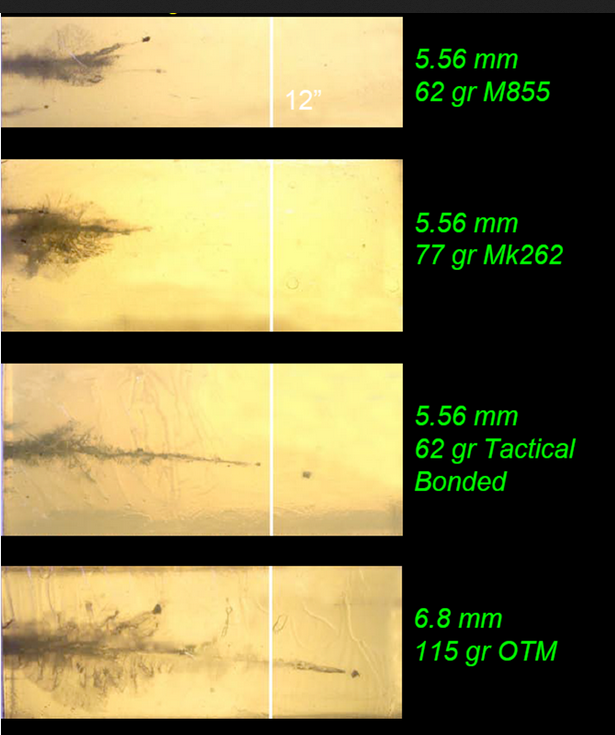
Against unarmored personnel, the 6.8×51mm is devastating in a different way than 5.56. The 5.56 NATO's lethality mechanism relies heavily on velocity, specifically, the round needs to be traveling above roughly 2,500 fps to reliably yaw and fragment in tissue. Below that threshold, the small-caliber bullet tends to pencil through, creating a narrow wound channel that may not incapacitate quickly. From an M4A1's 14.5-inch barrel, 5.56 drops below the fragmentation threshold somewhere between 100 and 200 meters depending on the specific load. M855A1 improved this with its design, but the physics of a 62-grain .224-caliber projectile still impose limits.
The 6.8×51mm delivers a 135-grain bullet with substantially more momentum and energy. Even as velocity drops at range, the heavier bullet transfers more energy to the target. The wound channel is larger. The probability of incapacitation on a single hit is higher at every distance. At close range, the difference is less tactically significant, both rounds are highly lethal inside 100 meters against unarmored targets. At 400 to 600 meters, the gap becomes enormous.
Extended effective range
The XM7's stated maximum effective range against a point target exceeds 600 meters. The M4A1's is 500 meters, and anyone who's worked a qualification range knows that consistent hits at 300 meters are a challenge for average soldiers, let alone 500. The effective range increase matters less for the typical rifleman and more for the designated marksman and automatic rifleman roles.
The XM250 automatic rifle, replacing the M249 SAW, is where the range extension gets genuinely interesting. The M249 in 5.56 has a maximum effective range of about 800 meters on area targets. The XM250 in 6.8×51mm extends that while delivering dramatically more energy per round at every distance. A machine gun that can defeat armored targets at 600+ meters is a fundamentally different capability than one that's effective primarily against exposed personnel.
The weight problem nobody wants to talk about
Here's where the briefing slides stop looking so clean.
The XM7 rifle weighs approximately 8.4 pounds unloaded. Add a loaded 20-round magazine, the XM157 Fire Control optic (which weighs about 2.8 pounds with its integrated mount), and you're looking at a combat-ready weapon that tips the scales near 12.5 pounds. The M4A1 with a loaded 30-round magazine and an Aimpoint CCO weighs roughly 8.5 pounds.
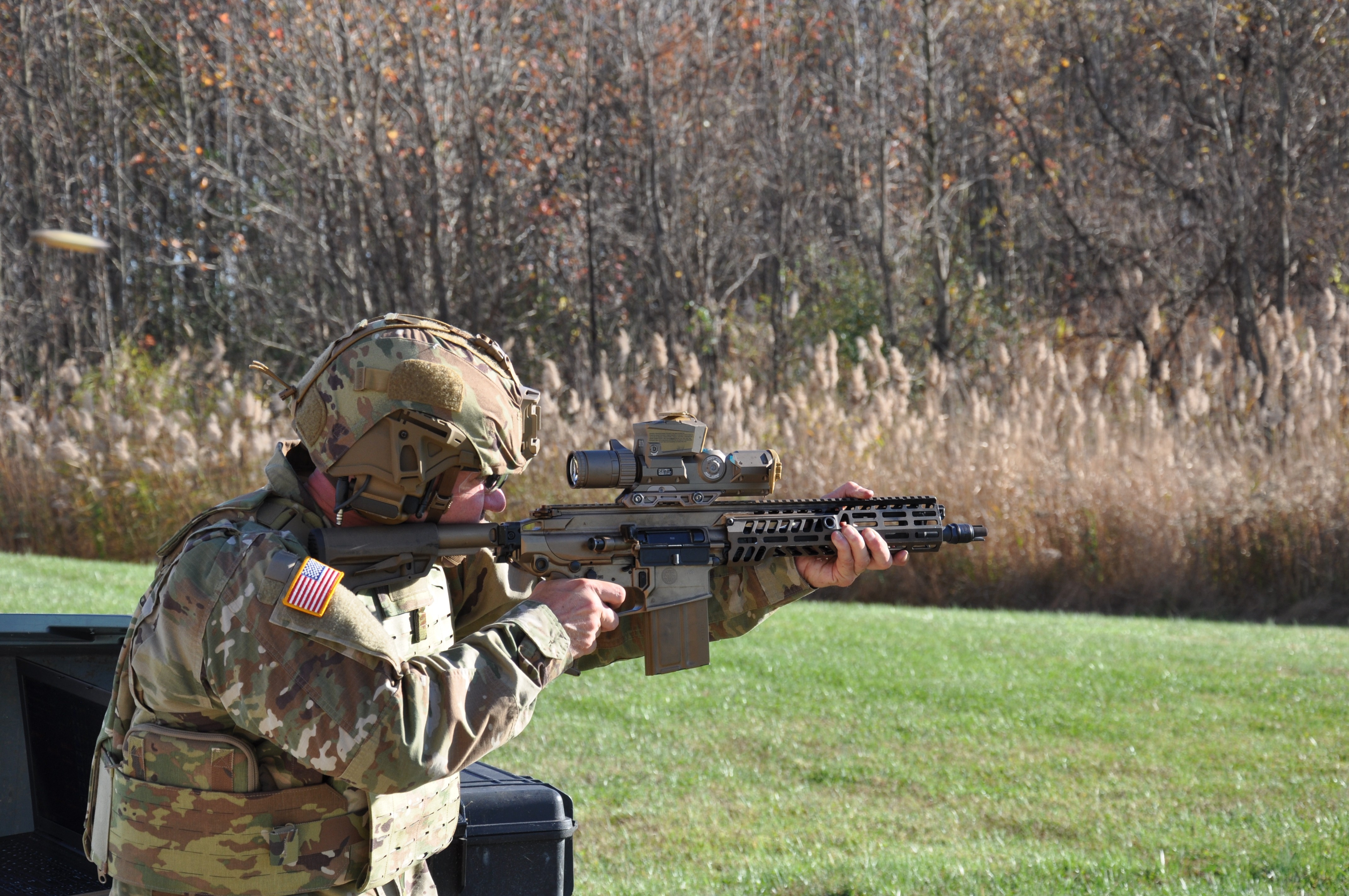
That's a four-pound increase in the weapon alone. Now add the ammunition. A soldier carrying a standard combat load of seven magazines has 140 rounds of 6.8×51mm weighing about 6.8 pounds. The equivalent in 5.56, 210 rounds in seven magazines, weighs about 5.7 pounds but gives you 70 more rounds. If you want to carry the same round count in 6.8×51mm, you need more magazines, and the weight climbs past 10 pounds for ammunition alone.
Total combat load increase: somewhere between 5 and 8 pounds depending on how many rounds a soldier carries. On a 12-mile foot movement, that matters. In a mounted infantry fight where soldiers dismount for short engagements, it matters less. The Army's calculation is clearly oriented toward the latter scenario, mechanized and Stryker units fighting from vehicles, dismounting to close with armored enemies at intermediate distances.
For a light infantry soldier in the 82nd or 10th Mountain humping a rucksack up a ridgeline, the weight penalty is real. This is one reason the Army approved the XM8 carbine, a lighter, shorter-barreled variant of the XM7, along with 25-round magazines to partially address both the weight and capacity concerns. The XM8 trades some velocity for reduced weight and a more compact package, which makes sense for units where every ounce in the rucksack is a planning factor.
From the arms room
The weight issue isn't theoretical. Units that have received the XM7 for evaluation and initial fielding have noted the difference immediately. Soldiers accustomed to the M4A1's handling characteristics, a weapon that can be manipulated one-handed, slung comfortably for hours, and fired from awkward positions without excessive fatigue, are adjusting to a noticeably heavier platform. The XM157 optic alone weighs more than many complete red-dot sights. The rifle balances differently. Transition drills feel different. None of this is insurmountable, but it requires training time that's always in short supply.
The XM157 fire control: the other half of the lethality equation
The NGSW program wasn't just about the bullet. The XM157 Fire Control, built by Vortex Optics under their government division, is arguably as significant as the caliber change. It integrates a variable-power optic (1-8x), a backup etched reticle, a laser rangefinder, a ballistic computer, atmospheric sensors, a visible and infrared laser aiming device, and a digital compass into a single unit.
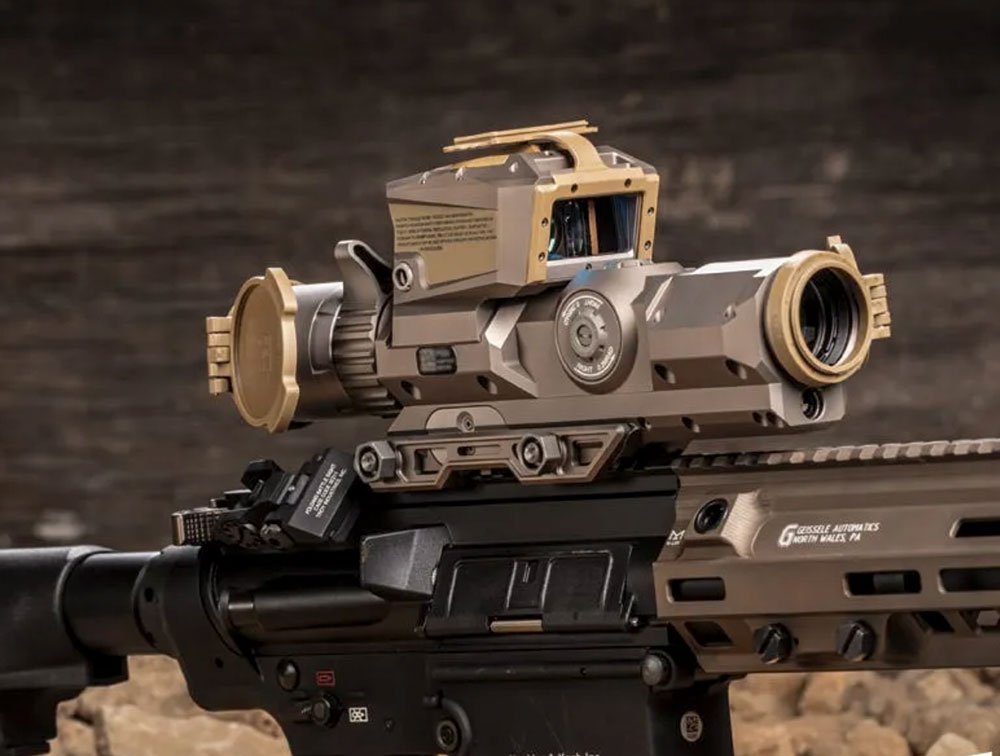
The ballistic computer is the game-changer. The soldier ranges the target, and the optic calculates the hold and displays an adjusted aim point. This accounts for distance, temperature, pressure, and cant, the variables that cause misses at extended range. A soldier who can barely hold a 23 out of 40 on an M4 qualification might suddenly be making hits at 600 meters because the computer is solving the ballistics problem that the soldier's training never adequately addressed.
This is the part of the NGSW program that doesn't get enough attention. The 6.8×51mm gives you the energy to defeat armor at distance. The XM157 gives the average soldier the ability to actually hit at that distance. The two capabilities together represent a step change. Either one alone would be significant. Together, they redefine what a squad-level engagement looks like.
The downside? Complexity. The XM157 runs on batteries. It has electronic components that can fail in the field. It requires PMCS (preventive maintenance checks and services) that soldiers aren't accustomed to performing on an optic. The backup etched reticle means the weapon is still functional if the electronics die, but you lose the ballistic computer, which means you lose most of the extended-range advantage that justified the system in the first place.
What this means for qualification and training
The Army hasn't yet published a finalized qualification standard for the XM7, though the Army Marksmanship Unit has been heavily involved in developing training programs and testing the weapon at Fort Moore (formerly Fort Benning). The current M4 qualification table fires 40 rounds at targets from 50 to 300 meters from various positions. Soldiers qualify as marksman (23/40), sharpshooter (30/40), or expert (36/40).
The XM7's qualification will almost certainly extend engagement distances. The weapon and optic are designed for 600+ meter engagements, and a qualification that tops out at 300 meters would fail to validate the system's primary capability. Expect to see targets at 400, 500, and possibly 600 meters on the new table. The XM157's ballistic computer should help soldiers engage at those distances, but it also means ranges need to be longer, target systems need to be placed farther out, and range infrastructure at many installations will need upgrades.
For Guard and Reserve units, this is a significant concern. Many training installations have ranges that max out at 300 meters. Building or modifying ranges to support 600-meter qualification isn't a weekend project, it's a multi-year, multi-million-dollar infrastructure investment. The active component will field first and train first. Guard and Reserve units may not see the XM7 for years, and when they do, range availability could be the bottleneck rather than weapon availability.
Range notes
The recoil of the 6.8×51mm is substantially sharper than 5.56. Soldiers describe it as comparable to a 7.62 NATO rifle, which makes sense given the similar energy levels. The XM7 has a tunable gas system and a muzzle device designed to mitigate recoil, but there's no getting around the physics of launching a 135-grain bullet at 2,800 fps from an 8.4-pound rifle. Soldiers who've spent their careers shooting M4s will need dedicated range time to build comfort with the increased recoil impulse, especially in rapid-fire and automatic-fire scenarios with the XM250.
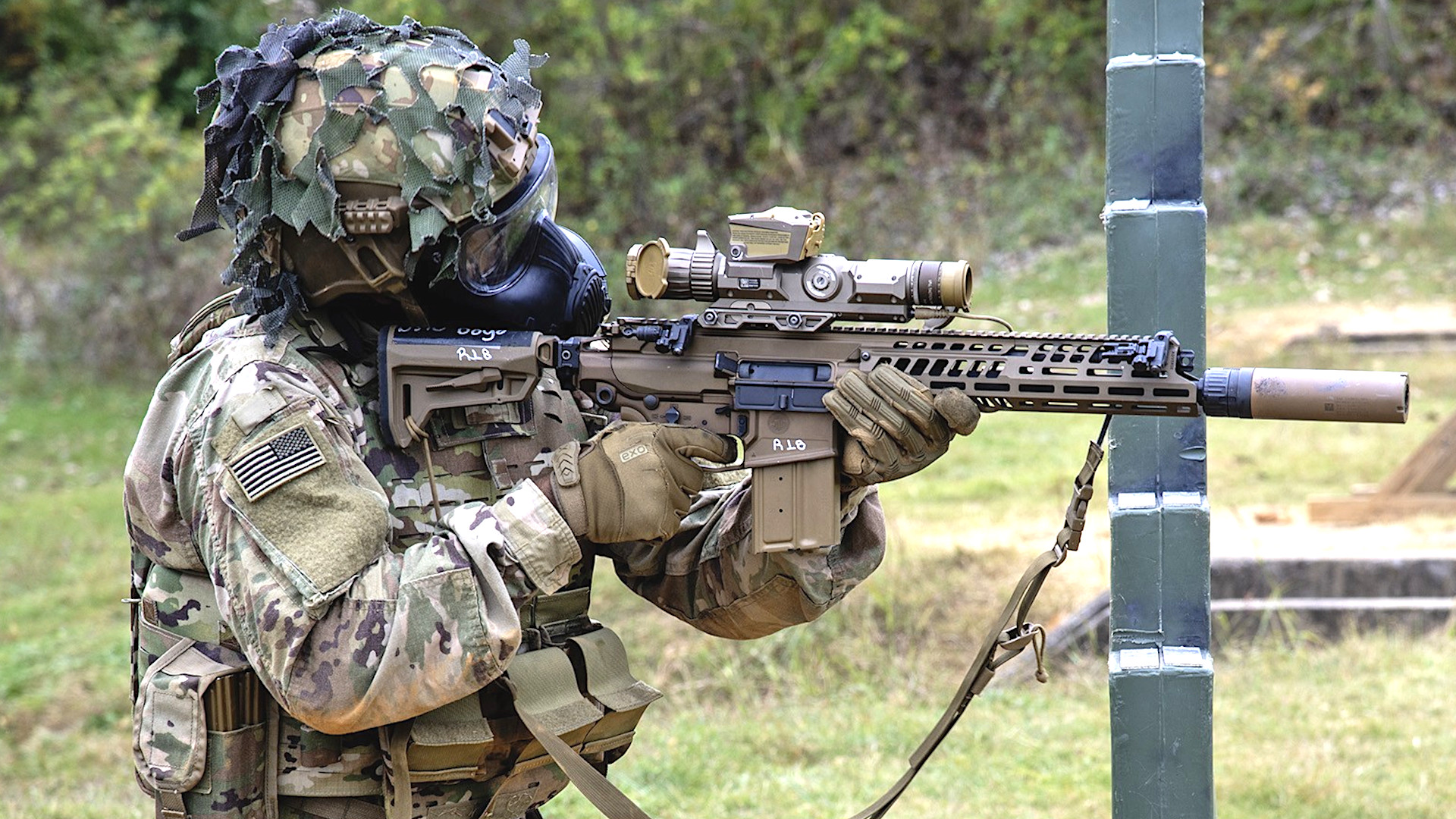
The suppressor situation adds another variable. The XM7 is designed to be suppressor-compatible, and the Army has indicated that suppressors will be standard issue rather than SOF-only accessories. A suppressor adds weight to the muzzle (shifting the balance point forward), increases overall length, and changes the backpressure characteristics of the gas system. Training with the suppressor attached, rather than bolting it on for the first time at a qualification range, is essential.
Common misconceptions and mistakes
"The 6.8×51mm is just a .270 Winchester"
No. While the bore diameter is similar (.277 caliber), the 6.8×51mm operates at pressures that would destroy a .270 Winchester chamber. The case design, operating pressure, and intended platform are completely different. The .270 Win runs around 65,000 PSI in a long-action bolt gun. The 6.8×51mm runs at 80,000 PSI in a short-action semi-automatic. These are not interchangeable in any way.
"Soldiers won't be able to handle the recoil"
This gets overstated. The recoil is more than an M4, yes. It's roughly comparable to an M110A1 SDMR in 7.62 NATO, which designated marksmen handle without issue. The XM7 is heavier than an M4, and that weight absorbs some of the recoil energy. The muzzle device helps. Soldiers adapt. The real training concern isn't recoil management on single shots, it's sustained fire comfort and shot-to-shot recovery time during rapid engagements. That's a training problem, not a design flaw.
"The ammo is too heavy, soldiers will run out in a firefight"
This is a legitimate concern, not a misconception, but it's often presented without context. The Army's operational analysis concluded that most engagements are decided in the first few magazines, not through sustained suppressive fire lasting hours. The increased lethality per round, particularly against armored targets, theoretically reduces the total rounds needed to achieve the desired effect. Whether that theoretical model holds up in actual combat is the trillion-dollar question. The approval of 25-round magazines for the XM7 and XM8 suggests the Army is already responding to capacity feedback.

Geissele Automatics handguard Deals
Prices may change. May contain affiliate links.
"This will never get fielded to the whole Army"
Probably true, at least not in the near term. The Army's initial fielding plan targets close combat forces, infantry, cavalry scouts, and similar units. Support units, aviation, and others may retain M4A1s indefinitely or transition to the XM8 carbine variant. Full Army-wide fielding of the 6.8×51mm ecosystem would require an ammunition production and logistics infrastructure that doesn't exist yet. The hybrid case is expensive and complex to manufacture at scale. A realistic projection has close combat units in the active component fielding first, followed by select Guard and Reserve units, with many formations retaining 5.56 weapons for years or decades.
"The M4A1 is obsolete now"
The M4A1 remains an excellent weapon system. M855A1 ammunition is highly effective against the threats most soldiers actually face. The NGSW program addresses a specific anticipated threat, armored near-peer infantry, that drives requirements for specific units. For a military police company running convoy security, a signal battalion, or a headquarters element, the M4A1 with M855A1 is more than adequate and significantly lighter. Calling the M4 obsolete misunderstands why the Army adopted the XM7 in the first place.
The NATO question
Here's something most people don't know: the 6.8×51mm is not a NATO standard cartridge. NATO standardization, governed by STANAG agreements, is how allied nations ensure ammunition interoperability. 5.56×45mm NATO (STANAG 4172) and 7.62×51mm NATO (STANAG 2310) are the current standards. Any NATO member can pick up another member's ammunition and use it. That interoperability has been a cornerstone of alliance logistics since the Cold War.
The U.S. adopted the 6.8×51mm unilaterally. No NATO STANAG covers it. No allied nation has adopted it or announced plans to. This means that U.S. soldiers carrying XM7s cannot share ammunition with British, French, German, Canadian, or any other allied soldiers, and vice versa. In a coalition fight, which is how NATO actually operates, this is a logistics planning factor that didn't exist before.
The Army's position is that the lethality requirement outweighs the interoperability concern, and that the U.S. will lead and allies will eventually follow. History partially supports this, when the U.S. adopted 5.56 in the 1960s, NATO eventually standardized around it, though it took over a decade and considerable political friction. Whether allies will follow the 6.8×51mm adoption is far from certain. Many NATO nations have recently invested in new 5.56 platforms (Germany's HK416, France's HK416F) and have no appetite for another caliber transition.
The Wavell Room, a British military professional journal, published an analysis noting that the NGSW's emphasis on defeating body armor reflects a specifically American vision of future warfare focused on near-peer conflict with Russia or China. European allies, many of whom are more concerned with hybrid warfare, counterinsurgency, and territorial defense, may not share the same threat assessment or capability priorities. The 6.8×51mm solves an American problem. Whether it's a NATO problem remains debated.
The body armor arms race
The NGSW program exists because body armor got better. But the adoption of a round specifically designed to defeat current armor invites the obvious question: what happens when armor improves again?
This is the arms race dynamic that has defined infantry combat for centuries. Better swords led to better shields. Better bullets led to better armor. Better armor led to better bullets. The 6.8×51mm defeats today's Level IV plates. Tomorrow's plates, potentially using next-generation materials like ultra-high-molecular-weight polyethylene composites, boron carbide, or silicon carbide with improved multi-hit capability, may close the gap again.
The counter-argument is that the 6.8×51mm has enough performance headroom to remain effective against improved armor for a generation. The 80,000 PSI operating pressure and the ability to push purpose-built AP projectiles at high velocity give the cartridge a significant margin over current threats. And unlike 5.56, which was essentially maxed out against armor from the day plates became common, the 6.8×51mm was designed with armor defeat as the primary requirement.
There's also the question of what happens on the other side. If U.S. soldiers are wearing armor that can stop 5.56 and 7.62×39mm (the standard Russian and Chinese infantry rounds), and U.S. soldiers are carrying a round that defeats enemy armor, the lethality advantage is asymmetric. The Army wants to be on the right side of that asymmetry.
Fielding timeline and who gets them first
The Army began initial fielding of the XM7 and XM250 in late 2023, with the 101st Airborne Division (Air Assault) at Fort Campbell receiving systems first. The 2024 fielding plan expanded to additional units, including elements of the 10th Mountain Division and the 25th Infantry Division. The Army's stated goal is to equip all close combat formations in the active component within the next several years, though specific timelines remain subject to production rates and funding.
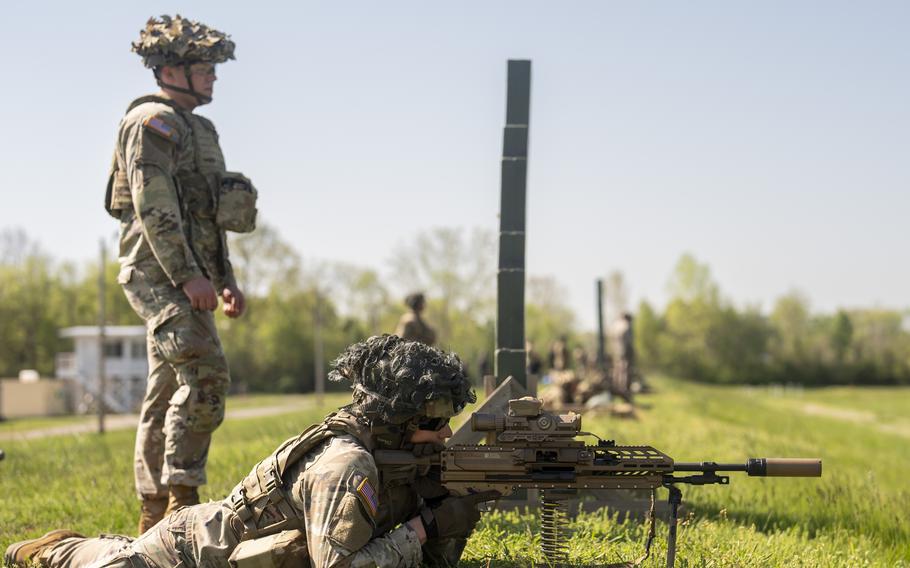
SIG Sauer is the sole-source manufacturer for both the weapons and the ammunition, at least initially. The Army has indicated interest in establishing a government-owned ammunition production capability, but that requires building or converting a manufacturing facility, a process that takes years. Until then, SIG controls the supply chain, which creates both cost and availability concerns.
For Guard and Reserve units, realistic fielding is likely five to ten years away for most formations. Some high-priority Guard infantry brigades may see systems sooner, but the typical Guard infantry battalion should plan on running M4A1s through at least the late 2020s. The training infrastructure, ranges, simulators, instructor certification, needs to precede the weapons, and that pipeline hasn't started for most Guard installations.
The controversy
The NGSW program hasn't been without criticism. An Army captain's widely circulated assessment called the XM7 "unfit" for infantry use, citing the weapon's weight, the ammunition weight, the reduced magazine capacity, and reliability concerns during testing. SIG Sauer disputed the characterization, and the Army subsequently approved the XM7 for full-rate production, indicating that the system met its technical requirements.
The criticism isn't baseless, even if the specific claims were contested. The weight increase is real. The capacity reduction is real. The logistics burden is real. Whether these trade-offs are acceptable depends entirely on the threat model. If the next major conflict involves armored infantry at intermediate distances, the scenario the Army is optimizing for, the XM7 and 6.8×51mm are purpose-built solutions. If the next conflict looks more like Afghanistan circa 2009, dismounted patrols in mountainous terrain over extended periods, the weight penalty becomes a serious operational constraint.
The Army's response has been pragmatic. The XM8 carbine variant addresses the weight concern for units that need a lighter platform. The 25-round magazine addresses the capacity concern. The phased fielding approach, close combat units first, support units later or never, acknowledges that not every soldier needs an armor-defeating rifle. These are reasonable adaptations, but they also suggest the Army recognized early feedback and adjusted, which is how acquisition should work.
What the civilian shooter should know
The .277 SIG Fury is available commercially in SIG's MCX Spear rifle. Federal and SIG both produce ammunition. The commercial loads use conventional brass cases rather than the military's hybrid steel-brass design, which means they operate at lower pressures, around 65,000 PSI rather than 80,000 PSI. Velocity and energy from the commercial loads are lower than the military specification, though still impressive: roughly 2,800 fps from a 16-inch barrel with a 135-grain bullet.
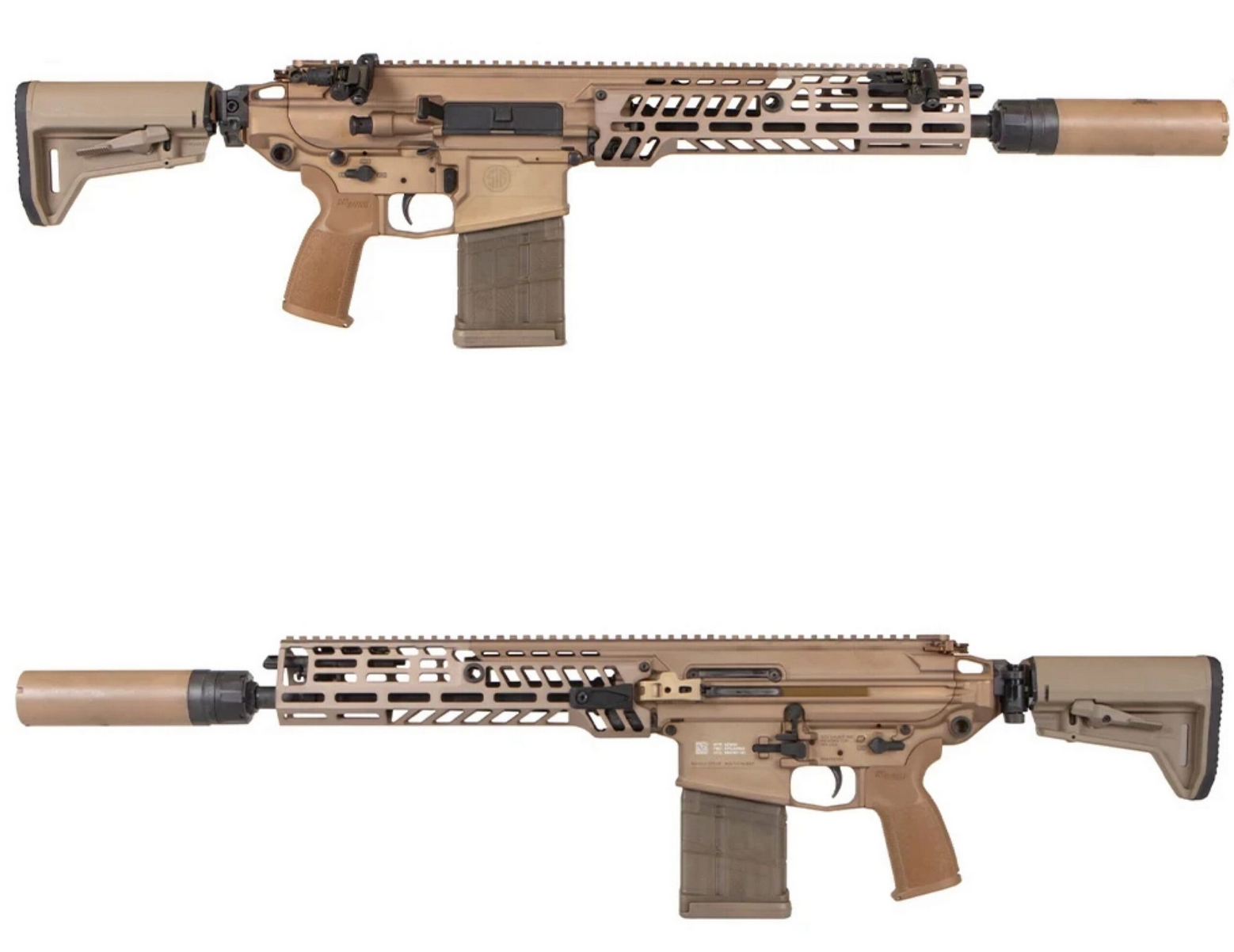
The commercial .277 Fury is a legitimate long-range hunting and precision cartridge. The .277-caliber 135-grain bullets have excellent ballistic coefficients, and the cartridge shoots flat with manageable recoil in the MCX Spear platform. It's not cheap, expect to pay significantly more per round than .308 Winchester, and ammunition availability remains limited compared to established cartridges.
The hybrid-case military ammunition is not commercially available and likely won't be. The pressure levels require weapons specifically rated for it, and there are liability and safety concerns with putting 80,000 PSI ammunition into the commercial market. If you're shooting .277 Fury commercially, you're shooting the brass-case variant, and your ballistic performance will be below what the military achieves from the same barrel length.
For handloaders, the .277 Fury is intriguing but constrained. Brass is available but expensive. Load data is still relatively limited compared to established cartridges. The dies and components exist, but this isn't a cartridge with fifty years of reloading wisdom behind it. Early adopters are figuring things out in real time.
What happens next
The 6.8×51mm represents the Army's vision of where infantry combat is headed: longer engagements, armored adversaries, and precision fires enabled by smart optics. Whether that vision is correct will be tested by reality, as all military predictions eventually are.
The immediate next steps are straightforward. Active-duty close combat units will continue receiving XM7s and XM250s through the mid-2020s. The Army Marksmanship Unit will refine training programs and qualification standards. Ammunition production will scale, slowly, expensively, toward the volumes needed for sustained training and combat operations. The XM8 carbine will enter fielding for units that need the caliber's capability in a lighter package.
The longer-term questions are harder. Will NATO allies adopt the 6.8×51mm or a compatible cartridge? Will the hybrid case give way to a cheaper, lighter conventional design? Will body armor technology leapfrog the round's capability within a decade? Will the next conflict validate the Army's assumptions about engagement distances and threat profiles?
Nobody knows. What soldiers can do right now is understand the system, understand the trade-offs, and prepare to train on it when it arrives. If you're an NCO in a unit scheduled for fielding, start thinking about range requirements, zero procedures, and PMCS protocols now. Read the TMs when they're published. Get your armorers into the maintenance courses early. The weapon is coming. The question is whether your unit is ready for it when it shows up in the arms room.
And if you're still running M4A1s with M855A1, which most of the Army will be for years, that's not a consolation prize. It's still one of the most effective infantry rifle combinations in the world. Zero it properly, train with it seriously, and qualify to standard. The caliber on the headstamp matters less than the fundamentals behind the trigger.