You're shopping for a first focal plane LPVO to run on a 5.56 or .308 carbine, and you don't want to spend more than $500 on the glass alone. That narrows the field fast. Most FFP scopes worth mounting still live north of $600, so the ones that dip below that line while keeping usable glass, reliable tracking, and a reticle you can actually read at 1x deserve real attention.

This roundup covers eight FFP LPVOs that street-price under $500. The magnification ranges span 1-6x through 1-10x, the reticles range from simple BDC to full MIL-based holdover systems, and the tube sizes split between 30mm and 34mm. Some include mounts. Some include zero-stop turrets. The goal here is to help you pick the one that matches your carbine's job, not just the one with the most impressive spec sheet.
Quick picks
Primary Arms SLx 1-6x24 FFP Best for budget-conscious 1-6x shooters
Sig Sauer Tango-MSR 1-6x24 FFP (SOTM61002) Best for mount-included value
Gunnr Odin ED 1-6x28 FFP Best for wide objective on a 1-6x
Gunnr Odin ED 1-8x24 FFP Best for lightweight 1-8x with zero stop
Primary Arms SLx 1-8x24 FFP (ACSS Griffin X MIL) Best for MIL-based reticle shooters
Primary Arms SLx 1-8x24 FFP (ACSS Raptor) Best for BDC holdover at 8x
Arken EP-8 1-8x28 FFP Best for elevation travel and 34mm tube
Gunnr Odin ED 1-10x28 FFP Best for max magnification under $500
At a glance
How we chose
Every scope on this list had to meet three non-negotiable criteria before we looked at anything else: it had to be a true first focal plane design, it had to street-price under $500, and it had to fit a carbine-length rail without requiring exotic mounting solutions.
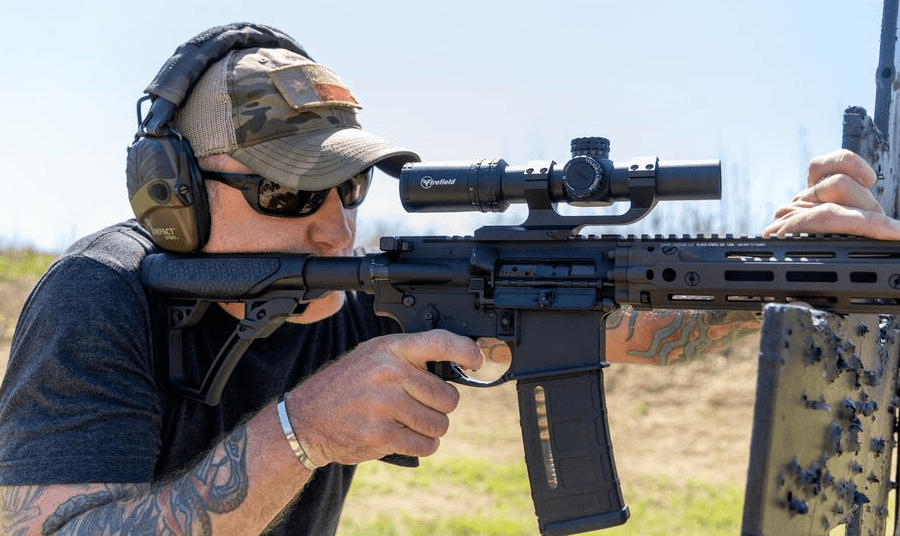
Beyond those basics, we weighted the selection toward scopes with established reticle systems that actually help you shoot. A BDC or MIL holdover reticle in the FFP is only useful if the subtensions are calibrated to common cartridges and readable at both low and high magnification. That's the whole reason you're buying FFP in the first place. If the reticle turns into an unreadable blob at 1x or disappears into the target at max power, the focal plane advantage evaporates.
We also looked at what ships in the box. A scope that includes a mount, throw lever, or flip caps changes the real cost of getting glass on your rifle. The Sig Tango-MSR FFP includes its ALPHA-MSR cantilever mount. Several Gunnr Odin configurations ship with a mount and case. That matters when you're budgeting the full system.
Manufacturer warranty played a role too. Vortex's VIP warranty, Sig's Infinite Guarantee, Primary Arms' lifetime warranty, Gunnr's hassle-free lifetime warranty, and Arken's support structure all factor into long-term ownership. An LPVO that takes a hit during a competition stage or gets bounced around in a truck bed needs a clear path back to service.
Finally, we considered the track record of each optical platform. The Primary Arms ACSS reticle system has years of field feedback behind it. The Vortex Strike Eagle line has been iterated on repeatedly. The Gunnr Odin and Arken EP-8 are newer entrants, but their spec sheets and feature sets earn them a seat at the table. We didn't exclude scopes just because they lack a decade of forum threads.
The picks
Primary Arms SLx 1-6x24 FFP
Best for: Budget-conscious 1-6x shooters who want a proven ACSS reticle in the first focal plane.
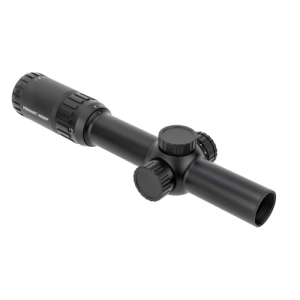
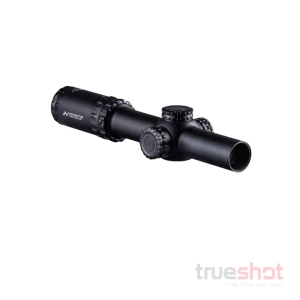
Primary arms ACSS Raptor 5.56 reticle Deals
Prices may change. May contain affiliate links.
The SLx 1-6x24 FFP with the ACSS Raptor 5.56 reticle is the scope that put Primary Arms on the FFP map at this price point. The ACSS Raptor reticle is designed around 5.56/5.45/.308 ballistics, with holdover marks, a horseshoe for fast acquisition at 1x, and ranging tools built into the subtensions. Because it's FFP, those holdovers stay accurate whether you're at 1x or 6x. That's the core selling point, and it works.
At 30mm tube diameter, this scope fits standard mounts without hunting for 34mm rings. The illuminated reticle runs on a common battery, and the overall package stays compact enough for a 16-inch carbine without looking like you bolted a telescope to your rail. The 1-6x range is the sweet spot for shooters who work inside 400 yards and want genuine both-eyes-open speed at the low end.
Where this scope shows its price is in the glass. You won't confuse it with a PLxC or a Razor at the high end of the magnification ring. But for a carbine that splits time between flat range work and practical shooting, the reticle does most of the heavy lifting, and the Raptor reticle is genuinely excellent at that job.

Pros:
Best for: BDC holdover shooting with 5.56/.308 out to 600 yards.
ACSS Raptor reticle with caliber-specific BDC holdovers
30mm tube fits standard mounts
FFP at the lowest price point in this roundup
Illuminated reticle
Primary Arms lifetime warranty
Cons:
6x top end limits reach past 400 yards
Glass quality reflects the price tier
Weight not published by manufacturer

Sig Sauer Tango-MSR 1-6x24 FFP (SOTM61002)
Best for: Shooters who want a complete mount-included FFP package ready to bolt on.

Sig Sauer Tango-MSR 1-6x24 FFP (SOTM61002) Deals
Prices may change. May contain affiliate links.
This is the FFP version of the Tango-MSR, model SOTM61002. Do not confuse it with the more common SFP Tango-MSR (SOT61000). The FFP variant carries the illuminated MSR BDC-6 reticle in the first focal plane, and it ships with a one-piece cantilever mount already in the box. That mount alone saves you $40-80 and the headache of matching ring height to your rail.
The optical system uses low-dispersion glass in a 30mm tube. Field of view at 100 yards measures 124.8 feet at 1x and 19.6 feet at 6x. Eye relief runs 3.93 to 3.74 inches across the magnification range. Adjustments click in 0.5 MOA increments with 100 MOA of total elevation travel. The integrated throw lever lets you snap between magnification settings without fumbling for an aftermarket lever. Sig backs it with their Infinite Guarantee, which stays with the scope through ownership changes without requiring paperwork.
The BDC-6 reticle is simpler than the ACSS system. It's a holdover design with stadia marks rather than a full ranging and wind-hold system. For shooters who want a clean sight picture without a lot of visual clutter, that's actually a plus. The 11 brightness levels on the illumination give you enough range to find a usable setting from dawn to midday.

Pros
ALPHA-MSR cantilever mount included
Integrated throw lever
Low-dispersion glass in a 6x optical system
124.8 ft FOV at 1x is genuinely wide
Sig Infinite Guarantee transfers with the scope
Cons
0.5 MOA clicks are coarser than the 0.25 MOA standard on most competitors
BDC-6 reticle lacks ranging and wind-hold tools
6x max magnification

Gunnr Odin ED 1-6x28 FFP
Best for: Shooters who want a 28mm objective and 34mm tube in a 1-6x FFP package.
Gunnr Odin ED 1-6x28 FFP
May contain affiliate links.
The Odin ED 1-6x28 stands out in this group for two reasons: the 28mm objective lens and the 34mm tube. Most budget 1-6x scopes use a 24mm objective in a 30mm tube. The larger objective gathers more light, and the 34mm tube gives more internal adjustment range. Windage and elevation each get 170 MOA of travel. For a 1-6x scope, that's generous.
Gunnr specs this scope with German Schott ED glass and a GRX-2B MOA reticle in the first focal plane. The illuminated reticle has 6 brightness levels. Construction is 7075 aluminum alloy with IP67 dust and water protection. Eye relief sits at 3.74 inches. Field of view at 100 yards runs from 122.5 yds at 1x down to 20.4 yds at 6x. The scope measures 11.7 inches in length and weighs 685g.
The Gunnr Odin line is newer to the market than the Primary Arms or Sig options, so the long-term durability track record is still being written. But the spec sheet is aggressive for the price, and the hassle-free lifetime warranty signals confidence from the manufacturer. A mount-included configuration also exists, which changes the value equation if you don't already have a 34mm mount on hand. Note that the 34mm tube means your existing 30mm rings won't work.

Pros
28mm objective lens gathers more light than 24mm competitors
34mm tube with 170 MOA elevation and windage travel
Schott ED glass
IP67 rated
Hassle-free lifetime warranty
Cons
34mm tube requires specific mount (not universal with 30mm rings)
Newer brand with less field history
685g is heavier than some 30mm-tube 1-6x scopes

Gunnr Odin ED 1-8x24 FFP
Best for: Lightweight 1-8x FFP with zero-stop turrets at a low price.
Gunnr Odin ED 1-8x24 FFP
May contain affiliate links.
The Odin ED 1-8x24 is one of the few sub-$500 FFP scopes that includes a zero-stop function. After you set your zero, the turret stops at that point so you can dial back without counting clicks. That's a feature usually reserved for scopes costing significantly more.
Best FFP LPVOs Under $500 for Carbine UseThis scope uses the same Schott ED glass and 7075 aluminum construction as the rest of the Odin line. It sits in a 30mm tube, which is notable because the 1-6x28 and 1-10x28 Odin models use 34mm. That makes the 1-8x24 more mount-friendly for shooters who already own 30mm rings or a cantilever. Length is 11.1 inches. Weight varies between 604g and 666g depending on the listing, though curiously the 604g figure appears on the bundle that includes mount and case while the 666g figure appears on the standalone scope listing. Field of view at 100 yards spans from 123 feet at 1x to 15.4 feet at 8x. The illuminated reticle has 6 brightness levels with 1/4 MOA click adjustments.
The mount-and-case bundle adds a 30mm aluminum alloy Picatinny mount with two torx wrenches. If you're building a carbine from scratch and want everything in one shipment, that bundle simplifies the process.

Pros
Zero-stop turrets at this price point
30mm tube fits standard mounts
Schott ED glass
Lightweight (604g in some configurations)
Mount and case bundle available
Cons
Newer brand, limited independent reviews
6 brightness levels (fewer than some competitors)
GRX-2B MOA reticle is less feature-rich than ACSS or KLGRID systems

Primary Arms SLx 1-8x24 FFP (ACSS Griffin X MIL)
Best for: MIL-based reticle shooters who want ACSS ranging tools in a universal measurement system.
Primary Arms SLx 1-8x24 FFP (ACSS Griffin X MIL) Deals
Prices may change. May contain affiliate links.

CR2032 battery Deals
Prices may change. May contain affiliate links.
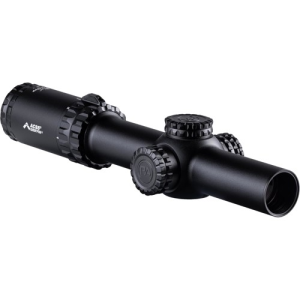
The Griffin X MIL reticle is Primary Arms' answer to shooters who think in milliradians but still want the ACSS holdover and ranging system. It combines MIL-based holdovers with the wind-hold and ranging tools from the original ACSS design, giving you a hybrid that speaks the universal language of MILs while keeping the speed advantages of ACSS.
This scope sits in a 30mm tube with fully multi-coated lenses. Click adjustments are 0.1 MIL, which is the standard for MRAD turrets and allows precise dialing. Eye relief runs 3.20 to 3.30 inches, and field of view at 100 yards goes from 105 feet at 1x to 14.3 feet at 8x. Weight is 17.9 oz (507g), making it one of the lighter 1-8x options in this roundup. The capped, low-profile turrets keep the scope's silhouette clean on a carbine rail. The illuminated reticle uses a CR2032 battery.
If you're already working in MILs on other optics or with a spotter, the Griffin X keeps your system consistent. If you've never used MILs and don't plan to start, the Raptor version below might be a simpler entry point. But for competition shooters or anyone who calls corrections in mils, this is the right reticle choice.

Pros
ACSS Griffin X MIL reticle with MIL-based holdovers and ACSS ranging tools
0.1 MIL click adjustments for precise dialing
17.9 oz is light for a 1-8x FFP
Moveable and replaceable magnification ring fin
Primary Arms lifetime warranty
Cons
Eye relief of 3.20-3.30 inches is tighter than some competitors
105 ft FOV at 1x is narrower than the Sig or Gunnr 1-6x options
MIL reticle has a learning curve if you're coming from MOA

Primary Arms SLx 1-8x24 FFP (ACSS Raptor)
Best for: BDC holdover shooting with 5.56/.308 out to 600 yards.
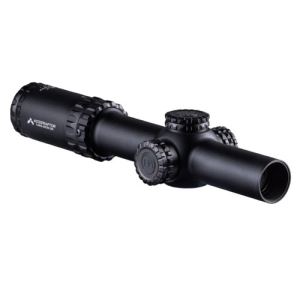
Primary Arms SLx 1-8x24 FFP (ACSS Raptor) Deals
Prices may change. May contain affiliate links.
This is the 1-8x evolution of the original SLx 1-6x24 FFP platform. Primary Arms designed the optical system from the ground up as a new FFP design emphasizing low distortion and accurate 1x magnification combined with a clear sight picture at 8x. The ACSS Raptor 5.56/5.45/.308 reticle carries the same holdover marks and ranging tools as the 1-6x version, but the extra magnification makes those subtensions more usable at distance.
The spec sheet mirrors the Griffin X MIL version in most respects: 30mm tube, fully multi-coated lenses, 1/4 MOA click adjustments, capped low-profile turrets, 17.9 oz weight, and eye relief of 3.20 to 3.70 inches. Field of view matches at 105 feet (1x) to 14.3 feet (8x) at 100 yards. The illuminated reticle includes AutoLive motion sensing and is night-vision compatible.
The Raptor reticle is calibrated for specific cartridges. That's both its strength and its limitation. If you're running 5.56, 5.45, .308, or 6.5 Grendel, the BDC marks correspond to real-world drop at specific distances. If you're running 6.5 Creedmoor or .300 Blackout, the holdovers won't match. The reticle is in the BDC/MOA family rather than MIL, so you're working in a system that's intuitive for most American shooters but less universal for calling corrections.

Pros
ACSS Raptor reticle calibrated for 5.56/5.45/.308Best FFP LPVOs Under $500 for Carbine Use
AutoLive motion-sensing illumination
Night-vision compatible
17.9 oz keeps carbine weight manageable
Designed from the ground up as a new FFP optical system
Cons
BDC holdovers only accurate for specific cartridges
1/4 MOA clicks rather than the 0.1 MIL of the Griffin X version
Tighter eye relief than 1-6x scopes in this roundup

Arken EP-8 1-8x28 FFP
Best for: Shooters who want a 34mm tube with maximum elevation travel in a 1-8x FFP.

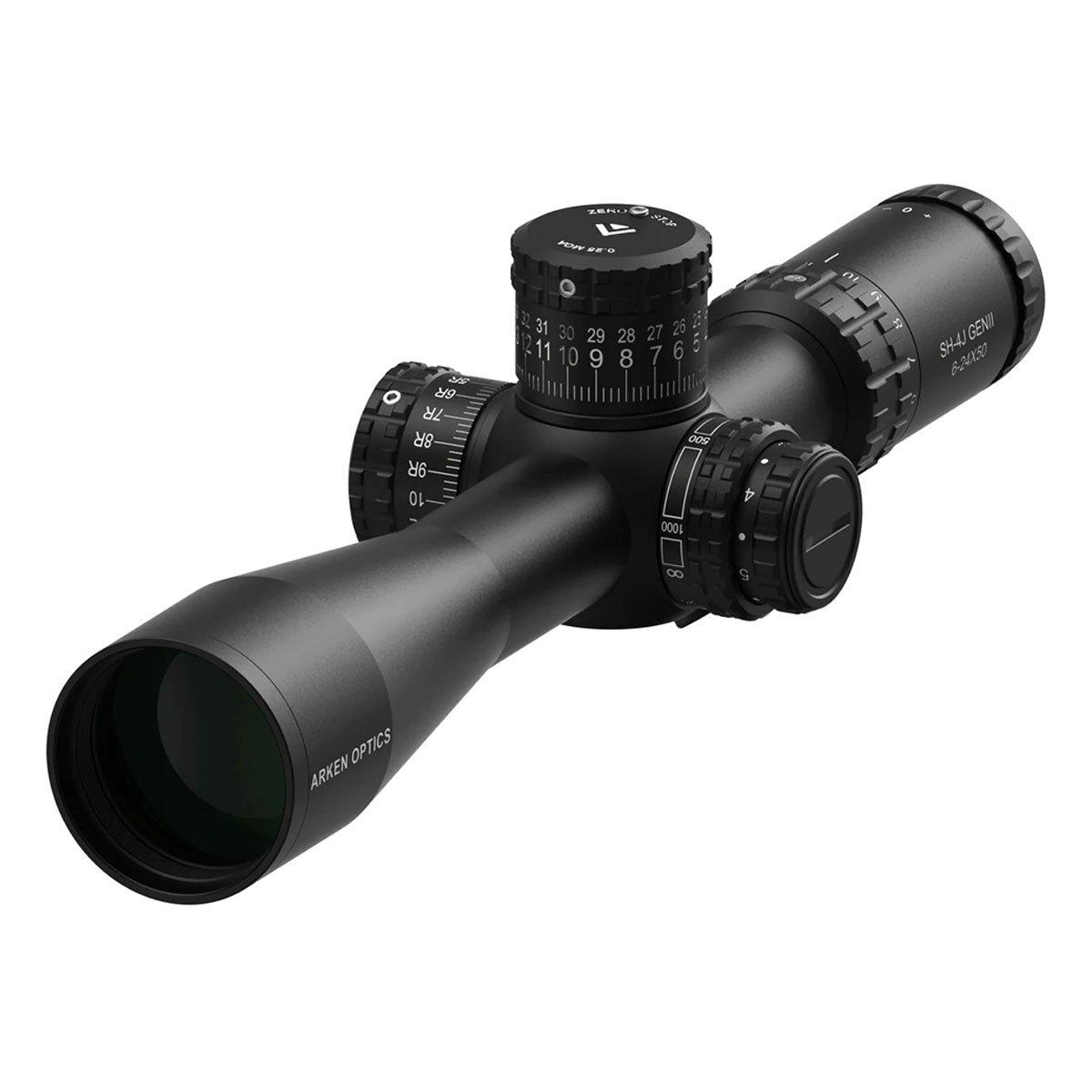
The Arken EP-8 brings a 28mm objective and 34mm tube to the 1-8x FFP category. That larger tube translates directly to more internal adjustment range: 30 MRAD or 110 MOA of elevation travel, depending on your reticle choice. If you're running a scope on a rifle with a canted rail or need to dial for distance rather than hold over, that extra travel matters.
You get two reticle options: the KLGRID in MIL or the KLBOX in MOA. Both are illuminated FFP designs. The KLGRID and KLBOX reticles are designed for shooters who want clean, grid-based holdover systems without the visual complexity of some BDC designs. Arken has built its reputation on the SH-4 and EP-5 lines in the precision rifle world, and the EP-8 represents their move into the LPVO space.
The 34mm tube is both an advantage and a consideration. You get the elevation travel and potentially better light transmission from the larger tube, but you also need 34mm rings or a 34mm cantilever mount. If you're already invested in 30mm mounting hardware, that's an additional cost. The EP-8 is available as a bundle with a scope mount, which helps offset that.

Pros
34mm tube with 30 MRAD / 110 MOA elevation travel
28mm objective lens
Choice of KLGRID MIL or KLBOX MOA reticle
Illuminated FFP
Arken's established reputation in precision optics
Cons
34mm tube requires specific mounting hardware
Newer LPVO product line from a brand known primarily for precision scopes
Weight not published

Gunnr Odin ED 1-10x28 FFP
Best for: Maximum magnification range in an FFP scope under $500.
Gunnr Odin ED 1-10x28 FFP
May contain affiliate links.
Ten power in a sub-$500 FFP scope. That's the headline. The Gunnr Odin ED 1-10x28 uses a 34mm tube and 28mm objective to deliver a 1-10x magnification range with the GRX-2B MOA reticle in the first focal plane. Field of view at 100 yards spans from 123 feet at 1x down to 12.3 feet at 10x. The scope measures 10.98 inches in length and weighs 666g.
Construction matches the rest of the Odin line: T775-grade aluminum, IP55 ingress protection, Schott ED glass, 6-level illuminated reticle, and 1/4 MOA click adjustments. Eye relief is not published in the available specifications, which is worth investigating before purchase since 1-10x scopes can get punishing if the eye box is tight at the high end.
The 10x top end gives you genuine utility past 500 yards for observation and precise shot placement. At 1x, you need the scope to behave like a red dot for close work. That's a hard engineering problem at any price, and it gets harder as the magnification ratio increases. The 1-10x ratio means more optical compromises than a 1-6x or 1-8x, but you're getting reach that none of the other scopes in this roundup can match.

Pros
1-10x magnification range is the widest in this roundup
34mm tube with 28mm objective
Schott ED glass
IP67 rated
Hassle-free lifetime warranty
Cons
Eye relief not published
10x ratio means more optical compromises than lower-ratio scopes
34mm tube requires specific mount
Newer brand with limited independent testing

Gunnr Odin ED 1-10x24 FFP reticle, with bullet drop compensator, ranging stadia and wind/movement leading hashes.
How to choose
The first decision isn't magnification. It's tube size. If you already own a quality 30mm cantilever mount, the Sig Tango-MSR FFP, both Primary Arms SLx 1-8x24 variants, the Primary Arms SLx 1-6x24 FFP, and the Gunnr Odin 1-8x24 all fit it. If you're starting from scratch and don't mind buying a 34mm mount, the Arken EP-8, Gunnr Odin 1-6x28, and Gunnr Odin 1-10x28 open up. Don't overlook this. A good 34mm mount costs $60-150, and that eats into your under-$500 budget.
Second, pick your reticle language. The ACSS Raptor is caliber-specific BDC. The ACSS Griffin X is MIL-based. The Sig BDC-6 is a simpler holdover system. The Gunnr GRX-2B is MOA. The Arken KLGRID/KLBOX splits MIL and MOA. If you're already dialing or holding in one system, stay consistent. Mixing MOA turrets with a MIL reticle (or vice versa) creates math problems you don't need under time pressure.
Third, be honest about your distance requirements. If your carbine lives inside 300 yards and speed matters more than precision at distance, a 1-6x with a wide field of view and forgiving eye box will serve you better than a 1-10x with a tighter sight picture. The Sig's 124.8-foot FOV at 1x and the Gunnr 1-6x28's 122.5 feet are noticeably wider than the 105-foot FOV on the Primary Arms 1-8x models. That width translates to faster target acquisition in close-quarters transitions.
Fourth, consider what ships in the box. The Sig Tango-MSR FFP includes a mount and throw lever. The Gunnr Odin models have bundle options with mounts and cases. The Primary Arms scopes ship with a magnification ring fin but no mount. The Arken EP-8 has a bundle option with a mount. Factor the total system cost, not just the scope price.
Fifth, if you've never run an FFP reticle before, understand the tradeoff. At 1x, the reticle subtensions shrink to the point where they're essentially invisible. You're shooting with the center dot or horseshoe only. The holdover marks only become readable and useful as you increase magnification. This is by design, and it's the correct behavior, but it surprises shooters who are used to SFP reticles that look the same at every power setting. If you want a reticle that's always visually prominent at 1x, an SFP scope might actually suit your use case better.
Glass notes
What you'll actually notice across this group: at 1x, the differences between these scopes are subtle. They all produce a usable sight picture for both-eyes-open shooting. The separation happens at max magnification. The Primary Arms SLx 1-8x24 platform was designed from the ground up to emphasize low distortion and accurate 1x combined with a clear sight picture at 8x. The Gunnr Odin scopes spec Schott ED glass, which should reduce chromatic aberration at the edges. The Sig uses low-dispersion glass in its 6x system. The Arken EP-8's 28mm objective paired with the 34mm tube should theoretically gather more light than a 24mm/30mm combination.
In low light, the difference shows. The scopes with larger objectives (28mm on the Gunnr 1-6x28, Gunnr 1-10x28, and Arken EP-8) have a physical advantage in light gathering over the 24mm models. Whether that translates to a visible difference at dawn or dusk depends on coating quality and glass composition, but the physics favor the bigger lens. The illumination systems vary from 6 levels (Gunnr) to 11 levels (Sig) to the AutoLive motion-sensing system on the Primary Arms Raptor. AutoLive is a genuine convenience feature that shuts off the illumination when the rifle is stationary and wakes it on movement, extending battery life without manual intervention.
Common mistakes with budget FFP LPVOs
Mounting a 30mm scope in 34mm rings (or vice versa) is more common than anyone admits. The Gunnr 1-8x24 is 30mm. The Gunnr 1-6x28, Gunnr 1-10x28, and Arken EP-8 are 34mm. Everything else here is 30mm. Confirm your tube diameter before ordering a mount.
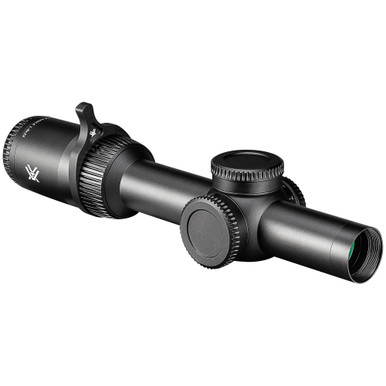
Vortex Strike Eagle 1-8x24 FFP Deals
Prices may change. May contain affiliate links.
Expecting the BDC holdovers to match your specific load without verification will cost you hits. The ACSS Raptor is calibrated for specific bullet weights and velocities in 5.56 and .308. Your handloads or preferred factory ammo may not match the reticle's assumptions. Confirm your drop data against the reticle subtensions at the range. Use a ballistic calculator with the specific reticle loaded (Strelok Pro has the EBR-8, and Primary Arms publishes ACSS reticle data).
Skipping the box test after mounting wastes your time at the range. Dial 10 MOA up, shoot a group. Dial 10 MOA right, shoot a group. Continue the box back to your original zero. If the final group doesn't land on the first group, you have a tracking problem. Run this test before you trust any holdovers or dial-up corrections.
Over-torquing ring screws cracks scope tubes, especially on budget optics with thinner tube walls. Use a torque wrench. Follow the mount manufacturer's spec, not a guess. 15-18 inch-pounds is typical for most 30mm rings, but check your specific mount's documentation.
Forgetting to set your parallax expectation is another issue. The Vortex Strike Eagle 1-8x24 FFP has a fixed parallax setting at 125 yards. Several scopes in this group have fixed parallax as well. At distances significantly shorter or longer than the parallax setting, you'll see the reticle shift against the target as you move your eye. This is normal for fixed-parallax scopes and doesn't mean the scope is broken. It means you need consistent cheek weld.
Next steps
Before you buy, measure your rail. If you're running a flat-top AR with a standard Picatinny rail, any of these scopes will physically fit. But if you have a shorter handguard or a non-standard upper, confirm that the scope's overall length (10.4 inches for the Sig, 11.7 inches for the Gunnr 1-6x28, 10.98 inches for the Gunnr 1-10x28, 11.1 inches for the Gunnr 1-8x24) leaves enough room for your mount and proper eye relief positioning.
Once the scope arrives, mount it with a torque wrench, set your eye relief so you see a full sight picture at max magnification with your natural cheek weld, and zero at 100 yards. Then run the box test. Dial up, right, down, left, and confirm return to zero. Only after the scope passes that tracking test should you start validating BDC holdovers or MIL holds at distance. The reticle is the interface. Everything else is housing. But the housing has to track true before the interface means anything.
If you're torn between a 1-6x and a 1-8x, ask yourself one question: how often do you actually shoot past 400 yards with your carbine? If the honest answer is rarely, the wider field of view and more forgiving eye box of a 1-6x will serve you better in the shooting you actually do. If you regularly push to 500-600 yards, the extra magnification of a 1-8x or 1-10x earns its keep. Mount it. Zero it. Then evaluate.