You want a rifle system that can hit steel at 1,000 yards without spending six months working up loads, testing turrets, and truing ballistic solvers. The Gunwerks LR-1000 was designed around that exact promise: range, dial, shoot. It ships as a complete package with a matched scope, custom ballistic turret, rangefinder, and factory ammunition, all calibrated to work together. The question isn't whether the concept is sound. It is. The question is whether the execution justifies the investment and whether the system actually delivers on the "out of the box" claim at distance.
May contain affiliate links.

The LR-1000 represents Gunwerks' original philosophy distilled into a single SKU. Founded in 2006 in Cody, Wyoming, Gunwerks has built its reputation on turnkey long-range hunting systems rather than standalone rifles. The LR-1000 was the platform that proved the concept, and understanding what it does well (and where it falls short) tells you a lot about what matters and what doesn't in a purpose-built long-range hunting rifle.
Quick verdict
The LR-1000 is built for the hunter who wants verified 1,000-yard capability without assembling a system from scratch. It's not a competition rifle. It's not a benchrest gun. It's a field hunting platform engineered to compress the learning curve on long-range shots at game. If you're the type who wants to select your own components, work up your own loads, and build your own DOPE book from the ground up, you'll find the LR-1000 frustrating because it's designed to do all of that for you. The major dealbreaker for most people will be cost. The system was listed at an MSRP of $3,995 in its RevX configuration, but earlier LR-1000 packages with premium optics and rangefinders ran significantly higher. If you're comfortable with the price and you want a system that's been ballistically validated before it leaves the factory, the LR-1000 earns its place.
Test context and methodology
The available data on the LR-1000 comes primarily from the Grand View Outdoors review of the system chambered in 6.5x284, which tested the rifle with Gunwerks' own 140-grain VLD loads and a matched Nightforce G7 scope and G7 BR2 rangefinder. The RevX, a separate dealer-exclusive product reviewed by GunsAmerica in 7mm Rem. Mag., was tested with both factory and custom loads at multiple distances, with specific group data recorded at 100 yards. Gunwerks' own qualifying criteria, published by founder Aaron Davidson, establish the benchmarks the company uses internally: consistent sub-MOA five-shot groups at 100 yards, verified cold-bore shift, and ballistic confirmation at extended range.
Gunwerks LR-1000 RevX 7mm Rem. Mag.
May contain affiliate links.
Gunwerks LR-1000 6.5x284
May contain affiliate links.
No single source reports a comprehensive round count across all conditions, so the performance picture here is assembled from multiple evaluations. Where specific numbers exist, they're cited. Where they don't, the gap is noted. That's how honest evaluation works.
Specs and configuration
The LR-1000 is a bolt-action rifle built on Gunwerks' own action. The version reviewed by Grand View Outdoors featured an action with positive horizontal ejection designed to clear large windage turret caps, a recoil lug machined as an integral part of the action (providing 55 percent more barrel threads and eliminating one joint), and a re-engineered helix mechanism that Gunwerks claims delivers 40 percent smoother bolt lift compared to earlier designs.
Nightforce NXS 5.5-22x G7 Deals
Prices may change. May contain affiliate links.
May contain affiliate links.

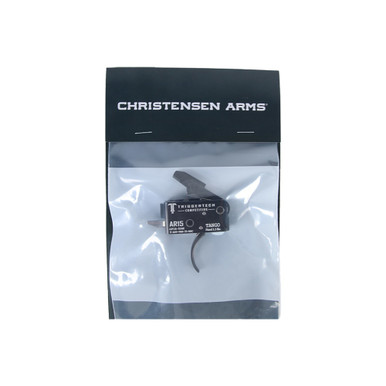
The trigger is a Jewell, factory set at 2.5 pounds, with TriggerScan analysis for force and movement consistency. The RevX variant used a Trigger Tech trigger instead. Both are well-regarded precision triggers, and the factory pull weights are appropriate for a hunting rifle that needs to be safe in field conditions while still breaking cleanly enough for precision work.
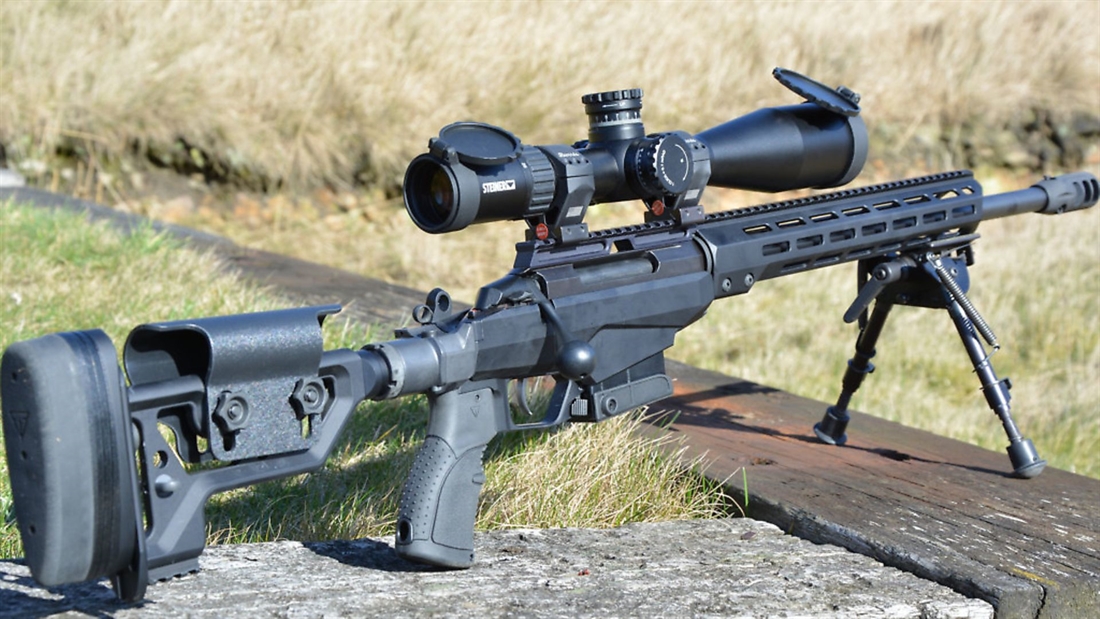
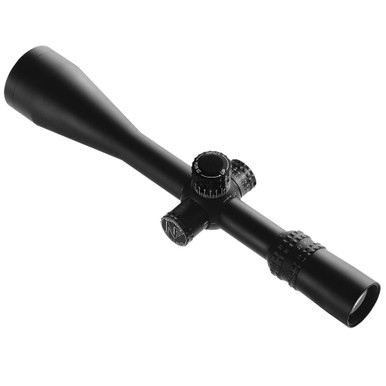
The 6.5x284 configuration shipped with a Nightforce 5.5-22x50mm G7 scope featuring a custom ballistic turret calibrated in yards to 1,400 yards using the true ballistic profile of the specific load. The RevX in 7mm Rem. Mag. also shipped with a Nightforce NXS 5.5-22x scope with a custom G7 turret. Both configurations included a G7 BR2 rangefinder capable of calculating shoot-to range with corrections for environmental conditions and incline.

The RevX variant weighed 7.7 pounds, measured 46.25 inches overall with a 25-inch barrel, and had a 13.7-inch length of pull. The stock was a natural-hold design with a vertical grip and aluminum bedding blocks in ultra-lightweight fiberglass. The floor plate was billet aluminum. The barrel was a Shilen hand-lapped, match-grade, sporter standard contour.
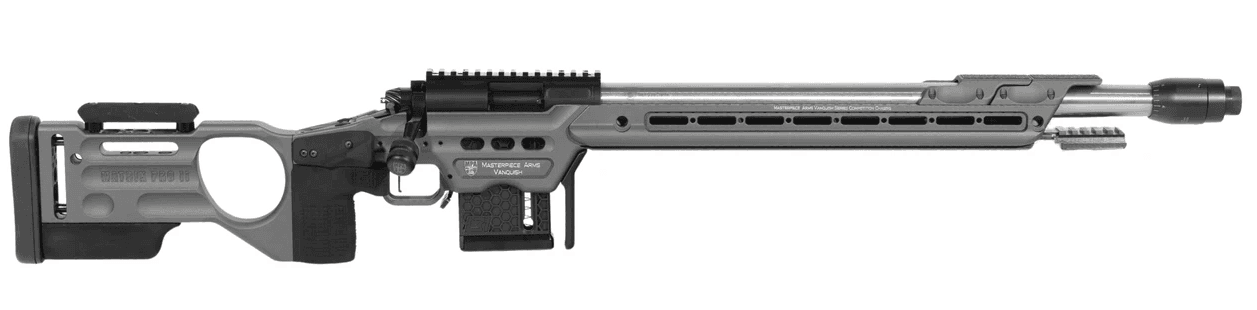

The WSF auction configuration from 2014 specified a 24-inch barrel and carbon fiber stock, noting the shorter barrel and carbon stock reduced weight for mountain hunting applications. Caliber offerings over the LR-1000's production life included 6.5x284, 7mm Rem. Mag., 6.5 Creedmoor, 28 Nosler, .300 Win. Mag., .300 RUM, .22-250, 6mm Creedmoor, 6.5 PRC, and 30 Nosler.
The RevX at $3,995 represents a more accessible entry point into the Gunwerks ecosystem compared to the company's Magnus, ClymR, or Nexus platforms, which range from roughly $8,499 to over $20,000 depending on configuration and optic package.
Ergonomics and handling
The vertical grip stock design on the RevX variant follows Gunwerks' philosophy of natural hold geometry. Aaron Davidson has stated publicly that the stock is where most of the engineering effort goes in defining what a system will do and how it serves the shooter. The vertical grip promotes a consistent wrist angle, which matters more than most people think. Inconsistent grip pressure and wrist angle are invisible accuracy killers, especially in field positions where you're not on a bench.
At 7.7 pounds unscoped, the RevX sits in a weight class that Gunwerks considers the practical minimum for 1,000-yard field shooting. Their published guidance suggests that with the right balance and ergonomics, a firearm at roughly 10 pounds with scope handles like one weighing pounds less. Add a Nightforce NXS and rings and you're right in that neighborhood.
The Gunwerks custom radial muzzle brake on the 7mm Rem. Mag. configuration was specifically noted for dampening recoil enough to make the rifle enjoyable to shoot for a magnum. That's not a trivial point. Flinch is a real accuracy problem, and a magnum rifle without effective recoil management will degrade your shooting over a string of fire. Most accuracy problems sit behind the rifle, and flinch anticipation is one of the biggest.

The bolt's re-engineered helix mechanism deserves mention. A 40 percent improvement in bolt lift smoothness translates directly to faster follow-up shots and less disruption of your position. The positive horizontal ejection clearing large turret caps is a detail that sounds minor until you've had a case bounce off a turret housing and land back in the action. That's a detail that tells you the engineers actually shoot their own rifles.
The 13.7-inch length of pull on the RevX is fairly standard and will fit most adult shooters without modification. The WSF auction configuration noted an adjustable carbon fiber stock, but the standard RevX fiberglass stock's adjustability was not specified in the available data.
Reliability and ammo sensitivity
The LR-1000 system is designed around matched ammunition. This is both its greatest strength and its most significant constraint. The G7 ballistic turret is calibrated using the true ballistic profile of a specific load. The rangefinder is programmed with that same profile. Change the ammunition and you've invalidated the entire system's calibration.
The 6.5x284 configuration shipped with Gunwerks' own 140-grain VLD loads. The RevX in 7mm Rem. Mag. was tested with Barnes VOR-TX LR 139-grain LRX BT factory ammunition, which produced average muzzle velocities of almost 3,300 fps. No malfunctions were reported in any of the available reviews, which is expected from a rifle that undergoes barrel break-in, accuracy testing, and long-range ballistic profiling before it ships.

The 6.5x284 Norma cartridge itself has a strong reputation among long-range match shooters and has become one of Gunwerks' preferred long-range hunting cartridges. Gunwerks chambers their 6.5x284 rifles with a 0.299-inch diameter reamer, with loaded brass measuring 0.294 inches, giving 0.005 inches of clearance. They've found this to be the optimum combination for long-range hunting with their factory cartridge. That level of specificity in chamber-to-cartridge matching is something you won't find in a production rifle, and it directly affects consistency.
The 6.5x284's ballistic performance is competitive with larger cartridges. Published data from Gunwerks' own comparisons shows the 6.5x284 experiences 0.7 inches less wind deflection at 1,000 yards than the .300 Win. Mag. in a 10 mph crosswind. Both cartridges maintain above 800 ft-lbs of kinetic energy past 1,000 yards, with the 6.5x284 not dropping below that threshold until after 1,200 yards and the .300 Win. Mag. holding until after 1,300 yards.
Range notes
If you're running the LR-1000 system as designed, with the matched ammunition, you shouldn't encounter ammo sensitivity issues because the system is built around a single load. The moment you start running different ammunition through it, you need to recalibrate or accept that your turret markings are now approximations. This is the trade-off of a turnkey system versus a build-your-own approach.
Accuracy and practical performance
The RevX in 7mm Rem. Mag. produced a best group of 0.95 inches and an average of 1.12 inches at 100 yards with Barnes VOR-TX LR 139-grain LRX BT ammunition. That's right at MOA, which aligns with Gunwerks' own published qualifying standard: a rifle that will shoot one MOA from a bench for five shots, consistently, qualifies as a great shooting rifle.

Gunwerks' framework for translating bench accuracy to field performance is worth understanding. Their published data states that a one-MOA rifle will typically shoot two MOA in field conditions, accounting for the shooter's positional instability, wind reading errors, and environmental variables. Two MOA is approximately 20.94 inches at 1,000 yards. A mature bull elk's vital zone ranges from roughly 18 to 26 inches depending on the source and measurement method. A mule deer with a 15-inch kill zone would have a practical maximum of 750 yards with a one-MOA rifle under this framework.
That's honest math, and it's the kind of analysis that separates serious long-range hunting from fantasy. The rifle's mechanical accuracy is only one variable. The system approach attempts to minimize the other variables, specifically range estimation error and elevation correction, by integrating the rangefinder and ballistic turret. But it can't eliminate wind reading error or positional shooting fundamentals. Those remain on the shooter.
The ballistic turret calibrated to 1,400 yards using the true ballistic profile of the load eliminates the need for holdover or manual calculation of MOA adjustments. The G7 rangefinder with the programmed ballistic profile for the specific rifle and load combination provides shoot-to range that accounts for environmental conditions and incline. The workflow is: range the target, read the corrected distance, dial the turret to that yardage, and send it.
On paper, this is elegant. At distance, the system's value becomes apparent because it removes the two most common sources of vertical error: incorrect range estimation and incorrect come-up calculation. Horizontal error from wind remains the shooter's problem. The wind call is the skill. Always has been.
Use-case fit
Long-range hunting
This is the LR-1000's primary mission, and it's where the system approach pays the biggest dividends. The hunter who takes one or two long-range shots per season on game doesn't have the repetitions to build and maintain a mental library of ballistic corrections. The turnkey system compensates for that by making the range-dial-shoot process nearly automatic. For western hunting scenarios involving mule deer at 500-plus yards on open prairie or Coues deer near the tops of foothills, the system is purpose-built.
Mountain hunting
The WSF configuration with its 24-inch barrel and carbon fiber stock was specifically configured for mountain hunting, and the weight reduction was noted as meaningful for the climb. The RevX at 7.7 pounds bare is reasonable for mountain use, though once you add scope, rings, and the rangefinder to your pack, total carry weight climbs. Gunwerks' later MTX platform, which fuses the ClymR with the Magnus, lists weight starting at 6.0 lbs with an 18-inch barrel option, and was specifically conceived as a more mountain-mission-ready alternative. If weight is your primary concern, the LR-1000/RevX is not the lightest option even within Gunwerks' own lineup.
May contain affiliate links.

Competition (PRS/NRL)
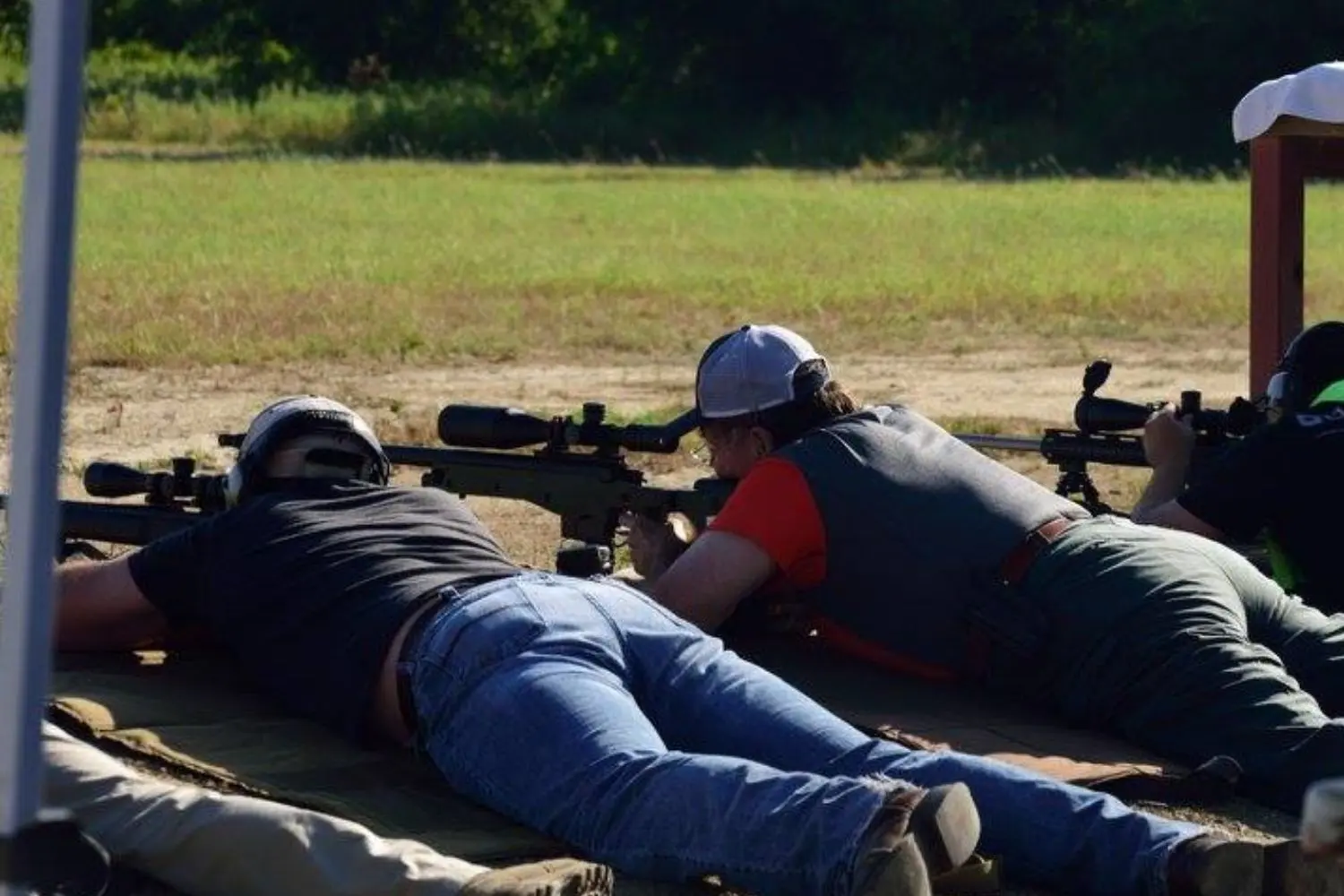
The LR-1000 is not a competition rifle. The sporter-contour barrel will heat up faster than a heavy contour under sustained fire. The turret system is calibrated for a single load, which limits flexibility. The stock isn't designed for the barricade and positional work that defines modern PRS stages. Positional stages expose everything, and a rifle optimized for field hunting from a bipod or pack doesn't translate well to shooting off barricades, through ports, or in awkward positions under a par time.
Training and practice
Gunwerks addresses this with their Long Range University program, which teaches wind reading, ballistics, rifle setup, and field-shooting techniques. They also developed the Rim Reaper, a .22 LR trainer built on the Magnus platform, designed for better practice and more enjoyable trigger time through lower ammunition cost and reduced recoil. The LR-1000 itself is best used for confirming zero and DOPE rather than high-volume practice, both because of barrel life considerations with magnum cartridges and ammunition cost.
Gunwerks Rim Reaper .22 LR
May contain affiliate links.
Where it's a poor fit
Anyone who wants to tinker, handload, and build their own system will find the LR-1000's integrated approach restrictive. The ballistic turret is matched to a specific load. The rangefinder profile is matched to that same load. Changing any variable means recalibrating the system. If the process of working up loads and building DOPE is part of what you enjoy about long-range shooting, this rifle takes that away from you by design.
Common mistakes with the LR-1000 and similar systems
Buying a turnkey system and assuming it eliminates the need for practice is the most common error. The system handles range estimation and elevation correction. It does not handle wind, positional fundamentals, trigger control, or reading conditions. A 1 MOA rifle with bad wind calls loses to a 1.5 MOA rifle with good ones.
Failing to verify zero at your elevation and location is another frequent mistake. Gunwerks zeroes the rifle before shipping, but altitude, temperature, and atmospheric pressure at your location will differ from Cody, Wyoming. The first thing you do with any turnkey system is confirm zero. Log it. Then trust the log.
Neglecting cold-bore verification will cost you the shot that matters most. Gunwerks' own qualifying protocol specifically calls for examining the point of impact of the first shot from a cold, fouled barrel relative to a five-shot group fired immediately afterward. Your cold bore shot is the one you'll take on game. If you haven't verified where it hits relative to your group, you're guessing.
Switching ammunition without recalibrating the turret and rangefinder profile invalidates the entire system. This seems obvious, but it happens. The turret markings become decoration if the ballistic profile doesn't match the load.
Overestimating your effective range based on bench performance is the mistake the system is most susceptible to enabling. Just because the turret is calibrated to 1,400 yards doesn't mean you should be shooting at game at 1,400 yards. Gunwerks' own math says a one-MOA rifle shoots two MOA in the field. At 1,400 yards, that's 28 inches of dispersion before wind error. Know your limits, not just your rifle's.
Alternatives and comparisons
The Gunwerks Nexus is the company's current modular platform, featuring a user-changeable barrel system, a carbon-wrapped barrel, and availability in 6 Creedmoor, 6.5 Creedmoor, 6.5 PRC, 7 PRC, 28 Nosler, and 300 PRC. The Nexus weighs 6 pounds 14 ounces with a 20-inch barrel. It's offered as a Long Range Package with mounted scope, custom ballistic turret, matched ammunition, and confirmed zero. Starting at $6,475, it's a step up in price from the RevX but adds barrel-swap modularity and a more modern action design. If you're buying into the Gunwerks ecosystem today, the Nexus has largely superseded the LR-1000/RevX.
Savage 110 Apex Hunter XP Deals
Prices may change. May contain affiliate links.
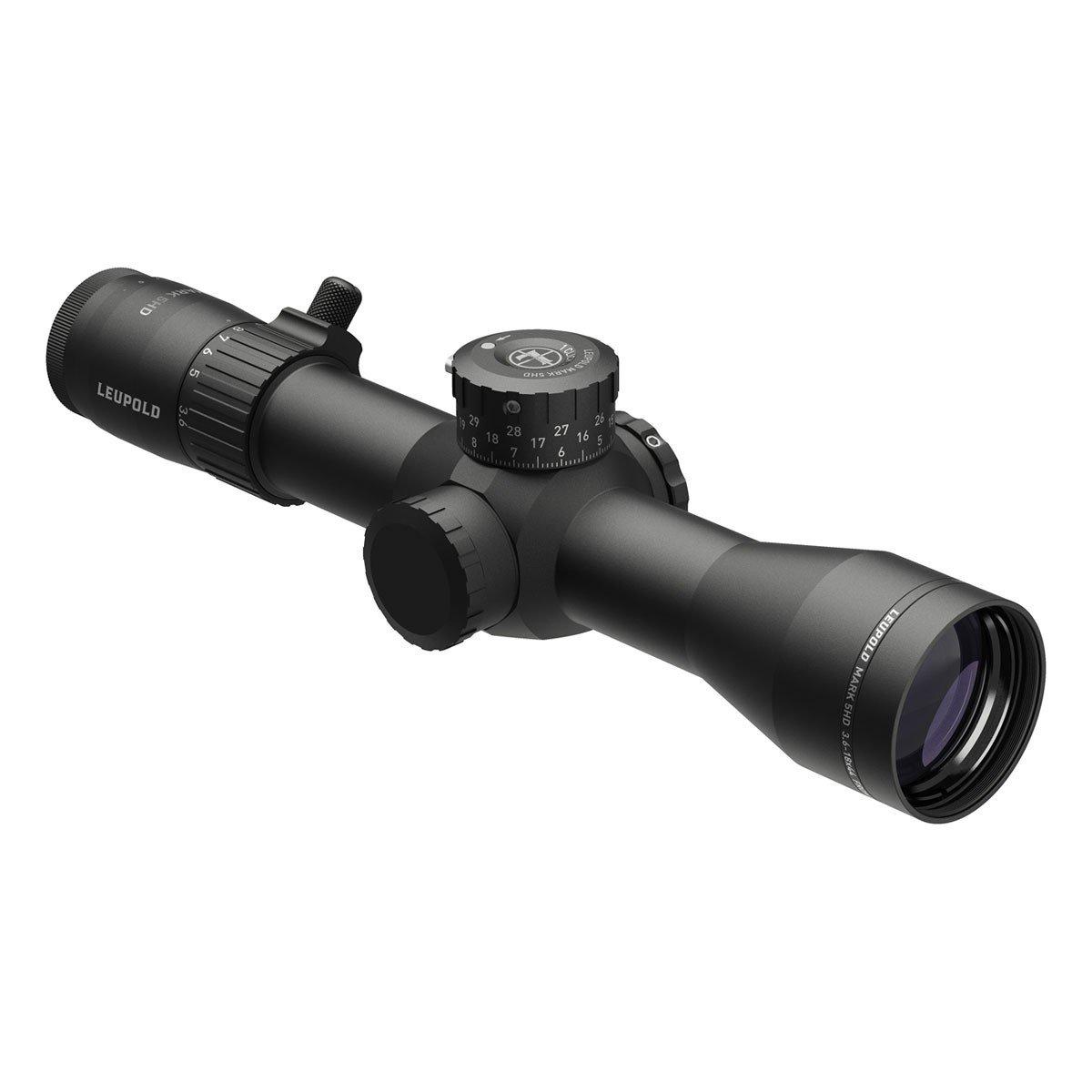
Leupold Mark 5HD 3.6-18x44 Deals
Prices may change. May contain affiliate links.
May contain affiliate links.
May contain affiliate links.
May contain affiliate links.
Seekins Havak PH2 6.5 Creedmoor
May contain affiliate links.
Seekins Havak PH2 6.5 PRC
May contain affiliate links.
Seekins Havak PH2 .300 Win. Mag.
May contain affiliate links.
The Gunwerks Werkman is the company's most accessible rifle at $3,994, available in 6.5 PRC, 300 PRC, 6.5 Creedmoor, and 7mm PRC with a 22-inch barrel. It maintains the core Gunwerks precision standard while stripping away extras. It doesn't ship as a complete system with optic and rangefinder at that base price, so you're closer to a traditional rifle purchase that you then build into a system. For someone who wants Gunwerks quality but prefers to choose their own optic and build their own ballistic profile, the Werkman makes more sense.
The Gunwerks ClymR is the mountain-hunting specialist, built on a GLR action (available in Stainless Steel or Titanium) with a carbon fiber ClymR stock, TriggerTech trigger, and a carbon-wrapped 416R Stainless Steel barrel. The version described in the Journal of Mountain Hunting came in at 6 pounds 4 ounces bare and 8 pounds 8 ounces with a Leupold Mark 5HD 3.6-18x44 and rings. It's offered in a wide range of chamberings including 6.5 PRC, 7 PRC, 300 PRC, 28 Nosler, .300 Win. Mag., 7mm Rem. Mag., and others. Pricing for ClymR packages runs from roughly $13,200 to over $18,800 depending on configuration. If weight and mountain portability are your primary criteria and budget is secondary, the ClymR is the better choice over the LR-1000.
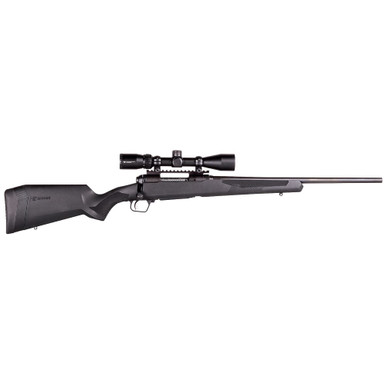
Outside the Gunwerks ecosystem, the Seekins Havak PH2 at $6.9-7.2 pounds in 6.5 Creedmoor, 6.5 PRC, or .300 Win. Mag. is a sub-MOA American-made hunting rifle, though it doesn't ship as a turnkey system. The Savage 110 Apex Hunter XP at $520-$725 ships with a mounted scope and represents the budget end of the "ready to shoot" spectrum, though the gap in component quality and ballistic integration compared to the Gunwerks approach is enormous.
Pros and cons
Strengths
- True turnkey system with ballistically matched scope turret, rangefinder, and ammunition
- Integral recoil lug with 55% more barrel threads eliminates a common accuracy-degrading joint
- Jewell or Trigger Tech trigger, factory set and TriggerScan verified
- Custom G7 turret calibrated to 1,400 yards for the specific load eliminates manual ballistic calculation
- Effective muzzle brake makes magnum chamberings shootable without developing a flinch
- Positive horizontal ejection clears large turret caps, a genuine field reliability detail
- Gunwerks performs barrel break-in, accuracy testing, and ballistic profiling before shipping
Weaknesses
- System calibration is tied to a single ammunition load; switching ammo invalidates turret and rangefinder profiles
- Sporter-contour barrel heats faster than heavy profiles under sustained fire
- Not designed for competition or positional shooting applications
- The RevX fiberglass stock lacks the adjustability of Gunwerks' carbon fiber options
- Limited aftermarket compatibility due to proprietary system integration
- Earlier LR-1000 packages carried significantly higher price tags than the RevX's $3,995 MSRP
- The platform has been largely superseded by the Nexus and Werkman in Gunwerks' current lineup
Final verdict
The Gunwerks LR-1000 proved the concept that a factory-integrated long-range hunting system could deliver legitimate 1,000-yard capability to hunters who don't have the time, expertise, or inclination to build a custom system from components. The engineering is thoughtful: integral recoil lugs, matched chamber-to-cartridge dimensions, ballistically calibrated turrets, and programmed rangefinder profiles all work together to compress the gap between mechanical accuracy and field performance. The RevX variant at $3,995 made that concept accessible to a broader audience than earlier LR-1000 configurations.
If you're shopping today, the LR-1000/RevX has been superseded by the Nexus platform, which adds barrel-swap modularity and a more refined action. But the fundamental philosophy hasn't changed, and understanding what the LR-1000 got right tells you what to look for in any long-range hunting system. The rifle's mechanical accuracy is the floor, not the ceiling. The system integration is what moves the ceiling higher. And the shooter's wind reading, positional fundamentals, and cold-bore discipline determine whether you ever reach it.
The drill to run: take whatever long-range hunting rifle you own, shoot a five-shot group from a bench at 100 yards, then shoot five consecutive cold-bore first shots on five separate range trips. Plot both. The difference between those two groups is your real-world accuracy envelope. Multiply that by ten for your 1,000-yard dispersion estimate. If the number is bigger than your target's vital zone, you've found your maximum ethical range. The LR-1000 was built to make that number as small as possible. Everything after that is on you.