You've been shooting PRS or NRL matches for a while. You can read wind at 1,000 yards, your positional game is solid, and you've got a good DOPE book. Now you're looking at an ELR event and wondering what it actually takes to connect with steel at a mile and beyond. The answer is: almost everything changes. Your rifle, your cartridge, your optic, your wind-reading methodology, your stage strategy, even the way you think about acceptable hit probability. ELR is a different discipline, and treating it like "PRS but farther" will cost you hits and money.
After reading this, you'll understand the gear baseline for a competitive ELR setup, how to choose a cartridge that actually makes sense for the distances you'll face, and how to approach stages where a single wind call error means a miss by 10 feet. You'll also have a structured practice plan to build competence before match day, because showing up to your first ELR event without preparation is an expensive way to watch your bullets disappear into the desert.
What you'll be able to do
By the end of this breakdown, you should be able to assemble a match-ready ELR kit without buying the wrong cartridge or scope, build a DOPE card that accounts for transonic behavior, read an ELR stage brief and form a realistic engagement plan, and practice the specific skills that separate hits from misses beyond 1,500 yards. None of this replaces trigger time. But it'll keep you from wasting your first season learning lessons that data already answers.
Safety and prerequisites
ELR matches run on ranges with target distances from 1 mile (1,760 yards) to 2 miles or beyond. The safety requirements are more demanding than a typical PRS match. You need to be completely comfortable with your rifle's manual of arms under stress, know your maximum elevation travel to the tenth of a mil, and understand what happens when a bullet goes transonic and potentially destabilizes. A round that keyholed or deflected unpredictably at 2,200 yards is still a round that lands somewhere.
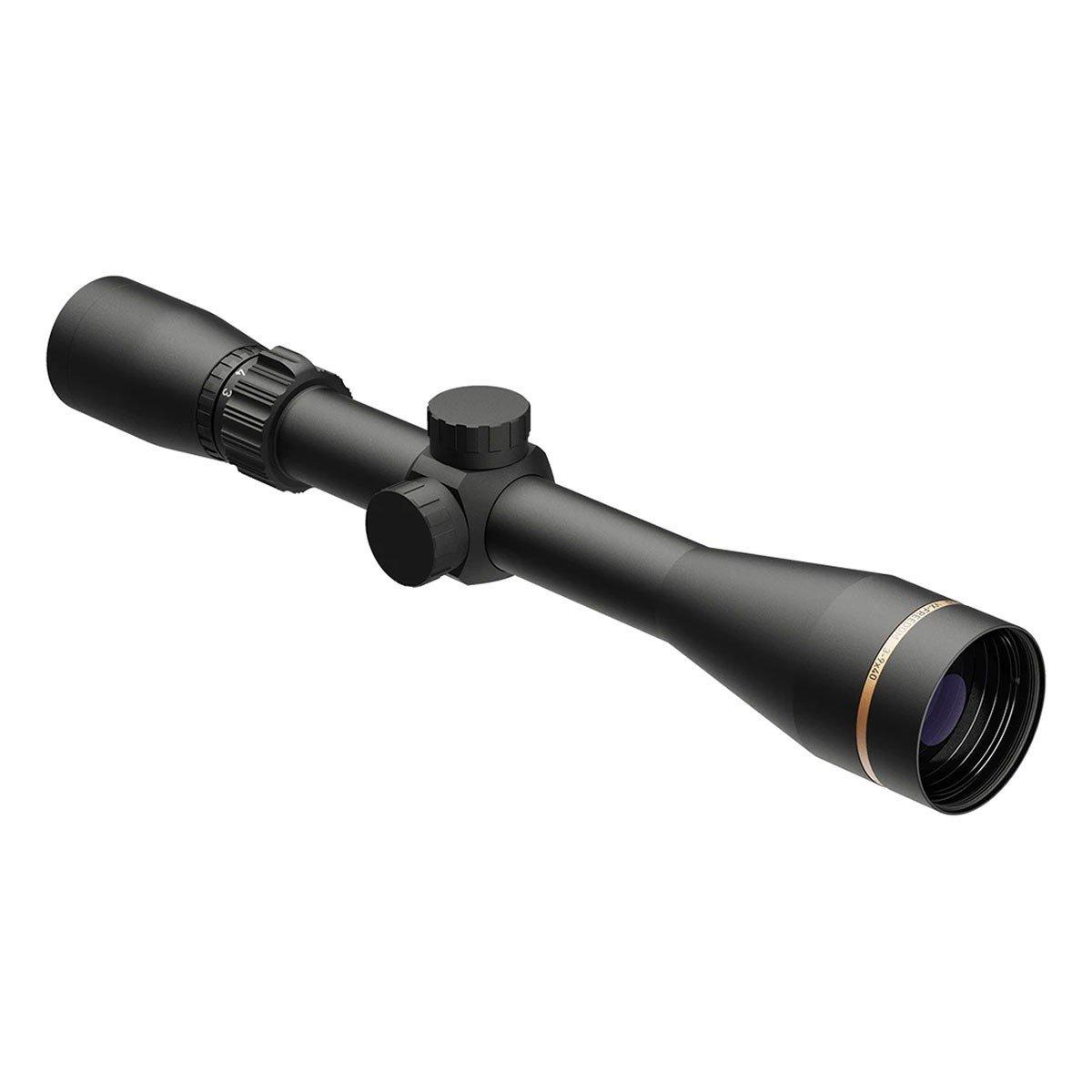
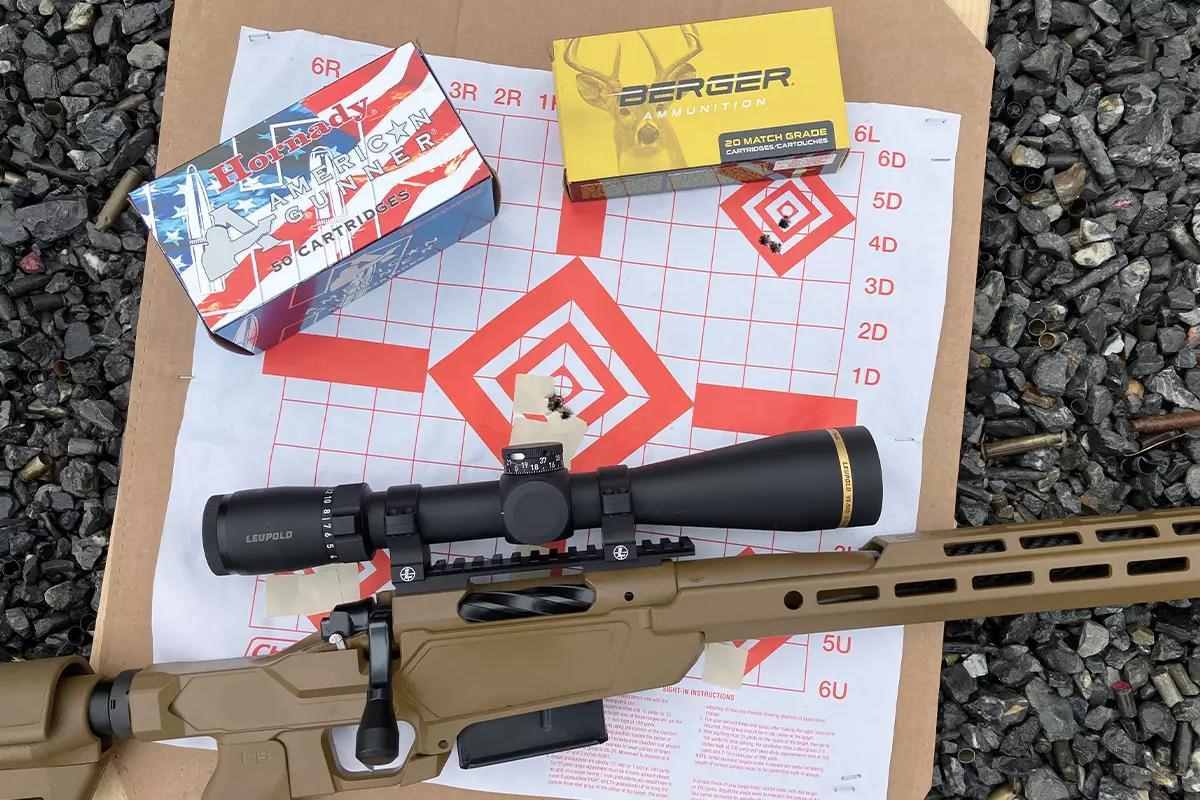
Leupold scope Deals
Prices may change. May contain affiliate links.
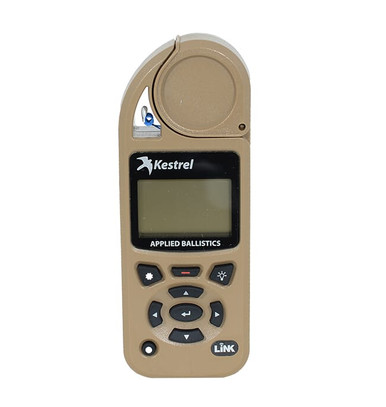
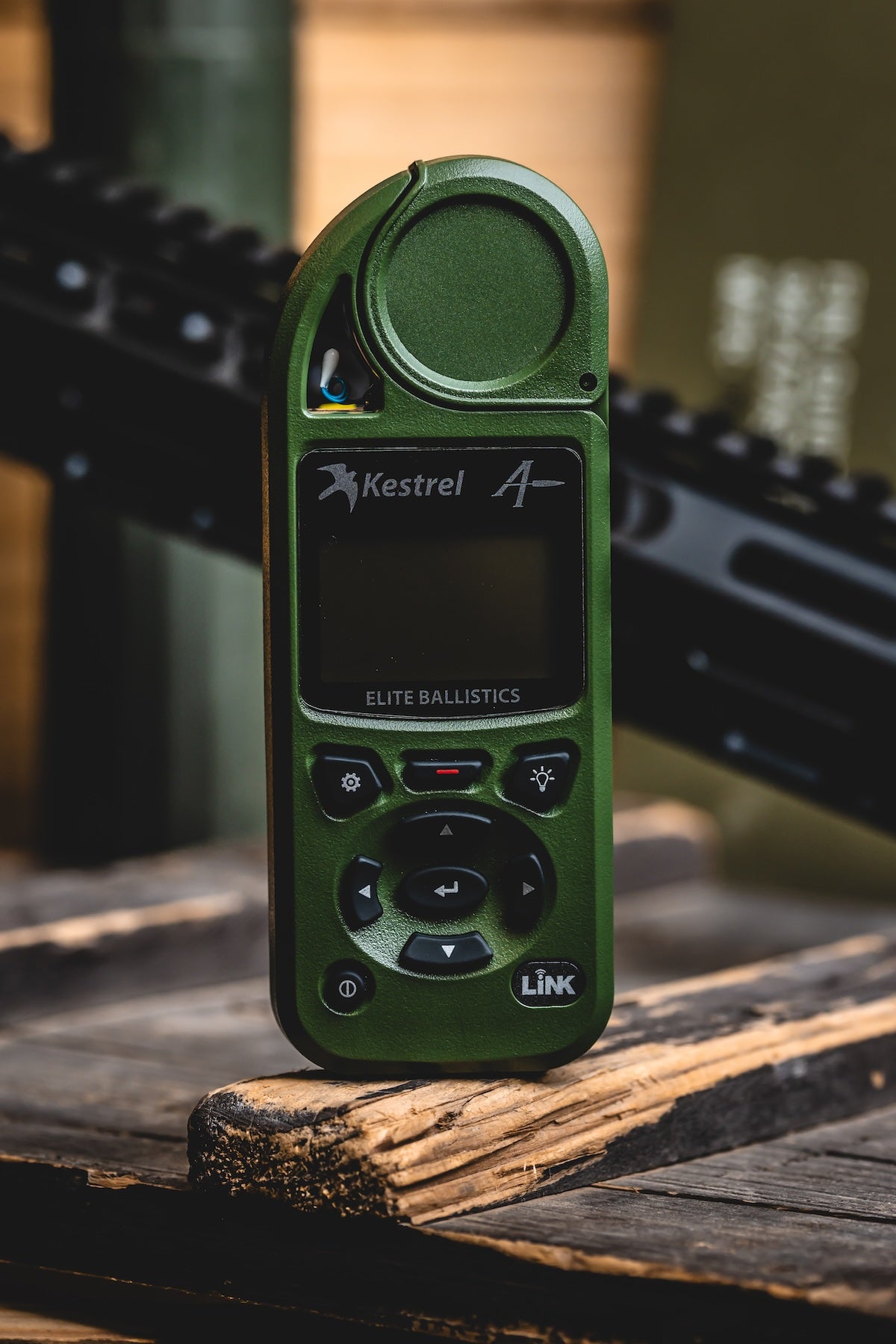
Kestrel 5700 Elite Deals
Prices may change. May contain affiliate links.
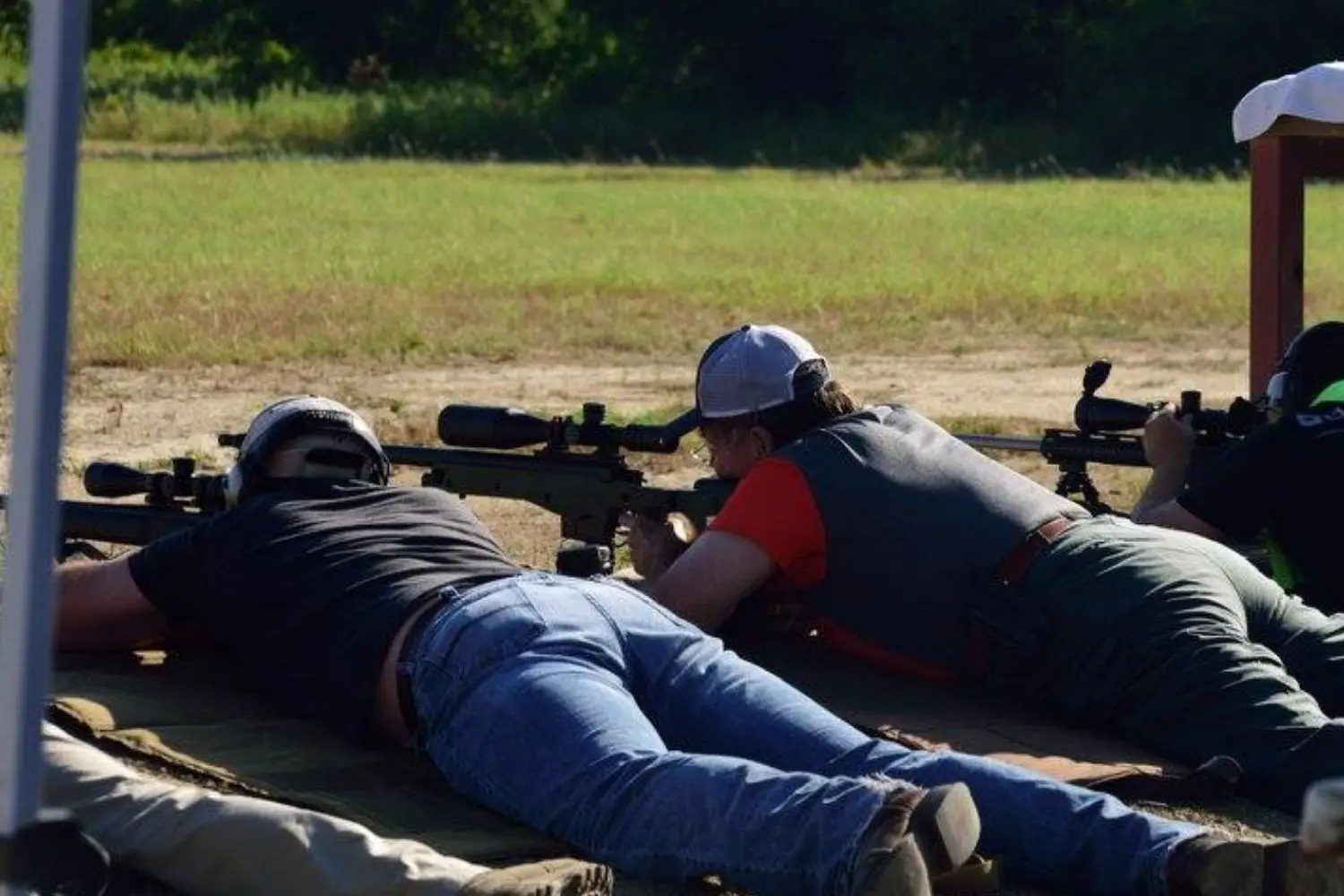
Before entering an ELR match, you should have solid fundamentals at 1,000 yards. That means consistent sub-MOA cold bore shots, reliable wind calls in variable conditions, and a well-trued ballistic solver. If you're still chasing groups at 1,000, the problems multiply at distance. A 0.3 mil wind error at 1,000 yards is a miss on a torso-sized target at 1,800.
Equipment-wise, you need a rifle rated for the pressures and barrel life demands of ELR cartridges, a scope with enough elevation travel (typically 35+ mils total), a quality bipod that handles the weight of a 16-20 pound rifle, and a Kestrel 5700 Elite or equivalent environmental meter with an integrated ballistic solver. You also need ear protection rated for the muzzle blast of large-bore cartridges with muzzle brakes, because a .375 or .416 with a brake will punish everyone on the line.
Range rules at ELR events are strict. Most require a ceasefire acknowledgment system, mandatory muzzle direction protocols, and specific procedures for loading and unloading at the line. Read the match rules before you show up. Every event runs slightly differently, and the Nightforce ELR Steel Challenge has different procedures than a King of 2 Miles qualifier.
What "good" looks like at ELR distances
The mental model shift from PRS to ELR is significant. At PRS distances (300-1,100 yards), a good shooter expects first-round hits on most targets. At ELR distances, a good shooter expects to need 2-3 rounds to connect, and the skill is in reading splash and correcting efficiently. Hit rates on first round at 1 mile in competitive ELR hover around 20-30% for top shooters. That's not a failure rate. That's the reality of engaging targets where time of flight exceeds 2 seconds and the bullet spends hundreds of yards in the transonic zone.
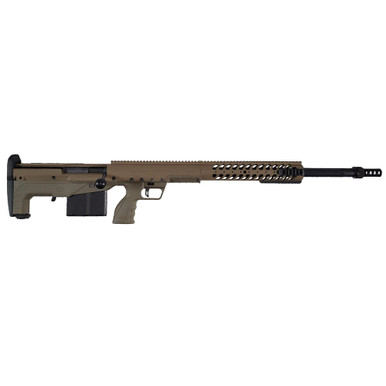
.375 CheyTac Deals
Prices may change. May contain affiliate links.
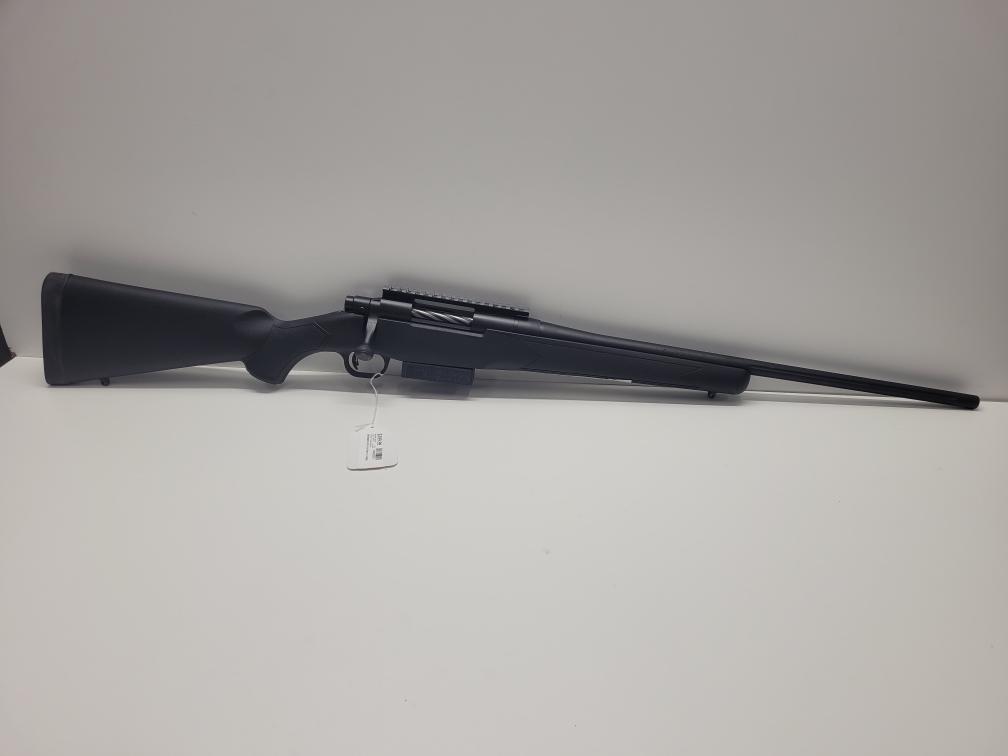
.6.5 Creedmoor Deals
Prices may change. May contain affiliate links.
The key principles that matter most shift dramatically. At PRS distances, the wind call is the dominant variable. At ELR distances, the wind call is still critical, but it's joined by density altitude accuracy, spin drift calculation, Coriolis correction, aerodynamic jump, and transonic behavior prediction. A 6.5 Creedmoor at 600 yards doesn't care about Coriolis. A .375 CheyTac at 2,200 yards absolutely does. We're talking about corrections of 0.5-1.0 mil just for Coriolis and spin drift combined at those distances.
The ES/SD tells the story even more brutally at ELR. An extreme spread of 15 fps in your muzzle velocity at 1,000 yards might mean 0.3 mils of vertical dispersion. At 2,000 yards, that same 15 fps ES can produce 1.5+ mils of vertical spread, which is the difference between a hit and a complete miss on a 2 MOA target. The ammunition quality bar is non-negotiable. Single-digit SD is the goal, and anything above 12 fps SD will show up as vertical dispersion that no amount of skill can overcome.
Good ELR performance also means understanding your bullet's transonic behavior. Every bullet design handles the transition from supersonic to subsonic differently. Some maintain stability and predictable trajectory. Others become erratic. Knowing where your specific bullet goes transonic and how it behaves through that zone is essential data. You gather this by shooting at the distances where it happens, not by guessing from a ballistic calculator.
Step-by-step breakdown
Choosing your cartridge
This is where most first-time ELR competitors either overthink or underthink. The cartridge selection data from competitive ELR events is clear: the field has consolidated around a handful of proven options, and there's a reason for that.

.416 Barrett Deals
Prices may change. May contain affiliate links.
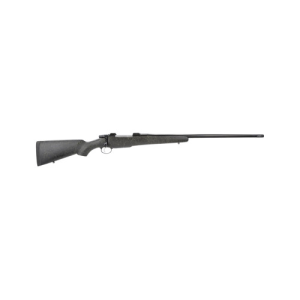

.50 BMG Deals
Prices may change. May contain affiliate links.
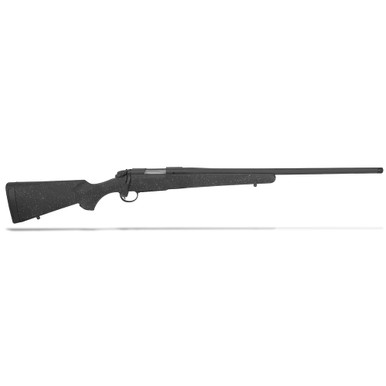
.300 PRC Deals
Prices may change. May contain affiliate links.
May contain affiliate links.
At the Nightforce ELR Steel Challenge and King of 2 Miles events, the cartridge distribution among competitive shooters tells you what works. The .375 CheyTac dominates the field, used by roughly 40-50% of top competitors. The .416 Barrett and its derivatives (including the .416 Stroker) make up another significant chunk. The .338 Lapua Magnum still shows up but is increasingly outclassed at true 2-mile distances. And you'll see some .50 BMG entries, though they're less competitive at the precision game despite the energy advantage.
The .375 CheyTac works because the bullet selection is excellent (the 400-grain Lazer solid projectiles have BCs exceeding 1.0 G1), the cartridge maintains supersonic velocity past 2,500 yards in most conditions, and the recoil is manageable enough for accurate follow-up shots. The .416 Barrett and .416 Stroker push heavier bullets (typically 400-550 grains) with extremely high BCs, and they stay supersonic even farther. Ryan Cheney's work with the .416 Stroker has shown it can maintain supersonic flight past 3,000 yards with the right projectiles and loads.
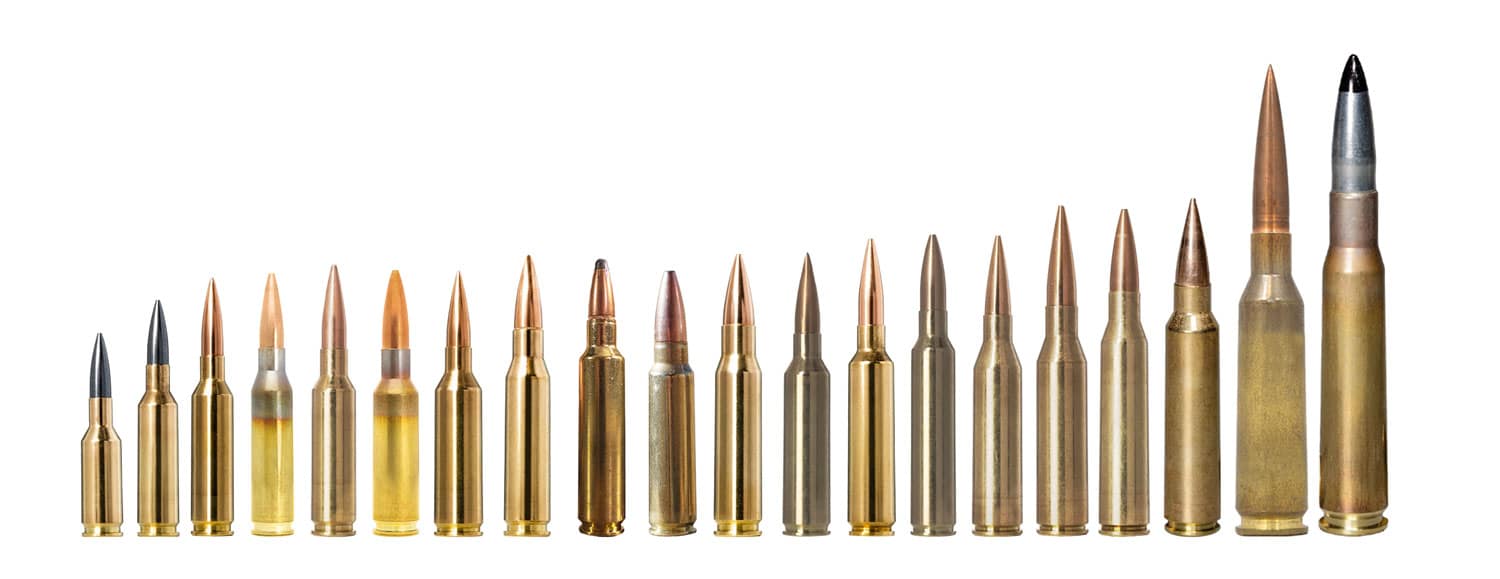
Here's the practical decision tree. If you're shooting events with maximum distances of 1 mile to 1.5 miles, a .338 Lapua Magnum or .300 PRC can be competitive. The cost of entry is lower, barrel life is better, and component availability is more forgiving. If the match goes to 2 miles, you need a .375 CheyTac minimum. If it goes beyond 2 miles, the .416 variants start making more sense despite the increased cost and recoil.
Don't pick a cartridge based on what sounds impressive. Pick it based on the match distances you'll actually shoot. A .416 Barrett at a 1-mile match is like bringing a Formula 1 car to an autocross. It'll work, but you're paying for capability you don't need while dealing with barrel life measured in hundreds of rounds rather than thousands.
Building the rifle
The rifle itself needs to do a few things well: handle the cartridge's pressures reliably, provide a platform stable enough for the precision required, and give you enough weight to absorb recoil without beating you up over a match day. Most competitive ELR rifles weigh 16-25 pounds, and that weight is intentional.
Stiller Precision action Deals
Prices may change. May contain affiliate links.
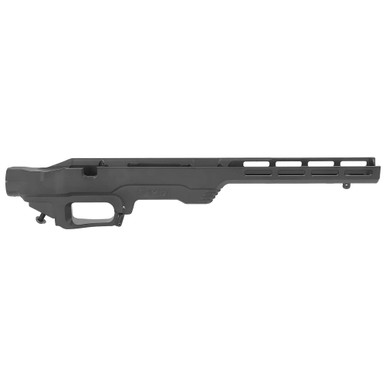
MDT chassis Deals
Prices may change. May contain affiliate links.
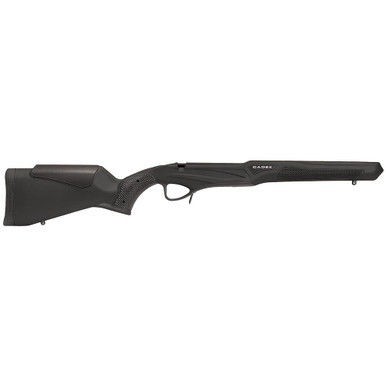
Cadex chassis Deals
Prices may change. May contain affiliate links.

McMillan chassis Deals
Prices may change. May contain affiliate links.
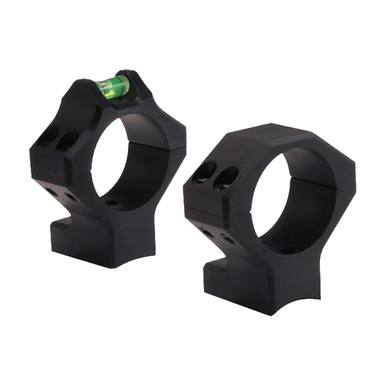
The action should be a purpose-built magnum or large-format action. Stiller, Bat, Defiance, and several other manufacturers make actions specifically designed for the bolt face diameters and pressures of ELR cartridges. Don't try to build an ELR rifle on a standard Remington 700 footprint action. The bolt thrust numbers on a .375 CheyTac or .416 Barrett demand more metal.
Barrel length matters more at ELR than anywhere else in precision shooting. Every 50 fps of muzzle velocity you gain extends your supersonic range and reduces wind deflection. Most competitive ELR barrels run 30-36 inches. A 34-inch barrel on a .375 CheyTac will typically produce 2,950-3,050 fps with a 400-grain projectile, compared to 2,800-2,850 fps from a 28-inch barrel. That 150-200 fps difference translates to roughly 200 additional yards of supersonic flight. The tradeoff is weight and handling, but at ELR you're shooting from a supported position every time, so handling barely matters.
The stock or chassis needs to be rigid and provide consistent cheek weld and length of pull. Most ELR competitors run chassis systems from MDT, Cadex, or McMillan with adjustable everything. You want a system that lets you get perfectly behind the scope without muscling the rifle, because at these magnifications and distances, any inconsistency in your position shows up as a miss.
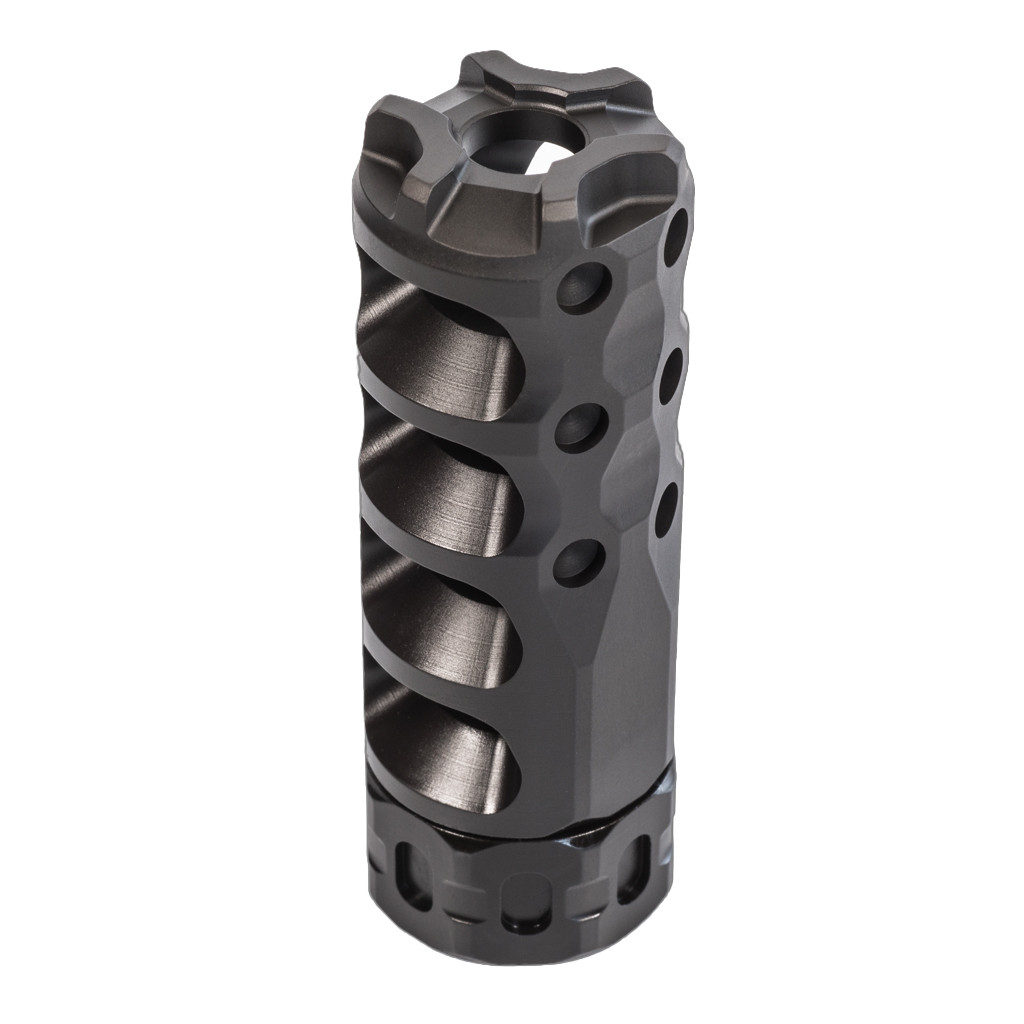
The muzzle brake is non-negotiable. These cartridges produce 40-80 ft-lbs of recoil energy without a brake. A good brake cuts that by 50-60%, and the reduced recoil lets you spot your own trace and splash. Seeing where your bullet went is how you make corrections, and you can't see anything if the rifle is bouncing you off your spot.
Selecting your optic
Your scope needs three things for ELR: enough magnification to see targets and read mirage at distance, enough elevation travel to dial to your targets without using a canted rail as a crutch, and a reticle that lets you hold for wind and make corrections precisely.
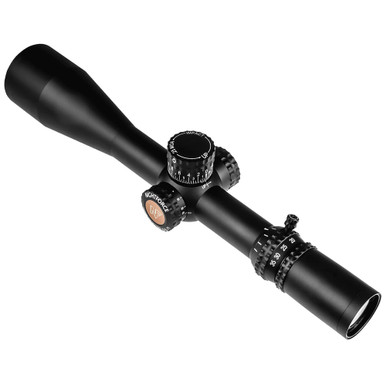
Nightforce ATACR 7-35x56 F1 Deals
Prices may change. May contain affiliate links.
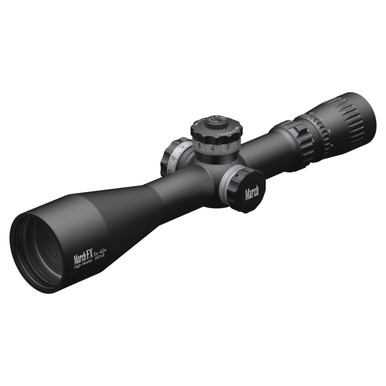
March 5-42x56 High Master Deals
Prices may change. May contain affiliate links.

Tangent Theta 5-25x56 Deals
Prices may change. May contain affiliate links.
The magnification question is straightforward. You want 35x minimum for most ELR work. At 2,000 yards, a 2 MOA target (roughly 40 inches) subtends about 1.0 mil. At 25x, that target is small. At 35x, it's workable. At 45x or 50x, it's clear but mirage becomes a bigger problem. Most competitors settle in the 35-45x range.
Elevation travel is the critical spec. A .375 CheyTac at 2,000 yards needs roughly 45-55 mils of elevation depending on conditions. Most high-end scopes top out at 30-36 mils of internal adjustment. That means you need a canted scope base (typically 40-60 MOA of cant) to supplement the scope's internal travel. The math matters here: add your scope's total elevation travel to your base cant, subtract the amount you need for zero at 100 yards, and confirm you can reach your maximum target distance with room to spare. Running out of elevation at the farthest target is a match-ending problem with no fix.
The scopes that dominate ELR competition include the Nightforce ATACR 7-35x56 F1, the March 5-42x56 High Master, and the Tangent Theta 5-25x56 (though the 25x max limits it at the longest distances). The Nightforce ATACR 7-35x56 gives you 34.9 mils of total elevation travel, excellent glass clarity, and a proven track record in competition. The March High Master series pushes to higher magnification and has exceptional tracking accuracy. ZCO (Zero Compromise Optics) also shows up frequently with their 5-27x56 and newer models.
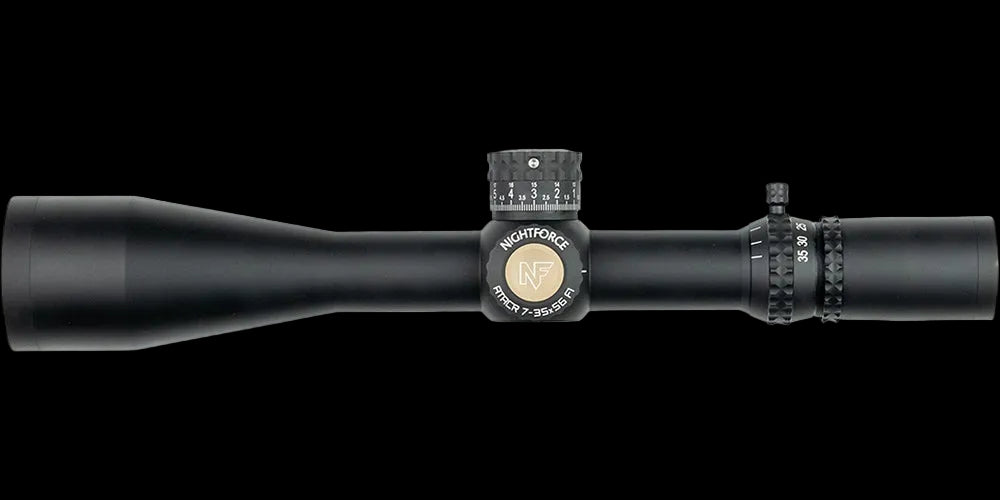
Whatever you choose, verify tracking accuracy before match day. Mount the scope, set up a tracking test at 100 yards, and confirm that 10 mils of dial input actually moves the point of impact 10 mils. Do this in both directions. A scope that's off by 2% in tracking accuracy costs you 1 mil of error at 50 mils of elevation. That's a miss.
Environmental tools and ballistic solvers
The Kestrel 5700 Elite with Applied Ballistics is the standard tool, and there's a reason it's ubiquitous. It measures temperature, humidity, barometric pressure, wind speed, and density altitude, then feeds all of that into the Applied Ballistics solver to produce firing solutions. At ELR distances, a 5-degree temperature change or a 500-foot density altitude error can shift your impact by a full mil or more.

Applied Ballistics solver Deals
Prices may change. May contain affiliate links.
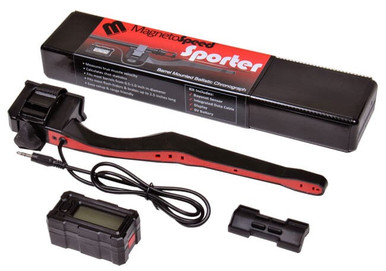
MagnetoSpeed chronograph Deals
Prices may change. May contain affiliate links.
The solver needs to be trued. Out of the box, Applied Ballistics uses library data for your bullet's BC and drag model. That data is good but not perfect for your specific rifle, barrel length, and load. You true the solver by shooting at known distances (ideally 1,000+ yards), comparing predicted drop to actual drop, and adjusting the DSF (drop scale factor) and muzzle velocity in the solver until they match. This process takes range time and ammunition, but it's the single highest-value preparation activity you can do.
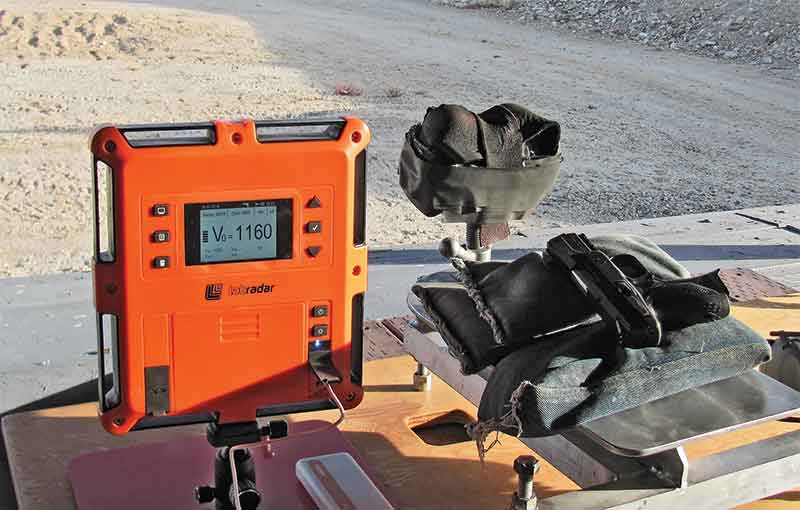
You also need a way to measure muzzle velocity accurately. A LabRadar or MagnetoSpeed chronograph gives you the actual velocity data that your solver needs. Don't use the velocity printed on the ammunition box or estimated from QuickLoad. Measure it. Then measure it again on a different day at a different temperature to confirm your temperature-velocity sensitivity curve. Most cartridges shift 1-2 fps per degree Fahrenheit. At ELR, that matters.
Match notes: reading an ELR stage
ELR stages are structurally different from PRS stages. You typically get more time per target (often 3-5 minutes per engagement), fewer targets per stage, and the targets are larger in absolute terms but smaller in angular terms. A 36-inch square target at 2,000 yards subtends about 0.5 mils. You need to be within 0.25 mils in both windage and elevation to connect.
Before each stage, you'll get a stage brief with target distances, time limits, and round counts. Use that information to pre-calculate your firing solutions for each target distance. Write them on your arm, tape them to your stock, or have them on a card. Don't rely on memory. You'll also want to note the wind conditions during the brief and compare them to what you see at the firing line. Wind at the firing line often tells you nothing about wind at 1,500 yards downrange.
The engagement sequence for most ELR targets follows a pattern: dial your elevation, hold your best wind call, send the first round, watch for trace and splash, correct, send again. The ability to read trace (the visible disturbance in the air along your bullet's flight path) is a skill that develops with practice. At ELR distances, trace is often visible for 1-2 seconds, and it tells you where your bullet went relative to the target. Splash, the impact signature on the ground near the target, gives you correction data. If you see splash 2 mils left of the target, you know your wind call was off by roughly 2 mils.
Some matches use spotters or allow team formats. If you have a spotter, they should be on a spotting scope at 40-60x, calling splash and trace while you stay on the rifle. The communication protocol should be simple: "Impact" or "Miss, 1 mil right, half mil low." No essays. Clean data.
Common mistakes and fixes
The first mistake is choosing a cartridge based on forum hype rather than match requirements. Shooters show up with a .50 BMG because it sounds like the right tool for long distance, but the bullet selection for precision .50 BMG is limited, the rifles are heavy and awkward, and the accuracy potential lags behind purpose-built ELR cartridges like the .375 CheyTac. Match the cartridge to the distances. Check past match results to see what the top 10 finishers were shooting.
The second mistake is insufficient load development. ELR cartridges are sensitive to seating depth, neck tension, and charge weight in ways that magnify at distance. Shooters who develop loads at 100 yards and assume they'll perform at 2,000 yards are disappointed. Develop at 100, confirm at 600, then validate at 1,200+. The group that looked good at 100 might open up dramatically when the bullet hits transonic if the load produces inconsistent velocities.
Third, not accounting for spin drift and Coriolis. At 1,000 yards with a 6.5 Creedmoor, these effects are small enough to ignore. At 2,000 yards with a .375 CheyTac, spin drift alone can account for 1-2 mils of lateral displacement, and Coriolis adds another 0.3-0.8 mils depending on your latitude and direction of fire. Your ballistic solver handles these calculations, but only if you've entered the correct data: twist rate, twist direction, latitude, and azimuth of fire. Get those inputs wrong and your solver's output is wrong.
Fourth, not practicing at actual ELR distances before the match. Shooting at 1,000 yards does not prepare you for 1,800 yards. The wind reading complexity, the time of flight, the transonic behavior, the visual challenge of finding and engaging small angular targets, all of it is qualitatively different. You need at least 3-5 sessions at 1,500+ yards before your first match. If you don't have access to that kind of range, you're not ready for the match.
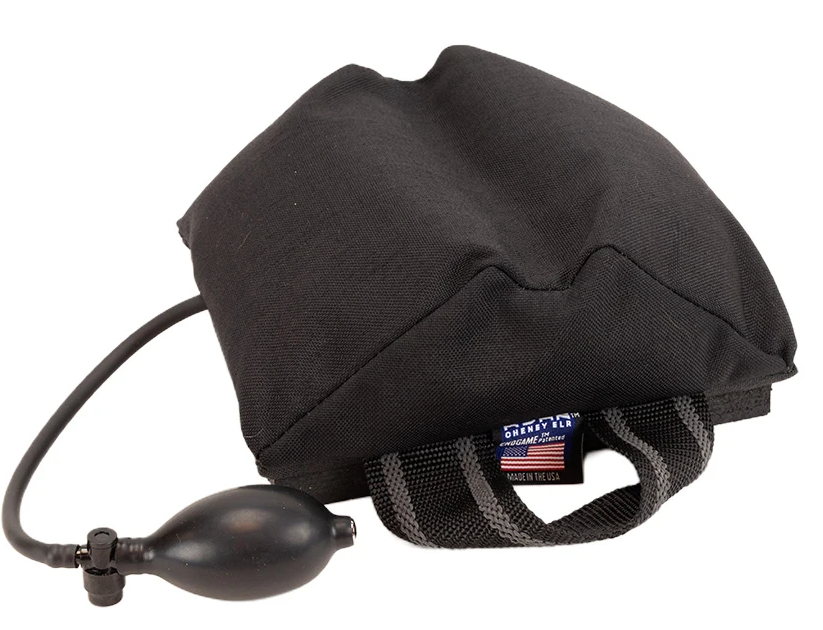
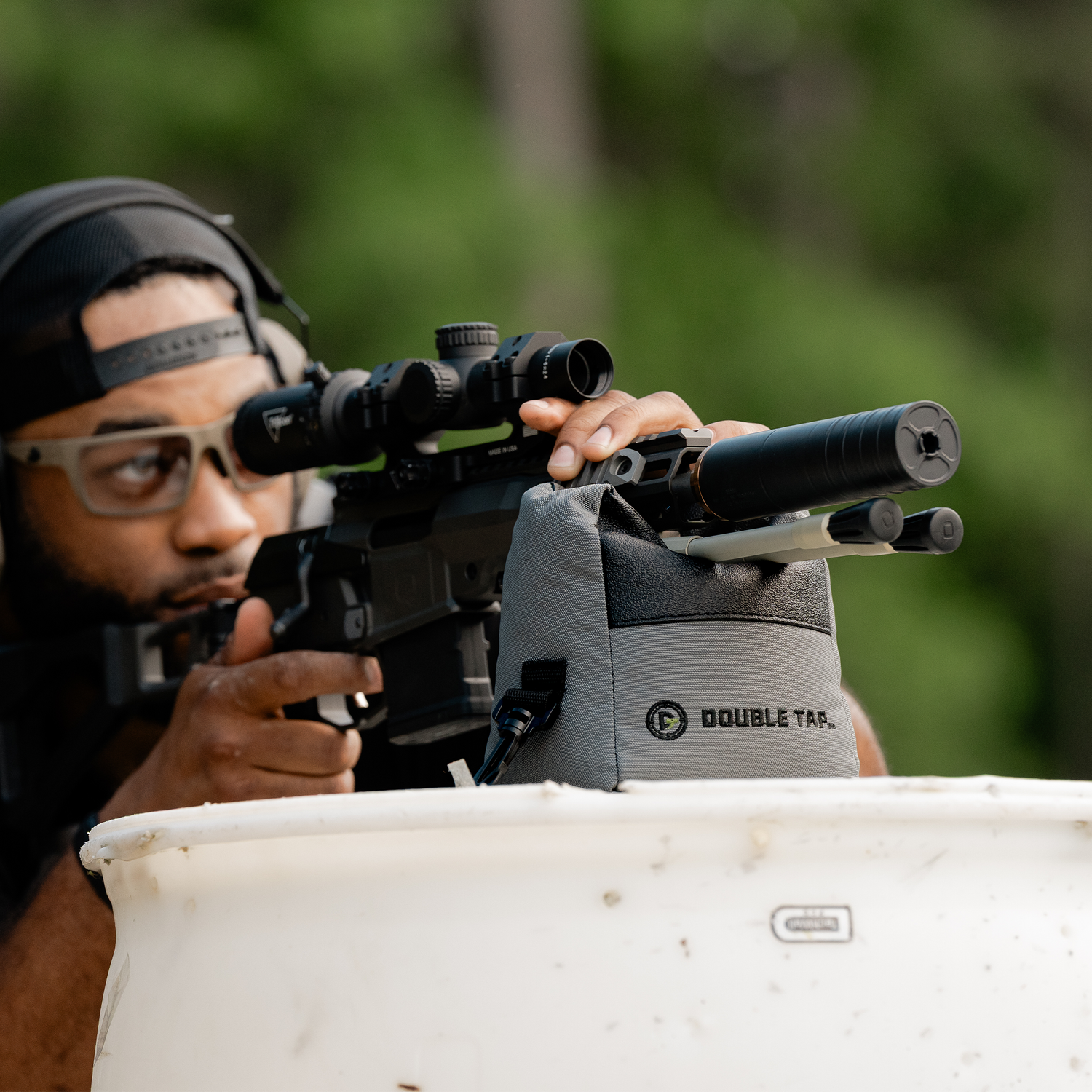
Fifth, poor recoil management leading to inability to spot trace. ELR rifles kick hard even with brakes, and if your position isn't solid, you'll lose the scope picture on every shot. That means you can't see where your bullet went, which means you can't correct. Build a position that lets you stay on the scope through recoil. This usually means more weight on the bipod, a rear bag that's properly loaded, and body position that absorbs recoil straight back rather than letting the rifle bounce.
At-home dry-fire practice
You can practice several ELR-relevant skills without firing a round. The most valuable dry-fire exercise for ELR is position building and hold stability. Set up your ELR rifle (or your PRS rifle if the ELR gun isn't built yet) on a bipod and rear bag. Get behind the scope at maximum magnification. Pick a target on the far wall, something small like a light switch or a nail head. Build your position until the reticle is dead still on that target. Then time how long you can hold that position without the reticle drifting more than 0.1 mil. At ELR, you might need to hold a position for 15-20 seconds while waiting for a wind condition, and any movement shows up as a miss.
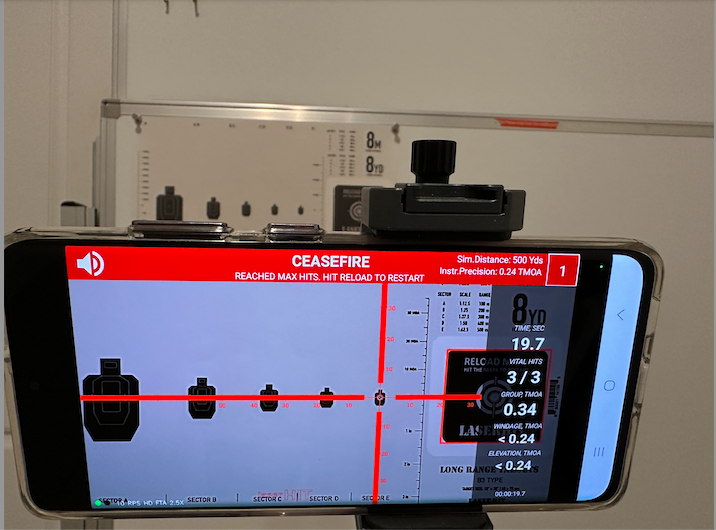
Practice your scope manipulation. Dial 30 mils of elevation, then dial back to zero. Do it without looking at the turret. Do it fast. Do it slow. Confirm that you return to the same zero every time. If your scope has a zero stop, confirm it works. If it doesn't, you need to develop an absolute familiarity with your turret's revolution count and position.
Work on your wind reading by watching flags, trees, and mirage through your scope or spotting scope. You can set up a spotting scope in your backyard or at a park and practice reading mirage off pavement or rooftops. Mirage reading is the primary wind indicator at ELR distances because you can see conditions downrange, not just at your position. A full-value mirage boil (heat waves rising straight up) means calm wind. A mirage running at an angle tells you wind direction and approximate speed. Practice identifying the transition from a 3 mph mirage to a 5 mph mirage to a 10 mph mirage where the mirage lays flat and becomes hard to read.
Also practice your data management workflow. Set up your Kestrel, generate a firing solution for a hypothetical target, write it down, then simulate the engagement sequence. Dial elevation, note your wind hold, dry fire, simulate a correction, dry fire again. The goal is to make the mechanical sequence automatic so that on match day, your brain is free to focus on reading conditions rather than fumbling with equipment.
Live-fire drills
Drill 1: velocity validation and truing (50 rounds)
Set up at a range with targets at 100, 600, and 1,000+ yards (farther if available). Fire 10 rounds at 100 yards over your chronograph to establish your actual muzzle velocity and SD for the day's conditions. Record temperature and DA. Then engage the 600-yard target, comparing your solver's predicted drop to actual point of impact. If they don't match, adjust your DSF. Move to 1,000+ yards and repeat. The goal is a solver that predicts drop within 0.1 mil at every distance you test. This drill consumes ammunition but produces the most valuable data you'll collect. Do it on at least two different days with different weather conditions to confirm your temperature-velocity model.
Drill 2: wind correction speed (30 rounds)
At 800-1,000 yards (or farther if available), engage a steel target with a deliberate 1-mil wind hold error on your first shot. Watch the splash. Correct and fire again. The goal isn't first-round hits. The goal is second-round hits after reading your miss. Time yourself from first shot to correction shot. A good ELR competitor can read splash, make a correction, and send a follow-up in 15-20 seconds. If you're taking 45 seconds, you're losing time that matters in a match. Run this drill in varying wind conditions. Calm days don't teach you anything.
Drill 3: cold bore at distance (10 rounds across 5 sessions)
Over five separate range sessions, fire two rounds at your maximum available distance as your first shots of the day. Record the conditions, your firing solution, and the result. Cold bore performance at distance reveals every weakness in your system: your zero stability, your solver accuracy, your ability to read conditions quickly, and your position consistency. Two rounds per session, five sessions, and you'll have a dataset that tells you exactly where your system stands.
Measuring progress
The metrics that matter for ELR preparation are specific and trackable. First, your ammunition SD. Measure it across multiple strings and sessions. Your target is single-digit SD (under 10 fps) with an ES under 25 fps in a 20-round string. If you're above that, your vertical dispersion at distance will mask your wind-reading ability.
Second, your solver accuracy. After truing, your solver should predict drop within 0.2 mils at 1,000 yards and within 0.5 mils at 1,500+ yards. Track the delta between predicted and actual impact at every distance you shoot. If the error grows non-linearly past a certain distance, you likely have a BC or drag model issue that needs correction.
Third, your correction speed. Time from first-round miss to second-round hit. At 1,000 yards, a good benchmark is a second-round hit within 20 seconds of the first shot. At 1,500+, give yourself 25-30 seconds because the flight time eats into your cycle. Track this over multiple sessions and look for improvement.
Fourth, your hit rate at distance. Keep a log of every shot at every distance: conditions, solution, result. After 100 rounds at 1,500+ yards, you should see a first-round hit rate of 30-40% and a second-round hit rate of 60-70% on a 2 MOA target. If your numbers are significantly below that, diagnose whether the misses are vertical (ammo/solver issue) or horizontal (wind-reading issue). The log tells you where to focus your practice.
Finally, track your position stability. During dry-fire sessions, time how long you can hold within 0.1 mil of your aiming point at max magnification. The benchmark is 20 seconds of stable hold. If you can't do it consistently, your position needs work before you add the complexity of live fire and recoil.
What to log
Every live-fire session should record: date, time, location, temperature, humidity, barometric pressure, density altitude, wind speed and direction, target distance, firing solution (elevation and wind hold), muzzle velocity (if chronographed), shot result (hit/miss, estimated miss distance and direction), and any corrections applied. This sounds tedious. It is. But the data compounds. After three months of logging, you'll have a personal database that reveals patterns no amount of theory can provide. Maybe your solver consistently under-predicts drop in high DA. Maybe your wind calls are biased to the right. Maybe your cold bore shot is always 0.2 mils high. The log shows you what your instincts can't.
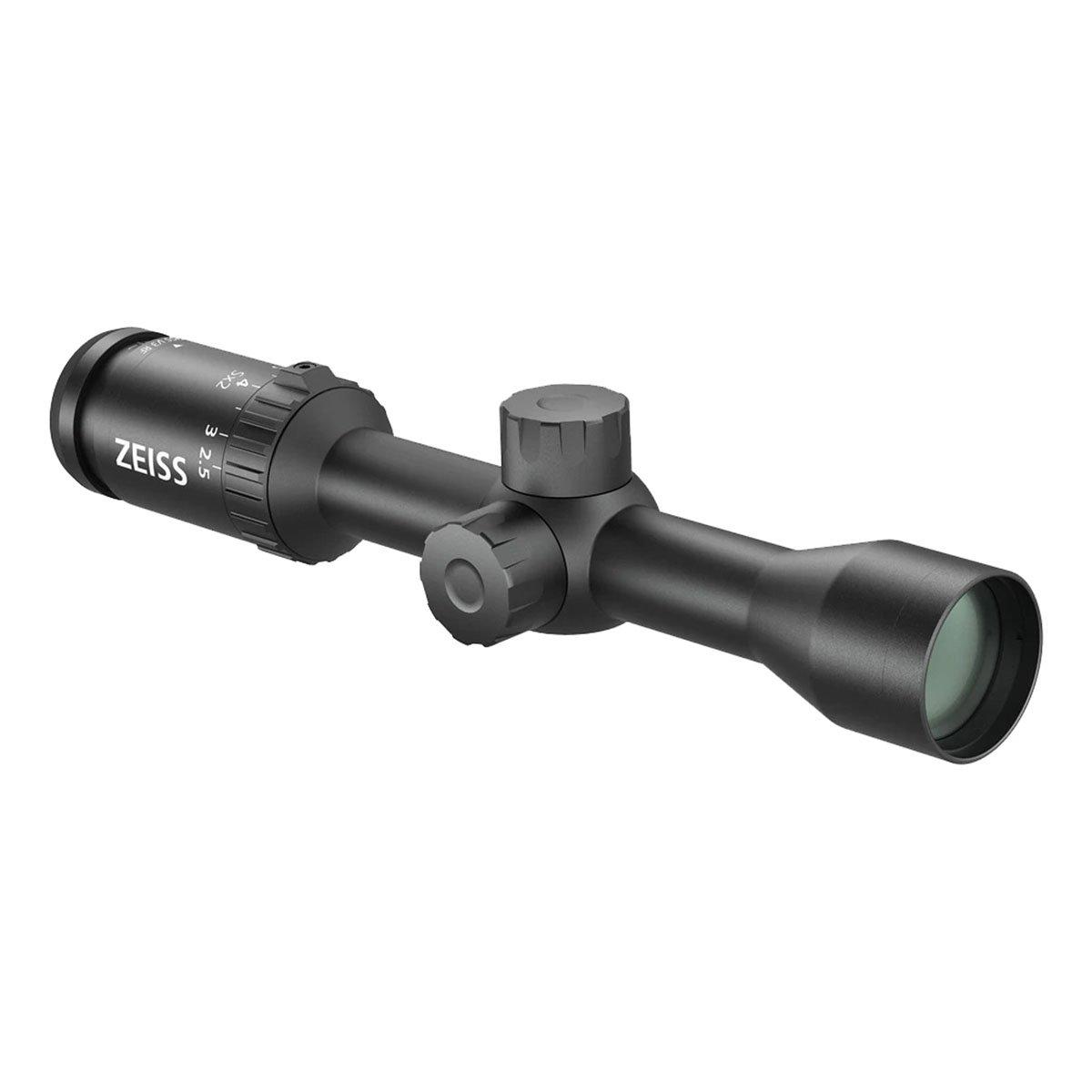
Zeiss riflescope Deals
Prices may change. May contain affiliate links.
Warwick Tactical precision bolt-action rifle
May contain affiliate links.
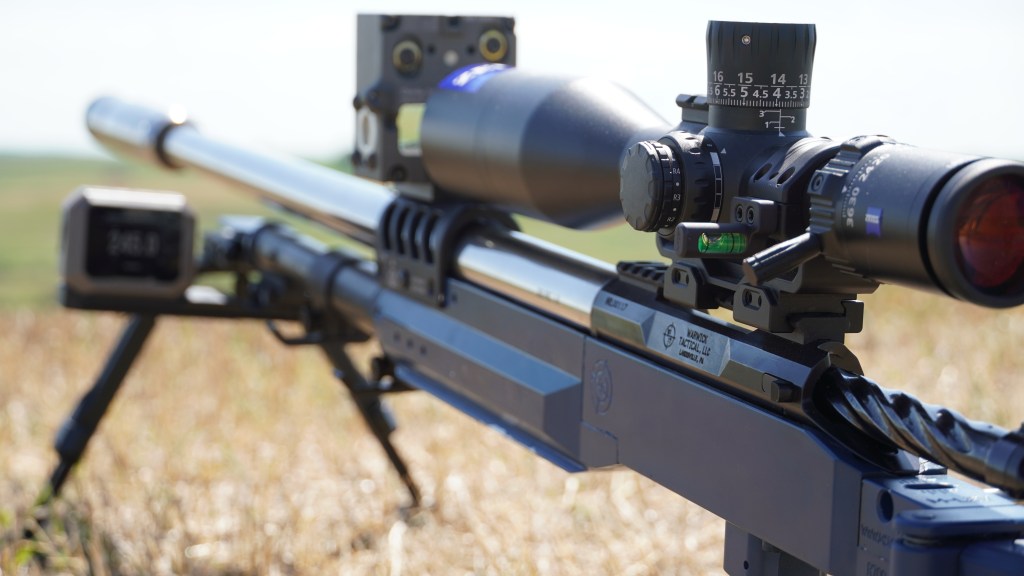
The gap between a first-time ELR competitor who shows up with good gear and no data versus one who shows up with good gear and three months of logged practice is enormous. The gear gets you to the line. The data gets you on the steel. Start logging now, build your DOPE book with real numbers from real conditions, and shoot at the longest distances available to you as often as your barrel life and budget allow. Your first ELR match should feel like a test you studied for, not a pop quiz.