You're hitting steel at 100 yards with a stock rimfire and thinking about stepping into NRL22. Good. But the gap between plinking steel and cleaning stages at a match is wider than most shooters expect. NRL22 courses of fire demand consistent hits on small targets from awkward positions, under time pressure, at distances where .22 LR ballistics start getting honest about your equipment choices. A rifle that shoots well off a bench at 50 yards can fall apart when you're shooting off a barricade at 200 with a crosswind pushing your bullet two feet.
The good news: building a dedicated NRL22 bolt gun isn't as expensive as building a centerfire PRS rig, and the skills transfer directly. The bad news: rimfire is less forgiving of sloppy component selection than most people realize. Centerfire cartridges can brute-force their way through some equipment deficiencies with velocity and BC. A .22 LR bullet at 1,050 fps with a BC around 0.145 has no such luxury. Every component decision either preserves or destroys the thin accuracy margin you're working with.
This is a parts-level breakdown of what goes into a competitive NRL22 bolt gun. Actions, barrels, triggers, chassis, optics, and the smaller details that separate a rifle that works from one that wins stages. No "buy this exact rifle" prescription. Instead, the reasoning behind each choice so you can build something that fits your shooting and your budget.
Why bolt action for NRL22
Semi-auto .22 LR platforms like the Ruger 10/22 have a massive aftermarket and can be built into accurate rifles. Kidd, Volquartsen, and others make complete semi-auto builds that shoot well. But there's a reason the top of NRL22 leaderboards is dominated by bolt guns.
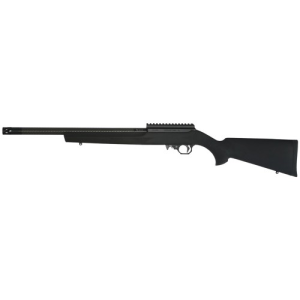
Volquartsen semi-auto build Deals
Prices may change. May contain affiliate links.
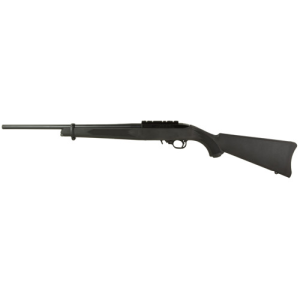
Ruger 10/22 Deals
Prices may change. May contain affiliate links.
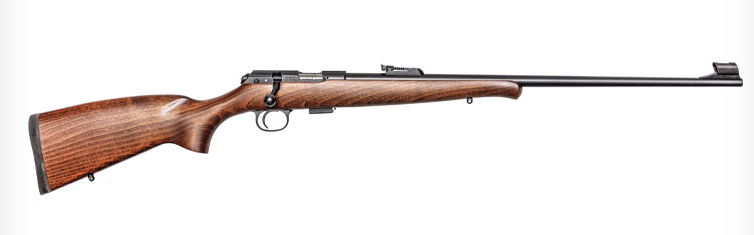
Bolt actions lock up consistently. The chamber dimensions stay the same shot to shot. There's no reciprocating mass shifting the point of impact, no extraction timing to worry about, and no magazine feeding geometry that varies with how many rounds are left. A bolt gun's lock time is typically shorter and more consistent, and the trigger options are better. Most importantly, a bolt action gives you direct control over headspace through bolt design or shim adjustment, and headspace consistency is one of the biggest accuracy variables in rimfire shooting.
The trade-off is speed. NRL22 stages are timed, and working a bolt between shots costs fractions of a second. But the accuracy advantage more than compensates. A hit is worth far more than a fast miss. Most competitive shooters find that smooth bolt manipulation becomes automatic within a few hundred rounds of practice, and the time penalty functionally disappears.
NRL22 rules (Base class) allow bolt-action rifles chambered in .22 LR with no restrictions on aftermarket components. You can run any stock, chassis, barrel, trigger, or optic you want. The rifle just has to be manually operated and chambered in .22 LR. That's a wide-open playing field for building exactly what you need.
The action: where everything starts
The action is the foundation. Everything else bolts to it, threads into it, or indexes off it. A bad action can't be fixed with a good barrel or a great scope. Here's what actually matters in a rimfire bolt action: headspace control, bolt-to-receiver fit, consistent lockup, and the quality of the raceway.
Budget tier: CZ 457 and Bergara B14R
The CZ 457 is probably the most common entry point for NRL22 competitors, and for good reason. The 457 action has a 60-degree bolt throw, which is short enough for fast cycling. The trigger is adjustable and genuinely good out of the box, breaking cleanly around 2 pounds with minimal creep. CZ chambers are typically well-cut, and the action mates to a variety of aftermarket stocks and chassis through its standard footprint.
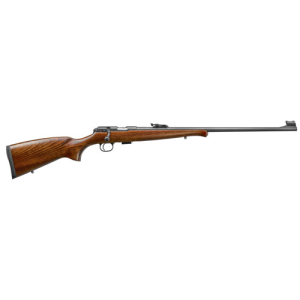
CZ 457 Deals
Prices may change. May contain affiliate links.
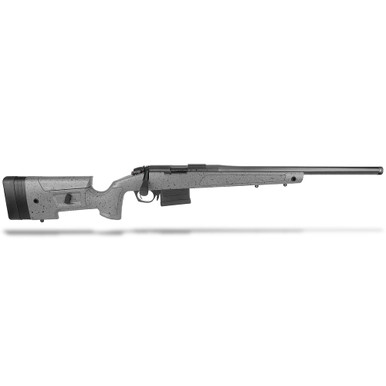
Bergara B14R Deals
Prices may change. May contain affiliate links.
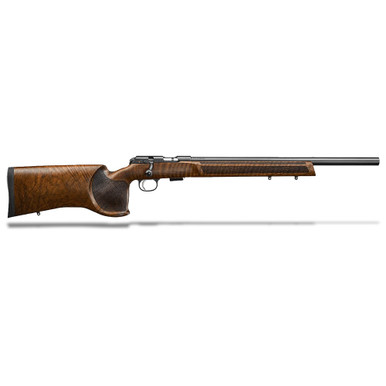
CZ 457 MTR Deals
Prices may change. May contain affiliate links.
The Bergara B14R uses a Remington 700 footprint, which opens up the entire R700 aftermarket for chassis and stock options. That's a significant advantage if you want to run an MPA, MDT, or KRG chassis without adapters. The B14R's action is smooth, the bolt handle is oversized for fast manipulation, and the factory trigger is competitive. Where it falls slightly behind the CZ is in the trigger feel and the overall refinement of the bolt raceway, though individual examples vary.
Both of these actions can be competitive at the local and regional level. The limiting factor at this price point isn't usually the action itself. It's the barrel quality and the ammunition selection. A CZ 457 MTR or a B14R with good ammo will shoot 0.5 MOA or better at 50 yards, which is enough mechanical accuracy for most NRL22 stages.
Mid tier: Tikka T1x and Lithgow LA101
The Tikka T1x gets mentioned less often than the CZ, but shooters who've run both tend to praise the Tikka's bolt feel. It's smoother out of the box than almost anything in this price range. The action is well-machined, the bolt throw is short, and the overall fit and finish is what you'd expect from Tikka. The downside is a smaller aftermarket compared to the CZ or the Remington-footprint Bergara. You'll need a Tikka-specific chassis or stock, which narrows your options somewhat. MDT and KRG both make Tikka-compatible chassis, so it's not a dead end, but it's fewer choices.
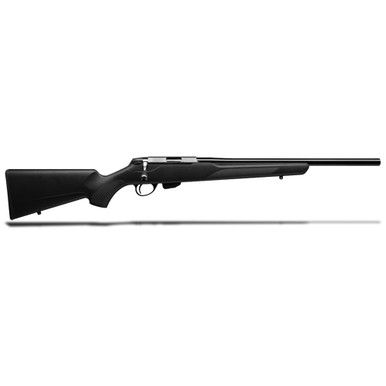
Tikka T1x Deals
Prices may change. May contain affiliate links.

The Lithgow LA101 is an underrated option. Built on the same action used in the Australian military's training rifles, the LA101 has a reputation for excellent chamber work and consistent accuracy. It's heavier than the CZ or Tikka, which can be a positive for NRL22 where rifle weight helps with stability in positional stages. The aftermarket is the smallest of this group, though, and finding one in stock can be a challenge depending on your location.
Top tier: Vudoo Gun Works and the custom action route
The Vudoo V-22 (and its variants like the Three 60 and Sinister) represents the current gold standard for NRL22 bolt actions. Vudoo actions are CNC-machined to extremely tight tolerances, with bolt-to-receiver fit that eliminates the slop found in production actions. The bolt throw is 60 degrees, the trigger hanger accepts Remington 700 triggers (including the TriggerTech and Bix'n Andy units that dominate PRS), and the action footprint is Remington 700, giving you full chassis compatibility.
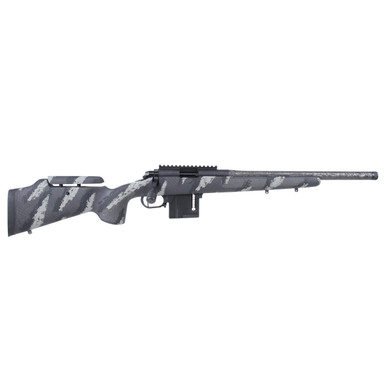
Vudoo Sinister Deals
Prices may change. May contain affiliate links.
May contain affiliate links.
May contain affiliate links.
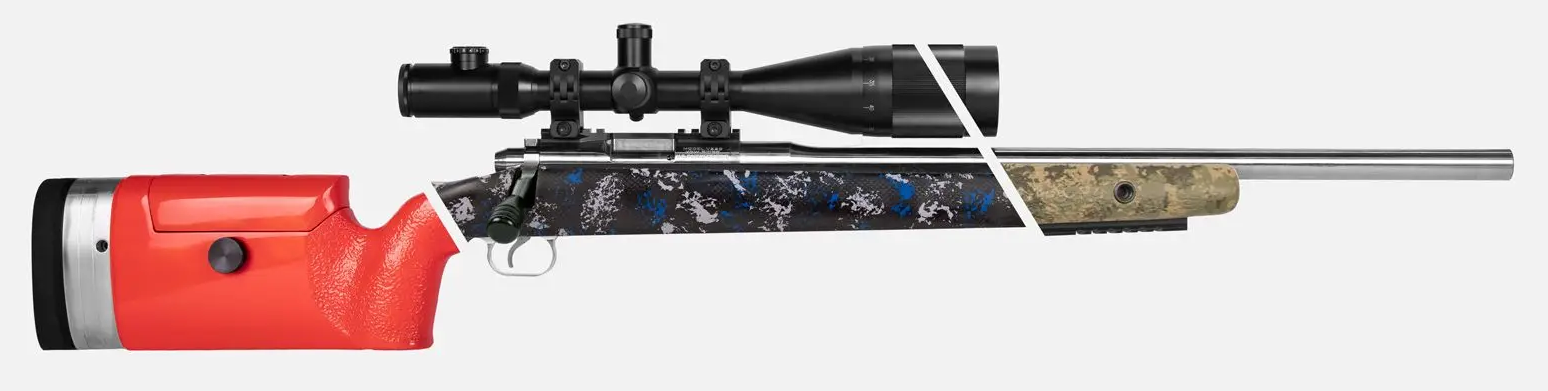
What separates the Vudoo from a good CZ isn't necessarily the group size at 50 yards. It's the consistency. A Vudoo will shoot the same group size with the same ammo, session after session, in a way that production actions sometimes don't. The headspace is precisely controlled, the chamber is match-cut, and the bolt face geometry is optimized for rimfire ignition. At 200+ yards, where small ES/SD differences in velocity combine with wind to open groups, that consistency matters.
The Zermatt Arms RimX is another custom-tier action worth considering. It uses the same Remington 700 footprint, has excellent bolt-to-receiver fit, and accepts standard R700 triggers. It's typically less expensive than a Vudoo and competes directly in terms of mechanical accuracy. Forum discussions among competitive shooters show a genuine split in preference between the RimX and Vudoo, with most agreeing that both are capable of winning matches.
The price difference between a CZ 457 and a Vudoo is significant. Roughly three to four times the cost for the action alone. Whether that's worth it depends on where you are as a shooter. If your wind-reading and positional fundamentals are still developing, a Vudoo won't make you shoot better scores than a CZ. The action isn't the bottleneck at that point. But if you're already placing well at local matches and want to compete at the national level, the consistency of a premium action starts paying dividends.
Barrels: the accuracy engine
The barrel does more work for accuracy than any other single component. In rimfire, barrel selection is complicated by the fact that .22 LR ammunition is not reloadable. You can't tune your load to your barrel. You have to find the ammunition that your barrel likes, or choose a barrel that's known to shoot well with a broad range of ammo.
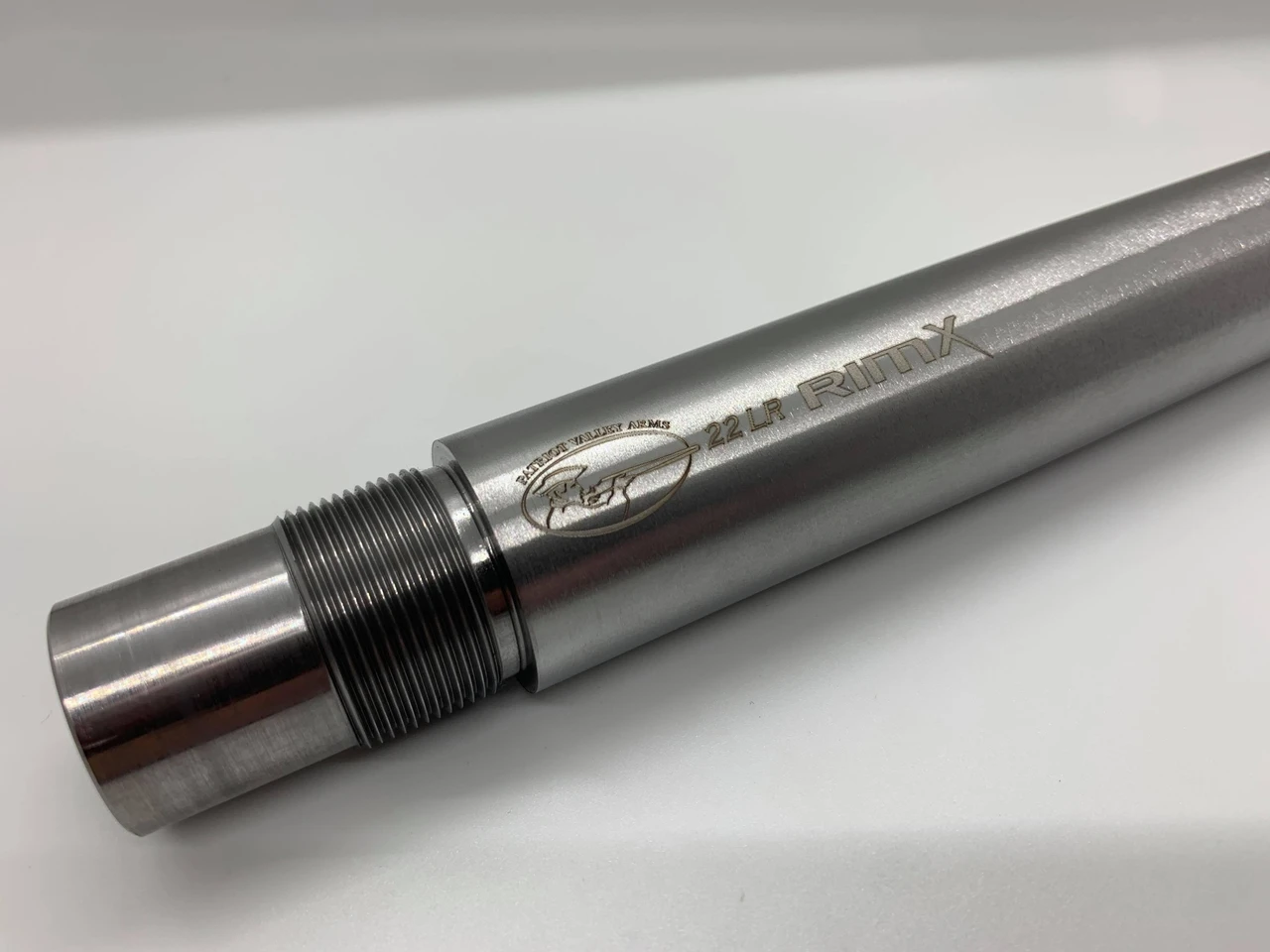
What matters in a rimfire barrel
Chamber dimensions are the single most important variable. A match chamber with a tight throat and minimal freebore will generally shoot better than a sporter chamber. The SAAMI spec for .22 LR is generous, and production barrels are often cut to the loose end of that spec to ensure reliable feeding with any ammunition. Match chambers are cut tighter, which means some bulk ammo may not chamber reliably, but the accuracy with match-grade ammunition improves dramatically.
Barrel length for NRL22 is typically between 16 and 20 inches. The .22 LR cartridge reaches peak velocity somewhere around 16 to 18 inches in most barrels, depending on the specific load. Going longer than 20 inches rarely adds velocity and can actually reduce it slightly as bore friction overcomes the remaining propellant energy. More importantly, a longer barrel adds weight forward of the action, which changes the balance of the rifle. For positional shooting, a front-heavy rifle can be harder to manage on some barricade stages. Most competitive NRL22 rifles run 18-inch barrels as a compromise between velocity, balance, and maneuverability.
Twist rate in .22 LR barrels is typically 1:16, which stabilizes standard and high-velocity 40-grain bullets well. Some barrels are cut at 1:14 for heavier subsonic projectiles, but for NRL22 where you're shooting standard velocity match ammo (typically 40-grain bullets at 1,050 to 1,080 fps), 1:16 is the standard and works well.
Barrel options by tier
Factory barrels on the CZ 457 MTR and Bergara B14R are good enough to compete. The CZ MTR barrel in particular has a reputation for excellent accuracy, and many shooters run them without replacement for years. If you're building on a CZ 457 action, the factory MTR barrel is a legitimate option, not just a placeholder.
Aftermarket barrels from Shilen, Lilja, Green Mountain, and Kidd represent the mid-tier upgrade path. Shilen match barrels are probably the most common aftermarket choice for bolt-action NRL22 rifles. They're available in various contours and lengths, typically with match chambers, and they have a long track record in competitive rimfire shooting. Lilja barrels are hand-lapped and have an excellent reputation for consistency. Green Mountain barrels are more budget-friendly and still shoot well, making them a good option if you're building on a tighter budget.
For Vudoo and RimX actions, most shooters run the barrels that come with the complete rifles (Vudoo uses Ace barrels, among others) or have a gunsmith fit a Shilen or Lilja blank. At this level, the barrel is typically the component that gets the most attention during the build, with the gunsmith carefully chambering and crowning to match the action.
One thing worth noting: rimfire barrels do wear out, but the timeline is much longer than centerfire. A good .22 LR barrel will typically maintain match accuracy for 50,000 to 100,000 rounds, depending on how it's cared for and what ammunition is run through it. Lead fouling is the primary enemy, not throat erosion. Regular cleaning with a proper rimfire solvent and bore brush keeps accuracy consistent.
Triggers: the underrated multiplier
A bad trigger will cost you more points than a mediocre barrel. In NRL22, you're often shooting from unstable positions with time pressure. A heavy, gritty, or unpredictable trigger pull magnifies every positional error. The trigger needs to break cleanly at a consistent weight, with minimal overtravel, so you can execute the shot without disturbing the rifle.
What the data shows
PrecisionRifleBlog's survey of top PRS shooters consistently shows TriggerTech as the most popular trigger brand among competitive precision rifle shooters. That trend carries over to NRL22, where TriggerTech Diamond and Special models are extremely common on Vudoo and RimX builds. These triggers are adjustable down to about 1.5 ounces and have a very short, crisp break with almost zero creep.
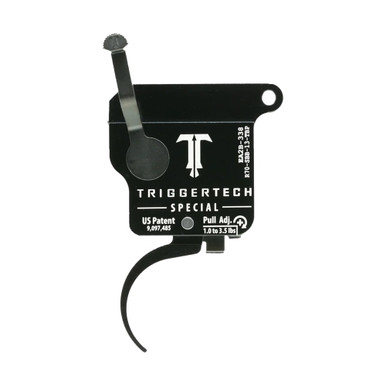
TriggerTech Special Deals
Prices may change. May contain affiliate links.

TriggerTech Diamond Deals
Prices may change. May contain affiliate links.
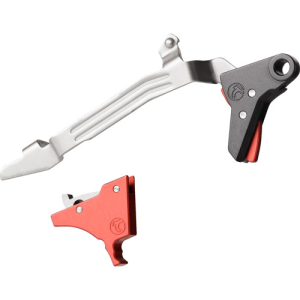
Timney trigger Deals
Prices may change. May contain affiliate links.
The Bix'n Andy competition triggers are the other dominant choice at the top level. They're adjustable, extremely consistent, and available in configurations for most action types. Both TriggerTech and Bix'n Andy use a Remington 700 trigger hanger, which is why R700-footprint actions dominate the custom rimfire market. If your action accepts R700 triggers, you have access to the best trigger options available.
For CZ 457 builds, the factory trigger is genuinely competitive after adjustment. It can be set to break around 1.5 to 2 pounds with a clean break. Aftermarket options from Timney and others exist, but many competitive CZ shooters stick with the factory unit. The Bergara B14R trigger is also adjustable and adequate for competition, though it's not quite as refined as the CZ unit.
Range notes: trigger weight for NRL22
Most competitive NRL22 shooters run trigger pulls between 4 and 10 ounces. That's lighter than what most people are comfortable with initially. The logic is simple: at lighter trigger weights, you need less force to break the shot, which means less disturbance to the rifle during the trigger pull. The risk is unintentional discharges if your trigger discipline isn't solid, or if the trigger is so light that the jarring from working the bolt causes it to fire.
Start at 1.5 pounds and work down over time as your trigger control improves. If you find yourself occasionally pulling shots because of trigger weight, go lighter. If you find yourself occasionally firing before you're ready, go heavier. The right weight is the lightest pull you can manage safely and consistently under match conditions.
Chassis and stocks: the interface
The chassis or stock is how you interface with the rifle. It determines your cheek weld, length of pull, grip angle, and how the rifle balances in various positions. For NRL22, where positional stages are the norm and you're shooting off barricades, bags, tripods, and sometimes the ground, the chassis needs to be adjustable and stable.
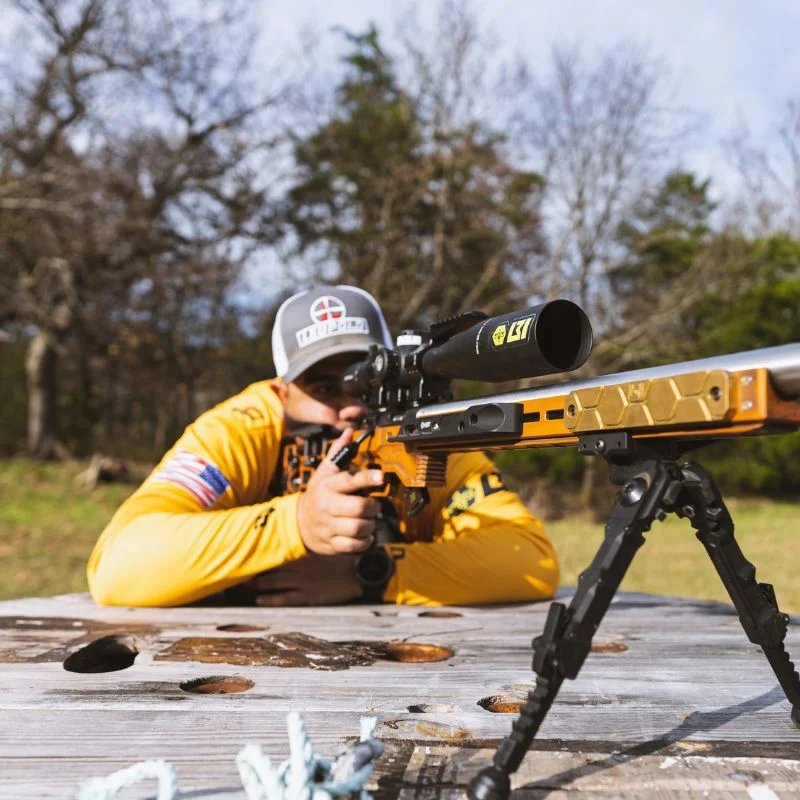
Chassis vs. traditional stock
Most competitive NRL22 shooters run chassis systems rather than traditional wood or fiberglass stocks. Chassis systems have adjustable cheek risers, adjustable length of pull, accessory rails for weights or barricade stops, and they typically have a flat forend that sits well on bags and barricades. The aluminum construction is rigid, which means the bedding is consistent and the action doesn't shift under stress.
What the pros run
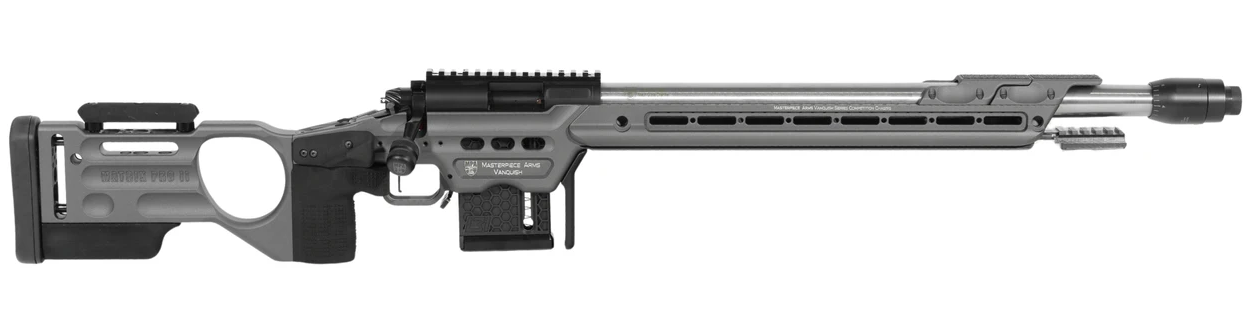
MPA (Masterpiece Arms) chassis dominate the top of PRS and NRL22 leaderboards. The MPA Matrix and BA Competition Chassis are the most common, with features like a fully adjustable buttstock, integrated barricade stop, ARCA rail on the forend, and a vertical grip. The MPA chassis uses a V-bedding system that creates consistent action-to-chassis contact without traditional bedding compound.
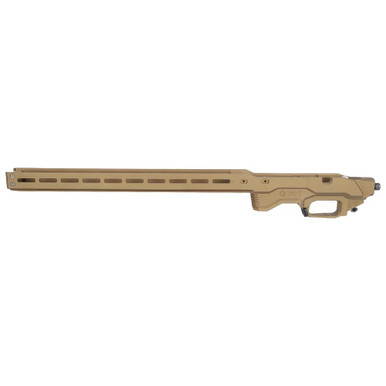
MDT ACC Deals
Prices may change. May contain affiliate links.

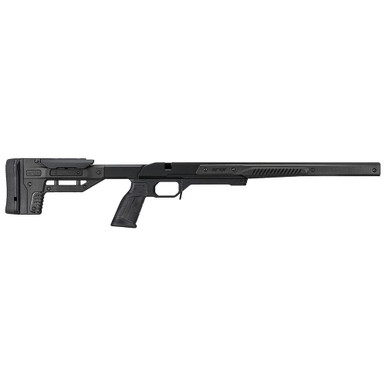
Oryx chassis Deals
Prices may change. May contain affiliate links.
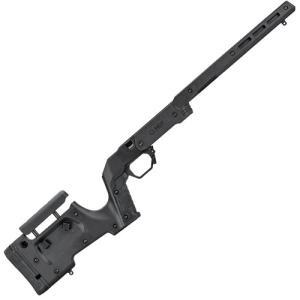
MDT XRS Deals
Prices may change. May contain affiliate links.
MDT (Modular Driven Technologies) chassis are the second most popular choice. The MDT ACC and XRS are both seen frequently in NRL22 competition. MDT chassis tend to be slightly more modular than MPA, with more options for forend length, weight distribution, and buttstock configuration. They're also available for a wider range of action footprints, which matters if you're building on a Tikka or CZ action rather than an R700 footprint.
KRG (Kinetic Research Group) makes the Bravo and Whiskey-3 chassis, both of which are popular in NRL22. The KRG Bravo is particularly common as a mid-budget option. It's less adjustable than the MPA or MDT options but has a good ergonomic design and solid construction. The Whiskey-3 is more fully featured and competes directly with the MPA and MDT top-tier options.
For CZ 457 builds specifically, the MDT XRS and the Oryx chassis are popular choices. The CZ footprint is well-supported by MDT, and several other manufacturers make CZ-specific chassis. If you're building on a CZ, you won't have trouble finding a good chassis, though the selection is smaller than what's available for R700-footprint actions.
Match notes: why ARCA rails matter
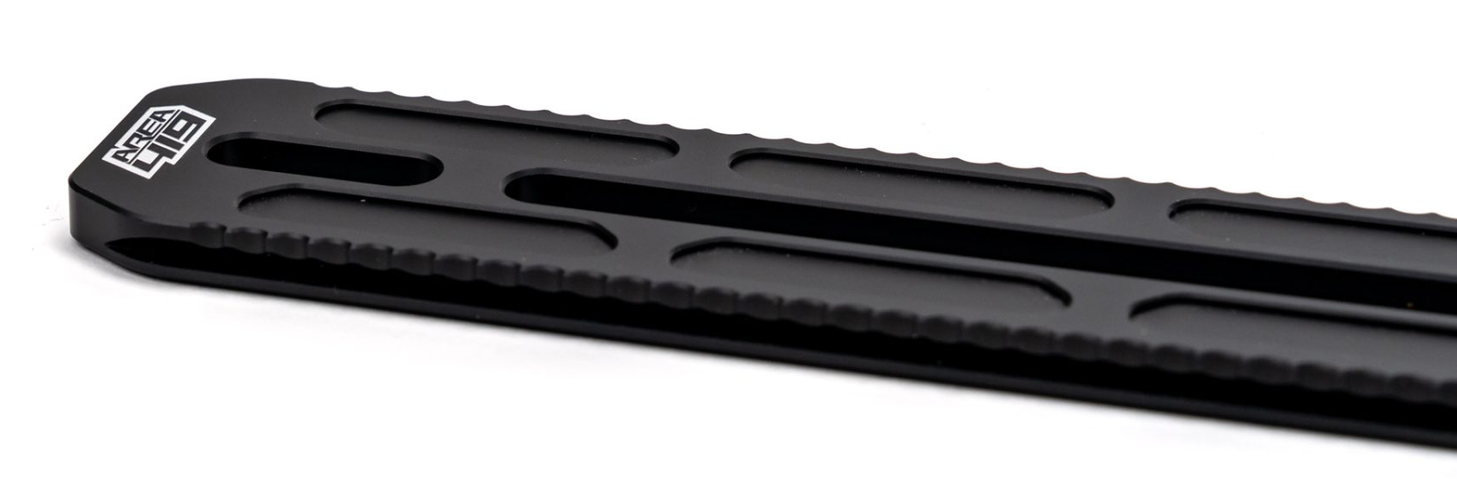
ARCA rails on the forend have become nearly universal in NRL22 competition. The ARCA dovetail system lets you quickly attach and adjust tripod mounts, bipods, and barricade stops without tools. In a timed stage where you're transitioning between positions, the ability to slide your tripod mount forward or back on the rail to adjust balance is a real advantage. If you're buying a chassis for NRL22, get one with an ARCA-compatible forend or plan to add one.
Optics: where budget decisions hurt most
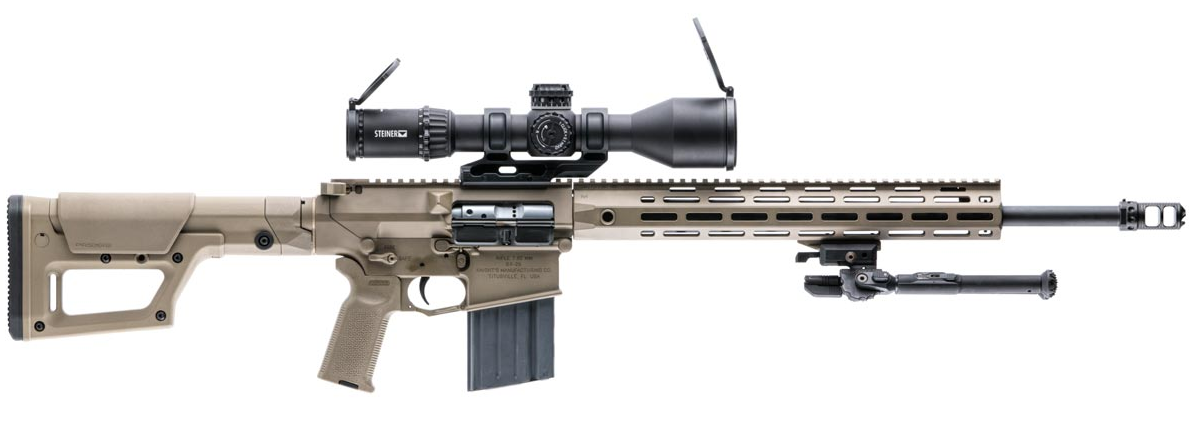
A $500 scope mistake at 100 yards is a $500 miss at 600. That statement applies to centerfire, but the principle scales to NRL22. At 200 to 300 yards with .22 LR, you're dealing with significant bullet drop (often 20+ MOA at 200 yards, depending on the load and conditions) and wind drift that can move the bullet several feet. Your scope needs to track accurately, have enough elevation adjustment to reach those distances, and have a reticle that lets you hold for wind without losing the target.
Elevation travel: the rimfire problem
This is the single biggest optics consideration for NRL22 that doesn't exist in centerfire. A .22 LR bullet drops roughly 10 to 12 MOA at 100 yards (zeroed at 50), around 25 to 30 MOA at 200 yards, and 50+ MOA at 300 yards. Most scopes designed for centerfire rifles have 50 to 65 MOA of total elevation travel. If you zero at 50 yards and need 55 MOA of come-up to reach 300, you've already exceeded many scopes' total travel, and that's before accounting for the fact that you can't use the full range of adjustment (the optical quality degrades at the extremes of travel).
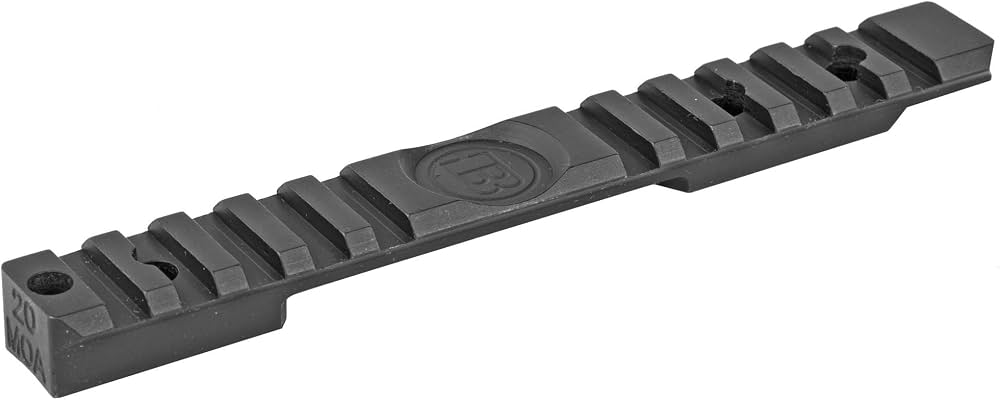
The solution is either a scope with very high total elevation travel, a 20 MOA canted scope base/rail, or both. A 20 MOA rail tilts the scope so that at mechanical center, the scope is already pointed 20 MOA above where the bore is aimed. This effectively gives you 20 MOA of additional come-up before you run out of elevation adjustment. Most NRL22 competitors run a 20 MOA or 30 MOA canted rail, and some run 40 MOA rails for 300-yard stages.
Magnification and reticle
NRL22 targets are small. KYL (Know Your Limits) racks start at around 2 inches and go down to less than 1 inch. At 100 yards, you need enough magnification to clearly see these targets and place your reticle precisely. At 200 to 300 yards, you need even more. Most competitive NRL22 shooters run scopes in the 5-25x or 4-24x range, with the majority shooting at or near maximum magnification for most stages.
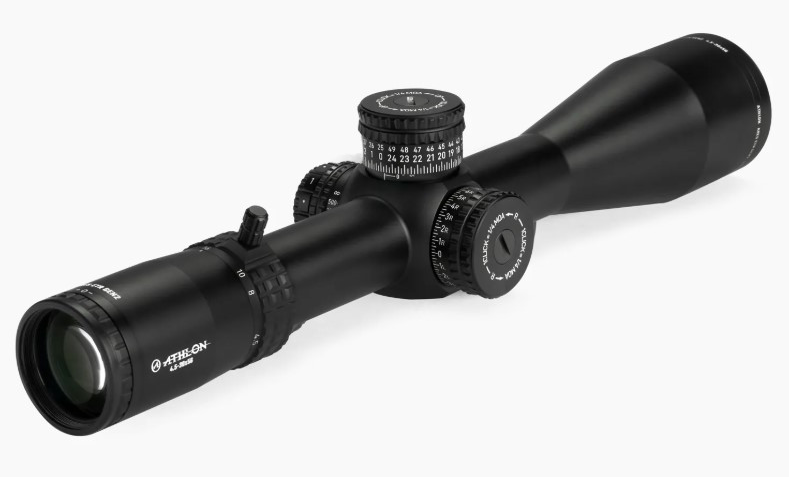
The reticle should be a Christmas tree or grid-style reticle with hash marks for wind holds. MRAD (milliradian) reticles are more common than MOA in NRL22 competition, matching the trend in PRS. The reason is practical: MRAD adjustments are in 0.1 MRAD clicks, which correspond to roughly 0.36 inches at 100 yards. This gives you fine enough adjustment for rimfire precision without requiring half-MOA clicks that some shooters find difficult to count accurately under time pressure.
Scope comparison for NRL22
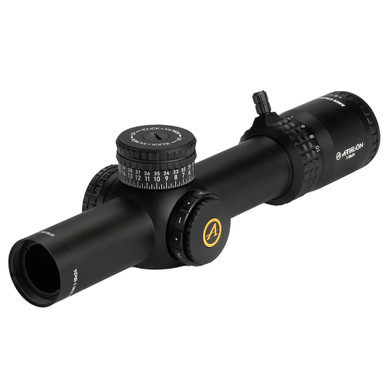
The Athlon Ares ETR is a popular mid-budget choice for NRL22. It has 110 MOA (32 MRAD) of total elevation travel, which is generous enough for rimfire use with a canted rail. The glass is clear, the turrets track well, and the reticle options include a good Christmas tree pattern. It's one of the better values in the NRL22 scope market.
Athlon Ares ETR Deals
Prices may change. May contain affiliate links.
Bushnell Match Pro ED Deals
Prices may change. May contain affiliate links.

Vortex Razor LHT Deals
Prices may change. May contain affiliate links.
Nightforce ATACR Deals
Prices may change. May contain affiliate links.

Kahles K525i Deals
Prices may change. May contain affiliate links.
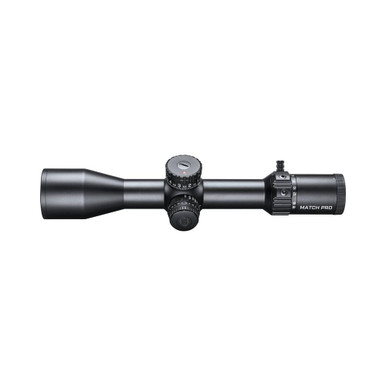
The Bushnell Match Pro ED has gained a significant following since its release. It's priced aggressively for the feature set, with good glass quality, reliable tracking, and a zero-stop system. The elevation travel is adequate for NRL22 with a canted rail, and the reticle is well-designed for competition use. RECOIL's testing confirmed good tracking consistency, and match shooters have validated that in competition.
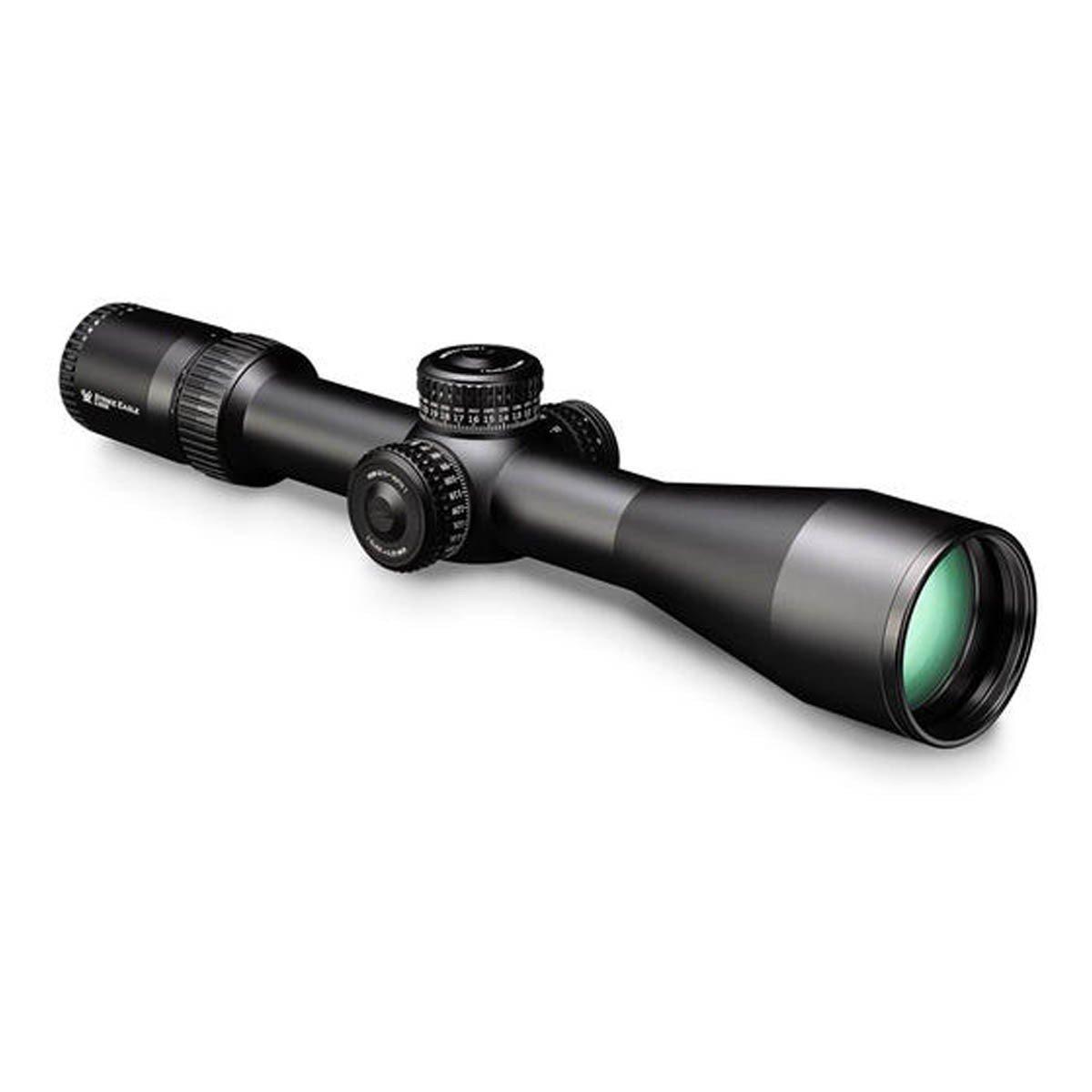
The Vortex Razor LHT and the Vortex Strike Eagle 5-25x50 are both seen at NRL22 matches. The Razor is the better scope optically, but the Strike Eagle is the better value for shooters on a budget. Neither has the elevation travel of the Athlon or some other options, so rail cant becomes more important.
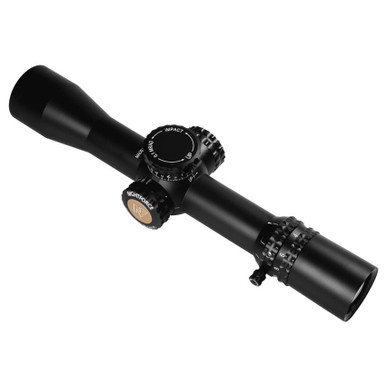
At the top end, the Nightforce ATACR and the Kahles K525i are what you'll see on national-level NRL22 rifles. These scopes have exceptional glass, bombproof tracking, and enough elevation travel for rimfire use. They're also three to four times the price of the Athlon or Bushnell. The accuracy advantage at the scope level comes from tracking consistency and optical clarity, not from some magical accuracy improvement. If your turrets don't return to zero reliably or your parallax adjustment doesn't clear at the distance you're shooting, you're leaving points on the table. Premium scopes solve those problems more reliably than budget scopes, but the gap has narrowed considerably in the last five years.
What you'll see at distance: parallax matters
Parallax error is more significant in NRL22 than in centerfire PRS because of the shorter distances and smaller targets. At 100 yards, even a small parallax error can move your point of impact off a 1-inch target. Make sure your scope's parallax adjustment actually reaches the distances you're shooting. Some scopes labeled "50 yards to infinity" don't actually resolve parallax well at 75 or 100 yards, which is exactly where you need them to. Test your scope's parallax at known distances before a match. Put the rifle on a solid rest, aim at a small target, and move your head around behind the scope. If the reticle moves relative to the target, your parallax isn't set correctly for that distance.
Ammunition: the variable you can't machine
You can't reload .22 LR. That means you're at the mercy of the manufacturer for consistency. The ES (extreme spread) and SD (standard deviation) of velocity in rimfire ammunition varies enormously between brands and even between lots of the same brand. Match-grade ammunition from Eley, Lapua, SK, and RWS typically runs SD values in the single digits (fps), while bulk ammunition can have SD values of 20 to 30 fps or more.
The ES/SD tells the story at distance. At 50 yards, a 20 fps SD doesn't matter much. At 200 yards, it's the difference between a hit and a miss on a small target, because velocity variation translates directly into vertical dispersion. A bullet that leaves the muzzle at 1,040 fps will drop more than one that leaves at 1,060 fps, and at 200 yards, that difference can be an inch or more of vertical spread.
Lot testing
Serious NRL22 competitors buy ammunition by the case and lot-test it in their specific rifle. The process is straightforward: buy several bricks from different lots, shoot groups at 50 yards from a solid rest, and measure. The lot that groups best in your rifle is the one you buy in quantity. A barrel that shoots Eley Match well might not shoot Lapua Center-X well, and vice versa. There's no universal "best" ammo. There's only the best ammo for your barrel.
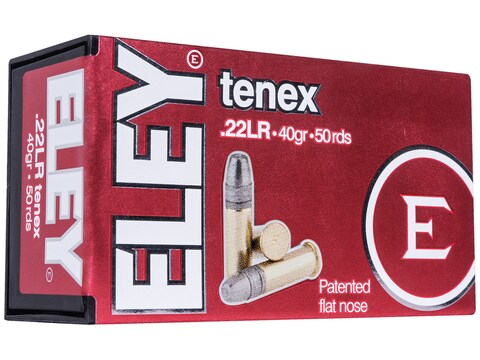
SK Standard Plus, SK Long Range Match, Eley Match, Eley Tenex, Lapua Center-X, and Lapua Midas+ are the most commonly used NRL22 ammunition. Eley Tenex and Lapua Midas+ are the premium options, with the tightest quality control and the highest price. SK Standard Plus is the budget option that still performs well enough for local competition. The sweet spot for most competitive shooters is SK Long Range Match or Eley Match, which balance consistency with cost.
Buy enough of your chosen lot to last a season. Rimfire ammunition lots can vary significantly, and switching lots mid-season means re-validating your DOPE. A case of 5,000 rounds of match ammo will last most shooters an entire competition season plus practice, and the consistency of shooting from a single lot is worth the upfront cost.
Common mistakes in NRL22 builds
Spending on the action before mastering fundamentals. A Vudoo won't fix bad trigger control or poor positional technique. If you're new to NRL22, start with a CZ 457 or Bergara B14R, shoot matches for a season, and identify what's actually limiting your scores. Often it's wind reading and positional stability, not the rifle.
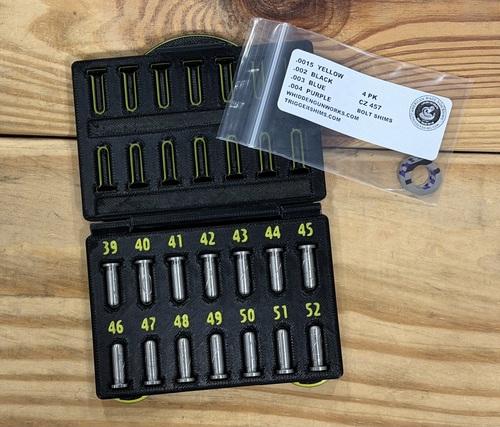
Ignoring headspace. Rimfire headspace is controlled by the distance between the bolt face and the chamber's breech. Inconsistent headspace means inconsistent ignition, which means velocity variation, which means vertical dispersion at distance. On production actions, bolt shims (available from companies like TriggerShims) can tighten headspace and improve consistency. On custom actions like the Vudoo, headspace is set precisely at the factory. Either way, check it and understand it.
Choosing a scope with insufficient elevation travel. This is the most common equipment mistake in NRL22. Shooters buy a scope that works great for centerfire, mount it on their rimfire rifle, and run out of elevation at 150 yards. Do the math before you buy. Calculate your total drop at your maximum expected distance, subtract the cant of your rail, and make sure your scope has enough elevation travel remaining with margin to spare.
Not lot-testing ammunition. Shooting whatever box of .22 LR is on the shelf at the gun store is fine for plinking. For NRL22, it's leaving points on the table. The difference between a good lot and a bad lot in the same brand can be half an inch at 50 yards, which becomes two or three inches at 200.
Over-weighting the rifle. NRL22 has a lot of positional stages. A 15-pound rimfire rifle that's rock-solid off a bench becomes a burden when you're shooting off a wobbly barricade or transitioning between positions quickly. Most competitive NRL22 rifles weigh between 9 and 12 pounds fully scoped. Heavier than that starts hurting more than it helps for most shooters, though individual preference and strength vary.
Putting it together: three build tiers
Entry competitive build
Start with a CZ 457 MTR or Bergara B14R. Keep the factory barrel and trigger. Drop the barreled action into an MDT XRS or KRG Bravo chassis. Mount an Athlon Ares ETR or Bushnell Match Pro ED on a 20 MOA rail. Lot-test SK Standard Plus and SK Long Range Match to find what your barrel likes. Add an ARCA rail to the forend and a basic bipod.
This build will be competitive at local NRL22 matches immediately. The limiting factor will be your skills, not your equipment. Shoot this setup for a season, track your scores, and identify where you're losing points before upgrading.
Mid-level competitive build
Bergara B14R or Tikka T1x action with an aftermarket Shilen or Lilja match barrel fitted by a competent gunsmith. TriggerTech Diamond or factory trigger adjusted to competition weight. MPA Matrix or MDT ACC chassis. Vortex Razor LHT or Athlon Ares ETR on a 20 MOA rail. Lot-tested Eley Match or Lapua Center-X ammunition.
This build competes at the regional level and won't embarrass you at a national match. The custom barrel and better chassis are the primary upgrades over the entry build, and they'll show up most clearly in consistency at 150+ yards and in positional stability.
Top-tier competitive build
Vudoo V-22 or Zermatt RimX action with a factory or gunsmith-fitted match barrel. TriggerTech Diamond or Bix'n Andy trigger set to 6 to 8 ounces. MPA Matrix Professional or MDT ACC chassis with ARCA rail, adjustable buttstock, and barricade stop. Nightforce ATACR or Kahles K525i on a 20 to 30 MOA rail. Lot-tested Eley Tenex or Lapua Midas+ ammunition from a single lot purchased in quantity.
This is what wins national-level NRL22 matches. The precision of the action, the consistency of the barrel, and the reliability of the optic all compound at distance and under match pressure. But this build only reaches its potential in the hands of a shooter who has the fundamentals to exploit it.
The build doesn't end at assembly
Once the rifle is assembled, the real work starts. Zero at 50 yards. Build a DOPE card for your specific ammunition lot at 25-yard increments from 50 to 300 yards. Verify your scope tracking by shooting a tall target test or a box test. Confirm your parallax settings at each distance you'll shoot in competition. Shoot groups at each distance to understand your rifle's actual dispersion, not the best group, but the average group.
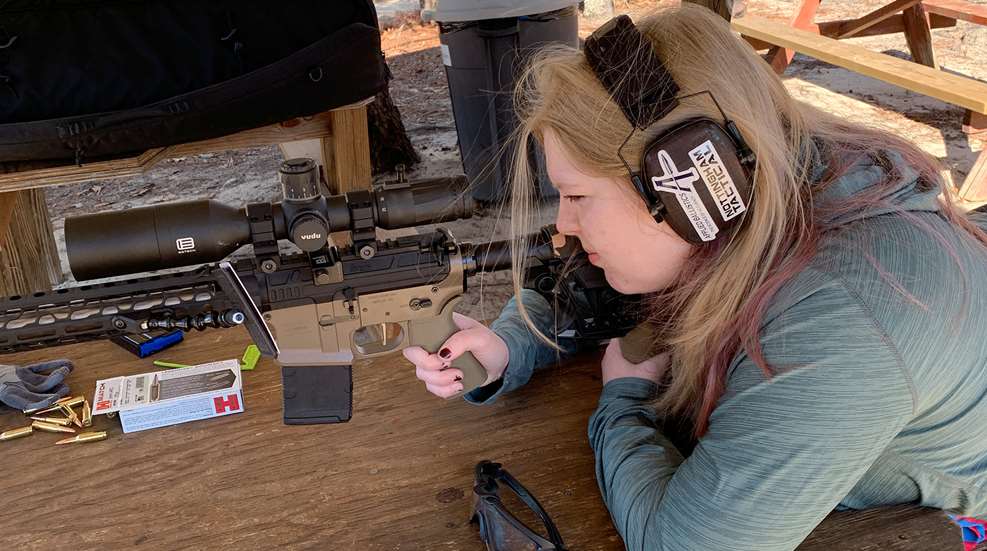
Then start practicing the things that actually win matches. Positional shooting off barricades, bags, and tripods. Calling wind at 100 to 200 yards with .22 LR, where a 5 mph crosswind pushes the bullet several inches. Transitions between positions under time pressure. Cold bore shots. Shooting from uncomfortable positions where your natural point of aim doesn't line up and you have to build the position correctly.
Log it. Then trust the log. Your DOPE book is more valuable than any single component on your rifle. The shooter who knows exactly how their rifle performs at every distance, with every wind condition they've recorded, will beat the shooter with a better rifle and no data every single time. Build the rifle right, feed it good ammunition, and then put in the work behind it. That's where the points are.