You found a CZ 82 at a decent price. The finish shows some holster wear, the bore looks weirdly smooth, and there's a string of numbers on the frame you're not sure how to read. Before you hand over cash, you need to know what you're actually looking at, because the CZ 82 is one of those surplus pistols where the details separate a genuine military-issue example from an overpriced parts gun or a mislabeled CZ 83.
The Czechoslovak CZ 82 (properly designated the Pistole vz. 82) occupies a strange and interesting niche in the surplus market. It was never sold commercially. Every genuine CZ 82 came out of the Česká zbrojovka factory in Uherský Brod and went directly to the Czechoslovak military or security services. That exclusivity, combined with a feature set that was genuinely ahead of its time, has made these surplus pistols increasingly collectible as supplies dry up. Current market values range from roughly $200 to $500 depending on condition and configuration, with excellent examples pushing toward the top of that range.
CZ 82 (Pistole vz. 82)
May contain affiliate links.

What follows is everything you need to evaluate a CZ 82 before buying: the markings to look for, the variants that exist, the red flags that should make you walk away, and the practical realities of owning and shooting one today.
Why the CZ 82 matters
The CZ 82 wasn't just another Eastern Bloc blowback pistol. When it entered Czechoslovak military service in 1983, it was arguably the most advanced military sidearm behind the Iron Curtain. Consider what it offered in a single package: a double-stack 12-round magazine when the standard Soviet Makarov PM held 8, an ambidextrous magazine release and frame-mounted thumb safety, a polygonal-rifled barrel for improved accuracy, and a DA/SA trigger mechanism. No other military pistol in the world combined all of those features in 1983. Not one.
That matters for collectors because the CZ 82 represents Czechoslovak engineering independence. Hungary, Czechoslovakia, and Poland all had established arms factories and were nationalistic about their sidearm designs. While other Warsaw Pact nations licensed or directly copied the Makarov, Czechoslovakia went its own way. The result was a pistol that shared only the 9x18mm Makarov cartridge with its Soviet counterpart and was superior to it in nearly every measurable way: capacity, ergonomics, accuracy, and ambidextrous controls.
The pistol also sits at a sweet spot for collectors. It's a genuine Cold War military sidearm that can still be found at accessible prices. Compare that to East German Makarovs, which have become highly sought after and command significantly higher prices, especially examples with small, unobtrusive import marks in good condition. The CZ 82 delivers more gun, more history, and more shootability for less money. That equation won't last forever as surplus supplies continue to thin out.
Development story
The CZ 82 was designed by a team of three engineers at Česká zbrojovka in Uherský Brod: Augustin Nečas, ing. Karel Strouhal, and Stanislav Střižík. The design year was 1982, and the pistol entered production and military service the following year, 1983. The design brief was straightforward: replace the aging vz. 52 pistol chambered in 7.62x25mm Tokarev with a modern sidearm standardized to the Soviet 9x18mm Makarov cartridge.

The choice of cartridge reflected Soviet bloc influences at the time, but Nečas wasn't content to simply build another Makarov clone. The vz. 82 was reportedly the first service pistol to feature both an ambidextrous frame-mounted thumb safety and an ambidextrous magazine release simultaneously. That's a remarkable detail for a military pistol from any era, let alone one produced behind the Iron Curtain in the early 1980s.
The operating mechanism is straight blowback, which is the standard approach for 9x18mm pistols. The cartridge was specifically designed by the Soviets to be the most powerful round that could reliably function in a simple blowback action without requiring a locked breech. The CZ 82 uses a fixed barrel, which contributes to its inherent accuracy, and that barrel features polygonal rifling rather than traditional lands and grooves. If you look down the bore of a CZ 82 and think something looks wrong because it appears almost smooth, that's normal. Polygonal rifling uses a rounded polygonal profile instead of cut grooves, creating a subtle "hills and valleys" appearance rather than the sharp-edged lands you'd see in a conventionally rifled barrel.
The frame is all steel, no aluminum alloy shortcuts like the Hungarian FEG designs that followed the Walther PPK pattern. The CZ 82 weighs 28 ounces empty (800 grams) and 32 ounces loaded. Overall length is 6.77 inches with a 3.8-inch barrel. The magazine holds 12 rounds in a staggered-column configuration, a significant tactical advantage over the single-stack 8-round Makarov PM magazines.

Production of the military vz. 82 ran from 1983 to 1992, though some sources extend the manufacturing window to 1994. The civilian export counterpart, the CZ 83, continued in production until 2012.
Service use and cultural moments
The vz. 82 was the standard-issue sidearm of the Czechoslovak People's Army starting in 1983. It replaced the CZ 52, a locked-breech pistol in the much hotter 7.62x25mm Tokarev cartridge. The transition represented a broader shift across the Warsaw Pact toward standardized 9x18mm sidearms, but the Czechoslovaks managed to produce something distinctly better than what most of their allies were carrying.
CZ 75 P-01 Deals
Prices may change. May contain affiliate links.
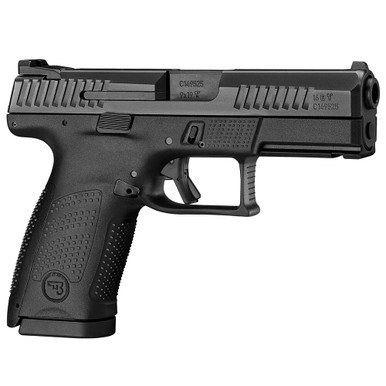
CZ P-10 C Deals
Prices may change. May contain affiliate links.
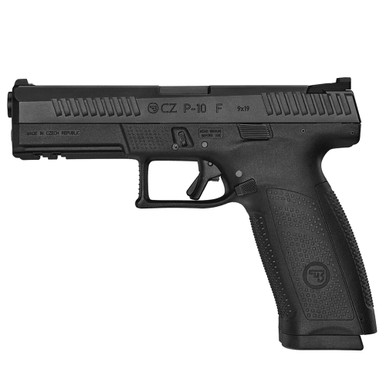
CZ P-10 F Deals
Prices may change. May contain affiliate links.
Following the Velvet Divorce of 1993, when Czechoslovakia peacefully split into the Czech Republic and Slovakia, both successor states retained the vz. 82 as their standard military sidearm. That's a telling endorsement. A newly independent nation choosing its military equipment has every reason to adopt something different if the existing gear is inadequate. Both countries kept the vz. 82 in service.
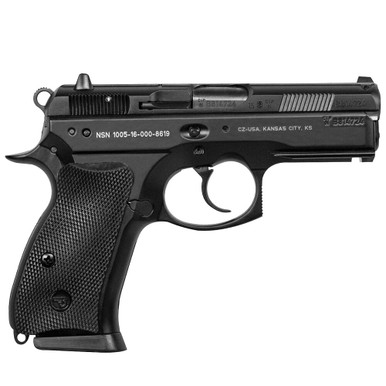
The Czech Republic began phasing it out starting around 2012, with the CZ 75 P-01 and later the CZ P-10 C and P-10 F taking over the role. That phaseout is what created the surplus market that collectors are buying from today. These are genuine military turn-in pistols, not commercial overruns or factory seconds.
The CZ 82 has also seen combat. Wikipedia documents its use in the Lebanese Civil War and the Russo-Ukrainian War. These aren't safe queens that sat in an armory for thirty years untouched. Many of them were carried, used, and maintained by soldiers and security personnel across decades of service.
The pistol never achieved the pop-culture recognition of the Makarov PM, which benefits from countless appearances in spy films and Cold War thrillers. But among the surplus collecting community, the CZ 82 has developed a devoted following. It's frequently cited as the best of the 9x18mm pistols, outperforming the Makarov PM, the Polish P-64, the Polish P-83 Vanad, and the various Hungarian FEG designs in terms of capacity, ergonomics, and shootability.
Variants and key differences
Vz. 82 (military issue)
This is the one collectors want. Chambered exclusively in 9x18mm Makarov with a 12-round magazine. All examples feature polygonal rifling. The finish is a distinctive enamel-like coating over steel, sometimes described as a lacquer or paint finish rather than traditional bluing. Military proof marks and "she" factory designation markings are present on genuine examples. These markings won't appear on civilian CZ 83 models.
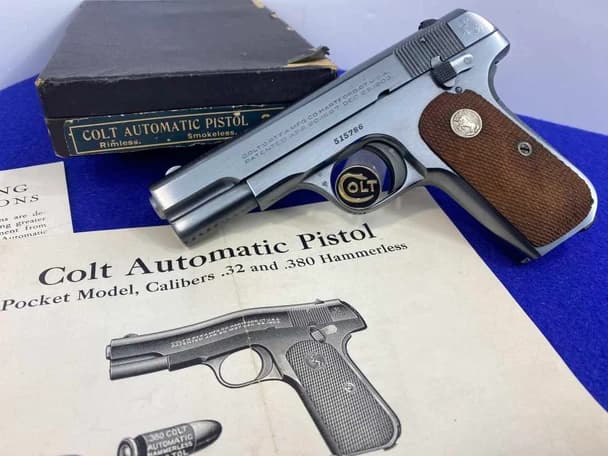

The vz. 82 was never sold commercially. Every genuine example was manufactured for the Czechoslovak military or security forces. That's the fundamental distinction from the CZ 83, and it's what gives these pistols their collector appeal.
CZ 83 (civilian/export)
The CZ 83 is mechanically near-identical to the vz. 82 but was offered in multiple calibers and finishes for the commercial and export market. The caliber options tell you a lot about what you're looking at:
The .32 ACP version (7.65mm Browning) holds 15 rounds in its staggered-column magazine and uses conventional grooved rifling rather than polygonal. The .380 ACP version (9mm Browning Short) is listed with a 13-round magazine capacity, though at least one hands-on review found the original CZ magazine held 12 rounds while an aftermarket magazine held 13. A 9x18mm Makarov version of the CZ 83 was produced from 1999 to 2001 and did feature polygonal rifling, making it the closest commercial equivalent to the military vz. 82.
The CZ 83 was available in additional finishes beyond the military standard, including nickel. CZ USA placed the CZ 83 in discontinued/limited production status in 2012. Both pistols share identical ambidextrous controls and frame dimensions. Most CZ 83 parts are interchangeable with the CZ 82, which is good news for anyone looking to keep a military example running.
How to tell them apart
The question to ask: Is it a genuine vz. 82 or a CZ 83 in 9x18mm? Here's how to tell. Check for military proof marks and the "she" factory designation on the frame. These are specific to military-issue vz. 82 pistols. A CZ 83 in 9x18mm Makarov (produced 1999-2001) will lack these military markings and will have commercial proof marks instead. The slide markings differ as well. The military designation "vz. 82" versus the commercial "CZ 83" should be present, though import marks and re-stamping can sometimes obscure original markings.

The rifling is another checkpoint, but only partially useful. Both the vz. 82 and the 9x18mm CZ 83 have polygonal rifling. However, if you're looking at a CZ 83 in .32 ACP or .380 ACP, the rifling will be conventional. So polygonal rifling confirms 9x18mm chambering but doesn't by itself confirm military origin.
The Makarov PM comparison
Since the CZ 82 shares its cartridge with the Makarov PM, buyers often cross-shop the two. The differences are substantial. The Makarov PM carries 8 rounds in a single-stack magazine versus the CZ 82's 12. The Makarov uses a heel-mounted magazine release versus the CZ 82's ambidextrous button release in the modern position. The Makarov has a slide-mounted safety/decocker versus the CZ 82's frame-mounted thumb safety. The CZ 82 is notably larger and heavier, which is the tradeoff for that extra capacity and improved ergonomics.

Among the various Makarov-caliber pistols that circulate in the surplus market, including the Russian PM, Bulgarian Makarov, East German Makarov, Polish P-64, and Polish P-83 Vanad, the CZ 82 consistently gets the nod as the most shootable and most practical of the bunch. The East German Makarov commands the highest collector premiums due to its beautiful dark blued finish, jet-black checkered plastic grips, and electro-penciled internal parts, but the CZ 82 is the one most people would rather actually shoot.
Collector notes: markings, serial numbers, and what to inspect
Frame and slide markings
The left side of the frame carries the serial number. Military vz. 82 pistols display proof marks and the "she" factory designation specific to Česká zbrojovka military production. These are the markings that confirm you're looking at a genuine military-issue pistol rather than a commercial CZ 83.
The slide markings indicate the model designation and caliber. On a genuine vz. 82, expect to see the military designation rather than the commercial CZ 83 marking. The specifics of Czechoslovak military proof marks are worth studying before you go shopping. They're your primary authentication tool.
Import marks
Almost every CZ 82 on the U.S. market carries an import mark, because these pistols were never commercially available in Czechoslovakia and had to be imported as surplus. The import mark will typically include the importer's name and location, along with "Made in Czechoslovakia" or the country of origin.
How much do import marks affect collector value? This is a genuine debate in the collecting community, and the answer depends on who you ask. The general consensus is that post-1986 U.S. importer markings lower the collectible value of any firearm compared to the same gun in the same condition without marks. Some collectors treat import marks like bore condition on a collectible rifle: a factor to consider but not necessarily a dealbreaker.
The size and placement of the import mark matters significantly. Early post-1986 importer markings were placed under the ends of muzzles and were very discreet. Those firearms may have more value to collectors compared to later mandated large visible markings on receivers and pistol frames. Some collectors have described the large, conspicuous later markings as the "claw of death" for collector value.
One experienced collector's framework: a non-import-marked, all-matching, very good condition example represents 100% value. An early post-1986, very good, non-refinished import might be worth 40-50% of that value, and a later large-marked example might be worth 30%. Those percentages were stated in the context of Mosin-Nagants and Mausers, not specifically CZ 82s, but the principle applies across military surplus collecting. For CZ 82s specifically, since virtually all examples on the market are imports, the impact is somewhat normalized. Everyone's dealing with import marks, so the comparison is really between discreet marks and billboard marks rather than marked versus unmarked.
If an import mark is huge and covers up historical markings like military proof stamps, that's a reason to pass. If it's small and placed on a non-critical area of the frame, most CZ 82 collectors accept it as the cost of doing business in the surplus market.
Matching numbers
Check whether the serial number on the frame matches the serial number on the slide. Matching numbers matter for collector value, as they confirm the pistol hasn't been assembled from parts of different guns. A "put-together" example using a frame from one pistol and a slide from another is worth less than a matching gun, even if both parts are genuine military-issue vz. 82 components.
The magazines are a separate question. Original military magazines are desirable but not always present on surplus pistols. Many surplus CZ 82s ship with magazines that may or may not be original to that specific pistol. Magazine serial matching is less critical than frame/slide matching for most collectors, but original military magazines are worth holding onto.
Red flags most buyers miss
Look closer at these common problems:
The finish is the first thing to evaluate, and it's where many buyers get fooled. The original CZ 82 military finish is a distinctive enamel-like coating, not a traditional hot blue. If the pistol has been refinished with conventional bluing, it may look "better" than an original-finish gun with honest wear, but it's worth less to collectors. Reblued finishes can destroy or obscure original proof marks and military stampings. A pistol that looks too good, with a deep, even blue and no wear patterns consistent with holster carry, deserves skepticism.

The bore is the second checkpoint, and it confuses people who aren't expecting polygonal rifling. A CZ 82 bore will look almost smooth compared to a conventionally rifled barrel. That's correct. Don't let a seller convince you there's something wrong with the bore to justify a lower price, and don't assume the bore is shot out because you can't see traditional lands and grooves. Conversely, if you're looking at what's claimed to be a vz. 82 in 9x18mm and you see conventional lands and grooves, you might be looking at a CZ 83 in .380 ACP that's been mislabeled.
Third, watch for CZ 83 pistols being sold as CZ 82s. The 9x18mm CZ 83 produced from 1999 to 2001 is mechanically similar and also has polygonal rifling, but it's a commercial pistol, not a military one. It lacks military proof marks and the "she" factory designation. A CZ 83 in 9x18mm is a perfectly fine pistol, but it's not a military-issue vz. 82, and it shouldn't be priced as one.
Fourth, check the safety function carefully. The CZ 82 has a frame-mounted thumb safety that allows cocked-and-locked carry (condition one). There is no decocker. If the safety doesn't positively engage and hold the hammer back, or if it allows the hammer to fall when engaged, something is wrong internally. This is a safety issue, not just a collector concern.

Fifth, examine the grips. The original military grips are black plastic with a distinctive texture. Wood grips are available as aftermarket replacements and some owners prefer them, but the wood grips are reportedly prone to cracking. Original military grips in good condition add to the authenticity and value of a surplus example.
Condition and value factors
Current market pricing
The CZ 82 market in 2026 breaks down roughly as follows based on condition. Excellent examples run $350 to $500. Very good condition lands in the $200 to $350 range. Good condition sits around $150 to $200. Fair condition drops to $100 to $150, and poor condition examples can be found for $50 to $100. These ranges reflect U.S. secondary market pricing, and specific configurations, condition details, or included accessories can push values above or below those ranges.
Surplus dealers typically grade their inventory on a scale from good to excellent. A "very good to excellent" surplus pistol will show holster wear, storage marks, or minor finish wear consistent with military service, but will be mechanically sound. Each firearm is unique, and cosmetic condition varies from piece to piece even within the same grade.
What adds value
Several factors push a CZ 82 toward the top of its price range. Matching serial numbers on frame and slide are fundamental. Original military finish with honest wear rather than refinishing is preferred by collectors over a refinished gun that looks superficially nicer. The presence of clear, legible military proof marks and factory designations matters. Small, discreet import marks are better than large billboard marks. Original military magazines (ideally two) add value. An original military holster, if included, is a bonus.
Earlier production dates from the mid-1980s carry some additional interest simply because they represent the earliest military issue examples. Later production from the early 1990s is equally genuine but somewhat more common in the surplus pipeline.
What subtracts value
Refinishing is the single biggest value killer. A reblued or repainted CZ 82 that's lost its original military proof marks has sacrificed much of what makes it collectible. Mismatched serial numbers between frame and slide indicate a parts gun. Missing or replacement magazines, especially if the pistol ships with only one non-original magazine, reduce the package value. Cracked or replaced grips, mechanical issues with the safety or trigger mechanism, a damaged or pitted bore, and heavy or conspicuous import marks all push values downward.
The CZ 82 is still affordable enough that condition really matters in determining whether a purchase is a good deal or an overpay. The difference between a $200 pistol and a $450 pistol often comes down to finish condition, matching numbers, and included accessories rather than any mechanical difference.

Shooting experience today
Range performance
At the range, the vz. 82 delivers consistent results for its size and price tier. The fixed barrel design contributes to inherent accuracy, and the polygonal rifling does its part as well. The sights are fixed front blade with a rear that's drift-adjustable for windage. They're usable by military pistol standards, though they're not target sights and they're not replaceable without knocking pins out.
The single-action trigger gets good marks from shooters. The double-action pull is longer and heavier, as expected with any DA/SA design, but it's manageable. The frame shape and grip angle fit many hands well, with the controls positioned where modern shooters expect them. The ambidextrous safety and magazine release are genuinely useful, not just checkbox features.
The blowback action does produce more felt recoil than you'd get from a locked-breech design in a comparable caliber. The slide is heavy relative to the cartridge because it has to be: in a blowback pistol, the slide mass is what keeps the breech closed during firing. That mass cycling back with each shot creates a snappier impulse than a tilting-barrel locked-breech gun would. It's not punishing by any means, but it's noticeable, especially compared to a modern polymer-framed .380 with a Browning-type action.
The 12+1 capacity is a genuine advantage over other 9x18mm options. Having 50% more rounds than a Makarov PM matters, whether you're shooting for fun or considering the pistol for any practical role.
Ergonomic notes
The CZ 82 is big for its caliber. That's the honest assessment. At 28 ounces empty, it weighs more than many modern compact 9x19mm pistols that carry comparable or greater round counts. The all-steel construction contributes to that weight, and while it helps absorb recoil, it makes the pistol less than ideal as a daily carry gun by modern standards.
The magazine release position is a known ergonomic issue. Some shooters can't reach it without shifting their grip. This is a function of hand size and grip technique, but it's worth checking before you commit. The oversized trigger guard that some find aesthetically questionable actually works well with gloved hands, which makes sense for a military pistol designed for Central European winters.

Safety considerations
The CZ 82 has a frame-mounted safety but no decocker. This means you can carry cocked and locked (round chambered, hammer back, safety on) in the manner of a 1911, or you can manually lower the hammer on a loaded chamber, which requires care. There's no mechanical decocker to safely drop the hammer for you. If you're going to carry or use this pistol, practice the manual of arms until the safety manipulation is automatic.
The all-steel construction and Czechoslovak manufacturing quality mean these pistols are durable. They were built to military specifications and designed for extended service life. A mechanically sound surplus example that's been properly maintained has plenty of life left in it.
Curio and relic status
The vz. 82 qualifies as a Curio and Relic firearm under ATF regulations. This means holders of a Type 03 Federal Firearms License (C&R license) can purchase eligible examples directly from dealers and have them shipped to their home address, bypassing the need for a transfer through a local FFL dealer. This is a significant practical advantage for collectors and substantially reduces acquisition costs.
C&R eligibility is based on the specific firearm meeting the ATF's criteria, generally being at least 50 years old or being recognized as having collector interest. The CZ 82 appears on the ATF's Curios or Relics list. When purchasing, confirm that the specific pistol you're buying is being sold as C&R eligible, as not all dealers handle C&R transactions the same way.
Some owners have considered using the CZ 82 as a concealed carry weapon, which is a separate question from collecting. The C&R status doesn't affect your ability to carry the pistol where legally permitted, but the practical considerations of carrying a 28-ounce blowback pistol in an obsolescent caliber versus a modern purpose-built carry gun are worth thinking through honestly.
Care, storage, and parts availability
Maintenance basics
The CZ 82 is straightforward to field strip and maintain. The process involves locking the slide back, rotating the takedown lever, and removing the slide assembly from the frame. Cleaning follows standard semi-automatic pistol procedures: brush the bore, clean the feed ramp, wipe down the slide rails, and clean the breech face.
Apply lubrication sparingly. Excess oil attracts contaminants, and the enamel-like military finish doesn't need oiling the way a traditional blued finish does. Focus lubrication on the slide rails, barrel hood contact points, and trigger mechanism pivot points.
For collector-grade examples, avoid aggressive cleaning that could damage the original finish. The military enamel coating can be worn through with abrasive cleaning methods. A lightly oiled cloth for exterior surfaces and standard bore cleaning procedures are sufficient. Do not attempt to "improve" the finish with cold blue, refinishing compounds, or any kind of coating. An honest wear pattern on original finish is always worth more than a touched-up example.
Parts availability
This is one of the CZ 82's significant advantages over many other surplus pistols. The CZ 83 shares most parts with the CZ 82, and the CZ 83 was in production until 2012. That means replacement parts are still widely available. Springs, firing pins, extractors, magazine catches, and other wear items can be sourced without resorting to cannibalizing another pistol.
Magazines are available from multiple sources. Original military 12-round magazines are the most desirable for collectors, but functional replacement magazines exist. When buying a surplus CZ 82, having at least two magazines included in the package is the standard expectation from most dealers.
Ammunition
The 9x18mm Makarov cartridge is not as widely available as 9x19mm Parabellum, but it's far from unobtainable. Several manufacturers produce new-production 9x18mm ammunition, and surplus ammunition occasionally surfaces as well. Prices per round are typically higher than 9x19mm but lower than many other specialty or obsolescent calibers.
Do not attempt to fire .380 ACP (9x17mm) or 9x19mm Parabellum in a CZ 82. The 9x18mm Makarov is a distinct cartridge with its own dimensions. A .380 ACP round may chamber but will not perform correctly, and a 9x19mm round should not chamber at all but attempting it risks damage. Use only 9x18mm Makarov ammunition.
Storage
Store with the action open or the slide forward on an empty chamber, safety engaged. A silicone-treated gun sock or a case with vapor corrosion inhibitor (VCI) material protects the finish during storage. Avoid foam-lined cases for long-term storage, as some foams can trap moisture against the metal. If you're storing the pistol as a collector item, keep the original magazines with it but store them unloaded to preserve spring tension over time.
Before you buy: the inspection checklist
When you're standing in front of a CZ 82 at a gun show, a shop counter, or evaluating photos from an online listing, run through this sequence.
Start with the markings. Look for military proof marks and the "she" factory designation on the frame. Their presence confirms a genuine military vz. 82. Their absence means you're looking at a commercial CZ 83 or a pistol that's been refinished to the point of losing its markings. Check the import mark: where is it, how large is it, and does it obscure any military stampings?
Check serial number matching between the frame and slide. Write down the number and compare. If they don't match, you're looking at a parts gun, and the price should reflect that.
Examine the finish. Is it the original military enamel coating with honest wear, or has it been refinished? Look for consistency in the finish texture and check whether proof marks appear to sit naturally in the surface or look partially obscured by a later coating.
Inspect the bore. Remember that polygonal rifling will look almost smooth. You're checking for pitting, corrosion, and erosion, not for sharp lands and grooves. A chrome bore, which the CZ 82 features, resists corrosion well, so a badly pitted bore suggests either severe neglect or extremely heavy use.
Function-check the safety, the trigger in both double-action and single-action modes, and the magazine release. Rack the slide and verify it locks back on the magazine follower. Check that the safety positively engages and disengages.
Ask what's included. Two magazines is standard for most surplus dealer packages. A holster is a bonus. Original military grips should be present and intact.
Finally, factor in the C&R eligibility if you hold a Type 03 license. The ability to purchase directly and avoid transfer fees changes the value equation meaningfully, especially on a pistol in this price range where a $25-50 transfer fee represents a significant percentage of the purchase price.
The CZ 82 remains one of the best values in Cold War surplus collecting. It's a genuine military sidearm with innovative features, solid construction, and enough remaining parts support to keep it shooting for decades. The supply is finite and shrinking. Every year, fewer good examples come to market, and the ones that do tend to show more wear than what was available five or ten years ago. If you've been thinking about picking one up, the research you do now will determine whether you end up with a solid example or an overpriced disappointment. Do the homework. Check the markings. And don't let anyone tell you a smooth-looking bore means the gun is shot out.