You've been carrying an XMacro for a year or two, it runs great, and now SIG drops the P385 at SIG NEXT 2026 and suddenly the forums are on fire. Is this a replacement? An upgrade? A completely different animal? The short answer is that the P385 is a ground-up new platform that borrows DNA from both the P320 and the P365, while the XMacro is still very much a P365-family gun. The longer answer involves a new fire control unit, a different recoil system, P320 magazine compatibility, and a grip module concept that doesn't exist anywhere else in SIG's current lineup.
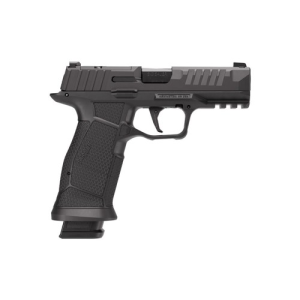
SIG P385 Deals
Prices may change. May contain affiliate links.

The real question isn't whether the P385 is "better." It's whether the things it changes actually matter for how you shoot and carry. That depends on what you're optimizing for: concealment, capacity, recoil management, modularity, or some combination of all four. Here's the breakdown.
What you're actually deciding between
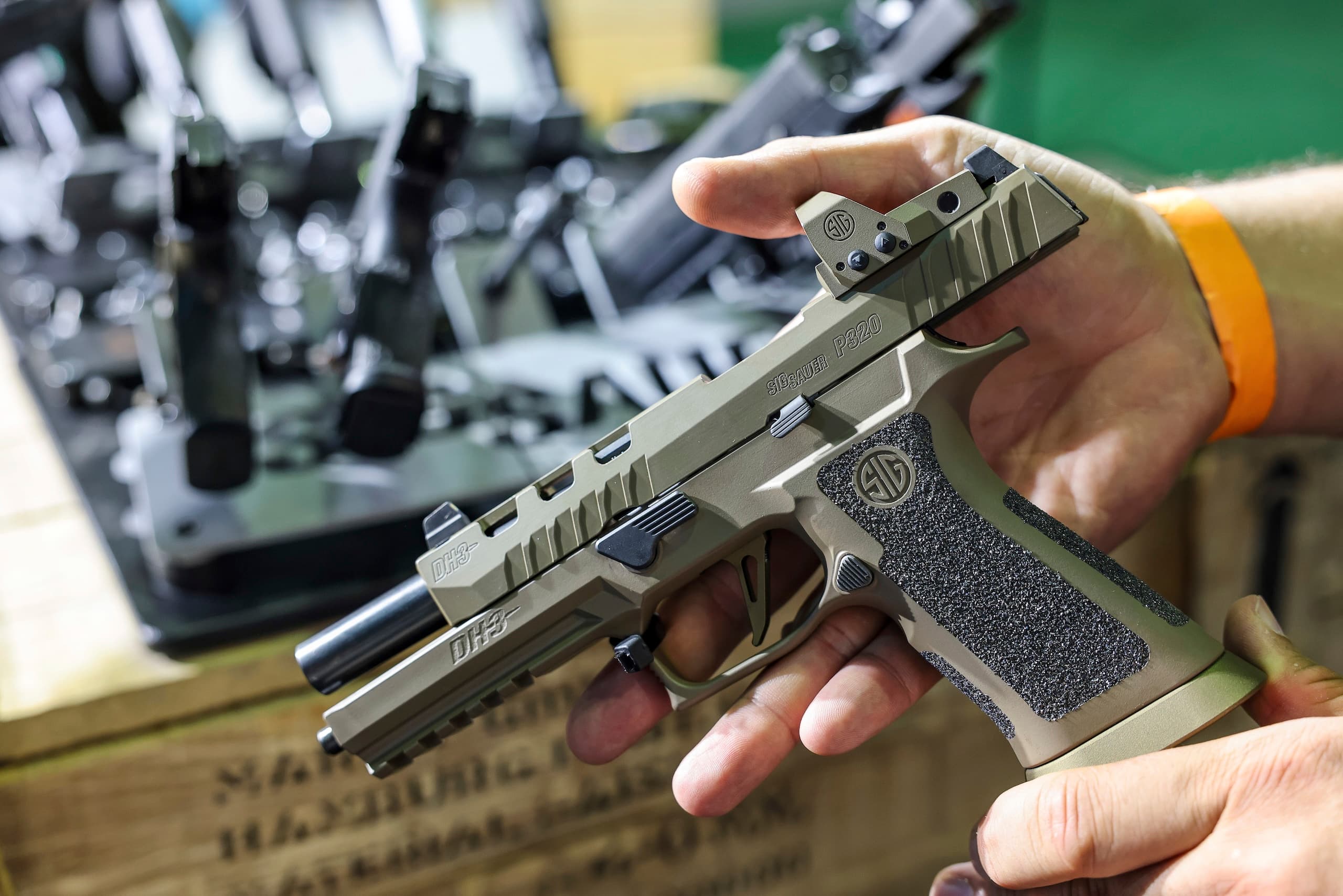
The P365 XMacro occupies a specific niche that didn't exist before SIG created it: a micro-compact frame width with a taller grip that holds 17 rounds of 9mm in a flush-fit magazine. It's a P365 at heart, running proprietary P365 magazines, with a 3.7-inch barrel (in the standard configuration) and a polymer grip module. The whole point of the XMacro was to give shooters full-size capacity in a package that's only 1.1 inches wide and light enough to carry all day.
SIG P385-COMP Deals
Prices may change. May contain affiliate links.
Sig sauer P365 magazine Deals
Prices may change. May contain affiliate links.
Sig sauer P320 magazine Deals
Prices may change. May contain affiliate links.
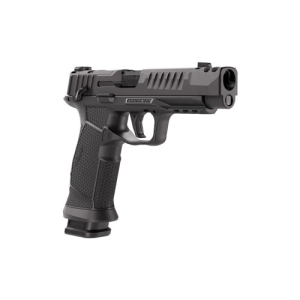
The P385 is something different. SIG's own shorthand is "P320 plus P365 equals P385," and that's a surprisingly honest description. It runs standard P320 magazines, not P365 magazines. It uses a brand-new fire control unit that's related to the P365's FCU architecture but isn't identical. It has a new recoil system (the SIG Recoil Dampening System, or SRDS) and a modular grip module called the MagStrap that lets you change both grip circumference and grip length without swapping the entire module. Five models were announced at launch: the P385-MACH3D, P385-COMP, P385-FULL, P385-CARRY, and P385-COMPACT.
So the decision context is this: if you're already invested in the P365 ecosystem (magazines, holsters, optics plates), the XMacro is the known quantity. If you're looking at a new purchase and want to understand whether the P385's engineering changes justify jumping platforms, you need specifics. Here they are.
Quick comparison: P365 XMacro vs P385 COMP
The P385 launched in multiple configurations, but the P385 COMP is the most natural comparison to the XMacro because both are compensated-capable, high-capacity 9mm pistols aimed at the carry-to-range crossover market. Here's how they line up based on published specs.

Sig sauer P320 21-round magazine Deals
Prices may change. May contain affiliate links.

A few things jump off that table immediately. The P385 COMP is bigger and heavier in every dimension. It's over an inch longer, almost half an inch taller, and carries nearly 8 more ounces. That's a significant difference in a concealment context. But it also gains a longer barrel, a higher potential capacity with 21-round magazines, and the new SRDS recoil system. The width difference is notable too: the XMacro at 1.1 inches is genuinely thin for a 17-round gun, while the P385 at 1.32 inches is wider but still narrower than the P320 at 1.40 inches. One SIG Talk forum member pointed this out specifically, noting the P385 is the narrowest of the three platforms despite running P320 magazines.
The engineering: what actually changed
The fire control unit
This is the heart of what makes the P385 a new platform rather than a P365 variant or a P320 refresh. SIG built a purpose-designed FCU for the P385 that draws on the P365's architecture but adds a new trigger block mechanism. The P365 line has been praised for years for having a crisper, more refined trigger feel than the P320, and SIG apparently wanted to bring that quality forward while adding their own improvements.

SIG P365 XMacro Deals
Prices may change. May contain affiliate links.

The XMacro uses the standard P365 FCU, which is the same compact-optimized unit that's been in the P365 family since the beginning. It works. Millions of rounds have gone through P365 triggers. But anyone who's shot both a P365 and a well-tuned P320 knows there are tradeoffs in both directions. The P385's new FCU with its trigger block is SIG's attempt to get the best of both without the compromises of either.
What nobody mentions about FCU changes: the trigger feel you experience is a combination of the FCU, the striker spring, the trigger bar geometry, and the frame fit. A new FCU doesn't automatically mean a better trigger. It means a different trigger. Until enough P385s are in hands and being shot under match stress and carry conditions, the "smooth, clean trigger press" language from SIG's press materials is a claim, not a verdict.
The SIG Recoil Dampening System
The headline engineering claim from SIG is that the SRDS, combined with the P385's low bore axis, reduces muzzle rise by 20 percent or more depending on the model. That's a significant claim. For context, the XMacro already has a relatively low bore axis for a micro-compact, and the COMP variant adds a compensator to further reduce muzzle flip. So SIG is essentially saying the P385 achieves a comparable or greater reduction through its recoil system design rather than (or in addition to) a compensator.
The P365 XMacro uses a standard recoil spring setup optimized for its size. It works well enough that the XMacro has become one of the most popular carry guns in the country. But anyone who's run an XMacro in a timed drill knows that the snappy recoil of a lightweight, short-barreled 9mm is the main limiting factor on split times. If the SRDS genuinely delivers a 20 percent reduction in muzzle rise, that translates directly to faster follow-up shots, which matters in both competition and defensive shooting.

SIG P365 Deals
Prices may change. May contain affiliate links.

The test that matters: run the same drill (something like a Bill Drill at 7 yards) with both guns, same ammunition, and compare split times. Marketing claims about recoil reduction are meaningless without a shot timer.
The MagStrap grip system
This is where the P385 diverges most dramatically from the XMacro's approach to ergonomics. The XMacro has a fixed polymer grip module. You can swap it for aftermarket modules, and the P365 ecosystem has plenty of options, but the factory grip is what it is. Your hand either fits it or it doesn't.
The P385's MagStrap system uses three interchangeable strap sizes (small, medium, large) that change the grip circumference without replacing the entire module. You can also change the grip length, converting from compact to full-size configuration. This is a genuinely new idea in the striker-fired pistol world. The P320 lets you swap entire grip modules between sizes. The P385 lets you adjust the same module.


SIG P320 Deals
Prices may change. May contain affiliate links.
Why this matters for real shooting: grip circumference directly affects trigger reach, which is the distance from the backstrap to the face of the trigger. If your trigger reach is wrong, your trigger press will be off-center, pulling shots left (for right-handed shooters) or right. Being able to dial in grip circumference with a strap swap instead of buying a whole new module is a practical advantage, especially for shooters whose hands fall between standard sizes.
Magazine compatibility
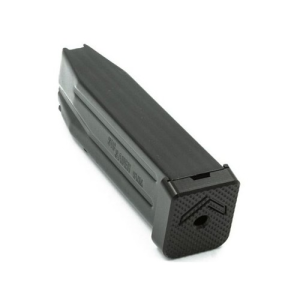
Here's the detail that changes the experience for a lot of shooters: the P385 runs P320 magazines. The XMacro runs proprietary P365 magazines.

SIG M17 Deals
Prices may change. May contain affiliate links.

SIG M18 Deals
Prices may change. May contain affiliate links.
This matters more than it sounds. P320 magazines are everywhere. They're the same magazines used in the M17 and M18 military sidearms. They come in many capacities, including 9, 10, 12, 13, 14, 15, 17, 18, 21, and 30 rounds. Aftermarket support is massive. If you already own a P320 or an M17/M18, your magazines work in the P385.

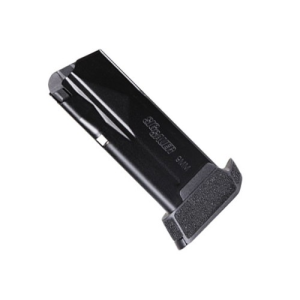
P365 magazines, by contrast, are proprietary to the P365 family. They're excellent magazines, and the 17-round XMacro magazine is an engineering achievement for its size. But they don't cross over to any other platform. If you're building a collection or want magazine commonality across multiple guns, the P385's P320 compatibility is a significant logistical advantage.
The flip side: P365 magazines are thinner, which is why the XMacro can be 1.1 inches wide with 17 rounds. The P385 is 1.32 inches wide. That's the tradeoff. Thinner magazines mean a thinner gun. P320 magazines mean more compatibility but more width.
How they actually carry
The XMacro's concealment advantage
At 6.6 inches long, 5.2 inches tall, 1.1 inches wide, and 21.5 ounces, the XMacro is still remarkably concealable for a 17-round gun. It carries like a slightly tall compact rather than a full-size pistol. In appendix carry with a good holster (something with a wing/claw and a wedge), the XMacro disappears under a t-shirt for most body types. The 1.1-inch width is the key number here. Width is what prints against your body, and the XMacro is only 0.1 inches wider than the original P365's 1.0-inch width.

The grip height is the main concealment challenge. At 5.2 inches, the grip can print under shorter cover garments, especially when seated. This is the eternal compromise of higher-capacity carry guns: more rounds means more grip, and more grip means more to hide.
The P385's size reality
The P385 COMP at 7.9 inches long, 5.64 inches tall, 1.32 inches wide, and 29.12 ounces is a different proposition entirely. This is not a micro-compact. It's closer to a compact-to-full-size duty gun. Nearly 30 ounces unloaded puts it in Glock 19 territory for weight, and the 7.9-inch overall length exceeds a Glock 19 by a meaningful margin.

Glock 19 Deals
Prices may change. May contain affiliate links.

Can you conceal it? Sure. People conceal full-size guns every day. But the effort required is different. You'll likely want a purpose-built holster, a good gun belt, and a cover garment that's cut for it. Appendix carry is doable for larger-framed shooters, but the length and weight will be noticeable compared to an XMacro. Strong-side hip carry at 3-4 o'clock might actually be more comfortable for extended wear.
The P385-COMPACT model exists for shooters who want the P385's engineering in a smaller package, though its specific dimensions weren't fully detailed in the launch materials. If concealment is your primary concern and you want the P385 platform, that's the variant to watch.
How it actually carries: the weight difference alone (roughly 8 ounces between the XMacro and the P385 COMP) is the difference between forgetting the gun is there and being aware of it all day. That matters over 12-16 hours of carry.
Common mistakes and misconceptions
Thinking the P385 replaces the P365
SIG has been explicit that the P320 and P365 both remain in full production. The P385 isn't killing either line. It's a new platform that sits between them conceptually. If you own an XMacro and it works for you, nothing about the P385's existence changes that. Several forum commenters at SIG Talk raised this exact question, with one asking bluntly: "If you already own a P365 X-Macro or Fuse, why would you want the P385?" That's a fair question, and the answer is: you might not. The P385 is for shooters who want P320 magazine compatibility, the new recoil system, or the MagStrap grip adjustability. If those features don't solve a problem you actually have, your XMacro is still a great gun.
Assuming wider means worse for carry
The P385 at 1.32 inches is wider than the XMacro at 1.1 inches, but it's actually narrower than the P320 at 1.40 inches. A fifth of an inch matters less than you might think in a holster. The bigger concealment factors are overall length, grip height, and weight. The width difference between 1.1 and 1.32 inches is real, but it's not the primary reason one gun conceals better than the other.
Conflating the P385 COMP with the base P385 Carry
The P385 launched in five models, and their dimensions and features differ. The P385 COMP at 7.9 inches overall is significantly larger than what the P385-CARRY or P385-COMPACT likely measure. If you see P385 specs online, make sure you're looking at the right variant. The comparison table above specifically uses the P385 COMP because that's the model with published dimensions that most directly compares to the XMacro's role.
Ignoring the holster ecosystem
The XMacro has been on the market for years. Holster options are deep: Tier 1, PHLster, Tenicor, JM Custom Kydex, and dozens of others make dedicated XMacro holsters in every carry position. The P385 is brand new. Holster availability at launch will be limited. If you need to carry the gun the day you buy it, the XMacro has a massive head start. This will equalize over time, but it's a real consideration for the first six months to a year.
Overlooking the optics mounting difference
The XMacro uses an optics-ready slide that accepts various micro red dots depending on the specific SKU and plate system. The P385 uses SIG's new SIG-LOC PRO mounting system as a factory standard across all models. If you're running a SIG Romeo-series dot, the SIG-LOC system should be seamless. If you're running a Holosun, Trijicon, or other brand, check compatibility before you buy. New proprietary mounting systems can be a blessing (more secure, purpose-built) or a curse (limited third-party support at launch).

Who should pick which
If concealment is your top priority
The XMacro wins this one clearly. It's shorter, thinner, lighter, and has years of holster support behind it. The 1.1-inch width and sub-22-ounce weight make it one of the best concealment-to-capacity ratios on the market. If you're carrying appendix under a fitted shirt, the XMacro's dimensions are hard to beat.
If you want maximum modularity
The P385 is built around modularity in a way the XMacro isn't. The MagStrap grip system, the ability to change from compact to full-size grip length, the P320 magazine compatibility, and the five-model lineup all point toward a platform designed to be configured and reconfigured. If you're the type of shooter who wants one serialized FCU and multiple configurations for different roles (carry, range, competition, nightstand), the P385's architecture is designed exactly for that.
If you already own P320 magazines
This is an easy one. If you have a P320, M17, or M18 and a drawer full of magazines, the P385 gives you a new pistol that feeds from your existing supply. The XMacro's proprietary magazines don't cross over to anything else. Magazine commonality across your collection simplifies logistics, reduces cost, and means you always have spare magazines available.
If recoil management matters most
The P385's SRDS system and heavier weight (29 ounces vs 21.5 ounces) should produce a noticeably softer shooting experience. More weight absorbs more recoil energy. A purpose-built dampening system on top of that extra weight should make the P385 COMP shoot flatter than the XMacro, even the compensated XMacro COMP variant. For competition use, timed qualification courses, or shooters who are recoil-sensitive, the P385 has a physics advantage.
That said, the XMacro COMP variant already does a good job of taming muzzle flip for its size class. The question is whether the P385's improvements are worth the size and weight penalty.
If you want a nightstand or home defense gun that you also carry sometimes
The P385 makes more sense here. The 21-round magazine option, the longer 4-inch barrel, the heavier weight for recoil control, and the rail for a weapon light all point toward a gun that's comfortable in a home defense role. Add a SIG Romeo dot and a quality light, and the P385 COMP or P385-FULL becomes a serious house gun that you can still holster and carry when needed.

The XMacro can absolutely serve in a home defense role, and plenty of people use it that way. But if you're setting up a dedicated nightstand gun with a light and optic, the P385's larger platform gives you more to work with.
If you're new to the SIG ecosystem
If you don't own any SIG pistols and you're choosing your first one, the decision comes down to what role the gun needs to fill. Pure everyday carry with maximum concealment? XMacro. A more versatile platform that can flex between roles? P385. Neither answer is wrong, but they optimize for different things.
The P365 XMacro's place in the lineup going forward
One of the most interesting questions the P385 raises is what happens to the XMacro's position in SIG's lineup over the next few years. The P365 family has expanded aggressively: the original P365, P365X, P365 XL, XMacro, XMacro COMP, Fuse, AXG Legion, and various special editions. The XMacro specifically pushed the P365 platform toward higher capacity and more shootability, which is exactly the space the P385 now occupies from a different angle.

SIG P365 XMacro COMP Deals
Prices may change. May contain affiliate links.

SIG P365 Fuse Deals
Prices may change. May contain affiliate links.


SIG P365 AXG Legion Deals
Prices may change. May contain affiliate links.
SIG says both platforms stay in production. That makes sense commercially because they serve different size envelopes. The XMacro remains the thinnest, lightest way to get 17 rounds of 9mm in a SIG. The P385 is wider and heavier but brings new engineering and P320 magazine compatibility. They coexist because they solve the same problem (high capacity in a carryable package) with different tradeoffs.
But long-term, the P385's modularity story is more compelling for SIG as a business. A single FCU that spans from compact to full-size, runs the military's magazines, and incorporates the company's latest recoil and trigger technology is a platform play. The XMacro is a product. The P385 is an ecosystem. That distinction matters if you're thinking about which platform will get more development attention, more accessories, and more variants over the next five years.
The forum commentary reflects this tension. As one SIG Talk member put it: "If you opt for the P385, why would you want a P365 other than the compact version?" Another called the P385 "a P365 on steroids" and predicted the P320 would slowly be phased out. Whether that happens remains to be seen, but the P385 clearly represents where SIG's R&D energy is focused right now.
What to do before you buy
Don't buy either gun based on specs alone. Here's the practical sequence.
First, if you can get hands on a P385 at a dealer or range that has one for rental, shoot it back-to-back with an XMacro. Use the same ammunition for both. Run a simple drill: five rounds into an 8-inch circle at 7 yards, as fast as you can get acceptable hits. Note your split times and how the recoil impulse feels. The P385's SRDS claim of 20 percent less muzzle rise is either real or it isn't, and a shot timer will tell you more than any review.
Second, grip both guns unloaded and check your trigger reach. With the XMacro, you get what you get unless you swap grip modules. With the P385, try different MagStrap sizes and see if the adjustability actually changes your trigger finger placement. If your finger lands naturally on the XMacro's trigger face but requires a strap swap on the P385 to feel right, that tells you something about which platform fits your hand.
Third, think honestly about your carry habits. If you carry every day in a specific position with a specific wardrobe, try concealing the P385 in your actual holster and clothes. The spec sheet says 29 ounces and 7.9 inches. Your belt and waistband will tell you whether those numbers work for your body and lifestyle. The XMacro's 21.5 ounces and 6.6 inches are a known quantity for millions of carriers at this point.
Fourth, inventory your existing magazines. If you have P320 magazines, the P385 is immediately more practical. If you have P365 magazines, the XMacro is the path of least resistance. Magazine cost adds up fast, especially if you want four or five for range use and carry rotation.
The P385 is a genuinely new platform with real engineering changes, not a rebadged P365 or a P320 in new clothes. The XMacro is a proven, refined carry gun with years of real-world use behind it. The P385 shoots flatter (by SIG's claims), carries heavier (by the scale), conceals harder (by the tape measure), and modifies easier (by design). The XMacro hides better, weighs less, and has an established ecosystem of holsters and accessories. Neither is the wrong choice. They're answers to different questions about what you want a pistol to do.