
You own a P320, or you're thinking about buying one, and every time you search for information you get a wall of contradictory noise. Some sources say the gun is a ticking time bomb. Others say it's the most tested striker pistol on the planet and every incident traces back to user error. The truth, as usual, is messier than either camp admits.

SIG P320 Deals
Prices may change. May contain affiliate links.
Here's where things actually stand as of late 2026: the lead attorney's firm represents more than 50 victims, with 68 cases pending in the multi-plaintiff New Hampshire litigation, multiple class actions have been filed, jury verdicts have gone both ways, the largest class action got tossed on appeal, and New Jersey's attorney general is actively suing SIG to force a recall. Meanwhile, the U.S. military still issues the M17 and M18 variants and recently reaffirmed them as "safe and reliable." If that sounds contradictory, that's because it is. The litigation picture is genuinely split, and pretending otherwise doesn't help anyone who carries this gun or is considering one.
This piece breaks down the legal landscape, the voluntary upgrade situation, what the military variants do differently, and the practical steps that matter if you already have a P320 in your safe or on your hip.
The core allegation
The central claim across every lawsuit is the same: the SIG P320 can fire without anyone touching the trigger. Plaintiffs call these "uncommanded discharges." Attorney Jeff Bagnell, who has litigated multiple P320 cases, has stated there have been over 400 reported incidents nationwide across 46 states. Many involve trained law enforcement officers whose guns discharged while fully holstered.

SIG's position has been equally consistent. The company maintains the P320 cannot, under any circumstances, discharge without a trigger pull. SIG points to the pistol passing U.S. military procurement testing, FBI evaluation, and exhaustive internal protocols involving trigger performance, accuracy, metallurgical inspections, malfunction assessments, and drop testing.

SIG M17 Deals
Prices may change. May contain affiliate links.
The factual dispute between these two positions is the entire case. There's no middle ground being offered by either side. SIG says every reported incident traces to user error, defeated or modified safeties, foreign objects in the trigger guard, or poorly fitted holsters. Plaintiffs say the gun's design, specifically the combination of a short, light trigger pull with a fully energized striker and no external safety, creates a unique susceptibility to uncommanded discharge that other striker pistols don't share.
One detail that sharpens the debate: the Washington federal class action complaint filed in November 2025 alleges that the P320's design combines a very light, short trigger pull with a mechanism that cocks and energizes the weapon any time it is loaded. Despite being fully energized, the standard civilian P320 lacks external safety features such as a manual safety or grip safety. The lawsuit claims SIG's marketing team deliberately removed these features during the design phase.
Where the lawsuits stand in 2026
The litigation landscape shifted dramatically through 2025 and 2026, and the movement hasn't been in a single direction. If you're trying to figure out whether SIG is winning or losing, the honest answer is both, depending on which courtroom you're looking at.
The Missouri class action: certified then killed
The biggest class action, Glasscock v. Sig Sauer (Case 6:22-cv-03095-MDH), was certified in July 2025 by U.S. District Judge Douglas Harpool. The certified class included all persons who purchased a Sig Sauer model P320 pistol without an external thumb safety primarily for personal, family or household purposes in the state of Missouri from September 1, 2017, through the present, excluding individuals who filed individual actions against Sig Sauer or who no longer own a P320 without an external thumb safety. It didn't survive appeal. On July 16, 2026, the Eighth Circuit Court of Appeals unanimously vacated class certification and directed the district court to dismiss the case, holding that the named plaintiff lacked Article III standing. That's a procedural kill, not a ruling on whether the gun is defective, but the practical effect is the same: the largest proposed class action in this litigation is gone.


SIG M18 Deals
Prices may change. May contain affiliate links.
The Washington class action
A new proposed class action was filed in Washington federal court on November 17, 2025. Plaintiff Patrick Schreiber alleges violations of Washington's Consumer Protection Act and seeks to represent all consumers who purchased a P320 without an external thumb safety in Washington state from November 2021 through the present. That case remains pending.
Jury verdicts: genuinely mixed
This is the part that makes the P320 situation impossible to reduce to a simple narrative. In 2024, two separate juries found for plaintiffs who claimed their P320s fired without a trigger pull. Juries in Georgia and Pennsylvania have agreed with the argument that the P320 should be equipped with an external safety and awarded victims millions in damages.
Then came the defense verdict. On August 7, 2026, after a nine-day trial in Bangor, Maine, a federal jury of nine rejected Somerset County detective David Cole's negligence, defective design and manufacturing, and failure-to-warn claims over a holstered P320 that fired a bullet through his right thigh, calf, and ankle. The jury found Cole failed to prove defects in the manufacture or design of the firearm and found no negligence on SIG's part. The court had excluded evidence of the 2017 Voluntary Upgrade Program and of agency bans, which is a significant evidentiary detail. The plaintiffs filed a motion for a new trial in September 2026.
SIG called the Maine verdict validation of the P320's engineering and design. But the earlier plaintiff verdicts, including compensatory awards that survived post-trial motions, tell a different story. Courts have not reached a single unified finding across the litigation.
The Colwell case in New York
For New York owners specifically, the case to watch is Colwell v. Sig Sauer. The Second Circuit revived this case in May 2026, and it's set for trial in Albany on November 16, 2026. This involves Troy Police Department Sgt. Michael Colwell's claim that his P320 fired on its own, and a Reuters report confirmed SIG must face the lawsuit.

New Jersey's state lawsuit
In October 2025, New Jersey Attorney General Platkin announced a lawsuit against SIG Sauer for multiple violations of the state's Firearms Industry Public Safety Law and the Consumer Fraud Act. This isn't a private plaintiff suing. It's a state government seeking a mandatory recall of the P320 and a halt to what the AG calls false and deceptive advertising. The complaint specifically alleges that the U.S. Army conducted a procurement evaluation of the P320 in 2016 and 2017 and concluded that without an external safety, the gun posed an unacceptable danger of unintended firing. The Army refused to procure the P320 until SIG added a manual thumb safety for the military M17 and M18 variants. The NJ lawsuit remains pending.
The legislative front
SIG hasn't limited its defense to the courtroom. The company has been pushing state legislation to immunize gunmakers from certain product liability lawsuits. New Hampshire passed such a law, barring suits alleging a gun is defective because it lacks an external safety. That directly targets the core argument in P320 litigation. More than 70 plaintiffs suing SIG in New Hampshire had argued the P320 should have an external safety because it's designed to be nearly fully cocked at rest with an extremely sensitive trigger. Under the new law, future victims can't make that argument in New Hampshire courts. SIG pushed similar efforts in Georgia and Florida, though those hit legislative hurdles.
The $11 million verdict and its aftermath
One of the most significant plaintiff wins came before the 2026 defense verdicts shifted momentum. A jury awarded $11 million, though the punitive portion was later vacated by the trial judge. The compensatory award and the liability finding stand. That case established that at least one jury, after hearing all the evidence, concluded the P320's design was defective. SIG's subsequent wins don't erase that finding, and SIG's losses don't invalidate the Maine acquittal. This is genuinely unsettled law.
No nationwide settlement fund covering the uncommanded discharge claims currently exists as of September 2026. The litigation is proceeding through individual jury trials and state-level lawsuits instead. Any site asking for a fee to "process" a P320 settlement claim right now is not describing a real, confirmed program.
The voluntary upgrade: what it actually changed
In 2017, after a prominent online gun shop pulled the P320 from its shelves over concerns the weapon could fire if dropped at certain angles, SIG launched what it called a Voluntary Upgrade Program. The company insisted the original design was safe, so this was not classified as a recall. Gun owners had to actively seek out the modification, and many never received it.

The upgrade included hardware changes to the trigger, striker, and disconnect. The modifications addressed drop safety specifically, reducing the weight of the trigger and modifying internal components to prevent the striker from releasing energy during a drop at certain angles. SIG maintained throughout that the upgrade was an enhancement, not a fix for a defect.
Forum feedback from owners who completed the upgrade is mixed but mostly positive on the mechanical side. Some report the trigger pull became smoother and slightly lighter, averaging around 5 pounds 6 ounces. Others preferred the original trigger's feel, describing it as smoother with a cleaner break before the upgrade. The turnaround time was reportedly about five business days.
Here's the problem nobody mentions: the upgrade may not have solved the uncommanded discharge issue that's at the center of the current lawsuits. In July 2025, the Wyoming Gun Project published video demonstrating that a post-upgrade P320 could discharge without any intentional finger contact. That footage has become significant evidence in ongoing litigation. The New Jersey AG's complaint specifically alleges that new and upgraded P320s have continued to unintentionally discharge. If true, the upgrade addresses drop safety but not the broader uncommanded discharge mechanism that plaintiffs allege.
If you own a pre-upgrade P320, you can check your serial number on SIG's website to determine whether your gun has been updated. There's no expiration date on the program, and all calibers are affected.
The military variants: what's different
The M17 and M18 are P320 variants, but they carry one critical difference: an external manual thumb safety. This adds a mechanical block that the standard commercial P320 lacks. The Pentagon reviewed the Modular Handgun System on Aug. 7, 2026, and affirmed the M17/M18 as "safe and reliable," stating that all investigated incidents of alleged "uncommanded discharges" had been traced back to the trigger being pulled.

The New Jersey AG's complaint highlights this distinction sharply. SIG markets the civilian P320 as "Chosen by the U.S. Military" and the "Official Sidearm of the U.S. Military" without disclosing that the military demanded an external safety not found on the typical civilian or law enforcement model. Whether that marketing constitutes deception is one of the legal questions the NJ case will resolve.
For owners who want the mechanical safety the military insisted on, SIG does sell manual-safety variants of the P320. Some owners in the carry community have switched to these models specifically because of the litigation. That's a personal risk calculus, not a concession that the standard model is defective.
One incident that initially seemed to implicate the M18 involved an Air Force case where an M18 appeared to discharge unintentionally. However, investigators later arrested another airman on charges including false official statement, obstruction of justice, and involuntary manslaughter, shifting scrutiny away from the firearm itself.
Agency responses: a patchwork
The institutional response to the P320 has been anything but uniform. Several Texas police departments suspended the P320 from service. Houston PD suspended it from approved duty weapons. The Washington State Criminal Justice Training Commission suspended use of the P320 after an uncommanded discharge on its firing range. The Oklahoma Highway Patrol reported nine incidents among officers. ICE switched to Glock.
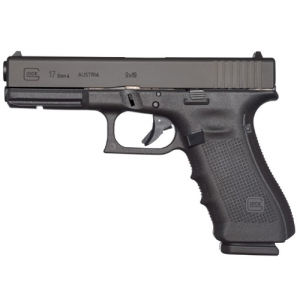
Glock Deals
Prices may change. May contain affiliate links.

On the competition side, IDPA banned the P320 entirely. IPSC and USPSA still allow it.
And yet other agencies continue to adopt or retain the P320. The U.S. military's reaffirmation of the M17/M18 carries significant weight, even though those are the manual-safety variants. The split in institutional response mirrors the split in jury verdicts: reasonable people and organizations, looking at the same gun, are reaching opposite conclusions.
What owners should actually do
Range notes for current P320 owners
If you carry a P320 and want to keep carrying it, here are the practical measures that reduce the disputed risk without requiring you to take a side in the litigation:
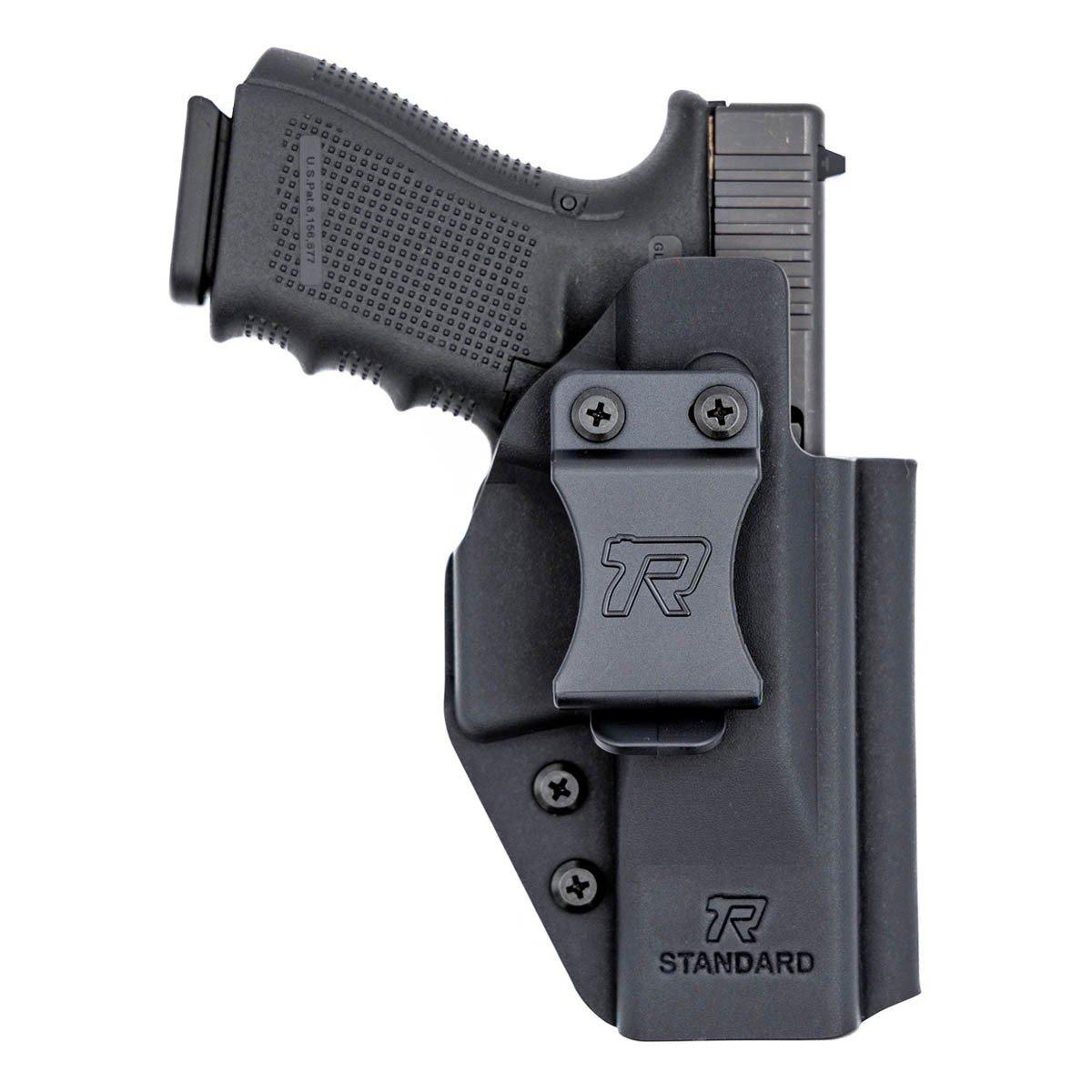
Kydex holster Deals
Prices may change. May contain affiliate links.
First, verify your upgrade status. Check your serial number on SIG's website. If your gun predates the Voluntary Upgrade Program, send it in. The upgrade is free, has no expiration, and addresses at least the drop-safety concern even if questions remain about broader uncommanded discharge claims.
Second, carry in a rigid holster that fully covers and protects the trigger guard. This addresses the foreign-object and snagged-trigger failure paths that SIG itself points to as explanations for reported incidents. A quality Kydex holster from a reputable maker, molded specifically for the P320, is non-negotiable. Soft holsters, universal holsters, or anything that allows material to intrude into the trigger guard should be retired immediately.

Third, consider the manual-safety variant. The same mechanical block the military's M17 and M18 carry is available on civilian models. Since the P320's modular FCU system allows grip module and slide swaps, transitioning to a manual-safety configuration doesn't necessarily mean buying a whole new gun, though it does mean a new FCU or slide assembly depending on the specific model.
Fourth, if you experience an uncommanded discharge, safety comes first. Once the situation is safe, do not modify, clean, or ship the pistol back to SIG until you've consulted an attorney. The firearm's physical condition is often central evidence in these cases. Preserve everything, including the holster, ammunition, and any clothing involved.
Common mistakes in the P320 debate
People on both sides of this argument make errors that cloud the picture. Here are the most common:
Treating the Voluntary Upgrade as a recall. It wasn't. SIG maintained the gun was safe and framed the upgrade as an enhancement. A recall would have involved the Consumer Product Safety Commission and mandatory notification. Firearms were expressly exempted by Congress from CPSC oversight when it created the commission in 1972, which means there's no federal agency that oversees how firearms are designed or built. This regulatory gap is part of why the litigation exists in the first place.
Assuming the military's adoption proves the civilian model is safe. The M17 and M18 have a manual thumb safety the civilian P320 lacks. The Army specifically required that safety before procurement. Citing military adoption without acknowledging this difference is misleading in either direction.
Dismissing all incidents as user error. Many reported uncommanded discharges involve trained law enforcement officers with guns fully holstered. That doesn't prove a design defect, but the "they must have pulled the trigger" explanation becomes harder to sustain across hundreds of reported incidents spanning 46 states.
Assuming a jury verdict settles the question. Juries in different jurisdictions have reached opposite conclusions. The Maine jury found no defect. Georgia, Pennsylvania, and Massachusetts juries found for plaintiffs. Neither set of verdicts is universally binding, and the evidentiary rulings in each case (like excluding the Voluntary Upgrade evidence in Maine) significantly shape outcomes.
Believing a settlement fund exists. No nationwide settlement covering uncommanded discharge claims exists as of September 2026. If someone asks you for money to process a P320 claim, that's not legitimate.
The P365 is not part of this
One clarification that comes up constantly: the SIG P365 is a different design and is not part of the uncommanded discharge controversy. If you carry a P365 or are shopping for one, the P320 litigation doesn't apply to that platform.

SIG P365 Deals
Prices may change. May contain affiliate links.
What happens next
The Colwell trial in Albany, scheduled for November 16, 2026, is the next major event. A plaintiff verdict in a Second Circuit case would add significant pressure on SIG, particularly because the New York case involves a law enforcement officer. The New Jersey AG lawsuit, seeking a mandatory recall and advertising changes, could have the broadest practical impact if it succeeds, potentially forcing SIG to add external safeties to all civilian P320s or pull them from the market in New Jersey.

The plaintiffs' motion for a new trial in the Maine case (Cole) is also pending, with responses due in late September 2026. If the court grants a new trial with different evidentiary rulings, particularly allowing the Voluntary Upgrade Program into evidence, the outcome could shift.
SIG's legislative strategy adds another variable. If more states pass immunity laws similar to New Hampshire's, the courtroom path narrows for future plaintiffs even as existing cases continue.
The real question for owners isn't whether the P320 is "safe" or "dangerous" in some absolute sense. It's whether the specific risk profile, whatever it turns out to be, is acceptable given the mitigation steps available. A rigid holster, a verified upgrade, and awareness of the manual-safety option are the concrete actions within your control. The courts will sort out the rest, and they're nowhere close to finished.