
You found a Johnson M1941 at a gun show, and the seller's telling you it's "USMC provenance." Maybe it is. Maybe it isn't. There's no comprehensive serial number roster of the 750-odd Johnson rifles the Marine Corps actually procured during World War II, and the rifle itself carries no specific U.S. military acceptance stamps the way a Garand does. That makes the Johnson one of the trickiest American WWII semi-automatics to authenticate and one of the most rewarding to collect if you know what you're looking at.

Johnson M1941 Rifle .30-06 Springfield Deals
Prices may change. May contain affiliate links.
The Johnson M1941 occupies a strange and fascinating corner of American ordnance history. It's the semi-automatic rifle that competed directly against the M1 Garand, lost the trials, and still ended up in combat with some of the war's most elite units. Total production sits at approximately 21,988 rifles, with total serial number production under 30,000 including all Light Machine Gun models, a rounding error compared to the four million-plus Garands that rolled off the lines by 1945. That scarcity, combined with genuinely innovative engineering and a combat record tied to Marine Paramarines and the First Special Service Force, has turned the Johnson into one of the most sought-after American military longarms of the era.

Why the Johnson matters
The M1941 Johnson rifle is significant for reasons that go beyond its limited production numbers. It represents the road not taken in American infantry weapons development. Where the Garand used a gas-operated system with a long-stroke piston, the Johnson employed short-recoil operation with a rotating bolt. That rotating bolt design would echo forward through firearms history in a way few collectors fully appreciate. Melvin Johnson was later hired by ArmaLite as a consultant to promote their rifle incorporating his bolt design, and he worked as an advocate to the US Government for the AR-15 rifle design on behalf of Colt and ArmaLite. The AR-15's bolt design bears a clear family resemblance to the Johnson's multi-lug rotating bolt. The lineage runs from a 1930s prototype made partly from scrap firearms parts (with a knitting needle for a firing pin, according to one account) straight through to the most widely issued military rifle on the planet today.

Colt AR-15 Deals
Prices may change. May contain affiliate links.
Beyond the engineering legacy, the Johnson matters because it's a genuine combat weapon with a documented, if limited, service record. These weren't warehouse queens. They went to Guadalcanal, Bougainville, and into the hands of OSS operatives. A handful even showed up at the Bay of Pigs invasion in 1961. For collectors of American military ordnance, the Johnson stands as proof that the story of WWII small arms development wasn't a straight line from Springfield to Garand to victory. There were detours, dead ends, and designs that deserved more consideration than they received.

The development story
Melvin Maynard Johnson Jr. was a Boston attorney from a prosperous, politically connected New England family. He was also a Marine Corps Reserve captain and a vocal critic of the newly adopted M1 Garand. Johnson believed the Garand was a badly flawed design, and he set out to prove it by building something better.
M1 Garand .30-06 Springfield
May contain affiliate links.
His first prototype emerged around 1935, cobbled together from scrap parts. By 1936, he had refined his recoil-operated mechanism into something testable. The rifle received some cursory evaluation by Army Ordnance in 1938-39, but the institutional momentum behind the Garand was already considerable. The Army showed little interest. Johnson's design was declared "not materially superior to the M1 Garand," which was technically a compliment to the Johnson but functionally a death sentence for adoption.
The Marine Corps conducted its own comparative trial, and the results were more favorable to Johnson's design. But more favorable wasn't enough. The Garand had already been designated the semi-automatic rifle, caliber 30, M1 on 3 August 1933 and gone into production in 1936, and the logistical machinery of the U.S. military was gearing up to produce it in enormous quantities. Had the Johnson been accepted as a supplement or replacement, it would have been designated the U.S. Rifle, Caliber .30, M2. That designation never happened.
One detail that catches many collectors off guard: the "Model of 1941" designation wasn't a U.S. military nomenclature. Johnson coined it himself as a marketing tool to drum up business with the armed forces. The U.S. military had dropped the practice of using dates in rifle nomenclature by the late 1920s. So every time you see "M1941" stamped on a receiver, you're reading a commercial designation, not an official ordnance classification.
Johnson's design goals centered on a few key advantages over the Garand. The short-recoil action eliminated the need for a gas system entirely. The 10-round rotary fixed magazine could be topped off with individual rounds or fed by stripper clips at any time, even with the bolt closed. You didn't have to empty the magazine before reloading the way you effectively did with the Garand's en-bloc clip system. And the barrel was quickly detachable, a feature that made the Johnson particularly attractive for airborne operations where compact transport mattered. The rifle could be partially disassembled for parachute drops in ways the Garand simply couldn't.

Service use and cultural moments
The Johnson's combat story begins not with the U.S. military but with the Dutch. By August 1940, the Netherlands Purchasing Commission placed an initial contract for 10,200 Johnson semi-automatic rifles and 500 Johnson Light Machine Guns, all chambered in .30-06 Springfield, to arm colonial forces in the Dutch East Indies. A larger order of up to 70,000 rifles was anticipated. The Dutch East Indies were a critical source of rubber, oil, and coffee, and the colonial government wanted modern semi-automatic rifles to defend them.

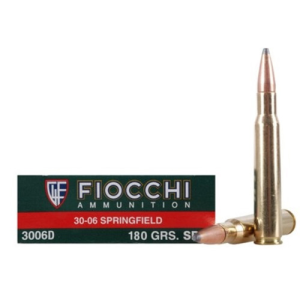
.30-06 Springfield ammunition Deals
Prices may change. May contain affiliate links.
Johnson had no manufacturing facilities of his own. Production was contracted to the Universal Windings plant in Cranston, Rhode Island, with the business organized under Johnson Automatics, Inc. (sometimes referenced as the Johnson Automatics Trust). Rifles began shipping, but the Japanese invasion moved faster than the supply chain. Only 1,999 rifles were shipped to the Dutch East Indies before the Japanese invaded. On the island of Java alone, the Japanese captured 614 Johnson automatic rifles. A Japanese manual for the Johnson rifle dated November 29, 1940, before the war with the Netherlands even began, has been preserved in Japanese archives. The rest of the Dutch order was stranded in the United States.
Those orphaned rifles became the Johnson's ticket into American combat service. The U.S. Navy purchased Johnson rifles for the Marine Corps. The first 23 M1941 rifles were unofficially donated by Melvin Johnson to the 1st Parachute Battalion for use during the Guadalcanal campaign, procured through Captain Harry Torgerson from Johnson Automatics. Serial number 9084 is documented as one of those original 23. The Marine Parachute Regiment would be equipped with a mix of M1941 Johnsons, M1A1 Carbines, and M1 Garands as primary weapons in 1943.

The total number of Johnson rifles acquired by the United States during the war numbered in the hundreds, with 750 procured by the USMC and a total of 773 acquired by the Marine Corps, including 23 lent by Melvin Johnson. A small number were also issued to OSS operatives for clandestine operations. The First Special Service Force, the joint American-Canadian commando unit, also received Johnson Light Machine Guns. As M1 Garands became more widely available to Marine units, the Johnson rifles were withdrawn from combat use and purged from the USMC inventory before the war ended.
The Johnson's postwar life was quieter but not over. Some 7mm variants were manufactured for South American military forces, including a contract for 1,000 rifles placed by the Chilean government for their mounted troops. The rifle also appeared in the hands of anti-Castro Brigade 2506 during training and was carried to the Bay of Pigs invasion in 1961, as evidenced by a photograph showing one alongside Castro himself. The rifle remained in worldwide service in various capacities until approximately 1961.
The cultural footprint of the Johnson is smaller than the Garand's but disproportionately interesting. Its association with Marine Paramarines and Raiders gives it an elite-unit cachet that few WWII weapons can match. The distinctive barrel profile is visible in period beach landing photographs from the Pacific, and the rifle has become a staple of WWII firearms reference works and museum collections.
Variants and key differences
The Johnson M1941 wasn't produced in the dizzying array of variants that mark something like the M1 Garand or the K98k, but there are meaningful distinctions that collectors need to understand.
Standard .30-06 production rifles
The bulk of production was chambered in .30-06 Springfield with a 22-inch barrel, a 10-round rotary magazine, and adjustable iron sights. The rifle weighed 9.5 pounds, measured 45.87 inches overall, and achieved a muzzle velocity of approximately 2,840 feet per second. Year of manufacture is indicated by a letter prefix to the serial number. Serial numbers with no letter prefix and with prefix A and B were manufactured in 1941. Serial numbers with letter prefix C, D, E, and F were manufactured in 1942. Serial numbers with letter prefix G were manufactured in 1943. Serial numbers with letter prefix H were manufactured in 1944. Rifles were produced from 1941 through 1944 at the Cranston, Rhode Island facility.

Early production with handguard
One of the rarest variants is the early production rifle with an optional wooden handguard. Serial number R-14, part of the Cody Firearms Museum collection, is designated with the Type R prefix (for rotary magazine) and has a two-piece round wooden handguard capped by a nosecap with a bayonet lug and sling swivel. The Johnson is typically seen with an exposed barrel, and this handguard option was dropped from later production. The non-fixed, recoiling barrel was cited as a concern during trials, and adding weight to the barrel could slow its travel and potentially cause reliability issues. The spike-type bayonet issued with the M1941 was designed to be lightweight specifically to minimize cycling problems when fixed.
7mm Mauser Chilean contract
A 7mm (7x57mm Mauser) variant was delivered in 1943 to fill the Chilean contract. The Chilean military ordered approximately 1,000 rifles, though some auction sources estimate that as many as 10,000 were produced for Chile, with manufacturing taking place circa 1943/44. These are chambered differently from the standard .30-06 production and represent a distinct collecting category. Identifying the caliber is critical before firing, and the barrel markings should confirm which chambering you're dealing with.

7x57mm Mauser ammunition Deals
Prices may change. May contain affiliate links.
.270 Winchester variant
Wikipedia references a .270 Winchester chambering, though this appears to have been a limited or experimental production. These are exceptionally uncommon.
VF-1 Argentine copy
An Argentine-produced copy designated the VF-1 exists. These are distinct from original Johnson Automatics production and should not be confused with genuine M1941 rifles.
USMC-modified rifles
Marine Corps Johnson rifles sometimes exhibit field modifications that help suggest (though not prove) USMC provenance. Front sight ears removed, rear peep sights opened up with a "V" cut, and charging handles modified to resemble those on the M1 Garand have all been documented on rifles with known or suspected Marine service. These modifications are not factory features and represent unit-level armorer work.
Collector notes
This is where the Johnson gets genuinely tricky, and where most buyers either make their best finds or their worst mistakes.
Serial numbers and "matching"
Here's the critical thing most collectors don't realize about Johnson rifles: there are no matching numbers. Not like a K98k Mauser, not like a Luger, not like most military arms collectors are accustomed to evaluating. No effort was made at the Cranston Arms/Johnson Automatics factory to match components on the assembly line. The barrel serial number will not match the receiver serial number. The bolt serial number will not match the receiver. This is factory-original condition. A Johnson with a barrel number 2,000 digits away from the receiver is not a "put-together" gun. It's a Tuesday at the Universal Windings plant.
The rifles were also not assembled in sequential order, so a low serial number doesn't necessarily mean early production. A rifle with serial number 500 could have been assembled after serial number 3000. The year-of-manufacture letter prefix is a more reliable indicator of production timing than the numerical sequence.
Identifying USMC provenance
This is the holy grail for Johnson collectors, and also the area most prone to wishful thinking. There is no known comprehensive serial number roster of the approximately 750 Johnson rifles procured by the USMC during World War II. Johnson rifles can only be identified as Marine Corps provenance with absolute certainty through documentation. Bruce Canfield's book, "Johnson Rifles and Machine Guns: The Story of Melvin Maynard Johnson, Jr. and His Guns," documents the serial numbers of the first 23 M1941s the Marine Corps received and lists additional known USMC examples. Being close in serial number to a documented USMC rifle suggests a likelihood but does not constitute proof.
Archival research has revealed that the Navy was the entity that actually purchased the M1941 Johnsons for the Marines. The serial numbers of known USMC rifles appear in loose ranges rather than tight sequential blocks, which makes proximity-based attribution even more uncertain.
Markings to look for
Genuine Johnson rifles will carry Cranston Arms or Johnson Automatics markings on the receiver. Look for a JA (Johnson Automatics) stamp on the barrel as well. Dutch contract rifles may carry a Dutch acceptance star. The triangular shape at the rear of the receiver is a distinguishing feature of the M1941 rifle versus the later Johnson A-C variant, which has a milled-off rear receiver profile.

Red flags and common mistakes
The red flag most buyers miss: someone claiming "matching numbers" on a Johnson rifle. If a seller uses that phrase, they either don't understand the rifle or they're counting on you not understanding it. Johnson rifles left the factory with mismatched component numbers. That's correct, not a deficiency.
Watch for refinished metal. A reblued Johnson loses substantial collector value, and the original finish on these rifles has a distinctive character that's hard to replicate convincingly. Pitting that's been aggressively buffed before rebluing is a telltale sign.
Be cautious about rifles described as having "USMC provenance" without documentation. Proximity to a known USMC serial number is interesting context, not proof. A rifle that's 19 digits off from a documented USMC example has a higher likelihood of Marine service, but "higher likelihood" and "confirmed provenance" are different things, and they should be priced differently.
Barrels that are severely worn to the point of not functioning the action have been documented, particularly on rifles that came through the Dutch East Indies and were later imported. A number of heavily abused Dutch contract Johnsons were imported into Canada in the early 1970s. Bore condition on these can be terrible.
Finally, know your caliber. The .30-06 rifles were the Dutch contract standard. The 7mm variants were South American contracts. Mixing ammunition between the two would be catastrophic. Verify the barrel markings before you load anything.
Condition and value factors
Condition grading on a Johnson M1941 requires adjusting your expectations relative to what you'd apply to a Garand or a Springfield. These rifles were produced in far smaller quantities, many saw hard service in tropical environments, and the postwar surplus market scattered them widely without the kind of arsenal rebuild programs that standardized the condition of millions of Garands.
What adds value
Documented USMC provenance is the single biggest value multiplier. A Johnson rifle with paperwork or serial number documentation tying it to the approximately 750 Marine Corps acquisitions commands a significant premium. One of the original 23 rifles lent by Melvin Johnson to the 1st Parachute Battalion for Guadalcanal would be extraordinary.

First-year production (no letter prefix) carries collector interest, as do very low serial numbers. Early production examples with the rare wooden handguard, like the Type R rifles, are museum-grade pieces.
Original accessories matter. The lightweight spike bayonet, original leather bayonet sheath, and period-correct slings (such as the M1907 leather sling) all add to the package. Complete rifles with original bayonets are significantly more desirable than bare rifles.
An original, unaltered finish with honest wear from service use is worth more than a refinished rifle in cosmetically "better" condition. This is true across military collecting, but it's especially pronounced with the Johnson because the pool of surviving examples is so small.
What subtracts value
Rebluing or refinishing the metal. Replaced stocks that don't match the production era. Aftermarket modifications that aren't consistent with documented wartime field modifications. Bores that are dark, pitted, or worn smooth. Barrels so worn they won't reliably cycle the action.
Missing small parts are a particular concern with the Johnson. The rifle employed a number of small components that were easily lost during field stripping. Those two little retaining pins fore and aft of the magazine, for instance, are the kind of parts that disappear in the field and are difficult to source decades later.
The Johnson was also criticized during its service life for having more "fiddly bits" than the Garand in its assembly. That complexity translates directly into collector headaches when parts go missing or get replaced with non-original components.
Shooting experience today
The Johnson M1941 is a genuinely interesting rifle to shoot, though it comes with caveats that any owner should understand before heading to the range.
The short-recoil operating system gives the Johnson a different recoil character than the gas-operated Garand. As the bullet and propellant gases move down the barrel, they impart force on the bolt head, which is locked to the barrel. The barrel and bolt recoil together briefly before the rotating bolt unlocks and the barrel returns forward while the bolt continues rearward to extract and eject. This was the only recoil-operated rifle manufactured in quantity during WWII, and the sensation is noticeably different from shooting a Garand or any other gas-operated semi-automatic of the era.

The 10-round rotary magazine is one of the Johnson's genuine practical advantages. You can top it off with individual rounds at any time without opening the bolt. That capability, reminiscent of the old Krag rifle's magazine, gives the shooter a flexibility that the Garand's en-bloc clip system simply doesn't allow. Stripper clips also work for faster loading.
The ability to quickly detach the barrel was prized by Paramarines for transport, but it introduces a consideration for shooters: the barrel must be properly seated and locked for the rifle to function safely and reliably. The non-fixed barrel was highlighted as a "deficiency" during Army trials, and attaching a standard bayonet or heavy accessories to the barrel can theoretically affect cycling. The lightweight spike bayonet was specifically designed to minimize this issue.
Accuracy from a well-maintained Johnson is respectable for a WWII-era semi-automatic, though opinions vary. Some shooters report good results; at least one owner of a no-prefix 5000-range rifle described it as inaccurate even after a full professional restoration. Bore condition is everything with these rifles, and a Johnson with a bright bore showing strong rifling will shoot very differently from one with a worn-out barrel.
The safety consideration that matters most: verify your chambering before you shoot. The existence of both .30-06 and 7mm Mauser variants means you cannot assume caliber based on appearance alone. Check the barrel markings. Then check them again.
For collectors weighing whether to shoot their Johnson, the calculus depends on the specific rifle's condition and provenance. A documented USMC example or a very early production rifle probably belongs behind glass. A mid-production Dutch contract rifle with honest wear and a good bore? That's a rifle that was built to be shot, and shooting it will teach you more about the design than any amount of reading.

Care, storage, and parts availability
Maintaining a Johnson M1941 without damaging its collector value requires a conservative approach and, ideally, access to a gunsmith who knows the platform.

gun oil Deals
Prices may change. May contain affiliate links.
The rifle's small parts are the primary maintenance concern. Field stripping a Johnson exposes you to the risk of losing components that are difficult or impossible to replace with original parts. Those small retaining pins, springs, and other detail parts were easily lost in wartime service, and they're no easier to keep track of in a home workshop. If you're going to disassemble a Johnson beyond basic cleaning, do it over a padded tray and photograph the process.
Parts availability is restricted. Numrich Gun Parts Corporation (Gun Parts Corp) lists Johnson firearms parts including barrels, receivers, bolts, recoil systems, stocks, trigger assemblies, magazines, firing pins, extractors, and springs. Availability fluctuates between original military surplus components, reproduction parts, and compatible replacements depending on condition and source. Because production was limited and most surviving firearms are now surplus or collectible, accurate identification of the exact model, serial number range, and markings is essential for proper parts fit and function. Specialist gunsmithing is often required for service work.
For storage, standard practices for WWII-era military rifles apply. A light coat of quality gun oil on metal surfaces, a climate-controlled environment away from moisture extremes, and periodic inspection for rust or corrosion. Avoid storing the rifle in a foam-lined case for extended periods, as foam can trap moisture against the metal. If the stock has original finish, don't refinish it. Clean it gently and apply a light coat of stock oil appropriate for the wood type.
The bore deserves particular attention. A Johnson with a bright, strong bore is worth preserving carefully. Clean after every shooting session with proper .30-caliber cleaning equipment, and don't use overly aggressive solvents that might damage the rifling in an already-aged barrel. If the bore is already compromised, you're not going to clean it back to life, and aggressive cleaning will only make things worse.
One resource that comes up repeatedly in Johnson collecting circles is Bruce Canfield's book on Johnson rifles and machine guns. It's the closest thing to a definitive reference on production history, serial number documentation, and variant identification. If you're serious about collecting Johnsons, acquire a copy before you acquire a rifle.

Before you buy
The Johnson M1941 rewards patient, knowledgeable buyers and punishes impulsive ones. Here's what to do before you hand over cash.
First, verify the caliber from the barrel markings. Don't take the seller's word for it. The difference between a .30-06 Dutch contract rifle and a 7mm Chilean contract rifle isn't academic if you load the wrong ammunition.
Second, ignore anyone who tells you the numbers "match" or "don't match." Johnson rifles left the factory with mismatched serial numbers across components. The receiver number, barrel number, and bolt number will almost certainly be different from each other. That's correct. If someone has gone to the trouble of renumbering components to make them "match," that's a red flag, not a selling point.
Third, evaluate any provenance claims critically. USMC attribution without documentation is speculation, even if it's educated speculation. Check the serial number against known USMC examples in Canfield's book. Look for the field modifications associated with Marine use: removed front sight ears, V-cut rear peep sights, Garand-style charging handle modifications. These suggest but don't prove Marine service.
Fourth, inspect the bore carefully. A Johnson with a bright bore and strong rifling is a fundamentally different proposition from one with a dark, pitted, or smooth bore. Barrel condition directly affects both shooting viability and collector value.
Fifth, check for all the small parts. The retaining pins fore and aft of the magazine, the complete recoil assembly, the correct buttstock components. Missing small parts are common on Johnsons and can be difficult to replace with original components.
Sixth, assess the finish honestly. Original finish with honest wear is worth far more than a refinished rifle. Look for signs of buffing, cold blue touch-ups, or inconsistent coloring that suggests rebluing. The original parkerized finish has a texture and uniformity that refinishing rarely replicates perfectly.
The Johnson M1941 is one of those rifles where the research is half the fun. Every example has a story, even if you can't always prove what that story is. The rifle that almost beat the Garand, that armed Paramarines on Guadalcanal, that influenced the bolt design of the AR-15, and that exists in numbers small enough to make every surviving example genuinely scarce. Know what you're looking at, ask the right questions, and you might find one worth chasing.