You found a Colt 1903 Pocket Hammerless at a gun show. The seller says it's "all original" with a "beautiful finish." The price seems fair. But before you hand over cash, do you know which of the five major production types you're looking at? Can you tell whether that bluing is factory or a reblue job from the 1980s? Do you know if the grips are correct for the serial number range?

Colt Model 1903 Pocket Hammerless .32 ACP Deals
Prices may change. May contain affiliate links.
The 1903 Pocket Hammerless is one of the most collected American pistols of the twentieth century, and for good reason. John Browning designed it, Colt manufactured it for nearly half a century, the U.S. military issued it, and everyone from generals to OSS operatives carried one. But that popularity means the market is full of guns that have been refinished, misidentified, or fitted with incorrect parts. The difference between a correctly identified Type III with original finish and a reblued example with replacement grips can be enormous in collector terms.
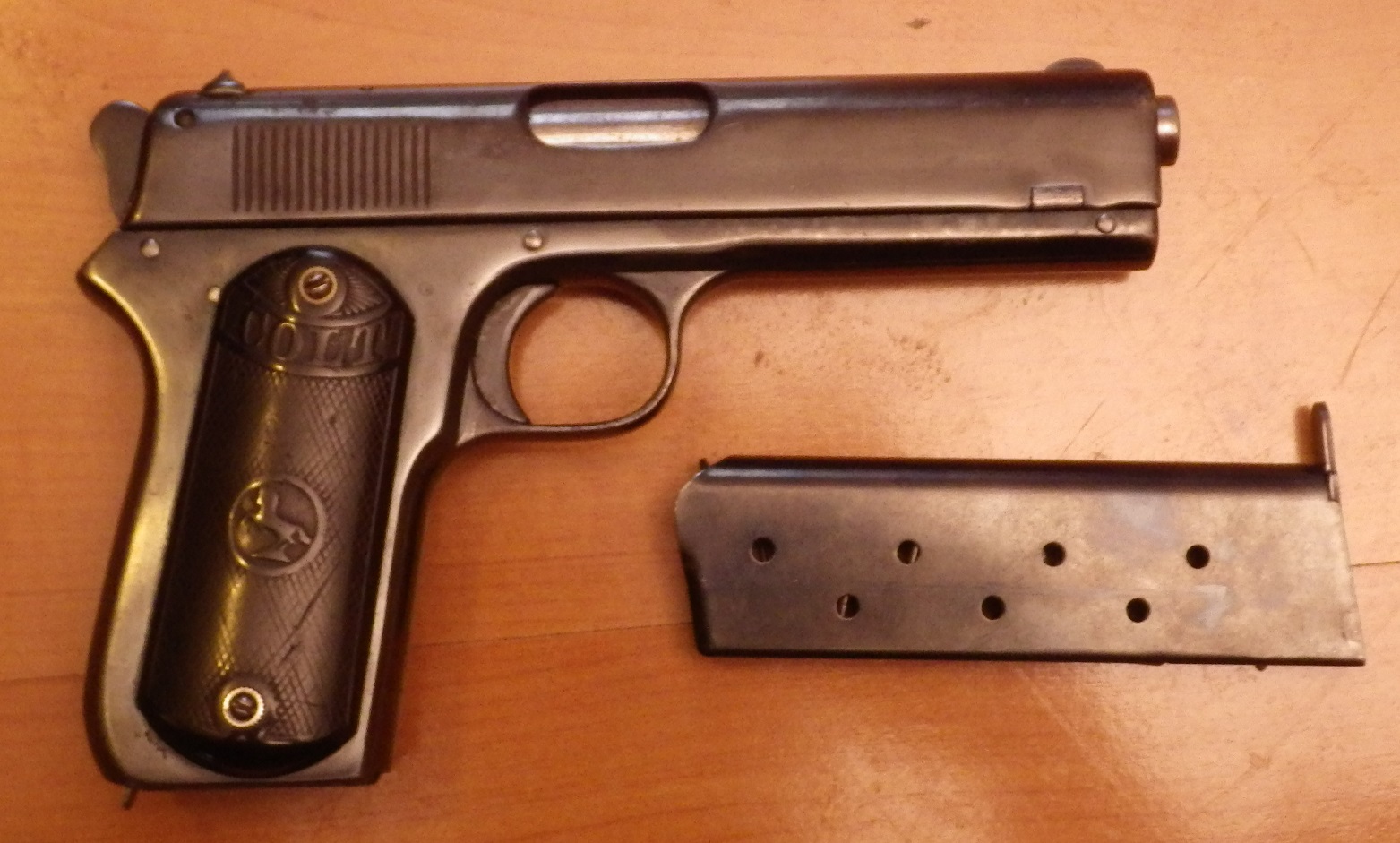
This is a gun that rewards careful study. Five distinct production types, multiple finish options, military contract variations, and nearly 572,215 pistols produced between 1903 and 1945 create a collecting field deep enough to spend years exploring. Here's how to navigate it.
The Browning design and why the name is wrong
The "hammerless" label is a misnomer that's stuck for over a century. The 1903 absolutely has a hammer. It's just concealed beneath the rear of the slide, invisible from the outside. Browning designed it this way for a specific reason: a pocket pistol needed to draw cleanly from clothing without snagging. The enclosed hammer, combined with a grip safety and a slim profile, made this one of the most practical concealed-carry pistols of its era.

Colt Model 1908 Pocket Hammerless .380 ACP Deals
Prices may change. May contain affiliate links.
Browning's design for the 1903 evolved from his earlier work on the FN Model 1903 (a different pistol entirely, chambered in .32 ACP for the European market under Fabrique Nationale). The Colt version was chambered in .32 ACP (7.65mm Browning) and used a simple blowback action. No locking lugs, no tilting barrel. The .32 ACP cartridge generated low enough pressure that a heavy slide and recoil spring were sufficient to manage the action. This simplicity is part of why the guns run so reliably even after a century of use.
The pistol holds eight rounds in a single-stack detachable magazine, with one additional round in the chamber. It weighs about 24 ounces unloaded, measures just under seven inches in overall length, and has a barrel length of 3.75 inches. These dimensions made it genuinely pocketable in an era when men wore suit jackets as daily attire. The slim, rounded profile was a deliberate design choice, not an accident. Every edge was smoothed, every protrusion eliminated.
One point of confusion worth clearing up immediately: the Colt Model 1903 Pocket Hammerless (.32 ACP) is a different pistol from the Colt Model 1903 Pocket Hammer (.38 ACP). They share a model year and a manufacturer, but they're entirely different designs. The Pocket Hammer is a larger, locked-breech pistol with an exposed hammer, chambered in the more powerful .38 ACP cartridge. If someone offers you a "1903 Colt" and it has an exposed hammer and a bigger frame, that's not the gun discussed here. Know which 1903 you're buying.
There's also the Colt Model 1908 Pocket Hammerless, which is essentially the same pistol scaled up slightly for the .380 ACP cartridge. The 1908 shares the same basic design, the same grip safety, and the same concealed hammer. Colt produced roughly 138,009 of the 1908 variant between 1908 and 1945. Many collectors pursue both models, but they're tracked separately by serial number range and have their own type classifications. The 1908 generally commands higher prices in comparable condition, partly due to lower production numbers and partly due to the more popular caliber.
The five types: what changed and when
Colt didn't produce one static version of the 1903 for forty-two years. The pistol went through five recognized production types, each with specific features that help date and authenticate a given example. Knowing these types is the foundation of collecting this model.
Type I (1903-1908)
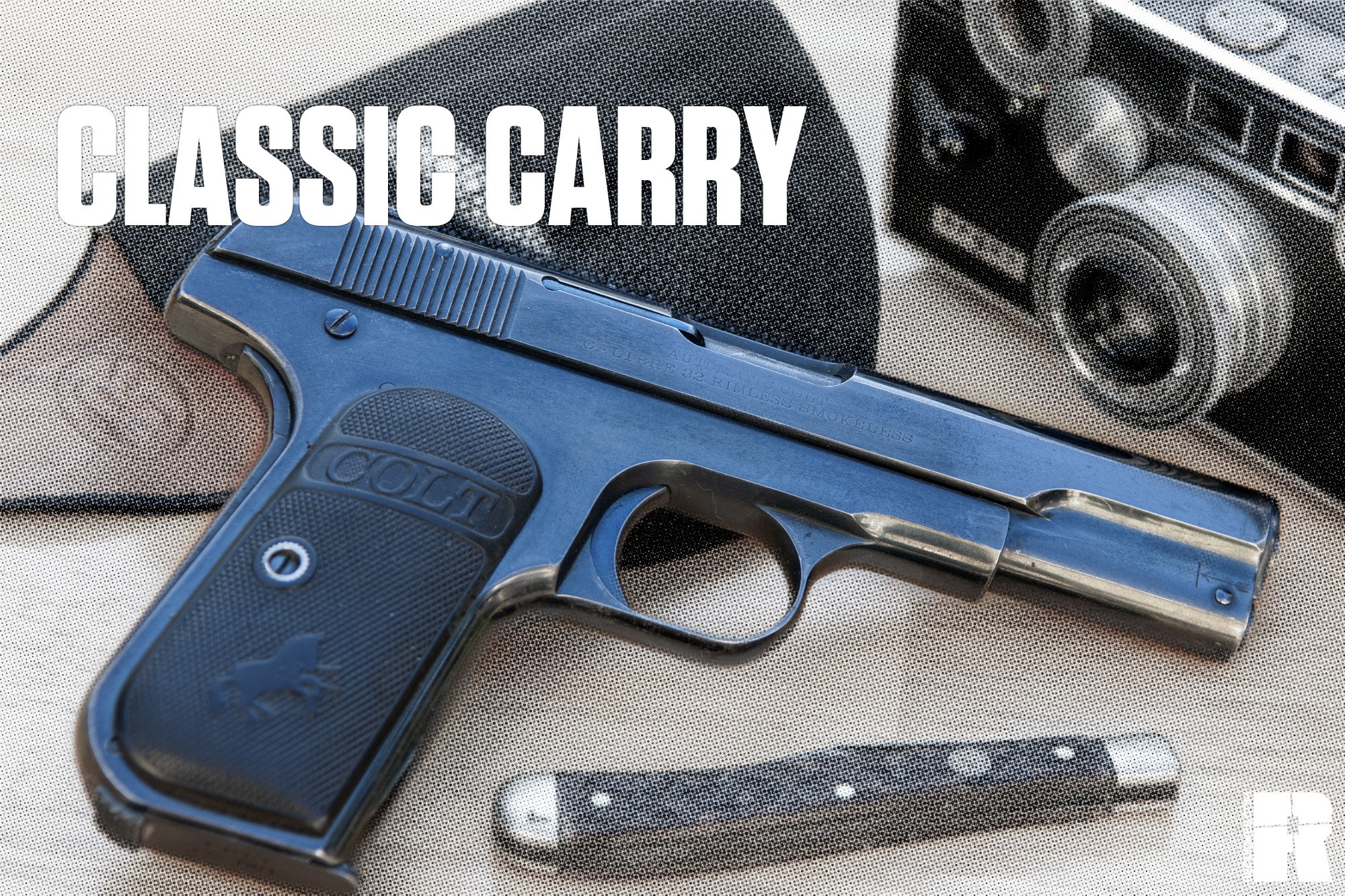
The earliest guns, covering approximately serial numbers 1 through 72,000. Type I pistols have a 4-inch barrel (slightly longer than later versions), a barrel bushing that's separate from the slide, and a rounded, shorter grip safety spur. The slide legend reads "AUTOMATIC COLT / CALIBRE 32 RIMLESS SMOKELESS" in two lines on the left side. The early Type I guns also have a wider rear sight groove milled into the top of the slide.
The detail that matters: Type I pistols are the only 1903s with the 4-inch barrel. If someone shows you a 1903 with a 4-inch barrel and a serial number above 72,000, something has been swapped. The barrel bushing is also a distinguishing feature. Later types integrated the bushing into the slide design differently.
Early Type I guns (very low serial numbers, roughly the first few thousand) are the scarcest and most desirable to collectors. They sometimes show slightly different machining patterns and earlier proof mark styles. Grips on Type I pistols are hard rubber with the Colt "rampant colt" medallion.
Type II (1908-1910)
Covering approximately serial numbers 72,001 through 105,050. The most visible change is the barrel length, which dropped from 4 inches to 3.75 inches. Colt also changed the barrel bushing arrangement. The slide legend and overall appearance remain similar to the late Type I guns, and distinguishing a late Type I from an early Type II can require checking the serial number against known production data.
Type II pistols represent a relatively short production window and lower total numbers compared to later types. They're not the rarest variant, but clean, original examples are less common than Type III or Type IV guns simply because fewer were made in this window and more have been subject to a century-plus of handling.
Type III (1910-1926)
This is the big production run, spanning approximately serial numbers 105,051 through 468,096. Colt made a significant change here: the addition of a magazine safety. Starting with Type III production, the pistol will not fire without a magazine inserted. Colt also redesigned the grip safety to have a longer, more pronounced spur. The slide serrations were changed from vertical lines to a series of wider, more aggressive grasping grooves.
Type III guns are the most commonly encountered 1903s on the market. The long production run means they overlap with World War I and the interwar period. Many Type III pistols saw military or law enforcement use. Because they're more common, they're generally the most affordable entry point for collectors, but condition still drives everything. A Type III in 95%+ original finish is worth dramatically more than a well-worn example.
Grips during the Type III era transitioned from hard rubber to checkered walnut with the Colt medallion. Knowing which grip style is correct for a specific serial number range matters. Walnut grips on an early Type III are wrong. Hard rubber grips on a late Type III are also wrong (or at least replacements).
Type IV (1926-1942)
Serial numbers approximately 468,097 through 554,446. The most notable change is the magazine catch. Colt moved from a heel-mounted magazine release (at the base of the grip) to a push-button release on the left side of the frame, behind the trigger guard. This is a major functional and visual difference. Type IV guns feel more "modern" in handling because the magazine change is faster and more intuitive.
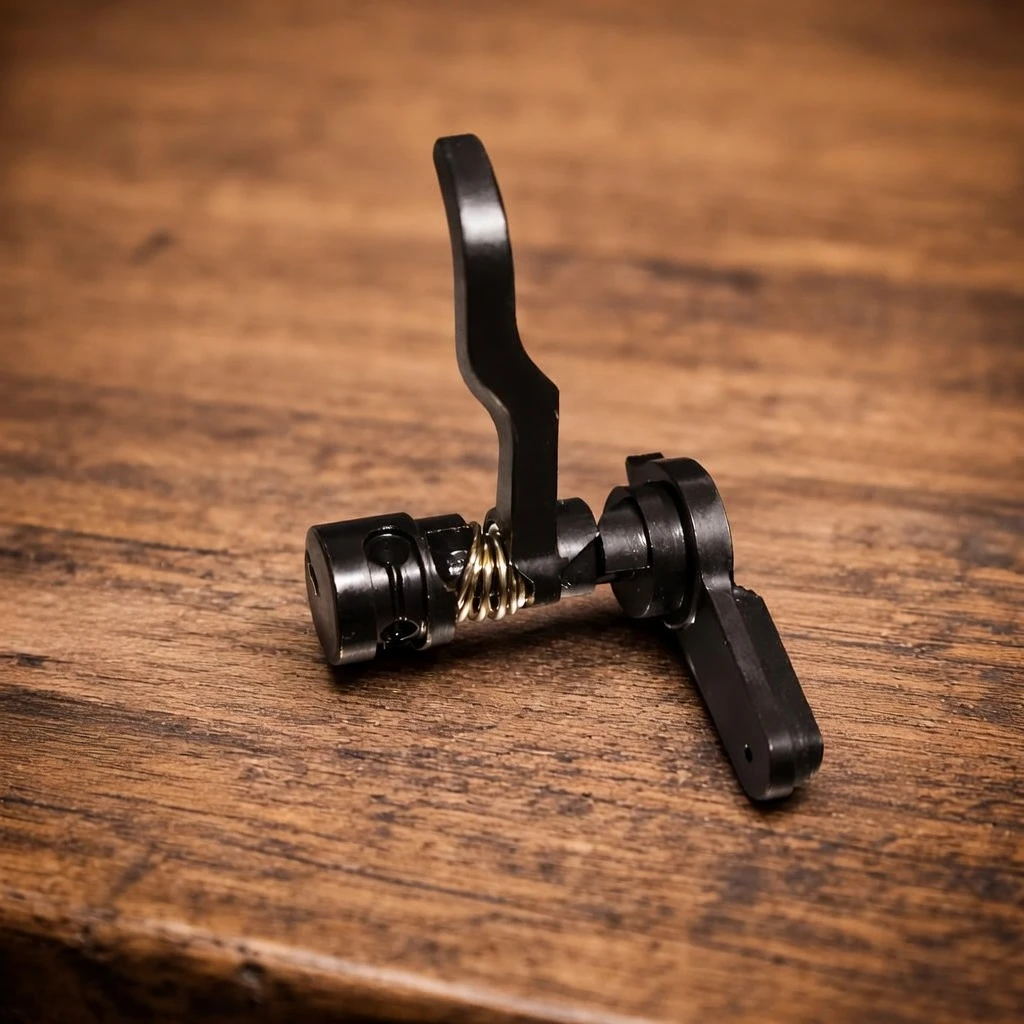
Type IV pistols also received a slightly modified safety lever and a change to the grip design to accommodate the new magazine release. The checkered walnut grips have a different profile at the bottom to clear the new release mechanism.
The red flag most buyers miss: a Type III pistol with a push-button magazine release has been modified. The frame would need to be drilled and milled to accept the later-style release, and any such modification destroys collector value. If the serial number says Type III but the magazine release says Type IV, walk away.
Type V (1942-1945)
The wartime production variant, serial numbers approximately 554,447 through 572,215. Type V pistols were produced under military contract, and they show the expected wartime simplifications. The most obvious change is the finish: Type V guns received a Parkerized (phosphate) finish instead of the commercial bluing used on all earlier types. Grips are checkered walnut without the Colt medallion, or in some cases, checkered brown plastic.
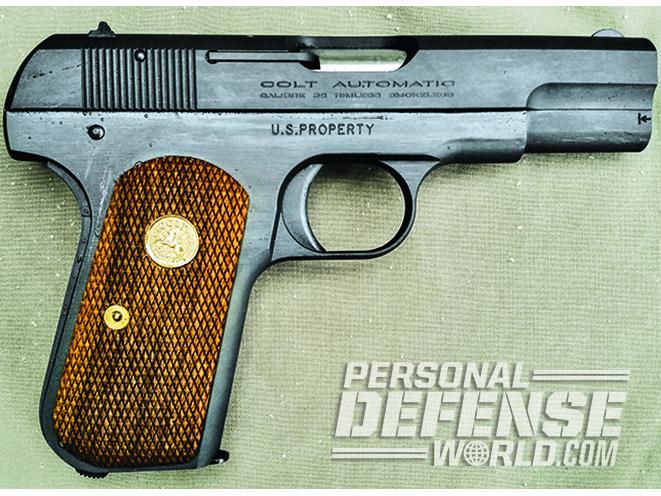
Type V pistols are marked "U.S. PROPERTY" on the frame and have military acceptance marks (typically an ordnance wheel, inspector initials, and a "P" proof on the trigger guard or frame). These are the military-issue 1903s, and they have their own dedicated collector following. About 200,000 were produced during the war, though exact numbers vary by source.
The detail that matters: not every Parkerized 1903 is a genuine Type V military gun. Earlier commercial pistols were sometimes Parkerized after the fact, either by the military during arsenal refurbishment or by private owners. Check the serial number range, look for correct "U.S. PROPERTY" markings, and verify the inspector stamps. A Parkerized Type III with no military markings is a refinished commercial gun, not a military pistol.
Finishes: what's original and what's been redone
Finish evaluation is where most buying mistakes happen with the 1903. The original Colt factory finish on commercial guns was a deep, lustrous blue-black that's often described as "Colt Royal Blue." It's a polished hot-salt blue with a distinctive depth and evenness that's difficult to replicate exactly. Nickel plating was also available as a factory option throughout production, though it's far less common.
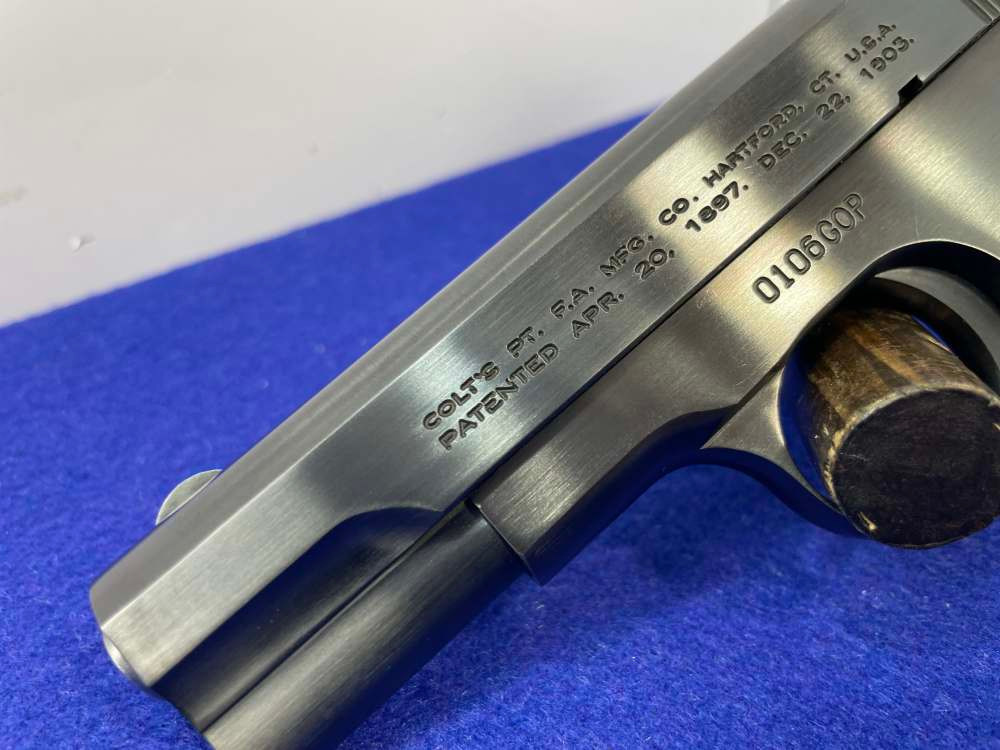
Here's how to tell original bluing from a reblue job. Original Colt blue has a specific character: it's even across all surfaces, it follows the contours of the metal without pooling in corners, and it shows wear in logical places (grip straps, muzzle, edges of the slide, around the safety and slide stop). The wear pattern should tell a story that makes sense. A gun that's been carried and used will show finish loss on high points and contact areas first.
A reblued gun, by contrast, often shows one or more of these problems: the finish is too uniform and too dark, with no natural wear gradation. The roll marks and proof marks may appear slightly softened or "filled in" because the polishing step before rebluing removed a thin layer of metal. Sharp edges on the slide serrations may be slightly rounded. And the color itself may be wrong. Many reblue jobs produce a finish that's more purple-black or grey-blue rather than the warm, deep black of original Colt blue.
Look closer at the screw heads. Original finish guns will have bluing inside the screw slots. Reblued guns sometimes show bright metal in the slots if the screws were installed during the bluing process, or they'll show a different shade of blue if the screws were blued separately. Check under the grips, too. On an original-finish gun, the metal under the grips will typically be in the white (unblued) or have a much lighter finish than the exposed surfaces. If the gun has been reblued, the area under the grips will often be the same deep blue as everywhere else, because the refinisher blued the entire frame.
Nickel-plated examples present their own authentication challenges. Factory Colt nickel from this era has a specific warm, slightly yellowish tone that differs from the brighter, cooler appearance of chrome plating. Chrome plating wasn't widely available during most of the 1903's production run, so a chrome-plated 1903 is almost certainly a later aftermarket job. Factory nickel will also show specific wear patterns: nickel tends to flake or peel at edges rather than wearing thin gradually the way bluing does. If the nickel is peeling and there's a layer of copper underneath, that's consistent with period nickel plating, which used a copper base layer. If it's peeling and there's bare steel underneath, be suspicious.
The Parkerized finish on Type V military guns is a matte grey-green phosphate coating. It's functional rather than attractive, and it was applied with less attention to cosmetic perfection than commercial bluing. Parkerized guns will show tool marks and machining more readily than blued guns. This is normal for wartime production and doesn't indicate a defect. What you don't want to see is Parkerizing over pitting, which suggests the gun was refinished after experiencing significant corrosion. Original Parkerizing on a Type V will be under the grips and inside the trigger guard, applied to all surfaces in a single process.
Arsenal refurbished military guns are a separate category. The U.S. military rebuilt many 1903s during and after the war, sometimes replacing parts, re-Parkerizing, and fitting new grips. These arsenal-rebuilt guns are legitimate military artifacts, but they're worth less than unmodified original-issue examples. Look for mismatched serial numbers on small parts, evidence of re-stamped markings, or a Parkerized finish that doesn't match the wear on the underlying metal.
Military and special-issue variants
The 1903's military history is a significant value driver, and it's also where some of the most interesting (and most faked) variants live.
Standard military issue (Type V)
The bulk of military 1903s are Type V pistols produced between 1942 and 1945 under U.S. government contract. They're marked "U.S. PROPERTY" on the right side of the frame, with ordnance inspection marks. These were issued primarily to officers, military police, OSS operatives, and other personnel who needed a compact sidearm. The .32 ACP chambering was considered adequate for a secondary weapon, and the slim profile made it easy to conceal under civilian clothing for intelligence work.
General Officer's Pistol
This is the variant that commands the highest premiums. Starting in 1943, the U.S. Army began issuing specially finished Colt 1903s to general officers as their personal sidearms. These General Officer's Pistols (GOPs) were typically refinished with a high-polish blue, fitted with special grips (often with a star or rank insignia), and presented in a case. The practice continued after the war, with 1903s serving as the standard GOP until 1972, when the Army switched to a different model.
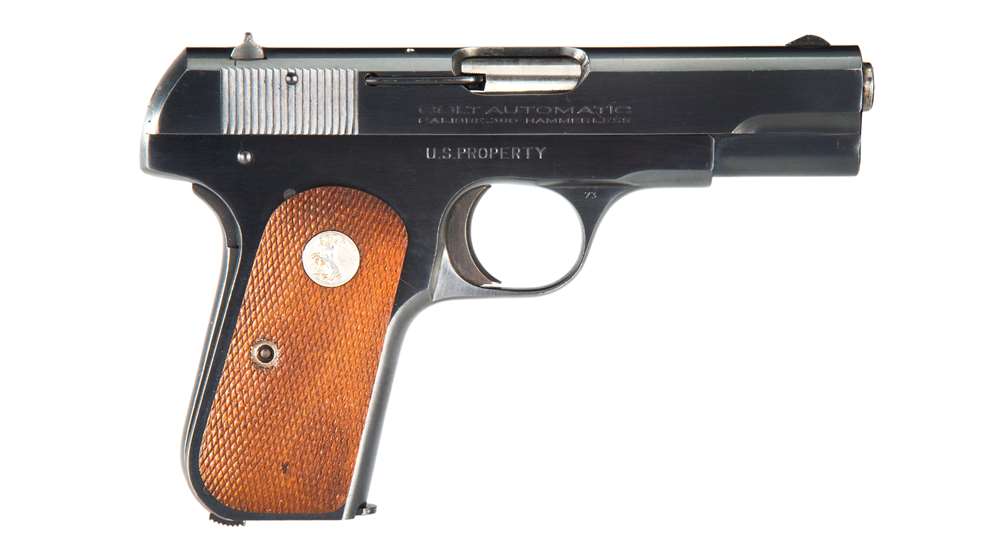
Genuine GOPs are documented. The Army maintained records of which pistol was issued to which general, and provenance can often be traced through military records. A GOP with confirmed provenance to a specific general officer is among the most valuable variants of the 1903. Without provenance documentation, a pistol that merely looks like a GOP is just a refinished 1903 with fancy grips.
The question to ask: does the seller have documentation linking this specific serial number to a specific general officer? Letters, military records, photographs, or published references? Without that paper trail, you're buying a story, not provenance.
OSS and intelligence use
The 1903's association with the Office of Strategic Services (the wartime predecessor to the CIA) adds considerable collector interest. OSS operatives favored the 1903 because it was compact, reliable, and could be concealed under European civilian clothing. Some OSS-issued 1903s were fitted with suppressors. Documented OSS-issue guns are extremely rare on the civilian market and command significant premiums. But "OSS-issued" is one of the most common false attributions in 1903 collecting. Unless a gun comes with specific documentation tying it to OSS procurement, treat the claim with skepticism. The fact that the OSS used 1903s doesn't mean every well-worn military 1903 was carried by a spy.
Pre-Type V military purchases
The U.S. government also purchased 1903s before the Type V production run. Some earlier-type pistols (particularly Type III and Type IV guns) were acquired by various military and government agencies during the 1920s and 1930s. These may or may not carry "U.S. PROPERTY" markings, and documentation is spottier. Some were marked with property stamps of specific agencies (the State Department, for example, or various law enforcement branches). These earlier military/government guns are collectible but harder to authenticate than the well-documented Type V production.
Grips, magazines, and small parts: getting the details right
The 1903 went through several grip styles across its production life, and incorrect grips are one of the most common issues on guns offered for sale. Getting this right matters.
Early Type I and Type II pistols used hard rubber grips with the Colt name and a rampant colt in an oval. These grips are black, have a distinctive checkering pattern, and are often found cracked or chipped on surviving examples. Replacement hard rubber grips are available, but they don't match the original Colt pattern exactly. Look at the checkering density, the depth of the Colt medallion, and the overall fit to the frame.
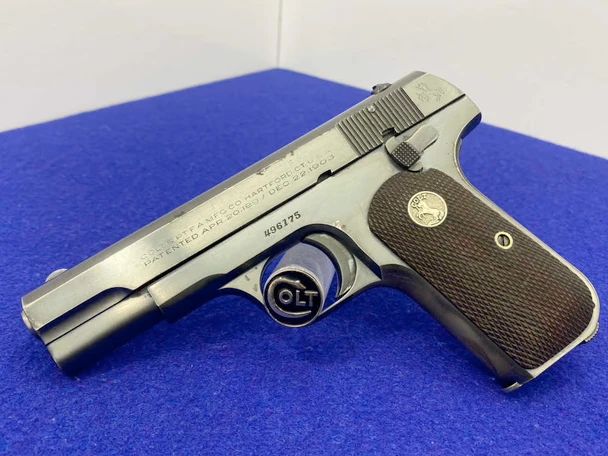
Type III pistols transitioned to checkered walnut grips with a silver Colt medallion inset into each panel. The checkering pattern, the size and style of the medallion, and the color of the walnut all varied slightly across the long Type III production run. Late Type III grips are not identical to early Type III grips. Collectors who specialize in the 1903 can often narrow down a grip set to a specific production decade based on these details.
Type IV grips are also checkered walnut with medallions, but the profile is different at the base to accommodate the push-button magazine release. You can't install Type III grips on a Type IV frame without modification (and you shouldn't).
Type V military grips are checkered walnut without medallions, or brown plastic. The walnut grips are simpler than their commercial counterparts, with a coarser checkering pattern. Plastic grips were used later in the war as a cost-saving measure.
What to look for with magazines: original Colt magazines for the 1903 have a two-tone blued finish, a specific follower design, and Colt markings on the floorplate. The magazine body should be smooth, without the seam lines or rough finish found on many aftermarket replacements. Military-issue magazines may have different markings. A correct magazine won't make or break a deal on a shooter-grade gun, but for a collector-grade example, having an original Colt magazine adds to the package. Aftermarket magazines from unknown manufacturers are common and often cause feeding problems due to slightly different dimensions or spring tension.
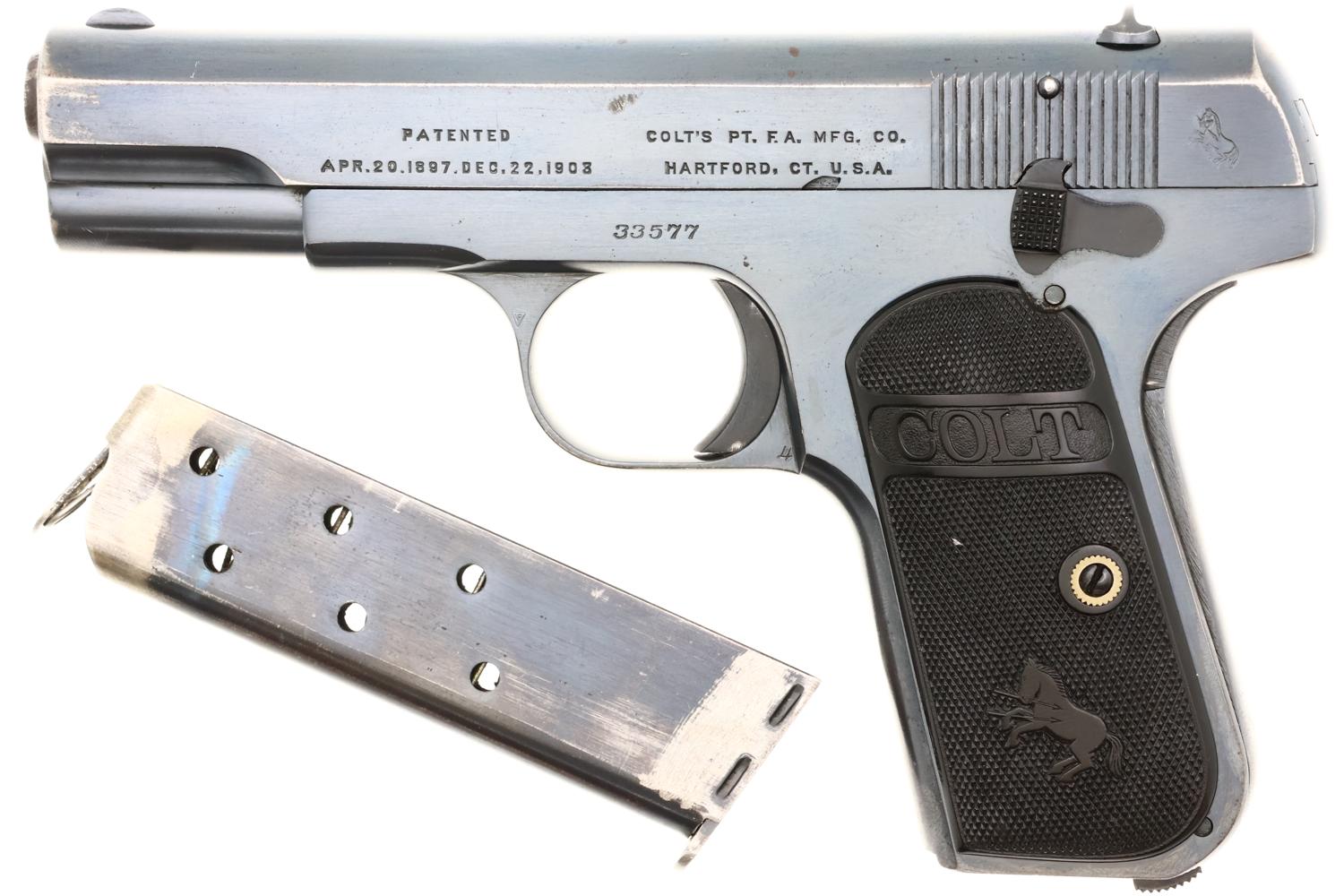
Small parts matter too. The barrel, slide stop, safety, grip safety, and trigger should all show consistent finish and wear patterns. If the slide is 90% original blue but the safety lever looks freshly blued with no wear, that part has probably been replaced or refinished separately. Check the firing pin and extractor for signs of replacement. These are wear parts that often get swapped, and while functional replacements are fine for a shooter, they reduce collector value on a gun being sold as "all original."
Common mistakes, fakes, and traps
The 1903 market has specific pitfalls that catch buyers regularly. Here are the ones that matter most.
Refinished guns sold as original are the single biggest issue. A well-done reblue can fool a casual buyer, especially under gun show lighting. Always examine a potential purchase under natural light or a strong white LED. Look for the telltale signs described above: softened markings, uniform finish without natural wear, bluing under the grips, and rounded edges on slide serrations. A gun that's "too pretty" for its age should raise questions, not excitement.
Mismatched parts across production types are common because the 1903 was in production for so long and parts are somewhat interchangeable. A Type III frame with a Type IV safety, Type V grips, and an aftermarket magazine is a parts gun, not a collector piece. Check every visible component against what's correct for the serial number range. This takes research, but it's the difference between buying right and buying wrong.
Fake military markings are a real concern. Stamping "U.S. PROPERTY" into the frame of a commercial 1903 isn't difficult, and it can add significant perceived value. Genuine military stamps have specific characteristics: consistent depth, correct font, proper placement on the frame. Compare any military-marked gun against published photographs of confirmed examples. The ordnance wheel (a circle with crossed cannons) and inspector initials should be crisp and correctly positioned. Sloppy or oddly placed stamps are a red flag.
Electropencil serial numbers are another warning sign. Some 1903s have had their serial numbers altered or re-stamped, either to disguise a stolen gun or to make a common serial number range appear to be a more desirable variant. Original Colt serial numbers are stamped with a specific depth and font. Numbers that appear scratchy, uneven, or too shallow may have been applied with an electric engraving pencil (electropencil) rather than stamped at the factory. Compare the serial number's appearance on the frame against the number on the slide and barrel. On an unmolested gun, all three should match in style and depth.
The "unfired" claim deserves skepticism. Some sellers describe 1903s as "unfired" or "new in box." While it's possible that a few examples sat in a drawer for decades without being shot, the vast majority of surviving 1903s have been fired. Check the breech face for primer marks, look at the barrel's feed ramp for brass marks, and examine the chamber for carbon residue. A gun can be in excellent condition without being unfired, and excellent condition is honest. "Unfired" is a specific claim that's usually unprovable and often untrue.
The 1908: the .380 sibling worth understanding
Any serious discussion of the 1903 has to address the Model 1908 Pocket Hammerless, because collectors frequently encounter both and need to understand the differences.
The 1908 is the same Browning design scaled up slightly for the .380 ACP cartridge (9mm Kurz). It's marginally larger and heavier than the 1903, with a 3.75-inch barrel and a seven-round magazine (one fewer than the .32 ACP version). The .380 ACP produces more energy than the .32 ACP, and the 1908 has always been considered the more "serious" defensive pistol of the two.
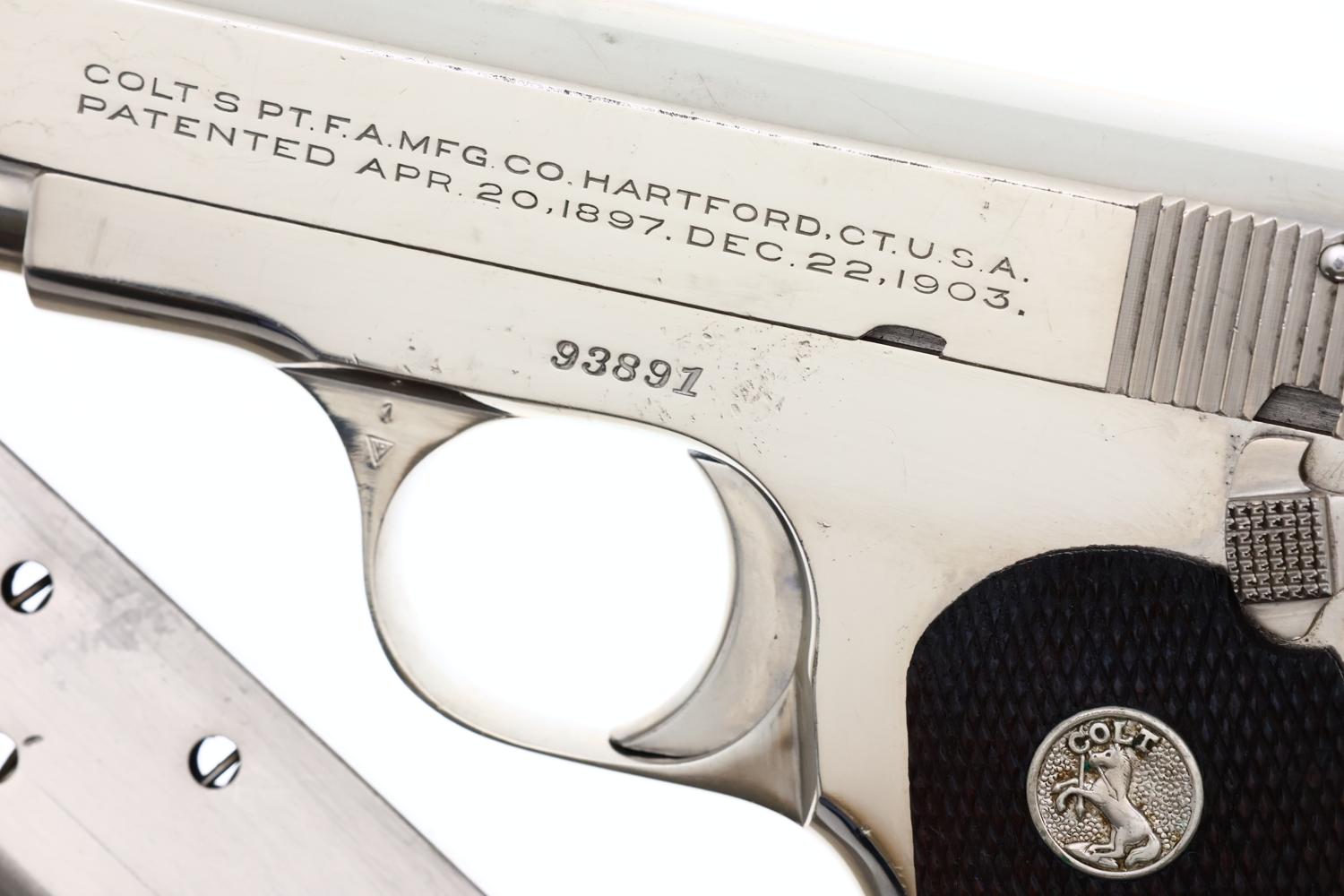
Colt produced approximately 138,009 Model 1908 pistols between 1908 and 1945. That's less than a quarter of the 1903's production numbers, which means original-condition 1908s are scarcer. The 1908 went through similar type variations as the 1903, with changes to barrel length, magazine release, and finish occurring at roughly comparable points in production.
In the current market, the 1908 generally commands higher prices than a comparable-condition 1903. The lower production numbers, the more popular caliber, and the slightly greater scarcity of high-condition survivors all contribute. But the same authentication principles apply. Check the type against the serial number, verify the finish, confirm the grips are correct, and look for the same red flags.
One specific note: the .380 ACP round puts more stress on the blowback action than the .32 ACP, and 1908 pistols sometimes show more wear on the barrel, recoil spring, and slide rails than a 1903 with comparable round counts. A 1908 that's been shot extensively may have more mechanical wear than its external finish suggests. Function-check the action carefully and pay attention to slide-to-frame fit.
What drives value: a framework for evaluation
Rather than quoting specific prices that will be outdated by the time you read this, here's how to think about what makes one 1903 worth significantly more than another.
Type and rarity form the baseline. Type I pistols (especially very early serial numbers) and Type V military guns with provenance are at the top. Type II pistols are scarce relative to Type III, which is the most common. Type IV guns fall in the middle. But type alone doesn't determine value.
Condition is the multiplier. A Type III in 98% original finish with correct grips, correct magazine, and sharp markings is worth more than a Type I that's been reblued with replacement parts. The condition grading standards used by the NRA (from "New" down through "Poor") apply here, but the critical distinction for the 1903 is between original finish and refinished. A gun in 70% original finish is almost always more desirable to collectors than the same gun reblued to look like 95%. The original finish, even worn, tells you the gun is honest. A reblue tells you someone tried to make it look like something it's not.
Provenance adds a premium that can exceed the gun's intrinsic value. A documented General Officer's Pistol, a confirmed OSS-issue gun, or a 1903 with a verified history tied to a specific person or event enters a different market entirely. But provenance must be documented, not narrated. A story without paperwork is just a story.
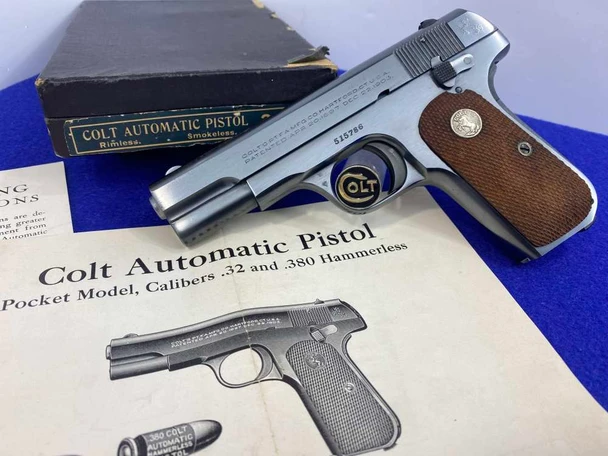
Completeness matters more than most buyers realize. An original box, original instruction sheet, original magazine, and any accessories that came with the gun from the factory all add value. A 1903 in its original maroon Colt box with the correct end label, sitting in the correct cardboard insert, with the original instruction pamphlet and a spare magazine, is a dramatically different package than the same gun alone. Even the box by itself has value.
Specific features create niche demand. Factory nickel guns are scarcer than blued guns and attract their own collectors. Guns with documented law enforcement issue history have a following. Pistols in unusual serial number ranges (first year of production, last year of production, milestone serial numbers) carry premiums. And any factory engraved 1903 is in a different category entirely, though factory engraving on this model is quite rare.
Inspection checklist: before you buy
Pull the slide back and lock it open. Look at the bore under good light. The 1903's barrel should show sharp rifling. Some pitting is acceptable on a hundred-year-old gun, but heavy pitting or a dark, rough bore suggests neglect or corrosion. The .32 ACP and .380 ACP cartridges used non-corrosive primers for most of the 1903's production life, so bore condition is often better than you'd expect on a gun of this age.
Check the serial number on the frame (right side, above the trigger), on the slide, and on the barrel (visible when the slide is retracted). All three should match. Mismatched numbers mean parts have been swapped, and that changes what the gun is.
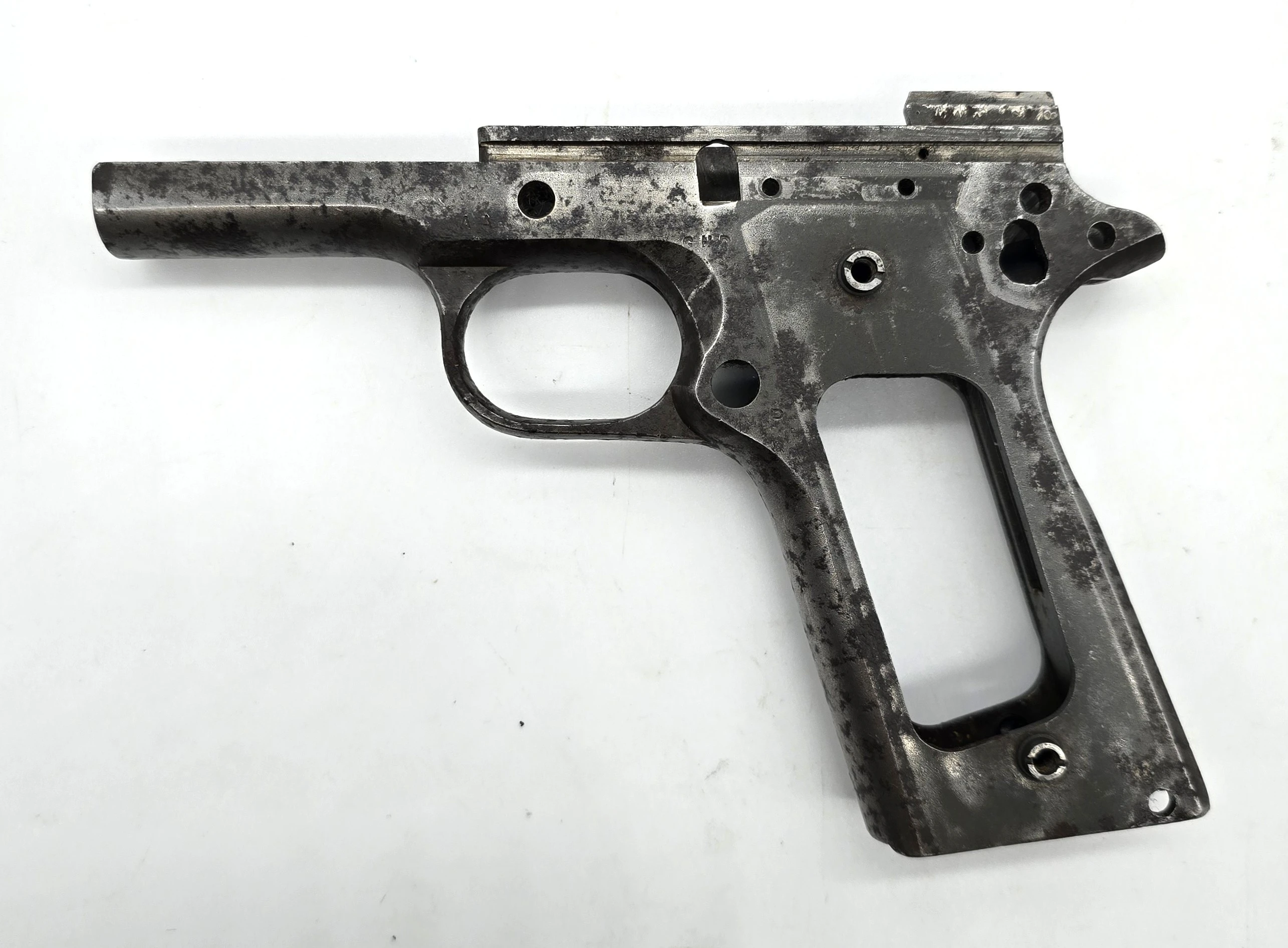
Examine the grip safety. It should move freely and positively block the trigger when not depressed. A grip safety that's been pinned or disabled is a modification that reduces collector value. Test the thumb safety as well. It should click positively into safe and fire positions.
Look at the slide-to-frame fit. Some play is normal on a well-used gun, but excessive looseness suggests heavy use or worn rails. Rack the slide several times and feel for smoothness. The 1903's action should feel slick and well-fitted, even on a gun with significant round counts.
Remove the magazine and examine it. Is it an original Colt magazine or an aftermarket replacement? Check the floorplate for markings. Inspect the feed lips for cracks or deformation. Insert the magazine and confirm it locks in place with a positive click (on Type IV and V guns with the push-button release) or seats fully into the heel catch (on Type I through III guns).
Finally, look at the overall gun under strong light, turning it at different angles. Original Colt blue has a depth and warmth that's hard to describe but recognizable once you've seen it. Hold the gun at a low angle and look along the flat surfaces of the slide. Original finish will show subtle variations in reflection where wear has thinned the bluing. A reblue job will look more uniform, almost glassy.
Resources worth consulting
The definitive serial number production data for the 1903 is available from several collector references that cross-reference serial ranges with production years and type changes. The Cruffler production data pages and the Colt Autos reference site both maintain serial number tables that are widely cited in the collecting community. For military variants, the records maintained by the Army's ordnance history branch and published references on General Officer's Pistols provide documentation trails.
Collector forums, particularly the Colt Forum and military surplus collector communities, are invaluable for comparing specific examples against known-correct guns. Post clear photographs of any potential purchase (with the seller's permission) and ask for opinions. Experienced collectors can often spot a reblue or incorrect part from a photograph that a buyer might miss in person.
If you're considering a high-dollar purchase, a letter from the Colt Archive is worth the cost and wait time. Colt maintains historical records that can confirm a pistol's original configuration, shipping date, and original purchaser. A Colt letter won't tell you whether the gun has been refinished, but it will tell you what the gun looked like when it left the factory. That's the benchmark against which you evaluate everything else.
The 1903 Pocket Hammerless is a gun that gets more interesting the deeper you look. Every serial number range has its own story, every type change reflects a specific decision by Colt's engineers, and every surviving example carries the accumulated evidence of where it's been and how it's been treated. The collectors who do best with this model are the ones who learn to read that evidence before they start writing checks.