You just threaded a can onto your 9mm and now you're standing in front of a wall of ammo options. The 115-grain range stuff you've been shooting is supersonic and will crack right past your suppressor's best efforts. You need 147-grain-and-up loads that stay below roughly 1,100 fps, but you also don't want to blow your whole range budget on a single box of premium defensive rounds. The sweet spot is subsonic 9mm that actually stays quiet, cycles your gun, and costs less than $30 a box.

This guide is for suppressor owners shooting pistols or PCCs who want reliable subsonic 9mm for range training, suppressed plinking, or defensive carry. The budget assumption is under $30 per box at standard retail, which rules out some of the boutique offerings but still leaves plenty of solid options. Experience level: you already own a suppressor and understand the basics of how subsonic velocity eliminates the sonic crack that a can't touch.
Quick picks
Federal Syntech 147gr TSJ Best for high-volume suppressed training
Winchester Super Suppressed 147gr FMJ Best for suppressor-optimized range shooting
Federal American Eagle 147gr FMJ Best budget subsonic training load
Hornady XTP Subsonic 147gr JHP Best subsonic defensive hollow point
Federal HST 147gr JHP Best for suppressed carry and home defense
Magtech 147gr FMJ Subsonic Best widely available budget option
At a glance
How we chose
The selection criteria boil down to four things, and none of them involve marketing copy.
First, the load has to be genuinely subsonic from a standard 4-inch pistol barrel. That means published muzzle velocities at or below roughly 1,050 fps with some margin built in. Loads that flirt with 1,100 fps out of a 4-inch barrel will almost certainly go supersonic through a 16-inch PCC barrel, which defeats the purpose. Every load here publishes velocity data from a 4-inch test barrel that stays comfortably below the threshold.

Second, cycling reliability matters more than raw quietness. The heaviest, slowest subsonic loads (158 gr, 165 gr) can be whisper-quiet, but they also present feeding issues in some platforms. The 147-grain weight is the mainstream standard for a reason: it's heavy enough to stay subsonic at standard pressure, but it generates enough slide velocity to reliably cycle virtually every modern 9mm pistol and PCC. All six picks use 147-grain projectiles because that's where the reliability data is deepest across the widest range of firearms.
Third, manufacturer track record and brass quality. Every load here uses boxer-primed brass cases, which means they're reloadable. Manufacturers like Federal, Winchester, Hornady, Speer, and Magtech have decades of quality-control infrastructure. Consistency from lot to lot is what keeps velocity spreads tight, and tight velocity spreads are what keep subsonic loads actually subsonic.
Fourth, the price has to make sense for the intended use. A $40+ box of premium defensive ammo is fine for the magazine you carry every day, but it's terrible economics for a 200-round suppressed range session. The picks here span from budget FMJ training loads to defensive hollow points, but all fall under $30 per box at standard retail for their primary box size, with the exception of the HST which hits $30 at common retail for its 50-round LE packaging.
The picks
Federal Syntech 147gr TSJ
Best for: high-volume suppressed training and indoor range use
Federal Syntech 147gr TSJ
May contain affiliate links.
Federal's Syntech line was built around a simple idea: replace the copper jacket with a polymer coating (Total Synthetic Jacket) that reduces friction, heat, and metal-on-metal fouling. The 147-grain version runs at 1,000 fps from a 4-inch barrel, generating 326 ft-lbs of energy. That puts it right at the top of the subsonic 147-grain performance window.
The polymer jacket has a practical advantage beyond just reduced fouling. It virtually eliminates splash-back on steel targets, which is why it's become a favorite at indoor ranges. The reduced friction translates to roughly 12 percent less barrel friction and about 14 percent less heat generation compared to standard copper-jacketed rounds, according to Federal's data. For suppressed shooting specifically, less fouling means less carbon buildup in your baffles over long sessions. Anyone who's cleaned a suppressor after 500 rounds of standard FMJ knows that's not a trivial benefit.
The Syntech 147gr also showed up in testing through the Springfield Kuna PCC, where it ran flawlessly in a suppressed roller-delayed platform alongside Hornady and HST loads. That's a good sign for PCC reliability. The flat-nose bullet profile feeds cleanly in most modern pistols and carbines.
Pros
Polymer jacket reduces bore fouling and suppressor carbon buildup
1,000 fps / 326 ft-lbs puts it at the top of the 147gr subsonic energy range
Eliminates splash-back on steel targets
Brass-cased, boxer-primed, reloadable
Flat-nose profile feeds reliably across platforms
Cons
TSJ coating means you can't use a magnet to police brass at the range
Not a defensive load; no expansion capability
Can be harder to find in stock than standard American Eagle FMJ
Winchester Super Suppressed 147gr FMJ
Best for: dedicated suppressor use with reduced lead fouling
Winchester Super Suppressed 147gr FMJ
May contain affiliate links.
Winchester engineered the Super Suppressed line specifically for suppressed firearms, and the 9mm 147-grain FMJ version reflects that focus in a couple of meaningful ways. The bullet uses a fully encapsulated jacket design (FMJE) where a brass disc encloses the base of the bullet core. This matters because exposed lead bases are the primary source of lead fouling in both barrels and suppressors. The encapsulated base dramatically reduces that problem.
Published velocity is 990 fps with 320 ft-lbs of energy, though the test barrel length is not specified by Winchester or most sources. Some sources list it at 985 fps, and the Winchester product page lists 990 fps. Either way, it's comfortably subsonic with a small margin. The clean-burning powder is optimized for suppressor use, reducing the noise signature while keeping cycling reliable. User reviews on multiple retailer sites consistently note clean performance and reliable feeding.
The brass cases are boxer-primed and fully reloadable. For shooters who reload their subsonic practice ammo, that's a meaningful cost consideration over time. Winchester positions this in their lineup as a dedicated suppressor product rather than a general-purpose training round, and the encapsulated base design backs that up.

Pros
Fully encapsulated bullet base reduces lead fouling in suppressors
Clean-burning powder optimized for suppressed use
990 fps stays comfortably subsonic
Brass-cased, boxer-primed, reloadable
Specifically engineered for suppressor use, not just relabeled target ammo
Cons
Slightly lower energy (320 ft-lbs) than the 1,000 fps Federal loads
FMJ only; no defensive application
Availability can be spotty depending on region
Federal American Eagle 147gr FMJ
Best for: budget subsonic training with a proven track record
Federal American Eagle 147gr FMJ
May contain affiliate links.
This is the workhorse. Federal American Eagle 147gr FMJ (AE9FP) runs at 1,000 fps from a 4-inch barrel with 326 ft-lbs of muzzle energy. Federal publishes full ballistic tables for this load: 976 fps at 25 yards, 953 fps at 50 yards, 933 fps at 75, and 914 fps at 100 yards. Energy drops from 326 ft-lbs at the muzzle to 311 at 25 yards and 273 at 100 yards. Those numbers tell you the bullet bleeds speed gradually and stays well below the transonic zone at any practical pistol distance.
The American Eagle line is Federal's high-volume training brand, and it shows in the price. This is typically the least expensive brass-cased subsonic 9mm from a major manufacturer. The clean-burning powders and Federal primers are consistent from lot to lot, which matters when you're trying to keep every round below the sound barrier. A load with wide velocity spreads might average 1,000 fps but throw occasional rounds at 1,080 fps, and those rounds will crack through your suppressor.
Some forum users have noted that American Eagle 147gr can run slightly dirtier than the Syntech or Winchester Super Suppressed loads. That's a fair trade for the lower price point if you're burning through cases of this stuff at the range. Clean your suppressor more often, save money on ammo.

Pros
1,000 fps / 326 ft-lbs matches the top of the 147gr subsonic performance window
Full published ballistic tables from Federal
Typically the most affordable brass-cased subsonic 9mm from a major brand
Consistent lot-to-lot quality from Federal's manufacturing
50-round boxes are standard
Cons
Runs dirtier than Syntech or Winchester Super Suppressed
Standard exposed-lead-base FMJ contributes to suppressor fouling
Not designed specifically for suppressor use like the Winchester or Syntech
Hornady XTP Subsonic 147gr JHP
Best for: subsonic defensive use and suppressed carry
Hornady XTP Subsonic 147gr JHP
May contain affiliate links.
Hornady built this load around their XTP (eXtreme Terminal Performance) bullet, which has a long track record of reliable expansion at moderate velocities. That matters here because subsonic velocities are inherently lower than standard defensive loads, and many hollow point designs need a minimum velocity to expand properly. The XTP was designed to work at these speeds.
Published data from Hornady shows 975 fps at the muzzle with 310 ft-lbs of energy from a 4-inch barrel. At 50 yards, velocity drops to 934 fps with 285 ft-lbs; at 100 yards, it's 899 fps and 264 ft-lbs. The 975 fps muzzle velocity is the lowest of the 147-grain loads in this roundup, which gives it the most margin below the supersonic threshold. That extra margin is useful in PCC barrels, where longer dwell time can typically push velocities up by 100-200 fps compared to a pistol barrel, though 147-grain loads see smaller gains.
Hornady specifically notes that the powders are selected for optimal performance and consistency at subsonic velocities, with a low flash signature. The load comes in 25-round boxes, which is standard for defensive-grade hollow point ammo. The XTP bullet's reputation for consistent expansion at subsonic speeds makes this the go-to recommendation from multiple sources as the best all-around subsonic JHP.

Pros
XTP bullet designed to expand reliably at subsonic velocities
975 fps gives the widest margin below the sound barrier among 147gr picks
Low flash signature from optimized subsonic powders
Proven terminal performance reputation
Brass-cased with quality primers
Cons
25-round boxes make it expensive for volume training
310 ft-lbs is the lowest energy in the roundup
Not bonded; may not retain weight as well through barriers as bonded designs
Federal HST 147gr JHP
Best for: suppressed carry and home defense
Federal HST 147gr JHP
May contain affiliate links.
The Federal HST 147gr is the load that keeps showing up at the top of defensive ammo rankings, and it earns that spot with data. Gel testing shows 15.24 inches of penetration, centered squarely in the FBI's 12-18 inch protocol window, with 0.606 inches of expansion. The skived copper jacket is designed to peel back into uniform petals while retaining nearly all of its original weight, even after passing through heavy clothing barriers.
At 1,000 fps and 326 ft-lbs from a 4-inch barrel, the HST 147gr sits right at the top of the subsonic energy range. It's the same velocity as the American Eagle 147gr FMJ, but the hollow point design converts that energy into controlled expansion rather than just punching a .355-caliber hole. The nickel-plated brass case feeds slickly and resists corrosion, which matters for ammo that sits in a carry magazine for weeks or months.
The HST is widely used by law enforcement agencies, and the 147-grain subsonic version specifically is favored for suppressed duty applications. Testing through the Springfield Kuna PCC showed 1.67-inch five-shot groups at 25 yards, the tightest of the four loads tested in that review. That's impressive accuracy from a defensive hollow point.
The price is the highest in this roundup. The 50-round LE packaging typically hits the $30 mark at retail, which puts it right at the ceiling of the budget this guide targets. The cost math works if you're buying one or two boxes for your carry gun and nightstand gun, not if you're trying to train with it at volume.

Pros
15.24" penetration and 0.606" expansion in gel testing
1,000 fps / 326 ft-lbs, top of the subsonic energy range
Nickel-plated brass resists corrosion in carry magazines
Near-100% weight retention through heavy clothing
Proven LE track record for defensive use
Cons
Most expensive load in this roundup at the $30 ceiling
Not a training round; cost prohibitive for volume shooting
Non-bonded design may shed petals through hard barriers compared to bonded alternatives like Speer Gold Dot

Magtech 147gr FMJ Subsonic
Best for: affordable subsonic range ammo with wide availability
Magtech 147gr FMJ Subsonic
May contain affiliate links.
Magtech's 147-grain FMJ is the quiet budget option. It's a straightforward subsonic training round with a standard full metal jacket bullet. Multiple sources describe it as a reliable, consistent subsonic load that's typically among the least expensive options from a recognized manufacturer. Magtech uses brass cases with boxer primers, so the brass is reloadable.
Magtech lists its subsonic 9mm at 990 fps from a four-inch barrel, which keeps it comfortably below the sound barrier. The combination of subsonic performance, smooth feeding, and low cost makes it a natural choice for shooters who want to put high round counts through a suppressed pistol without worrying about the per-round math.
Magtech doesn't have the suppressor-specific engineering of the Winchester Super Suppressed (no encapsulated base) or the reduced-fouling polymer jacket of the Syntech. It's conventional FMJ ammo loaded to subsonic velocities. That means more cleaning, but also a lower price point. For many shooters, that's the right trade.

Pros
Among the least expensive brass-cased subsonic 9mm from a major brand
Brass-cased, boxer-primed, reloadable
Subsonic velocity for effective suppressor use
Wide retail availability
Smooth feeding in most platforms
Cons
Standard FMJ with exposed lead base contributes to suppressor fouling
No suppressor-specific engineering
Specific muzzle energy not published by manufacturer on product page
How to choose
The decision tree for subsonic 9mm is simpler than it looks once you separate training ammo from defensive ammo.
If your primary use is high-volume range training with a suppressor, the Federal Syntech 147gr and Winchester Super Suppressed 147gr are the two best options. Both are designed to reduce fouling, which directly translates to less time cleaning your suppressor and barrel. The Syntech's polymer jacket is better for steel targets; the Winchester's encapsulated base is better for lead reduction in your can. If neither is available, the Federal American Eagle 147gr or Magtech 147gr are perfectly serviceable budget alternatives that just require more frequent cleaning.
If you need a defensive load for suppressed carry or home defense, the Federal HST 147gr is the top choice based on gel-tested terminal performance data. The 15.24 inches of penetration and 0.606 inches of expansion through heavy clothing put it squarely in the FBI protocol sweet spot. The Hornady XTP Subsonic 147gr is the runner-up, with a bullet specifically designed to expand at subsonic velocities and a lower muzzle velocity that gives more margin in longer barrels.

If you're shooting a PCC with a 16-inch barrel, pay extra attention to velocity margin. A load that runs 1,000 fps from a 4-inch pistol barrel can pick up 50-100 fps from a longer barrel, potentially pushing it supersonic. The Hornady XTP Subsonic at 975 fps from a 4-inch barrel has the most room before it crosses the threshold. The Winchester Super Suppressed at 990 fps and the Magtech at 990 fps are also good choices. The Federal loads at 1,000 fps may flirt with the sound barrier in some PCC setups, so testing with a chronograph through your specific barrel length is worth the effort.
Don't overlook the reloading angle. All six picks use brass cases with boxer primers. If you reload, your cost per round for subsonic practice ammo drops significantly after the first purchase. Heavier 147-grain bullets and moderate powder charges are straightforward to load, and you can tune velocity precisely to your barrel length.
Common mistakes and troubleshooting
Mixing up "subsonic" labeling with actual subsonic performance is the most common error. Not every 147-grain 9mm load is marketed as subsonic, but most standard-pressure 147-grain loads naturally fall below the ~1,125 fps speed of sound at sea level. The flip side is also true: some loads marketed as "subsonic" from a 4-inch barrel will go supersonic through a longer PCC barrel. The only way to know for sure is a chronograph and your specific gun.
Ammo Inc Stelth 165gr Subsonic Deals
Prices may change. May contain affiliate links.

Altitude and temperature affect the speed of sound. At sea level on a standard day (15°C / 59°F), the speed of sound is roughly 1,100 fps. At higher elevations or in cold weather, the speed of sound drops, which gives you slightly more margin. In hot weather, it rises. If you're shooting in Arizona in July, a load running 1,000 fps from a 4-inch barrel has plenty of room. If you're shooting a PCC that adds 75 fps of barrel velocity, the margin gets thinner.
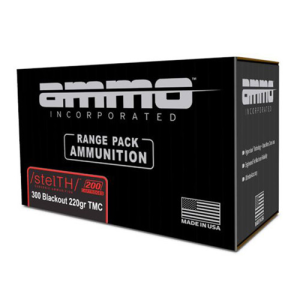
Heavy subsonic loads above 147 grains (like the 158-grain Fiocchi or 165-grain Ammo Inc Stelth) can be significantly quieter, but they may not cycle reliably in all platforms. The reduced slide velocity from a slower, heavier bullet can cause short-stroking in some pistols, particularly compact and subcompact models with stiffer recoil springs. If you want to run heavy subsonic loads, test them thoroughly in your specific gun before relying on them.
Suppressor fouling accumulates faster with subsonic ammo because the lower gas pressure doesn't blow carbon out of the baffles as aggressively. Loads with exposed lead bases (standard FMJ) contribute lead fouling on top of the carbon. The Winchester Super Suppressed's encapsulated base and the Federal Syntech's polymer jacket both address this. If you're shooting standard FMJ subsonic, plan on cleaning your suppressor more frequently.
Don't use subsonic FMJ for defensive purposes. A 147-grain FMJ at 1,000 fps will poke a .355-caliber hole through a target without expanding. For defensive use, you need a hollow point designed to expand at subsonic velocities, like the Federal HST or Hornady XTP Subsonic. The terminal performance difference between an expanding and non-expanding bullet is not subtle.
What the chrono data tells you
Here's where it gets interesting: the velocity spread across these loads is only about 25 fps at the muzzle, ranging from 975 fps (Hornady XTP) to 1,000 fps (Federal HST, Federal Syntech, Federal American Eagle). That's a remarkably narrow band, and it tells you that manufacturers have converged on the same performance window for 147-grain subsonic 9mm. The energy range is similarly tight, from 310 ft-lbs (Hornady) to 326 ft-lbs (Federal loads).
The practical implication is that the performance gap between these loads narrows fast once you look past bullet construction. For range training, the difference between 975 fps and 1,000 fps is irrelevant. What separates them is fouling characteristics, bullet construction for terminal performance, and price. The velocity spread within a given load (shot-to-shot consistency) matters more than the average velocity difference between loads, and that's where major manufacturers earn their premium over budget brands.
Suppressed sound levels tell a similar story. Source data shows suppressed subsonic 9mm at approximately 129 dB, compared to about 137 dB for suppressed supersonic 124-grain loads. That 8 dB difference is significant because the decibel scale is logarithmic. A 10 dB reduction would represent a perceived loudness reduction of roughly half, and while the 8 dB drop from 137 dB to 129 dB falls short of that threshold, it still produces a very noticeable difference in perceived volume. All six picks in this guide should deliver similar sound levels when suppressed, since they're all operating in the same velocity window. The differences in perceived quietness between subsonic loads have more to do with the suppressor, barrel length, and powder charge characteristics than with the 25 fps velocity spread between brands.
Range notes
When you take these loads to the range for the first time, here's what to watch for. Run at least two magazines through your gun before drawing any conclusions about reliability. Subsonic loads generate less slide velocity than the 115-grain or 124-grain ammo your recoil spring was probably tuned for, and some guns need a few rounds to "settle in" with the different impulse.
Pay attention to point of impact shift. Subsonic 147-grain loads typically hit lower than supersonic 124-grain loads at the same distance because the heavier, slower bullet drops more. Source data confirms this: subsonic loads produce a lower point of impact compared to supersonic. If you're zeroed for 124-grain carry ammo and switch to 147-grain subsonic for suppressed range work, expect to adjust your hold or your sights.
The recoil character is noticeably different. Subsonic 147-grain loads produce a slower, pushing recoil impulse rather than the sharper snap of lighter, faster loads. Most shooters find follow-up shots easier with the heavier subsonic loads. This is one of the genuine advantages of suppressed subsonic shooting beyond just noise reduction: the combination of reduced sound, reduced muzzle blast, and softer recoil makes for a genuinely more pleasant shooting experience.
If you're running a PCC, check whether your bolt locks back on an empty magazine with subsonic ammo. Some PCCs, particularly blowback designs, may not generate enough rearward bolt velocity with subsonic loads to reliably lock back. Roller-delayed and radial-delayed designs like the SP5 and Kuna tend to handle subsonic loads more gracefully. The Kuna PCC specifically showed excellent results with Hornady 147gr Subsonic (1.72-inch groups at 25 yards) and Federal HST 147gr (1.67-inch groups at 25 yards) in suppressed testing.
Next steps
Before you buy a case of anything, pick up one box each of two or three loads from this list and run them through your specific gun with your specific suppressor. What you're testing for is reliable cycling (no failures to feed, extract, or eject), point of impact relative to your zero, and subjective sound level. A chronograph is ideal if you have access to one, because it's the only way to verify that the load stays subsonic through your barrel length.
If you're choosing between training loads, the cost math matters over time. Run the per-round math and multiply by your expected annual round count. The difference between a $0.30/round load and a $0.44/round load is $140 per thousand rounds. Over a year of regular suppressed shooting, that adds up fast. Pick the cheapest load that cycles reliably and doesn't foul your suppressor excessively, then spend the savings on more trigger time.
For defensive use, buy one box of Federal HST 147gr or Hornady XTP Subsonic 147gr, confirm it feeds and functions in your gun, verify the point of impact, and load your carry and home defense magazines. Then train with the cheaper stuff. The muscle memory from shooting Federal American Eagle 147gr at 1,000 fps transfers directly to the HST at 1,000 fps because the velocity, bullet weight, and recoil impulse are nearly identical. That's not an accident. Federal designed it that way.