
You've got a .308 bolt gun or AR-10 that pulls double duty on deer, and now you want to run coyotes with it. The question isn't whether a .308 can kill a coyote. Of course it can. The question is which loads minimize pelt damage, shoot flat enough to connect at 300 yards without a lot of holdover math, and don't cost you three bucks a trigger pull on an animal you might call in six times in a morning.
The answer almost always points toward lighter bullets in the 110 to 130 grain range. These projectiles leave the muzzle fast, shoot flat, and fragment or expand rapidly on thin-skinned predators instead of punching through like a 165-grain deer bullet. But not every light .308 load is created equal, and the details matter more than the marketing copy on the box.

Who this guide is for
This is for the shooter who already owns a .308 and wants to use it effectively on coyotes at typical calling distances, roughly 50 to 300 yards. Budget ranges from affordable factory loads around a dollar per round up to premium small-batch ammunition. Experience level assumes you're comfortable zeroing a rifle and reading a basic drop chart.
Quick picks
- Federal Varmint & Predator 110 Grain V-Max Best overall for coyote-specific factory ammo
- Black Hills Gold 125 Grain CX Best lead-free option
- Speer TNT 125 Grain (handload) Best accuracy potential for reloaders
- Hornady TAP Urban 110 Grain Best for short-barrel .308s
- Federal Fusion 150 Grain Best dual-purpose coyote and deer load
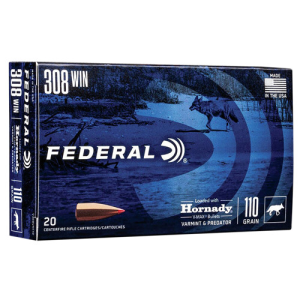
Federal Varmint & Predator 110 Grain V-Max .308 Deals
Prices may change. May contain affiliate links.

Federal Fusion 150 Grain .308 Deals
Prices may change. May contain affiliate links.
Black Hills Gold 125 Grain CX .308
May contain affiliate links.
Speer TNT 125 Grain .308
May contain affiliate links.
Hornady TAP Urban 110 Grain .308
May contain affiliate links.
At a glance
How we chose
Coyote loads for the .308 need to solve a specific problem: the cartridge was designed to push 147 to 180 grain bullets at moderate velocity, and most of those bullets are built to hold together through a deer's ribcage. That's the opposite of what you want on a 35-pound canine. A 165-grain bonded soft point will kill a coyote, sure, but it'll also blow a fist-sized exit hole and ruin whatever pelt value existed.

The selection criteria here focused on four things. First, bullet construction suited to thin-skinned predators, meaning rapid expansion or fragmentation rather than deep penetration and high weight retention. Second, flat trajectory inside 300 yards, because lighter bullets at higher velocity give you a more forgiving point-blank range. Third, accuracy from common .308 twist rates (1:10 is the most common in factory rifles, with 1:12 also well established and 1:11.25 found in some factory offerings). And fourth, availability as either factory ammunition or widely obtainable component bullets for handloaders.
Reliability data came from forum reports of actual field use on coyotes, published ballistic tables from manufacturers, and user reviews documenting function in both bolt-action and semi-auto platforms. The Fusion 150 grain earns its spot not as a dedicated coyote round but as the practical choice for someone who doesn't want to re-zero between deer season and predator season.
The picks
Federal Varmint & Predator 110 Grain V-Max
Best for: dedicated coyote hunting with factory ammo in a standard .308
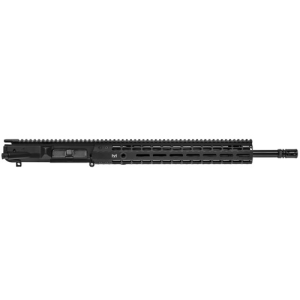
Aero M5 .308 Deals
Prices may change. May contain affiliate links.
The numbers on this load are hard to argue with. At 3,300 fps muzzle velocity, this is one of the fastest factory .308 loads available. That velocity, combined with the Hornady V-Max polymer tip bullet, produces a trajectory that's dramatically flatter than typical 150 or 165 grain hunting loads. One published comparison shows the 110-grain .308 dropping just 2.5 inches at 200 yards with a 100-yard zero, and about 10 inches at 300 yards. Compare that to a 150-grain load at the same zero: 3.9 inches at 200 and 14.7 inches at 300. That's a meaningful difference when you're trying to hold center-mass on a coyote at distance without dialing.

The V-Max bullet has a ballistic coefficient of .290, which isn't spectacular, but at the distances coyotes are typically engaged, it's more than adequate. The polymer tip initiates expansion at velocities as low as 1,600 fps, so even at 300-plus yards this bullet is still opening up. User reviews consistently note good accuracy and reliable function in semi-auto platforms like the Aero M5. The load ships in 50-round boxes, which is a nice touch for a varmint round since you'll burn through more ammo on a calling session than a deer hunt.
Forum reports from multiple shooters describe the 110 V-Max as producing "bang flops" on coyotes, with one user reporting kills at 400-plus yards from a DPMS .308 carbine with minimal pelt damage at that distance. Closer shots will be more destructive, but that's the tradeoff with any frangible varmint bullet.
Pros
- Highest muzzle velocity of any pick at 3,300 fps from a 24-inch barrel
- Flattest trajectory inside 300 yards
- Ships in 50-round boxes
- Proven function in semi-auto .308 platforms
- V-Max polymer tip ensures expansion even at lower impact velocities
Cons
- Low ballistic coefficient (.290) means velocity bleeds off faster past 300 yards than heavier, sleeker bullets
- Not suitable for deer-sized game; this is a dedicated varmint round
- Pelt damage at close range (under 100 yards) can be significant due to frangible design
Black Hills Gold 125 Grain CX
Best for: lead-free predator hunting or dual-purpose predator and small deer use
Black Hills loads their Gold line .308 with a 125-grain Hornady CX bullet, a monolithic copper alloy projectile, at 3,000 fps from a 24-inch test barrel with 2,498 ft-lbs of muzzle energy. The CX is a controlled-expansion design, not a frangible varmint bullet. That distinction matters. It won't fragment like a V-Max, which means less explosive pelt damage but also less instant incapacitation compared to a true varmint projectile.

The real advantage here is versatility. The CX bullet retains nearly all its weight on impact, and at 125 grains moving at 3,000 fps, it shoots almost as flat as the 110-grain options while carrying more energy downrange. One source specifically identifies this load as the best .308 for coyote, noting it delivers "superior accuracy and trajectories, all without severely damaging a coyote's pelt." The copper construction also makes it legal in lead-free hunting zones like California's condor range.
The downside is cost. Black Hills Gold ammunition is small-batch, handcrafted stuff, and it's priced accordingly. If you're burning through boxes on a weekend calling marathon, the per-round math gets uncomfortable fast. This is the load you buy when pelt preservation or lead-free compliance matters more than volume shooting.
Pros
- Lead-free copper construction for restricted hunting zones
- 3,000 fps muzzle velocity with flat trajectory
- Controlled expansion preserves pelts better than frangible bullets
- Versatile enough for coyotes and small deer
- Black Hills' reputation for consistent, hand-loaded quality
Cons
- Highest price tier of any pick here
- Controlled expansion means less dramatic terminal effect than frangible varmint bullets
- 20-round boxes only
- Availability can be spotty
Speer TNT 125 Grain (handload)
Best for: reloaders chasing maximum accuracy and terminal performance on predators
The Speer TNT 125-grain bullet is a component, not loaded factory ammo, but it earns a spot because of how frequently it appears in forum discussions about accurate, effective coyote loads in .308. The bullet has a thin precision jacket with internal fluting designed for complete disruption on impact, a ballistic coefficient of .341 (notably higher than the 110-grain V-Max's .290), and a long ogive with a small hollow point.

Multiple shooters report sub-MOA accuracy with the 125 TNT over charges of Varget or IMR 4895. One user describes getting 1-inch five-shot groups from a DPMS .308 carbine using 49 grains of Varget behind the 125 TNT. Another reports sub-half-MOA groups with 46 grains of IMR 4895. Velocities from 20 to 22-inch barrels generally land around 2,880 to 3,000 fps based on forum chrono data, though these numbers will vary by barrel length and chamber dimensions.
On coyotes, the TNT lives up to its name. The thin jacket and internal fluting mean this bullet comes apart violently on impact. One source describes it as making "a mess" of groundhogs, and the same terminal behavior applies to coyotes. Close-range hits will not be fur-friendly. At 200 yards and beyond, the damage becomes more manageable while the bullet still delivers rapid incapacitation.
Pros
- Highest ballistic coefficient of the light-bullet picks at .341
- Exceptional accuracy potential in multiple platforms
- Violent expansion on thin-skinned predators
- Widely available as a component bullet
- Handloaders can tune velocity and accuracy to their specific rifle
Cons
- Requires handloading; no widely available factory-loaded option
- Not suitable for deer or larger game
- Extreme fragmentation at close range will damage pelts
- Handload data should be worked up carefully in each individual rifle
Hornady TAP Urban 110 Grain
Best for: short-barrel .308 rifles and AR-10 platforms
The TAP Urban was designed as a law enforcement round, specifically for reduced penetration in urban environments, but its terminal characteristics make it an excellent coyote bullet. The 110-grain BTHP is designed for rapid expansion, fragmentation, and low retained weight. Hornady publishes ballistic data for three different barrel lengths, which is unusually helpful for real-world planning.

From a 24-inch M24-length barrel, the TAP Urban runs 3,153 fps at the muzzle with 2,428 ft-lbs of energy. Drop it to a 20-inch Remington 700 LTR barrel and you get 2,998 fps. In a 16-inch DPMS carbine, it still manages 2,857 fps. That 16-inch data point is valuable because a lot of AR-10 and short-barrel bolt guns run barrels in that neighborhood, and losing only about 300 fps compared to a full-length barrel is a reasonable tradeoff for a more maneuverable predator rifle.
One user reports honest 2.5-inch groups at 100 yards from a Remington 788 with the Hornady TAP 110-grain loads, noting "not fur saving but it sure does anchor the predators." The fragmentation design means this round breaks apart on impact rather than exiting, which is both a pelt concern and a safety advantage in areas where you're worried about what's beyond your target.
Pros
- Published ballistic data for 16-inch, 20-inch, and 24-inch barrels
- Rapid fragmentation eliminates over-penetration concerns
- Excellent terminal effect on coyote-sized game
- Functions reliably in semi-auto platforms
Cons
- Law enforcement product line can be harder to find at retail
- 20-round boxes
- Fragmentation means significant pelt damage at closer ranges
- Not a hunting bullet by design; purely a varmint and predator application
Federal Fusion 150 Grain
Best for: shooters who want one load for deer season and coyote calling
Here's where it gets interesting: sometimes the best coyote load is the one already zeroed in your rifle. The Federal Fusion 150-grain is a Fusion Soft Point running 2,820 fps with 2,648 ft-lbs of energy. It's designed for deer. The bonded construction retains 85 to 95 percent of its weight through hide and bone. That's the opposite of what a dedicated coyote bullet does.

So why include it? Because a lot of predator hunters are running the same rifle they used last weekend for whitetail, and re-zeroing for a different load adds complexity that most people skip anyway. The Fusion 150 will absolutely kill coyotes. It won't be fur-friendly. The exit wound will be substantial. But if your priority is one load, one zero, and the ability to shoot a coyote or a deer on the same outing without swapping ammo, this is the practical answer.
The Fusion also happens to be one of the more affordable hunting-grade .308 loads on the market, with strong price-to-performance. It's widely available at sporting goods stores, and it shoots to practical accuracy from most factory hunting rifles. The flat trajectory inside 300 yards keeps it usable for predator distances without major holdover adjustments.
Pros
- One-load solution for deer and coyote hunters
- Bonded construction handles any game animal you might encounter
- Among the most affordable hunting-grade .308 loads
- Widely available
- Flat trajectory inside 300 yards
Cons
- Not a varmint bullet; will cause significant pelt damage
- Bonded design means the bullet holds together rather than fragmenting
- Heavier bullet means more drop at 300 yards compared to 110 or 125 grain options
- Overkill on coyotes from a terminal performance standpoint
How to choose
The decision tree for coyote loads in .308 is simpler than it looks, and it really comes down to three or four honest questions about how you hunt.
If you're a dedicated predator caller who wants the flattest trajectory and most dramatic terminal effect, the 110-grain V-Max loads are the default answer. They shoot the flattest, they expand the hardest, and they come in 50-round boxes because Federal understands you'll shoot more of them than deer loads. The cost per round is the lowest of the dedicated varmint options, and the velocity advantage is real.
If pelt preservation or lead-free compliance matters, the Black Hills Gold 125-grain CX is the pick. The controlled-expansion copper bullet won't fragment like a V-Max, so exit wounds are smaller and pelts stay more intact. You're paying a premium for that, but if you're selling fur or hunting in a lead-restricted zone, the math works differently.
If you reload, the Speer TNT 125-grain opens up accuracy potential that factory ammo can't always match. The higher BC compared to 110-grain bullets means less wind drift at 200 to 300 yards, and the ability to tune your load to your specific rifle barrel is worth the effort if you shoot enough to justify the setup time.
If your .308 wears a short barrel, check the Hornady TAP Urban data. The published velocity numbers from a 16-inch barrel are genuinely useful, and losing less than 300 fps compared to a 24-inch barrel means you're not giving up much at coyote distances.
And if you just want one box of ammo in the safe that works on everything from coyotes to deer, the Fusion 150 is the honest answer. It won't be pretty on a coyote at 75 yards, but it'll work, and you won't be fumbling with different loads or different zeros when something unexpected shows up.
Range notes: what you'll see
Zeroing a 110-grain load versus your 150 or 165-grain deer load will produce a noticeably different point of impact. Don't assume your deer zero transfers. The lighter, faster bullet will typically print higher at 100 yards if you're sighted in with heavier ammo, and the trajectory curves are different enough that holdovers won't match at 200 or 300 yards.

With a 100-yard zero, expect the 110-grain V-Max to drop roughly 2.5 inches at 200 yards and about 10 inches at 300. A 150-grain load at the same zero drops approximately 3.9 inches at 200 and 14.7 inches at 300. That 4.7-inch difference at 300 yards is the difference between a center-chest hit and a low miss on a standing coyote.
Recoil with 110-grain loads is noticeably lighter than 150 or 165-grain hunting loads. You'll get back on target faster for follow-up shots, which matters during a stand where multiple coyotes might respond to a call. The reduced recoil also makes it easier to spot your own impacts through the scope.
Common mistakes
Shooting big-game bullets at coyotes and wondering why the exit wounds are enormous. A 165-grain Nosler Partition or AccuBond is designed to hold together through an elk's shoulder. On a coyote, it acts like a full metal jacket with a slightly larger wound channel. If pelt damage is a concern, you need a bullet designed to come apart, not one designed to stay together.
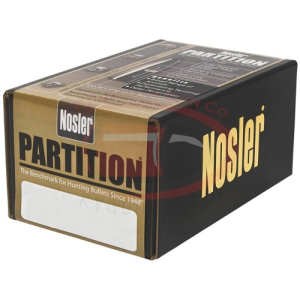
Nosler Partition Bullet Deals
Prices may change. May contain affiliate links.
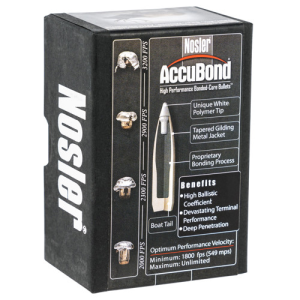
Nosler AccuBond Bullet Deals
Prices may change. May contain affiliate links.
Assuming all 110-grain bullets stabilize in all .308 twist rates. Most .308 rifles come with 1:10 or 1:12 twist barrels, and 110-grain bullets generally stabilize fine in both. But some shooters have reported keyholing with 125-grain bullets in certain 1:10 twist barrels, which likely indicates a barrel or crown issue rather than a twist problem. If you're getting oblong holes on paper, don't blame the bullet weight first. Check your crown and try a different lot of ammo before changing loads.
Not re-zeroing when switching between deer and varmint loads. A 40 to 55 grain difference in bullet weight at significantly different velocities will shift point of impact by several inches at 100 yards. This isn't a "close enough" situation. Confirm zero every time you change loads.
Overestimating the wind resistance of light bullets. A 110-grain V-Max with a .290 BC will drift more in a crosswind at 300 yards than a 168-grain match bullet with a .462 BC. If you're hunting open prairie with steady wind, the lighter bullets require more wind holds than you might expect from their flat drop tables.
Buying expensive premium ammo for volume predator calling. If you're sitting on a stand making 15 to 20 calls in a day and shooting at multiple coyotes per session, the per-round cost of Black Hills Gold adds up fast. Save the premium stuff for situations where lead-free compliance or pelt quality demand it, and run the Federal Varmint & Predator for general calling.
Next steps
Before committing to a load, run at least 20 rounds through your rifle at 100 yards from a stable rest. You're looking for consistent groups, not just one lucky three-shot cluster. If a load won't hold two MOA or better from your rifle, it doesn't matter how good the ballistics look on paper.
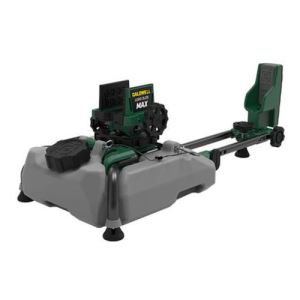
Caldwell Lead Sled MAX Deals
Prices may change. May contain affiliate links.

Once you've confirmed accuracy, shoot a drop-verification group at 200 and, if your range allows, 300 yards. Compare actual drop to the published ballistic table for your load. Barrel length, altitude, and temperature all affect real-world trajectory, and the numbers on the box are from a test barrel that probably isn't the same length as yours. The Hornady TAP Urban data is particularly useful here because it publishes velocities for 16-inch, 20-inch, and 24-inch barrels, giving you a realistic starting point.
If you're running a semi-auto, function-test your chosen load through at least two full magazines. Light bullets at high velocity can sometimes produce different gas pressures than the 147 to 150 grain NATO-spec loads your gas system was tuned for. Confirm reliable cycling before you trust it in the field. And if you're a reloader considering the Speer TNT 125-grain, start with published data from Hodgdon or your powder manufacturer's load manual and work up carefully. The accuracy potential is real, but so is the responsibility to develop safe loads in your specific chamber.
The .308 isn't the classic coyote cartridge. That honor goes to the .223 and .22-250 crowd. But with the right bullet at the right velocity, it's a legitimate predator tool that lets you run one rifle for everything from November whitetails to February coyote stands. The key is matching the bullet to the target, not the other way around.