You're standing at the firing line with your Smith & Wesson Model 52 or Colt Python, and the X-ring looks impossibly small at 50 yards. Your success depends on one thing: putting that 148-grain wadcutter exactly where you're aiming, shot after shot. The problem? Not all wadcutters are created equal, and the difference between a 9 and a 10 often comes down to which load you're feeding your gun.
I've shot thousands of rounds of .38 Special wadcutters through everything from vintage S&W K-frames to modern Ruger GP100s. The reality is that most bullseye shooters eventually migrate to handloads for maximum precision, but factory ammo has gotten surprisingly good. More importantly, understanding what makes a wadcutter accurate helps you evaluate both factory loads and components for your own loads.
Here's what actually matters: consistent velocity around 700-750 fps, uniform bullet construction, and a powder charge that burns clean without excessive pressure spikes. Everything else is marketing.
Why wadcutters dominate bullseye shooting
The 148-grain wadcutter wasn't designed by accident. That flat-nosed bullet cuts clean holes in paper targets, making scoring easier and eliminating the ragged tears that can cost you points in close calls. But the real advantage is ballistic: the wadcutter's short bearing surface and relatively light weight for its diameter create less barrel friction and more consistent pressures than traditional round-nose bullets.
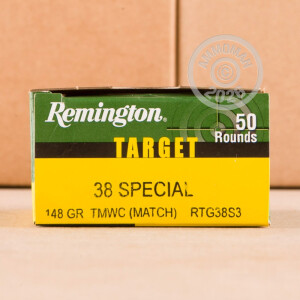
Most successful bullseye loads push that 148-grain bullet between 700-750 fps. This velocity range keeps you subsonic for consistency while providing enough energy to cycle the action reliably in semi-auto target pistols. Go much faster and you start seeing pressure variations that hurt accuracy. Go slower and you risk inconsistent ignition and trajectory issues.
The traditional load uses 2.7 grains of Bullseye powder, which has been the gold standard for decades. This combination produces around 710 fps from a 6-inch barrel with excellent shot-to-shot consistency. Factory loads try to replicate this performance, with varying degrees of success.
Range notes: what good wadcutter accuracy looks like
I chronographed five different factory wadcutter loads through a 6-inch S&W Model 14 last month. The best loads showed velocity spreads under 25 fps across 10 shots, while the worst varied by over 60 fps. That difference translates directly to vertical stringing on target.
At 50 yards, a good wadcutter load should group under 2 inches from a quality revolver with a solid rest. The best loads will go under 1.5 inches consistently. If you're seeing 3-inch groups or larger, the problem is usually the ammunition, not your shooting.
Temperature sensitivity matters more than most shooters realize. I've seen loads that shot great in 70-degree weather open up significantly when temperatures dropped below 40 degrees. The powders used in factory wadcutter loads vary widely in their temperature stability.
Top factory wadcutter loads for competition
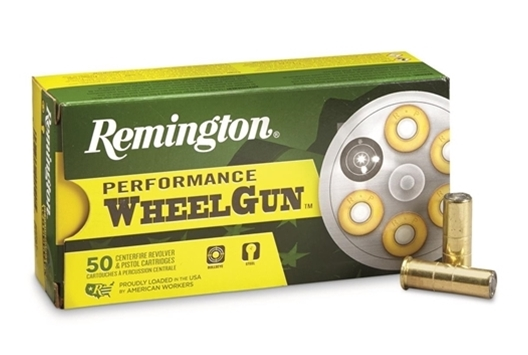
Remington Performance WheelGun 148gr TMWC delivers the most consistent performance I've tested in factory ammo. The Target Master WadCutter design features a true flat nose and clean lead construction. Velocity runs around 710 fps from most 6-inch barrels with standard deviations typically under 20 fps. The brass is excellent quality for reloading, and the primers seat consistently. This load shoots to point of aim with most adjustable-sight revolvers using a 6 o'clock hold.
Winchester Super Match 148gr HBWC uses a hollow-base design that's supposed to improve accuracy by allowing the bullet to obturate and seal the bore better. In practice, results are mixed. Some guns love it, others prefer the solid-base design. Velocity is slightly higher at around 730 fps, which can shift point of impact compared to standard loads. The hollow base does seem to help with leading in some barrels, particularly those with slightly oversized bores.
Sellier & Bellot 148gr WC offers European manufacturing quality at a competitive price point. The bullets are well-formed with consistent weights, and velocity runs close to 700 fps. The powder burns very clean, leaving minimal residue after extended shooting sessions. The only downside is occasional availability issues, as S&B prioritizes military and law enforcement contracts.
Remington Performance WheelGun 148gr TMWC .38 Special Deals
Prices may change. May contain affiliate links.
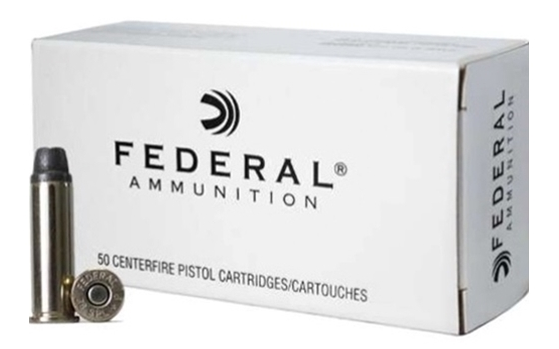
Federal Gold Medal Match 148gr HBWC represents Federal's premium target line. The hollow-base bullets are precisely manufactured, and the powder charge is carefully metered. Velocity consistency is excellent, typically showing single-digit standard deviations in good conditions. The price reflects the quality, expect to pay 30-40% more than standard target loads.
Fiocchi 148gr WC provides solid performance at a budget-friendly price. The bullets aren't quite as precisely formed as premium options, but they're consistent enough for practice and local matches. Velocity runs around 720 fps with acceptable spreads. The brass is serviceable for reloading, though primer pockets can be slightly tight.
Hollow base vs solid base wadcutters
The hollow-base versus solid-base debate splits bullseye shooters into camps. Hollow-base proponents argue that the skirt expands under pressure to better seal the bore, reducing gas cutting and improving consistency. The theory makes sense, and some guns definitely prefer hollow-base bullets.
Solid-base advocates point out that the simpler design eliminates one variable that can affect accuracy. There's no skirt to deform inconsistently, and the bearing surface remains constant from shot to shot. Most handloaders prefer solid-base bullets for this reason.
In my testing, the difference usually comes down to the individual gun. I've seen revolvers that shot hollow-base bullets into half-inch groups at 25 yards while struggling to keep solid-base loads under an inch. Other guns showed the opposite preference. The only way to know is testing both types in your specific revolver.
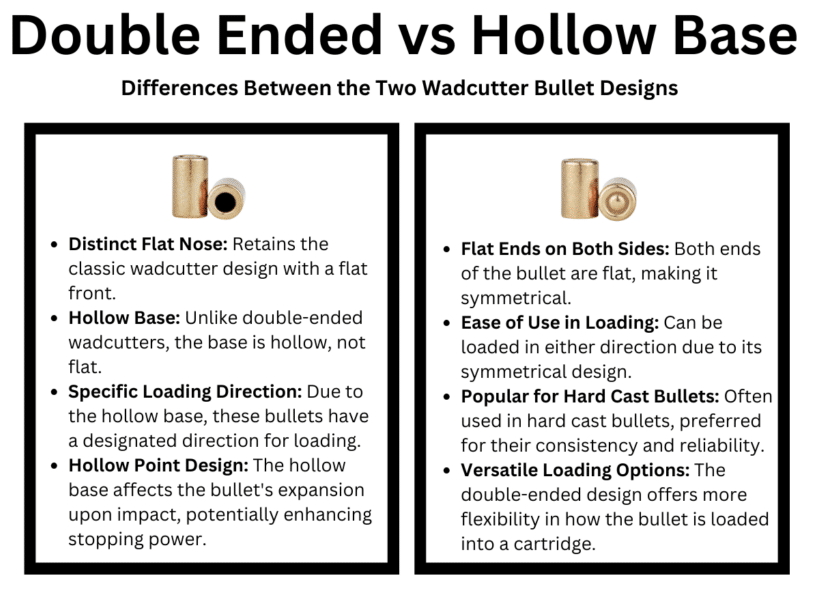
One practical consideration: hollow-base bullets are more fragile and can deform if handled roughly. They're also more sensitive to crimp pressure during reloading. Solid-base bullets are more forgiving in both storage and loading.
Velocity sweet spots and pressure signs
Most .38 Special wadcutter loads work best in the 700-750 fps range, but individual guns can have preferences within that window. I've found that revolvers with longer barrels (6 inches or more) often prefer loads on the faster end of the spectrum, while shorter barrels may shoot better with slightly reduced charges.
The traditional 2.7-grain Bullseye load produces around 710 fps and has proven accurate in thousands of different revolvers over decades. Factory loads that approximate this velocity tend to shoot well across a wide range of guns. Loads that deviate significantly, either faster or slower, become more gun-specific in their accuracy.
Pressure signs in .38 Special are subtle compared to magnum cartridges. Look for difficult extraction, flattened primers, or brass that shows ejector marks. More importantly for accuracy, watch for velocity spreads that suddenly increase or groups that open up; these can indicate pressure inconsistencies before you see obvious physical signs.
Common wadcutter problems and solutions
Leading in the barrel happens when bullet alloy is too soft for the velocity, or when the bullet doesn't properly seal the bore. Hollow-base bullets can help, but the real solution is usually finding a load with the right velocity for your barrel. Most leading occurs with loads pushed too fast for the bullet hardness.
Inconsistent ignition shows up as wide velocity spreads and flyers. .38 Special cases have large internal volume relative to the powder charge, which can cause position-sensitive ignition if the powder isn't consistent. Factory loads use powders designed to minimize this issue, but it's more common with very light target loads.
Point of impact changes between different wadcutter loads are normal and expected. The 6 o'clock hold used in bullseye shooting assumes a specific velocity and bullet weight. Faster loads will hit higher, slower loads lower. Adjust your sights or hold accordingly rather than trying to find a load that hits exactly to your current zero.
Tumbling bullets at longer ranges can occur with wadcutters, particularly in barrels with slow twist rates. The short, flat-nosed bullet has marginal stability compared to pointed bullets. This rarely affects accuracy at standard bullseye distances (25 and 50 yards) but can become an issue at 100 yards or beyond.
Inconsistent groups that vary from session to session often indicate temperature-sensitive powder or inconsistent bullet seating. Factory loads with ball powders tend to be more temperature stable than those using flake powders. Storage temperature can also affect performance; ammunition stored in hot cars or cold garages may show different behavior than rounds kept at room temperature.
Handloading considerations for competitive shooters
Most serious bullseye competitors eventually start handloading their wadcutter ammunition. The level of consistency available with carefully prepared handloads exceeds what's practical with factory ammunition, and the cost savings add up quickly when you're shooting thousands of rounds per year.
The classic recipe remains 2.7 grains of Bullseye powder behind a 148-grain wadcutter, but modern powders offer some advantages. Titegroup provides similar performance with less temperature sensitivity. N310 burns extremely clean and shows excellent consistency, though it's more expensive and harder to find.
Bullet selection matters more in handloads than factory ammunition. Swaged bullets like those from Hornady or Speer tend to be more consistent than cast bullets, but premium cast bullets from companies like Missouri Bullet Company can match swaged performance at lower cost. The key is finding bullets that are consistently sized and lubricated.
Case preparation becomes critical for maximum accuracy. Uniform case length, consistent primer seating depth, and proper case mouth flare all affect accuracy. Many competitive shooters sort their brass by manufacturer and retire cases after a certain number of loadings to maintain consistency.
Choosing the right load for your gun
Start with Remington Performance WheelGun if you want proven factory performance that works in most revolvers. The combination of consistent velocity, clean burning powder, and quality bullets makes it a safe choice for competition use. It's also readily available and reasonably priced for factory match ammunition.
If your gun prefers hollow-base bullets, try Winchester Super Match or Federal Gold Medal Match. Both offer excellent quality control and consistent performance, though at a premium price. The Federal load is particularly good if you need maximum consistency for important matches.
For practice and training, Sellier & Bellot provides good accuracy at a lower cost. The slightly reduced velocity may require sight adjustment, but the quality is sufficient for skill development and local competitions. Save the premium loads for matches where every point counts.
Test multiple loads in your specific revolver before committing to large quantities. Buy a box of each candidate load and shoot them from a rest at your typical competition distance. The gun will tell you which load it prefers, and that preference may not match what works in other revolvers.
Consider your shooting environment when selecting loads. If you compete primarily in temperature-controlled indoor ranges, powder temperature sensitivity matters less than if you shoot outdoor matches with varying weather conditions. Similarly, if you shoot multiple revolvers, choose loads that work reasonably well across all your guns rather than optimizing for just one.
The best wadcutter load is the one that puts your shots where you're aiming, consistently, in the conditions where you compete. Everything else is just details.