You've got a lower sitting on the bench and a decision to make. Two-stage trigger, definitely. But which one? The LaRue MBT-2S and the Geissele SSA-E are the two triggers that come up in every forum thread, every group chat, every "what trigger should I buy" conversation. They're both two-stage, both machined from S7 tool steel, both designed to replace mil-spec fire control groups in AR-15 and AR-10 lowers. And yet one costs roughly half what the other does.
May contain affiliate links.

The question isn't really whether either trigger is good. They're both excellent. The question is whether the SSA-E's lighter pull, sharper break, and Geissele pedigree justify the price gap over the MBT-2S. That's the actual decision, and it's not as simple as "buy the cheap one" or "buy the expensive one." The answer depends on what you're building, what you're doing with it, and how much the difference in break character actually matters to your shooting.
This is a deep comparison of two specific triggers. Not a survey of the trigger market, not a buyer's guide to every option out there. Just these two, head to head, across every dimension that matters.
What you're actually choosing between
Both of these triggers solve the same fundamental problem: the mil-spec AR trigger is mushy, heavy, and inconsistent. It was designed to be cheap to manufacture and resistant to negligent discharges, not to help you shoot well. Swapping it out is one of the single biggest improvements you can make to an AR-15, right up there with optics.
The LaRue MBT-2S and Geissele SSA-E are both open-style (non-drop-in) two-stage component triggers. That means they install the same way a mil-spec trigger does, using the same pins, springs, and hammer arrangement. No cassette, no housing, no special tools beyond a punch set. Both use small (.154") pins and fit standard mil-spec lower receivers.
May contain affiliate links.

Where they diverge is in pull weight, break character, trigger bow options, and price. The MBT-2S is built as a duty-weight trigger with a clean break and fast reset. The SSA-E is built as a lighter, crisper precision trigger that still works for duty applications. The MBT-2S carries an MSRP of $139.99 from LaRue and is commonly found around $135. The SSA-E runs $219 to $250. That's a meaningful spread, especially if you're building multiple rifles.

The constraint most people face isn't whether they can afford either trigger. It's whether the SSA-E gives them something they'll actually feel and benefit from during real shooting, or whether the MBT-2S gets them 90% of the way there for roughly half the money. That "90% of Geissele performance" line shows up constantly in reviews and forum posts, and it's not wrong. But the remaining 10% matters more to some shooters than others.
Specs compared
Here's the raw data, side by side. These numbers come from manufacturer specs and independent testing.
A few things jump out. The SSA-E's total pull weight is significantly lighter, sitting around 3.5 lb compared to the MBT-2S's 4.5 lb. That difference is almost entirely in the second stage. The MBT-2S breaks at 2.0 lb on the second stage. The SSA-E breaks at under 1.3 lb. That's a big deal for precision work, and it's the single largest functional difference between these two triggers.

The MBT-2S ships with two springs. The standard spring gives you 4.5 lb total, and the included heavy spring bumps it to 6.0 lb for a more duty-appropriate pull. The SSA-E doesn't ship with an alternate spring option. You get what you get, which is a lighter, more precision-oriented pull.
Both triggers are machined from S7 tool steel, which is the same material used in industrial impact tools. It's extremely tough and resistant to deformation under repeated strikes, which is exactly what a hammer does thousands of times over the life of a trigger. The material parity here is notable because S7 is typically associated with premium triggers. Getting it at the MBT-2S's price point is part of what makes that trigger such a compelling value.
One more detail: the MBT-2S comes in both curved and straight (flat) bow options at the same price. The SSA-E is curved only. If you prefer a flat trigger face for consistent finger placement and a more predictable press, the MBT-2S gives you that option without paying extra. The SSA-E X (the newer Lightning Bow variant) does come in a flat configuration, but it's a different SKU at a higher price point, around $335.

Break character and feel
This is where the conversation gets interesting, because specs only tell part of the story. Two triggers can have identical pull weights and feel completely different. Break character is the quality of the transition from "wall" to "bang," and it's the thing that separates a good trigger from a great one.
The LaRue MBT-2S has what's consistently described as a "glass-like" break. The first stage is smooth and predictable, with a clear wall at the end. The second stage breaks cleanly with very little overtravel. Reset is positive and fast. It's not dramatic or snappy. It's just clean. The wall is distinct, the break is crisp, and the reset lets you know exactly when you're back on the sear. Multiple independent reviews note that the overtravel is incredibly small, which helps with shot-to-shot consistency.
The Geissele SSA-E has what Geissele describes as an "icicle" break. That's their term for a sharp, crisp second-stage break that feels almost like snapping a thin piece of ice. The first stage is lighter than the MBT-2S's, with a smooth roll into a well-defined wall. The second stage is remarkably light, under 1.3 lb in most examples, and the break is distinctly sharper than the MBT-2S's. Reset is positive and distinct, and multiple reviews note that the SSA-E's reset has a slightly more pronounced tactile click compared to the MBT-2S.
The practical difference shows up most during slow, precision fire. When you're pressing through a light second stage and trying to break a shot without disturbing the sight picture, that sub-1.3 lb second stage on the SSA-E makes a real difference. There's less force required to break the shot, which means less opportunity for your trigger finger to push or pull the rifle off target. For rapid fire or close-range work, the difference narrows considerably. Both triggers reset fast enough for quick splits, and both have enough tactile feedback to confirm reset without looking.

Range notes
The difference between these two triggers is most apparent during slow fire at distance. The SSA-E's lighter second stage allows for a more refined press when you're trying to break a shot cleanly on a small target. The MBT-2S's 2.0 lb second stage isn't heavy by any standard, but it requires noticeably more deliberate pressure to break. For offhand shooting, barricade work, or anything where you're managing recoil and getting back on target quickly, the gap between them shrinks. Both triggers provide a clean enough break and fast enough reset that split times won't be meaningfully different for most shooters. Where the SSA-E pulls ahead is in the quality of the break itself, that razor-thin transition from wall to fire that precision shooters obsess over. The MBT-2S is clean. The SSA-E is sharp. Whether that distinction matters to you depends entirely on what you're doing with the rifle.
Use cases
Duty and home defense
The MBT-2S was built for this role. A 4.5 lb total pull is heavy enough to provide a margin of safety under stress but light enough to shoot well. The included heavy spring option pushes it to 6.0 lb, which matches what many law enforcement agencies spec for patrol rifles. The break is clean, the reset is positive, and the trigger doesn't require a delicate touch to shoot accurately. It's a workhorse.
The SSA-E can absolutely work in a duty role, but its lighter pull weight makes some shooters hesitant. A 2.9–3.8 lb total pull with a sub-1.3 lb second stage means there's less margin before the shot breaks. Under stress, with adrenaline and gloves and cold fingers, a lighter trigger demands more discipline. The Geissele SSF (Super Select-Fire) is the trigger that actually carries the Naval Surface Warfare Center Crane Safety Certification and was approved for Special Operations use. The SSA was introduced as a civilian-friendly form of the SSF's semi-automatic trigger, offering the same quality minus the full-auto capability. The SSA runs at 4.25–4.75 lb total, closer to the MBT-2S's weight class. The SSA-E is the enhanced, lighter version, and it's positioned more toward precision than pure duty use.
If the rifle lives next to the bed or rides in a patrol car, the MBT-2S with the standard spring is the more practical choice. If you want even more margin, swap in the heavy spring and you've got a 6.0 lb duty trigger that still breaks cleaner than any mil-spec unit ever made.

Precision and DMR builds
This is the SSA-E's home turf. A designated marksman rifle or a precision recce build benefits directly from a lighter, crisper trigger. When you're trying to print sub-MOA groups or make first-round hits at 400+ yards, the quality of the trigger press matters enormously. The SSA-E's light second stage and sharp break allow for a more controlled press with less disturbance to the rifle. It's the better trigger for this application, full stop.
The MBT-2S can work in a precision build, and plenty of shooters run them successfully in that role. The 4.5 lb pull isn't a dealbreaker for accuracy. But the SSA-E gives you a measurable advantage in break quality that translates to tighter groups, particularly for shooters who have already refined their fundamentals.
Competition
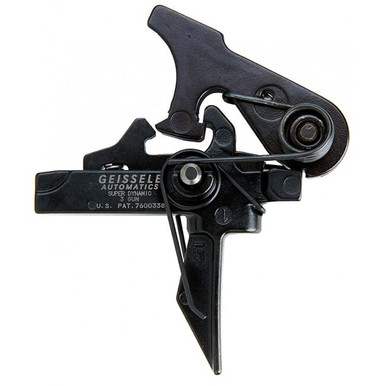
Three-gun and other action shooting sports reward speed and precision in roughly equal measure. The SSA-E's lighter pull can help with fast, accurate shooting on small targets. The MBT-2S's slightly heavier pull provides a bit more control during rapid transitions. Neither trigger is purpose-built for competition the way something like the Geissele SD-3G or a TriggerTech Diamond is, but both work well in that context.
Geissele SD-3G Deals
Prices may change. May contain affiliate links.
TriggerTech Diamond Deals
Prices may change. May contain affiliate links.

The flat bow option on the MBT-2S is worth mentioning here. A flat trigger face promotes consistent finger placement, which can help with shot-to-shot repeatability during fast strings of fire. If you want a flat trigger and don't want to step up to the SSA-E X at $303, the MBT-2S straight bow is the move.
General purpose and range use
Most AR-15s don't have a single defined mission. They go to the range, they sit in the safe, they occasionally get used for a carbine class or a coyote hunt. For a general-purpose rifle that does a little bit of everything, either trigger is an excellent choice. The decision comes down to budget and personal preference for pull weight.
Logistics and ownership
Price and availability
The MBT-2S is listed at $139.99 on LaRue's website, though some third-party sources reference prices of $115 and $134.99, and street prices can vary by retailer. It's available from LaRue directly, as well as from retailers like Palmetto State Armory, OpticsPlanet, and MidwayUSA. One persistent issue with the MBT-2S is availability. LaRue's direct sales have historically involved slow shipping, and the trigger goes in and out of stock at third-party retailers. Demand consistently outpaces supply, which is both a testament to the product and a frustration for buyers. If you see one in stock, buy it. Don't wait for a sale that may or may not happen.

Real Avid Accu-Punch Hammer and Roll Pin Punch Set Deals
Prices may change. May contain affiliate links.
The SSA-E has an MSRP of $249, with street prices around $245 to $250 depending on the retailer. It's widely available from Primary Arms, Brownells, OpticsPlanet, Sportsman's Outdoor Superstore, and many others. Availability is generally not an issue. Geissele has a larger production operation and broader distribution network. Black Friday and holiday sales from Geissele have historically brought the SSA-E down to more competitive price points, so patient buyers can sometimes close the gap.
The price difference between these two triggers is roughly $100 to $135. On a single build, that's meaningful but not catastrophic. If you're building three or four rifles, the math gets more compelling for the MBT-2S. Four MBT-2S triggers cost roughly the same as two SSA-E triggers.

Installation
Both triggers install the same way. Remove the old trigger and hammer pins, pull the old fire control group, drop in the new one, and drive the pins back in. A punch set and maybe a slave pin are all you need. It's one of the easiest modifications you can make to an AR-15, and there are hundreds of tutorials available. Fifteen minutes is a reasonable estimate for someone who's done it before. Maybe thirty for a first-timer who's being careful.
Neither trigger requires anti-walk pins, though some shooters install them anyway. The hammer and trigger springs on both units are designed to retain the pins through spring tension. The MBT-2S uses a J-spring on the hammer to retain the hammer pin, and the hammer spring legs help keep the trigger pin in place.
Barrel life and maintenance
Triggers don't wear out barrels, but they do experience wear themselves over thousands of rounds. S7 tool steel is extremely durable, and both triggers are built to last well beyond the useful life of most barrels. Maintenance is minimal. Occasional cleaning with compressed air to remove unburned powder and debris from the fire control group, followed by a couple drops of oil at the contact points, is all that's needed. This doesn't need to happen every range trip, but every thousand rounds or so is reasonable practice.
Reloading and ammo considerations
This doesn't apply in the traditional sense since we're talking about triggers rather than cartridges. But pull weight does interact with primer sensitivity. Lighter hammer springs (which produce lighter pull weights) can occasionally cause light primer strikes with hard-primered ammunition, particularly mil-spec primers. The MBT-2S with its standard spring has a robust hammer strike that handles all primer types without issue. The heavy spring option makes this even less of a concern. The SSA-E, despite its lighter pull, uses a full-power hammer spring. The lighter pull weight comes from the sear geometry, not from a reduced hammer spring. Light primer strikes are not a commonly reported issue with the SSA-E.
Common mistakes
A few things trip people up with both of these triggers.
Buying based on specs alone without understanding break character. The MBT-2S and SSA-E have different pull weights, yes, but the feel of the break is the bigger differentiator. A 4.5 lb trigger with a glass-clean break can feel lighter than a 3.5 lb trigger with a gritty one. Both of these triggers break cleanly, but they do it differently. If you have the chance to try both before buying, do it.
Ignoring the heavy spring that comes with the MBT-2S. A lot of people install the MBT-2S with the standard spring and never try the heavy spring. If you're running the rifle for home defense or duty, the 6.0 lb option is worth testing. It adds a meaningful safety margin under stress while still breaking far cleaner than a mil-spec trigger. You already own the spring. Try it.

Assuming the SSA-E is "too light" for duty use. A 3.5 lb trigger isn't inherently unsafe. It requires more discipline, but it's not a liability in trained hands. The concern is legitimate for shooters who haven't invested in trigger control fundamentals, but dismissing the SSA-E for anything other than benchrest shooting is overly conservative.
Waiting for the MBT-2S to go on sale and missing the window. LaRue has historically run aggressive Black Friday pricing, but the trigger sells out fast and restocks can be unpredictable. If you need a trigger now, buy it at the current price. The savings from waiting for a sale aren't worth the months of shooting with a mil-spec trigger.
Overthinking flat vs. curved bow. Both work. Flat bows promote consistent finger placement. Curved bows feel more natural to most people. The MBT-2S lets you choose without a price penalty. Pick whichever feels better when you dry fire it. If you've never used a flat trigger, the curved bow is the safer bet for your first upgraded trigger.
Product comparison
Three triggers worth considering in this space, with the context of how they relate to the MBT-2S and SSA-E decision.
LaRue MBT-2S
The value benchmark. S7 tool steel, 4.5 lb total pull with a 2.5/2.0 lb first/second stage split, glass-like break, fast reset, and an included heavy spring for 6.0 lb duty pull. Available in curved or straight bow. Street price around $115–$135. The trigger that 90% of AR-15 owners should probably buy. Its only real downsides are occasional availability issues and a reset that, while positive, isn't quite as tactile as Geissele's.

LaRue MBT-2S Deals
Prices may change. May contain affiliate links.
Geissele SSA-E
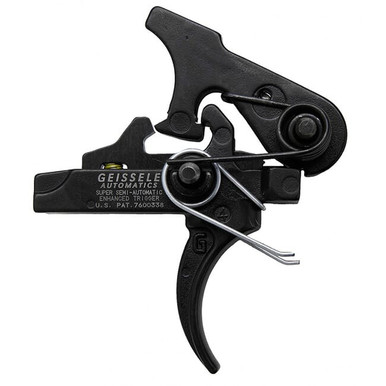
The precision standard. S7 tool steel, 2.9–3.8 lb total pull with a 2.0–2.5/0.9–1.3 lb first/second stage split, sharp "icicle" break, and a distinctly tactile reset. Curved bow only. Street price $219–$250. The better trigger for precision builds, DMR setups, and shooters who want the lightest, crispest two-stage break available. The price premium over the MBT-2S is the main drawback, and the performance gap, while real, is narrower than the price gap suggests.
Geissele SSA-E Deals
Prices may change. May contain affiliate links.
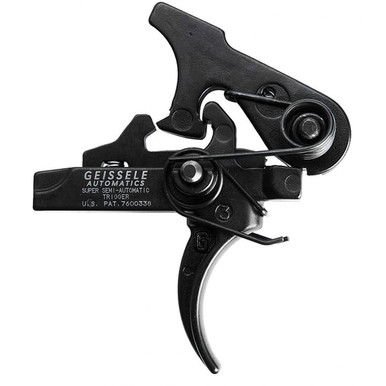
Geissele SSA-E X with Lightning Bow
The newest variant. Same core SSA-E action with the Lightning Bow trigger shape, which is Geissele's flat-face design. Measured average pull weight around 3.34 lb with 0.100" of travel. This is the trigger to look at if you want SSA-E performance with a flat bow. Street price around $303, which puts it firmly in the premium tier. The Lightning Bow shape has earned strong praise for feel and control. If budget isn't the primary constraint and you want a flat-face SSA-E, this is the one.
Geissele SSA (standard)
Worth mentioning because it's the duty-focused sibling of the SSA-E. Total pull around 4.0–4.75 lb with a "carrot" break character (tactile rather than sharp). Crane certified and used by SOCOM units. Street price around $228.99–$250. If you want Geissele's build quality and reputation but at a duty-appropriate pull weight, the SSA splits the difference between the MBT-2S's weight and the SSA-E's pedigree. The break isn't as crisp as either the MBT-2S or the SSA-E, though. It's designed for pronounced tactile feedback under stress rather than precision refinement.
Which to choose
If you're building a duty rifle, home defense gun, or general-purpose AR and you want the best value, buy the LaRue MBT-2S. The performance-to-price ratio is unmatched. You get S7 tool steel, a clean break, a fast reset, your choice of bow shape, and a heavy spring option for duty use. The trigger punches well above its price class and competes directly with triggers costing twice as much. The performance gap between the MBT-2S and the SSA-E is real but narrow, and for most shooting applications, you won't notice it. If you're building a precision rifle, a DMR, or a competition gun where trigger quality directly affects your scores or group sizes, buy the Geissele SSA-E. The lighter pull weight and sharper break are genuine advantages for precision work. The sub-1.3 lb second stage allows for a level of trigger control that the MBT-2S can't quite match. The price premium is justified if precision is your primary objective.
If you're building multiple rifles, buy MBT-2S triggers for most of them and put an SSA-E in the one rifle that demands it. This is the approach that makes the most financial and practical sense for most shooters. Your carbine, your truck gun, your loaner rifle, they all get MBT-2S triggers and shoot beautifully. Your precision build gets the SSA-E and shoots just a little bit better where it counts.
If you want a flat-face trigger and don't want to spend $303 on the SSA-E X, the MBT-2S straight bow is the obvious choice. Same internals, same performance, same price as the curved version. No other trigger in this price range gives you that option.
If availability is a concern and you need a trigger now, the SSA-E is easier to find in stock. The MBT-2S's popularity creates supply constraints that can be frustrating. Check Palmetto State Armory, OpticsPlanet, and MidwayUSA before going direct to LaRue, as third-party retailers sometimes have stock when LaRue's own site doesn't.
Final call
The LaRue MBT-2S is the trigger most people should buy. It's not a compromise. It's a genuinely excellent two-stage trigger that happens to cost less than its closest competitor. The SSA-E is the better trigger in absolute terms, with a lighter, sharper break and a more refined feel. But "better" and "worth the price difference" aren't the same thing. For duty use, general shooting, and most practical applications, the MBT-2S delivers everything you need. For precision work where trigger quality is a limiting factor in your accuracy, the SSA-E earns its premium. Know what you're building, know what you're doing with it, and buy accordingly. Either way, you're getting a trigger that's miles ahead of mil-spec and built to last longer than you'll own the rifle.