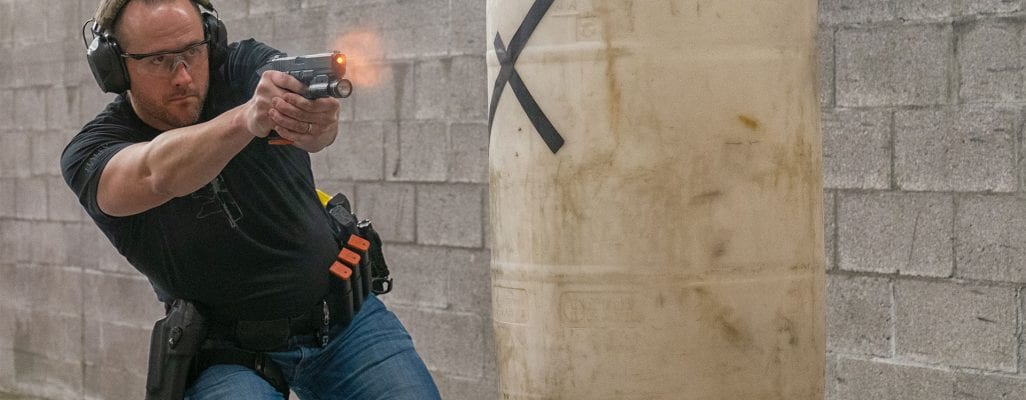
You're running drills at the range, and you think your draw is getting faster. Maybe it is. Maybe it isn't. Without a timer, you're guessing, and guessing doesn't show up on a classifier. A dedicated shot timer turns every range session into data you can actually use: draw time, splits, transitions, par time performance. It's the single cheapest piece of gear that will move your scores.

The problem is the market splits hard between budget junk and $300+ flagship timers. If you're a USPSA shooter who wants reliable splits, a loud buzzer you can hear through doubled-up ear pro, and par time functionality without spending flagship money, the sweet spot sits right around $125 to $150. That's where the timers in this guide live. Every pick here has a track record on match days and practice bays, and every one of them can be had for $150 or less at current dealer pricing.
This guide is aimed at the shooter who's already running classifiers, practicing draws and transitions with intent, and needs a timer that won't let them down on a hot range with five other shooters banging away. If you've been borrowing a buddy's timer or fumbling with a phone app, it's time to get your own.
Quick picks
PACT Club Timer III Best overall value
Competition Electronics ProTimer BT Best for data tracking and Bluetooth
Special Pie M1A2+ Best for Bluetooth match scoring on a budget
Competition Electronics ProTimer Best standalone match timer
CED7000 Gen-2 Best compact option for match officials
Competition Electronics Pocket Pro Best simple entry point
At a glance
How we chose
The title says "under $150," so every timer here had to be available from a stocking US dealer at or below that threshold based on actual retail pricing found across multiple sources. That immediately cuts the field. The Shooters Global SG Timer 2, for example, runs $329.99–$349.99 depending on the retailer, putting it well outside our budget.
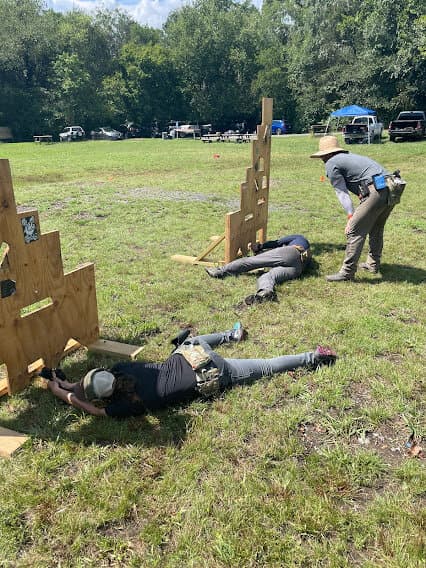
Beyond price, we filtered on the things that actually matter for USPSA practice. First, reliability. A timer that misses shots or double-counts on a busy range is worse than no timer at all. Every pick here has years of documented use in competition environments. Second, buzzer volume. If you can't hear the start signal through electronic muffs with foam plugs underneath, the timer is useless for realistic practice. Third, the features that USPSA shooters specifically need: par time mode for drills, split time review for tracking transitions and Bill Drills, and enough memory to review a string after you shoot it without losing data.

We also looked at manufacturer support and serviceability. Competition Electronics has been building timers in Rockford, Illinois since 1982 and backs their products with a 2-year warranty. PACT has been in the game just as long. The CED7000 has over 15 years of production history. These aren't fly-by-night operations.
What we didn't weight heavily: app connectivity, video overlay, and smart features. Those are nice. They're also what pushes timers past the $150 mark. If your budget allows, the SG Timer GO at $164 is the obvious next step up. But this guide is about what you can get right now, under the cap, that will genuinely serve your USPSA training.
The picks
PACT Club Timer III
Best for: overall value and no-nonsense reliability
The PACT Club Timer III is the timer you see clipped to belts at local matches across the country, and there's a reason for that. It does exactly what a USPSA practice timer needs to do, it does it reliably, and it doesn't ask you to fiddle with menus or pair a phone to get there.

The controls are dead simple. You get a big GO button, a review button, and scrolling arrows. Shot number and total time display by default, along with first shot time and last split, with no button pushing required. Hit the review button and you can scroll through each shot's total time and split. The buzzer is loud. Multiple sources and user reviews confirm it cuts through doubled-up ear protection, which is non-negotiable for realistic draw practice. The ergonomic shape with rounded edges fits comfortably in the hand, and the control buttons are recessed so you won't accidentally trigger them while moving. It runs on a standard 9V battery, which means you can swap one in from any gas station if it dies at a match.
Par time mode works exactly as you'd expect: set your par, get a random delay on the start signal, and the timer beeps again at your par time. That's the backbone of most structured USPSA practice. Draw to first shot on par. Bill Drill on par. Reload on par. The PACT handles all of it without making you navigate sub-menus.
Where the PACT falls short is in modern features. There's no Bluetooth, no app, no shot string memory beyond basic review. The sensitivity adjustment exists but isn't the easiest to access. And the form factor is the largest of the timers in this group. But for pure function at the lowest price point among reliable dedicated timers, it's hard to beat. Dealer pricing from multiple sources puts it between $129.95 and $130.
Pros:
Extremely loud buzzer, audible through double ear protection
Simple one-button operation for starting and reviewing strings
Ergonomic, rounded design that fits well in hand
Recessed controls prevent accidental activation
Proven reliability across decades of competition use
Lowest price among reliable dedicated shot timers
Cons:

No Bluetooth or app connectivity
Sensitivity adjustment is not easy to access
Largest physical size among the picks in this guide
No hit factor scoring on the timer
9V battery means no recharging
Competition Electronics ProTimer BT
Best for: Bluetooth data tracking and USPSA match integration
The ProTimer BT is the most feature-rich timer you can get under $150, though you'll need to shop around since the manufacturer's listed price is $167.95 while actual dealer pricing from Ben Stoeger Pro Shop shows $149.95. It takes everything Competition Electronics learned from the Pocket Pro II and rebuilds it around one idea: the data should still be there when you get home.
Fifty time-stamped strings stored in memory, with on-screen review in chronological order with date and time stamps. That alone sets it apart from the PACT and the basic Pocket Pro. But the real differentiator is built-in hit factor scoring. After a string, navigate to the scoring screen, enter your points down, and the timer calculates your hit factor right on the display. For a USPSA shooter, that's immediate, actionable feedback without pulling out a phone or doing math in your head between strings.
The Bluetooth connectivity pairs with PractiScore 2, which means your practice data can flow directly into the same ecosystem you use on match day. Five par time alerts give you flexibility for complex drills with multiple position changes or reload points. The start signal includes both the beeper and an 850mcd bright white LED, which is useful for practicing visual starts. It runs on a 9V battery with over 20 hours of life per battery.
The tradeoff is price positioning. At $149.95 from the right dealer, it squeaks in under the $150 cap, but just barely. The manufacturer's own site lists it higher. It's also a Competition Electronics product, which means it's built in the USA with a 2-year warranty and access to real people who build timers when you call their support line.
Pros
50 time-stamped strings with chronological review
Built-in hit factor scoring on the timer display
Bluetooth connectivity with PractiScore 2 integration
5 programmable par time alerts for complex drills
LED start signal for visual start practice
Made in USA with 2-year warranty
20+ hours battery life per 9V
Cons
Manufacturer list price of $167.95 exceeds $150; requires shopping for dealer pricing
Bluetooth pairing adds a layer of complexity some shooters won't use
Still runs on 9V rather than rechargeable

Special Pie M1A2+
Best for: Bluetooth match scoring on a budget
The Special Pie M1A2+ is the timer you'll see on the belts of ROs at big IPSC matches: it's an official IROA partner product and is used at IPSC Level IV and V events. The reason it belongs in a sub-$150 roundup is that it brings Bluetooth pairing with PractiScore, which the Competition Electronics ProTimer BT also does, at a street price that usually lands between $130 and $150. It's built more like a stopwatch than a traditional timer, with a belt clip, an IP4-rated housing that tolerates rain, and an illuminated button layout that walks you through the next step. The sound sensor covers everything from .22 up to 12.7mm, and the echo-filtering mode keeps it from double-counting on enclosed indoor ranges. Start delay can be instant, random (2 to 4 seconds), fixed, or custom, and par mode runs 1 to 10 drills at 1 to 120 seconds. Memory holds 20 strings of up to 99 shots. It charges over USB and runs about 72 hours on a charge with Bluetooth off, less with it on. There are two Bluetooth versions, the M1A2-F and the M1A2-FW; both pair with PractiScore, and the FW model also links to Special Pie's wireless LED display board for stage scoring. The multilingual menu (English, Spanish, French, German and others) is a plus at international matches and a non-issue for everyone else.

Pros: IROA partner timer, PractiScore Bluetooth, echo filtering, true silent mode, rechargeable, cheapest Bluetooth timer here.
Cons: Pricing moves around the $150 line depending on the seller, Chinese brand with less US dealer support than CE or PACT, and the stopwatch form factor takes getting used to.
Competition Electronics ProTimer
Best for: standalone match timer with hit factor scoring, no Bluetooth needed
If you want the ProTimer BT's on-timer brains but don't care about Bluetooth, the standard ProTimer saves you money while keeping the features that matter most for solo USPSA practice. Dealer pricing from Ben Stoeger Pro Shop sits at $134.95, with Amazon showing $137.48.
You still get 50-string memory with on-screen review, date and time stamps, and the same built-in hit factor scoring. You still get up to 5 par time settings. The difference is simply no Bluetooth. For the shooter who doesn't need data syncing to a phone and just wants to review strings on the timer itself between drills, that's a perfectly reasonable tradeoff that keeps more money in the ammo budget.
The ProTimer shares the same build quality and 2-year warranty as its Bluetooth sibling. The bright blue backlit LCD is positioned for easy viewing from your belt. Competition Electronics has been refining this platform for over 40 years, and the current ProTimer reflects that accumulated knowledge. It's a mature product that does what it says.

Pros
50-string memory with hit factor scoring on the display
5 par time settings for multi-interval drills
Bright blue backlit LCD, readable from belt position
Made in USA with 2-year warranty
Lower price than the BT version while retaining core features
Cons
No Bluetooth or app connectivity
Battery type not published in available sources
Slightly less community buzz compared to the PACT and CED7000
CED7000 Gen-2
Best for: compact size and match official use
The CED7000 has been the range officer's timer at USPSA and IPSC matches worldwide for over 15 years. The Gen-2 update addresses the original's biggest complaints: rubber buttons replace the old plastic ones for better tactile feel and durability, battery life is up 30% over the original, the screen protector is now Gorilla Glass, and the charging port moves to USB-C. It's rechargeable, which means no hunting for 9V batteries.

The form factor is the standout. At 80 grams (approximately 2.82 ounces) and roughly the size of a cell phone, it's dramatically smaller and lighter than the PACT or either Competition Electronics timer. You can clip it on your belt and genuinely forget it's there. The illuminated LCD display is easy to read despite the compact size.
For USPSA practice, the CED7000 Gen-2 stores 10 strings with up to 99 shots per string. It has fixed, random, and instant delay options. Custom par time settings support single or multiple par times with variable delay intervals down to one-hundredth of a second. It also includes Spy Mode, which lets you track other shooters' times silently. Comstock, Virginia, and Fixed Time modes are built in, which matters if you're practicing stage formats or working as an RO.
The downside is echo filtering on crowded ranges. Testing reported by multiple sources shows the CED7000 struggles more than the PACT in busy indoor environments, achieving around 82% correct shot isolation with five active shooters compared to 85% for the PACT with four other active shooters. The display is also smaller than some competitors. And there's no Bluetooth on the standard unit. Dealer pricing from sources ranges from $130 to $145, with the Gen-2 available from Double-Alpha Academy at $139.95.
Pros:
Extremely compact and lightweight at 2.7 ounces
Rechargeable via USB-C, no disposable batteries
Gorilla Glass screen protector on Gen-2
Comstock, Virginia, and Fixed Time modes built in
Spy Mode for silently tracking other shooters
10 strings with 99 shots per string memory
Worldwide standard for USPSA/IPSC range officers
Cons:

Echo filtering weaker than PACT on crowded ranges (82% vs 85% shot isolation reported)
Display smaller than competing timers
No Bluetooth on standard unit
Some users report quality control inconsistencies
Competition Electronics Pocket Pro
Best for: simple, proven entry point
The Pocket Pro is the stripped-down entry into dedicated shot timers from Competition Electronics. It reviews up to 50 shots forward or reverse with split times, has a par time beep, and offers switch-selectable instant or random delayed start. That's about it. And for a lot of shooters, that's enough.
The display uses half-inch tall numbers reading up to 199.99 seconds. Adjustable shot sensitivity helps tune out adjacent bay noise. A large clothespin-style belt clip fits over a shooting belt. The separate shot sensor and buzzer mean the unit's design keeps the microphone away from the speaker, reducing false triggers. It runs on a 9V battery and powers down automatically after 10 minutes of inactivity.
Dealer pricing from Ben Stoeger Pro Shop shows $125.99, with Amazon around $135.89. It's made in the USA and backed by Competition Electronics' two-year warranty, which is a solid warranty commitment for a timer in this price range.

The Pocket Pro doesn't store strings with timestamps, doesn't calculate hit factor, and doesn't connect to anything. Multiple users note the menu navigation has a learning curve compared to the PACT's more intuitive controls. But if you want an American-made timer with a lifetime repair guarantee at the lowest Competition Electronics price point, the Pocket Pro delivers the basics reliably.
Pros
Lifetime repair guarantee from Competition Electronics
50-shot review with split times, forward and reverse
Separate shot sensor and buzzer reduces false triggers
Half-inch display numerals, easy to read
Made in USA
Adjustable sensitivity
Cons
No string memory, hit factor, or date/time stamping
Menu navigation has a steeper learning curve than competitors
No Bluetooth or app connectivity
Some users find the boxy shape less comfortable than the PACT
How to choose
Start with what you'll actually use. If you want to clip a timer to your belt, press GO, and review splits with zero fuss, the PACT Club Timer III is the pick. It's the cheapest reliable dedicated timer worth owning, and simplicity is a feature when you're trying to focus on your shooting, not your gear.
If you're serious about tracking progress over time and you practice USPSA stage formats, the hit factor scoring on the Competition Electronics ProTimer or ProTimer BT changes how you train. Being able to enter points down and see your hit factor on the timer between strings means you're practicing the way you compete. The Bluetooth version adds PractiScore integration if you want digital logs, but the standard ProTimer gives you the same on-timer experience for less.
Compact size matters more than most people think. If you're running and gunning through practice stages, a heavy timer bouncing on your belt is a distraction. The CED7000 Gen-2 at 2.7 ounces disappears on your belt, and the USB-C rechargeable battery means one less thing to keep stocked. It's also the right choice if you pull RO duty at local matches, since the Comstock/Virginia/Fixed Time modes are built for that job.
Don't overthink the Bluetooth question. Most of your training improvement comes from reviewing splits immediately after a string and running the drill again. If you're the type who will actually sync data to PractiScore and review trends at home, the ProTimer BT justifies the premium. If you're honest with yourself and know you'll never open the app, save the money.
Consider what you're giving up by staying under $150. The Shooters Global SG Timer GO at $164.99 adds smart shot detection for dry fire, suppressed fire, and live fire, plus the Drills app with video-synced training data. That's only $15 to $25 more than the ProTimer BT. If your budget has any flex at all, it's worth a look. But every timer on this list will do the core job of making your practice measurable, and measurable practice is what moves classifiers.
Next steps
Before you buy, figure out where you train most. If it's a busy indoor range, echo filtering matters more, and the PACT edges out the CED7000 in that environment. If you mostly practice outdoors or at a club where you get a bay to yourself, any of these timers will pick up shots cleanly.
Handle one if you can. Ben Stoeger Pro Shop stocks all of these, and if you're at a local match, ask to hold someone's timer for a stage. The ergonomic difference between the PACT's rounded shape and the Pocket Pro's boxier profile is real, and so is the CED7000's featherweight compactness. Your preference matters because a timer that's annoying to carry is a timer that stays in the range bag.
Once you have a timer, use it with a plan. Set a par time for your draw to first shot. Run it cold at the start of every range session, no warm-up, because that's your real baseline. Track your first-shot draw time, your average splits on a Bill Drill, and your reload time over weeks. The numbers will tell you exactly where to focus. Fifty rounds with a plan beats 200 without one, and a $125 timer is what turns plinking into training.