The barricade drill that changed everything
You're comfortable shooting prone and standing, but put a barricade in front of you and suddenly you're fighting the rifle. Your groups open up, you can't find a stable position, and that timer keeps running while you wrestle with geometry that should be simple.
Here's what I learned after watching shooters struggle through their first NRL22 match: most people think barricade shooting is about finding the perfect position. It's not. It's about building a stable platform from whatever the stage gives you, and doing it fast enough to matter.
The difference between struggling and succeeding comes down to understanding how your body, the rifle, and the obstacle work together as a system. Once you get that, every weird angle becomes just another problem to solve.
Why barricades break shooters
Most rifle training happens from textbook positions. Prone with a bipod. Standing with a sling. Bench rest for precision work. These positions work because they're predictable; your body interfaces with the rifle the same way every time.
Barricades destroy that predictability. Suddenly you're shooting around corners, over barriers, through ports, from heights that don't match your natural stance. The rifle wants to cant. Your natural point of aim shifts. Support points that worked in practice become awkward or impossible.
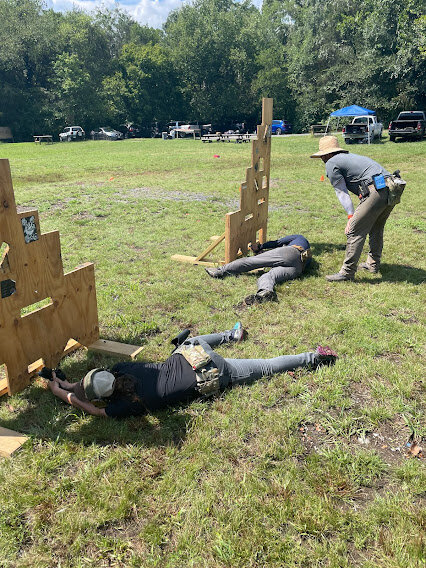
The real problem isn't the barricade itself. It's that most shooters try to force their standard positions to work instead of adapting to what the obstacle demands. They'll contort themselves trying to get a perfect prone position on a 30-inch barrier when a modified standing position would be faster and more stable.
I used to do the same thing. I'd spend 30 seconds trying to get comfortable behind a barricade, burning time that should have been spent shooting. The breakthrough came when I stopped thinking about positions and started thinking about contact points.
The contact point system
Every stable shooting position needs at least three points of contact between you and something solid. With barricades, those contact points change, but the principle doesn't.
Your body can contact the barricade. The rifle can contact the barricade. The ground still counts. The key is identifying which combination gives you the most stability for the specific shot you need to make.
Look at a typical wooden barricade with shooting ports at different heights. From the high port, you might use your support hand on the barricade, your firing-side elbow against the vertical post, and your feet planted wide. That's three solid contacts.
Drop down to the low port and everything changes. Now you're using your knee against the base, the rifle's handguard on the horizontal beam, and your support-side shoulder pressed into the vertical. Still three contacts, completely different geometry.
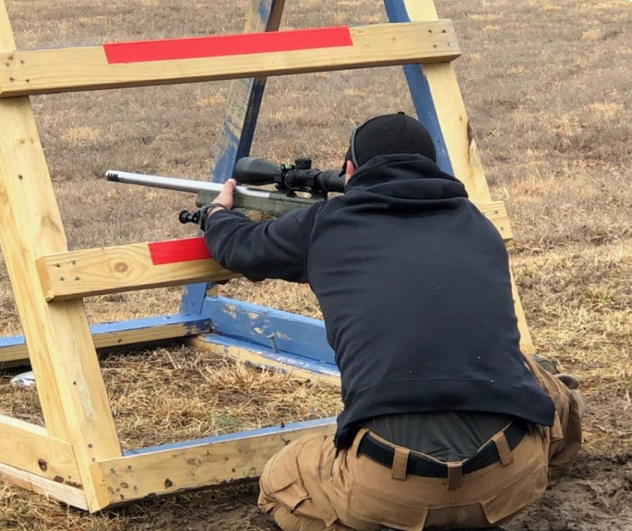
The fastest shooters I know don't memorize positions for every barricade type. They read the obstacle, identify the available contact points, and build their position around what's actually there.
Range notes: The 5-4-3-2-1 barricade drill
Set up any barricade or use a shooting bench, table, even a truck tailgate. You need five different shooting positions from the same obstacle.
Start with 10 rounds. Pick five distinct positions around your barricade, high right, low left, over the top, around the side, whatever your setup allows. Fire two rounds from each position at a 4-inch target at 50 yards.
Here's the key: you get 30 seconds total per position. That includes getting into position, finding your natural point of aim, and breaking both shots. Use a shot timer or have someone call time.
Most people fail this drill the first time because they spend too long getting comfortable. The timer forces you to work with "good enough" instead of perfect, which is exactly what competition demands.
Run this cold every range session. Track which positions give you trouble and which ones feel natural. The patterns will tell you where to focus your dry fire practice.
Building positions under pressure
The biggest mistake I see is shooters trying to build their position from the ground up every time they encounter a barricade. By the time they get settled, half their stage time is gone.
Fast barricade shooting starts with reading the obstacle before you touch it. As you approach, you should already know which parts of your body will contact which parts of the barricade. You're not discovering your position, you're executing a plan.
Generic/unspecified Shot timer Deals
Prices may change. May contain affiliate links.
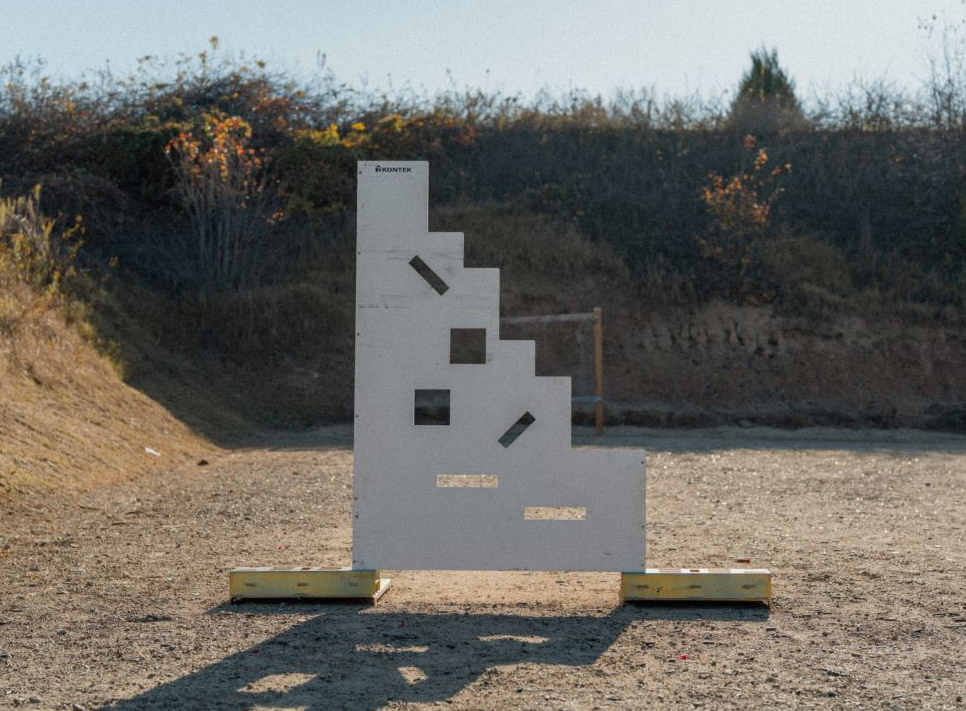
Here's how that looks in practice. You see a barricade with a low port on the left side. Before you get there, you know you'll drop to one knee, use your support-side knee as a contact point against the base, rest the rifle's forend on the horizontal beam, and press your firing-side shoulder into the vertical post.
You've identified your three contact points before you arrive. Now execution becomes mechanical: establish contact, find natural point of aim, confirm your sight picture, break the shot.
This pre-planning works because barricades follow patterns. Most have horizontal surfaces for rifle support, vertical surfaces for body contact, and bases for knee or foot placement. Once you recognize these elements, you can build positions quickly from any combination.
The other piece is accepting "good enough" stability instead of perfect stability. In competition, a position that's 80% stable but achieved in 5 seconds beats a position that's 95% stable but takes 20 seconds to build.
Common barricade mistakes
Fighting the cant. Your rifle will want to cant when shooting around obstacles. Most shooters fight this by trying to level the rifle, which creates tension and instability. Instead, let the rifle cant naturally and use your scope's reticle to ensure your sight picture is square to the target. A few degrees of rifle cant won't hurt your accuracy at typical competition distances.
Overthinking natural point of aim. Yes, you want your natural point of aim close to the target. But don't spend 15 seconds making micro-adjustments. Get close, confirm your sight picture is repeatable between shots, and send it. You can make small corrections with muscle rather than repositioning your entire body.
Ignoring your support hand. Your support hand doesn't always have to grip the rifle. Sometimes it's more stable pressed against the barricade, creating a contact point that steadies your entire position. Experiment with using your support hand as part of the barricade interface rather than just rifle control.
Forcing standard positions. Stop trying to make a prone position work from a 36-inch barrier. If the geometry doesn't fit, build a different position. The goal is stability and speed, not adherence to textbook form.
Neglecting your feet. Your foot position matters even when most of your support comes from the barricade. Wide, stable foot placement gives you a foundation that makes everything else more solid. Don't ignore your base just because you're focused on upper body contact points.
Reading different barricade types
Wooden barricades with multiple ports are the most common, but competitions throw different obstacles at you. Each type rewards different approaches.
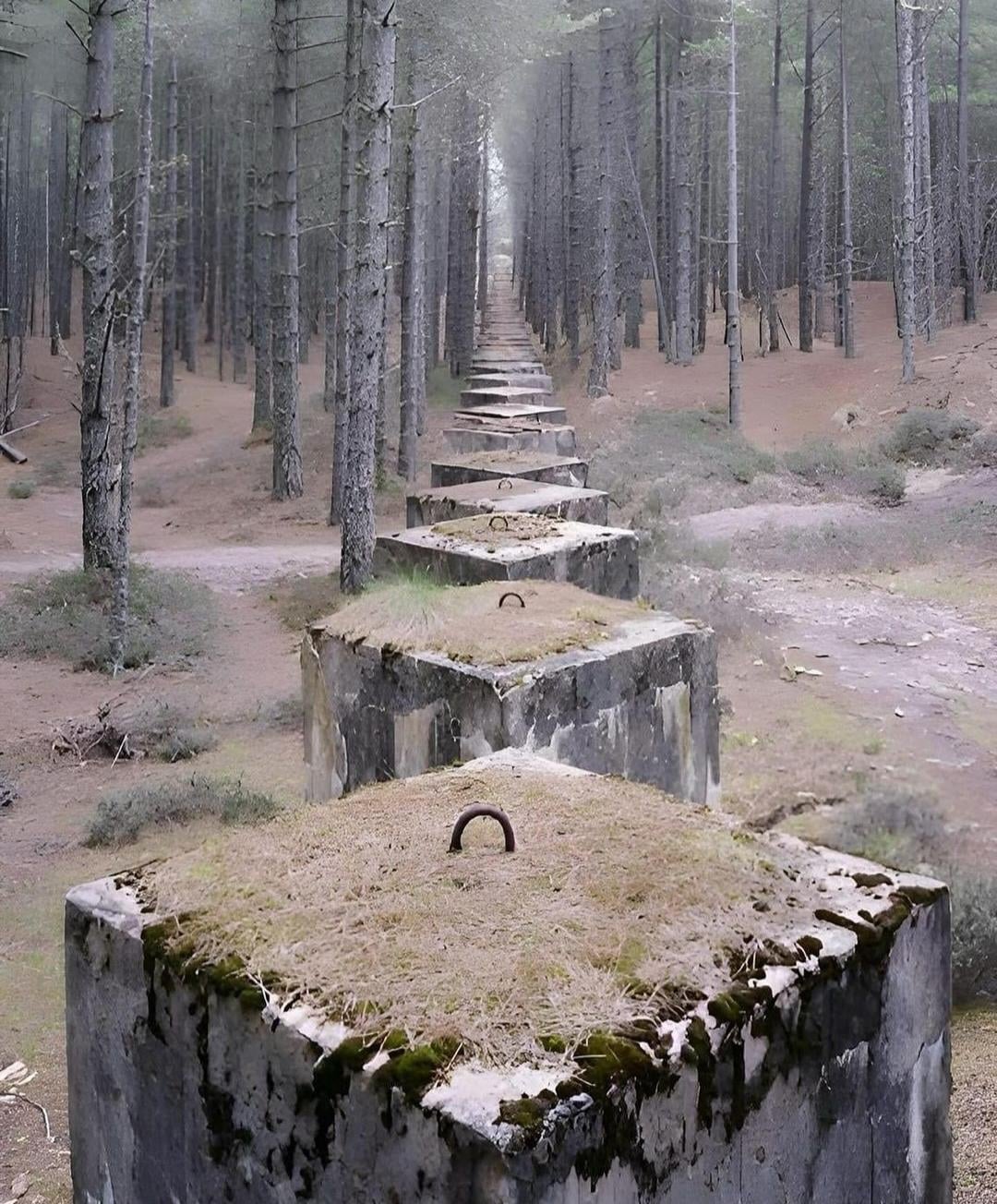
Tank traps and concrete barriers usually offer limited contact points but solid support where you can get it. These favor positions where the rifle does most of the work, resting the handguard or bipod on the obstacle while you provide minimal additional support.
Tire barricades and similar soft obstacles give you more flexibility but less rigid support. Here you're often better off using the obstacle for body support rather than rifle support. Press your torso against the tire while maintaining a more traditional rifle hold.
Rooftop or elevated positions change the game entirely. Now you're dealing with height advantage but potentially awkward shooting angles. These often work best with positions that prioritize rifle support over body support, since you're shooting down at angles that make traditional body positions uncomfortable.
The key insight is that different obstacles reward different strategies. Don't try to use the same approach for every barricade type. Adapt your contact point selection to what each obstacle does well.
Dry fire for barricade work
Most of your barricade improvement happens at home, not at the range. You can't replicate every obstacle in dry fire, but you can train the skills that make barricade shooting easier.
Position transitions are the biggest one. Set up two different "positions" in your dry fire area, maybe shooting from behind a chair and from beside a table. Practice moving between them quickly while maintaining muzzle discipline and trigger finger placement.
Work on getting into positions without looking at your feet or hands. Your body should know where to go based on what you see, not what you feel around for. This comes from repetition with consistent obstacles.
Practice shooting with rifle cant. Set up your dry fire so you have to shoot around a corner or over an angled surface. Get comfortable with your reticle being slightly off-level while keeping your sight picture square to the target.
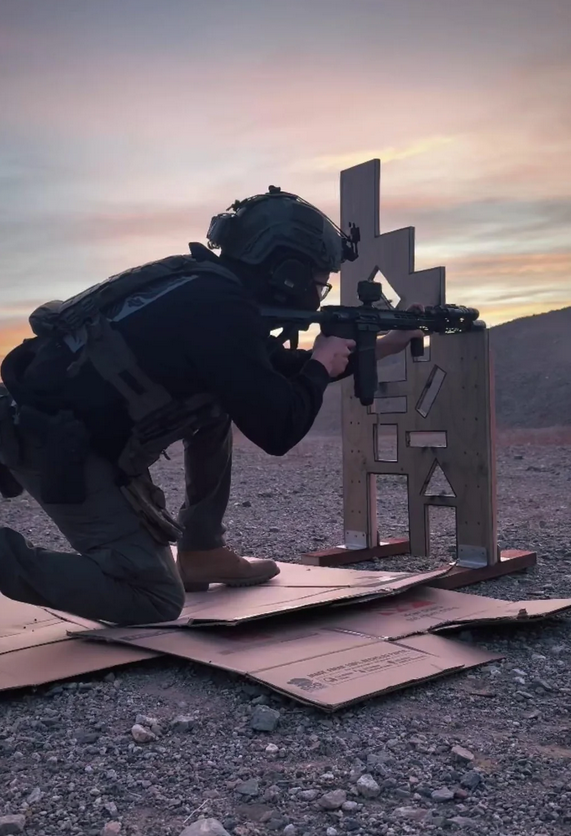
The other big dry fire skill is natural point of aim confirmation. Practice getting into position, closing your eyes, relaxing, then opening them to see where your sights settled. If you're off target, adjust your body position rather than muscling the rifle back on target.
What good barricade shooting looks like
A shooter who's got this figured out approaches every obstacle with a plan. They identify their contact points before they arrive, establish their position in under 10 seconds, and break shots with the same rhythm they use from any other stable position.
Their positions might not look textbook perfect, but they're repeatable and stable enough for the accuracy the stage demands. They're not fighting the rifle or the obstacle, everything works together.
Most importantly, they're not spending mental energy on position building during the stage. That work happened during practice and stage planning. When it's time to shoot, they're focused entirely on sight picture and trigger control.
You'll know you're getting there when barricades stop feeling like obstacles and start feeling like tools. Instead of thinking "how do I shoot around this thing," you'll think "how can I use this thing to make my shooting more stable."
The best barricade shooters I know don't avoid difficult positions, they seek them out in practice because they know that's where improvement happens. They understand that comfort with awkward positions is what separates decent shooters from competitive ones.
Start with the 5-4-3-2-1 drill. Build your contact point recognition. Practice position transitions in dry fire. Most importantly, stop trying to force perfect positions and start building stable ones quickly.
The barricade isn't your enemy. It's just another tool for building the stable platform your rifle needs to do its job. Once you see it that way, every stage becomes an opportunity to use the environment to your advantage rather than fight against it.