You passed the written test, filled out the application, and now you're staring down the live-fire qualification. Or maybe you already have your permit and renewal is coming up. Either way, the question isn't whether you can pass. The question is whether you're actually training to the standard or just hoping range time will carry you through.
California's CCW qualification isn't one unified test. Every issuing authority sets its own course of fire, and the differences between counties can be significant. Some require shooting from 3 yards out to 15. Others push you back to 25. Some demand drawing from a holster. Others don't. The round counts, time limits, and passing scores all vary. That inconsistency means you need to know exactly what your county requires and build a practice plan around it. Guessing won't cut it.
Ear protection Deals
Prices may change. May contain affiliate links.
This piece breaks down the most common qualification standards across California counties, answers the questions people actually ask about the process, and gives you specific drills to practice. Not vague advice. Actual distances, par times, and round counts you can take to the range tomorrow.
What the qualification actually looks like
How do California CCW qualification courses work?
There's no single statewide course of fire. California law requires applicants to demonstrate competence with each firearm they want listed on the permit, but the specific shooting test is set by the issuing authority, which is typically the county sheriff or the police chief in some cities.
B-27 silhouette target Deals
Prices may change. May contain affiliate links.
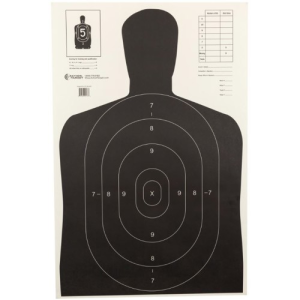
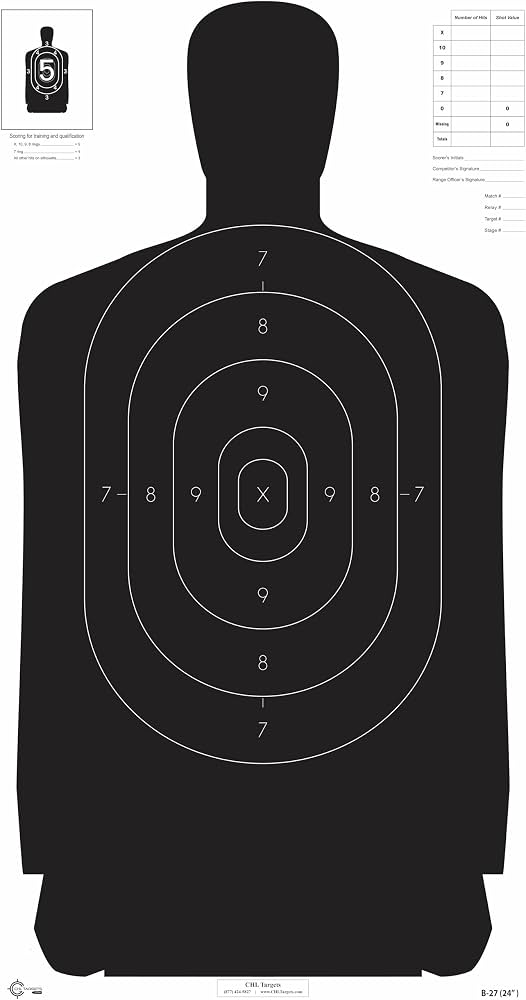
Most courses follow a similar pattern: you shoot a set number of rounds at specified distances within time limits, and you need to hit a minimum score. The target is usually a standard silhouette like the B-27 or a similar full-size target. Rounds outside the scored zone count against you or don't count at all.
The key variables that change between jurisdictions are the distances (anywhere from 3 to 25 yards), the total round count (typically 30 to 50 rounds), the time limits per string, and whether you draw from a holster or start from a low ready position.
What are the common distances and round counts?
Looking across several California counties, a pattern emerges. Morgan Hill's qualification course, for example, uses distances of 3, 5, 7, 10, and 15 yards. Humboldt County's renewal qualification, according to a training provider for the county, is conducted at a single distance of 10 yards with 25 rounds per handgun. Most counties cluster their round counts between 30 and 50 rounds total, broken into strings of 2 to 6 rounds per stage.
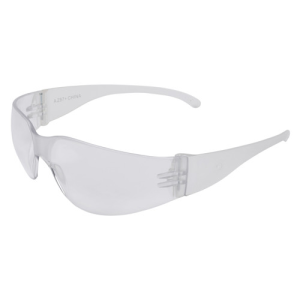
Safety glasses Deals
Prices may change. May contain affiliate links.
Here's a composite look at what you're likely to face:
| Distance | Typical round count per stage | Common time limit |
|---|---|---|
| 3 yards | 4-6 rounds | 2-4 seconds per string |
| 5 yards | 6-10 rounds | 3-5 seconds per string |
| 7 yards | 6-10 rounds | 4-6 seconds per string |
| 10 yards | 4-6 rounds | 5-8 seconds per string |
| 15 yards | 4-6 rounds | 8-10 seconds per string |
| 25 yards | 2-4 rounds (if included) | 10-15 seconds per string |
The passing score is typically 70% to 80% of total possible points, depending on the jurisdiction. Some counties require all rounds to land within the silhouette's scoring rings. Others use a simpler pass/fail based on hits within a designated zone.
Do I have to draw from a holster?
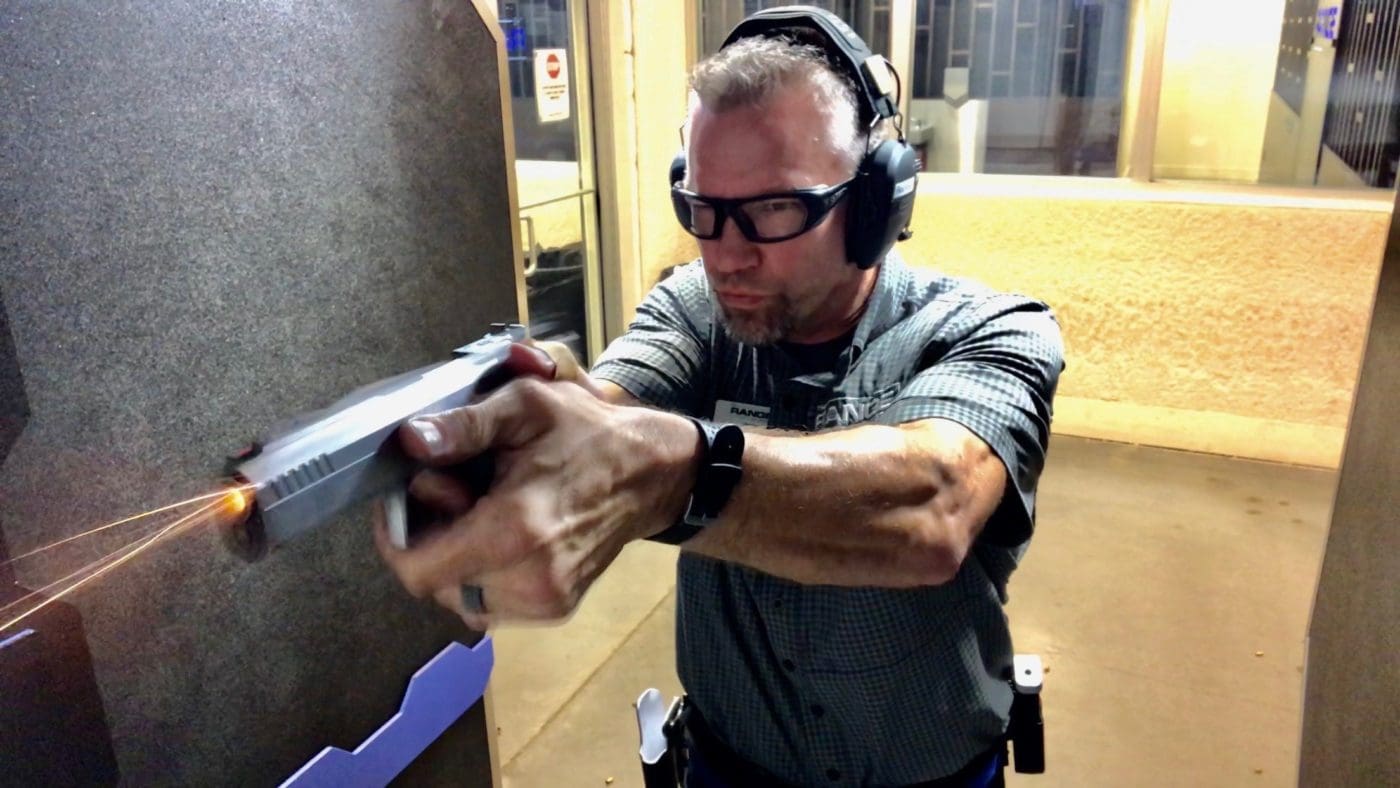
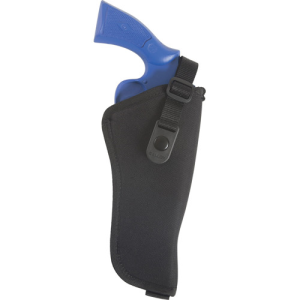
It depends on your county. Some qualification courses require a holster draw. Others start you from a low ready or even from the bench. If your county requires a holster draw, you need to practice that draw with the exact holster you'll use on qualification day. If they don't require it, you should still practice it anyway because that's how you'll actually carry.
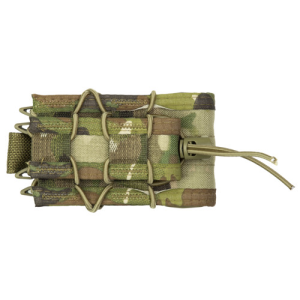
MOLLE double mag pouch Deals
Prices may change. May contain affiliate links.
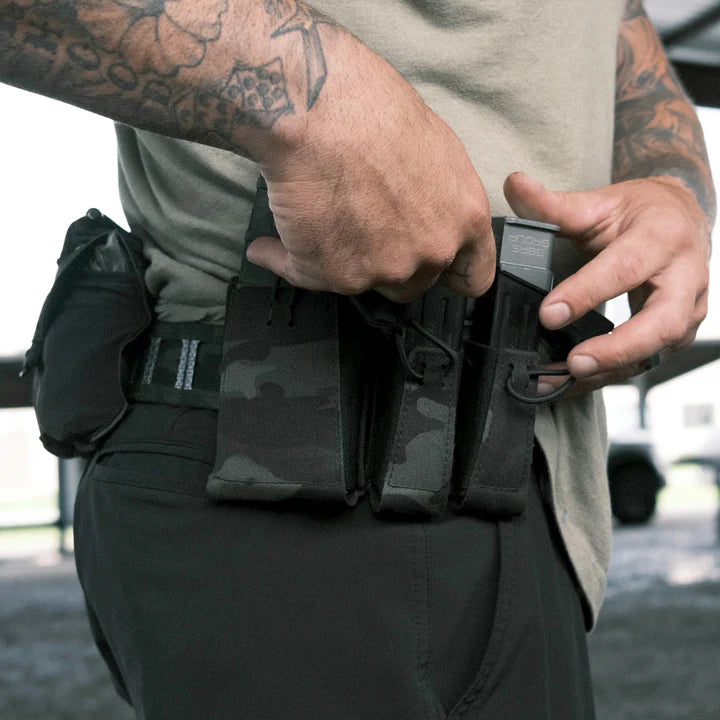
Humboldt County's course, for instance, specifies drawing from a holster at multiple distances. Morgan Hill's Phase II qualification also includes holster work. Los Angeles County and San Diego County each have their own protocols. Check with your specific issuing authority before you show up.
What about reloads and malfunctions?
Several county courses incorporate mandatory reloads. You might fire a partial magazine, reload, and continue. This tests your ability to perform a reload under time pressure, not just your marksmanship. Some courses also include a simulated malfunction clearance, though this is less common in the basic qualification.
If your course includes a reload, practice it until it's boring. Then practice it more. A fumbled reload under a timer eats seconds you can't get back.
The written test and classroom hours
How long is the required training course?
California law currently requires a minimum of 16 hours of training for an initial CCW permit and 8 hours for renewal. This includes both classroom instruction and live-fire qualification. The classroom portion covers legal use of force, safe handling, storage requirements, and state-specific carry laws.
However, legislative changes are in motion. Assembly Bill 210, if enacted, would increase training requirements significantly, potentially pushing initial training to 16 hours and adding more specific curriculum requirements around scenario-based decision-making and legal knowledge. As of now, check your county's current requirements, because some already exceed the state minimum.
What does the written test cover?
The written portion tests your knowledge of California firearms law, use-of-force standards, safe handling rules, and carry-specific regulations like where you can and can't carry. Most counties require a passing score of 75% or higher.
The questions aren't trick questions, but they do require you to know specifics. Things like: Can you carry in a post office? What's the legal standard for use of deadly force in California? What are your obligations if you're contacted by law enforcement while carrying? If you don't know the answers to those off the top of your head, study before you sit for the test. Several training providers and online resources offer practice tests with 50 or more sample questions that mirror the actual exam format.
Can I use any firearm for qualification?
You qualify with the specific firearms you want listed on your permit. In California, you can typically list up to three handguns on your CCW permit. You must qualify with each one individually. That means if you want two pistols on your permit, you're shooting the course of fire twice.
This matters for practice. If you plan to qualify with a compact 9mm and a full-size .45, you need range time with both. Don't assume proficiency with one transfers to the other. The trigger, the recoil impulse, the sight picture, the grip angle, all different. Train with what you'll qualify with, and carry what you qualified with.
What to actually practice
The 7-yard standard
If you can only practice at one distance, make it 7 yards. Most defensive encounters happen inside this range, and most qualification courses weight it heavily. The standard you should chase: every round inside a 4-inch circle at 7 yards, on demand, from the draw.
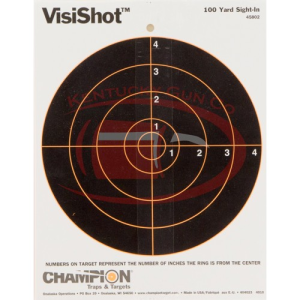
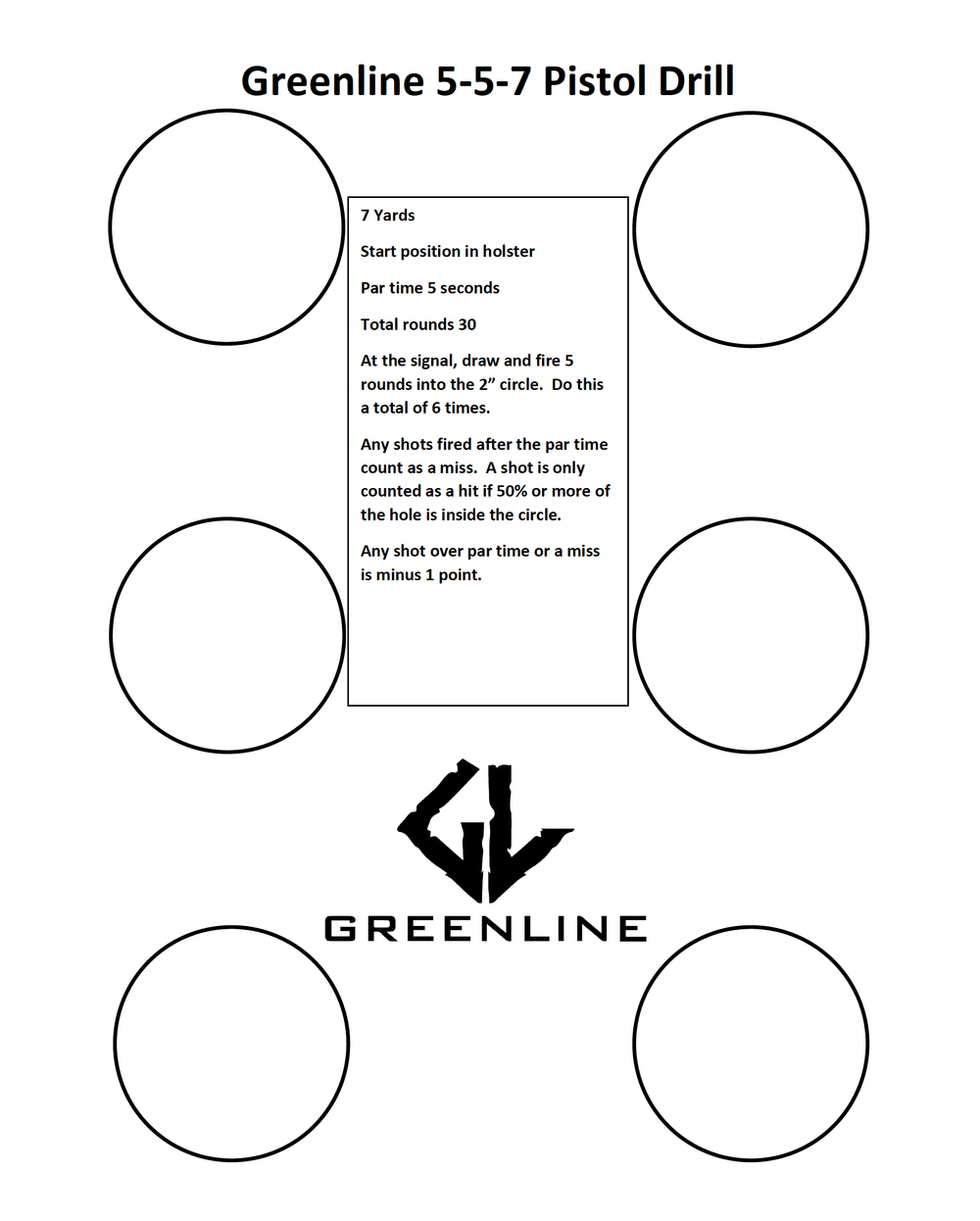
Here's a drill. Set up a 4-inch circle target (or use a 3x5 index card) at 7 yards. Draw and fire one round. Par time: 2.5 seconds from concealment. Repeat 10 times. Count your hits. If you're getting 8 out of 10 inside the circle at that pace, you're in solid shape for any California CCW qualification. If you're below 6, slow down. Accuracy first, then compress the time.
Range notes
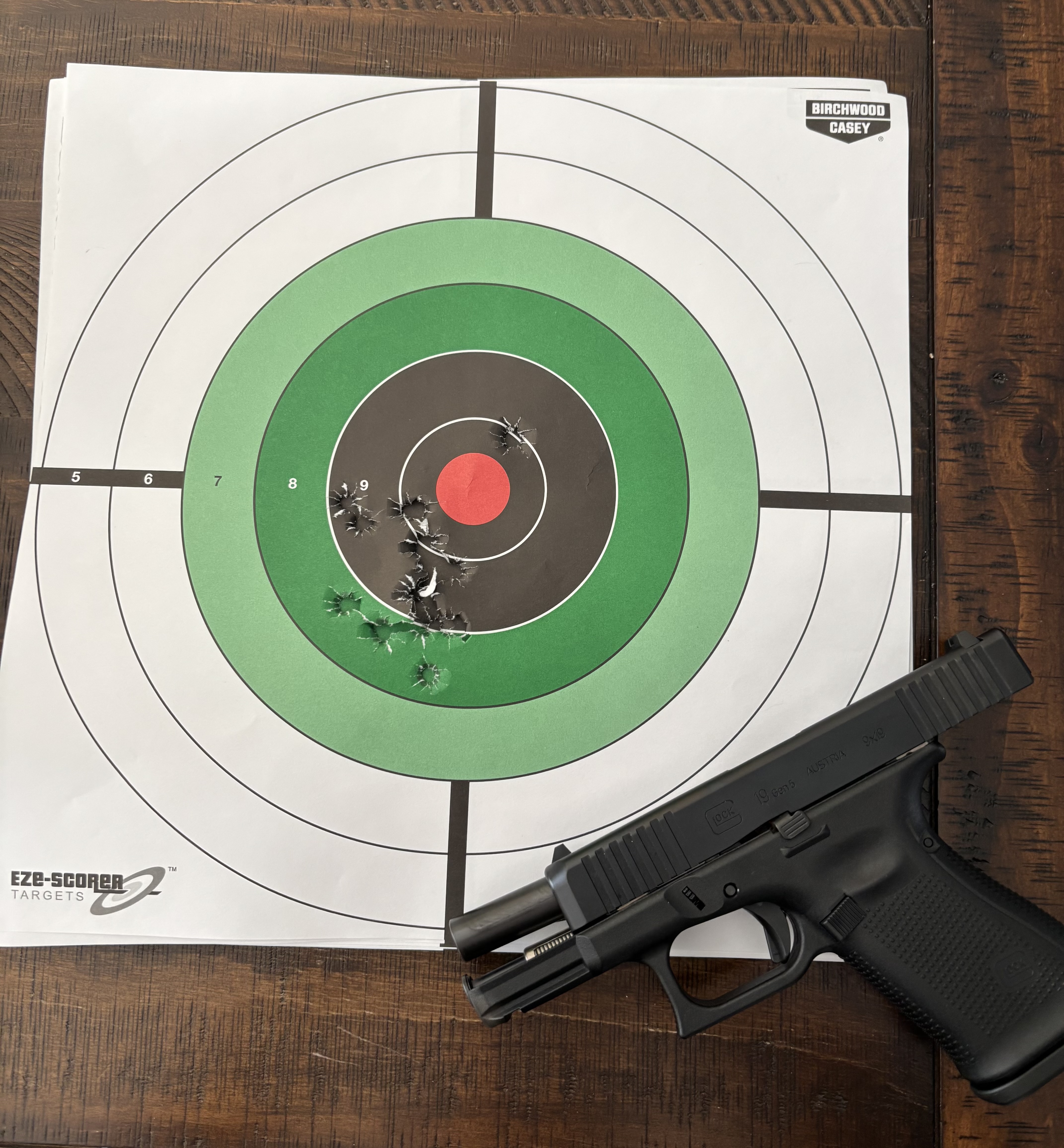
When you run this drill, pay attention to where your misses go. Low and left (for right-handed shooters) means you're slapping the trigger or anticipating recoil. High means you're lifting your head or breaking your wrist up. Consistent misses in one direction tell you exactly what to fix. Random scatter means your grip or sight alignment is inconsistent, and you need to slow down and rebuild from fundamentals.
The close-range speed drill
At 3 yards, the qualification times are tight, usually 2 to 4 seconds for multiple rounds. The temptation is to go fast and assume you'll hit at that distance. Don't assume. At 3 yards, a flinch still moves the bullet off target, and under time pressure, flinching gets worse.

Weapon light Deals
Prices may change. May contain affiliate links.
Drill: At 3 yards, draw and fire 2 rounds to center mass. Par time: 2 seconds from concealment. The standard is both rounds inside an 8-inch circle. Run it 10 times. This is a draw speed and first-shot diagnostic rolled into one. If your first round is consistently off, your presentation needs work. If your second round opens up, you're not managing recoil between shots.
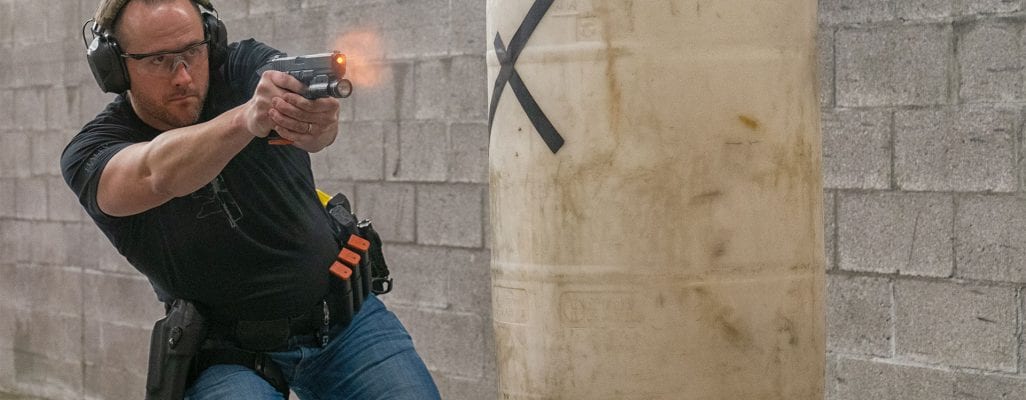
Dry fire fixes the draw. Live fire fixes the recoil management. Do both.
The 15-yard accuracy check
This is where most people fall apart. At 15 yards, every flaw in your trigger press shows up on paper. You can't muscle your way to accuracy at this distance. The fundamentals either work or they don't.
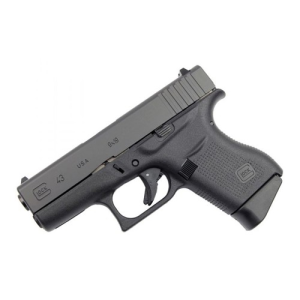
Glock pistol Deals
Prices may change. May contain affiliate links.
Drill: 5 rounds at 15 yards, no time limit at first. Shoot the tightest group you can. If all 5 are inside a 6-inch circle, you're ready to add time pressure. If they're not, you have a fundamentals problem that speed will only make worse.
Once you can group inside 6 inches consistently, add a par time. Start at 4 seconds per round (20 seconds for 5 rounds) and compress from there. The qualification standard at 15 yards is usually generous, maybe 8 to 10 seconds for a string of 4 to 6 rounds, but training tighter than the standard means the test feels easy.
Dry fire notes
You can replicate almost everything except recoil at home. Draw to first shot, sight alignment at extension, trigger press, reloads. If your county's qualification includes a holster draw, you should be dry-fire practicing that draw 20 to 50 times per session, several times a week. Use a shot timer app on your phone. Track your draw time from concealment to a click on target. The goal is a smooth, consistent presentation that puts the sights on target without fishing for them at the end.
A good benchmark for a concealed draw to first shot: 1.5 to 2.0 seconds. Most people start around 2.5 to 3.0 seconds. Dry fire gets you to 2.0. Live fire confirms it works with recoil.
Common mistakes
Practicing without a plan
The biggest waste of range time is showing up with a box of ammo and no structure. You fire 50 rounds at 7 yards, feel okay about the group, and leave. You didn't test anything. You didn't measure anything. You can't track improvement because there's nothing to track.
Every range session should have a specific drill, a specific distance, a specific standard, and a way to record the result. Fifty rounds with a plan beats 200 without one.
Ignoring the draw
If your qualification requires a holster draw, that draw is the single most important skill to practice. It's the one thing you can't fake on test day. A smooth draw sets up everything that follows. A sloppy draw means you're playing catch-up for the rest of the string, rushing the sight picture, jerking the trigger, trying to make up time you lost at the start.
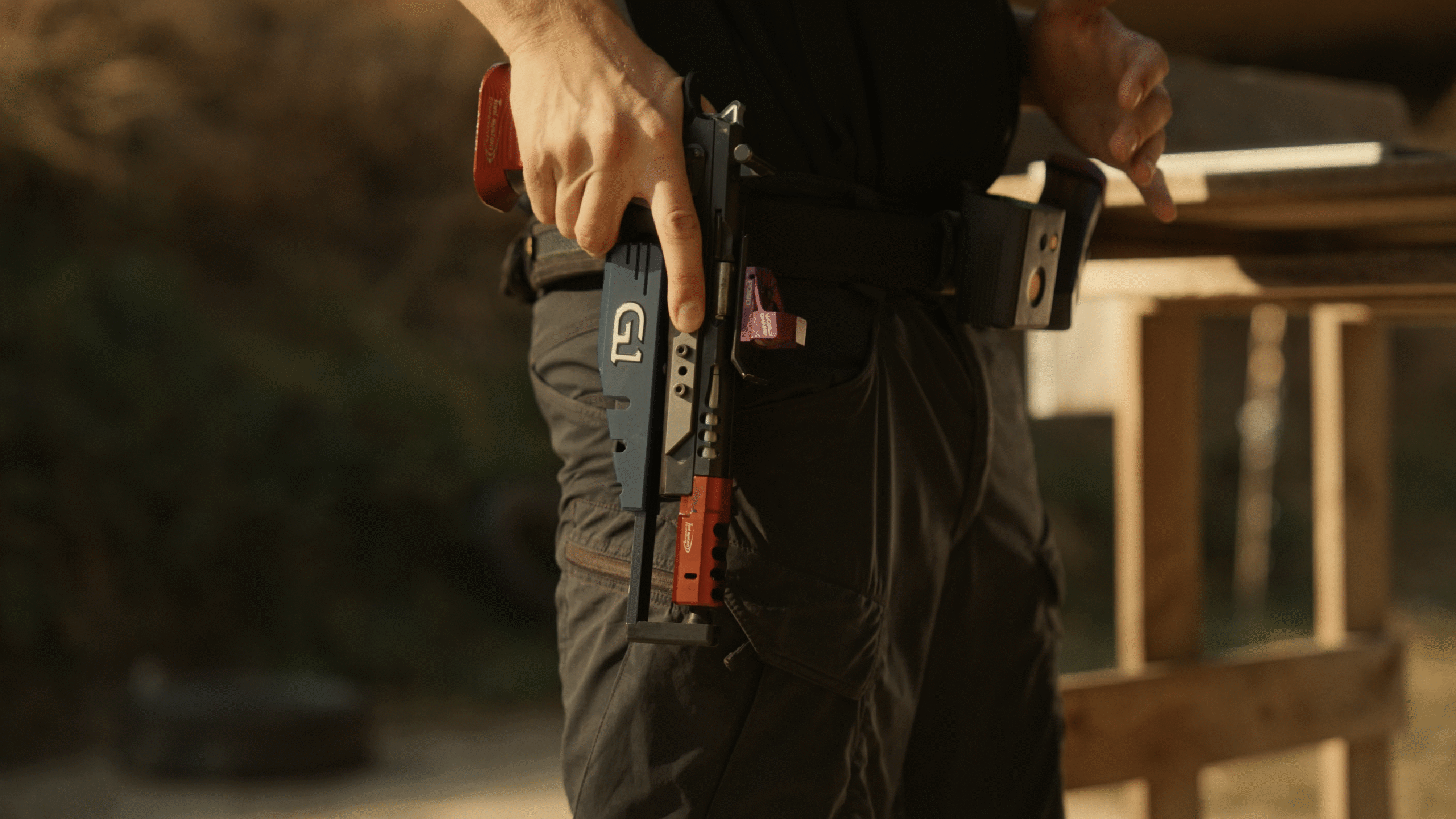
Most people skip this. They practice shooting but not drawing. The draw is a separate skill. Train it separately.
Training only at your comfortable distance
Everyone has a distance where they feel good. Usually it's 5 to 7 yards. So that's where they park and shoot all day. Meanwhile, the 15-yard stage on the qualification is the one that costs them points.
If 15 yards is hard, that's where you need to spend time. Not all your time, but enough to make it not hard. The same goes for 3 yards if your speed isn't there. Train your weaknesses, not your strengths.
Not practicing reloads
A reload under time pressure is a different animal than a reload at the bench. If your qualification includes a mandatory reload, practice it with the same magazine pouches or carry setup you'll use. Practice it until you can do it without looking at the magazine well. Practice it until it's automatic.

Magazine pouch Deals
Prices may change. May contain affiliate links.

The diagnostic: if your reload takes more than 3 seconds, you're losing time that shows up on the scorecard. A clean emergency reload from a belt-mounted pouch should be under 2.5 seconds with practice. From a pocket? Longer. Know your setup and train accordingly.
Neglecting trigger control at speed
Speed exposes trigger control problems. At a slow pace, you can steer the sights back on target between shots. At speed, there's no time for that. If your trigger press isn't clean, your group opens up as you go faster.
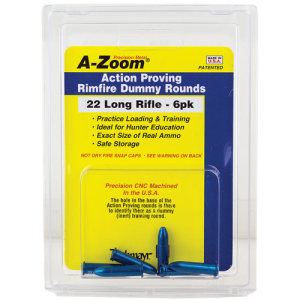
Snap caps Deals
Prices may change. May contain affiliate links.
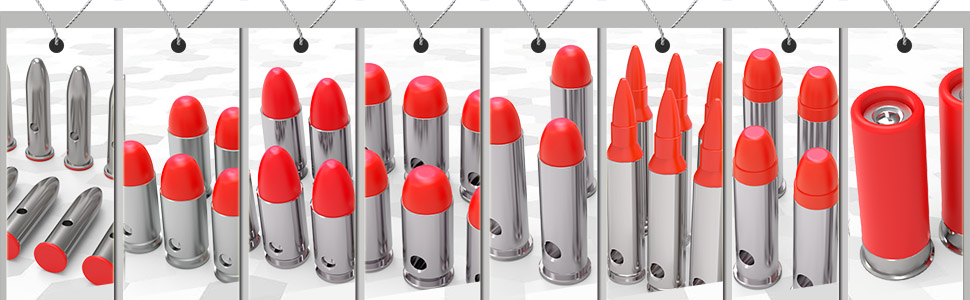
The fix is the ball-and-dummy drill. Load a magazine with a mix of live rounds and snap caps (dummy rounds) in random order. When you hit a snap cap, you'll see exactly what your hands do in anticipation of recoil. If the muzzle dips when you hit a dummy round, you're anticipating. This is the single best diagnostic for trigger control problems, and almost nobody runs it often enough.
Building a practice plan for qualification
How many range sessions do I need before the test?
That depends on where you're starting. If you shoot regularly and can already put consistent hits on a silhouette at 15 yards, two or three focused sessions might be enough. If you're coming back after a long layoff or you're new to drawing from a holster, plan for six to eight sessions spread over several weeks.
Here's a sample four-session plan built around a typical California CCW qualification:
Session 1: Baseline. Shoot the full course of fire (or your best approximation of it) cold. No warm-up. Record your score. This is your starting point. Don't judge it. Just measure it.
Session 2: Close range and draw. Spend the entire session at 3 and 5 yards. Work the draw to first shot. Work pairs (two quick rounds). Use a timer. Burn 50 rounds total with purpose.
Session 3: Mid-range and accuracy. Park at 7 and 10 yards. Focus on group size first, then add time pressure. Include at least one reload drill per string. Fifty to 75 rounds.
Session 4: Full course rehearsal. Run the qualification course of fire again, start to finish, under time. Compare to your Session 1 score. If you're at or above the passing standard with margin, you're ready. If you're close but not there, run Session 2 and 3 again.
What should I track?
At minimum, track these three things after every session: your score on the qualification course (or a close approximation), your draw-to-first-shot time at 7 yards, and your group size at 15 yards. Those three numbers tell you almost everything about your readiness. Track them over time and trust the trend. One bad session doesn't mean anything. A downward trend over three sessions means something needs to change.
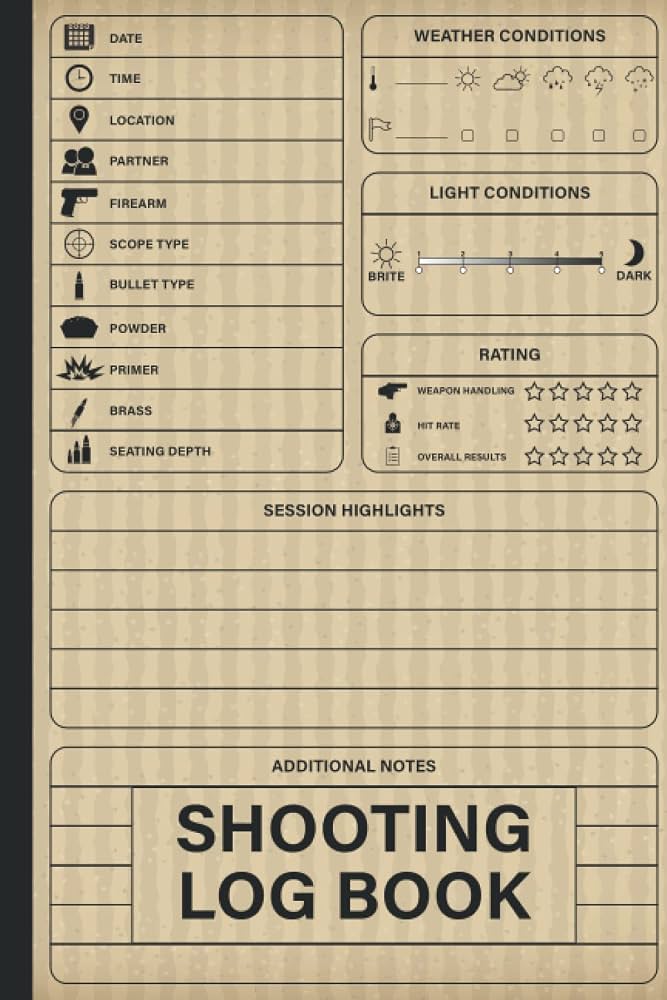
A simple notebook works. So does a spreadsheet on your phone. The format doesn't matter. The habit does.
County-specific details worth knowing
Does my county post its qualification course online?
Some do, some don't. Morgan Hill publishes its firearm qualification standards on the city website. Humboldt County's sheriff's office posts its course of fire publicly. San Diego County's sheriff provides general information about the CCW process but may require you to get the specific course details through an approved training provider. Sacramento, Riverside, Butte, San Bernardino, and Placer counties all have CCW information pages, but the level of detail varies.
Your best move is to call your issuing authority directly or contact an approved CCW training provider in your county. The training providers run the qualification regularly and know exactly what's on it. Many of them, like those operating in Southern California and the Bay Area, will walk you through the course of fire before test day.
Can I practice at any range?
Yes. You don't have to practice at the range where you'll qualify. Any range that allows you to shoot at the distances you need is fine. Some indoor ranges max out at 25 yards, which covers most qualification distances. If your county includes a 25-yard stage, make sure your practice range can accommodate that.
If your range doesn't allow drawing from a holster, you can still practice the shooting portions. Work the draw at home in dry fire, then integrate it at a range that permits holster work, or during a training class.
What about the new training requirements under AB 210?
Assembly Bill 210 would expand California's CCW training requirements substantially. The bill proposes increasing initial training hours, adding more rigorous scenario-based components, and potentially requiring periodic proficiency demonstrations beyond the current renewal process. As of mid-2026, the bill is still moving through the legislative process.
If it passes, expect the qualification to get harder, not in terms of marksmanship necessarily, but in terms of total time commitment and the breadth of skills tested. The fundamentals don't change though. Accurate shooting under time pressure from realistic distances is still the core of any qualification, no matter how many hours of classroom time get added around it.
What you'll feel when it clicks
There's a moment in qualification prep where the draw stops feeling like a sequence of steps and starts feeling like one motion. The gun comes out, the sights arrive on target, and the trigger breaks without you consciously deciding to press it. That's not magic. That's the result of hundreds of dry-fire reps building a consistent presentation. When it happens during live fire, your groups tighten and your times drop simultaneously. That's the signal that you're ready.
The qualification itself, once you're prepared, should feel almost boring. The time limits are generous for someone who's trained. The distances are manageable. The passing score is achievable. The people who fail are the people who didn't practice with specificity, who assumed general range time would translate to a structured test under a timer.
Still have questions?
Start with your county sheriff's website. Most issuing authorities maintain a CCW information page with application procedures, training provider lists, and at least general qualification information. For counties like San Diego, Los Angeles, Riverside, Sacramento, and San Bernardino, the sheriff's department websites have dedicated CCW sections.
For the written test, practice exams are available online from multiple training organizations, with 50-question formats that mirror the real thing. Take a few until you're consistently scoring above 90%, not just passing.
For live-fire prep, find a training provider approved by your issuing authority. Even if you're an experienced shooter, a single session with an instructor who runs the qualification regularly will show you exactly what to expect and where to focus your practice. That's worth more than five solo range sessions without direction.
The standard is knowable. The test is passable. Build a plan, run the drills, track the numbers, and show up ready. That's it.