You're looking at your first rimfire can and you've set a hard budget: $300 total, suppressor plus whatever the transfer costs. That number used to be a fantasy. A $200 tax stamp alone ate most of a budget rimfire build's suppressor fund. But the landscape shifted in 2026. The House-passed One Big Beautiful Bill Act set the manufacturer tax on silencers to $0 and struck the registration requirement, and since October 9, 2026, the ATF hasn't enforced the Form 4 approval and registration requirements for suppressors. Dealers are transferring them on a standard Form 4473 with a NICS background check, same as a regular firearm.
That changes the math dramatically. A suppressor that retails for $296 now costs $296 out the door at most dealers, not $496. The $300 ceiling that once bought you nothing now puts real, proven cans within reach. But only a few of them. Most quality rimfire suppressors still land in the $375 to $550 range, so the pickings at this price point are genuinely slim. The good news: the one that fits is arguably the most battle-tested rimfire suppressor ever made.
Who this guide is for
This is for the shooter who wants a dedicated .22 LR can, knows the NFA process (or what's left of it in 2026), and doesn't want to spend a dollar more than $300 total including any transfer-related costs. You're comfortable with a stainless steel suppressor that needs periodic cleaning, and you want something with a long track record rather than an untested budget gamble.
Quick picks
- SilencerCo Sparrow 22 Best overall value under $300

That's the list. One pick. Here's why, and why the runners-up don't make the cut at this price.
At a glance
The table is short because the budget constraint is real. Every other rimfire suppressor with source-verified specs lands above $300 at retail. The Angstadt Arms Reticent 22 at $345, the YHM Phantom 22 at $439.95 MSRP, the Rugged Oculus 22 at $434, the Dead Air Mask at $459 or $489 depending on retailer, the Otter Creek Labs Titanium 22 at $475 MSRP, the HUXWRX Flow 22 Ti at $499, the Silencer Central Banish RF 22 Ti at $629 MSRP, the SilencerCo Switchback 22 2.0 at $493, the Q Erector 22 at $550. None of them clear the $300 bar.

Rugged Oculus 22 Deals
Prices may change. May contain affiliate links.

Dead Air Mask Deals
Prices may change. May contain affiliate links.


HUXWRX Flow 22 Ti Deals
Prices may change. May contain affiliate links.


Yankee hill machine YHM Phantom 22 Deals
Prices may change. May contain affiliate links.
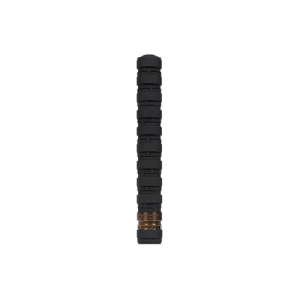
Q Erector 22 Deals
Prices may change. May contain affiliate links.
How we chose
The selection criteria here are simple but ruthless: the suppressor must have a verified retail price at or below $300 from a major dealer, it must be user-serviceable (rimfire fouling demands it), and it must come from a manufacturer with a documented track record and a warranty program. We're not recommending no-name aluminum tubes from fly-by-night brands just to fill a listicle. If the budget only supports one solid recommendation, that's what you get.
Reliability record matters more in the rimfire suppressor world than people realize. Rimfire ammunition is filthy. Lead, wax, carbon, and unburned powder coat the inside of a .22 can faster than any centerfire equivalent. A suppressor that can't be fully disassembled for cleaning will eventually seize up or lose performance. The Sparrow 22 has been in continuous production for over fifteen years, and SilencerCo backs it with a limited lifetime warranty to the original registered purchaser. That's a track record you can verify, not a marketing promise.
Serviceability is non-negotiable at this price point. You're not buying a second rimfire can as a backup. This is your one .22 suppressor, and it needs to keep working through thousands of rounds of bulk ammo. The Sparrow's monocore stainless design comes apart without tools, and stainless steel handles aggressive cleaning methods (ultrasonic baths, solvent soaks, even the "dip" method with CLR or similar) without the material concerns you'd have with aluminum.
The picks
SilencerCo Sparrow 22
Best for: budget-conscious first rimfire suppressor, shooters who want a proven design with the longest track record in the category
SilencerCo Sparrow 22 Deals
Prices may change. May contain affiliate links.

Streamlight TLR-1 HL Deals
Prices may change. May contain affiliate links.

Ruger Mark IV Deals
Prices may change. May contain affiliate links.


Beretta 21A Deals
Prices may change. May contain affiliate links.

CCI Standard Velocity .22 LR Deals
Prices may change. May contain affiliate links.
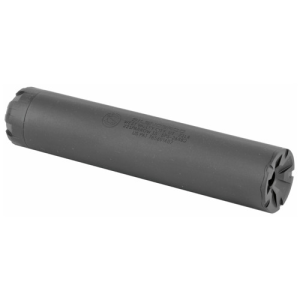
The SilencerCo Sparrow 22 was the first suppressor SilencerCo ever built. That's not trivia; it's relevant context. After fifteen-plus years of continuous production, the Sparrow remains one of the most popular rimfire suppressors on the market. It retails at $296 from Silencer Shop, which means under the current $0 transfer tax environment, you're looking at $296 plus whatever your local dealer charges for the 4473 transfer if you buy online. Most dealers charge $0 to $25 for a suppressor transfer on items purchased through their kiosk or directly through Silencer Shop's system. You're comfortably under $300 in most scenarios.

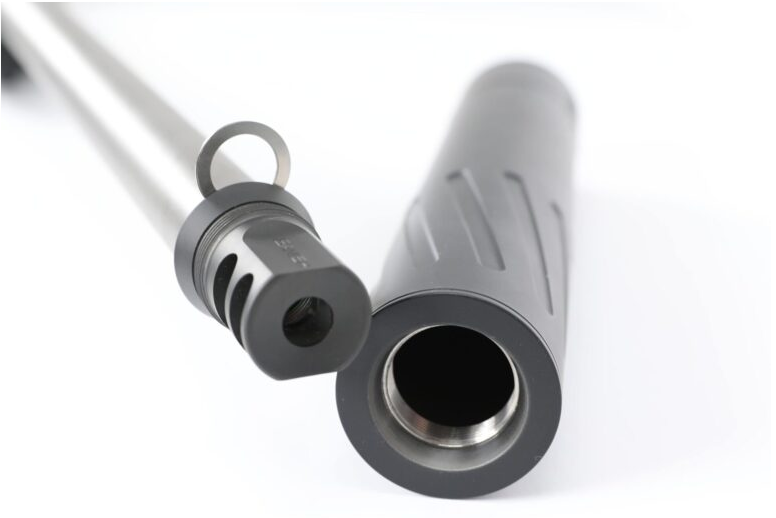
The Sparrow is built entirely from 17-4 stainless steel and features a monolithic core as part of a multi-component, user-serviceable design that includes an outer tube, back cap, and two half tubes. It weighs 6.5 ounces and measures 5.08 inches long with a 1.07-inch diameter. The 1/2x28 direct thread mount fits the overwhelming majority of rimfire hosts, from Ruger Mark IVs to 10/22s to bolt guns. It's rated for multiple rimfire calibers beyond .22 LR, and SilencerCo rates it for 5.7x28mm as well, which gives you some flexibility if your collection grows.

Sound performance is competitive. In PEW Science testing on a Beretta 21A subcompact pistol with CCI Standard Velocity ammunition, the Sparrow achieved a Suppression Rating of 74.5, which PEW Science characterized as "relatively competitive with silencers on the current market" on that short-barrel platform. Multiple sources place the Sparrow among the quietest rimfire cans available, with subsonic .22 LR metering in the low 110s of decibels in full-length configuration. That's hearing-safe territory outdoors with subsonic ammo.
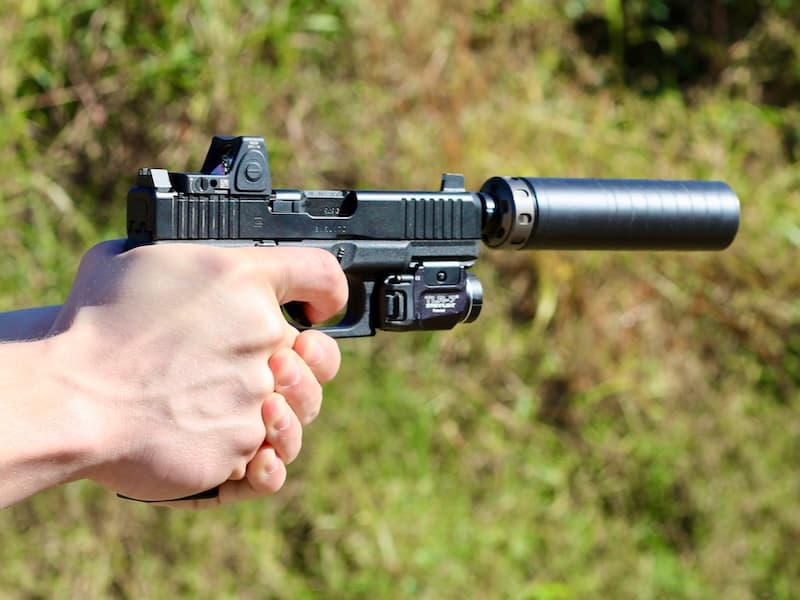
The practical reality is that the Sparrow does exactly what a rimfire suppressor needs to do: it gets quiet, it comes apart easily, it tolerates abuse, and it goes back together without drama. It's not the lightest (titanium cans like the Otter Creek Titanium 22 at 4.0 oz or the Reticent 22 at 2.5 oz beat it handily), and it's not modular (the Rugged Oculus and SilencerCo Switchback give you short and long configurations). But at $296, it's the only proven rimfire suppressor that fits a $300 total budget.
Pros
- Retail price of $296 puts it under $300 with the current $0 federal transfer tax
- 17-4 stainless steel construction handles aggressive cleaning methods
- Tool-less disassembly for the user serviceability that rimfire demands
- Fifteen-plus year production history with a known track record
- Rated for .22 LR and 5.7x28mm for cross-platform use
- Limited lifetime warranty from SilencerCo to original registered purchaser
- 1/2x28 thread fits virtually every rimfire host on the market
Cons
- 6.5 oz is heavier than titanium competitors (the Reticent 22 weighs 2.5 oz, the HUXWRX Flow 22 Ti weighs 3.9 oz)
- Fixed length only; no short configuration option like the Rugged Oculus
- Stainless steel monocore design is a generation behind newer 3D-printed titanium cans
- Not published as full-auto rated in the source materials we reviewed

What almost made the cut (and why it didn't)
The honest answer is that nothing else made the cut. But it's worth understanding what sits just above the $300 line, because a small budget stretch opens up significantly more options.
The Angstadt Arms Reticent 22 sells for $345 direct from Angstadt. It weighs just 2.5 ounces, is built from Grade 5 titanium using DMLS (Direct Metal Laser Sintering), and recorded a lowest shot of 113.4 dB on a bolt-action rimfire host under MIL-STD-1474D measurement conditions. At 5 inches long and 1 inch in diameter, it's one of the most compact full-size rimfire suppressors available. The thing nobody tells you about sealed-core titanium cans: cleaning is simpler because you just soak the whole unit rather than scrubbing individual baffles. Angstadt's own instructions describe it as a soak-and-go process. But at $345, it's $45 over the line. If your budget has any flex at all, the Reticent 22 is worth serious consideration.
The Rugged Oculus 22 at $434, the Dead Air Mask at $459 to $489, and the Otter Creek Labs Titanium 22 at $440 are all excellent suppressors that dominate the "best rimfire can" conversation. The Oculus gives you modular short (3.25 inches, 4.3 oz) and full (5.25 inches, 6.9 oz) configurations with Rugged's unconditional lifetime warranty. The Dead Air Mask is the default recommendation across nearly every review source, with a Grade 9 titanium tube, 17-4 stainless baffles, and full-auto rating for .22 LR. The OCL Titanium 22 weighs just 4.0 ounces in Grade 5 titanium and is full-auto rated for .22 LR. All three are genuinely better suppressors than the Sparrow in various ways. None of them cost less than $300.
The transfer cost reality in 2026
This is where most first-time buyers need an update, because the process changed dramatically. Since October 9, 2026, the ATF has not enforced the Form 4 approval and registration requirements for suppressors. Suppressors now transfer on a standard Form 4473 with a NICS background check, the same form you fill out for any firearm purchase. No Form 4. No fingerprints. No passport photos. No CLEO notification. No months-long wait.
The federal transfer tax is $0 under the One Big Beautiful Bill Act. That $200 stamp that used to double the cost of a budget rimfire can? Gone.
So what does "transfer fees" actually mean in 2026? It means whatever your dealer charges for their time processing the 4473. If you buy from a dealer's in-store inventory, that's typically $0 above the sticker price. If you buy online through Silencer Shop's kiosk system or Silencer Central's direct-to-door model, the transfer fee depends on your local dealer's arrangement. Many dealers who participate in the Silencer Shop network charge nothing for the transfer on items purchased through their kiosk. Others charge $15 to $50 as a handling fee. Call your local SOT (Special Occupational Taxpayer, meaning a dealer licensed to handle NFA items) and ask what they charge before you order.
The practical reality: a SilencerCo Sparrow 22 at $296 from Silencer Shop, transferred through a participating dealer, will cost you $296 to $321 in most cases. That's a real, proven, user-serviceable rimfire suppressor for roughly the cost of a decent trigger upgrade.
One important caveat: state law is the first gate, federal is the second. Many states tie suppressor possession to federal registration. With the ATF not currently enforcing Form 4 registration, some states are in a gray area regarding whether a suppressor transferred on a 4473 alone satisfies state law. Twenty states have been specifically noted as tying suppressors to federal registration requirements. Verify your own state's current position before buying. This is not legal advice; it's a flag to do your homework.

How to choose
If your budget is truly hard-capped at $300 total, the SilencerCo Sparrow 22 is your answer. There's no agonizing decision tree here. But the way you plan to use it should inform whether $300 is the right budget in the first place.
Taurus TX22 Deals
Prices may change. May contain affiliate links.
If your primary host is a rifle (10/22, bolt gun, or similar) and weight doesn't matter much, the Sparrow at 6.5 oz on a rifle is a non-issue. Stainless steel durability and easy cleaning are pure upside on a rifle platform where you're burning through bricks of bulk ammo.
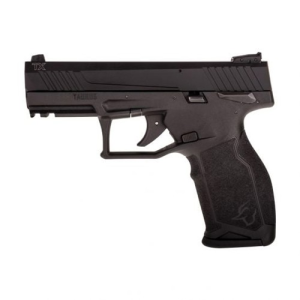
If your primary host is a pistol (Ruger Mark IV, Taurus TX22, Beretta 21A), the Sparrow works fine but the weight is more noticeable on a handgun. Adding 6.5 oz to the end of a pistol barrel changes the balance. If that bothers you, the Reticent 22 at 2.5 oz or the HUXWRX Flow 22 Ti at 3.9 oz are dramatically better pistol-host suppressors, but they cost $345 and $499 respectively.
If you need modular length (short for pistols, long for rifles), the Sparrow can't do that. The Rugged Oculus 22 and SilencerCo Switchback 22 both offer multiple configurations, but at $434 and $493.
If you shoot high volume and clean infrequently, stainless steel is your friend. The Sparrow's 17-4 stainless construction handles ultrasonic cleaning, solvent soaks, and aggressive carbon removal without the material concerns that come with aluminum-bodied suppressors. Plan on cleaning every 300 to 500 rounds for best performance, though the stainless construction is more forgiving if you stretch that interval.
If this is your only suppressor ever, stretch the budget. The Sparrow is a solid can, but the $345 Reticent 22 or $434 Oculus 22 or $440 OCL Titanium 22 represent meaningful upgrades in weight, modularity, or both. The $0 tax stamp already saved you $200. Putting some of that savings toward a better can is a reasonable move.
Next steps
First, verify that your state allows suppressor ownership. Roughly 42 states do, but the details matter, especially in 2026 with the federal registration enforcement in flux. Check your state's current statute, not a forum post from 2023.
Second, confirm your host is threaded 1/2x28. Nearly every rimfire host on the market uses this thread pitch, but verify before you order. If your barrel isn't threaded, threading services vary by shop; Silencer Central charges $124.99 per barrel, while Sportsman's Warehouse charges $200. Silencer Central also includes barrel threading as part of their purchase process.
Third, call your local dealer and ask what they charge for a suppressor transfer on a 4473. If the answer is $0 to $25, you're golden with the Sparrow at $296. If they charge $50 or more, shop around or buy from a dealer who stocks the Sparrow in-house.
Fourth, buy an ultrasonic cleaner if you don't already own one. A basic unit plus citric acid or CLR solution runs $80 to $150 one-time and will clean every suppressor you ever own. Rimfire fouling is the one ongoing maintenance reality of .22 suppressor ownership, and the right cleaning setup makes it trivial rather than tedious.
The SilencerCo Sparrow 22 at $296 is the only proven rimfire suppressor that fits a strict $300 budget in 2026. It's not the lightest, the quietest, or the most modern design in the category. It is the one that's been doing the job for fifteen years, costs less than three hundred dollars, and comes apart for cleaning without a fight. Sometimes the boring answer is the right one.