
You've decided to suppress a pistol. Now every forum thread, every YouTube comment section, and every dealer counter has a different answer about which 9mm can to buy. The 9mm pistol suppressor market in 2026 is the deepest it's ever been, with options ranging from sub-3-ounce titanium direct-thread cans to full-size modulars that also eat .300 BLK for breakfast. The good news: there's genuinely no bad era to be buying a can. The less-good news: the sheer number of choices makes the decision harder, not easier.
This guide narrows the field to the cans that actually matter for pistol hosts. Not PCCs, not subguns, not bolt rifles. Pistols. That means we care about weight at the muzzle, booster and piston compatibility, diameter relative to suppressor-height sights, and whether the thing will reliably cycle a tilting-barrel Glock or Sig without turning into a single-shot. If a can also happens to work well on a PCC, great, but pistol performance is the filter.

Quick picks
- Rugged Obsidian 9 Best overall for pistol hosts
- Dead Air Mojave 9 Best for low back pressure on a pistol
- HUXWRX FLOW 9K Ti Best lightweight option
- SilencerCo Omega 9K Best compact option
- BANISH PSTL 9 TI Best for maximum sound reduction
- Yankee Hill Machine R9 Best budget option
- SilencerCo Spectre 9 Best ultralight fixed-length option
At a glance
How we chose
Pistol suppressor selection comes down to a handful of factors that don't always apply to rifle or PCC cans.

Glock 19 Deals
Prices may change. May contain affiliate links.

Glock 17 Gen5 Deals
Prices may change. May contain affiliate links.
B&T Hush Puppy 9mm Deals
Prices may change. May contain affiliate links.
Steiner MPS Deals
Prices may change. May contain affiliate links.
The first gate is cycling reliability on a tilting-barrel pistol. Most modern semi-auto pistols use a Browning-type tilting barrel, which means the suppressor needs a booster (Nielsen device) and piston to let the barrel unlock properly under the added weight. A can that ships with the piston included saves you $65-$150 and the headache of figuring out which piston fits your thread pitch. We weighted this heavily.

Weight at the muzzle changes how a pistol handles more than almost any other variable. An extra 4 ounces on a rifle barrel is nothing. An extra 4 ounces hanging off the end of a Glock 19 slide is a different shooting experience entirely. Lighter cans track faster and cause fewer cycling issues, but they also tend to suppress less. That tradeoff is real and we didn't pretend it isn't.
Diameter matters because it determines whether your existing suppressor-height sights will clear the can body. Most pistol cans in the 1.35 to 1.40 inch range work with standard suppressor-height sights. Once you push past 1.5 inches, you're potentially looking at taller sights or a red dot to get a sight picture.

We also looked at manufacturer track record, warranty terms, and the mounting ecosystem. A suppressor from a company with a deep accessory catalog (pistons in multiple thread pitches, 3-lug adapters, fixed-barrel spacers) is more useful long-term than one that locks you into a single configuration. Every can on this list comes from a manufacturer with an established warranty and service history.
Sound performance matters, obviously, but we deliberately avoided ranking purely by published dB numbers. Testing methodology varies wildly between manufacturers, and a number measured at the muzzle means something very different from a number measured at the shooter's ear. Where PEW Science data exists, we referenced it. Where it doesn't, we noted the manufacturer's claims without treating them as gospel.
The picks
Rugged Obsidian 9
Best for: all-around pistol suppression with maximum flexibility

Rugged Obsidian 9 Deals
Prices may change. May contain affiliate links.
SureFire X300 Ultra Deals
Prices may change. May contain affiliate links.
Aimpoint Acro Deals
Prices may change. May contain affiliate links.
The Obsidian 9 shows up on nearly every "best 9mm suppressor" list for a reason that has nothing to do with hype: it ships ready to shoot on a pistol, right out of the box. The package includes the suppressor, a 1/2x28 piston, a 9mm front cap, and the ADAPT module that lets you run it in short (4.85 inches, 8.7 ounces) or full-length (7.8 inches, 12.7 ounces) configuration. Most competitors require you to buy the piston separately. Rugged doesn't, and that matters more than it sounds like it should when you're already spending hundreds of dollars on a suppressor plus the transfer process.

The non-slotted piston design deserves specific mention. Slotted pistons, which are common across the industry, allow gas to blow back through the slots and into the shooter's face. Rugged's piston creates a full circumference gas seal. The practical result is less carbon fouling on your hands and glasses, which is the kind of detail you don't appreciate until you've shot 200 rounds through a different can and look like you've been working on a diesel engine.
Construction is 17-4 stainless steel baffles with a hard-coat anodized aluminum tube, fully user-serviceable. Rugged recommends cleaning the Obsidian 9 baffles every 1,000 rounds, with the piston and spring cleaned after each range trip. The 1.37-inch diameter keeps suppressor-height sight compatibility intact, which matters if you're running this on a defensive pistol where co-witnessing through a red dot or using irons is non-negotiable. It carries an unconditional lifetime warranty with no fine print, and it's belt-fed rated for 9mm. The Obsidian 9 pistons are also cross-compatible with SilencerCo slotted pistons, so if you're already in the SilencerCo ecosystem, your existing hardware works.
Pros
- Ships with 1/2x28 piston, 9mm front cap, and ADAPT module included
- Two-length modularity on one tax stamp (short or full)
- Non-slotted piston reduces gas blowback versus slotted designs
- 1.37-inch diameter works with standard suppressor-height sights
- Fully user-serviceable with unconditional lifetime warranty
- Cross-compatible with SilencerCo slotted pistons
Cons
- 12.7 ounces in full-length configuration is heavy on a pistol
- Fixed-barrel and three-lug mounts are separate purchases
- Not the quietest option on this list in either configuration

Dead Air Mojave 9
Best for: shooters who want low back pressure and modular length on a pistol
Dead Air Mojave 9 Deals
Prices may change. May contain affiliate links.
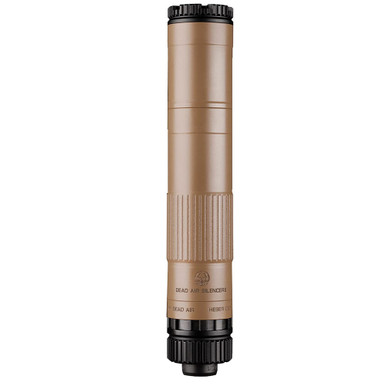
The Mojave 9 is Dead Air's answer to the question of whether a 3D-printed titanium suppressor can outperform traditional welded stainless designs. The short answer, based on PEW Science testing, is yes. PEW Science found the Mojave 9 second only to the CAT SC in combining excellent muzzle (bystander) hazard reduction with exceptional shooter's ear (operator) hazard reduction, and it achieves significant free-field operator hazard reduction in both its long and short configurations. That's a meaningful distinction. Many modular cans sacrifice real performance in their short setup. The Mojave 9 doesn't give up as much.
It runs two configurations: long at 7.64 inches and 9.6 ounces, or short at 5.89 inches and 8.2 ounces. The 3D-printed Triskelion baffle stack is what makes the modular trick work without a sound penalty. Caliber compatibility extends beyond 9mm to .357 Magnum, .300 Blackout (subsonic and supersonic), and .350 Legend, with full-auto ratings covering 9mm and .300 BLK subsonic, while .300 BLK supersonic and .350 Legend are semi-auto only. If you want one pistol can that also handles a .300 BLK upper, the Mojave 9 covers that without a second stamp.
The practical reality on a pistol: at 8.2 ounces in short configuration, it's noticeably lighter than the Obsidian 9 in full-length mode and only slightly heavier than the Obsidian 9 short. The 1.405-inch diameter is marginally wider than the Obsidian 9's 1.37 inches but still within the range where most suppressor-height sights work. The Mojave 9 ships with a 1/2-28 piston included; if you need additional pistons in other thread pitches, those are sold separately.
Pros
- PEW Science tested with top-tier suppression ratings in both configurations
- 3D-printed titanium construction keeps weight down relative to performance
- Low back pressure compared to traditional designs
- Modular long/short configurations
- Rated for 9mm, .357 Mag, .300 BLK, and .350 Legend
Cons
- Piston sold separately (Mojave piston required for tilting-barrel pistols)
- Higher MSRP than most competitors at $1,099
- 5.89 inches in short config is still longer than dedicated compact cans

HUXWRX FLOW 9K Ti
Best for: shooters who prioritize weight and clean shooting above all else

HUXWRX FLOW 9K Ti Deals
Prices may change. May contain affiliate links.

Sig P320 Deals
Prices may change. May contain affiliate links.

The FLOW 9K Ti is HUXWRX's first fully 3D-printed pistol suppressor, and it represents a fundamentally different approach to 9mm suppression. The Flow-Through venting technology routes gas forward and downrange instead of back toward the shooter. On a pistol, that translates to dramatically less blowback to your face, less carbon on your slide, and less need to adjust your gas system or recoil spring. At 4.8 ounces without the booster (8.9 ounces with the booster assembly installed), it's one of the lightest full-auto-rated 9mm cans you can buy that still works on a tilting-barrel handgun.
The entire suppressor is constructed from Grade 5 titanium with a high-temperature Cerakote finish. The enhanced GeoFlash Cap with extended lugs makes installation and removal straightforward. HUXWRX specifically calls out compatibility with Glock, M&P, P320, and other tilting-barrel pistol platforms. No modifications to the platform or gas system are required.
The catch: HUXWRX's mounting ecosystem requires some navigation. The booster piston housing adapter is a separate purchase, and several of the adapter options on HUXWRX's accessories page show as sold out. The Hub Piston Housing Adapter runs $108 and accommodates HUXWRX's piston for use on tilting-barrel pistols. If you're running it on a fixed-barrel host or PCC, the direct-thread stiction mount works without the booster. But for pistol use, budget for the adapter and piston on top of the suppressor price.
The 1.47-inch diameter is the widest on this list and may require taller suppressor sights on some hosts. Check your specific pistol before committing.

Pros
- 4.8 ounces without booster; among the lightest 9mm options available
- Flow-Through technology dramatically reduces gas blowback
- Full-auto rated with no barrel restrictions
- Grade 5 titanium construction throughout
- Particularly well-suited for shooters who experience blowback issues with standard cans
Cons
- Booster piston housing adapter sold separately ($108)
- 1.47-inch diameter may require taller sights on some pistols
- Not modular; single fixed length
- Some mounting accessories frequently out of stock
SilencerCo Omega 9K
Best for: compact suppression on pistols and subguns where overall length matters most

SilencerCo Omega 9K Deals
Prices may change. May contain affiliate links.

SureFire X300 Turbo Deals
Prices may change. May contain affiliate links.
Vortex red dot sight Deals
Prices may change. May contain affiliate links.
At 4.56 inches and 7.3 ounces, the Omega 9K is the shortest and one of the lightest traditional-construction cans on this list. If your primary concern is keeping overall length down on a compact pistol or a short-barreled subgun, the Omega 9K has been the category benchmark for years, and in 2026 it still holds significant market share.

SilencerCo engineered this for high-volume firing schedules. It's full-auto rated for 9mm pistols, PCCs, and submachine guns, and it's also rated for .300 BLK (subsonic and supersonic) with no barrel length restrictions. The box includes a 5/8x24 Alpha Direct Thread Mount, a 3-lug tool, a user manual, a Spring Retainer Cap and Spring, and a booster assembly. What it does not include is a piston. For tilting-barrel pistol use, you'll need to purchase a SilencerCo piston in the correct thread pitch for your host. That's an extra $60-80 depending on the pitch.
The Omega 9K doesn't chase the absolute lowest dB numbers. That's not its job. Its job is to be short, light, durable, and reliable enough to leave on the gun permanently. For shooters who want compact suppression they'll actually use rather than maximum suppression they'll leave in the safe because it's too long, the Omega 9K makes the math work.
Pros
- 4.70 inches long; shortest traditional can on this list
- 7.2 ounces; easy to carry and maneuver
- Full-auto rated for pistols, rifles, and subguns
- Rated for 9mm and .300 BLK (subsonic and supersonic)
- No barrel length restrictions
- Deep aftermarket support and accessory ecosystem
Cons
- No piston included; separate purchase required for pistol use
- Not modular; single fixed length
- Sound suppression trades off against compact size
- Frequently out of stock at major dealers
BANISH PSTL 9 TI
Best for: maximum sound reduction on a 9mm pistol
Glock 17 Deals
Prices may change. May contain affiliate links.
If raw quiet is what you're after, the BANISH PSTL 9 TI makes the strongest published claim in the 9mm pistol suppressor market: 34 dB of sound reduction. That number comes from 14 baffles packed into a titanium and 7075 aluminum body that measures 6.8 inches without the mount (7.16 inches with the Micro Booster installed) and weighs 6.73 ounces bare or 8.57 ounces with the Micro Booster.
The Micro Booster is the interesting part. BANISH developed a proprietary compact booster (patent pending) that functions as a Nielsen device but in a smaller, lighter package than traditional booster assemblies. It ships with the suppressor in 1/2x28 threading, so the can is ready to shoot on most common 9mm pistol hosts out of the box. Direct thread mounts are also available in 5/8x24 and M13.5x1LH for PCCs, lever guns, and bolt-action rifles.
Construction is titanium baffles with a 7075 aluminum main tube and front cap, finished in black anodized and black Cerakote. The 1.35-inch diameter is among the narrowest on this list, which is excellent for sight clearance. It's user-serviceable and carries a lifetime warranty against manufacturing defects and damage from normal use. The caliber range extends to 5.7x28, .32 ACP, .380 ACP, 9mm, .300 BLK, .38 Special, .357 Mag, and .350 Legend. Full-auto rating covers 9mm supersonic and .300 BLK subsonic.
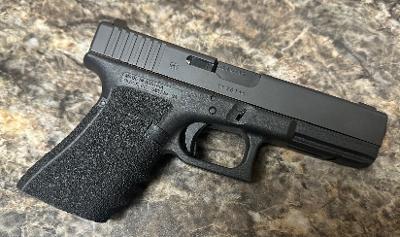
The tradeoff for all that suppression is length. At 7.16 inches with the Micro Booster, this is the longest can on the list. On a full-size pistol like a Glock 17 or Beretta 92, the added length is manageable. On a compact carry gun, you're looking at a very front-heavy setup.
Pros:
- 34 dB published sound reduction; highest claim on this list
- Ships with Micro Booster in 1/2x28; ready for pistol use out of the box
- 1.35-inch diameter is the narrowest here; excellent sight clearance
- Titanium and aluminum construction keeps weight reasonable for the size
- User-serviceable with lifetime warranty
- Multi-caliber rated from .32 ACP through .357 Mag
Cons:

- 7.16 inches with Micro Booster is long for a pistol can
- Published dB claims use manufacturer testing methodology; no PEW Science data available
- 14 baffles mean more parts to clean and reassemble
- Not modular; single fixed length
Yankee Hill Machine R9
Best for: getting into suppressed pistol shooting without spending $800+
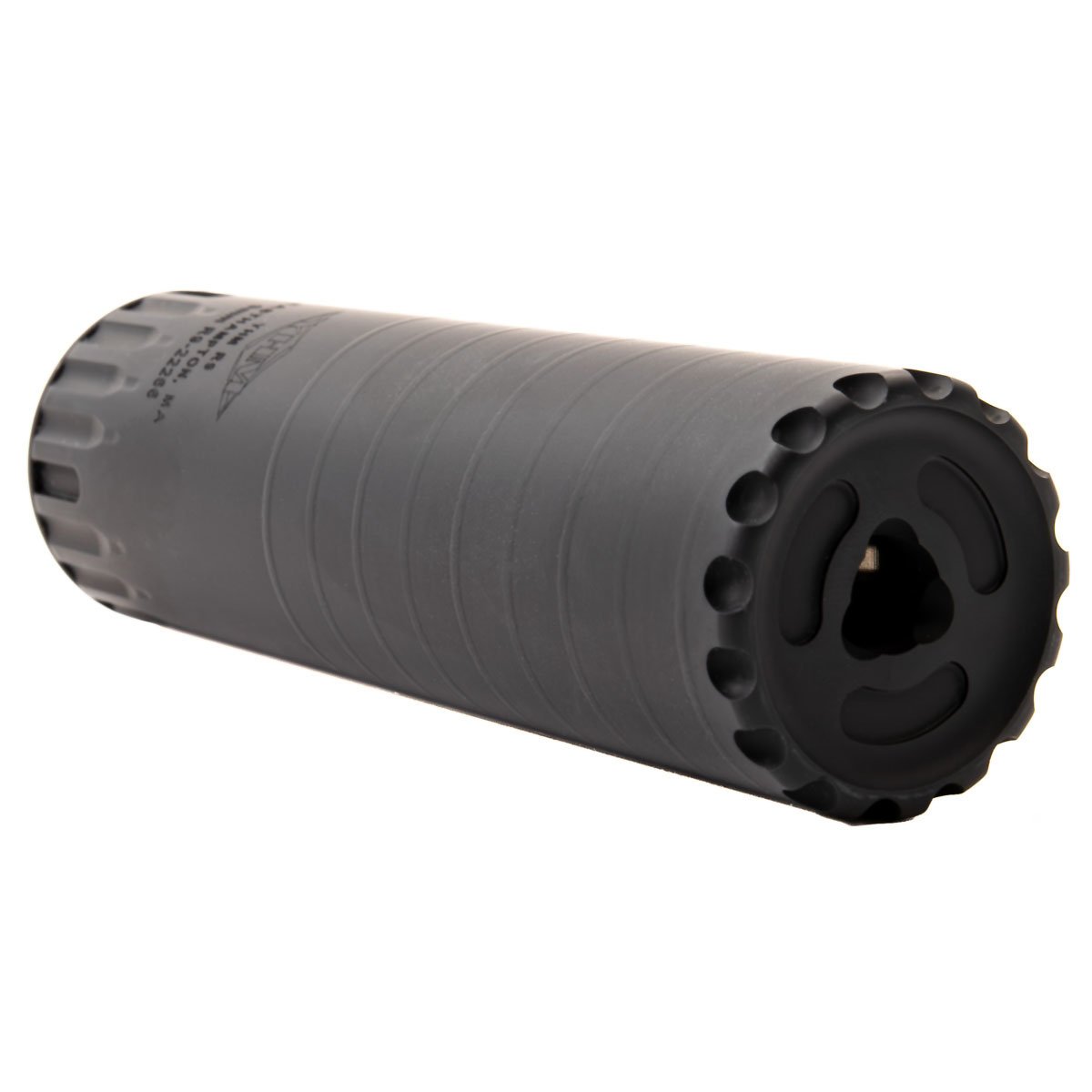
The YHM R9 is the can that makes the "I can't afford a suppressor" excuse obsolete. At an MSRP of $599.95 and street prices that frequently dip into the low $500s, it undercuts nearly every competitor on this list by $200-$500. The question is always whether budget means compromise, and with the R9 the answer is: less than you'd expect.
It's a 5.2-inch, fully welded, tubeless 17-4 PH stainless steel suppressor that weighs 9.3 ounces (11 ounces with the direct thread adapter). YHM rates it for 9mm through .308 Winchester, which is absurd versatility for the price. The published decibel rating is 123 dB on compatible hosts. It ships with a 1/2x28 direct thread HUB adapter and accepts YHM's full lineup of 1-3/8x24 HUB mounting options, including a Nielsen booster assembly and 3-lug adapter (both sold separately).
Here's where the budget reality kicks in for pistol use specifically: the R9 does not ship with a booster or piston. You'll need the YHM Nielsen Booster Assembly and a piston to run it on a tilting-barrel handgun. That adds roughly $120-$150 to the total cost. Even with those additions, you're still under $700 all-in, which is less than the suppressor-only price of several competitors.
The 1.5625-inch diameter is the widest on this list and will likely require taller suppressor sights on most pistol hosts. That's worth factoring into your total budget.
Pros:
- MSRP of $599.95 with street prices often in the low $500s
- 17-4 PH stainless steel; fully welded tubeless construction
- Multi-caliber rated from 9mm through .308 Winchester
- HUB mounting system accepts multiple adapter types
- Full-auto rated (limited)
Cons:

- Booster and piston required for pistol use; sold separately
- 1.5625-inch diameter requires taller suppressor sights on most pistols
- 11 ounces with direct thread; heavier than titanium options
- Not modular; single fixed length
- Not user-serviceable (welded construction)
SilencerCo Spectre 9
Best for: absolute minimum weight on a pistol with no modularity needed

SilencerCo Spectre 9 Deals
Prices may change. May contain affiliate links.

Sig P320 Compact Deals
Prices may change. May contain affiliate links.
At 3.9 ounces, the Spectre 9 is the lightest suppressor on this list by a meaningful margin. SilencerCo built it entirely from Grade 5 and Grade 9 titanium in a tubeless architecture designed to maximize internal baffle volume despite a compact 4.76-inch shell. The 1.37-inch outer diameter matches the Obsidian 9 and works with standard suppressor-height sights.
The Spectre 9 ships with a Piston Housing Assembly, a Spectre Tool, an Alpha Tool, and a field manual. It's full-auto rated and handles 9mm plus subsonic .300 BLK. Internal baffles do not require cleaning per SilencerCo's maintenance guidance, which is a genuine convenience factor for shooters who don't want to spend range day afternoons with an ultrasonic cleaner.
The weight savings are real and noticeable. On a Glock 19 or Sig P320 Compact, the Spectre 9 barely changes the balance of the pistol. That matters for shooters who plan to actually carry or train with the suppressor mounted rather than treating it as a range novelty. The tradeoff is that you get one length, one configuration, and less internal volume than larger modular cans. Sound suppression won't match the Obsidian 9 in full-length or the BANISH PSTL 9 TI, but the weight-to-suppression ratio is hard to argue with.
Pros
- 3.9 ounces; lightest full-auto-rated 9mm pistol can on this list
- 4.76-inch length barely extends past the muzzle on a full-size pistol
- 1.37-inch diameter works with standard suppressor-height sights
- Ships with piston housing assembly
- Baffles do not require cleaning per manufacturer guidance
- Grade 5 and Grade 9 titanium construction
Cons
- Not modular; single fixed length
- Less internal volume means less suppression than larger cans
- Limited to 9mm and subsonic .300 BLK
- No PEW Science data available for independent comparison
How to choose
Start with your host pistol. If you're running a tilting-barrel gun (Glock, Sig P320, Smith & Wesson M&P, CZ P-10, Beretta 92, and most other modern semi-autos), you need a booster and piston. Cans that ship with the piston included (Obsidian 9, BANISH PSTL 9 TI, CAT Street Crack Short) save you money and hassle. Cans that don't (Mojave 9, Omega 9K, FLOW 9K Ti, R9) require separate purchases that add $80-$150 to your total cost.

Beretta 92 Deals
Prices may change. May contain affiliate links.
Smith & Wesson M&P Deals
Prices may change. May contain affiliate links.

CZ P-10 Deals
Prices may change. May contain affiliate links.

Decide how much muzzle weight you can tolerate. If you're suppressing a full-size duty pistol for range use, 10-12 ounces is manageable. If you're suppressing a compact carry gun or training pistol where fast transitions matter, sub-5-ounce options like the Spectre 9 or the FLOW 9K Ti (without booster) change the equation. Shoot a friend's suppressed pistol if you can, or at minimum handle one at a dealer, before committing to a heavy can.
Think about what else you'll mount it on. If the pistol is the only host, optimize for pistol performance. If you also have a PCC, a .300 BLK upper, or a subgun, multi-caliber cans like the Mojave 9, R9, or Obsidian 9 stretch one purchase across multiple platforms. The Wolfman, while not a primary pick here because of its 1.618-inch diameter and 14.4-ounce long-configuration weight, is worth considering if your primary host is actually a PCC and the pistol is secondary.
Respect your budget honestly. The YHM R9 all-in with a booster and piston runs under $700. The Dead Air Mojave 9 with a piston runs over $1,100. Both will suppress 9mm. The performance gap exists but it's not proportional to the price gap. If this is your first can and you're not sure how much you'll actually shoot suppressed, the R9 is a smart entry point.
Check your state law first, then your sights. State law is the first gate. If your state allows suppressor ownership, the federal process is straightforward. Then check whether your pistol's sights will clear the suppressor body. Most cans under 1.4 inches in diameter work with standard suppressor-height sights. The R9 at 1.5625 inches and the FLOW 9K Ti at 1.47 inches may require taller sights or a red dot setup.
Next steps
Before you buy, confirm your state allows suppressor ownership. The federal landscape shifted significantly in 2026. Multiple sources reference the elimination of the $200 tax stamp and changes to the Form 4 process, with some dealers noting that suppressors now transfer on a Form 4473 with a background check under current ATF guidance following the October 2026 policy change. Verify the current status of these changes with your dealer, because legal challenges and policy shifts are ongoing. The process may look different by the time you read this than it did when these sources were published.
Handle as many of these cans as you can before committing. Specs on a page don't capture how 12.7 ounces feels on a Glock 17 versus how 3.9 ounces feels. If you have a local dealer with a range and rental suppressors, that's worth a trip. If not, at minimum hold the suppressor on your pistol at the dealer counter and check sight clearance before you finalize the transfer.
Figure out your piston situation before you order. Know your host pistol's thread pitch (1/2x28 is the most common for 9mm, but M13.5x1LH shows up on some European-market guns and certain aftermarket barrels). If the can you want doesn't include a piston, order the correct one at the same time so you're not waiting on a $60 part after your suppressor clears. And if you're running a threaded barrel you bought separately, confirm the barrel's concentricity before mounting any suppressor. A baffle strike from a misaligned barrel is not a warranty claim anyone wants to file.