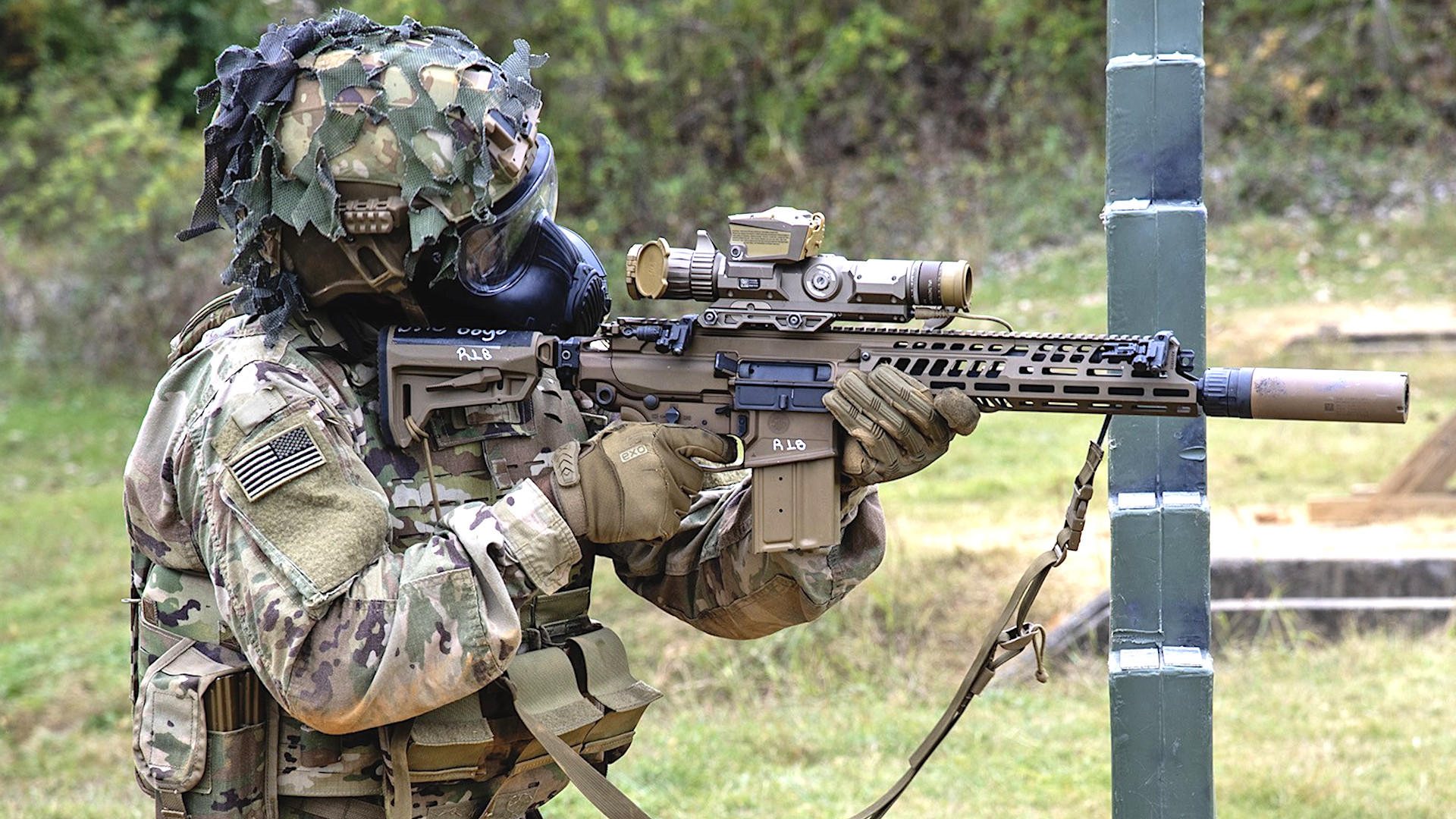
The Army is fielding its first new service rifle caliber since the M16 entered service in the 1960s. The XM7, chambered in 6.8x51mm, is replacing the M4A1 in close combat units, and the sales pitch is straightforward: more range, more lethality, the ability to defeat body armor that 5.56 cannot touch. The Army's own assessment calls it a "significant capability improvement in accuracy, range and overall lethality." That part is true.

But capability improvements do not arrive for free. Every gain the XM7 delivers comes with a corresponding cost somewhere else in the squad's combat power, and most of those costs land on the individual soldier's back. Heavier rifle, heavier ammo, fewer rounds, more recoil, a logistics tail that now has to feed two calibers across the same brigade. The question is not whether the XM7 is a better weapon in isolation. The question is whether the rifle squad, as a fighting unit, comes out ahead or behind when you add up everything it gains and everything it gives away.
That is the question Army CPT Braden Trent tried to answer in his research paper presented at Modern Day Marine, and it is the question that has reignited a debate as old as the M14-to-M16 transition: heavier caliber or more rounds? The answer matters to every infantry leader who will carry this weapon into a fight, and it matters to the Guard and Reserve units who will eventually inherit the logistics complexity whether they get the rifle or not.
Decision context
The XM7 exists because the Army concluded that the 5.56x45mm NATO cartridge had reached its ceiling. Reports on poor barrier penetration and ineffective terminal performance during the wars in Iraq and Afghanistan pushed Army leaders to look for a better round for the close combat force. The specific concern was near-peer adversaries wearing body armor that 5.56 cannot reliably defeat at combat ranges, particularly in the open terrain of Eastern Europe and the Indo-Pacific.

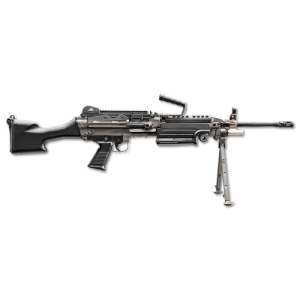
5.56x45mm NATO Deals
Prices may change. May contain affiliate links.
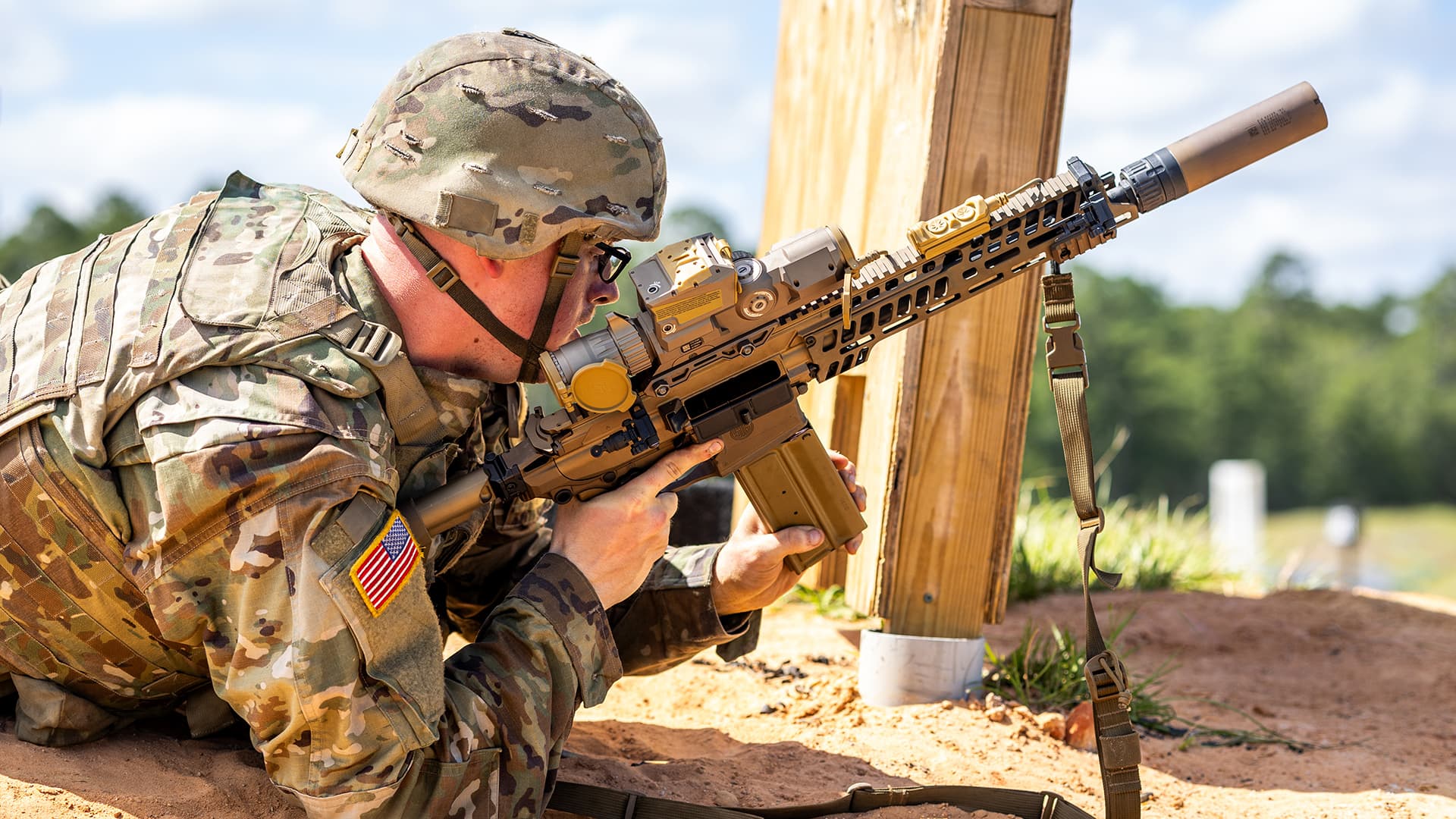
SIG Sauer won the Next Generation Squad Weapon (NGSW) contract in April 2022, a ten-year deal with an initial delivery order worth $20.4 million. The broader NGSW contract has been valued at up to $4.5 billion and covers the XM7 rifle, the XM250 automatic rifle (replacing the M249 SAW), the XM157 fire control optic, and the 6.8x51mm ammunition family. The first unit fielded was 1st Battalion, 506th Infantry Regiment, 101st Airborne Division, in March 2024. By fiscal year 2025, about a dozen units were in the fielding pipeline, with priority going to Pacific-focused and special operations formations.

The constraint every unit leader needs to understand: the XM7 is not replacing the M4A1 across the entire Army. It is going to close combat units only. Infantry, reconnaissance, combat engineers, and associated combat formations get the new rifle. Everyone else keeps the M4. That means a single brigade could be running two different rifle calibers, two different magazine types, and two different ammunition supply chains. The arms room complexity alone is worth a briefing slide.
For the individual rifleman, the decision has already been made. But for leaders planning training, logistics, and combat loads, the tradeoffs are worth understanding in detail. And for the civilian reader watching this transition unfold, this is the most consequential American military small arms change since Eisenhower was president.
Quick comparison table
The numbers that jump off that table are the ones that matter most to a squad leader: 70 fewer rounds per soldier and four more pounds on every rifleman's kit. Everything else flows from those two facts.
Ballistics head-to-head
Trajectory and range
The 6.8x51mm cartridge was designed from the ground up to extend the infantry squad's effective engagement range. The Army lists the XM7's effective range at 600-plus meters compared to the M4A1's 500 meters. That 100-meter extension does not sound dramatic on paper, but it represents a fundamentally different engagement envelope. At 500 meters, the M4A1 is already at the ragged edge of what a typical infantry soldier can reliably hit under stress. Pushing the effective range to 600 and beyond means the squad can initiate contact or return fire at distances that previously required a designated marksman with an M110 SASS.
The muzzle velocity numbers are surprisingly close: roughly 3,002 ft/s for the XM7 versus approximately 2,970 ft/s for the M4A1 firing M855A1. But velocity alone does not tell the story. The 6.8x51mm projectile is substantially heavier than the 5.56 bullet, which means it retains energy much better at distance. A heavier bullet moving at similar velocity carries more momentum and resists wind drift more effectively. The 6.8x51mm's hybrid case, with a brass body and stainless steel base, allows for chamber pressures that would be unsafe in a conventional brass case, which is how SIG Sauer gets that velocity out of a heavier projectile.
Terminal performance
This is where the Army's argument for the XM7 is strongest. The 6.8x51mm round delivers significantly greater energy on target than 5.56, particularly at extended ranges. The Army's pitch has been blunt: "No longer can you hide behind a tree. No longer can you hide behind a wall. When we know you're there, we're going to be able to kill you." That quote came from an Army official discussing the XM7's barrier penetration and lethality advantage.
The specific threat driving this transition is body armor. Near-peer adversaries are fielding increasingly capable personal armor, and the 5.56 round, even in its improved M855A1 form, struggles against Level IV-equivalent plates at combat distances. The 6.8x51mm was designed to defeat that armor at ranges where 5.56 cannot. The original requirement reportedly called for defeating Level II-equivalent armor at 800 to 1,000 meters, though the chamber pressure specification has already been reduced from approximately 80,000 PSI to around 70,000 PSI for reliability reasons. That pressure reduction may affect the extreme-range armor defeat capability, but the round still significantly outperforms 5.56 against protected targets at typical engagement distances.
Recoil
Here is where the physics get uncomfortable. You cannot push a heavier bullet to similar velocities at higher chamber pressures without generating substantially more recoil. The XM7 uses a short-stroke gas piston system rather than the M4's direct impingement, which helps manage felt recoil, and the integrated suppressor adds weight at the muzzle that further dampens it. But the fundamental energy equation has not changed. Soldiers transitioning from the M4A1 to the XM7 report noticeably more recoil, and that has real implications for controllability in automatic fire and for rapid follow-up shots.
CPT Trent's research flagged recoil as one of the XM7's operational limitations, and the concern is not theoretical. Controllable full-auto fire was one of the primary reasons the Army moved from the M14 to the M16 in the first place. The M14, chambered in 7.62x51mm, was essentially uncontrollable on full-auto for most soldiers. The 6.8x51mm generates less recoil than 7.62 NATO, but more than 5.56, and the question of whether the typical infantry soldier can effectively employ the XM7 on automatic at combat distances is still being answered in fielding evaluations.
The factoid most people do not know
The 6.8x51mm hybrid case is genuinely novel in military ammunition design. The stainless steel base allows the case to withstand chamber pressures far beyond what conventional brass can handle, roughly 80,000 PSI in the original specification versus about 62,000 PSI for standard 5.56 NATO. That is not an incremental improvement. That is a fundamentally different approach to cartridge engineering, and it is why the Army had to build a separate ammunition production line at the Lake City Army Ammunition Plant in Missouri just to manufacture the stuff. SIG Sauer is also producing 6.8mm rounds at a facility in Arkansas. The ammunition supply chain for this cartridge is being built from scratch, in parallel with fielding the weapon.
What the squad actually loses
Volume of fire: 70 rounds per rifleman
This is the number that keeps infantry leaders up at night. The M4A1's standard basic combat load is seven 30-round magazines, giving each soldier 210 rounds. The XM7's combat load, also seven magazines, drops to 140 rounds. That is a 33% reduction in the ammunition a rifleman carries into a fight.

"A 70-round difference may not seem significant, but to the soldier in the fight, it absolutely is a difference," CPT Trent said at Modern Day Marine. The concern is not just about a single engagement. The XM7 could be useful for suppressing targets in one fight, but soldiers would not likely get a timely resupply for a subsequent mission. In large-scale combat operations against a near-peer adversary, the scenario the XM7 was specifically designed for, resupply is exactly the thing that becomes unreliable.
The math gets worse when you try to compensate. A soldier could carry more magazines to close the round-count gap, but each loaded 20-round XM7 magazine adds 1.25 pounds. Carrying enough magazines to match the M4A1's 210 rounds would require 11 magazines, adding roughly 13.75 pounds of ammunition weight versus the 7.4 pounds for the M4A1's combat load. Nobody is doing that. The soldier is either accepting fewer rounds or accepting a dramatically heavier load. There is no third option.
Weight: four pounds that add up fast
Each soldier equipped with the XM7 carries about four pounds more total load than an M4A1-equipped soldier, with 70 fewer rounds. That four-pound figure includes the heavier rifle and the heavier ammunition for the standard seven-magazine combat load. It does not include the suppressor, which is integral to the XM7 system and pushes the rifle's weight to 9.84 pounds versus the M4A1's 6.54 pounds unloaded.
Sig sauer XM8 carbine
May contain affiliate links.
Four pounds does not sound like much until you remember that infantry soldiers are already carrying loads that routinely exceed 100 pounds in combat. Every pound added to the individual load degrades mobility, increases fatigue, and reduces the soldier's ability to close with and destroy the enemy. The Army has spent decades studying the effects of excessive combat loads, and the conclusion is always the same: lighter is better for the dismounted fighter. The XM7 moves in the opposite direction.
The Army recognized this problem quickly. Soldiers from a variety of units, including the 101st Airborne Division, participated in an equipment evaluation event dubbed "Soldier Touch Point" in September 2025, with additional testing conducted at Fort Benning, Georgia. The result was the XM8 carbine, which SIG Sauer displayed at AUSA 2026. The XM8 is more than 1 lb lighter and approximately 3.5 inches shorter than the M7 in standard configuration, and by FY2027, M7 rifle procurement is essentially over, replaced entirely by the shorter, lighter XM8. The fact that the Army moved to a lighter variant within two years of initial fielding tells you everything about how the weight issue played out in practice.

Suppressive fire capability
The infantry squad's ability to suppress the enemy is built on volume of fire. Suppression is not about hitting the target. It is about putting enough rounds near the target that the enemy cannot effectively return fire or maneuver. The M4A1, with its 30-round magazine and lighter ammunition, allows a rifleman to sustain fire longer before reloading and to carry more total rounds for extended engagements.
The XM7's 20-round magazine means more frequent magazine changes under fire. In a squad-level engagement, that translates to more moments where individual rifles go silent during reloads. The XM250 automatic rifle is supposed to compensate for some of this, but the squad's total volume of fire from its riflemen is objectively reduced. The debate between heavier caliber and more rounds is not new. It is the same argument that played out during the M14-to-M16 transition, and the M16 won that argument precisely because controllable automatic fire and higher round counts proved more valuable in combat than the M14's greater per-round lethality.

Range notes: what the arms room sees
The XM7's piston-driven action keeps combustion gas away from the rifle's internal works, which can improve reliability in certain conditions compared to the M4A1's direct impingement system. Piston systems tend to run cleaner and may require less frequent cleaning in sustained operations. But piston systems are also inherently heavier than their direct impingement counterparts, and that weight penalty is already baked into the XM7's 8.38-pound unloaded figure. The arms room trade is simpler maintenance procedures against a heavier weapon that requires a different set of spare parts, different magazines, and different ammunition than everything else in the unit's inventory.
Use cases: where the XM7 makes sense and where it does not
May contain affiliate links.
The scenario the Army designed it for
The XM7 was built for large-scale combat operations against a near-peer adversary in open terrain. Think Eastern Europe, the Indo-Pacific, environments where engagement distances stretch beyond what 5.56 can reliably cover and where the enemy is wearing body armor that shrugs off M855A1. In that specific scenario, the XM7's advantages are real. Greater effective range, superior barrier and armor penetration, and the ability to push marksman-level lethality down to every rifleman in the squad.
The Army's argument is that future combat will look different from the counterinsurgency campaigns that shaped U.S. small arms doctrine after 2001. The M4A1 was optimized for a fight that involved close-range engagements in urban terrain and rural compounds, where 5.56's lighter weight and higher round count were decisive advantages. If the next fight is across open steppe or island chains at 400 to 600 meters against armored opponents, the calculus changes.
Where the M4A1 still wins
Close quarters battle. Urban operations. Any environment where engagement distances are short, targets are unarmored or lightly armored, and the ability to carry more ammunition and reload less frequently matters more than per-round lethality. The M4A1 is nearly two pounds lighter unloaded, carries 50% more rounds per magazine, and is more controllable on automatic fire. For a soldier clearing rooms or patrolling dense urban terrain, those advantages are not trivial.

Colt M4A1 Deals
Prices may change. May contain affiliate links.
There is also the training reality. Soldiers qualify with whatever rifle they are issued, and the XM7's increased recoil makes marksmanship training more demanding. A soldier who barely qualifies with an M4A1 is going to have a harder time with the XM7. Guard and Reserve units, which already face limited range days and ammunition allocations, will feel this more acutely if and when they receive the new system.
The designated marksman gap that closes
One genuinely significant gain: the XM7 effectively pushes designated marksman capability down to every rifleman. The M110 Semi-Automatic Sniper System (SASS) in 7.62x51mm has an effective range of 800 meters, weighs 13.7 pounds empty with optics and bipod, and tips roughly 15.66 pounds with its suppressor attached, but it is issued to one soldier per squad or platoon. The XM7, paired with the XM157 fire control optic, gives every rifleman in the squad the ability to engage targets at ranges that previously required a specialized marksman rifle. That is a meaningful increase in squad-level lethality at distance, and it is the strongest argument in the XM7's favor.
Logistics: the cost nobody talks about enough
Two calibers, one brigade
The NGSW is currently confined to close combat units. Infantry, reconnaissance, combat engineers, and associated combat formations get the XM7. Everyone else in the brigade keeps the M4A1 and 5.56. That means the brigade's ammunition supply point now stocks two rifle calibers. The logistics chain from theater ammunition supply point to forward ammunition distribution point to the squad leader's hands now has to track and deliver two different types of rifle ammunition to units that may be operating in the same battlespace.
This is not a theoretical concern. Resupply in large-scale combat operations, again, the exact scenario the XM7 was designed for, is already the most fragile link in the infantry squad's combat power. Adding a second rifle caliber to the supply chain increases the probability of getting the wrong ammunition to the wrong unit at the wrong time. Every logistics officer who has ever run an ammunition supply point understands this problem intuitively.
Ammunition production
The 6.8x51mm round is not coming off an existing production line. The Army is building a separate ammunition production line at the Lake City Army Ammunition Plant in Missouri, and SIG Sauer is producing rounds at a facility in Arkansas. The hybrid case design, with its brass body and stainless steel base, requires manufacturing processes that do not exist for conventional ammunition. Scaling production to support Army-wide fielding to close combat units will take years, and the per-round cost will remain significantly higher than 5.56 for the foreseeable future.

For context, the global small arms market was estimated at $12.5 billion in 2025 and is expected to grow to $18.5 billion by 2035. The NGSW contract alone, at up to $4.5 billion, represents a substantial fraction of that market. The Army is essentially funding the creation of an entirely new ammunition ecosystem, and the cost of that ecosystem will be borne by training budgets and ammunition allocations for years to come.
Barrel life and sustainment
Higher chamber pressures accelerate barrel wear. The 6.8x51mm operates at pressures significantly above standard 5.56 NATO, and while the exact barrel life figures for the XM7 are not published in the source material, the physics are clear: higher pressure means shorter barrel life. That means more frequent barrel replacements, which means higher sustainment costs and more complex arms room maintenance schedules. For Guard and Reserve units that already struggle to get parts and maintenance time, this is a real concern.
Magazine and parts incompatibility
The XM7 uses SR-25 pattern magazines, not the standard STANAG magazines that the M4A1 and every other 5.56 NATO rifle in the inventory use. A soldier cannot grab an M4 magazine in an emergency and load it into an XM7. That incompatibility extends to most other parts as well. The piston-driven action shares almost nothing with the M4A1's direct impingement system. The arms room that previously maintained one rifle platform now maintains two completely different weapons with different parts, different magazines, and different technical manuals.
Common mistakes and concerns
Assuming the XM7 replaces the M4 everywhere. It does not. The XM7 and its successor XM8 carbine are going to close combat units only. Non-combat MOS holders and non-close combat units will continue to field the M4A1. This is a partial transition, not a full replacement, and that creates its own set of problems.
Ignoring the round-count math. Leaders who focus on the XM7's per-round lethality advantage without accounting for the 33% reduction in carried ammunition are doing incomplete analysis. A squad that runs dry 30% faster in a sustained engagement has a serious problem, regardless of how lethal each individual round is.
Treating the weight penalty as acceptable because "soldiers are strong." The Army's own research on combat loads has consistently shown that excessive weight degrades combat effectiveness. Four additional pounds per rifleman, spread across a nine-soldier squad, is 36 pounds of additional weight the squad carries into every movement. That weight comes directly out of speed, endurance, and tactical flexibility.
Forgetting the training burden. The XM7's increased recoil and different manual of arms require dedicated training time. Units transitioning from M4A1 to XM7 need range time to zero, qualify, and build proficiency with a weapon that handles differently than the rifle soldiers have trained on for their entire careers. That training time competes with every other requirement on the training calendar.
Overlooking the XM8 pivot. The Army accepted its first XM8 carbines in April 2026, and by FY2027, M7 procurement is essentially over. The XM8 is 12% lighter and 3.5 inches shorter than the M7. Units that received M7s may end up transitioning again to XM8s, which means another round of new equipment training, new zero data, and new arms room procedures. The speed of this pivot suggests the M7's weight and length were bigger problems in practice than the Army initially acknowledged.
The XM8 response: the Army's own admission
The introduction of the XM8 carbine deserves its own discussion because it is, in effect, the Army acknowledging that the original XM7 configuration was too heavy and too long for the close combat force. SIG Sauer displayed the XM8 at AUSA 2026. It has a 10.5-inch barrel compared to the M7's 13-inch barrel, is approximately 12% lighter, and is 3.5 inches shorter overall. It retains the M7's 6.8x51mm chambering and compatibility with the XM157 fire control optic.
The XM8 was developed in response to soldier feedback. Personnel from the 101st Airborne Division and the 75th Ranger Regiment evaluated the shorter configuration at Fort Benning in September 2025. The Army accepted its first XM8 delivery on April 3, 2026, and M7 production is being replaced entirely by XM8 production. That is a remarkably fast pivot for a military procurement program, and it tells a clear story: the soldiers who actually carried the M7 in training and evaluations said it was too heavy and too unwieldy, and the Army listened.
The XM8 addresses the weight and length concerns but does not solve the magazine capacity or ammunition weight issues. A 20-round magazine is still a 20-round magazine. The 6.8x51mm round still weighs more than 5.56. The logistics complexity of running two calibers in the same brigade remains. The XM8 is a better version of the same trade-off, not a resolution of it.
Scenario-based guidance
If your unit is fielding the XM7/XM8: Focus training time on the new manual of arms, zero procedures, and magazine change drills. The 20-round magazine means soldiers will be reloading more frequently under stress, and that needs to be trained until it is automatic. Build combat load plans that account for the reduced round count and heavier ammunition. Talk to your logistics section early about ammunition supply procedures for two calibers.
Sig sauer MCX Spear Deals
Prices may change. May contain affiliate links.
.277 Fury Deals
Prices may change. May contain affiliate links.
If your unit is keeping the M4A1: You are not off the hook. Your brigade may include units running the XM7/XM8, and cross-leveling ammunition in a fight just got more complicated. Ensure your soldiers understand that M4 magazines and 5.56 ammunition are not compatible with the XM7, and vice versa. Plan for the possibility that resupply convoys are carrying ammunition your unit cannot use.
If you are a Guard or Reserve infantry unit: You are likely further back in the fielding pipeline. Use that time to study the system, understand the differences, and plan your training calendar for the transition. The XM7's recoil and weight will require more deliberate marksmanship training, and your limited range days need to account for that. The arms room will need new storage, new parts bins, and new TM references.
If you are a leader planning large-scale combat operations: The squad's total firepower equation has changed. Each rifleman brings more lethality per round but fewer rounds per soldier. Your fire distribution plans, ammunition resupply plans, and engagement criteria need to reflect that reality. The XM250 automatic rifle is supposed to compensate for some of the squad's reduced volume of fire, but that weapon has its own weight and ammunition concerns.
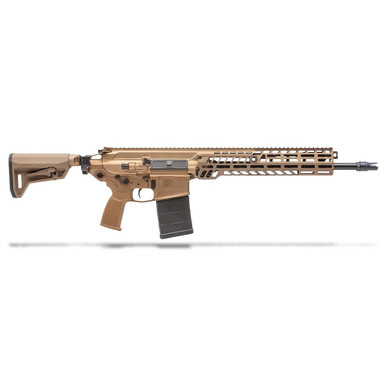
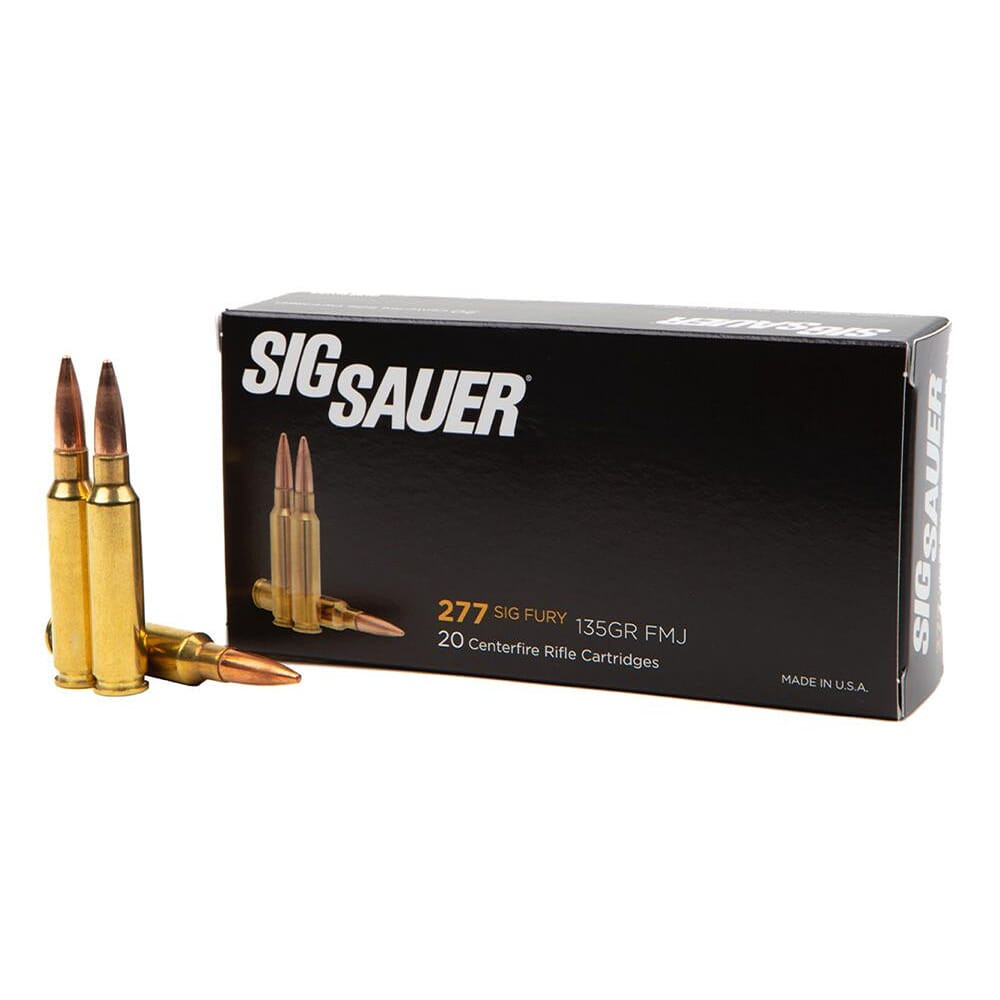
If you are a civilian following this transition: The 6.8x51mm cartridge, sold commercially as .277 Fury, is available in SIG Sauer's MCX Spear platform. The civilian version is semi-auto only and uses commercially loaded ammunition at lower pressures than the military specification. The military's investment in the 6.8x51mm ecosystem will eventually benefit the civilian market as the ammunition supply chain matures and aftermarket support develops. But the military-specification ammunition with its hybrid case and extreme chamber pressures is not the same thing as what you will find on the shelf at your local gun store.
The debate that will not end
The XM7 transition has reignited the oldest argument in infantry small arms: do you want each round to hit harder, or do you want more rounds? The M14-to-M16 transition answered that question in favor of more rounds and lighter weight. The 5.56 NATO cartridge defined Western infantry combat for over sixty years precisely because it allowed soldiers to carry more ammunition, shoot more controllably on automatic, and move faster under lighter loads.
The Army is now arguing that the threat has changed enough to justify reversing that calculus. Body armor that defeats 5.56, engagement distances that exceed the M4A1's effective range, and near-peer adversaries that fight differently than insurgents in Iraq and Afghanistan. Those are legitimate concerns, and the 6.8x51mm cartridge addresses them directly.

But the concerns raised by CPT Trent and other critics are equally legitimate. A 33% reduction in carried ammunition, a four-pound weight increase per soldier, more recoil, a more complex logistics chain, and the training burden of transitioning to an entirely new weapon system are not trivial costs. The Army's own rapid pivot to the lighter, shorter XM8 suggests that at least some of those costs were underestimated during the program's development.
The honest answer is that nobody knows yet whether the trade-off will prove correct. The XM7 has not been tested in sustained combat against a near-peer adversary. The scenarios that justify its adoption, long-range engagements against armored opponents in open terrain, are projections about future conflicts, not lessons from recent ones. If the next fight looks like Eastern Ukraine, the XM7's advantages may prove decisive. If it looks like Fallujah, the M4A1's lighter weight, higher capacity, and proven close-quarters performance may be what soldiers wish they still had.
What the rifle squad loses in this transition is concrete and measurable: rounds, mobility, simplicity. What it gains is potential: the potential to engage farther, hit harder, and defeat protection that 5.56 cannot. Whether that potential outweighs those concrete losses is the question the Army is betting billions of dollars and, more importantly, soldiers' lives on answering correctly. The fielding is underway. The first units are training with the new system. The answer will come from the firing line and, eventually, from the battlefield. Until then, every leader in the close combat force needs to understand exactly what the squad is giving up to get what the Army says it needs.