
Half the arms rooms in the Army have at least two M240 variants sitting in the same rack, sometimes three, and the soldiers drawing them don't always know which one they're holding or why it matters. The M240B, M240L, and M240H share a lineage, a caliber, and most of their operating principles, but they are not the same gun. The differences in weight, barrel length, furniture, and intended role change how you employ them, how you maintain them, and which parts you can swap between them. Getting this wrong costs range time, creates logistical headaches, and occasionally sends a soldier downrange with a weapon configured for a mission it wasn't designed for.
The M240 family traces back to the Belgian FN MAG (Mitrailleuse d'Appui Général, which translates to "general-purpose machine gun"), and the U.S. military first adopted a variant in 1977 for coaxial use in armored vehicles. The infantry version, the M240B, didn't enter Army service until the late 1990s as a replacement for the M60. The M240L followed in the early 2010s, and the M240H has been around since 2004. All three are gas-operated, open-bolt, belt-fed 7.62x51mm NATO medium machine guns. The M240B and M240H share a cyclic rate of 550 to 650 rounds per minute, though the broader M240 family can fire at higher rates depending on gas settings. All three have a maximum range of 3,725 meters. And all three are still being actively procured. FN America received a $9.9 million contract in March 2026 just for M240Bs, and a $4.9 million contract in July 2025 for M240Ls. The Pentagon isn't treating this family as legacy inventory waiting to be retired. It's managing a mixed fleet on purpose.
May contain affiliate links.

This breakdown covers the three variants a line unit is most likely to encounter in the arms room or draw from a support battalion: the B, the L, and the H. What makes each one different, where each one belongs in the formation, what breaks, what gets confused, and what the future looks like.
The common DNA: what all three share
Before splitting hairs between variants, the shared architecture matters because it's what makes the M240 family so reliable and why it's survived nearly fifty years of continuous service. Every variant in this discussion uses the same gas-operated, long-stroke piston action firing from an open bolt. Open-bolt firing reduces heat buildup in the chamber and eliminates the risk of a chambered round cooking off during sustained fire. That's not a minor detail for a weapon system designed to deliver suppressive fire at the platoon and company level.
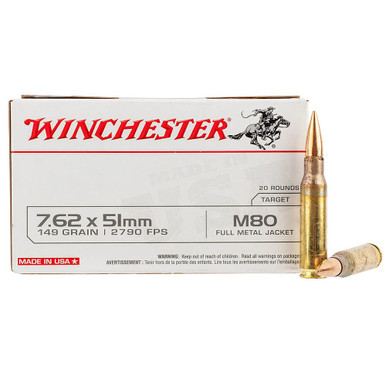
7.62x51mm NATO Deals
Prices may change. May contain affiliate links.
All three variants fire 7.62x51mm NATO from a disintegrating-link belt. They all use cold hammer-forged, hard-chromed barrels with fixed headspace and timing, meaning a barrel swap doesn't require gauging or adjustment. That fixed headspace and timing is one of the M240's biggest practical advantages over the M60 it replaced. Soldiers commonly struggled with headspace and timing on the M60, and getting it wrong could be catastrophic. The M240 eliminated that failure point entirely.
The effective ranges are consistent across the B, L, and H variants: 800 meters for a point target, 1,800 meters for an area target with tripod and traversing and elevation (T&E) mechanism, and 900 meters for tracer burnout. Maximum range is 3,725 meters for all three. The cyclic rate sits at 550 to 650 rounds per minute with the hydraulic buffer installed. These numbers don't change between variants because the gas system, bolt group, and ammunition are the same.
Where the variants diverge is in receiver material, barrel length, overall weight, stock configuration, mounting hardware, and intended primary role. Those differences ripple outward into how you carry the weapon, what platforms it mounts on, which accessories it ships with, and how the arms room tracks parts compatibility.
The M240B: the steel workhorse
The M240B, formerly designated the M240E4, is the standard infantry medium machine gun. It's the variant most soldiers picture when someone says "240." It entered Army service in the mid-1990s and remains the standard for the Marine Corps, Navy, and Coast Guard as well. As of 2026, the M240B is still the primary medium machine gun for the U.S. Army, and FN America continues to receive procurement contracts for new production guns.

May contain affiliate links.
May contain affiliate links.

The numbers tell the story. The M240B weighs 27.6 pounds empty. Barrel length is 21.7 inches. Overall length is 48.5 inches. The receiver is machined steel with a top-mounted MIL-STD-1913 rail for optics and accessories. It ships with an integrated adjustable steel bipod and can be mounted on the M192 tripod (Army standard) or the M122 tripod (Marine Corps standard), as well as vehicle and watercraft pintle mounts.
That 27.6 pounds is the gun alone. Add a spare barrel, a tripod, T&E, 600 rounds of linked 7.62, and the associated pouches and carriers, and the total system weight for a machine gun team approaches or exceeds 80 pounds distributed across two or three soldiers. Fully kitted out for a dismounted patrol, the gun itself can approach 35 pounds before ammunition. That weight is the M240B's defining characteristic and its defining limitation.

The steel receiver is extraordinarily durable. It absorbs sustained fire heat, resists warping, and tolerates the kind of rough handling that happens when weapons get tossed into the back of an LMTV or dragged through a breach lane. The sealed receiver design functions reliably in wet, dusty, sandy, and cold environments. The M240B earned its reputation in the Gulf War, Iraq, and Afghanistan precisely because it kept running in conditions that killed other weapons.
For units where the gun lives on a vehicle mount or a fixed position most of the time, the M240B's weight penalty is irrelevant. The steel receiver's long-term durability and lower unit cost (approximately $6,600) make it the logical choice for formations that don't need to shave pounds. The Army's continued procurement of M240Bs alongside M240Ls suggests a deliberate force-design decision: the B stays where commonality, durability, and cost matter more than weight savings.
Arms room reality
The M240B is the variant most likely to have been sitting in your arms room since before half the unit enlisted. Some of these guns have been in continuous service for over two decades. The TM says to inspect the receiver for cracks, pitting, and erosion during PMCS (preventive maintenance checks and services), and that's not theoretical guidance on a weapon with this much mileage. Pay attention to the barrel locking mechanism, the gas regulator, and the feed tray cover. A worn feed tray cover pawl is one of the most common causes of feeding malfunctions on high-round-count M240Bs, and it's the kind of thing that gets missed during a quick pre-range inspection.
The M240L: titanium drops five pounds
The M240L, formerly designated the M240E6, is the product of the M240B Weight Reduction Program. The Army adopted it in the early 2010s, with full fielding ramping up around 2017. The design goal was simple: cut weight from the M240B without sacrificing range, reliability, or lethality. The result is a gun that sheds 5 pounds, roughly 18% of the M240B's weight, through titanium construction and alternative manufacturing methods for major components.
May contain affiliate links.
May contain affiliate links.

Here are the M240L's specifications from FN America: caliber is 7.62x51mm NATO, barrel length is 21.7 inches (three inches shorter than the M240B's 24.8-inch barrel), overall length is 48.5 inches, height is 11.6 inches, and the rate of fire is 550 to 650 rounds per minute. The weight reduction comes from a titanium receiver and polymer trigger frame, with titanium also used for the front sight post and carrying handle, while alternative manufacturing methods for major components further contributed to the savings. The barrel itself weighs 5.8 pounds and uses a titanium front sight. The gun also has a single-port gas regulator and a redesigned collapsible buttstock assembly with a hydraulic recoil buffer system and non-slip buttplate.
Five and a half pounds doesn't sound like much until you carry a medium machine gun for twelve hours on a dismounted patrol. That 18% weight savings translates directly into reduced soldier fatigue, increased mobility, and the ability to carry additional ammunition, water, or other mission-essential equipment. For light infantry, airborne, and air assault units where every ounce matters, the M240L changes the calculus of what a machine gun team can do and how far they can do it.
The M240L comes equipped with the forward-mounted MIL-STD-1913 rail kit as standard, giving it accessory mounting capability out of the box that the M240B requires an add-on kit to match. The effective ranges are identical to the M240B: 600 meters for grazing fire, 800 meters for a point target, 900 meters for tracer burnout, 1,800 meters for an area target, and 3,725 meters maximum range. The shorter barrel doesn't meaningfully degrade ballistic performance at these engagement distances.

The Army initially bought 4,500 M240Ls and planned to procure 12,000 total. The July 2025 contract for $4.9 million indicates that procurement is ongoing. Guard and Reserve units have been slower to receive M240Ls, which means many of those formations are still running M240Bs exclusively and may not have hands-on experience with the titanium variant. If your unit is transitioning, there are some practical differences worth knowing.
What changes for the gunner
The shorter barrel and different balance point of the M240L mean it handles differently than the M240B. The center of gravity shifts slightly, and soldiers who've spent years on the B will notice the difference immediately when they shoulder the L. It's not a problem, but it's an adjustment. The collapsible buttstock changes the length of pull and the cheek weld geometry. Soldiers should get dry-fire time with the L before a qualification range if they're transitioning from the B.
The polymer trigger grip and titanium receiver also feel different under sustained fire. The titanium receiver transfers heat differently than steel. It doesn't absorb and dissipate heat the same way, which means the receiver can feel hotter to the touch during extended engagements even though the internal operating temperatures are comparable. This is a perception issue more than a performance issue, but it catches soldiers off guard.
Parts compatibility between the M240B and M240L is limited. The bolt group, barrel (with caveats about the shorter L barrel), and some small components interchange, but the receivers, trigger groups, and stocks do not. The arms room needs to track B and L parts separately. Mixing titanium and steel receiver components is not authorized and will create maintenance nightmares. This is the kind of detail that gets overlooked when a unit has both variants in the same rack and is pulling parts for a range day under time pressure.
The M240H: built for the bird
The M240H, formerly designated the M240E5, entered service in 2004 on U.S. Army helicopters. It's an improvement of the earlier M240D (the door-gun variant), and its primary design intent is aviation and vehicle mounting. The H features a rail-equipped feed cover, an improved flash suppressor, and a configuration that allows faster conversion to ground use via an egress components kit.
May contain affiliate links.
May contain affiliate links.

FN America lists the M240H at 25.8 pounds, with a 21.7-inch barrel, 41.6 inches overall length, and 9 inches in height. The rate of fire is the same 550 to 650 rounds per minute. The most distinctive feature of the M240H in its primary configuration is the dual spade grips with thumb-activated trigger systems, replacing the conventional pistol grip and trigger of the B and L variants. Those spade grips are designed for pintle-mount operation from helicopter doors, vehicle turrets, and boat mounts, where the gunner needs enhanced control during burst and sustained fire from an unstable platform.
The M240H lacks the integrated bipod found on the B and L. It doesn't need one in its primary role. The solid steel receiver provides the durability required for the vibration, heat cycling, and environmental exposure that come with aviation operations. The receiver is gas-operated and fires from the open bolt position, same as every other M240 variant.
What makes the H operationally interesting is the egress kit. This conversion package includes a bipod and conventional pistol grip trigger module that allow the M240H to be reconfigured for dismounted ground use. The concept is straightforward: if a helicopter goes down or a vehicle is disabled, the crew can strip the mounted M240H, install the egress kit, and employ it as a ground weapon. The conversion is designed to be fast, but "fast" in this context still means a deliberate process that requires training. Soldiers who've never practiced the egress kit conversion under stress will fumble it.

Who actually uses the H
The M240H is primarily found in aviation units, cavalry squadrons with scout helicopters, and mounted formations. Infantry line units are unlikely to have M240Hs in their arms rooms unless they're in a combined arms battalion with an organic mounted element. The Navy uses M240Ds and M240Hs on surface vessels and riverine craft. Contract records show ongoing procurement of M240Ds for the Navy alongside M240B and M240H orders for the Army.
The H's shorter overall length (41.6 inches versus the B's 48.5 inches) makes it more practical in the confined spaces of helicopter cabins and vehicle turrets. That nearly seven-inch difference matters when you're trying to traverse a weapon system inside a Black Hawk door frame or a Stryker hatch.

Most units get the H wrong in one specific way: they treat the egress kit as an afterthought. The kit lives in a pouch somewhere in the aircraft or vehicle, and nobody trains on the conversion until it's too late. The standard should be that every crew member who operates an M240H can convert it to ground configuration under time pressure and in reduced visibility. That's a five-minute drill that could save lives in a downed-aircraft scenario.
Side-by-side comparison
One thing most people don't know: the M240 is the U.S. military's adoption of the FN MAG, and parts compatibility extends to other MAG variants adopted by NATO member nations. That interchangeability has significant advantages for coalition operations, training, logistics support, and joint missions. A U.S. M240 can accept parts from a British L7A2 or a Canadian C6 in a pinch. That kind of cross-compatibility doesn't exist with most other weapon systems in the inventory.
Common mistakes and troubleshooting
Soldiers and armorers make the same mistakes with M240 variants across the force. These are the ones that eat range days and create maintenance failures.
Mixing B and L parts in the arms room. The titanium receiver on the M240L and the steel receiver on the M240B are not interchangeable, and neither are the trigger groups or stocks. When a unit has both variants, parts bins need to be clearly segregated. A steel component forced into a titanium receiver housing will cause damage. The bolt groups have more commonality, but even here, the TM is the authority on which specific parts interchange. When in doubt, check the serial number on the receiver against the parts log.

Ignoring the gas regulator. The M240's single-port gas regulator controls the cyclic rate and the force of the operating cycle. Carbon buildup in the gas regulator is one of the most common causes of sluggish operation and short-recoil malfunctions. Soldiers skip cleaning the gas regulator because it's tedious and requires a specific tool. The fix takes five minutes and saves a range day. CLP (cleaner, lubricant, protectant) and a gas regulator scraper should be part of every cleaning kit that goes to the range.
Running a barrel too long without a change. The TM prescribes barrel changes at specific round-count intervals during sustained fire. The standard is a barrel change every 200 rounds during sustained fire (over 100 rounds per minute) or when the barrel becomes too hot to touch. The quick-change barrel system makes this a fast operation, but soldiers who haven't drilled it will fumble the latch, burn their hands, or short-seat the replacement barrel. A barrel that isn't fully locked will cause a catastrophic malfunction. Drill barrel changes until they're automatic.

Neglecting the feed tray and feed pawls. High-round-count guns develop wear on the feed tray cover, the feed pawls, and the cam slot that drives the belt through the action. A worn feed pawl causes the belt to skip, resulting in a failure to feed that looks intermittent and drives gunners crazy. This is an armorer-level inspection item, but gunners should know what the feed pawls look like when they're worn and flag it during PMCS.
Treating the M240H egress kit as optional training. Aviation and mounted units issue the egress kit with the weapon but rarely train on the conversion. The drill should be a standard part of crew qualification: remove the gun from the mount, install the bipod, swap the spade grips for the pistol grip trigger module, attach the buttstock, and conduct a functions check. Timed. Under stress. In the dark. If the crew can't do it, the egress kit is dead weight.
Range notes: what qual day actually looks like
M240 qualification is a crew event. The gunner and assistant gunner work together, and the standard involves engaging targets at multiple distances from both bipod and tripod positions. The specific tables vary by service and unit, but the core tasks are the same: establish a position, achieve a stable firing platform, engage point and area targets, conduct barrel changes, and handle malfunctions.
The reality on most range days is that units don't get enough ammunition to train effectively before qualifying. Guard and Reserve units face this more than active. A typical training allocation might give a gun team 400 to 600 rounds for the entire range day, which has to cover zero confirmation, practice, and qualification. That's not much for a belt-fed weapon with a 550-round-per-minute cyclic rate. Every burst matters, and soldiers who haven't had enough trigger time will struggle with the beaten zone concept, with controlling burst length, and with the rhythm of fire that makes a 240 effective.
Tripod work is where most gun teams fall apart. Getting the T&E mechanism set correctly, establishing a correct traversing arc, and understanding the relationship between clicks of elevation and meters of range adjustment at distance requires deliberate practice. The bipod position is more intuitive but less stable and less precise at range. Units that skip tripod training because it's time-consuming are leaving their most effective engagement capability untrained.

One practical tip that pays dividends: dry-fire drills with dummy rounds before going live. Load a belt of dummy rounds, have the gun team run through their engagement sequence, practice barrel changes, and rehearse immediate and remedial action for malfunctions. This costs zero ammunition and builds the muscle memory that makes live fire productive. Most units skip this step because it feels like wasted time. It isn't.
The future: FMMG and what comes after the M240
The M240 has been in service for nearly fifty years, and the Army is laying groundwork for what comes next. The fiscal year 2026 budget includes funding for the Future Medium Machine Gun (FMMG) program, which aims to replace the M240B for dismounted infantry roles. The projected total cost across research, development, and acquisition is $3.6 billion.
.338 Norma Magnum Deals
Prices may change. May contain affiliate links.
The FMMG program is exploring several directions simultaneously. One track involves rechambering existing M240s to fire the 6.8x51mm ammunition used by the new M7 rifle and M250 light machine gun. In 2022, the Army issued a solicitation for 6.8x51mm conversion kits for the M240B and M240L. Another track evaluates replacing some M240s outright with the M250 (the belt-fed companion to the M7) in certain units, which would provide ammunition commonality across the squad. A third track looks at a clean-sheet design in .338 Norma Magnum, a cartridge that delivers roughly twice the muzzle energy of 7.62 NATO and stays supersonic past 1,300 meters.
The March 2025 Request for Information asked industry about a next-generation medium machine gun capable of firing both .338 Norma Magnum and 6.8x51mm from the same weapon via a conversion kit. That's an ambitious requirement. The .338 Norma Magnum is a 300-grain bullet traveling at approximately 2,650 feet per second, delivering over 4,900 foot-pounds of muzzle energy and remaining lethal beyond 1,500 meters. That nearly doubles the effective range of the current M240.
Several industry competitors are positioning for this program. The SIG Sauer MG 338 is undergoing testing and evaluation as part of SOCOM's LMG-M program, while the Army's FMMG effort remains a separate initiative that has not yet moved beyond the RFI stage. The Knight's Armament AMG (formerly designated the LAMG) in 7.62×51mm NATO weighs 13.9 pounds unloaded, nearly half the M240B's weight. Ohio Ordnance Works has the REAPR, which was designed from the ground up, incorporating best features from legacy machine gun designs with innovations in quick-change barrel mounting, a roller delayed operating system similar to the MG45, and a patented sliding feed cover for enhanced optics compatibility.

But here's the practical reality for line units: the FMMG program is in its earliest stages with no official program of record yet. The M240 family will remain the medium machine gun for the foreseeable future. The continued procurement of both M240Bs and M240Ls through 2026 and beyond confirms this. The Army is actively managing the M240 as a capability portfolio, not passively sustaining legacy inventory while waiting for a replacement. Units need to train on what they have, maintain what they have, and understand the differences between what they have.
What the mixed fleet means for your unit
The Army's deliberate decision to field both M240Bs and M240Ls creates a practical force-design logic that units need to understand. The M240L is favored where dismounted mobility is paramount: light infantry, airborne, air assault, and Ranger formations where every pound carried affects mission endurance. The M240B remains attractive where commonality, lower technical risk, and long-term durability matter more than weight savings: mechanized infantry, support units, and formations where the gun spends most of its life on a mount or in a fixed position.
This means a brigade combat team might have M240Ls in its infantry battalions and M240Bs in its support and headquarters elements. A division might have all three variants across its subordinate formations. The supply system needs to track parts for each variant separately. The training plan needs to account for soldiers who may transition between variants during a PCS or a reorganization.
For Guard and Reserve units, the mixed fleet creates an additional challenge. These formations often receive equipment later than active component units and may have less flexibility in what they're issued. A Guard infantry battalion that's been running M240Bs for years might receive M240Ls with minimal transition training time. The differences between the two are manageable, but they're not zero, and assuming a soldier who's proficient on the B will be immediately proficient on the L is a mistake.
What to do before your next range day
If your unit has M240s on the range schedule, there are concrete steps that pay off. First, verify which variant you're drawing and confirm that all accessories, spare barrels, and cleaning equipment match that variant. An M240B spare barrel is not the same length as an M240L spare barrel. Second, conduct a thorough PMCS before leaving the arms room, with specific attention to the gas regulator, feed tray cover, feed pawls, barrel locking mechanism, and buttstock assembly. Third, build time into the range plan for dry-fire rehearsals with dummy rounds before going live. Fourth, if your unit has both B and L variants, brief the gun teams on which variant they're firing and what's different about it.
For M240H crews, add the egress kit conversion drill to your pre-range training. Time it. Do it again. Then do it in the dark with NODs. That's the scenario where it matters, and it's the scenario where untrained crews fail.
The M240 family has earned its reputation over five decades of combat service. The B, L, and H variants each exist for a reason, and understanding those reasons makes soldiers more effective with whichever one they draw from the rack. The gun doesn't care which variant it is. It'll run. The question is whether the crew behind it understands what they're holding and how to get everything out of it.