Your defensive ammo has been sitting in a nightstand drawer for four years. The range ammo in the garage went through two summers of 100°F heat. That case of 5.56 you panic-bought in 2020 is still sealed in the original cardboard. Is any of it still good?

The short answer is that properly stored ammunition lasts a very long time; decades, sometimes longer. Military surplus from the 1950s and 1960s still fires reliably when it's been kept in sealed containers. But "properly stored" is doing a lot of heavy lifting in that sentence. The enemies are heat, humidity, and temperature cycling, and most people's actual storage conditions are worse than they think. The difference between ammo that's fine after 20 years and ammo that's giving you misfires after 5 isn't luck; it's chemistry and physics you can actually control.
Here's what the data says about what degrades, how fast, and what you can realistically do about it.
What actually degrades inside a cartridge
A loaded round is a sealed system, but it's not a perfect one. Four components can degrade: the primer compound, the propellant powder, the case seal, and the case itself. Understanding which one fails first; and why; changes how you think about storage.
The primer is the most vulnerable component. Modern primers use lead styphnate or, in newer military and some commercial loads, lead-free compounds like DDNP (diazodinitrophenol). These are sensitive to moisture. When water vapor reaches the primer compound, it can desensitize the mixture. The result isn't a dramatic failure; it's a click instead of a bang. Primers don't need to be submerged to absorb moisture; sustained high humidity above 65-70% relative humidity is enough over time, especially if the primer pocket isn't sealed.

Propellant degradation is slower but more consequential. Modern smokeless powders are based on nitrocellulose (single-base) or nitrocellulose plus nitroglycerin (double-base). Both decompose through a process called autocatalytic decomposition; the breakdown products accelerate further breakdown. Powder manufacturers add stabilizers (typically diphenylamine or ethyl centralite) that absorb these decomposition byproducts. Once the stabilizer is consumed, degradation accelerates rapidly. Temperature is the primary driver. The rate of chemical decomposition roughly doubles for every 10°C (18°F) increase in temperature. Powder stored at 70°F might retain adequate stabilizer for 40-50 years. The same powder stored at 120°F; easily achievable in a car trunk, attic, or metal shipping container in summer; might consume its stabilizer in a fraction of that time.
The case and the seal between bullet, case, and primer are the physical barriers keeping moisture out. Brass is essentially inert over relevant timescales. Steel cases with lacquer or polymer coatings can corrode if the coating is damaged or if they sit in humid conditions. The sealant around the primer and at the case mouth varies by manufacturer. Military ammo typically gets a visible ring of sealant (often red or green lacquer) around the primer and a crimp or sealant at the case mouth. Most commercial ammo has no visible sealant, relying on the interference fit between components. That fit is good enough for years in reasonable conditions. It's not good enough for decades in a damp basement.
The heat problem is worse than you think
Here's where it gets interesting: the issue with heat isn't just extreme temperatures; it's sustained moderate heat and, especially, temperature cycling.
SAAMI (Sporting Arms and Ammunition Manufacturers' Institute) recommends storing ammunition below 150°F. That sounds like a generous ceiling until you realize what common storage locations actually reach. A car parked in direct sun in Phoenix can hit 170°F on the dashboard and 140°F+ in the trunk. A metal storage shed in Texas or Florida easily reaches 130-140°F in summer. Even an attached garage in the southern U.S. can sustain 100-110°F for months.

The Guns and Ammo temperature testing data is instructive. Propellant burn rates change with temperature; warmer powder produces higher pressures and velocities, cooler powder produces lower. The velocity shift is roughly 1-2 fps per degree Fahrenheit for most common rifle and pistol powders. That's a normal and expected variation, and modern firearms are designed to handle it. A round that's been sitting at 120°F will produce slightly higher pressure when fired than one stored at 70°F, but it's within the safety margin that SAAMI pressure specs account for.
The real damage from heat isn't the single firing event; it's the cumulative chemical degradation during storage. A case of ammo that spent five summers in a 130°F shed has effectively aged much faster than the calendar suggests. The stabilizer in the powder has been consumed at an accelerated rate. The primer compound may have degraded. And you can't see any of this from the outside.
Temperature cycling adds a secondary mechanism: moisture pumping. When temperature drops rapidly (say, from a 100°F day to a 60°F night), the air inside and around the ammo contracts. If there's any pathway for air exchange; and there usually is, since cartridges aren't hermetically sealed; humid air gets drawn in. When temperature rises again, that moisture is trapped. Over hundreds of cycles, this can introduce meaningful amounts of moisture even in relatively dry climates.

What the military data shows
U.S. military ammunition specifications (MIL-STD-1171 and related procurement standards) require ammunition to meet performance standards after exposure to temperature extremes from -65°F to +165°F. But that's for short-duration exposure; transport and field conditions, not decades of storage. Military long-term storage protocols call for sealed ammo cans with desiccant, stored in climate-controlled or at least covered and ventilated magazines. The ammunition surveillance program periodically pulls samples from stockpiles and test-fires them to verify performance. When lots fail, they're condemned.
The key takeaway: even the military, with sealed containers and sealant on every primer, doesn't assume ammo lasts forever. They test it. You should too, within reason.
Research on thermal hazards of propellants in confined environments confirms that the decomposition of nitrocellulose-based powders is strongly temperature-dependent and that the autocatalytic nature of the process means degradation can accelerate suddenly after a long period of apparent stability. Thermal indicating paints have been developed for military ammunition storage specifically because external inspection can't reveal internal degradation; the paint changes color if the round has been exposed to temperatures above a threshold. Commercial shooters don't have that tool, which makes controlled storage even more important.
Humidity: the silent killer
Moisture does more visible damage than heat, but it works on a longer timeline for properly manufactured ammo. The failure mode is straightforward: water corrodes brass and steel, degrades primer compounds, and can eventually reach the powder charge.
The numbers say this: relative humidity below 50% is ideal for long-term storage. Below 30% is excellent. Above 65% and you're in the danger zone for long-term storage, especially for ammo without primer sealant. Above 80% sustained humidity; common in basements, coastal areas, and poorly ventilated spaces; and you'll start seeing visible corrosion on brass cases within a few years.
Corrosion on the outside of a case is cosmetic up to a point. Light tarnish or patina on brass doesn't affect function. But green verdigris (copper carbonate) on the case mouth or around the primer pocket suggests moisture has been working on the seal points. That's a red flag. Steel-cased ammo is more vulnerable; once the lacquer or polymer coating is breached, steel corrodes faster than brass, and the corrosion products can flake off and cause feeding issues.

Shotgun shells deserve special mention because they're more vulnerable than metallic cartridges. The hull is typically plastic, but the brass head and the crimp are both potential moisture entry points. Paper-hulled shells (still found in older stock) are especially hygroscopic. Shotgun primers are generally larger and the primer pocket seal is less tight than in metallic cartridges. Shooters who store shotgun shells in unheated garages or damp basements frequently report misfires and weak loads after 5-10 years, while identical metallic cartridge ammo in the same conditions might still function fine.
The basement myth
A lot of people store ammo in basements because basements are cool. Cool is good. But most basements are also humid, and humidity is worse than moderate heat. A basement at 60°F and 75% relative humidity is a worse storage environment than a climate-controlled room at 72°F and 40% humidity. If you're going to use a basement, you need a dehumidifier running consistently, and you need to verify with an actual hygrometer; not just assume it's dry because it feels dry.
How long does ammo actually last?
The honest answer: it depends entirely on storage conditions, and anyone giving you a single number is oversimplifying.

7.62 NATO Deals
Prices may change. May contain affiliate links.
Under good conditions (cool, dry, stable temperature, sealed containers), modern factory ammunition lasts 25-50+ years with no meaningful degradation. There are well-documented cases of military surplus from the 1940s and 1950s firing reliably; Lake City .30-06 from WWII, 7.62 NATO from the 1960s, Soviet-era 7.62x39. The common thread is sealed ammo cans, often with desiccant, stored in arsenals or bunkers with relatively stable temperatures.

Under mediocre conditions (garage in a temperate climate, no sealed containers, moderate humidity), expect 10-20 years before you should start being skeptical. The ammo might still work fine, but the probability of misfires and hangfires increases enough that you should test a sample before relying on it.
Under bad conditions (hot attic, damp basement, car trunk, outdoor shed in a humid climate), degradation can become significant in 3-5 years. Primers are the first to go. You might see increased failure-to-fire rates, delayed ignition (hangfires), or reduced velocities from degraded powder.
Here's the critical nuance: degradation isn't linear. Ammo doesn't slowly get worse in a predictable way. It can seem fine for years and then fail relatively suddenly as the primer compound crosses a threshold or the powder stabilizer is finally consumed. This is why "I shot some 15-year-old ammo and it was fine" doesn't mean your 15-year-old ammo is fine. It means that specific lot, in those specific storage conditions, was fine. Sample size of one.
What you'll actually see when ammo goes bad
Knowing the theory is useful. Knowing what to look for in practice is more useful.
Visible corrosion around the primer pocket or case mouth is the most obvious sign. Tarnished brass is cosmetic. Green, white, or crusty deposits at the seal points mean moisture has been working on the round. These rounds aren't necessarily dangerous to fire, but they're unreliable. Set them aside.
Discoloration or staining on the case that isn't uniform tarnish can indicate chemical leaching. If you see oily residue on the outside of a cartridge, that could be powder decomposition products migrating through the case. This is rare with modern ammo but happens with very old stock or ammo stored in extreme heat. The smell test is real here; degrading smokeless powder has a distinct acrid, acidic smell. If you open an ammo can and get hit with a sharp chemical odor, that powder is breaking down.
Bullets that are loose in the case; you can push them in or pull them out with finger pressure; indicate the case mouth seal has failed. The round may still fire, but the velocity will be unpredictable and the round shouldn't be trusted for anything that matters.
Dented or deformed primers can indicate rough handling, but they can also mean the primer compound has swelled from moisture absorption. If primers look puffy or raised compared to fresh ammo of the same type, be cautious.
Corroded or pitted case heads are a safety concern. The case head contains the primer pocket and is the thickest part of the case, bearing the most pressure. Significant corrosion here weakens the case and could lead to a case head separation. This is rare but it's the one degradation mode that's actually dangerous rather than just unreliable.
Storage done right: the practical setup
The ideal storage environment is boring: a climate-controlled room at 60-70°F with relative humidity below 50%. For most people, that's a closet in the main living space of their house. Not the garage. Not the attic. Not the basement (unless dehumidified). Not a storage unit.
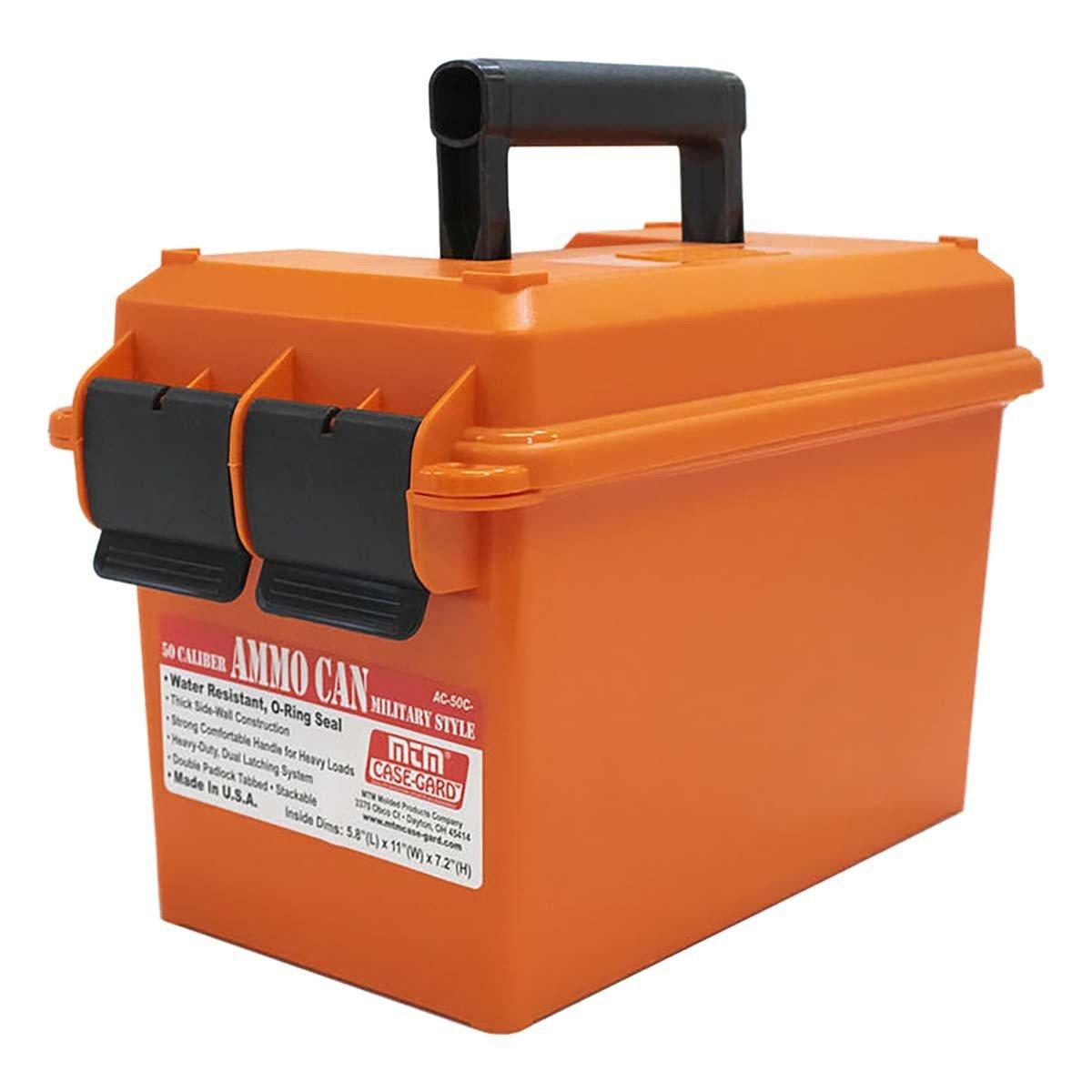
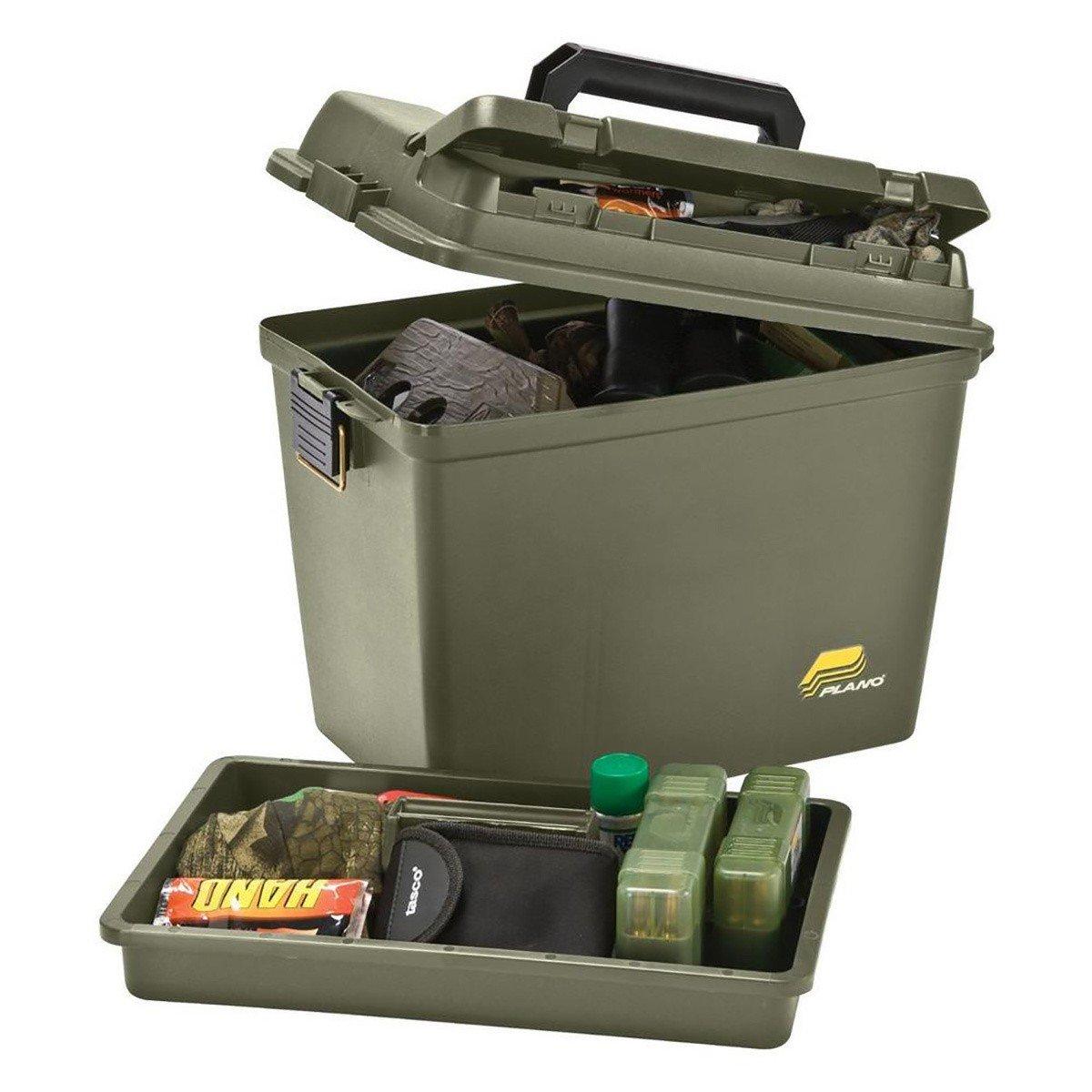
Beyond location, the hierarchy of protection goes like this:
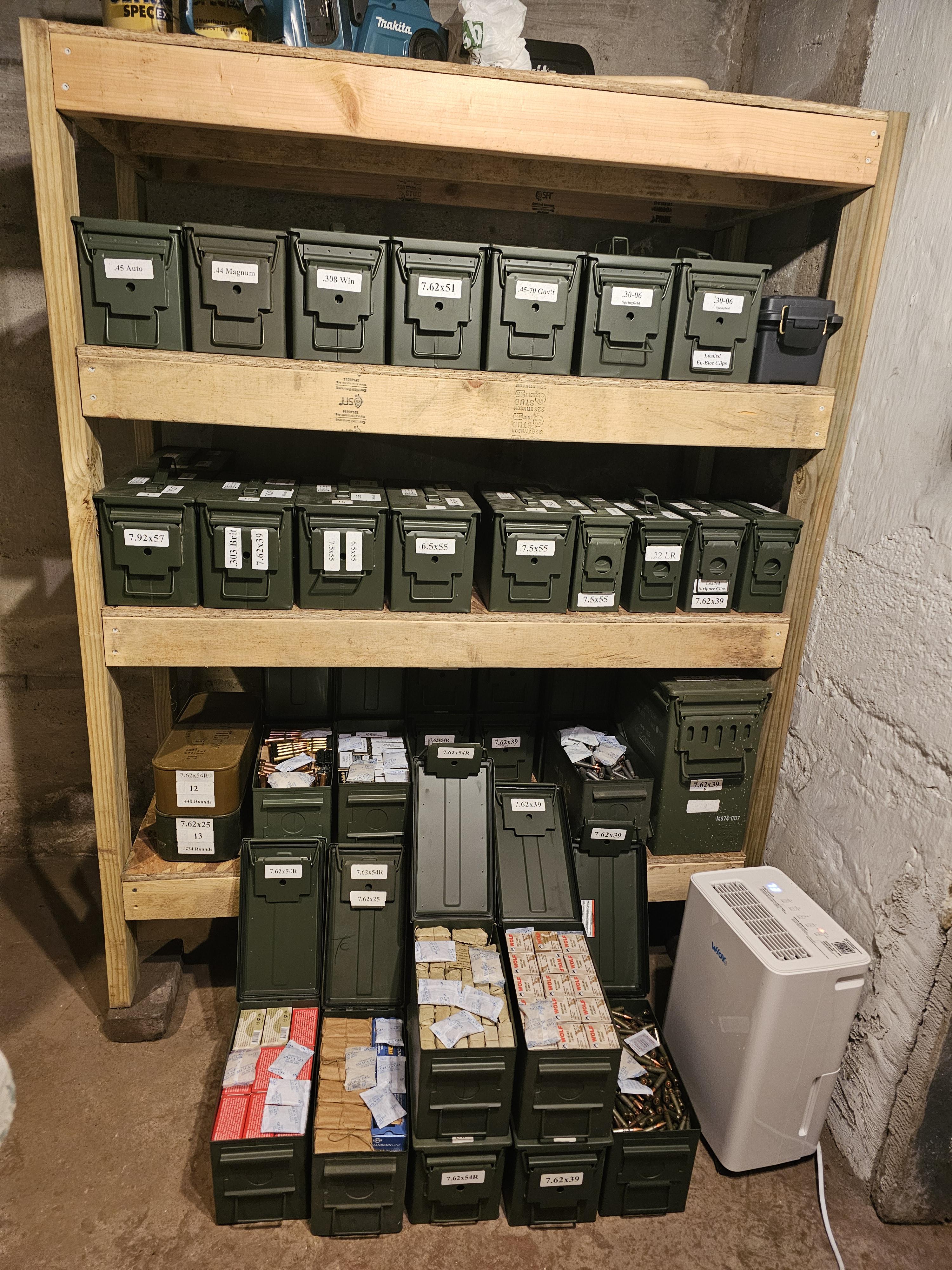
The best option is a sealed military-surplus ammo can with a good gasket, plus a desiccant packet inside. GI .50 cal and .30 cal ammo cans with intact rubber gaskets are genuinely airtight when latched. Throw in a 40-gram silica gel desiccant packet (or a rechargeable desiccant canister) and you've created a microenvironment that's nearly impervious to humidity changes. The ammo inside that can doesn't care what the ambient humidity is. Cost is minimal; surplus ammo cans run a few dollars each, and silica gel is cheap.

The next best option is a quality plastic ammo can or storage container with a gasket seal. MTM, Plano, and others make these. They're not as robust as steel GI cans, but they seal well enough to slow moisture exchange significantly. Add desiccant.
Cardboard boxes inside a safe or cabinet are adequate for medium-term storage (a few years) in a climate-controlled space. They're inadequate for long-term storage or any environment with humidity swings. Cardboard absorbs moisture and can actually hold it against the cartridges.
Loose ammo in a drawer, on a shelf, or in a range bag is fine for ammo you're going to shoot soon. It's not storage; it's staging.
The gun safe question
A lot of shooters store ammo in their gun safe, and this is generally fine with a caveat. Gun safes in climate-controlled rooms maintain a reasonable environment. Gun safes in garages can become ovens in summer and condensation traps in winter. The steel walls of a safe conduct heat efficiently, and the interior can cycle through dew point temperatures, causing condensation on both guns and ammo.
If your safe is in a garage or other non-climate-controlled space, a golden rod (heated dehumidifier rod) or rechargeable desiccant unit inside the safe is close to mandatory. Monitor with a small digital hygrometer; they cost under $15 and they'll tell you exactly what's happening inside your safe. Target below 50% RH.

Liberty Safe and other manufacturers recommend keeping ammunition in the safe but note that large quantities of ammo add thermal mass, which can actually help stabilize temperature swings. However, they also note that in a fire, ammunition in a safe will cook off. SAAMI testing shows that ammunition cooking off outside of a chamber produces relatively low-velocity projectile fragments; the case, not the bullet, is typically what moves, and it doesn't have enough energy to penetrate the safe walls. So ammo in a safe isn't a significant fire hazard to firefighters, but it will destroy the ammo.
Common mistakes and how to avoid them
There are a few errors that come up repeatedly in forum discussions and range conversations. Most are easily fixed.
Storing ammo in the original cardboard boxes long-term without any secondary container is the most common mistake. Cardboard wicks moisture, provides zero pest protection (mice love chewing through ammo boxes), and offers no barrier to temperature-driven humidity cycling. If you're keeping ammo more than a year or two, get it into sealed containers with desiccant.
Mixing old and new ammo without marking dates creates a problem you'll only discover later. When you buy ammo, write the purchase date on the box or container with a Sharpie. If you're rotating stock (shooting the oldest first and replacing it), you need to know what's oldest. This matters most for defensive ammo, where reliability isn't negotiable.
Storing ammo in a vehicle is worse than most people realize. A car trunk in summer is one of the most hostile environments for ammunition. Temperatures can exceed 150°F, humidity fluctuates wildly, and the daily temperature cycling pumps moisture. Keeping a box of defensive ammo in a car for a few weeks during a road trip is one thing. Leaving ammo in a vehicle for months is asking for degraded primers and accelerated powder decomposition. If you keep a truck gun or car gun, rotate the ammunition monthly during hot months.
Assuming all ammo is equally durable is a mistake. Military-spec ammo with sealed primers and crimped case mouths (look for the colored sealant ring around the primer and sometimes at the case mouth) is significantly more resistant to moisture than commercial ammo with no sealant. If you're buying ammo specifically for long-term storage, military-surplus in sealed cans or commercial ammo marketed as having sealed primers (Federal, Hornady, and Speer all seal primers on some defensive and duty lines) is worth the small premium.
Neglecting to inspect stored ammo periodically rounds out the list. Once a year, open your ammo cans, check the desiccant (replace or recharge if it's saturated), and visually inspect a sample of cartridges. Look for corrosion, discoloration, loose bullets, and that acrid chemical smell. This takes 15 minutes and can save you from discovering degraded ammo at the worst possible time.
Specific ammo types and their storage quirks
Not all ammunition degrades at the same rate or in the same way. The construction differences matter.
Rimfire vs. centerfire
Rimfire ammunition (.22 LR, .22 WMR, .17 HMR) is inherently more vulnerable to moisture than centerfire. The priming compound is spun into the rim of the case during manufacturing, and the seal between the case and the bullet is typically just a friction fit with a light wax coating. There's no separate primer cup to seal, and the thin brass of the rim is more susceptible to moisture intrusion. Rimfire ammo stored in poor conditions shows higher failure-to-fire rates than centerfire ammo in the same conditions. The good news: rimfire is cheap enough that rotation is easy. Shoot your oldest stock first and replace it.
.22 WMR Deals
Prices may change. May contain affiliate links.

.17 HMR Deals
Prices may change. May contain affiliate links.


Shotgun shells
As mentioned earlier, shotgun shells are more vulnerable than metallic cartridges. The crimp (either star or roll) is a relatively poor moisture seal, and the primer pocket in a shotgun hull isn't as tight as in a brass cartridge case. Older paper-hulled shells absorb moisture readily and can swell enough to cause chambering problems. Modern plastic hulls are better but still not as durable as brass. Store shotgun ammo in sealed containers with desiccant, and be more aggressive about rotation; 5-10 years is a reasonable service life for shotgun shells in average conditions, versus 20+ years for well-stored metallic cartridges.
Steel-cased ammo
Steel-cased ammo (Tula, Wolf, Barnaul, and similar) typically has a lacquer or polymer coating to prevent corrosion. This coating works well when intact, but it can be scratched during handling or feeding, exposing bare steel to moisture. Steel cases also expand and contract differently than brass under temperature cycling, which can affect the seal at the case mouth and primer pocket. For long-term storage, steel-cased ammo needs more protection from humidity than brass-cased ammo. In sealed containers with desiccant, it'll last a long time. In a cardboard box in a damp garage, you'll see surface rust within a couple of years.
Defensive hollow points
Your carry ammo and home defense ammo deserves the most attention, not because it degrades faster, but because it's the ammo where reliability matters most. The conventional wisdom is to rotate defensive ammo every 6-12 months, and that's reasonable; not because the ammo has degraded in that time, but because carry ammo gets chambered and unchambered repeatedly (causing bullet setback), exposed to body heat and sweat (moisture and salt), and subjected to the temperature extremes of whatever you're wearing or wherever you're carrying. If your carry ammo lives in a holstered gun on your hip, it's experiencing a much harsher environment than ammo in a box on a shelf.
The rotation schedule for home defense ammo can be longer; annually is fine if it's in a climate-controlled house. The ammo you rotate out goes to the range for practice. This way you're also periodically confirming that your defensive ammo functions in your specific firearm.
Five loads and how they hold up
Comparing specific products on storage durability is tricky because no manufacturer publishes long-term degradation data. But construction details and design choices tell you a lot about what's likely to last.
Winchester White Box 9mm 115-grain FMJ Deals
Prices may change. May contain affiliate links.
Federal HST 9mm 147-grain is a common defensive choice. Federal seals the primers on their HST line, which is a significant advantage for longevity. The nickel-plated brass case resists tarnish better than raw brass and provides a slightly better seal at the case mouth. Nickel plating also makes visual inspection easier; corrosion shows up more obviously against the bright surface. This is ammo designed for duty use where it might sit in a magazine for months or years before being needed.
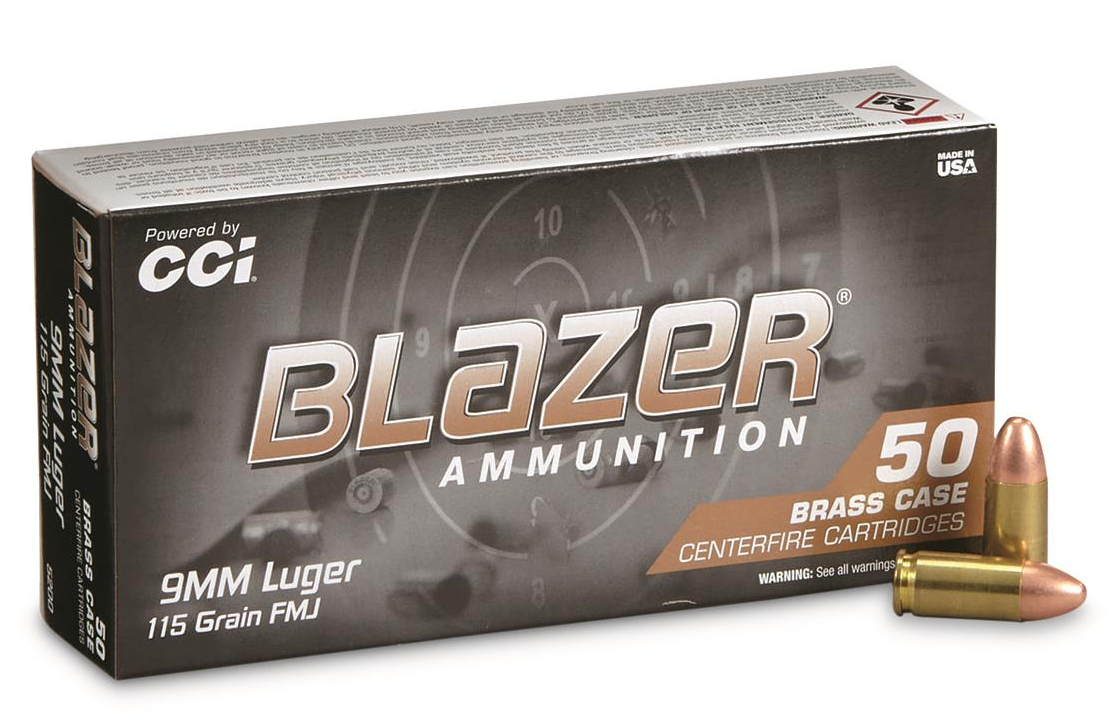
Winchester White Box 9mm 115-grain FMJ is the quintessential budget range ammo. No primer sealant, no special case treatment. It's perfectly fine for storage in reasonable conditions for several years. In a sealed ammo can, it'll last much longer. But if you're buying bulk White Box and throwing it in the garage, it's more vulnerable than military-spec ammo. The cost math favors just shooting it within a couple of years and buying fresh.
Lake City 5.56 NATO M855 (green tip) is the gold standard for long-term storage in the AR world. Military-spec production means sealed primers, crimped case mouths, and annealed case necks. Ammo from Lake City packed in sealed GI cans with desiccant has been documented firing reliably after 30+ years. If you're stockpiling 5.56 for long-term storage, Lake City in sealed cans is the way to go. Commercial .223 without primer sealant is fine for medium-term storage but won't match the longevity.

Tula 7.62x39 steel case is representative of the Russian-made steel-cased ammo that many AK and SKS shooters stock up on. The Berdan primers are typically sealed with lacquer, and the steel cases have a polymer or lacquer coating. In sealed storage, this ammo lasts well; there are countless reports of Soviet-era 7.62x39 from the 1970s and 1980s firing fine from sealed spam cans. Once the spam can is opened, the clock starts ticking faster. The lacquer coating on individual rounds is good but not great, and any scratches expose steel to corrosion. Shoot opened cases within a few years or repackage into sealed containers with desiccant.
Federal Gold Medal Match .308 Win 168-grain Sierra MatchKing is what a lot of precision shooters stock. Match ammo is manufactured to tighter tolerances, but it doesn't necessarily have better environmental sealing than standard ammo. Federal doesn't typically seal primers on their match lines the way they do on duty/defensive lines. For precision work, consistency matters; and aged ammo with degraded powder will show increased velocity spreads before it shows outright failures. If you're chasing sub-MOA groups, fresh ammo matters more than if you're plinking. Store match ammo in sealed containers, and if you're serious about consistency, note the lot number and purchase date so you can track whether velocity spreads increase over time.
Chrono notes: how to test your old ammo
If you've got ammo of questionable age or storage history, here's a practical way to evaluate it before trusting it for anything beyond casual range use.
Start with visual inspection. Pull 20 rounds at random from the lot. Look for corrosion at the primer pocket and case mouth, loose bullets (try to push the bullet into the case with thumb pressure), discoloration, and any chemical smell when you open the container. If more than one or two rounds show issues, the lot is suspect.
Fire a 10-round string over a chronograph. You're looking at two things: average velocity compared to published data for that load, and extreme spread (ES); the difference between the fastest and slowest round. Fresh factory ammo typically shows an ES of 30-60 fps for standard loads and 15-30 fps for match loads. If your old ammo is showing an ES of 100+ fps, the powder charge is burning inconsistently, which means degradation. If average velocity is more than 75-100 fps below published data, the powder has lost energy.

Note any failures to fire or hangfires (delayed ignition). A single failure to fire in 10 rounds is a 10% failure rate, which is completely unacceptable for defensive use and annoying for range use. If you get even one misfire, test another 10 rounds. Two or more misfires in 20 rounds and that lot should be relegated to casual range use only; and even then, treat every failure to fire as a potential hangfire (keep the gun pointed downrange for 30 seconds before opening the action).
For defensive ammo specifically, the standard should be zero failures in at least 50 rounds. If you're not willing to shoot 50 rounds of your defensive ammo to verify it, you're not willing to verify it, and you should just buy fresh.
The cost math on rotation
Shooters sometimes resist rotating ammo because it feels wasteful. Run the numbers and it's not.
A box of 50 quality 9mm defensive ammo runs roughly $25-35 at typical retail. Rotating annually means shooting one box per year per defensive gun. That's one range session worth of ammo cost. If you carry daily, you're trusting your life to that ammo; spending $30 a year to ensure it's fresh is the cheapest insurance you'll ever buy.
For stockpiled range ammo, the math is different. If you've got 2,000 rounds of 5.56 in sealed ammo cans with desiccant in a climate-controlled closet, you don't need to rotate that on any particular schedule. Check it annually, shoot the oldest stock first when you go to the range, and replace what you shoot. The ammo isn't going bad in that environment. The cost of proper storage (ammo cans and desiccant) is maybe $20-30 per thousand rounds stored, and it's a one-time investment since the cans last indefinitely.
Where people waste money is buying ammo they don't store properly and then having to discard it. A case of ammo that spent three years in a hot garage and now has a 5% misfire rate is ammo you paid for and can't rely on. The cost of the ammo cans and desiccant you didn't buy is a fraction of the cost of the ammo you ruined.
What the marketing doesn't mention
Ammunition manufacturers have no financial incentive to tell you how long their product lasts. A shorter perceived shelf life means more frequent purchases. You'll never see "lasts 30 years" on a box of ammo, even though it's true for well-stored product.
You'll also rarely see honest discussion of which products are sealed and which aren't. Some manufacturers seal primers on all their centerfire ammo. Some seal only military-contract and defensive lines. Some don't seal at all. This information is sometimes available on the manufacturer's website or by examining the rounds closely (look for a colored ring of sealant around the primer), but it's almost never on the box.
The ammunition industry's position, through SAAMI, is essentially: store it cool and dry, and it'll last a long time. They don't give a specific shelf life because they can't control your storage conditions. That's fair, but it puts the burden on you to understand what "cool and dry" actually means in practice.
The bottom line on shelf life
Modern ammunition is remarkably durable when you give it even minimal protection from the elements. The combination of a sealed container, desiccant, and a location that doesn't get extremely hot covers about 90% of what you need to do. The other 10% is periodic inspection and a willingness to shoot old stock to verify it still performs.
The practical protocol: store ammo in sealed containers with desiccant in a climate-controlled space. Mark purchase dates. Inspect annually. Rotate defensive ammo every 6-12 months by shooting the old stuff and buying fresh. Shoot your oldest range ammo first and replace it. If you find ammo of unknown age or storage history, test it over a chronograph before trusting it.

The next time you're at the range, bring that old box of ammo you've been wondering about. Shoot ten rounds and pay attention. Do they all go bang? Do they sound consistent? Do they hit where expected? That ten-round test tells you more than any amount of speculation. And if they all work fine, you've got your answer; and ten fewer old rounds to worry about.