
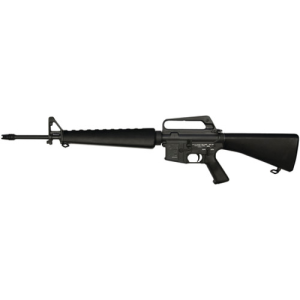
A transferable M16 lower receiver sold for $7,000 in the mid-1990s. That same lower; a small chunk of aluminum with a third pin hole and an auto sear; trades today for $35,000 to $45,000, depending on configuration. A nice Thompson will cost you more than a new truck. A mint Colt M16A1 with original furniture can eclipse $50,000. And at the top of the market, rarities like transferable FG 42s and MG 42s have cleared $400,000 at auction.
The math behind all of this is brutally simple. On May 19, 1986, the Hughes Amendment to the Firearm Owners Protection Act closed the National Firearms Act registry for new machine guns. Every machine gun manufactured and registered for civilian transfer before that date is all there will ever be. The supply is fixed; actually shrinking, as guns are occasionally damaged, seized, or lost to estate complications. Demand, meanwhile, has done nothing but grow. So prices go one direction.
But "machine guns are expensive" isn't the whole story. The transferable market is tiered, and what you can actually buy varies enormously depending on whether you're working with $10,000 or $250,000. This is a walk through those tiers; what's available, what it costs, what the ownership experience looks like, and where the real value hides in a market that rewards knowledge.
How we got here: the registry and why it matters
The National Firearms Act of 1934 didn't ban machine guns. It taxed them. A $200 tax stamp, equivalent to roughly $4,500 in today's money, was imposed on the manufacture or transfer of machine guns, suppressors, short-barreled rifles, and a handful of other items. The intent was to make these items expensive enough to keep them out of criminal hands during the gangster era. For decades, the system worked more or less as designed: pay the tax, submit the paperwork, pass the background check, take possession.
The 1986 Hughes Amendment changed everything. Tacked onto the otherwise pro-gun Firearm Owners Protection Act in a controversial voice vote, it prohibited the transfer or possession of machine guns manufactured after May 19, 1986, by civilians. Machine guns already on the NFA registry as of that date remained legal to buy, sell, and possess, they're "transferable." Everything made after that date is limited to government agencies, military, and properly licensed dealers (FFL/SOT holders) as "post-samples" or "pre-86 dealer samples."

Auto-ordnance Thompson submachine gun M1928
May contain affiliate links.
The result is a closed universe of roughly 175,000 to 182,000 transferable machine guns. Nobody knows the exact count because the ATF doesn't publish precise registry numbers, and some registered guns have been destroyed, lost, or rendered permanently inoperable over the decades. What we do know is that the number can only decrease. Every year, the ratio of interested buyers to available guns shifts further toward scarcity.
This is why a MAC-10, a stamped-metal submachine gun that cost $120 new in the early 1980s, now commands $8,000 to $12,000 on the transferable market. The gun itself isn't worth that. The registration is.
The transfer process for machine guns
Buying a transferable machine gun follows the same Form 4 process as buying a suppressor, just with more zeros on the price tag. You find the gun through a Class III dealer (technically an FFL with a Special Occupational Tax, or SOT), pay the agreed price, submit ATF Form 4 (Application for Tax Paid Transfer and Registration of Firearm) along with your $200 tax stamp payment, passport photos, fingerprint cards, and CLEO notification to your local chief law enforcement officer.
If you're buying through an individual registration, that's straightforward. If you're using an NFA trust, and most machine gun buyers do, every responsible person on the trust needs to submit photos, prints, and the CLEO notification. The trust route makes inheritance and shared access simpler, which matters a lot when you're talking about a $40,000 asset.
Current Form 4 eFile approvals are running roughly 4 to 6 months for most NFA items. Machine gun transfers can sometimes take longer because they occasionally get flagged for additional review, and paper Form 4s (still used by some dealers for machine gun transfers) can stretch to 9 to 12 months. Your money is typically tied up during this period, many dealers require full payment before submission, though some will work out escrow arrangements for high-dollar transfers.
One process note that trips up first-time machine gun buyers: the gun must transfer through a dealer in your state, just like any other firearm. If you find a transferable Uzi in Texas and you live in Arizona, it ships to your local Class III dealer, who then initiates the Form 4 to you. That dealer will charge a transfer fee, and for machine guns, those fees can be higher than the $25–$75 you'd pay for a regular firearm transfer. Expect $100 to $300 for NFA transfers, sometimes more for high-value items where the dealer assumes storage liability.
And the obvious caveat: state law is the first gate. Machine gun ownership is legal in the majority of states, but a handful, California, New York, Illinois, Hawaii, Washington, and several others, prohibit civilian possession entirely or impose restrictions that make it functionally impossible. Check your state's laws before you start shopping. An FFL in a restrictive state can't transfer a machine gun to you regardless of what federal law permits.
The entry tier: $7,000 to $15,000
This is where most people enter the transferable market, and the options are limited but real. You're looking at two main categories here: MAC-pattern guns and a handful of oddball registrations.
MAC-10s and MAC-11s
The Military Armament Corporation MAC-10 (in .45 ACP or 9mm) and the smaller MAC-11 (.380 ACP) are the Honda Civics of the machine gun world. They're ugly, crude, and nobody buys one because it's a precision instrument. You buy one because it's a registered machine gun that you can actually afford.
Rma armament MAC-10 .45 ACP
May contain affiliate links.
Rma armament MAC-10 9mm
May contain affiliate links.
Rma armament MAC-11 .380 ACP
May contain affiliate links.

A transferable MAC-10 in .45 ACP typically runs $9,000 to $12,000 in average condition. The 9mm variants trade in a similar range, sometimes slightly less. MAC-11s in .380 tend to be a touch cheaper, $8,000 to $11,000, partly because the .380 caliber is less desirable and the guns are genuinely tiny and hard to control on full auto.
The thing nobody tells you about MACs: the aftermarket is what makes them worth owning. Companies like Lage Manufacturing produce upper receivers that transform a MAC into something genuinely enjoyable to shoot. The Lage MAX-31 upper, for instance, turns a MAC-10/45 into a slow-firing, smooth-shooting 9mm subgun that's more fun than guns costing three times as much. A Lage MAX-11/15 upper converts a MAC-11 into a 5.56 NATO platform. The registered receiver, the part that's the legal machine gun, stays the same. You're just bolting on a better upper.

Budget $2,000 to $4,000 for a quality Lage upper on top of your MAC purchase. At $12,000 for the gun and $3,000 for a Lage upper, you're into a genuinely fun, reliable machine gun for $15,000 total. That's the best value proposition in the transferable market, and experienced NFA collectors will tell you the same thing.
Registered auto sears (RDIAS) and lightning links
These are the oddball registrations. A Registered Drop-In Auto Sear (RDIAS) is a small device, basically a piece of metal, that was registered as a machine gun before the 1986 cutoff. Drop it into a standard AR-15 lower with M16-pattern fire control parts, and you have a select-fire rifle. The RDIAS itself is the registered machine gun. The host AR-15 lower is just a regular firearm.

RDIAS units trade for $35,000 to $45,000 currently, so they're not entry-level. But lightning links, a simpler auto-conversion device that also works in AR-15 platforms, can occasionally be found for less, in the $10,000 to $15,000 range, though they're becoming scarcer at those prices.
The appeal of a registered sear or link is versatility. You can move it between host rifles. Want to run it in a 10.3-inch SBR upper one day and a 14.5-inch midlength the next? Swap uppers. The registered part stays the same. That flexibility is worth a lot to shooters who want the M16 experience without being locked into a single configuration.
There's a catch, though. Lightning links are mechanically simpler and less reliable than a proper RDIAS or a registered M16 lower. They can be finicky about which lowers they work in, and they deliver full-auto only, no burst, no semi-auto option in some configurations. Know what you're getting before you buy.
The mid-tier: $15,000 to $40,000
This is where the market gets interesting. You're past the budget MACs and into guns with genuine history, better ergonomics, and more satisfying shooting experiences.
Uzis
The IMI Uzi, the full-size model, not the Mini or Micro, is one of the most popular transferable machine guns in this range. Expect to pay $18,000 to $28,000 for a transferable Uzi in good condition, with prices varying based on configuration, manufacturer markings, and included accessories.
May contain affiliate links.
May contain affiliate links.
The Uzi is a genuinely pleasant gun to shoot on full auto. The open-bolt, blowback design with a heavy bolt gives it a relatively slow cyclic rate, around 600 rounds per minute, that makes it controllable and economical with ammunition. It's heavy (about 8 pounds empty), which helps absorb recoil. And 9mm is cheap to feed, which matters when you're burning through magazines.

Transferable Uzis come in several flavors. Action Arms and Group Industries imports are common. Some have been converted from semi-auto receivers (legally, pre-1986), and purists will pay more for factory-original select-fire guns. A numbers-matching IMI military Uzi with original wood stock will command a premium over a parts-kit build on a registered receiver.
Mini Uzis are rarer on the transferable market and command higher prices, $20,000 to $30,000, partly because fewer were registered before the cutoff and partly because the compact size is appealing.
M16 lowers and complete rifles
Here's where the AR-15 platform enters the conversation in its true select-fire form. A registered M16 lower receiver, not an RDIAS, but an actual lower with the third pin hole and proper M16 fire control group, is the gold standard for AR-platform machine gun ownership.
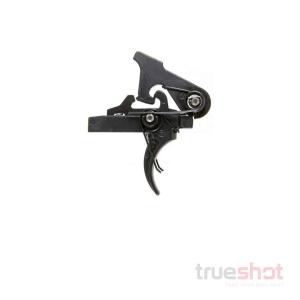
Geissele trigger group Deals
Prices may change. May contain affiliate links.
May contain affiliate links.
Prices for registered M16 lowers currently sit around $35,000 to $45,000, depending on manufacturer and condition. Colt-manufactured lowers command a premium. A complete, correct Colt M16A1 with original furniture and markings will run $40,000 to $55,000. M16A2 configurations, less common on the transferable market since many A2s were manufactured after 1986, can push even higher when they surface.
The practical reality is that most buyers at this tier purchase a registered lower and then build it out with whatever upper and furniture they prefer. The lower is the machine gun. Everything else is just parts. This means your $40,000 registered Colt lower can host a modern free-float rail, Geissele trigger group (with the appropriate full-auto compatible parts), suppressor-ready barrel, and optic. You get the M4/M16 experience with 2025 ergonomics.

One important note on M16 lowers: they're not all created equal. Some registered lowers were originally manufactured as semi-auto AR-15s and converted to M16 configuration before the 1986 deadline. These are legal transferable machine guns, but some collectors and buyers prefer factory Colt M16 lowers with original military markings. The price difference between a converted lower and an original Colt M16 lower can be $5,000 to $10,000 or more.
Sten guns and other WWII subguns
If you want a piece of history you can actually shoot, the Sten gun is the affordable option in this tier. Transferable Stens, usually Mk II or Mk III variants, trade for $12,000 to $20,000. They're crude, they're stamped metal, and they have a reputation for being unreliable. But they're WWII machine guns, they fire 9mm, and they're about as close to a museum piece you can take to the range as you'll find at this price.
Carl gustaf Swedish K Carl Gustaf M/45
May contain affiliate links.
Suomi Finnish Suomi KP/-31
May contain affiliate links.
The Swedish K (Carl Gustaf M/45) shows up occasionally in the $18,000 to $25,000 range. It's a much better gun than a Sten, smoother action, better build quality, and the same 9mm economy. The Finnish Suomi KP/-31 is another one that surfaces in this tier, usually $15,000 to $22,000, and it's a fascinating piece of engineering with its 71-round drum magazine.
The upper-mid tier: $40,000 to $80,000
This is where you start seeing the guns most people picture when they think "machine gun." The iconic stuff. The guns from the movies.
Thompson submachine guns
The Thompson, the "Tommy Gun", is probably the most recognized machine gun in American culture. It's also one of the most expensive transferable subguns, because demand is enormous and the supply of registered Thompsons is finite.

Auto-ordnance Thompson M1
May contain affiliate links.
Auto-ordnance Thompson M1928
May contain affiliate links.
Auto-ordnance Thompson M1928A1
May contain affiliate links.
A transferable Auto-Ordnance or Savage-manufactured Thompson M1928 or M1928A1 with Cutts compensator and drum magazine will run $35,000 to $55,000 in good condition. Military M1 and M1A1 Thompsons (the simplified wartime production models with stick magazines only) trade in a similar range, $30,000 to $50,000, though the M1928 variants with the Cutts compensator and finned barrel tend to command the premium.

The most expensive Tommy Guns sold on GunBroker in recent months have cleared $50,000 to $60,000 for exceptional examples. Auction houses like Rock Island and Morphy have pushed well beyond that for rare variants or guns with documented provenance.
Shooting a Thompson on full auto is a bucket-list experience for most gun enthusiasts. The .45 ACP cartridge at 600-700 RPM through a 10.5-pound gun is surprisingly controllable. The bolt's heavy reciprocating mass gives it a distinctive "chug-chug-chug" rhythm that's unlike anything else. It eats .45 ACP, though, and at current ammo prices, a range day with a Thompson gets expensive fast. Budget 500 to 1,000 rounds for a good session, and that's $150 to $350 in ammo alone.
There's a subcategory worth mentioning: rewelds, sometimes called "rewats" (rewelded automatic weapons, transferable). These are Thompsons (and other guns) that were torch-cut at some point and then professionally welded back together and returned to firing condition. They're legal transferable machine guns if they were on the registry, but they trade at a discount, sometimes significant, compared to original, uncut guns. A rewelded Thompson might sell for $25,000 to $35,000 where an original would bring $45,000+. Opinions on rewelds vary. Some collectors avoid them entirely. Others see them as a way to own an iconic gun at a lower price point, and if the weld work is done properly, they shoot fine.
HK sear guns
Here's where the HK world gets interesting, and expensive. Before the 1986 cutoff, a number of registered HK auto sears (sometimes called "trigger packs" or "sear packs") were manufactured and registered. These sears work across multiple HK platforms: drop one into an HK91 (G3 pattern) and you have a select-fire 7.62 NATO battle rifle. Put it in an HK94/MP5 host and you have the most iconic 9mm subgun ever made. Some sears work in HK33 (5.56) hosts as well.

Heckler & koch HK91 G3 pattern Deals
Prices may change. May contain affiliate links.
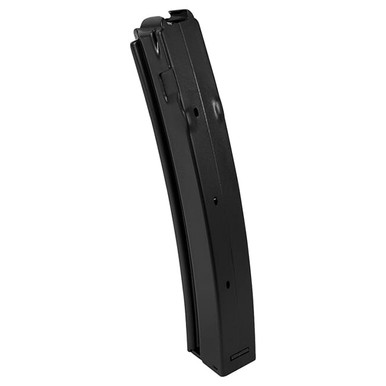
A registered HK sear currently trades for $38,000 to $55,000, and prices have been climbing. The versatility is the draw, one registered part, multiple host guns. An HK sear in an MP5 host is the closest most civilians will ever get to the gun that defined 1980s and 1990s special operations. In a G3/HK91 host, it's a full-auto .308 battle rifle that will rearrange your fillings and your shoulder.
The practical reality of HK sear ownership is that most people run them primarily in MP5 hosts. The 9mm MP5 on full auto is one of the smoothest, most controllable machine guns ever designed. The roller-delayed blowback action soaks up recoil in a way that makes even burst fire feel civilized. It's the gun that ruined every other subgun for a lot of people.

Complete, factory-original transferable MP5s (not sear guns, but guns registered as complete machine guns) are rarer and more expensive, $50,000 to $70,000 when they surface. Most HK machine gun ownership on the transferable market goes through the sear route.
FN FALs and other battle rifles
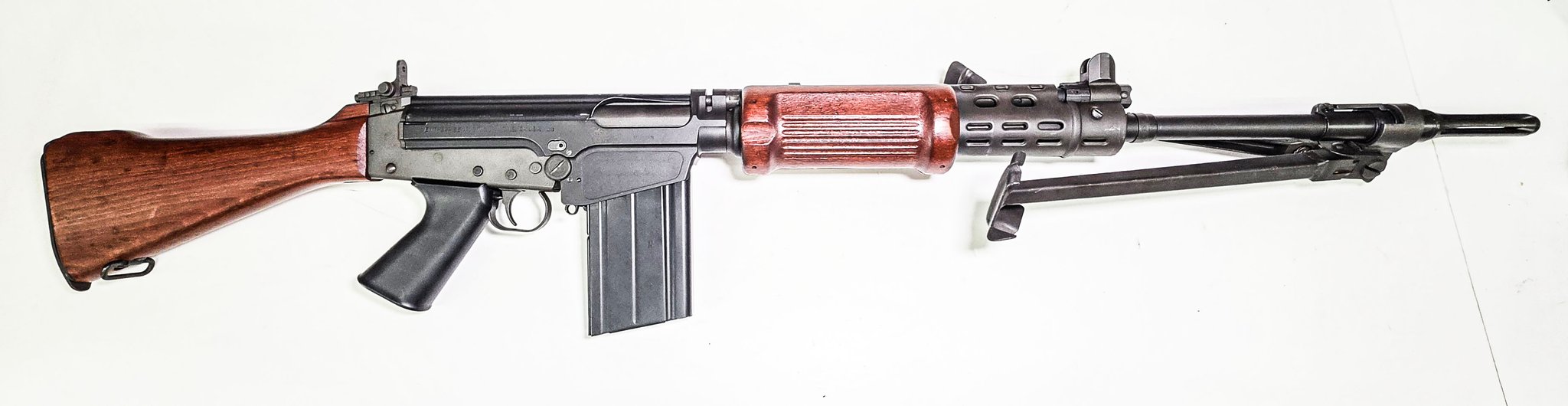
Transferable FN FAL variants show up occasionally in the $40,000 to $60,000 range. They're less common than M16s or HK sears because fewer were registered before the cutoff. A select-fire FAL in .308 is a handful on full auto, the recoil is substantial, and ammunition costs add up fast, but it's a piece of Cold War history that saw service on every continent.
The BM-59, an Italian select-fire derivative of the M1 Garand in 7.62 NATO, surfaces occasionally in the $30,000 to $45,000 range. It's a fascinating gun, essentially a Garand with a detachable magazine and a giggle switch, but parts support can be challenging.
The premium tier: $80,000 to $150,000
Now we're firmly in collector territory. The guns at this level are bought as much for historical significance and investment potential as for shooting enjoyment.
Browning Automatic Rifles (BAR)
A transferable BAR, the iconic WWII squad automatic weapon, commands $80,000 to $130,000 depending on variant and condition. The M1918A2 (the WWII production model with bipod and carry handle) is the most commonly encountered, though earlier M1918 variants surface at auction.
Browning Automatic Rifle M1918A2 .30-06
May contain affiliate links.
Browning Automatic Rifle M1918 .30-06
May contain affiliate links.
Shooting a BAR is an experience. Twenty pounds of steel and walnut firing .30-06 on full auto at 300-600 RPM (depending on the rate selector setting). The slow rate of fire makes it more controllable than you'd expect for a .30-06 automatic, but it's still a substantial gun that demands respect. Ammunition costs are eye-watering, .30-06 at full-auto consumption rates will empty your wallet faster than the magazine.
MP40s and other WWII German weapons
The German MP40, the "Schmeisser" (though Hugo Schmeisser didn't design it), trades for $30,000 to $50,000 on the transferable market. It's a beautifully engineered 9mm subgun with a slow cyclic rate and iconic folding stock. Fewer were registered than Thompsons or M16s, so supply is tighter.
The StG 44, widely considered the first true assault rifle, is astronomically expensive when it surfaces, $100,000 to $200,000+ for a transferable example. Parts availability is a genuine concern, as original magazines and replacement parts are scarce and expensive.
The MG 34 and MG 42, the legendary German general-purpose machine guns, command $100,000 to $250,000 for transferable examples. These are belt-fed, crew-served weapons firing 7.92x57mm Mauser at cyclic rates of 800-1,200 RPM (the MG 42's rate was famously high, earning it the nickname "Hitler's Buzzsaw"). Owning one is a commitment, the ammunition, the links, the barrel changes, the sheer logistics of shooting a belt-fed WWII machine gun. But for the collector with the means, there's nothing else like it.

The stratosphere: $150,000 and beyond
At the very top of the market, you're looking at museum-quality pieces that happen to be legal to own and shoot.
Rare and historically significant pieces
Rock Island Auction Company has sold transferable machine guns for staggering sums. A transferable FG 42, the German paratroop rifle that influenced the design of the M60, has sold for over $300,000. Transferable Bren guns, Vickers guns, and water-cooled Browning M1917s all trade in the six-figure range when they surface.
Browning M1917 water-cooled
May contain affiliate links.
General electric GE M134 Minigun 7.62mm
May contain affiliate links.
The Minigun, the GE M134 7.62mm rotary-barrel machine gun, is the unicorn of the transferable market. A handful were registered before 1986. When one surfaces, expect north of $400,000, and that's before you address the feeding problem. A Minigun consumes 3,000 to 6,000 rounds per minute. Even at the low end, that's 50 rounds per second of 7.62 NATO. The ammunition cost per trigger pull is measured in hundreds of dollars.
At these price points, buyers are typically serious collectors, investment-minded individuals, or both. The guns are often kept in climate-controlled storage and shot sparingly, if at all. Some are purchased as alternative investments, transferable machine guns have outperformed the S&P 500 over most 20-year periods since 1986, though past performance and all that.
The real costs beyond the sticker price
The purchase price is just the beginning. Machine gun ownership carries ongoing costs that new buyers sometimes underestimate.
Ammunition
This is the big one. A MAC-10 in .45 ACP or 9mm is cheap to feed, maybe $0.20 to $0.30 per round for bulk 9mm. At 1,000 RPM cyclic rate, a 32-round magazine empties in about two seconds. A fun range session might burn 500 rounds: $100 to $150 in ammo. That's manageable.
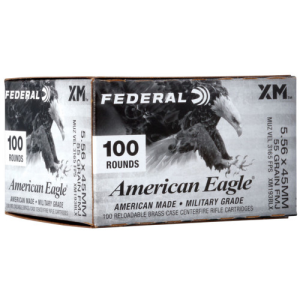
Federal American Eagle 5.56x45mm NATO 120-round ammo can Deals
Prices may change. May contain affiliate links.
A Thompson in .45 ACP is more expensive, $0.30 to $0.45 per round for bulk ball ammo. A BAR in .30-06 is worse: $0.80 to $1.20 per round. And anything belt-fed in rifle calibers gets genuinely painful. An MG 42 burning through a 250-round belt of 8mm Mauser at $1.00+ per round means $250 gone in about 15 seconds of sustained fire.

The practical reality is that most machine gun owners shoot their guns in controlled bursts, not sustained fire. Short bursts are more fun anyway, you can actually feel the gun work, adjust your aim, and make the ammunition last. Mag-dumping is entertaining exactly once. After that, disciplined burst fire is where the real enjoyment lives.
Insurance and storage
A $40,000 machine gun deserves a proper safe and a rider on your homeowner's or renter's insurance. Standard firearms coverage on most homeowner's policies caps at $2,500 to $5,000 for the entire collection. You'll need a scheduled personal property rider or a dedicated firearms insurance policy. Companies like Collectibles Insurance Services and USCCA offer coverage, but read the fine print, some policies exclude NFA items or require additional documentation.
Storage is straightforward: a quality gun safe rated for the value you're storing. At the $40,000+ level, many owners invest in a proper RSC (Residential Security Container) or TL-rated safe. A decent safe that'll hold a machine gun collection runs $1,500 to $5,000.
Maintenance and parts
Transferable machine guns are old. The newest ones were manufactured in 1986, that's nearly 40 years ago. Many are considerably older. A WWII Thompson is 80+ years old. Parts wear, springs fatigue, and extractors break.
For AR-15/M16 platform guns, parts are everywhere. The fire control group, bolt carrier, barrel, and every other component are readily available. This is one of the major advantages of M16 lowers and RDIAS units, the host platform has the best parts support in the firearms world.
For Uzis, parts availability is good. Magazines are plentiful and affordable. Bolts, springs, and barrel assemblies are available from multiple sources.
For Thompsons, parts are available but increasingly expensive. Original WWII-era parts command collector premiums. Reproduction parts exist for most wear items, but quality varies.
For rarer guns, StG 44s, FG 42s, MG 34s, parts availability is a genuine problem. Original parts are scarce and expensive. Some machine shops specialize in manufacturing replacement parts for rare NFA items, but expect to pay accordingly. Owning a rare transferable machine gun means accepting that a broken firing pin might cost $500 and take three months to source.
The investment angle
The transferable machine gun market has been one of the strongest alternative asset classes in the firearms world. The math is straightforward: fixed supply, growing demand, inflation of the dollar. A MAC-10 that sold for $1,500 in 1986 is worth $10,000 today. An M16 lower that sold for $7,000 in 1995 is worth $40,000 today. A Thompson that sold for $15,000 in 2000 is worth $45,000 today.

But there are risks that the investment crowd sometimes glosses over. The biggest one is legislative. If the Hughes Amendment were ever repealed, allowing new manufacture of transferable machine guns, the value of existing transferable guns would collapse overnight. A registered M16 lower is worth $40,000 because of artificial scarcity created by law. Remove that scarcity, and it's worth whatever a new M16 lower costs: maybe $1,000 to $2,000.
The probability of Hughes Amendment repeal is a matter of debate. Gun rights organizations have generally not prioritized it, and the political appetite for expanding machine gun access is limited even among pro-gun legislators. But it's not zero probability, and anyone treating transferable machine guns purely as an investment should factor it in.
The other risk is liquidity. Machine guns are not stocks. You can't sell one in 30 seconds on an app. Finding a buyer, negotiating price, and completing the Form 4 transfer process takes weeks to months. In a market downturn, or if you need cash quickly, you may have to accept a significant discount to move a gun fast. The NFA transfer process means your buyer is also committing to a months-long wait, which narrows the pool of impulse purchasers to approximately zero.
There's also the ATF reclassification question that surfaces periodically. The ATF has, on rare occasions, reclassified certain pre-86 dealer sample machine guns as fully transferable when the original importing dealer's SOT lapsed under specific circumstances. These reclassifications add guns to the transferable pool, which theoretically dilutes value, though the numbers involved have been tiny relative to the total market.
Common mistakes and gotchas
A few things that trip up buyers in this market, even experienced NFA owners who've been through the Form 4 process for suppressors or SBRs:
Buying without verifying the registration. Every transferable machine gun should have a clean paper trail on the NFA registry. Before you hand over $40,000, your dealer should verify the gun's registration status with the ATF's NFA Branch. A gun that's not properly registered, or that has a discrepancy between the serial number on the gun and the serial number on the registry, is a paperweight at best and a federal felony at worst. Reputable Class III dealers do this verification as a matter of course, but if you're buying from a private party through a dealer, make sure it happens.
Ignoring the Form 3 timeline. When a machine gun transfers between dealers (Form 3, dealer-to-dealer), it's supposed to be relatively quick, days to weeks. But the subsequent Form 4 to you, the buyer, takes months. Some buyers don't realize that the clock on their Form 4 wait doesn't start until the gun arrives at their local dealer and the Form 4 is actually submitted. If you buy a gun from an out-of-state dealer, add the Form 3 transfer time to your total wait.
Overpaying due to urgency. The machine gun market rewards patience. Prices fluctuate, and a gun that seems rare today might have three examples listed next month. Unless you're chasing a genuinely rare variant (transferable StG 44, for instance), there's usually another one coming. Set a budget, set a price target, and wait. Dealers and auction houses know that machine gun buyers often get emotionally invested, and pricing reflects that.
Forgetting about state-line travel. Taking an NFA item across state lines requires ATF Form 5320.20 (Application to Transport Interstate or to Temporarily Export Certain National Firearms Act Firearms). This applies to machine guns, SBRs, SBSs, and destructive devices. Suppressors and AOWs are exempt from this requirement. If you live near a state border and shoot at ranges in the neighboring state, you need to plan ahead. The form can be approved for a specific trip or for a period of up to one year for repeated travel to the same state.
Not planning for inheritance. A $40,000 machine gun in an NFA trust with clear successor trustees transfers smoothly upon the owner's death, tax-free, via Form 5 (Tax-Exempt Transfer and Registration of Firearm). A machine gun owned by an individual with no estate plan can create a nightmare for heirs who may not be eligible to possess it in their state, don't know the process, or face time pressure from probate courts. The trust question comes down to this: if you're spending five figures on a machine gun, spend $500 on a properly drafted NFA trust.
Where to buy
The transferable machine gun market operates through several channels, each with different advantages.
Specialized NFA dealers like DealerNFA, OTB Firearms, and Ruben Mendiola have been in the Class III business for decades. They maintain inventories of transferable guns, handle the paperwork, and can advise on market values. The markup over private-party prices is real, typically 10% to 20%, but you're paying for expertise, verified registrations, and a smooth transaction.
GunBroker is the largest online marketplace for transferable machine guns. Prices are transparent (you can see completed auction results), the selection is broad, and you can sometimes find deals. The risk is that you're often buying from individuals or small dealers, and due diligence on registration status is your responsibility (through your receiving dealer).
Auction houses, Rock Island Auction Company, Morphy Auctions, James D. Julia (now part of Morphy), handle the highest-end transferable guns. If you're shopping for a $100,000+ piece, this is where the best examples surface. Buyer's premiums of 15% to 20% add to the cost, but provenance documentation and condition grading are typically excellent.

The Sturmgewehr.com forums and other NFA-specific communities are where private-party sales happen. Prices tend to be lower than dealer retail, but you need to know what you're doing. Verify registration, use a reputable dealer for the transfer, and don't wire $40,000 to someone you met on the internet without proper safeguards.
The FFL/SOT alternative
There's another path to machine gun ownership that doesn't involve the transferable market: becoming a Federal Firearms Licensee with a Special Occupational Tax classification. An FFL Type 07 (manufacturer) with an SOT Class 02 can manufacture and possess post-sample machine guns, brand-new, modern machine guns that would be illegal for a regular civilian to own.
The costs are significant but not prohibitive: the FFL application fee, annual SOT payment ($500 for small businesses, $1,000 for larger ones), compliance with ATF record-keeping requirements, and the need to actually operate as a legitimate business. You can't just get an FFL/SOT to collect machine guns, the ATF expects to see business activity.
The catch is that post-sample machine guns can't be kept when you surrender your license. They must be transferred to another FFL/SOT or to a government agency, or destroyed. So this isn't "ownership" in the traditional sense, it's more like a long-term rental that requires running a business. Some people find the trade-off worthwhile, especially for guns that simply don't exist on the transferable market (modern platforms like the FN M249 SAW, HK416, or anything manufactured after 1986).
Pre-86 dealer samples occupy a middle ground. These are machine guns imported by dealers before 1986 that aren't on the transferable registry but can be possessed by FFL/SOT holders. Unlike post-samples, pre-86 dealer samples can sometimes be retained when a license is surrendered, depending on the specific circumstances of their importation and registration. The ATF's treatment of pre-86 dealer samples has evolved over the years, and there have been instances where certain pre-86 dealer samples were reclassified as fully transferable. This is a niche within a niche, but it's worth understanding if you're in the dealer world.
What to buy at each budget
Here's the practical summary, stripped down to what your money actually gets you in today's market:
$8,000–$12,000: MAC-10 or MAC-11. Add a Lage upper for $2,000–$4,000 and you have a genuinely fun machine gun for $10,000–$16,000 total. Best value in the market.
$12,000–$18,000: Sten gun or Swedish K if you want history. Lightning link if you want AR-15 versatility. MAC-10 with Lage upper if you want to maximize fun per dollar.
$18,000–$28,000: Uzi. Full-size, 9mm, controllable, reliable, cheap to feed. The practical middle ground.
$28,000–$40,000: M16 lower (registered) or HK sear. The M16 lower gives you the most modern ergonomics and parts support. The HK sear gives you the smoothest shooting experience and platform versatility.
$40,000–$60,000: Thompson if you want iconic. M16 lower if you want practical. HK sear in MP5 host if you want the best shooting experience money can buy in the transferable market.
$60,000–$100,000: Rare variants, documented provenance pieces, or collector-grade examples of common guns. This is where investment mentality starts to make sense.
$100,000+: Museum pieces, WWII rarities, belt-fed guns. Buy because you love it, not because you expect to shoot it much.
Final thoughts
The transferable machine gun market is real, it's liquid (if you're patient), and it rewards knowledge. The guns are legal, the process is established, and the community of NFA owners is generally helpful and knowledgeable.
But it's also a market where emotion drives pricing, where scarcity creates artificial value, and where a single legislative change could crater everything. Buy because you want to own and shoot a machine gun, not because you think it's a sure investment. The best machine gun to own is the one you'll actually shoot and enjoy.
And if you do buy one: shoot it. These are tools designed to be used. A MAC-10 with a Lage upper, a Thompson, an Uzi, an MP5 with an HK sear, these are some of the most fun guns you can fire. The registration is valuable, but the experience is priceless.