You're carrying a pocket .380, and you want defensive ammo that actually works. The problem? Most .380 loads either expand well but don't penetrate enough, or they penetrate deep but barely expand at all. Finding the sweet spot isn't easy.
Here's the thing: .380 ACP sits right at the edge of what works for defensive use. It doesn't have the velocity of 9mm ammo or the mass of .45 ACP. Every grain of bullet weight and every foot per second of velocity matters when you're trying to get both reliable expansion and adequate penetration from a cartridge that's already marginal.
I've tested dozens of .380 loads through chronographs and ballistic gel. The results show clear winners and losers, but more importantly, they show why certain design approaches work better than others in this caliber.

The .380 penetration problem
Most defensive hollow points need to penetrate 12-18 inches in ballistic gel to be considered effective. That's deep enough to reach vital organs from various angles, accounting for clothing and bone. The challenge with .380 is that many loads either stop short of 12 inches or blow right through without expanding.
The velocity threshold for reliable hollow point expansion is roughly 800-900 fps at impact. Many .380 loads leave short barrels at 850-950 fps, which sounds adequate. But velocity drops fast. A load that starts at 900 fps from a 3-inch barrel might be down to 750 fps by the time it travels 10 feet.
Bullet construction matters more in .380 than in more powerful calibers. Traditional cup-and-core hollow points often fail to expand reliably at .380 velocities. The jacket is too thick, or the hollow point cavity isn't aggressive enough. When they don't expand, they act like FMJ rounds; they penetrate deep but create narrow wound channels.
What actually works: bullet designs that expand at low velocity
The best .380 defensive loads use bullet designs specifically engineered for lower velocities. These fall into three main categories: polymer-tipped bullets, pre-stressed jackets, and solid copper designs.

Barnes TAC-XPD .380 ACP 80-grain Deals
Prices may change. May contain affiliate links.
Hornady Critical Defense .380 ACP 90-grain
May contain affiliate links.
Federal HST .380 ACP 99-grain
May contain affiliate links.
Remington Golden Saber .380 ACP 102-grain
May contain affiliate links.
Polymer-tipped bullets like Hornady Critical Defense use a plastic insert to initiate expansion even at marginal velocities. The polymer tip acts like a wedge, forcing the hollow point cavity to open even when impact velocity is low. Critical Defense .380 consistently expands to .50-.60 inches in gel tests while penetrating 14-16 inches.

Pre-stressed jackets, like those used in Federal HST and Remington Golden Saber, have controlled weak points that allow expansion at lower velocities than traditional designs. The jacket is scored or thinned in specific areas. HST .380 loads typically expand to .45-.55 inches and penetrate 13-15 inches.
Solid copper bullets like Barnes TAC-XPD eliminate the jacket-separation problem entirely. The petals are cut directly into the copper bullet body. They expand reliably at .380 velocities and retain nearly 100% of their weight. TAC-XPD .380 expands to .50-.65 inches with 12-14 inches of penetration.
Range notes: what you'll actually see
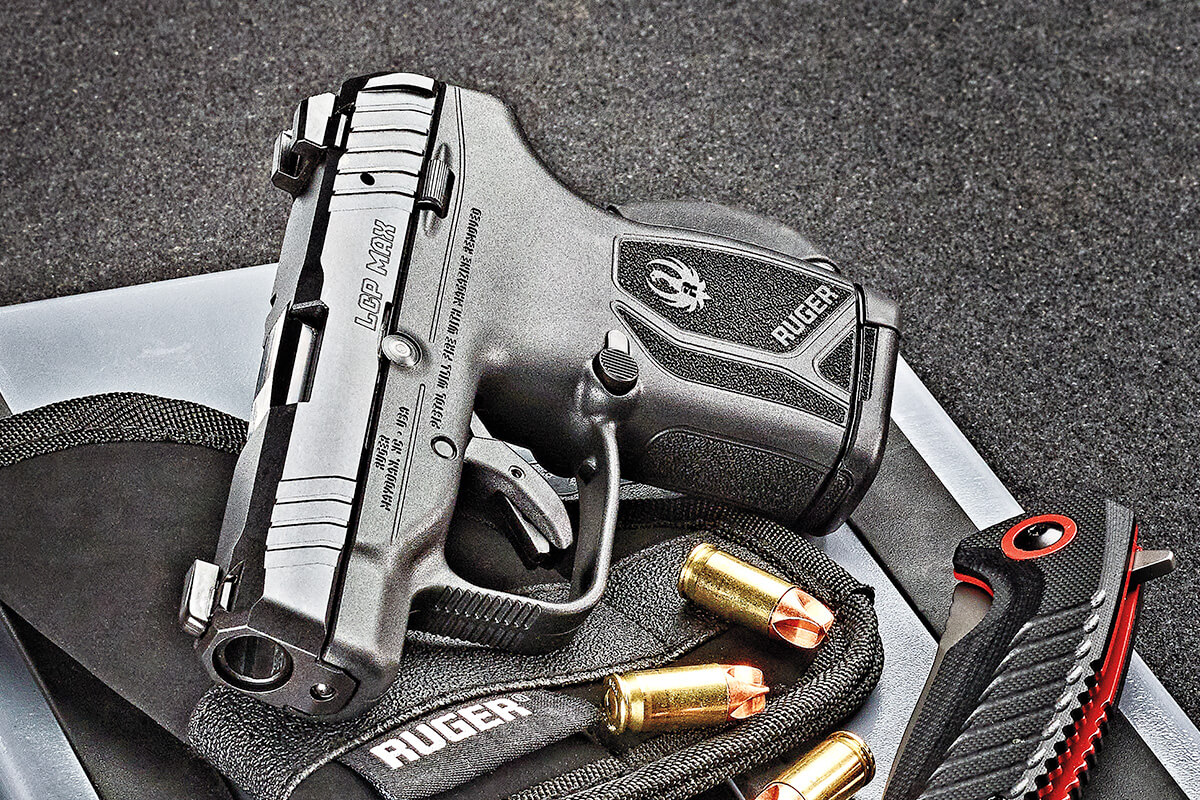
I've chronographed these loads through multiple .380 pistols; Ruger LCP, Glock 42, S&W Bodyguard, and Sig P238. Barrel length makes a huge difference in .380 performance.
From the LCP's 2.75-inch barrel, most defensive loads run 50-100 fps slower than advertised velocities. Federal HST 99-grain averaged 875 fps instead of the claimed 950 fps. Hornady Critical Defense 90-grain hit 925 fps versus the advertised 1000 fps.
The Glock 42's 3.25-inch barrel added about 40-60 fps across all loads. The P238's 2.7-inch barrel performed similarly to the LCP. Shorter barrels hurt .380 performance more than they hurt 9mm because .380 operates closer to the minimum expansion threshold.
Accuracy was consistently good with quality defensive loads. Most grouped 2-3 inches at 15 yards from these small guns. The limiting factor is usually the shooter and the short sight radius, not the ammunition.
Federal HST: the proven performer
Federal HST .380 comes in 99-grain and 94-grain loadings. The 99-grain version is the better choice for most applications. It launches at about 875-900 fps from short barrels and expands reliably to .45-.50 inches in gel tests.
Federal HST .380 ACP 94-grain
May contain affiliate links.

HST uses Federal's proven bullet design with a deep hollow point cavity and pre-stressed jacket. The bullet is designed to expand in four symmetrical petals while retaining most of its weight. In gel tests, HST .380 typically penetrates 13-15 inches with consistent expansion.
The brass cases are nickel-plated for corrosion resistance and smooth feeding. HST feeds reliably in every .380 I've tested it in, including finicky guns like the original LCP. The primer seal and case mouth seal help prevent moisture intrusion during extended carry.
One downside: HST .380 can be hard to find and expensive when available. It's worth stocking up when you find it at a reasonable price.
Hornady Critical Defense: reliable expansion
Critical Defense .380 uses a 90-grain FTX bullet with Hornady's polymer tip technology. The red polymer tip initiates expansion even at the lower velocities typical of .380 pocket guns. From short barrels, it runs about 925-950 fps.
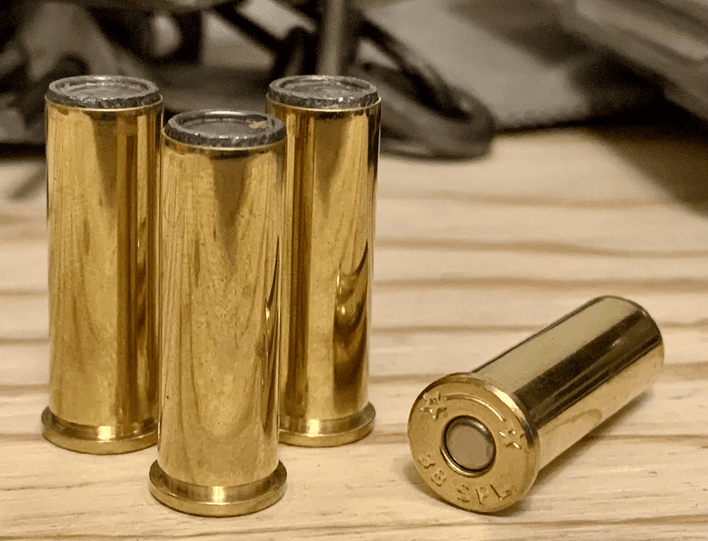
The polymer tip serves two purposes: it prevents hollow point clogging from clothing or debris, and it acts as a wedge to start expansion at impact. In gel tests, Critical Defense .380 expands to .50-.60 inches and penetrates 14-16 inches consistently.
Critical Defense feeds well in most .380 pistols. The polymer tip gives the bullet a rounded profile that helps with feeding in guns with steep feed ramps. The brass cases are nickel-plated and the bullets have a slight taper that aids chambering.
The main advantage of Critical Defense is availability. It's easier to find than HST and usually costs less. Performance is very similar between the two.
Barnes TAC-XPD: all-copper reliability
Barnes TAC-XPD .380 uses an 80-grain all-copper hollow point bullet. The lighter weight allows higher velocity; about 975-1000 fps from short barrels. The solid copper construction eliminates jacket separation and ensures the bullet retains its weight.

The hollow point cavity is deep and the petals are pre-cut into the bullet body. Expansion is reliable and dramatic; TAC-XPD .380 typically opens to .60-.70 inches in gel tests. Penetration is usually 12-14 inches, right in the sweet spot.
TAC-XPD is loaded to higher pressures than most .380 loads. This gives better velocity but can increase felt recoil in lightweight pocket guns. The copper bullets are longer than lead-core bullets of the same weight, which can cause feeding issues in some pistols with short magazines.
The all-copper construction makes TAC-XPD expensive; often twice the cost of conventional hollow points. But if your gun feeds it reliably, it's one of the most effective .380 loads available.
What doesn't work: common .380 mistakes
Traditional hollow points designed for higher velocities. Many .380 loads use bullets originally designed for 9mm or .38 Special. These often fail to expand reliably at .380 velocities. Winchester White Box JHP and Remington UMC JHP fall into this category.

Winchester White Box .380 ACP JHP Deals
Prices may change. May contain affiliate links.
Remington UMC .380 ACP JHP
May contain affiliate links.
Federal Classic Hi-Shok .380 ACP
May contain affiliate links.
Winchester Silvertip .380 ACP
May contain affiliate links.
Lightweight, high-velocity loads. Some manufacturers try to compensate for .380's limitations by pushing light bullets very fast. These loads often have excessive muzzle flash and blast from short barrels, and the light bullets don't penetrate adequately even when they expand.
Old-technology hollow points. Loads like Federal Classic Hi-Shok and Winchester Silvertip use 1980s bullet technology. They were adequate for their time but have been surpassed by modern designs. The hollow point cavities are shallow and the jackets are too thick for reliable expansion at .380 velocities.
+P loads in guns not rated for them. Some companies offer +P .380 loads that increase velocity by 100-150 fps. These can damage guns not designed for the higher pressures. Most pocket .380s aren't rated for +P ammunition.
Mixing different bullet weights. Some shooters carry one weight for practice and another for defense. This changes point of impact and can affect reliability. Stick with the same bullet weight and design for both practice and carry.
Load comparison: five proven defensive options
Federal HST 99-grain: Velocity 875 fps, expansion .45-.50", penetration 13-15". Excellent balance of expansion and penetration. Hard to find but worth the search.

Sig V-Crown .380 ACP 90-grain Deals
Prices may change. May contain affiliate links.

Hornady Critical Defense 90-grain: Velocity 925 fps, expansion .50-.60", penetration 14-16". Reliable expansion with good availability. Feeds well in most guns.
Barnes TAC-XPD 80-grain: Velocity 975 fps, expansion .60-.70", penetration 12-14". Maximum expansion with deep penetration. Expensive but very effective.
Sig V-Crown 90-grain: Velocity 900 fps, expansion .45-.55", penetration 13-15". Good all-around performance with consistent quality. Designed specifically for the P238/P365.
Remington Golden Saber 102-grain: Velocity 850 fps, expansion .40-.50", penetration 15-17". Deep penetration with moderate expansion. Good for barrier penetration.
Testing your defensive load
Every .380 pistol has preferences. What feeds and shoots well in one gun might not work in another. Here's how to properly test your chosen defensive load.
Start with function testing. Load your magazines with defensive ammo and shoot at least 50 rounds without malfunctions. Pay attention to feeding, firing, extraction, and ejection. Any hiccup means you need to try a different load.

Test accuracy at your likely engagement distances. For a pocket gun, that's usually 3-7 yards. Your defensive load should group within 3 inches at 7 yards from a rest. If it doesn't, try a different bullet weight or design.
Check point of impact versus your practice ammo. Many .380 pistols have different points of impact with different bullet weights. If your defensive load hits significantly different from your practice ammo, you need to adjust your zero or choose different ammunition.
Consider recoil and muzzle flash. Some .380 loads produce excessive blast from short barrels. This can be disorienting in low light and slow follow-up shots. Test your chosen load in dim light conditions if possible.
The velocity reality check
Advertised velocities for .380 ammunition are usually measured from longer test barrels than what's found on pocket pistols. A load advertised at 1000 fps might only achieve 900 fps from your 2.75-inch barrel. This velocity loss affects expansion reliability.
Use a chronograph if you have access to one, or look for published data from barrels similar to yours. Many online sources test ammunition from realistic barrel lengths. Velocity below 850 fps significantly reduces the chances of reliable hollow point expansion.
Temperature affects .380 performance more than larger calibers because it operates closer to the expansion threshold. Cold weather can drop velocities by 50-100 fps, potentially preventing expansion. Consider this if you live in a cold climate.
Beyond the gel test: real-world factors
Ballistic gelatin provides consistent test conditions, but real-world performance involves variables that gel can't replicate. Clothing can clog hollow points or slow bullets before impact. Bone can deflect bullets or cause them to fragment.
Heavy clothing is particularly problematic for .380 loads. Denim, leather, or heavy winter clothing can prevent hollow point expansion or significantly reduce penetration. Some loads handle clothing better than others; polymer-tipped bullets like Critical Defense are specifically designed to penetrate clothing without clogging.

Intermediate barriers like car doors or glass can stop .380 bullets that would penetrate easily in gel tests. This is a fundamental limitation of the cartridge, not a problem with specific loads. If barrier penetration is a concern, .380 isn't the right choice.
Making the choice: what works for your situation
The best .380 defensive load depends on your specific gun and carry situation. If your pistol feeds everything reliably, Federal HST or Hornady Critical Defense are excellent choices with proven track records.
Fiocchi .380 ACP FMJ
May contain affiliate links.
Federal American Eagle .380 ACP FMJ
May contain affiliate links.
If you have a finicky gun that doesn't feed hollow points well, consider a quality FMJ load like Fiocchi or Federal American Eagle. FMJ doesn't expand, but it penetrates consistently and reliably feeds in problem guns.
For maximum stopping power in .380, Barnes TAC-XPD delivers the best expansion and penetration combination. The higher cost and potential feeding issues make it worth testing thoroughly before committing to carry.
Look, .380 ACP isn't ideal for defensive use. It's a compromise cartridge for situations where you can't carry something more powerful. But with the right ammunition choice and proper testing, it can be adequate for personal defense. The key is understanding the limitations and choosing loads that work within them.
Test your chosen load thoroughly in your specific gun. Function, accuracy, and reliability matter more than theoretical ballistics. Once you find a load that works, stick with it and practice regularly. Shot placement trumps caliber selection every time.