You just bought your first 9mm pistol; maybe a Glock 19, maybe a Smith & Wesson M&P, maybe a Sig P365; and now you're standing in front of a wall of ammo at your local shop. There are boxes labeled 115 grain, 124 grain, 147 grain. FMJ, JHP, +P. Some cost $0.19 per round, others cost $1.20. The guy behind the counter has opinions. The internet has more opinions. Most of them conflict.
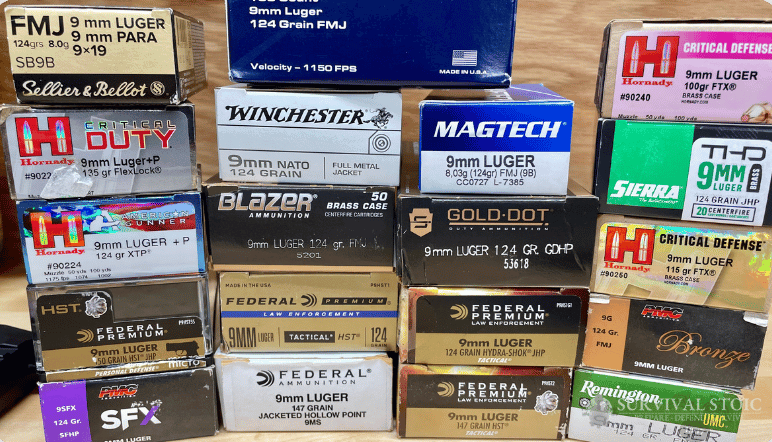
Here's what actually matters, broken down by the questions new 9mm shooters ask most often. No history lessons, no filler about Georg Luger. Just the stuff that affects what you load into your magazine and how much it costs you to get better at shooting.
9mm Luger, 9x19, Parabellum, same thing or not?
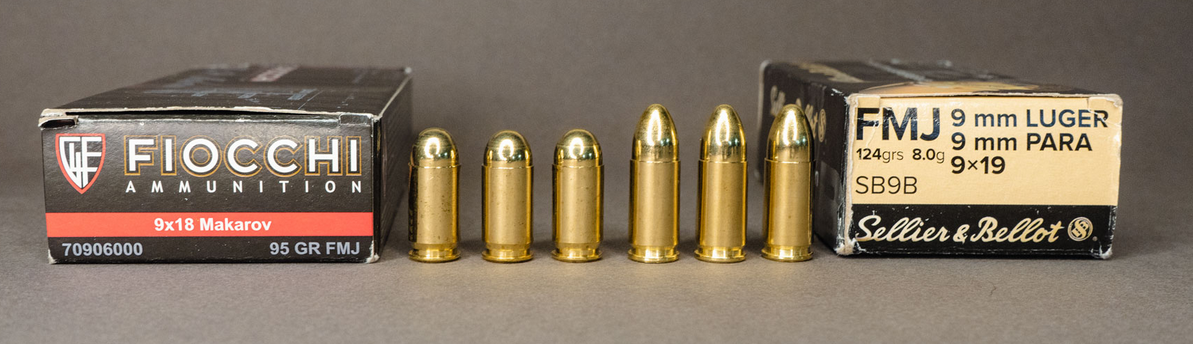
This trips up almost everyone the first time. You'll see boxes labeled 9mm Luger, 9x19mm, 9mm Parabellum, and occasionally 9mm NATO. The short version: 9mm Luger, 9x19mm, and 9mm Parabellum are all the same cartridge. Different names, same SAAMI spec, same chamber dimensions. If your pistol says "9mm" or "9x19" on the slide or barrel, all three labels are interchangeable. Grab whichever box is cheaper.
9mm NATO is almost the same, but not quite. NATO-spec ammo is loaded to slightly higher pressures; roughly 36,500 psi compared to the standard SAAMI max of 35,000 psi for 9mm Luger. In practice, any modern 9mm pistol from a reputable manufacturer handles NATO-spec ammo without issues. You might notice slightly snappier recoil. It's not +P. It's just a hair hotter than standard.
What's actually different and will ruin your day: 9x18mm Makarov. That's a shorter, wider cartridge designed for Soviet-era pistols. It will not chamber in a 9x19 gun, but people occasionally try. Also different: 9x21mm, which exists mainly for countries where civilian ownership of military-caliber cartridges is restricted. If the box says 9x18 or 9x21, put it back. Everything else labeled "9mm" on a standard ammo shelf is almost certainly 9x19 Luger/Parabellum.
Bullet weights: 115 vs. 124 vs. 147 grain
Grain is a unit of weight (7,000 grains = 1 pound), and it measures the projectile, the bullet itself, not the whole cartridge. The three most common 9mm bullet weights are 115, 124, and 147 grain. Each behaves differently, and the differences actually matter more than most new shooters expect.
115 grain
This is the lightest common 9mm load and the most widely available. It's what you'll find in most budget range ammo. Typical muzzle velocities run 1,150 to 1,200 fps from a 4-inch barrel. The lighter bullet moves faster, which means a flatter trajectory at short distances, not that trajectory matters much at typical pistol ranges inside 25 yards.
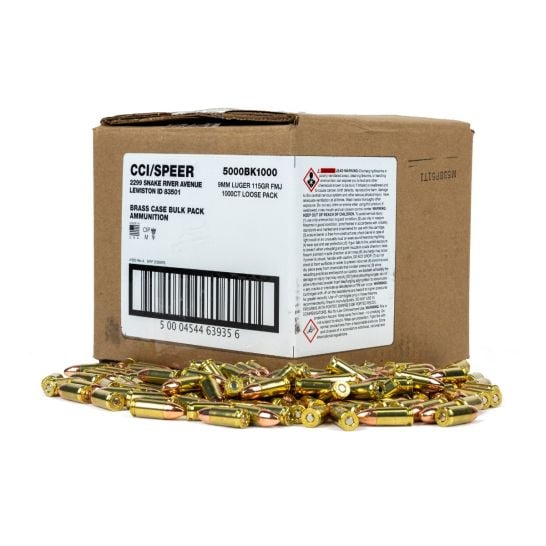
The recoil impulse with 115-grain loads tends to feel snappier. The slide cycles fast, the muzzle flips up, and it comes back down. For new shooters, this snap can actually be harder to manage than the slower push of heavier bullets, though opinions vary. The cost math is what matters here: 115-grain FMJ is almost always the cheapest 9mm you can buy. At current market prices, bulk 115-grain brass-cased FMJ runs somewhere around $0.19–$0.24 per round in 1,000-round cases. That's your training ammo baseline.
124 grain
The middle child, and arguably the sweet spot for the caliber. Muzzle velocity typically falls between 1,050 and 1,150 fps. NATO-spec 9mm is loaded with a 124-grain bullet, which is part of why many law enforcement and military loads use this weight.
The recoil feel shifts noticeably from 115 grain. It's less snappy, more of a push. Many shooters find 124-grain loads easier to shoot fast and accurately because the slide speed and muzzle behavior are slightly more predictable. The velocity spread, the difference between the fastest and slowest rounds in a string, tends to be tighter with quality 124-grain loads, which matters if you're tracking consistency.
Price-wise, 124-grain FMJ costs a few cents more per round than 115. Not enough to change your budget meaningfully if you're buying in bulk. If you shoot a pistol with a compensator (increasingly common even on carry guns), 124-grain loads tend to produce enough gas pressure to run comps reliably, where 115-grain loads sometimes don't generate sufficient dwell time.
147 grain
The heavy option. Muzzle velocities are subsonic, typically 900 to 1,000 fps. That's below the speed of sound (~1,125 fps at sea level), which means no supersonic crack. If you ever run a suppressor on a 9mm host, 147-grain is the default choice because it stays subsonic and actually gets quiet.
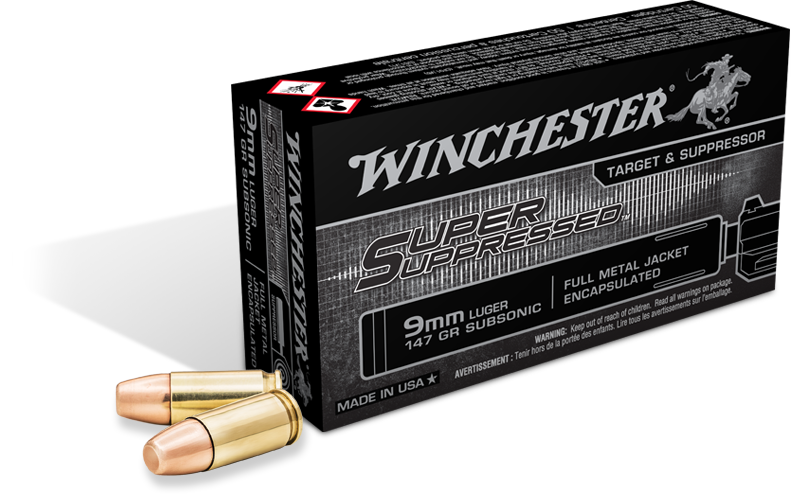
The recoil is a slow, rolling push rather than a snap. Some shooters love this for competition, particularly USPSA and IDPA, where managing recoil between shots matters. The heavier bullet also tends to produce tighter groups at 25 yards in many guns, though this is barrel-dependent and not universal.
The trade-off: 147-grain FMJ costs more than 115 or 124, and it's less common on shelves. For defensive hollow points, 147-grain loads have historically had a reputation for under-expanding because the lower velocity doesn't always drive reliable expansion. Modern bullet designs from Federal, Speer, and Hornady have largely solved this, but it's worth knowing the history.
Which weight should you buy?
For range training: 115 grain. It's the cheapest, it's everywhere, and the recoil management practice you get from the snappier impulse translates well. If you want your training ammo to feel closer to your carry ammo, match the bullet weight, most defensive loads come in 124 or 147 grain.
For defensive carry: 124 grain is the most popular choice for good reason. It balances velocity, expansion potential, and controllability. 147 grain works well in modern hollow point designs and is preferred if you want less muzzle flash and a softer recoil impulse.
For suppressed shooting: 147 grain, no contest.
FMJ, JHP, and the other acronyms on the box
The bullet type matters as much as the weight, and this is where new shooters make the most consequential decisions, especially around defensive ammo.
FMJ (full metal jacket)
A lead core wrapped in a copper jacket. The bullet doesn't expand on impact. It punches a roughly caliber-sized hole and keeps going. FMJ is your range and training ammo. It feeds reliably in virtually every semi-auto, it's cheap to manufacture, and it's the standard for practice.
You should not carry FMJ for self-defense. The reason is simple: over-penetration. An FMJ 9mm round can easily punch through a person and keep traveling with enough energy to be dangerous to whatever's behind them. FBI testing protocols look for 12 to 18 inches of penetration in calibrated ballistic gelatin. FMJ regularly exceeds that range, sometimes significantly.
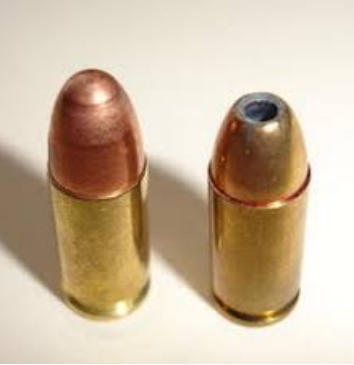
JHP (jacketed hollow point)
This is your defensive ammo. The bullet has a cavity in the nose that causes it to mushroom on impact, creating a wider wound channel and, critically, slowing down inside the target. Good hollow points expand to 1.5 to 2 times their original diameter and stop within that 12-to-18-inch FBI penetration window.
The engineering differences between cheap hollow points and premium defensive loads are significant. A budget JHP might expand inconsistently or clog with clothing material and behave like an FMJ. Premium designs from Federal (HST), Speer (Gold Dot), and Hornady (Critical Duty / Critical Defense) use specific jacket geometries, bonded cores, or polymer tips to ensure reliable expansion through barriers like denim, heavy clothing, wallboard, and auto glass.
JHP ammo costs substantially more than FMJ, typically $0.60 to $1.20 per round for quality defensive loads. You don't train with it daily. You buy a box or two, run 50 rounds through your carry gun to confirm reliability, and then load your magazines with the rest. More on this below.
+P and +P+
The "+" means higher pressure. SAAMI specifies a +P rating for 9mm Luger at 38,500 psi, compared to the standard 35,000 psi. That extra pressure pushes the same bullet weight faster, a 124-grain +P load might hit 1,200+ fps instead of 1,100 fps. More velocity generally means more reliable expansion with hollow points and more energy on target.
The trade-offs are real. More pressure means more recoil, more muzzle flash, faster wear on your pistol (particularly the barrel, recoil spring, and locking surfaces), and in some compact or subcompact guns, noticeably more felt recoil that slows down follow-up shots. Most modern full-size and compact 9mm pistols are rated for +P. Check your owner's manual. If it says "+P rated," you're fine. If it doesn't mention +P, contact the manufacturer before running it.
+P+ is not a SAAMI specification. It's an informal designation for loads that exceed +P pressures. Some law enforcement contract ammo has historically been loaded to +P+ levels. For civilian shooters, there's rarely a good reason to seek out +P+ ammo. The performance gains over standard +P are marginal, the wear on your gun increases, and the pressure levels aren't standardized, one manufacturer's +P+ might be significantly hotter than another's.
Subsonic
Any 9mm load with a muzzle velocity below ~1,125 fps is technically subsonic. Most 147-grain loads qualify by default. Some manufacturers specifically market subsonic loads (often 147 or 150 grain) for suppressor use. The practical difference between a load marketed as "subsonic" and a standard 147-grain FMJ is often minimal, check the velocity on the box. If it says 950 fps or similar, it'll stay subsonic.
Picking defensive ammo without overthinking it
New shooters tend to either ignore defensive ammo selection entirely (carrying whatever FMJ they bought for the range) or fall into a research rabbit hole comparing gel test results across dozens of loads. Here's a more practical approach.
The FBI and most major law enforcement agencies have done extensive testing on defensive handgun ammunition. Their protocols involve shooting through various barriers, bare gelatin, heavy clothing, denim, plywood, wallboard, sheet metal, auto glass, and measuring penetration depth and expansion diameter. You don't need to replicate this testing. You need to pick from the loads that have already passed it.
Five loads that consistently perform
Federal HST (124 grain or 147 grain) is arguably the most widely recommended defensive 9mm load across law enforcement and the concealed carry community. The 124-grain version typically expands to around 0.55 inches and penetrates 14 to 16 inches in bare gelatin. It feeds reliably in almost everything. The 147-grain version expands slightly less aggressively but penetrates more consistently through barriers. Both are excellent.
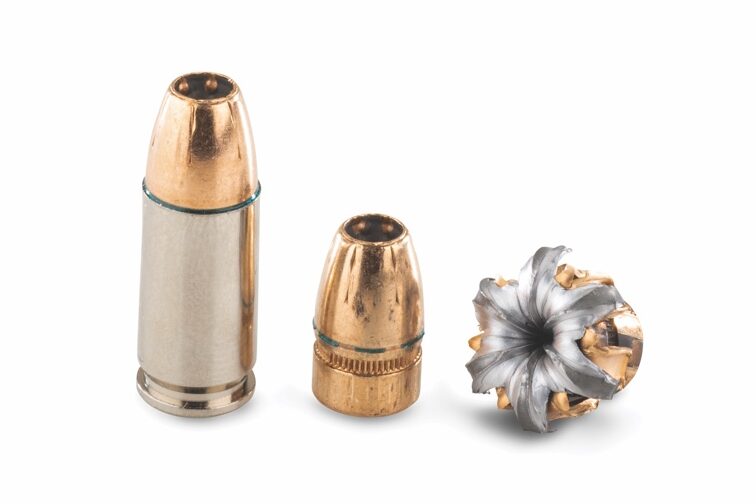
Speer Gold Dot (124 grain +P) has been a law enforcement standard for decades. The bonded-core construction means the jacket doesn't separate from the lead core on impact, which improves performance through barriers like auto glass where unbonded bullets tend to fragment. The 124-grain +P version runs around 1,220 fps from a 4-inch barrel and expands reliably through heavy clothing.
Hornady Critical Duty (135 grain +P) was specifically designed to meet FBI barrier test protocols. The FlexLock bullet has a polymer tip that prevents the hollow point cavity from clogging with barrier material. At 135 grains, it splits the difference between 124 and 147, running around 1,110 fps. Hornady also makes Critical Defense, which is optimized for short-barreled concealed carry guns, lighter jacket, designed for less velocity. Critical Duty for full-size and compact; Critical Defense for subcompacts. That distinction matters.
Winchester Ranger T-Series (127 grain +P+) is a law enforcement load that's available on the civilian market. The taloned jacket petals fold back into distinctive points on expansion. It's effective, but the +P+ pressure designation means more wear and more recoil. Unless you have a specific reason to run +P+, the standard-pressure options above accomplish the same job with less blast.
Federal Punch (124 grain) is a newer entry designed specifically for civilian self-defense. It's loaded to standard pressure (not +P), which makes it a good option for shooters who want manageable recoil in a compact gun. Expansion and penetration numbers are solid, though not quite as extensively documented in independent testing as HST or Gold Dot.
How much defensive ammo to buy
Buy at least two boxes (100 rounds total) of whatever you choose. Run 50 rounds through your carry gun to verify it feeds, fires, and ejects without issues. Some pistols are picky about bullet profiles, the ogive (the curved shape of the bullet nose) on certain hollow points can hang up on feed ramps, especially in older designs or guns that haven't been broken in. If your gun chokes on a specific load, try a different one before blaming the gun.
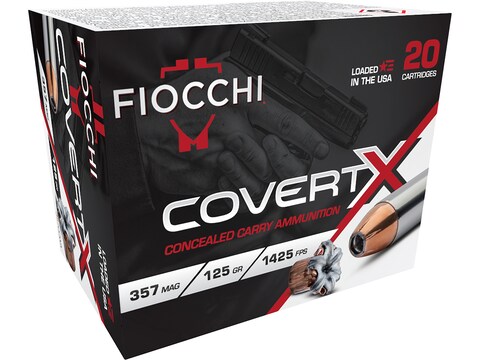
Load your carry magazines with the remaining rounds. Replace your carry ammo once a year, shoot the old stuff at the range and load fresh. Ammo stored in a magazine, carried against your body in varying temperatures and humidity, degrades faster than ammo sitting in a cool, dry ammo can.
The cost-per-round math that actually matters
New shooters tend to focus on the sticker price of a 50-round box. The real number to track is cost per round, and the real question is how much you'll spend over a year of practice.
A reasonable training schedule for a new pistol shooter is 200 rounds per month. That's one range session per week at 50 rounds, or two sessions per month at 100 rounds. Over a year, that's 2,400 rounds.
At $0.20 per round (bulk 115-grain FMJ), that's $480 per year. At $0.28 per round (name-brand 124-grain FMJ in 50-round boxes), that's $672 per year. At $0.35 per round (buying 20-round boxes of whatever's on the shelf), that's $840 per year.
The difference between buying smart and buying lazy is $360 per year. That's almost enough for another gun, or a decent set of sights, or a training class.
The cost math favors buying in bulk, 500 or 1,000-round cases. The per-round price drops significantly. Shipping costs are amortized across more rounds. And you won't skip range trips because you "don't have enough ammo." The psychological effect of having a case of ammo on the shelf is underrated. You shoot more when you're not mentally calculating the cost of every trigger pull.
Brass vs. steel case
Steel-cased ammo (Tula, Wolf, some Norma-branded imports) runs $0.02–$0.05 cheaper per round than brass. Over 2,400 rounds, that's $48 to $120 in savings. The trade-offs:
Steel cases don't obturate (seal the chamber) as well as brass, which can mean more carbon blowback. Steel is harder on extractors over tens of thousands of rounds. Some ranges don't allow steel-cased ammo because the bimetal jackets (copper-washed steel) stick to their range magnets and complicate brass recycling. The accuracy is generally worse, wider velocity spreads, less consistent bullet seating.
For a new shooter running 2,400 rounds a year, steel-cased ammo is fine for basic marksmanship practice. The extractor wear concern is real but takes 10,000+ rounds to become meaningful, and extractors are cheap replacement parts. The bigger issue is whether your range allows it and whether you reload, steel cases can't be reloaded.
Run the per-round math and decide if the savings justify the downsides for your situation. For most new shooters buying their first case of ammo, quality brass-cased 115-grain FMJ in bulk is the right call. The cost difference isn't large enough to matter, and you eliminate several variables.
What the numbers on the box actually mean
Every box of ammo has a few key numbers. Here's what they tell you and what they don't.
Bullet weight in grains, we covered this. Muzzle velocity in feet per second (fps), this is measured from a test barrel, usually 4 inches for 9mm. Your gun's barrel length, temperature, and individual chamber dimensions will produce different numbers. Expect 25–75 fps variation from the listed velocity in your specific gun. Muzzle energy in foot-pounds (ft-lbs), this is calculated from velocity and bullet weight. Standard 115-grain loads produce around 340–365 ft-lbs. Standard 124-grain loads produce 330–370 ft-lbs. Standard 147-grain loads produce 300–330 ft-lbs. The energy numbers look similar across weights because the lighter bullets move faster.
What the box doesn't tell you: velocity spread (the consistency of the load), accuracy potential in your specific barrel, or how the bullet actually performs on impact. Those require testing, either your own chrono data or relying on published independent testing from sources that actually shoot the ammo through calibrated gelatin.
Chrono notes: what you'll see at the range
If you ever borrow or buy a chronograph (the Caldwell Ballistic Precision or LabRadar units are popular), here's what to look for with 9mm ammo.
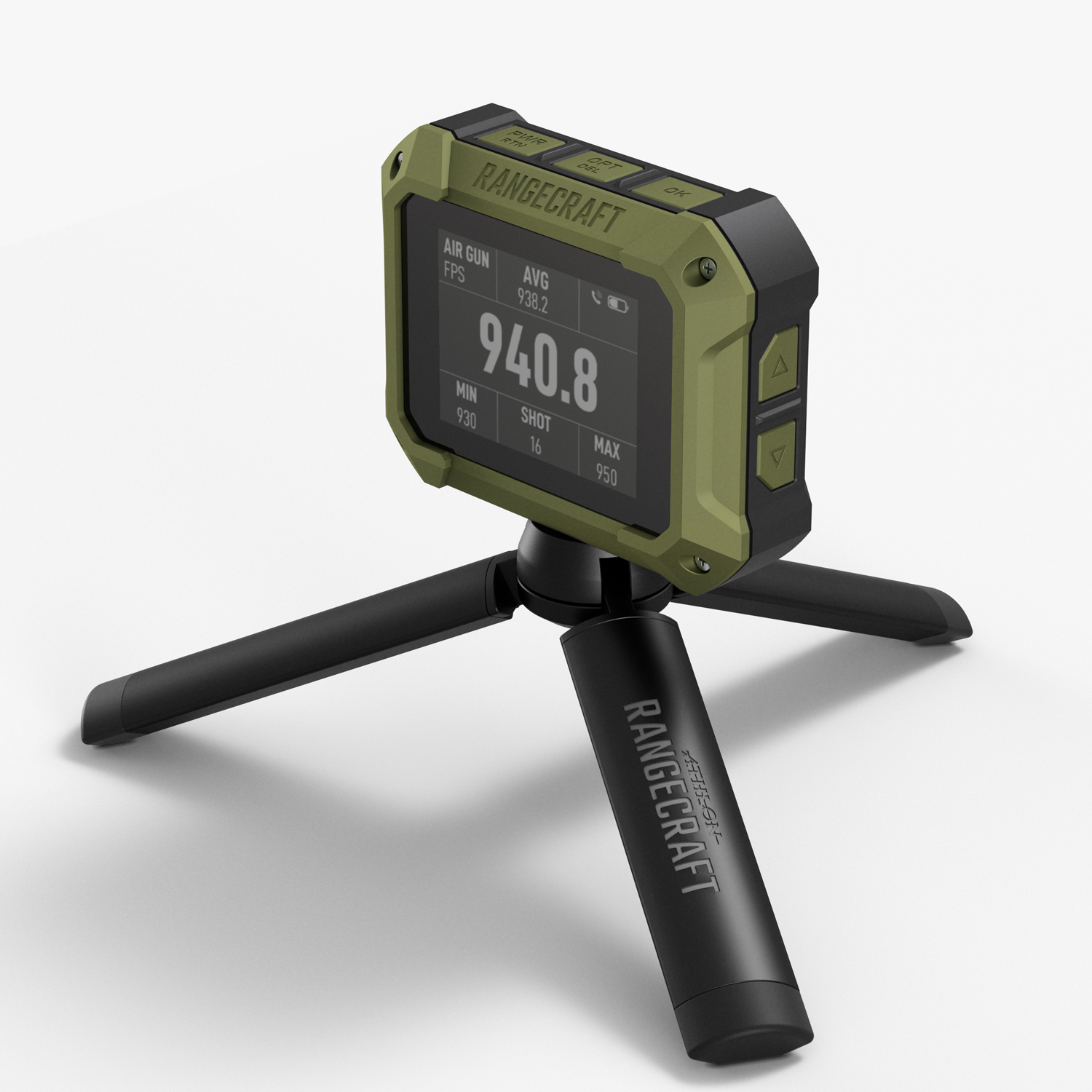
Shoot 10-round strings and record every velocity. Calculate the average, the extreme spread (fastest minus slowest), and the standard deviation. Quality factory ammo from Federal, Fiocchi, Sellier & Bellot, or CCI/Blazer typically shows standard deviations of 12–20 fps. Budget or steel-cased ammo often runs 25–40 fps. That wider spread means less predictable point of impact at distance and less consistent recoil impulse, which affects split times (the time between shots).
The velocity spread tells the story of manufacturing consistency. A load with an average of 1,150 fps and an SD of 15 fps will feel and perform noticeably more consistent than one averaging 1,140 fps with an SD of 35 fps, even though the averages are similar.
For a new shooter, chrono data is educational but not essential. What is essential: knowing that the velocity on the box is an approximation, not a guarantee, and that your gun will produce its own numbers.
Common mistakes new 9mm shooters make with ammo
Carrying FMJ for self-defense
Already covered, but it bears repeating because it's the single most common and most consequential ammo mistake. FMJ over-penetrates and doesn't create an effective wound channel. Carry JHP. The $25 to $40 you spend on a box of quality hollow points is not optional if you're carrying for defense.
Never testing carry ammo in their gun
You bought a box of Federal HST because the internet said to. You loaded your magazines without ever firing a round of it through your pistol. Three months later, you need it, and the first round nosedives into the feed ramp. This happens. Different bullet profiles interact differently with different feed ramp geometries. Run at least 50 rounds of your chosen defensive load through your gun. Zero malfunctions in 50 rounds is the minimum standard. If you get even one failure to feed, try a different load.
Mixing ammo in a magazine
Some new shooters load alternating FMJ and JHP, or mix different brands and bullet weights in the same magazine. Don't. Each load has a different point of impact, recoil impulse, and cycling behavior. Your first shot goes where you expect; your second shot doesn't. Load magazines with one type of ammo, consistently.
Storing ammo badly
Ammo is surprisingly durable, but moisture is the enemy. Primers and powder charges degrade when exposed to humidity over time. A loaded magazine sitting in a leather holster against sweaty skin in a Florida summer is a worse storage environment than a sealed ammo can in a closet. Keep your bulk ammo in a cool, dry place. Rotate your carry ammo annually. If a round shows visible corrosion on the case, discoloration around the primer, or the bullet is set back into the case (shorter overall length than it should be), don't shoot it.
Rma armament Norma steel-cased 9mm ammunition Deals
Prices may change. May contain affiliate links.
Bullet setback from repeated chambering
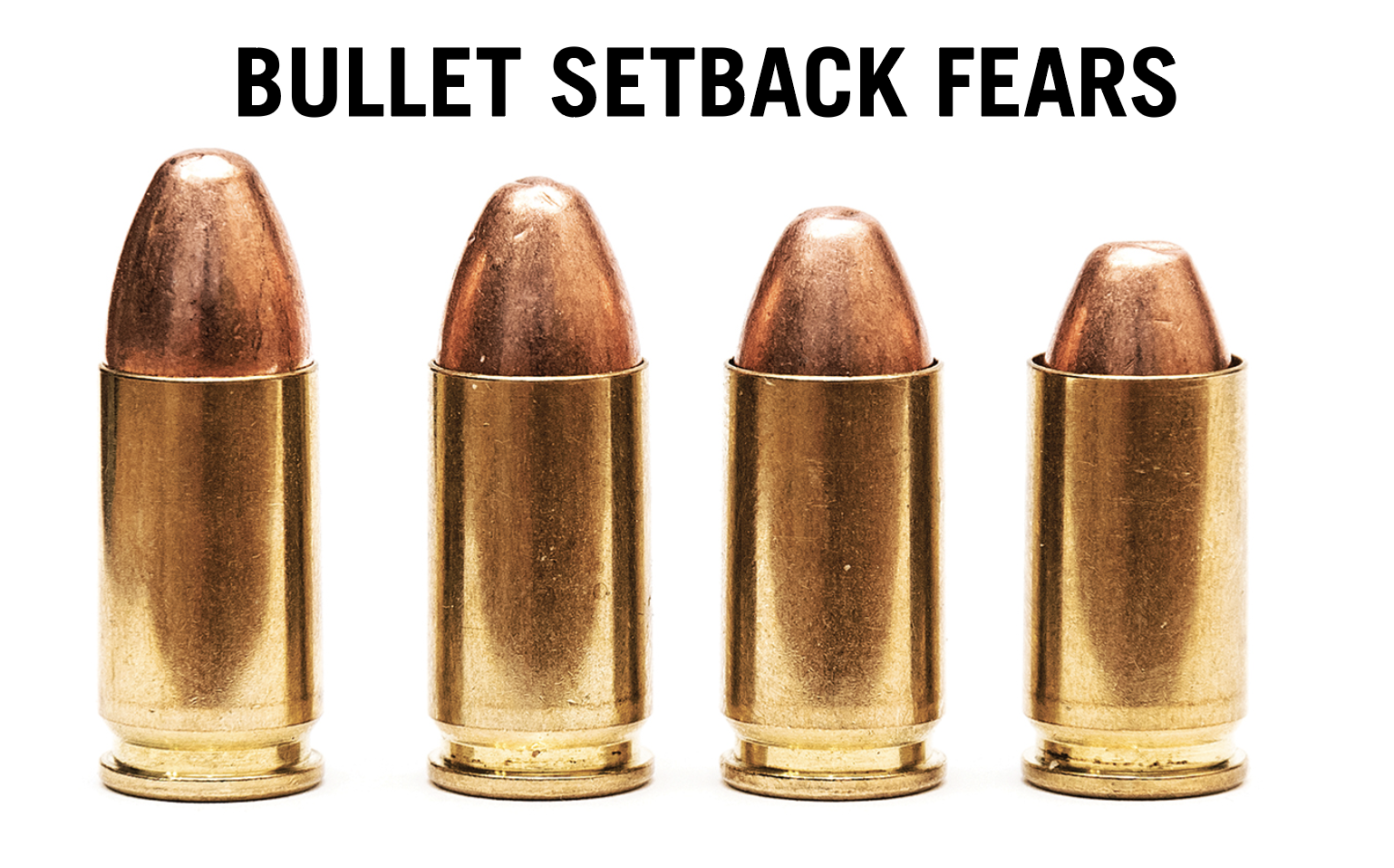
Every time you rack the slide to chamber a round, then later unload it by racking the slide again, the bullet can get pushed slightly deeper into the case. This is called bullet setback. It increases chamber pressure because the internal volume decreases. After 5–10 chamber/unchamber cycles, the overall length can be measurably shorter. The fix: when you unload your carry gun, set aside the top round. Rotate it to the bottom of the magazine. After a few rotations, shoot those rounds at the range and replace them. Visually compare your carry ammo to a fresh round from the box periodically. If a round looks shorter, don't chamber it.
How your gun affects ammo performance
Not all 9mm pistols behave the same with the same ammo, and new shooters sometimes blame the ammo when the gun is the variable.
Barrel length
A Glock 19 has a 4.02-inch barrel. A Sig P365 has a 3.1-inch barrel. A Glock 17 has a 4.49-inch barrel. That inch or more of barrel length difference translates to 50–100 fps of velocity difference with the same load. A 124-grain JHP that expands reliably at 1,150 fps from a Glock 19 might only hit 1,050 fps from a P365, and that reduced velocity can mean less reliable expansion. This is why Hornady makes both Critical Duty (optimized for standard-length barrels) and Critical Defense (optimized for shorter barrels with lower velocities). Match your ammo to your barrel length.
Recoil spring weight
Most factory pistols come with a recoil spring tuned for standard-pressure ammo. Running +P consistently can accelerate spring fatigue. Running very light loads (some 115-grain target loads at 1,050 fps) might not generate enough slide velocity to cycle reliably, especially in a new gun with a stiff spring. If your gun short-strokes (the slide doesn't come all the way back, causing failures to eject or feed), try hotter ammo before assuming the gun is broken.
Break-in period
Some pistols, particularly tight-tolerance models from Sig, CZ, and some 1911-pattern guns, need 200–500 rounds before they run reliably with all ammo types. During break-in, use standard-pressure 124-grain FMJ. It's the most likely to cycle correctly in a stiff new action. Save the hollow point testing for after break-in.
Range ammo recommendations: five loads worth trying
Here are five widely available FMJ training loads, ranked by the balance of cost, consistency, and shootability.
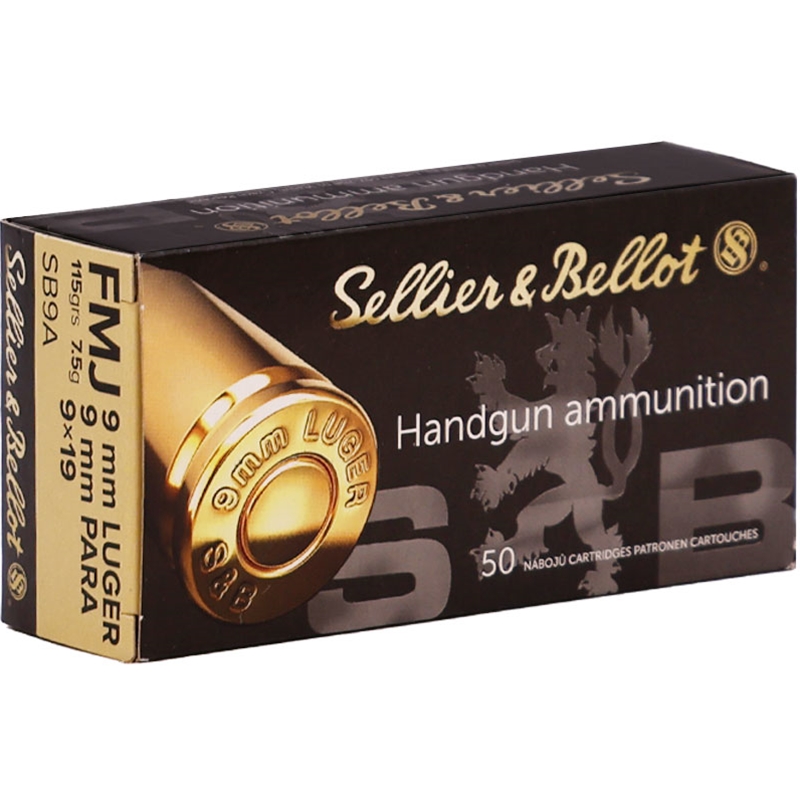
Sellier & Bellot 115-grain FMJ is a Czech-made load that consistently punches above its price point. Velocity spreads tend to be tighter than comparably priced American-made budget ammo. Cases are clean brass. It runs around $0.22–$0.26 per round in bulk and feeds reliably in everything. If you can find it, buy it.
Federal American Eagle 124-grain FMJ is the training companion to Federal HST. Same bullet weight, similar recoil impulse (though less velocity than the HST +P). If you carry 124-grain HST, training with American Eagle 124-grain gets your practice reps closer to your carry ammo's feel. Slightly more expensive than 115-grain budget options, but the consistency is worth a few cents per round.
CCI Blazer Brass 115-grain FMJ is a reliable budget option from a major manufacturer. It's not the most consistent ammo on a chronograph, but it feeds well, the brass is reloadable, and it's priced competitively in bulk. The aluminum-cased Blazer (silver cases) is even cheaper but can't be reloaded and some ranges reject it.
Fiocchi 115-grain FMJ is another European-made load with good quality control. Fiocchi tends to run slightly hotter than its listed velocity, which means snappier recoil than some other 115-grain loads. Some shooters prefer this because it more closely mimics the feel of +P defensive loads during practice.
Norma Range & Training 124-grain FMJ is a newer entry to the budget market. It's competitively priced and the quality control has been solid based on published testing. The 124-grain weight makes it a good practice analog for 124-grain carry ammo.
The +P question for new shooters
Should you carry +P ammo? The honest answer: probably not yet, and maybe not ever.
Modern standard-pressure defensive loads have gotten remarkably good. Federal HST in standard pressure (not +P) expands reliably and penetrates within the FBI window. Speer Gold Dot comes in standard-pressure variants that perform well. The performance gap between standard pressure and +P has narrowed considerably as bullet engineering has improved.
The trade-offs of +P for a new shooter are meaningful. More recoil means slower follow-up shots. More muzzle flash means more visual disruption in low light. More blast means more flinch potential. And if you're shooting a subcompact carry gun, which many new shooters choose because it's small and concealable, the +P recoil in a light gun is genuinely unpleasant and counterproductive to building good fundamentals.
Start with standard-pressure defensive ammo. If you later develop the shooting skills where +P recoil doesn't affect your split times or accuracy, and your gun is rated for it, you can make that switch. But the best defensive round is the one you can put on target quickly and repeatedly. A standard-pressure round that hits is infinitely more effective than a +P round that misses.
How much ammo to keep on hand
There's no single right answer, but here's a practical framework.
Keep enough training ammo for two months of practice. At 200 rounds per month, that's 400 rounds. This prevents skipped range trips due to ammo shortages or price spikes. If you find a good deal on bulk ammo, buy a case (1,000 rounds) and work through it.
Keep 150 rounds of your chosen defensive ammo. That's 50 for initial reliability testing, enough to fill your carry magazines plus a reload, and a reserve for annual rotation. Defensive ammo has a long shelf life when stored properly, years, not months, so this isn't a perishable inventory problem.
If you want a deeper reserve for uncertain times, 1,000 rounds of training ammo and 200 rounds of defensive ammo is a reasonable ceiling for a single-caliber shooter. Beyond that, you're into prepper territory, which is a different conversation.
What to do at your next range trip
Buy two boxes of different bullet weights, one 115-grain and one 124-grain, from the same manufacturer if possible. Shoot a magazine of each at 7 yards, then 15 yards. Pay attention to three things: where the groups center (point of impact may shift between weights), how the recoil feels between the two, and whether you shoot tighter groups with one versus the other.

Most shooters find they have a preference, and it's not always the one they expected. The 124-grain loads often produce better practical accuracy because the softer recoil impulse allows faster sight recovery between shots. But some shooters genuinely shoot 115-grain better. The only way to know is to put rounds on paper and compare.
If you haven't tested your defensive ammo yet, bring a box. Run a full magazine through your carry gun at 7 yards. Watch for any feeding or ejection issues. Check your group size. Then load your carry magazines and know, not hope, know, that your gun runs your chosen ammo.
The numbers don't lie, and neither does the target. Everything else is just conversation.