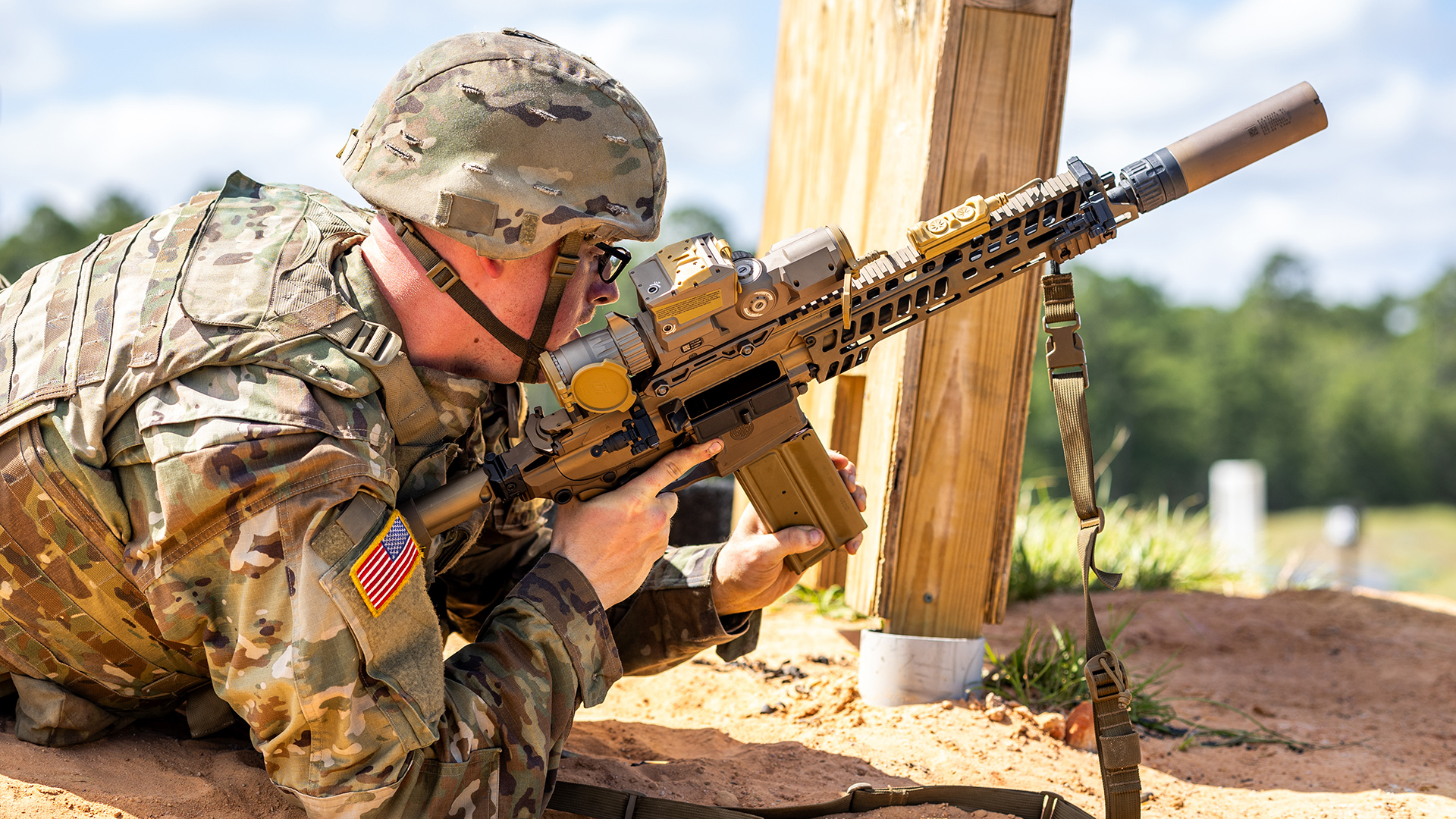
The M110A1 CSASS was supposed to replace the M110 SASS in the sniper role. That's not what happened. The program shifted, the rifle got redistributed as the Squad Designated Marksman Rifle, and the original M110 stayed in sniper sections with a fresh five-year Knight's Armament contract signed in September 2026. Meanwhile, civilians who shot the M110A1 on active duty came home wanting one, and HK never made a military-equivalent version available on the commercial market. What they did make was the MR762A1 and now the MR762 A4, the civilian semi-auto siblings of the HK417 family tree. Same bloodline, different animal.
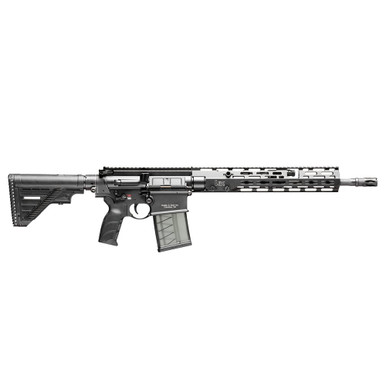
Heckler & koch MR762 A4 Deals
Prices may change. May contain affiliate links.
So the question that keeps showing up on forums, in DMs, and at every gun show where someone has a tan-painted HK on the table: can you actually turn an MR762 into a real M110A1, or are you just building an expensive costume? The answer is more complicated than either the clone builders or the purists want to admit. The two rifles share a parent design, but the differences between them are specific, intentional, and in some cases require machining to bridge. This is the breakdown of what separates the military rifle from the civilian one, what a conversion actually involves, and whether the juice is worth the squeeze.

Decision context
The reader here falls into one of a few camps. You're either active duty or recently separated, you shot the M110A1 SDMR or CSASS variant, and you want to replicate that platform on the civilian side. Or you're a precision rifle enthusiast who wants an HK 7.62 semi-auto and you're trying to decide between buying a stock MR762 A4 and running it as-is, or sinking thousands into a clone build. Or you're a unit armorer or Guard/Reserve soldier trying to understand the actual differences between what's in your arms room and what's on the commercial shelf.
May contain affiliate links.
Each of those paths leads to different decisions. The MR762 is a genuinely excellent 7.62 NATO semi-auto that can do DMR work out of the box. The M110A1 is a purpose-built military system with specific modifications driven by Army requirements. The gap between them is real but not insurmountable, and the cost of closing it is significant. Knowing exactly where the differences live helps you decide whether a clone conversion is worth $7,000-plus or whether a factory MR762 A4 at $4,749 gets you 90% of the capability for half the investment.
Quick comparison table
The weight difference alone tells you something. The MR762 A4 at 9 pounds 13 ounces is nearly a pound and a half heavier than the M110A1 at 8.4 pounds unloaded. That's not furniture weight. That's receiver and barrel profile differences baked into the design.
May contain affiliate links.
The family tree: HK417 to G28 to M110A1 to MR762
Understanding the lineage matters because it tells you which parts interchange and which don't. The HK417 is the military parent rifle, a select-fire 7.62mm NATO weapon developed as the big brother to the HK416. The G28 is the Bundeswehr's designated marksman rifle, developed from the civilian MR308 rather than directly from the HK417, though approximately 75% of parts are interchangeable with the HK417. It is configured with a longer handguard, precision optics, and a steel upper receiver. The M110A1 is derived from the G28E (export variant), but with a critical change: the Army's weight requirements forced HK to swap the steel upper receiver for an aluminum one, bringing the unloaded weight down to 8.4 pounds. That weight mandate shaped the entire rifle.
The MR762, on the other hand, is HK's commercial semi-auto derivative of the HK417 platform. It was introduced in 2011 for the civilian and law enforcement market. It shares the short-stroke gas piston system, the rotating bolt, and the general operating principle. But it was never designed to meet the CSASS specification. It's a commercial rifle built to commercial standards, which in HK's case are still extremely high, but they're not the same standards as a military contract rifle optimized for a specific mission set.
Here's something most people don't know: the M110A1 displayed at SHOT Show 2017 was actually marked "MR 762 A1" on the receiver, suggesting HK may have used MR762 receivers as the basis for at least some of the prototypes or display models. The Firearm Blog noted this at the time, pointing out that the specific example shown might not have been an original CSASS rifle. That detail matters because it hints at how close the platforms are at the receiver level, even if the final military configuration diverges significantly in furniture, barrel profile, and accessories.
The MR762 A4, released more recently, closed some of the gap. It brought fully ambidextrous controls, an M-LOK handguard, an adjustable gas block, and a lighter barrel profile. HK also added a lifetime barrel-bore guarantee and a 1 MOA accuracy guarantee with match ammunition, which the A1 version never had. HK's Director of Business Development stated that their "proprietary cannon-grade steel barrels vastly outperform so-called mil-spec barrels in both accuracy and durability." That's a marketing claim, but the barrel guarantee backing it up is real.
Ballistics head-to-head
Both rifles fire 7.62x51mm NATO. There's no ballistic difference in the cartridge itself. The M110A1's listed muzzle velocity of 750 m/s (2,461 ft/s) with 175-grain M118LR is the standard you'd expect from a 16-inch class barrel in this chambering. The MR762 A4 with its 16.5-inch barrel should produce comparable or slightly higher velocities with the same ammunition, though HK hasn't published official velocity figures for the commercial rifle.
Heckler & koch MR762 A1
May contain affiliate links.
The effective firing range for the M110A1 on point targets is listed at 800 meters (875 yards). That's the Army's stated capability with the issued optic and M118LR ammunition. During operational testing at Fort Carson, Colorado, Army snipers from the 2nd Infantry Brigade Combat Team engaged targets at ranges from 300 to 1,000 meters from a standing supported position, putting 8,000 total rounds downrange in freezing single-digit temperatures. The testers noted increased accuracy and higher hit percentages at longer ranges compared to the M110 SASS.
Can the MR762 reach out to 800 meters? With quality optics, good ammunition, and a competent shooter, absolutely. The rifle doesn't know it's a civilian model. The barrel, bolt, and chamber are doing the same physics. The difference is that the M110A1 was tested, validated, and fielded as a system optimized for that performance envelope, with a specific optic (Schmidt & Bender 3-20x50 PMII Ultra Short for CSASS, Sig T6 for SDMR), specific suppressor (OSS baffle-less), and specific ammunition (M118LR, plus the Advanced Armor Piercing round, a tungsten-cored design intended to supersede the M993 AP, with its urgent materiel release authorized in October 2019).
The trajectory and wind drift characteristics are identical because the cartridge is identical. Terminal performance depends on the ammunition selected, not the rifle. What the M110A1 system gives you that the MR762 doesn't is the integrated suppressor solution, which affects point of impact shift, recoil impulse, and signature reduction. The OSS/HUXWRX baffle-less design was specifically selected to minimize back-pressure, which matters for a gas-piston gun running a suppressor extensively.
The conversion: what it actually takes
This is where the rubber meets the road for clone builders. Several outfits now offer MR762-to-M110A1 conversion services, and the community on HKPro forums has documented the process in detail. The work is not trivial.
Receiver modifications
The MR762 upper receiver requires physical machining to match the M110A1 profile. This includes shaving the forward assist, removing the blocking feature, cutting the case deflector, and in some cases extending the rear Picatinny rail section. The bolt catch guard needs to be reduced in size to match the military configuration. On the lower receiver, ambidextrous cuts for the bolt release must be machined in if starting from an A1 lower (the A4 already has ambi controls). All original MR762 markings get blasted off so M110A1 markings can be laser engraved.
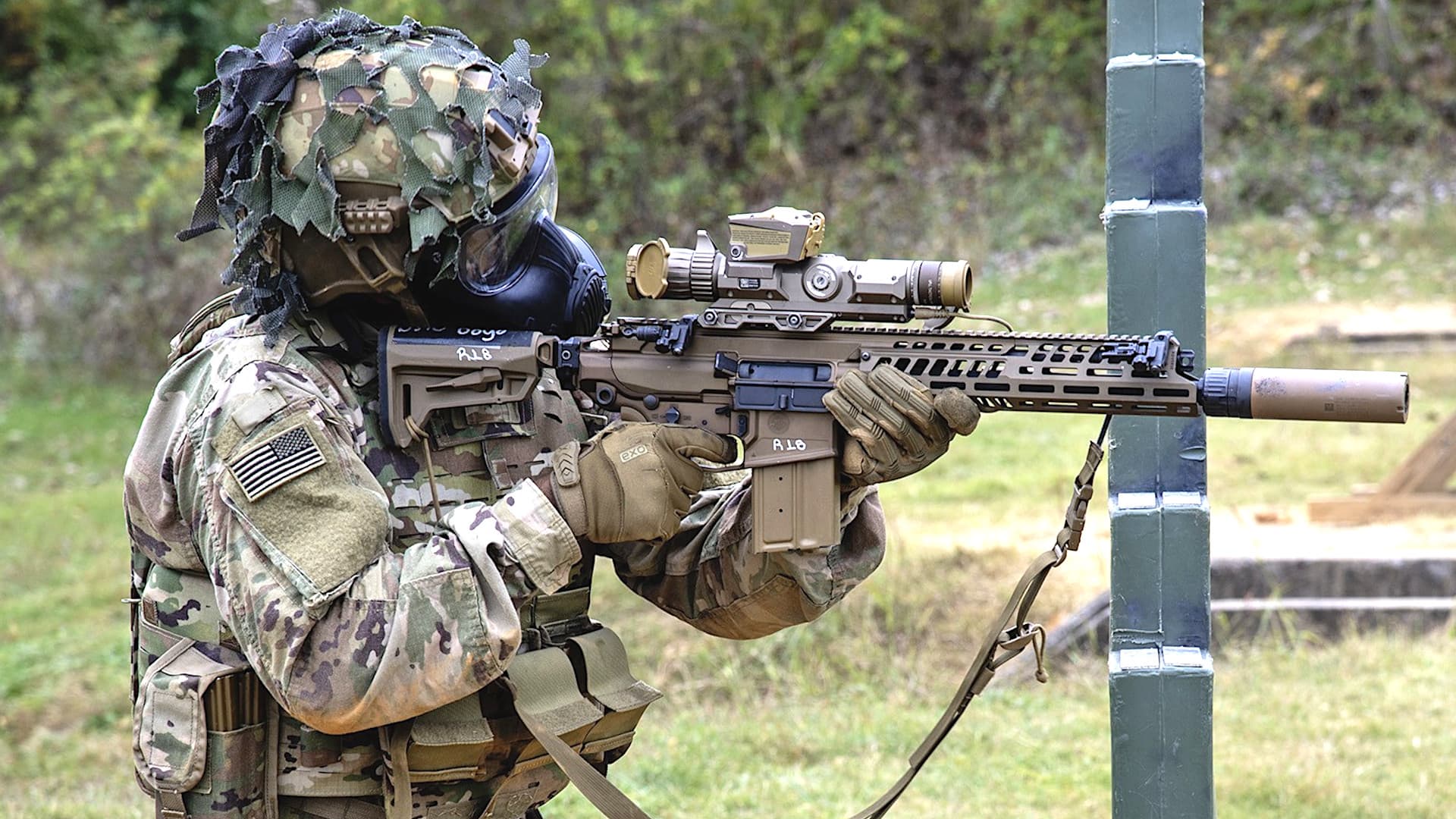
This isn't bolt-on work. It requires a competent machinist who understands HK receiver geometry. Shops like Black Ops Defense and Ronin Arms LLC have developed the tooling and processes to do this work, but you're trusting someone to cut on your $4,000+ receiver.
Finish work
The M110A1 wears a distinctive RAL8000 tan finish. The MR762 ships in black. Getting the color right requires either Cerakote or reanodizing, and the two produce different results. For their M110A1 conversions, Black Ops Defense specifically notes they use reanodizing rather than Duracoat or Cerakote paint, which produces a more durable and factory-correct appearance, though their broader services page also lists Duracoat finish work, and they offer Cerakote/DuraCoat options for 417 conversions. The Cerakote route works but it's a paint finish over the original anodizing, which some builders consider less authentic.

RAL8000 itself is a specific color standard, but anyone who has handled military HK rifles knows that "RAL8000" covers a range of actual shades depending on the production batch, the finishing process, and how much sun the rifle has seen. Clone builders agonize over getting the exact right tan, and the truth is that actual issued M110A1s vary enough that there's no single "correct" shade.
Parts list
A proper M110A1 SDMR clone conversion includes a substantial parts list. Based on documented builds, the components include:

Troy 45-degree flip-up iron sights Deals
Prices may change. May contain affiliate links.
- Geissele/HK M110 foregrip (HK marked)
- M110A1 SDMR standard wide stock in tan
- Extended castle nut
- Ambidextrous QD rear sling swivel plate
- V7 pistol grip
- Enlarged trigger guard
- Troy 45-degree flip-up iron sights
- LaRue bipod mount and Harris bipod
- Ambidextrous bolt release
- Ambidextrous magazine release
- HK cold hammer forged light profile barrel (A4 adjustable gas block)
- Tan selector levers
- Tan magazine floor plates
- Tan ejection port cover
- OSS/HUXWRX muzzle device
- Geissele Super Precision scope mount (SDMR specific)

Many of these parts are not available through normal HK commercial channels. The G28/M110A1 stock, the specific selector levers, the tan small parts, and some of the receiver-specific components either come from military surplus channels, European HK parts sources, or are manufactured by licensed third parties. HKParts.net carries some items like the G28 SDMR clone buttstock in RAL8000, but availability fluctuates.
The cost
Black Ops Defense lists their complete M110A1 SDMR MR762A4 rifle custom conversion at $6,999 (recently reduced from $7,499). That's the conversion service on a rifle you already own. If you're buying a base MR762 A4 at $4,749 and then converting it, you're looking at north of $11,500 before optics, suppressor, and mount. Add a Geissele Super Precision SDMR scope mount, a Sig T6 or Schmidt & Bender optic, and an OSS/HUXWRX suppressor, and you're easily past $15,000 for a complete clone-correct system.
For context, the original Army contract was $44.5 million for 3,643 rifles, which works out to roughly $12,200 per rifle. That's a complete system price including optics, suppressor, and accessories at military contract rates. Your civilian clone is going to cost more per unit than what the Army paid, which is a strange reality of the defense procurement world.
Range notes
One detail that clone builders consistently underestimate is the weight difference. The M110A1 at 8.4 pounds unloaded is substantially lighter than the MR762 A4 at 9 pounds 13 ounces. Simply bolting M110A1 furniture onto an MR762 doesn't get you to 8.4 pounds. The military rifle achieved that weight through a lighter barrel profile and receiver modifications that removed material. A converted MR762 will look like an M110A1 but it won't weigh like one unless the barrel is swapped to a lighter profile, which is part of what the more comprehensive conversion services include.
Use cases
The active duty or veteran shooter
You carried the M110A1 SDMR in your squad. You know the manual of arms, you know the recoil impulse, you know where the controls are in the dark. You want that same platform for DMR competition, precision rifle matches, or just because you liked the gun. The clone conversion makes emotional and practical sense for this shooter. The MR762 with a proper conversion will handle identically to the issued rifle in every way that matters at the firing line. The weight difference won't matter in competition the way it matters on a 12-mile movement.
As one HKPro forum member building the conversion put it: he had "some experience on the M110A1 in the past due to work" and wanted to rebuild the platform he "came to love and hate" while also getting a solid DMR shooting platform. That love-hate relationship is telling. The M110A1 isn't universally beloved in the military community. A Reddit thread on the SpecOpsArchive subreddit noted that the M110A1 CSASS/SDMR was "disliked in the Regiment," though the specific complaints weren't detailed in that thread. Soldiers have opinions about their weapons, and the M110A1 generates strong ones in both directions.
The precision rifle competitor
If your goal is pure accuracy and performance in DMR-style matches, the stock MR762 A4 might actually be the smarter buy. It comes with a 1 MOA accuracy guarantee with match ammunition and a lifetime barrel accuracy guarantee that the A1 version and any clone conversion won't carry. HKPro forum members consistently report being "blown away by the accuracy" of the A4, and multiple users stated that "both are equal in accuracy" between the A1 and A4, with the shooter and ammunition making any difference. The A4 is also lighter than the A1 it replaced, though still heavier than the military M110A1.
For competition, you don't need RAL8000 paint, military markings, or clone-correct furniture. You need a rifle that shoots sub-MOA groups reliably, cycles cleanly, and accepts the optic and suppressor you want to run. The MR762 A4 does all of that at $4,749 without modification.
The collector and clone builder
Some people build clones because they want the clone. The build is the point. The process of sourcing correct parts, getting the machining done, matching the finish, and ending up with something that looks like it came out of an Army arms room is its own reward. For this shooter, the $7,499 conversion cost is the price of the hobby, same as someone building a correct retro M16A1 clone or a period-accurate M1 Garand.
The clone community around the M110A1 is active and growing. The HKPro forums have multiple threads tracking conversion journeys with detailed photos and parts lists. Builders are documenting everything from the correct buffer tube part numbers to the exact shade of RAL8000 on different production runs. This is a community that cares about getting the bolt catch guard reduction to the right dimension.
Law enforcement
The MR762 has seen adoption in law enforcement precision rifle roles. During a police-sponsored sniper course, an instructor used the MR762A1 and reported shooting "a 99 on the course with the MR762A1" and engaging targets "a lot faster than the other students without sacrificing accuracy at all" due to the semi-auto platform. For LE applications, the stock MR762 A4 is the practical choice. No agency is going to approve a clone conversion for a duty rifle, and the commercial rifle's accuracy guarantee and factory support make it the defensible procurement decision.
Logistics
Ammunition
Both rifles eat the same 7.62x51mm NATO ammunition. The M110A1's stated performance is validated with 175-grain M118LR, which is widely available on the commercial market as Federal Gold Medal Match 175-grain Sierra MatchKing or equivalent loads. The Advanced Armor Piercing round fielded in 2019 as a tungsten-cored replacement for the M993 AP is not available to civilians and wouldn't be relevant for commercial use anyway.
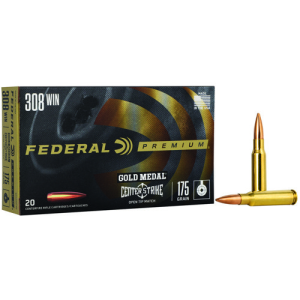
Federal Gold Medal Match 175-grain Sierra MatchKing Deals
Prices may change. May contain affiliate links.
Ammunition cost for quality 7.62 NATO match ammunition runs roughly $1.00-1.50 per round for factory match loads. Training ammunition in ball configuration is cheaper but won't give you the accuracy the platform is capable of. If you're running a $12,000+ clone build, don't feed it steel-case.
Barrel life
HK's cold hammer forged barrels are known for longevity. The MR762 A4's lifetime barrel accuracy guarantee is an HK first and reflects the company's confidence in their barrel manufacturing. The M110A1 uses the same HK barrel technology. Barrel life in 7.62 NATO with match ammunition typically runs 10,000-20,000 rounds before accuracy degrades noticeably, depending on firing schedule, cleaning regimen, and ammunition pressure. The short-stroke gas piston system is gentler on barrels than direct impingement alternatives because less gas and heat cycle through the action.
Suppressor considerations
The M110A1 was designed around the OSS (now HUXWRX) baffle-less suppressor system. This is a flow-through design that doesn't trap gas the way traditional baffle suppressors do, which means less back-pressure, less gas in the shooter's face, and less impact on the piston system's cycling. Black Ops Defense lists the HUXWRX Flow 762 TI in FDE at $1,189 and the original OSS M110A1 FDE suppressors at $1,499-1,999 for their conversion packages.
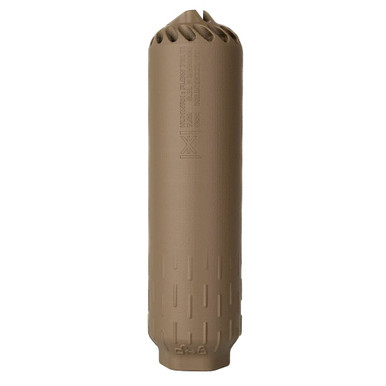

If you're building a clone, the correct suppressor matters both for authenticity and for function. The gas system was tuned for the OSS. Running a different suppressor will work but may require gas block adjustment, which is why the A4's adjustable gas block is valuable for the conversion platform.
Parts availability
This is the real logistical challenge. HK military parts don't flow freely into the commercial market. The G28/M110A1 stock, the specific tan small parts, the military-spec handguard, and the receiver-specific components are all limited availability items. Black Ops Defense notes that "in many cases the factory parts are simply not available in the US or are cost prohibitive for most collectors" and that they use "a mixture of factory HK parts and high quality HK licensed parts."
The MR762 A4, by contrast, has full factory support, a warranty, and readily available spare parts through HK USA and authorized dealers. If something breaks on your clone build, you're sourcing parts from specialty vendors. If something breaks on your factory A4, you're calling HK.
The M110A1's actual military status
Understanding where the M110A1 sits in the military inventory matters for context. The original CSASS program was meant to replace the M110 SASS in the sniper role. The Army awarded HK a $44.5 million contract on March 31, 2016, for 3,643 rifles. But the program's trajectory changed. The CSASS requirement morphed into the SDMR requirement, pushing the rifle from sniper sections down to the squad level as a designated marksman weapon.
As one researcher tracked it: "The M110A1 CSASS became the M110A1 SDMR, deployed at the squad level. This gave the US Army a proper DMR to replace the Mk 14 EBRs brought during GWoT. The M110 was a sniper weapon, not typically deployed at the infantry squad level. So CSASS is dead, the M110 goes unreplaced."
That's a significant distinction. The M110A1 in its SDMR configuration is not filling the same role as the M110 SASS. It's filling the role previously held by the M14 EBR and similar interim DMR solutions. The M110 SASS itself remains in service, with Knight's Armament winning a new $49.9 million contract in September 2026 for M110 rifles, variants, accessories, spare parts, and training through 2031. The upgraded M110s with the Advanced Sniper Accessory Kit appear to have received the M110A2 designation.
Several thousand M110A1 SDMRs have been fielded with the US Army and Air Force. The CSASS variant with the Schmidt & Bender optic was the sniper configuration; the SDMR variant with the Sig T6 optic is the squad-level DMR configuration. Most of what's in the field is the SDMR version.
From the arms room
Guard and Reserve units that received M110A1 SDMRs face the same challenges they face with any new weapons system: limited training time, limited ammunition allocation, and soldiers who may have qualified on the platform once and then not touched it for six months. The M110A1 SDMR was distributed to select units for limited user testing starting in late 2018, with broader fielding following. Units that previously ran M14 EBRs or other interim DMR solutions had to retrain their designated marksmen on a completely different manual of arms, different maintenance procedures, and different optic system. The transition isn't just about the rifle. It's about the entire system, including the optic, suppressor, and ancillary equipment that soldiers need to maintain and employ effectively.
Which to choose
If you want the most capable 7.62 HK semi-auto for precision shooting and competition: Buy the MR762 A4 at $4,749. It comes with the accuracy guarantee, the lifetime barrel guarantee, the ambidextrous controls, the adjustable gas block, and full factory support. Mount whatever optic and suppressor you prefer. Spend the $7,500 you saved on ammunition and trigger time.
If you carried the M110A1 and want to replicate your issued weapon: The clone conversion is the path. Start with an MR762 A4 as the base (the adjustable gas block and ambi controls give you a head start), budget $7,499 for a professional conversion from a shop like Black Ops Defense, and then budget another $3,000-5,000 for the correct optic, mount, and suppressor. You're looking at $15,000+ all-in for a clone-correct system. It won't weigh exactly what the military rifle weighs, but it will handle the same and look the part.
If you want a 7.62 semi-auto DMR and don't care about the HK pedigree: The commercial market has strong alternatives. The Knight's Armament SR-25 is the civilian equivalent of the M110 SASS, with a 20-inch barrel, 5R cut rifling, 1:10 twist, and 9.42-pound weight. It's a different design philosophy (direct impingement vs. gas piston, 20-inch vs. 16.5-inch barrel) but it's the other side of the same military coin.
If you're a unit leader trying to understand what your soldiers have: The M110A1 SDMR in your arms room is purpose-built for the squad DMR role. It's lighter than anything your soldiers can buy commercially from HK, it's configured with a specific optic and suppressor system that was tested and validated together, and it requires PMCS (preventive maintenance checks and services) specific to the platform. The MR762 your soldier shoots on weekends is a cousin, not a twin. The manual of arms transfers, but the maintenance procedures, the gas system tuning, and the accessories are different enough that range familiarity on one doesn't fully substitute for training on the other.
The real question
The MR762 and the M110A1 share DNA in the same way that a Porsche Cayenne and a Porsche 911 GT3 share DNA. Same engineering house, same fundamental philosophy, different execution for different missions. The MR762 is a superb commercial rifle. The M110A1 is a military system built to a military specification. Converting one into the other is possible, documented, and being done by multiple builders right now. But it costs real money, requires irreversible machining, voids your factory warranty, and produces a rifle that approximates the military system without being identical to it.
The civilian clone community is doing impressive work. The level of detail in documented builds, from the correct bolt catch guard dimensions to the specific shade of RAL8000, reflects genuine craftsmanship and dedication. But the honest answer to "civilian clone or the real thing" is that the clone is always the clone. It's a faithful reproduction built on a closely related platform, and for practical shooting purposes it will perform identically. The M110A1 in Army inventory went through a testing and validation process that included 8,000 rounds at Fort Carson in single-digit temperatures, force-on-force exercises, and engagement of targets from 300 to 1,000 meters. Your clone didn't go through that process, but the underlying engineering did.
If the build is the journey and the finished rifle is the destination, the conversion is worth every dollar for the right buyer. If the goal is simply the best-performing HK 7.62 semi-auto you can own, the MR762 A4 straight from the factory is the smarter play. The rifle doesn't shoot better because it's painted tan.