You've been shooting Steel Challenge or a local rimfire league with whatever .22 you had lying around, and now you want something purpose-built. Maybe you're tired of fighting a mushy trigger, or you want a platform that actually accepts a red dot without adapter-plate gymnastics. The good news: the best competition-oriented .22 LR pistols live well under a grand, and several of them are genuinely excellent right out of the box.

The bad news is that "competition .22" covers a lot of ground. A Steel Challenge gun wants a light, crisp trigger and fast sight acquisition. A bullseye pistol wants pure accuracy and a long sight radius. A rimfire trainer for USPSA-style stages wants capacity and quick reloads. Picking the wrong one means you're fighting the equipment instead of working on your splits. Here's how to sort it out.
Quick picks
Ruger Mark IV 22/45 Tactical Best overall competition .22
Smith & Wesson Performance Center SW22 Victory Target Best for bullseye and precision stages
Browning Buck Mark Plus UDX Best factory trigger
Taurus TX22 Competition Best high-capacity option
Smith & Wesson SW22 Victory (base/threaded) Best upgrade-path value
FN 502 Tactical Best optics-ready suppressor host for training stages
At a glance
How we chose
Competition rimfire is unforgiving in a specific way: the gun has to run dirty. A .22 that chokes after 200 rounds of bulk ammo is useless at a match where you might burn through 150 rounds before you get a chance to wipe down the bolt face. Reliability with a broad range of ammunition was the first filter.
After that, trigger quality matters more than almost anything else. In centerfire competition you can mask a mediocre trigger with recoil management skills, but in rimfire the trigger is the whole show. A heavy, gritty pull with a vague reset will add tenths to every string, and those tenths add up across a five-stage match. Every pick here either ships with a genuinely good trigger or has a deep aftermarket that lets you get there cheaply.
We also weighted the aftermarket and upgrade ecosystem heavily. Competition shooters modify their guns. They add compensators, swap grips, mount dots, and tune triggers. A pistol with no parts pipeline is a dead end. The Ruger Mark IV, SW22 Victory, and Browning Buck Mark platforms have decades of aftermarket support. The Taurus TX22 is newer but has built a healthy accessory market quickly. The FN 502 is the youngest of the group but its optics-ready slide and suppressor-readiness earn it a spot for shooters who want modern features without modification.
Finally, everything here has a manufacturer's suggested retail price that falls under $1,000. Several come in well below that. We excluded pistols where the sources didn't confirm specs or pricing sufficient to verify they meet the title's limit.
The picks
Ruger Mark IV 22/45 Tactical
Best for: overall competition use across Steel Challenge, rimfire leagues, and general match shooting

Ruger Mark IV 22/45 Tactical Deals
Prices may change. May contain affiliate links.

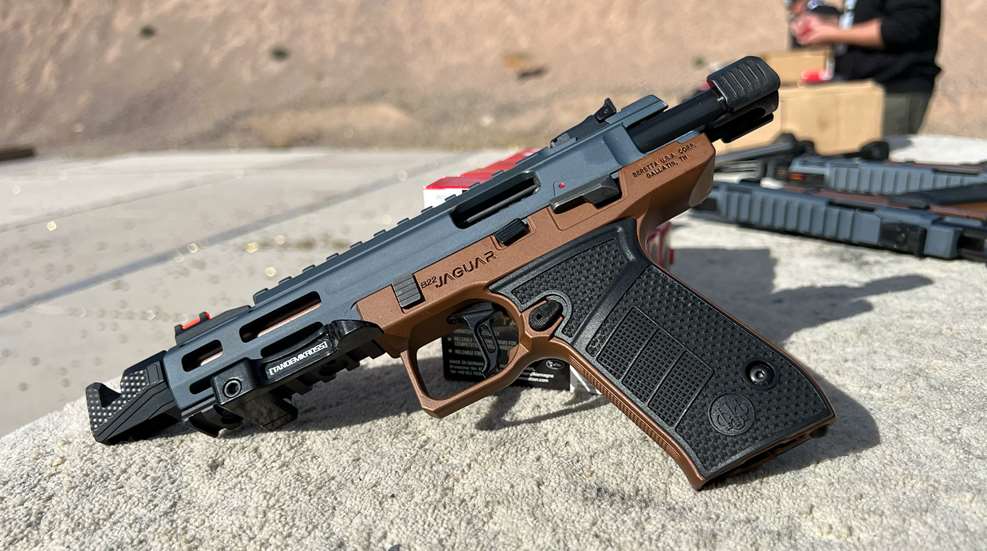
The Mark IV 22/45 Tactical is the gun you'll see on more Steel Challenge stages than any other rimfire, and there's a reason for that. The 1911-style grip angle points naturally, the one-button takedown finally solved the field-strip nightmare that plagued earlier Mark series pistols for decades, and the 4.4-inch threaded barrel accepts compensators without any adapter work. The 1/2"-28 thread pattern is standard, so aftermarket muzzle devices from companies like Tandemkross bolt right on. The overall length is 8.50 inches, and at 33.3 ounces it has enough heft to settle quickly between shots without feeling like a boat anchor during transitions.

What makes the Mark IV the default competition rimfire isn't any single feature. It's the ecosystem. Volquartsen triggers, Tandemkross compensators and magazine pouches, Hogue and Pac-Mayr grips, aftermarket barrels, bolt tune kits, and magazine bumper pads are all available and well-tested. You can take this pistol from box-stock to fully race-prepped in stages, spending only what your results demand. The rail on top of the receiver accepts Picatinny-mount optics bases, and the aftermarket for Mark IV optic mounts is enormous.
The factory trigger is serviceable but not exceptional. Most competition shooters swap it out within the first few hundred rounds. That's not a knock against the gun; it's a testament to how easy and inexpensive the upgrade path is. A Volquartsen or TandemKross trigger kit transforms the pull into something short, crisp, and predictable. The 10+1 capacity is the platform's biggest limitation for speed stages where round count matters, but for Steel Challenge and bullseye disciplines, ten rounds per magazine is standard.
Pros
One-button takedown makes cleaning between match stages fast
Deepest aftermarket of any .22 LR pistol, period
4.4" threaded barrel accepts compensators and suppressors
1911-grip angle points naturally for most shooters
Ships with two 10-round magazines
Proven reliability record across millions of rounds in the field
Cons
Factory trigger needs upgrading for serious competition
10+1 capacity limits it in high-round-count stages
Optics mounting requires a separate base or plate (no direct slide cut)
Heavier than polymer-framed alternatives at 33.3 oz
Smith & Wesson Performance Center SW22 Victory Target
Best for: bullseye shooting, precision-focused rimfire leagues, and shooters who want a competition-ready gun out of the box

Smith & Wesson Performance Center SW22 Victory Target Deals
Prices may change. May contain affiliate links.
The Performance Center SW22 Victory Target pistols are designed specifically for target shooting competitions, and they show it. The 6-inch barrel (available in fluted stainless or carbon fiber) gives you a long sight radius and enhanced cooling during extended strings. These guns ship with a custom muzzle brake, TandemKross hiveGrips with a target thumbrest, a flat-face target trigger with adjustable trigger stop, an extended magazine release, a beveled magazine well, and a custom polished feed ramp. A Picatinny-style rail comes installed for quick optic mounting. Two 10-round magazines are included.
In Gun Tests' accuracy evaluation, the SW22 Victory posted a best group of 0.48 inches and an average group of 0.55 inches with Eley Match at 25 yards, outperforming both the Browning Buck Mark and Ruger Mark IV in that particular test. Gun Tests declared the SW22 Victory their winner based on accuracy, noting that the entire target showed "no flyers, no 'oops,' just nine great groups." That kind of consistency matters enormously in bullseye and precision rimfire events where a single flyer can drop you a class.
The Performance Center versions sit at the top of the SW22 Victory lineup. Smith & Wesson lists the carbon fiber barrel model at $779, and two Performance Center models with red dot sights at $999 (one with a 6" carbon fiber target barrel and one with a 6" fluted barrel), all under our ceiling. The stainless steel construction and interchangeable barrel system mean you can swap barrel profiles without buying a new gun, which is unusual in this price range. The one-screw takedown design is simpler than the Ruger Mark series (though the Mark IV's one-button system is also straightforward). Smith & Wesson backs these with their Lifetime Service Policy.

Pros
6" barrel with long sight radius for precision work
Adjustable target trigger out of the box (take-up and overtravel)
Best-in-test accuracy with match ammunition (0.55" average groups at 25 yards with Eley Match)
Interchangeable barrel system for swapping profiles
Picatinny rail included for optic mounting
Ships with muzzle brake, hiveGrips, and two magazines
Cons
10+1 capacity, same limitation as the Ruger
Heavier than polymer options (stainless steel construction)
Fewer aftermarket trigger options compared to the Mark IV ecosystem
Performance Center models cost more than base Victory variants
Browning Buck Mark Plus UDX
Best for: shooters who prioritize trigger quality above all else
Browning Buck Mark Plus UDX Deals
Prices may change. May contain affiliate links.
TRUGLO/Marble's Fiber-Optic Front Sight Deals
Prices may change. May contain affiliate links.
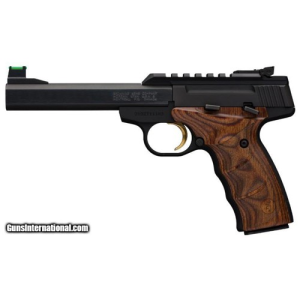
The Buck Mark Plus UDX has what multiple sources call the best factory trigger in any .22 LR pistol, and that claim holds up. The single-action trigger breaks at approximately 2.5 pounds, crisp and clean, with minimal take-up. For competition, trigger quality is the single biggest performance differentiator in rimfire, and the Buck Mark delivers it without any aftermarket work.
The 5.5-inch slab-side bull barrel gives you a stable sighting platform and an 8-inch sight radius. The Pro-Target adjustable rear sight handles windage and elevation, and the TRUGLO/Marble's fiber-optic front sight picks up fast under match lighting. The aluminum alloy receiver keeps weight at 34 ounces, comparable to the SW22 Victory. Overall length is 9.5 inches. The wood laminate Ultragrip DX stocks, paired with finger grooves machined into the grip frame, lock the hand in place during long shooting sessions, which matters when you're running a five-stage match and fatigue starts affecting your grip.
The Buck Mark's biggest competition drawback is the takedown. It requires an Allen wrench, not a tool-free system like the Ruger Mark IV or the SW22 Victory's one-screw design. That's an annoyance during cleaning, but it's not a dealbreaker for match use where you're cleaning between match days, not between stages. The 10+1 capacity is standard for this class. Rail options are more limited than the Mark IV, so optic mounting takes a bit more planning. But if you're shooting irons-only divisions or bullseye, this trigger is hard to beat at any price, let alone at the Buck Mark's price point.
In Gun Tests' comparative testing, the Buck Mark would have taken the win over the SW22 Victory based on speed results, though it gave up the accuracy crown. That's a meaningful distinction: the Buck Mark's trigger and handling characteristics lend themselves to fast, confident shooting, which is exactly what Steel Challenge and speed-oriented rimfire stages demand.

Pros
Best factory trigger in the category (~2.5 lb crisp single-action)
Pro-Target adjustable sights with TruGlo front
5.5" slab-side bull barrel with 8" sight radius
Walnut finger-groove grips lock the hand in position
CNC-machined 7075 aluminum receiver
Decades of proven reliability
Cons
Takedown requires an Allen wrench (no tool-free disassembly)
Limited rail options compared to the Mark IV
10+1 capacity
Ships with only one 10-round magazine
Taurus TX22 Competition
Best for: speed stages, high-round-count matches, and shooters who want capacity without magazine changes

Taurus TX22 Competition Deals
Prices may change. May contain affiliate links.
Here's what actually separates the TX22 Competition from the target pistols above: 16+1 capacity and a 5.25-inch threaded barrel at a weight of just 23.2 ounces. In rimfire competition formats that reward speed and penalize reloads, having six extra rounds per magazine changes the math on stage planning. You're running fewer reloads, spending less time fumbling with magazine pouches, and keeping your eyes on the next target.
The TX22 Competition ships optics-ready with Taurus's T.O.R.O. (Taurus Optics Ready Option) system, which accepts micro red dots directly on the slide without adapter plates. The threaded barrel takes compensators and suppressors. The striker-fired action mimics the feel of modern centerfire competition guns, which makes it a legitimate training analog if you're also shooting Production or Carry Optics in USPSA with a striker-fired 9mm.
The trigger is the TX22 Competition's weak point relative to the dedicated target pistols. Gun Tests gave the TX22 Competition an A- grade but noted a higher trigger-pull weight compared to the target-oriented competition. Some users report inconsistent trigger reset on the TX22 platform, which can affect follow-up shot cadence. That said, at this price point, the capacity and optics-readiness make it a compelling choice for action-oriented rimfire matches where you're moving, shooting, and reloading under a par time rather than carefully pressing shots at a bullseye.

Pros
16+1 capacity eliminates reloads on most stages
Optics-ready slide (T.O.R.O. system) with no adapter needed
5.25" threaded barrel for compensators
23.2 oz makes it one of the lightest options here
Striker-fired action mirrors centerfire competition guns
Strong value relative to performance
Cons
Trigger-pull weight higher than dedicated target pistols
Some reports of inconsistent trigger reset
Aftermarket not as deep as Ruger or S&W ecosystems
Holster availability can be limited for competition rigs

Smith & Wesson SW22 Victory
Best for: shooters who want a solid foundation with room to grow through upgrades

Smith & Wesson SW22 Victory Deals
Prices may change. May contain affiliate links.
The base SW22 Victory and threaded-barrel variant sit below the Performance Center models in price while sharing the same core platform. The SW22 Victory starts at $469 MSRP, and the threaded barrel version lists at $489. You get the same stainless steel construction, interchangeable barrel system, and one-screw takedown as the Performance Center guns, but without the custom trigger work, muzzle brake, and hiveGrips.
The real appeal here is the upgrade path. The SW22 Victory has a deep aftermarket. Tandemkross makes triggers, compensators, grips, and magazine accessories specifically for this platform. The Game Changer PRO compensator from Tandemkross fits the Victory directly. Magazine pouches designed for rimfire competition fit Victory magazines. You can build up a base Victory into a full competition rig incrementally, spending money only as your skill level and commitment justify it.
The SW22 Victory's accuracy potential is well-documented. In Gun Tests' evaluation, the base Victory posted strong groups across multiple ammunition types, with a best group of 0.55 inches with SK Match and an even tighter 0.48-inch best group with Eley Match, which averaged 0.55 inches overall. The interchangeable barrel means you can start with the standard 5.5-inch barrel and later swap to a longer or fluted option without buying a new pistol. That modularity is unusual in this price bracket and gives the Victory a longer useful life as your competition needs evolve.

Pros
Lowest entry price in the SW22 Victory lineup ($469-$489 MSRP)
Interchangeable barrel system for future upgrades
Deep aftermarket for triggers, compensators, and grips
One-screw takedown for easy cleaning
Stainless steel construction
Proven accuracy platform
Cons
Factory trigger needs work for serious competition use
10+1 capacity
Heavier than polymer alternatives
Requires aftermarket investment to match Performance Center models
FN 502 Tactical
Best for: shooters who want slide-mounted optics and suppressor capability in one package for training-oriented competition

FN 502 Tactical Deals
Prices may change. May contain affiliate links.

Holosun Red Dot Optic Deals
Prices may change. May contain affiliate links.
The FN 502 Tactical was the industry's first slide-mounted, optics-ready rimfire handgun, and that distinction still matters. The optic sits directly on the slide via a mounting system inspired by FN's patented Low-Profile Optics Mounting System, and co-witness iron sights align with the dot. For competition formats that allow or require optics, this eliminates the frame-mount vs. slide-mount debate. The dot moves with the slide, which means your point of aim tracks naturally through the recoil cycle, just like it does on your centerfire competition gun.
The hammer-fired action delivers a consistent trigger pull, and the ergonomics and ambidextrous controls are borrowed from FN's 509 series. At 23.7 ounces, it's light enough for extended match sessions without fatigue. The threaded barrel accepts suppressors, which is relevant for suppressed rimfire divisions that are growing in popularity at club-level matches.
Capacity is 10 or 15 rounds depending on magazine configuration, giving it a slight edge over the 10-round-only platforms when using the extended magazine. The FN 502 Tactical lists at $619 MSRP. The platform is newer than the Ruger, Browning, and S&W options, which means the aftermarket is thinner. You won't find the same depth of trigger kits, barrel options, and competition-specific accessories. But if your priority is a modern, optics-integrated rimfire that mirrors the ergonomics of a duty-size centerfire pistol, the 502 Tactical fills that niche better than anything else here.

Pros
Slide-mounted optics with co-witness iron sights
Hammer-fired trigger for consistent pull
Ambidextrous controls mirror FN 509 centerfire ergonomics
Threaded barrel for suppressor or compensator use
15-round magazine option available
Lightweight at 23.7 oz
Cons
Newest platform with the thinnest aftermarket
10-round standard magazine (15-round is optional)
No interchangeable barrel system like the SW22 Victory
Fewer competition-specific holster and pouch options
How to choose
The first question is what format you're shooting. Steel Challenge and bullseye reward pure accuracy and trigger control, which points you toward the Browning Buck Mark Plus UDX, the Performance Center SW22 Victory Target, or a tuned Ruger Mark IV 22/45 Tactical. These platforms have the sight radius, trigger quality, and aftermarket support to build a precision-focused competition gun.
If you're shooting action-oriented rimfire stages where movement, reloads, and round count matter, the Taurus TX22 Competition's 16+1 capacity and optics-ready slide change the equation. Fewer reloads mean faster stage times, and the striker-fired action transfers directly to centerfire competition training.
Consider your tolerance for modification. The Ruger Mark IV has the deepest aftermarket but benefits most from a trigger swap. The Browning Buck Mark ships with the best trigger but has limited rail options. The SW22 Victory splits the difference with a good upgrade path and interchangeable barrels. If you want to shoot competition out of the box with minimal modification, the Performance Center SW22 Victory Target or the Buck Mark Plus UDX are the strongest choices.
Weight matters more than most people think. A 34-ounce pistol settles faster between shots but fatigues the wrist over a long match day. A 23-ounce gun transitions faster but requires more active recoil management (even with .22 LR, muzzle rise affects split times at speed). If you're shooting five or six stages in a day, handle both weight classes before committing.
Finally, think about optics. If you're shooting an optics division, the FN 502 Tactical's slide-mounted system and the TX22 Competition's T.O.R.O. cut give you the cleanest dot-mounting solutions. The Ruger and SW22 Victory use rail-mounted or frame-mounted optics, which work well but add height over bore. The Buck Mark is primarily an irons gun unless you invest in an aftermarket optics solution.
Next steps
Before you buy, handle all of these at a gun store if you can. Grip angle is personal and non-negotiable. The Ruger Mark IV's 1911-style angle feels completely different from the Browning Buck Mark's more upright grip, and both feel different from the TX22 Competition's polymer-frame ergonomics. The gun that points most naturally for your hand geometry is the one you'll shoot fastest.
If your local range rents rimfire pistols, book a lane and run a simple test: five rounds slow-fire at 25 yards for accuracy, then five rounds as fast as you can get acceptable hits on an 8-inch plate at 10 yards. The first string tells you about the gun's mechanical accuracy and trigger. The second tells you about the trigger reset, sight tracking, and how the gun handles under speed. That combination will tell you more than any spec sheet.
Pick up spare magazines before your first match. Every platform here ships with one or two magazines, and you'll want at least four for a typical rimfire competition. Tandemkross Quick Grip magazine pouches are designed specifically for rimfire competition and fit magazines for the Ruger Mark IV, Browning Buck Mark, and SW22 Victory. Get your belt rig sorted before match day, not during it.
And run your match ammo through the gun before you show up to compete. Rimfire reliability varies by ammunition brand and even by lot. Buy a brick of whatever you plan to shoot, put 200 rounds through the gun, and confirm it cycles cleanly. A gun that runs CCI Standard Velocity perfectly might hiccup on bulk Federal, and you'd rather discover that on a Tuesday evening than during your first classifier stage.