You're planning a backcountry trip into grizzly country, and you've decided a 10mm Auto on your hip makes more sense than a 4-pound .44 Magnum revolver you'll dread carrying all day. Good call. The 10mm has earned its spot as a legitimate bear-defense cartridge; it pushes a 200-grain hardcast flat-nose bullet past 1,200 fps from a full-size barrel, penetration numbers rival .357 Magnum, and you get it in a platform that's flatter, lighter, and holds more rounds than any wheelgun.
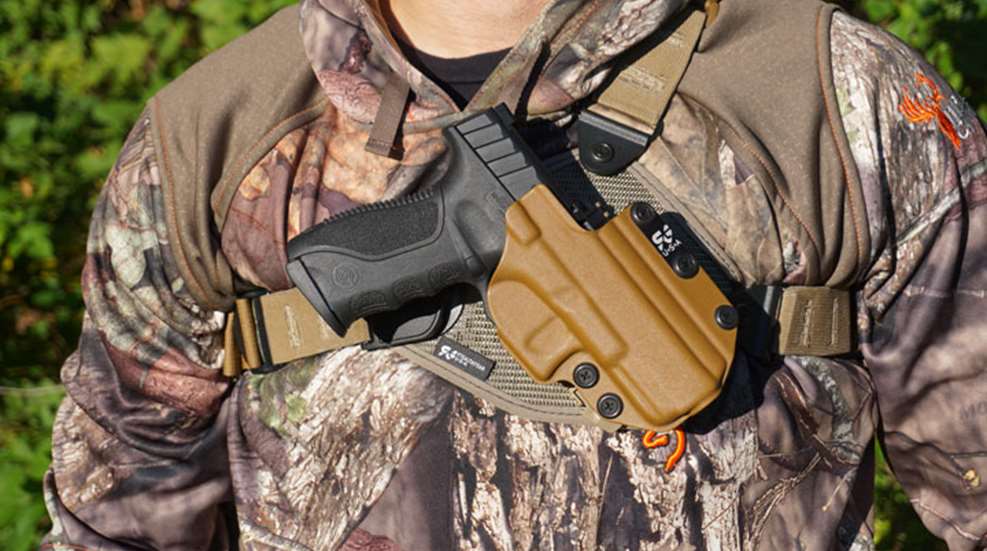
But "buy a 10mm" isn't a plan. The gun matters. The specific model, the barrel length, the trigger, the reliability with heavy hardcast loads, how fast you can get it out of a chest holster and put rounds into a charging animal's skull; all of that matters more than the caliber printed on the slide. A bear encounter at close range is a 2-to-4 second event. You need a gun that runs full-power loads without flinching, sits in a chest rig without making you miserable on a 12-mile day, and puts the first shot where it needs to go.
Here's the breakdown of what actually works for this specific job, why certain platforms have earned their reputation in the backcountry, and what to avoid.
Why 10mm and not something bigger
The debate between 10mm Auto and traditional revolver cartridges like .44 Magnum or .454 Casull never fully dies, and it shouldn't; those cartridges hit harder in raw foot-pounds. But the 10mm argument isn't about matching a .44 Magnum's energy. It's about the total package.
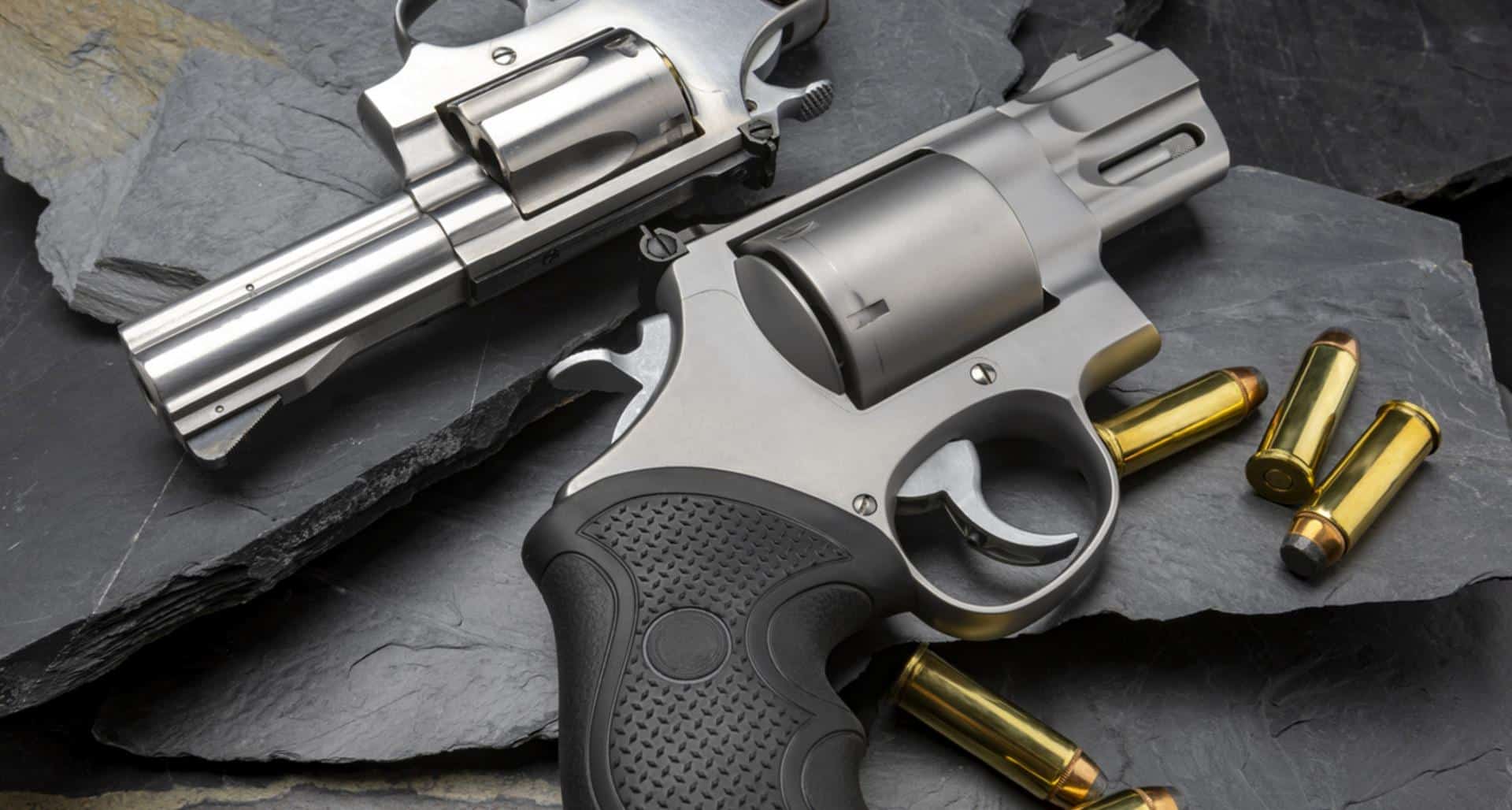
A Glock 20 loaded with 16 rounds of hardcast 10mm weighs around 39 ounces. A Ruger Super Redhawk in .44 Magnum loaded with 6 rounds weighs 53 ounces. That's nearly a full pound heavier for less than half the capacity. Over a 10-hour day with 4,000 feet of elevation gain, that pound matters. The capacity matters more. Under the stress of a charge; heart rate spiking, fine motor skills gone, an 800-pound grizzly closing 30 feet in about one second; you want every round you can get. Missing isn't a character flaw in that scenario; it's a statistical likelihood.
Penetration is the metric that actually matters against bears, not muzzle energy. A 200-grain hardcast flat-nose 10mm at 1,250 fps will punch through 24+ inches of ballistic gelatin, and field reports from Alaska Department of Fish and Game consistently show 10mm stopping charges when the shooter does their part. The cartridge has proven itself. The question is which gun delivers it best.
One more thing the 10mm gives you: faster follow-up shots. The recoil impulse of a semi-auto spreads energy over a longer cycle than a revolver's sharp snap. Double-action revolver triggers run 10-12 pounds; a decent semi-auto trigger breaks at 4-6. You'll shoot a semi-auto faster and more accurately under stress. That's not opinion; it's biomechanics.
What a bear gun actually needs
Before getting into specific models, here's the filter. Not every 10mm pistol is a good bear gun. Some are built for concealed carry, some for competition, some for general range fun. A backcountry bear-defense gun needs to pass a specific set of tests.
Reliability with hardcast and heavy loads
This is the deal-breaker. Full-power 10mm loads from Buffalo Bore, Underwood, and DoubleTap push pressures that factory guns sometimes don't love. Hardcast lead bullets have a different profile than jacketed hollowpoints; they're longer, the ogive is blunter, and they can hang up on feed ramps that weren't designed for them. Any gun you're trusting your life to in bear country needs to run 200-grain hardcast flat-nose ammunition with zero malfunctions across at least 200 rounds of testing. Not "mostly works." Zero.
Barrel length
Longer barrels mean more velocity, and velocity is what makes the 10mm competitive with magnum revolver cartridges. A 4.6-inch barrel (Glock 20 length) gets you into respectable territory. A 6-inch barrel (Glock 40 MOS, Dan Wesson Bruin) squeezes another 75-100 fps out of the same load. That's not trivial; it's the difference between 1,200 fps and 1,300 fps with a 200-grain bullet, and it pushes the energy numbers closer to .41 Magnum territory. For dedicated backcountry use where concealment is irrelevant, longer is better.
Sights and speed
Iron sights work. A red dot works better, especially under stress when your ability to align a front sight with a rear notch degrades sharply. The gun should either come optics-ready or have a viable path to mounting a dot. That said, the dot must be robust; a Holosun 507C or Trijicon RMR, not a budget Amazon special that'll lose zero after 500 rounds of full-power 10mm.
Whatever the sighting system, the front sight needs to be highly visible. Bright orange or fiber optic. You might be drawing in timber at dusk with a bear 20 yards out. A black-on-black sight picture is worthless in that moment.
Controls under stress
Can you manipulate the slide release, the magazine release, and the safety (if applicable) with thick gloves? With wet hands? With hands shaking from adrenaline? Guns with small, flush controls or heavy manual safeties become liabilities in a defensive scenario where fine motor skills evaporate.
Holster compatibility
A backcountry bear gun rides in a chest holster; Kenai, Diamond D, Gunfighters Inc., Hill People Gear. The gun needs to fit in one of these systems and draw cleanly. Odd frame shapes, oversized accessories, or proprietary rail systems can make holster selection a nightmare.
Glock 20 Gen5 MOS
The default answer, and for good reason. The Glock 20 has been the most popular 10mm bear gun for over a decade, and the Gen5 MOS version is the best iteration yet.
The Gen5 brought a few meaningful changes over the Gen4. The barrel is now factory-standard Glock Marksman Barrel with improved rifling, which tightens groups noticeably; expect 3-inch groups at 25 yards with good ammo instead of the Gen4's sometimes-loose 4-5 inches. The MOS system adds an optics-ready slide with adapter plates for most popular red dots. The trigger is cleaner out of the box than previous generations, though it's still a Glock trigger; functional, not exciting, with a spongy take-up and a clean-enough break around 5.5 pounds.
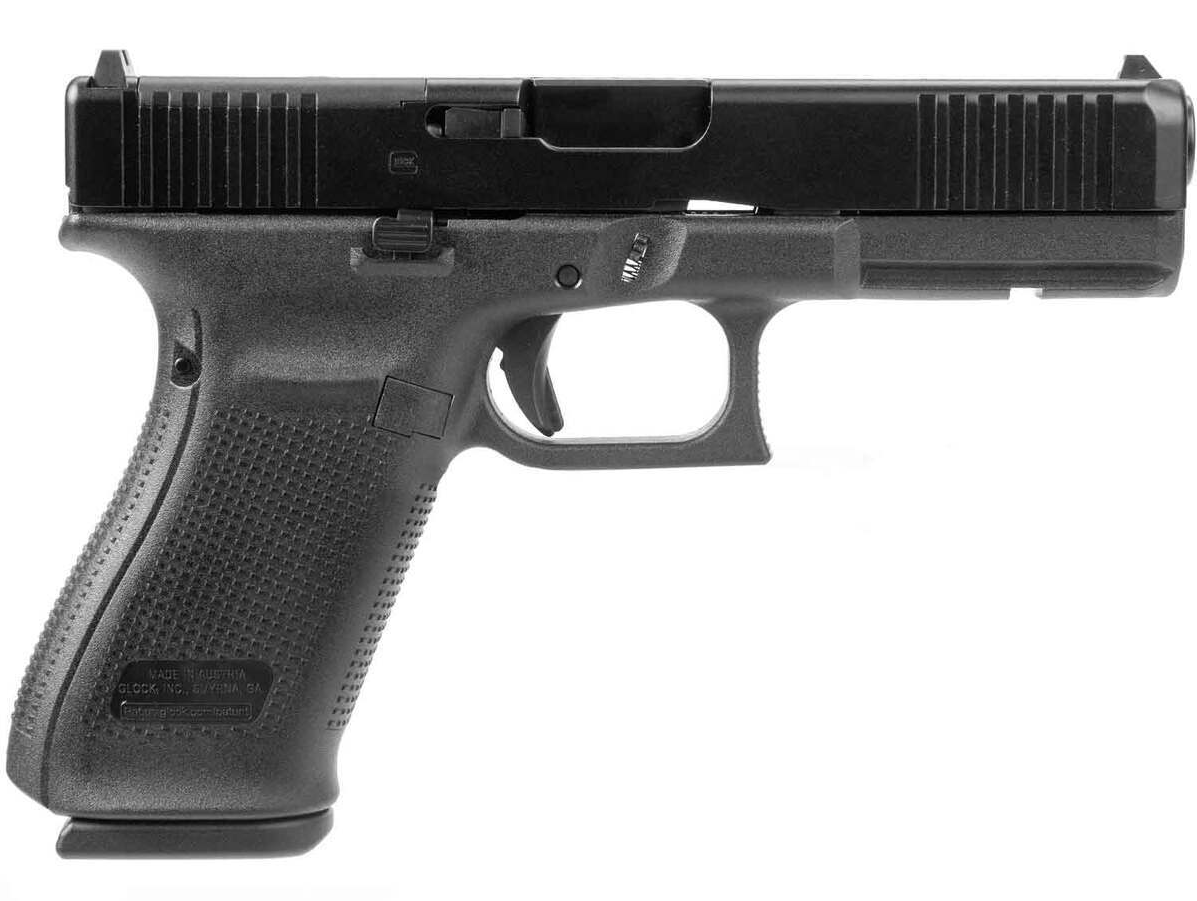
What makes the Glock 20 dominant for this role is the combination of capacity, reliability, and weight. You get 15+1 rounds of 10mm in a gun that weighs 30.7 ounces empty. With a loaded magazine and one in the chamber, you're still under 40 ounces. That's absurd for the firepower you're carrying. And the Glock's reputation for eating anything you feed it holds true in 10mm; hardcast, jacketed flat-nose, hollowpoints, +P loads from boutique manufacturers. Gen5 guns have gone thousands of rounds of full-power 10mm without stoppages in documented long-term testing.
The 4.6-inch barrel is the one compromise. You're leaving velocity on the table compared to the Glock 40's 6-inch tube. But the shorter barrel makes the gun more manageable in a chest holster, especially when you're scrambling over deadfall or squeezing through thick brush. It's a reasonable trade-off for most backcountry users.
Range notes
The Glock 20 Gen5 MOS recoils more than a 9mm Glock; obviously; but it's not punishing. The polymer frame flexes slightly under recoil, which actually softens the impulse compared to an all-steel gun of the same weight. Split times between shots stay under 0.4 seconds with practice. The trigger reset is short and tactile enough to find without looking for it. Where the gun falls short is the trigger pull itself; that mushy Glock take-up doesn't inspire confidence for precision shooting. At 25 yards on a static range, you'll wish for a better trigger. At 15 feet with adrenaline flooding your system, you won't notice.
The MOS system works but isn't perfect. The adapter plates add height to the optic mount, and some users report the screws loosening under sustained 10mm recoil. Blue Loctite is mandatory. Better yet, skip the factory plates and get a direct-mill slide from a company like Maple Leaf Firearms or Jagerwerks. The lower the optic sits, the faster you'll pick up the dot.
One modification worth considering: a Lone Wolf or KKM extended barrel in 6 inches, paired with a compensator. You gain velocity and reduce muzzle rise. The gun gets longer, but if you're already committed to a chest holster, the extra length is negligible.
Glock 40 Gen5 MOS
If you want the Glock 20's reliability in a package optimized for maximum 10mm performance, the Glock 40 is the move. Same frame, same magazine, same 15+1 capacity. The difference is a 6.02-inch barrel that squeezes every foot-per-second out of the cartridge.
Chronograph testing consistently shows 75-100 fps gains over the Glock 20 with the same ammunition. A 200-grain Underwood hardcast load that clocks 1,225 fps from a Glock 20 barrel will push 1,300+ from the Glock 40. That extra velocity translates to deeper penetration and more energy on target. For a dedicated bear gun that lives in a chest rig and doesn't need to do anything else, the Glock 40 is arguably the better choice.
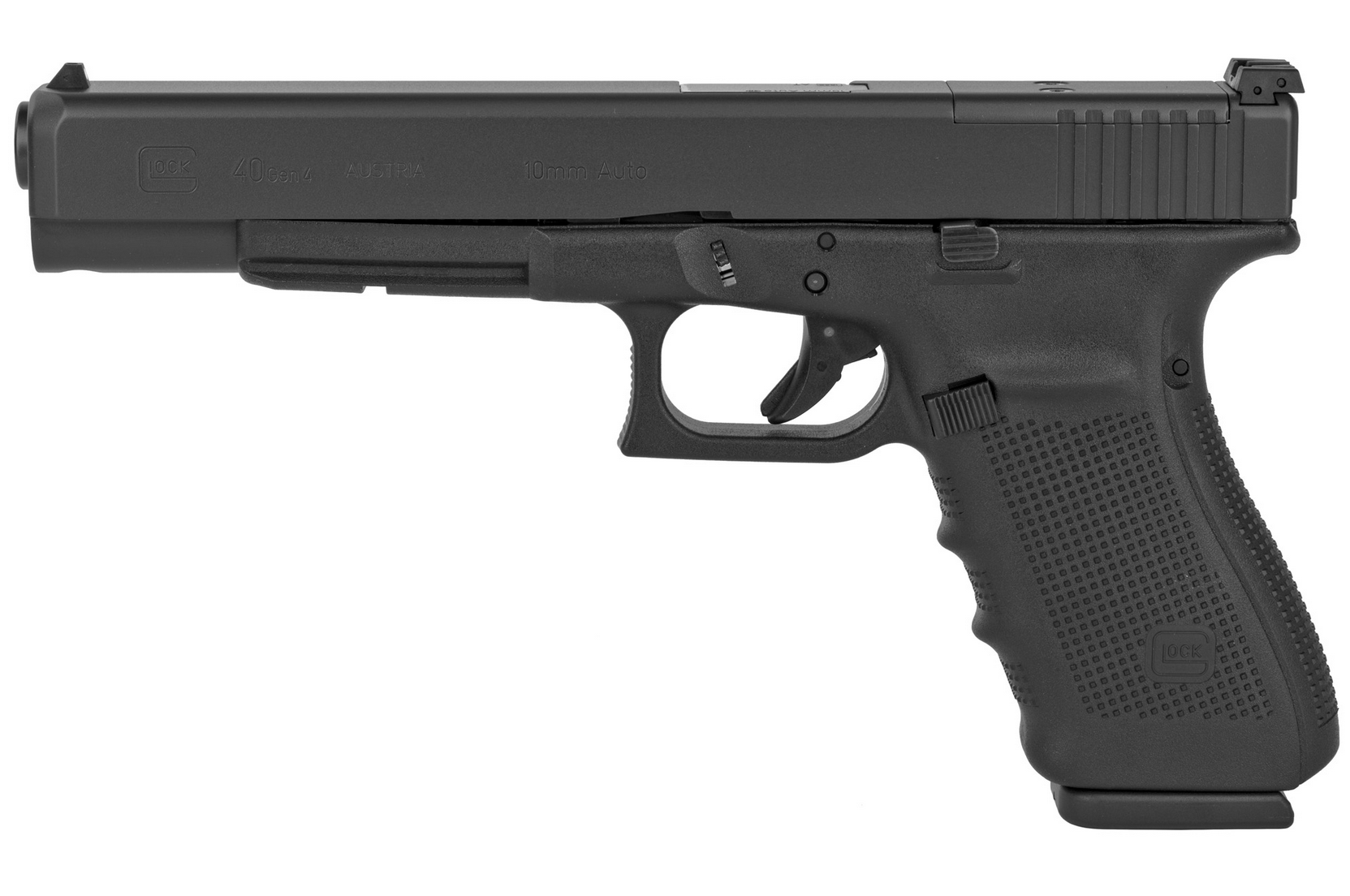
The longer slide also gives you a longer sight radius; 7.56 inches versus 6.49; which makes precise shot placement easier with iron sights. And the added weight up front (35.3 ounces empty versus 30.7) tames muzzle rise. The gun tracks flatter during rapid fire.
The downsides are practical, not mechanical. The Glock 40 is big. It's noticeably longer than the 20 and hangs further off your chest in a holster. If you're doing technical scrambling, bushwhacking through alders, or wearing a heavy pack with a sternum strap, the extra length can be annoying. It's also slightly harder to find chest holsters specifically molded for the 40's slide length, though most major holster makers now accommodate it.
Carry notes
The Glock 40 in a Kenai chest holster with a loaded 15-round magazine and a Holosun 507C on top is about as capable a bear-defense setup as exists in the semi-auto world. Total weight is around 44 ounces loaded; still lighter than most .44 Magnum revolvers unloaded. The draw from a quality chest holster is fast and natural: thumb the retention, grip, punch out. Practice this until it's automatic. You won't have time to think about it.
SIG Sauer P320 XTEN
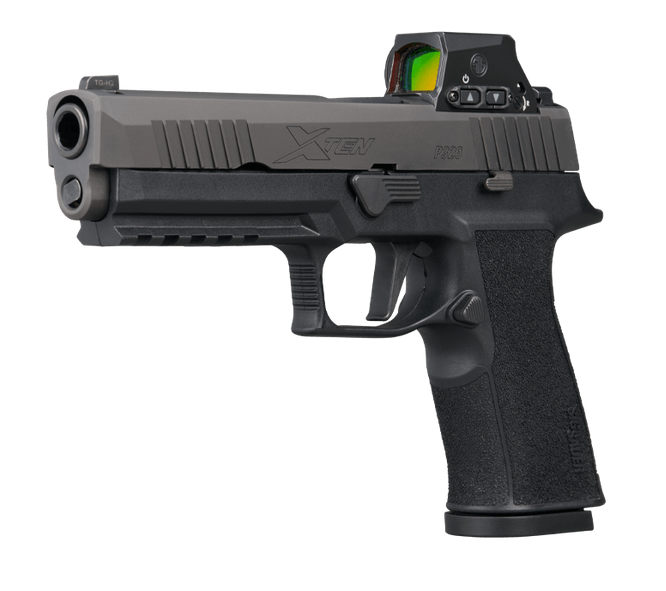
SIG entered the 10mm market with the P320 XTEN, and it immediately became the Glock 20's most credible competitor. The XTEN is built on the P320 modular chassis system with a full-size frame, a 5-inch bull barrel, and a 15+1 capacity. It ships with an optics-ready slide, flat trigger, and aggressive grip texturing.
The trigger is where the XTEN separates itself from the Glock. It's a flat-faced design that breaks cleanly at around 5 pounds with minimal take-up and a crisp reset. For shooters who've struggled with the Glock's mushy trigger, the XTEN feels like an upgrade the first time you press it. That cleaner break translates to better accuracy, especially at distance; tighter groups at 25 yards are consistently reported across reviews and forum discussions.
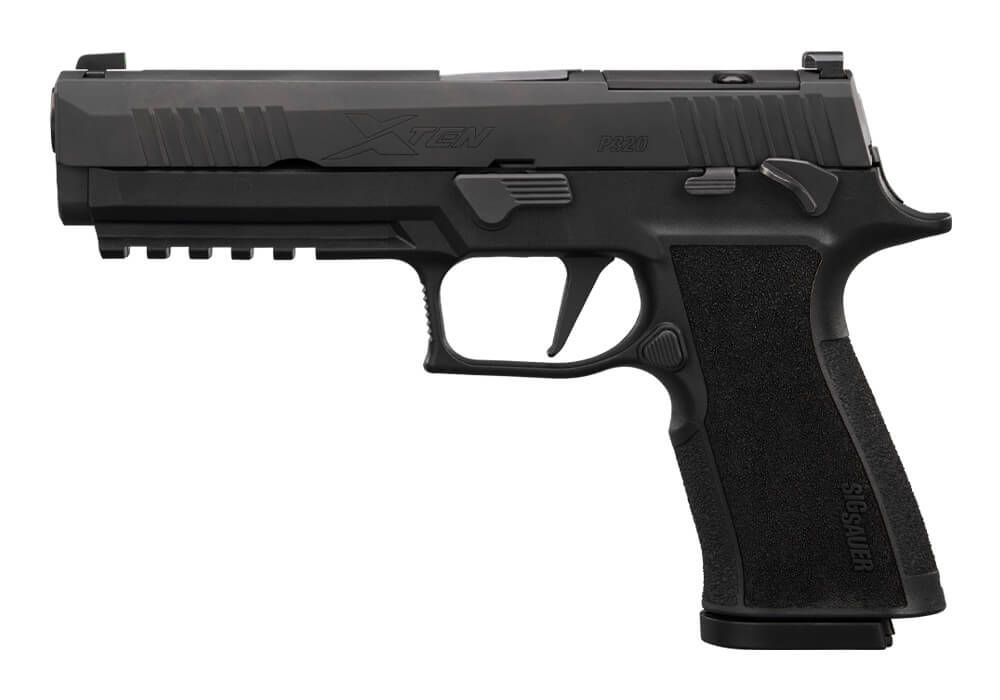
The 5-inch barrel splits the difference between the Glock 20 and Glock 40, giving you more velocity than the 4.6-inch Glock without the full-size commitment of a 6-inch slide. Expect chronograph numbers about 40-50 fps above the Glock 20 with the same loads.
Reliability has been mostly positive, but with a caveat. Early production XTEN pistols had some reports of feeding issues with certain hardcast bullet profiles; the flat nose of a 220-grain hardcast could catch on the feed ramp. SIG reportedly addressed this in later production runs, and most current XTEN owners report flawless function with hardcast loads. But this is exactly why you need to test your specific gun with your specific carry ammo before trusting it in the field. Two hundred rounds minimum, no excuses.
The P320's modularity is a genuine advantage. You can swap grip modules to fit your hand size without buying a new gun. The grip angle is more vertical than the Glock's, which some shooters find more natural for rapid target acquisition. Others don't. This is a "rent both and see" situation.
The XTEN's weight is 39.5 ounces empty; heavier than the Glock 20, close to the Glock 40. That weight helps manage recoil but adds up on long days. Chest holster options are growing but still not as plentiful as Glock holsters. Kenai and a few other makers now offer XTEN-specific molds.
What you'll feel
The XTEN shoots flat for a 10mm. The bull barrel adds weight forward, and the grip texturing is aggressive enough to maintain purchase with sweaty or wet hands without being cheese-grater abrasive. The recoil impulse is a firm push rather than a snap; manageable for rapid follow-ups. The flat trigger face distributes force across more of your finger, which reduces the perception of trigger weight during fast shooting. It's a well-engineered gun that feels like SIG took the 10mm application seriously rather than just rechambering an existing design.
FN 510 Tactical
FN's 510 Tactical is the high-capacity king of the 10mm world. Twenty-two rounds in a flush-fit magazine. Let that sink in. In a bear-defense scenario where you might dump half a magazine into a charging grizzly at close range, having 22+1 rounds on board without a reload is a significant psychological and tactical advantage.
The 510 is built on FN's proven 509 platform, scaled up for 10mm. The barrel is 4.71 inches, the slide is optics-ready with FN's Low-Profile Optics Mounting System, and the grip is long enough to accommodate the double-stack 10mm magazine without feeling bloated. The trigger is similar to the 509 Tactical; a striker-fired design with a clean break around 5-5.5 pounds and a short, positive reset.
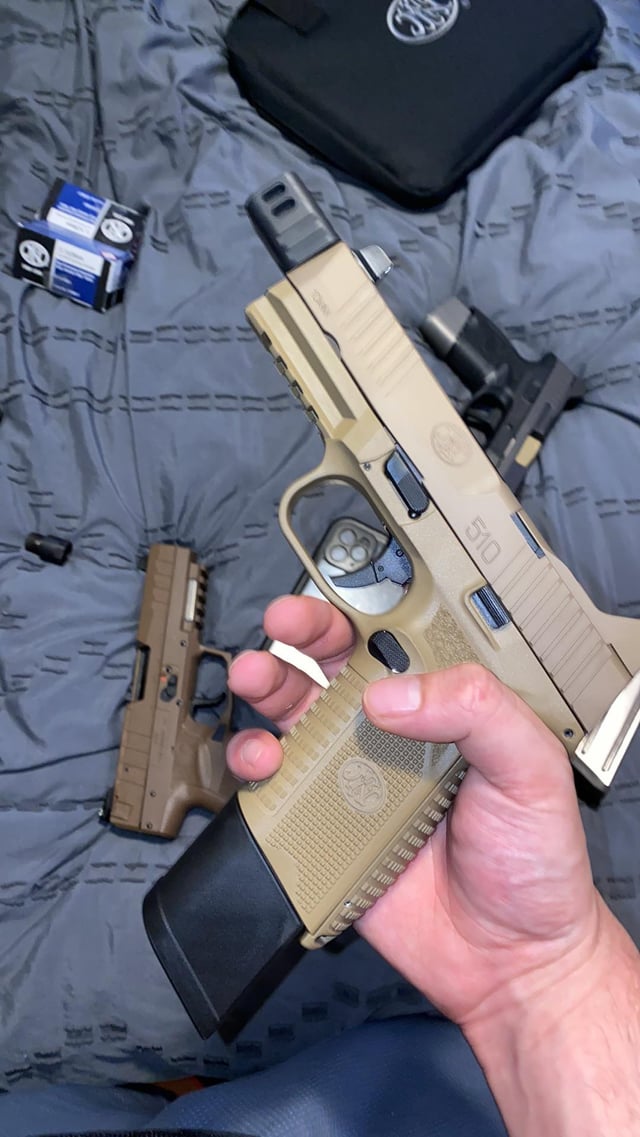
The capacity advantage is real, but it comes with trade-offs. The FN 510 is a large pistol. The grip is noticeably thicker than the Glock 20 or XTEN due to the wider magazine, which can be a problem for shooters with smaller hands. The gun weighs 32.4 ounces empty but gets heavy in a hurry when you load 22 rounds of 10mm; expect around 48 ounces loaded. That's entering .44 Magnum revolver territory for weight, though you're getting nearly four times the capacity.
Reliability reports have been generally positive with jacketed ammunition. With hardcast loads, results are more mixed. Some owners report flawless function; others have experienced occasional nose-dive failures with blunt-profile hardcast bullets. The feed ramp geometry seems to be the culprit. If you're considering the FN 510 for bear defense, testing with your specific hardcast ammo is even more critical than usual. Consider running a few hundred rounds of Buffalo Bore or Underwood hardcast through it before committing.
The 510 fits in some chest holsters designed for the FN 509 Tactical, though the wider grip can cause fitment issues. Dedicated 510 holsters from Kenai and others are available but less common than Glock options.
The real question with the FN 510
Do you need 22 rounds? Probably not; most documented bear-defense shootings involve 3-6 rounds fired. But "probably not" isn't the same as "definitely not," and the peace of mind of having 22 rounds available is worth something. The real question is whether the thicker grip and potential hardcast reliability concerns outweigh the capacity advantage. For someone with large hands who's verified hardcast reliability in their specific gun, the 510 is a compelling choice. For everyone else, the Glock 20 or XTEN is a safer bet.
Dan Wesson Bruin 10mm
Now we're in different territory. The Dan Wesson Bruin is a 6-inch long-slide 1911 in 10mm, and it's the gun you buy when you want the best-shooting 10mm available and you're willing to pay for it and carry the weight.
The Bruin runs on the classic 1911 platform with CZ-USA's Dan Wesson build quality, which means hand-fitted parts, a match-grade barrel, and a trigger that breaks like glass at around 3.5 pounds. That trigger is the Bruin's defining feature for bear defense. Under stress, a lighter, cleaner trigger promotes better shot placement. When you need to put a hardcast bullet into a bear's skull at 15 feet while your hands are shaking, a 3.5-pound single-action trigger with zero creep is a genuine advantage over a 5.5-pound striker-fired trigger with mushy take-up.
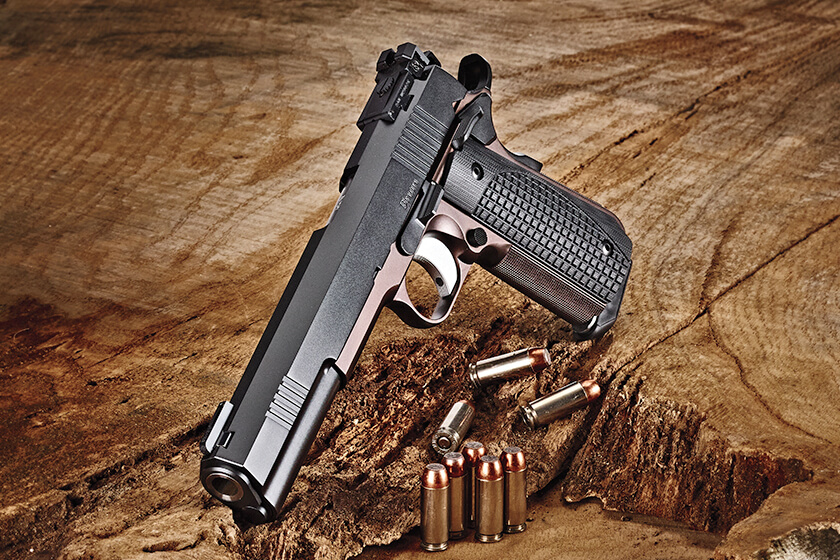
The 6-inch barrel maximizes 10mm velocity; expect numbers comparable to the Glock 40 or slightly better, depending on the load. The Bruin ships with a fiber optic front sight and an adjustable rear, plus a Trijicon RMR cut in the slide. The long sight radius and quality sights make this one of the most accurate 10mm pistols you can buy. Three-inch groups at 25 yards are achievable with good ammo, and sub-2-inch groups aren't unusual from a rest.
The trade-offs are significant. The Bruin weighs 42.2 ounces empty; substantially heavier than the polymer-framed options. Loaded with 9 rounds (8+1, standard 1911 capacity), you're looking at around 48 ounces on your chest. That's a lot of weight for 9 rounds when a Glock 20 gives you 16 rounds at lighter weight. The 1911 platform also means a manual thumb safety, which is one more thing to manipulate under stress. You train with it until disengaging the safety is part of the draw stroke and you don't think about it; but it's still an additional failure point compared to a striker-fired gun with no manual safety.
Reliability is another consideration. The 1911 platform, even in high-end iterations like the Dan Wesson, is generally less tolerant of neglect than a Glock. Dirt, sand, lack of lubrication; conditions that are common in the backcountry; can cause issues. The Bruin's tight tolerances, which contribute to its accuracy, also mean less room for debris. This isn't a gun you throw in a chest holster and forget about for a week-long wilderness trip. It needs attention.
Hardcast feeding in 1911s can be hit-or-miss depending on the specific gun's feed ramp geometry. The Bruin's ramped barrel helps significantly, and most owners report reliable feeding with hardcast loads after a break-in period of 200-300 rounds. But again; verify with your ammo before you trust it.
Who the Bruin is for
The shooter who prioritizes accuracy and trigger quality above all else, who's willing to carry the extra weight and accept the lower capacity, and who has the discipline to maintain a 1911 in field conditions. If you've been shooting 1911s for years and the platform is second nature; safety manipulation, manual of arms, maintenance; the Bruin is a phenomenal bear gun. If you're not a 1911 person, the backcountry isn't the place to become one.
Colt Delta Elite
The Colt Delta Elite is the original 10mm 1911 and still a viable bear gun, though it occupies a different niche than the Dan Wesson. It's a more traditional 5-inch Government-model 1911 without the long-slide configuration or optics-ready slide. What you get is a proven design from the company that's been building 1911s longer than anyone, with a solid reputation for running full-power 10mm loads.
Current production Delta Elites come in stainless steel with Novak sights, an upswept beavertail grip safety, and an extended thumb safety. The trigger is good for a production 1911; expect a break around 4-4.5 pounds with some creep, not as refined as the Dan Wesson but significantly better than any polymer striker gun. Capacity is 8+1, same as the Bruin.
The Delta Elite's 5-inch barrel gives up velocity compared to the 6-inch long-slide guns, putting it roughly in Glock 20 territory for muzzle velocity. Where it differs from the Glock is in the shooting experience; the all-steel frame soaks up recoil differently than polymer, and the 1911's low bore axis keeps muzzle flip minimal. Follow-up shots are fast and controlled.
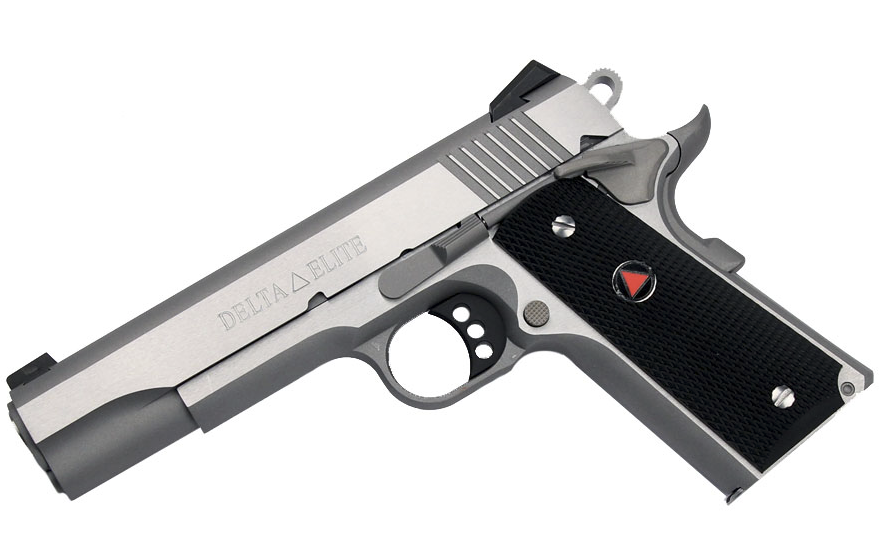
Earlier generations of the Delta Elite had a reputation for cracking frames under sustained full-power 10mm use. Colt addressed this with design changes to the recoil system, and current production guns don't have this issue. But it's worth knowing the history if you're considering a used Delta Elite; stick with newer production guns or verify the recoil system has been updated.
The Delta Elite doesn't come optics-ready from the factory, which is a limitation for bear defense. You'd need to have the slide milled by a competent gunsmith, adding cost and lead time. The Novak sights are serviceable but not ideal for fast acquisition in low light; swapping to a high-visibility fiber optic front sight is a smart upgrade.
The Delta Elite is a good bear gun for someone who wants a traditional 1911 in 10mm without the Dan Wesson price tag. It's not the optimized choice; the Bruin or a Glock will serve you better in specific ways; but it's a solid, reliable platform with decades of 10mm service behind it.
Springfield Armory XD-M Elite 5.25" 10mm
Springfield's XD-M Elite in the 5.25-inch configuration is an underrated option for bear defense. The longer barrel gets velocity numbers close to the Glock 40, the 16+1 capacity matches the Glock 20, and the trigger is genuinely good; a flat-faced design with a clean break and a short, tactile reset that's among the best in the polymer striker-fired category.
The XD-M Elite's grip ergonomics are polarizing. The grip angle is more vertical than a Glock, similar to a 1911, and the grip safety (a feature inherited from the XD platform) is either a non-issue or a deal-breaker depending on who you ask. In a bear-defense scenario, a grip safety adds a theoretical failure point; if you don't fully depress it during a panicked draw, the gun won't fire. In practice, any normal firing grip engages the grip safety automatically. But "in practice" and "during a bear charge" aren't the same thing. If this concerns you, it's a legitimate reason to look elsewhere.
The 5.25-inch barrel and full-size frame make this a big gun, though not as long as the Glock 40. It rides well in a chest holster and the aggressive grip texturing provides excellent purchase. The slide is optics-ready with a mounting system that accommodates most popular red dots.
Reliability with hardcast loads has been generally good, though the XD-M platform doesn't have the same depth of 10mm field experience as the Glock 20. It hasn't been carried by as many people in as many backcountry situations, simply because it's less popular for that role. That doesn't mean it's less reliable; it means there's less data. If you shoot an XD-M better than a Glock, and you've verified reliability with your carry ammo, it's a perfectly valid choice.
Common mistakes with 10mm bear guns
Carrying hollowpoints instead of hardcast
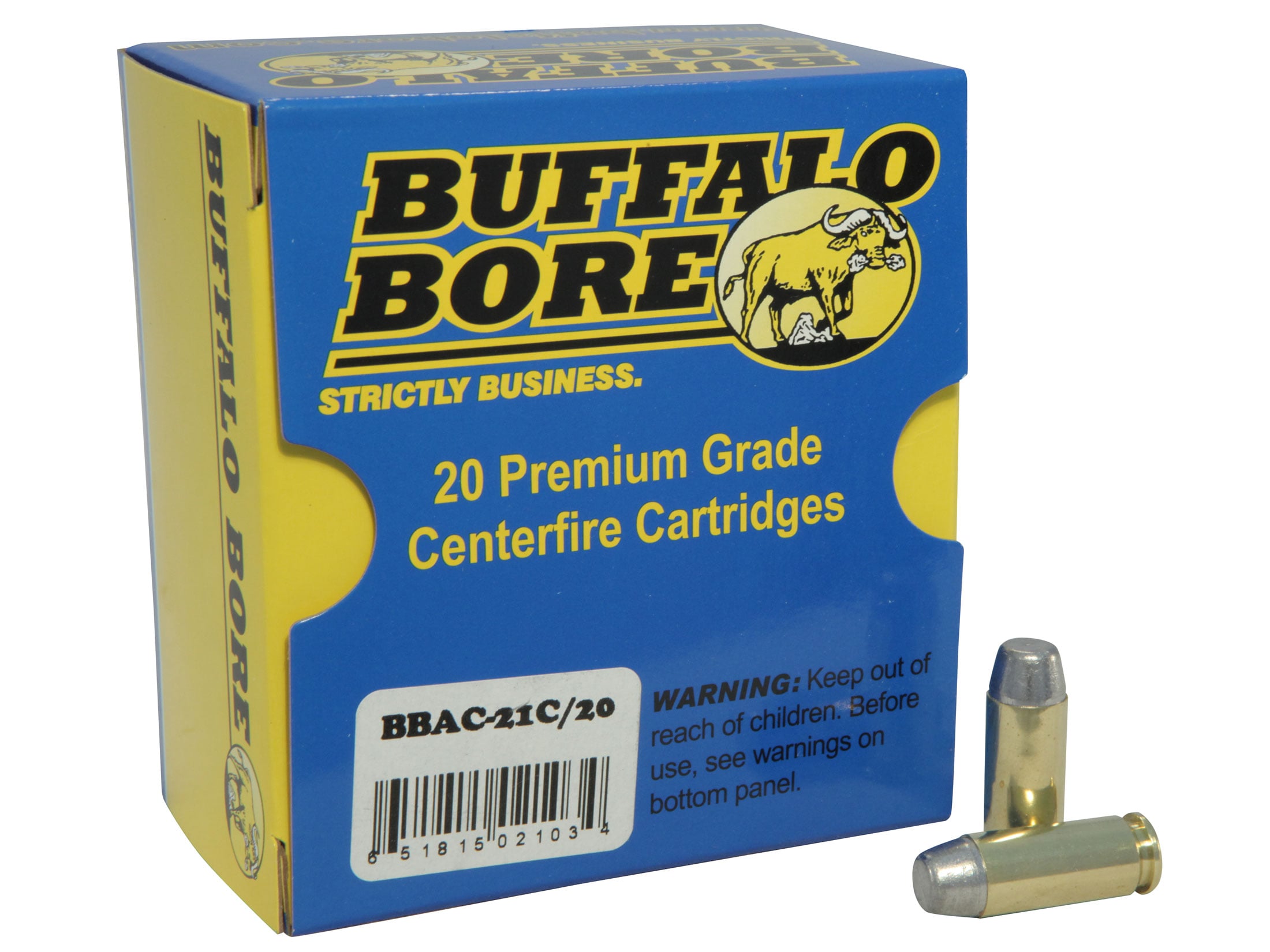
This is the most critical mistake. Jacketed hollowpoints are designed to expand and stop inside soft tissue; that's exactly what you want for self-defense against humans. Against a bear, expansion is the enemy. You need maximum penetration through thick hide, dense muscle, and heavy bone. A 200-grain hardcast flat-nose bullet at 1,200+ fps will punch straight through without expanding, reaching vitals that a hollowpoint would never touch. Buffalo Bore 220-grain hardcast, Underwood 200-grain hardcast, and DoubleTap 200-grain hardcast are the standard recommendations. Load your bear gun with hardcast. Period.
Never testing full-power loads in your specific gun
Factory 10mm from Federal, Winchester, and Remington is typically downloaded to .40 S&W velocities; 1,000-1,050 fps with a 180-grain bullet. This ammo is not adequate for bear defense. The full-power loads from Buffalo Bore, Underwood, and DoubleTap run significantly hotter, and not every gun handles them identically. Feed ramp geometry, recoil spring weight, and extractor tension all affect reliability with hot loads. Buy 200 rounds of your chosen carry ammo and run them through your gun before you set foot in bear country. If you get a single malfunction, diagnose and fix it. If you can't fix it, pick a different gun or different ammo.
Neglecting the draw stroke
You can have the best 10mm on the market and it won't matter if you can't get it out of the holster fast. A chest holster draw is different from a hip draw; the mechanics are different, the angles are different, and you need to practice it specifically. Fifty draws a day for two weeks before your trip, from your actual chest holster, wearing your actual pack. Time yourself. You should be able to draw and put a first shot on a torso-sized target at 10 yards in under 2 seconds from the holster. Under 1.5 is better.
Skipping the red dot
Iron sights work. They've worked for a hundred years. But a red dot is faster to acquire under stress, especially for shooters who struggle with front-sight focus under adrenaline. The dot also works better in low light, which is when many bear encounters happen; dawn, dusk, in heavy timber. If your gun is optics-ready, mount a quality dot. The Holosun 507C and Trijicon RMR are both proven on 10mm slides. The Holosun's shake-awake feature means the dot is always on when you draw, which matters when you don't have time to press a button.
Carrying with an empty chamber
This one comes up in forums constantly. "I carry my bear gun with an empty chamber for safety." Don't. A bear can cover 30 feet in about one second. You do not have time to rack a slide. Carry with a round chambered, in a quality holster with proper retention. Every modern 10mm from a reputable manufacturer is drop-safe. The holster covers the trigger. There is no safety concern that outweighs the need to fire immediately.
Ammo selection matters as much as the gun
The gun is half the equation. The ammo is the other half, and arguably more important. Here's what to look for in a 10mm bear-defense load:
Bullet weight should be 200 grains or heavier. Heavier bullets retain momentum better and penetrate deeper. The 200-grain hardcast flat-nose is the sweet spot for most 10mm bear loads; it balances velocity, penetration, and controllability. Some manufacturers offer 220-grain hardcast loads that penetrate even deeper but at lower velocity and with more recoil.
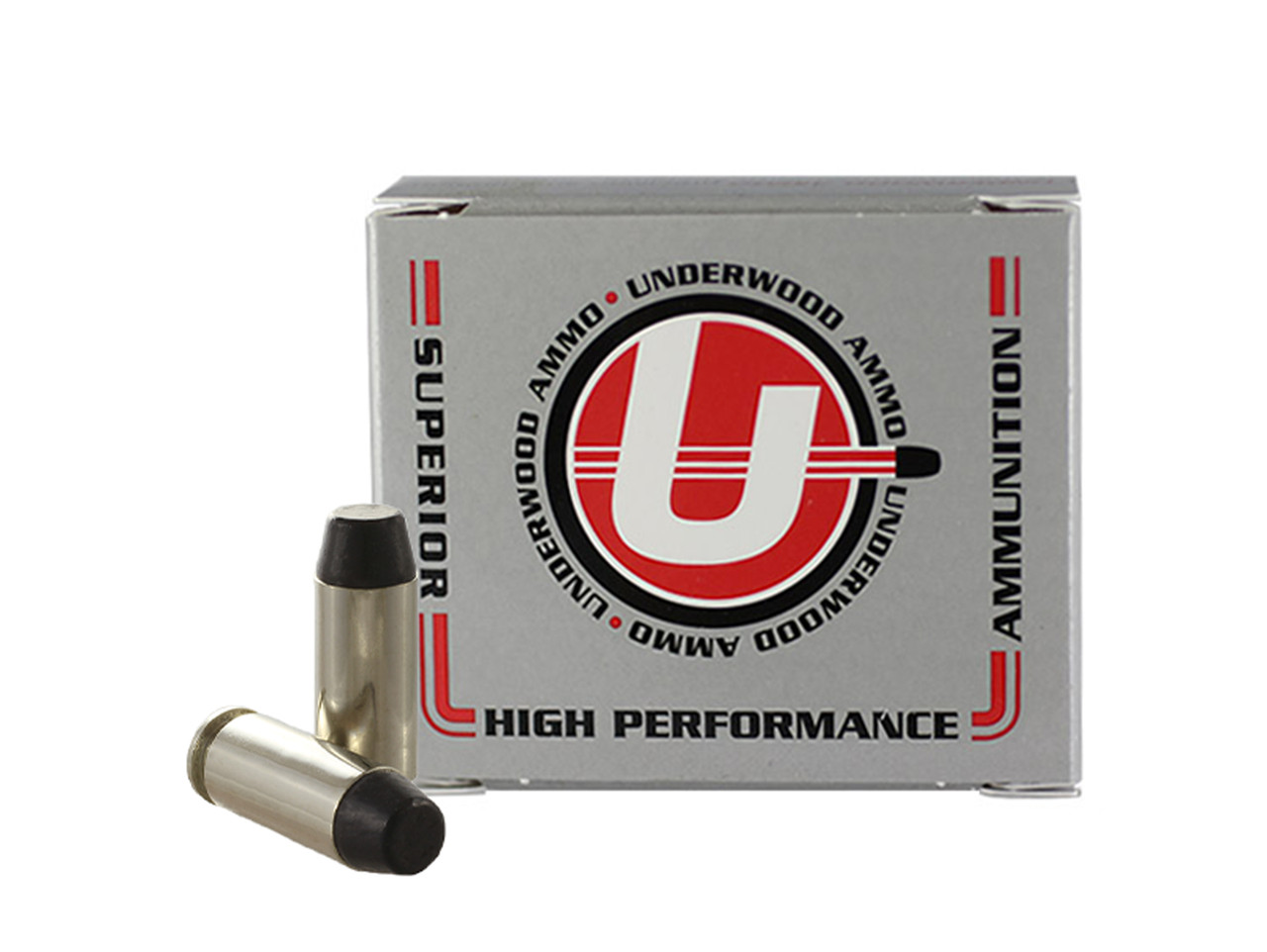
Bullet construction must be hardcast lead or solid copper. No hollowpoints, no soft-points, no polymer tips. You want a bullet that will not deform or expand, maintaining its cross-section as it drives through tissue and bone. Hardcast lead with a Brinell hardness of 21+ won't deform on bone. Lehigh Defense and Underwood also make solid copper loads with a flat meplat (the flat face of the bullet) that penetrate similarly to hardcast without the lead fouling concerns.
Velocity should be 1,200 fps or higher from your specific barrel length. Check the manufacturer's listed velocity and the barrel length they tested from, then expect to lose 25-50 fps per inch of barrel you're giving up. A load listed at 1,300 fps from a 6-inch test barrel will run closer to 1,200 from a 4.6-inch Glock 20 barrel.
The top recommended loads, based on consistent performance data and community consensus: Buffalo Bore 220-grain hardcast flat-nose (item 21A), Underwood 200-grain hardcast flat-nose, and DoubleTap 200-grain hardcast. All three run at true 10mm pressures and have extensive field use in bear country.
Head-to-head: picking your platform
Here's the direct comparison across the models that matter most for this specific role.
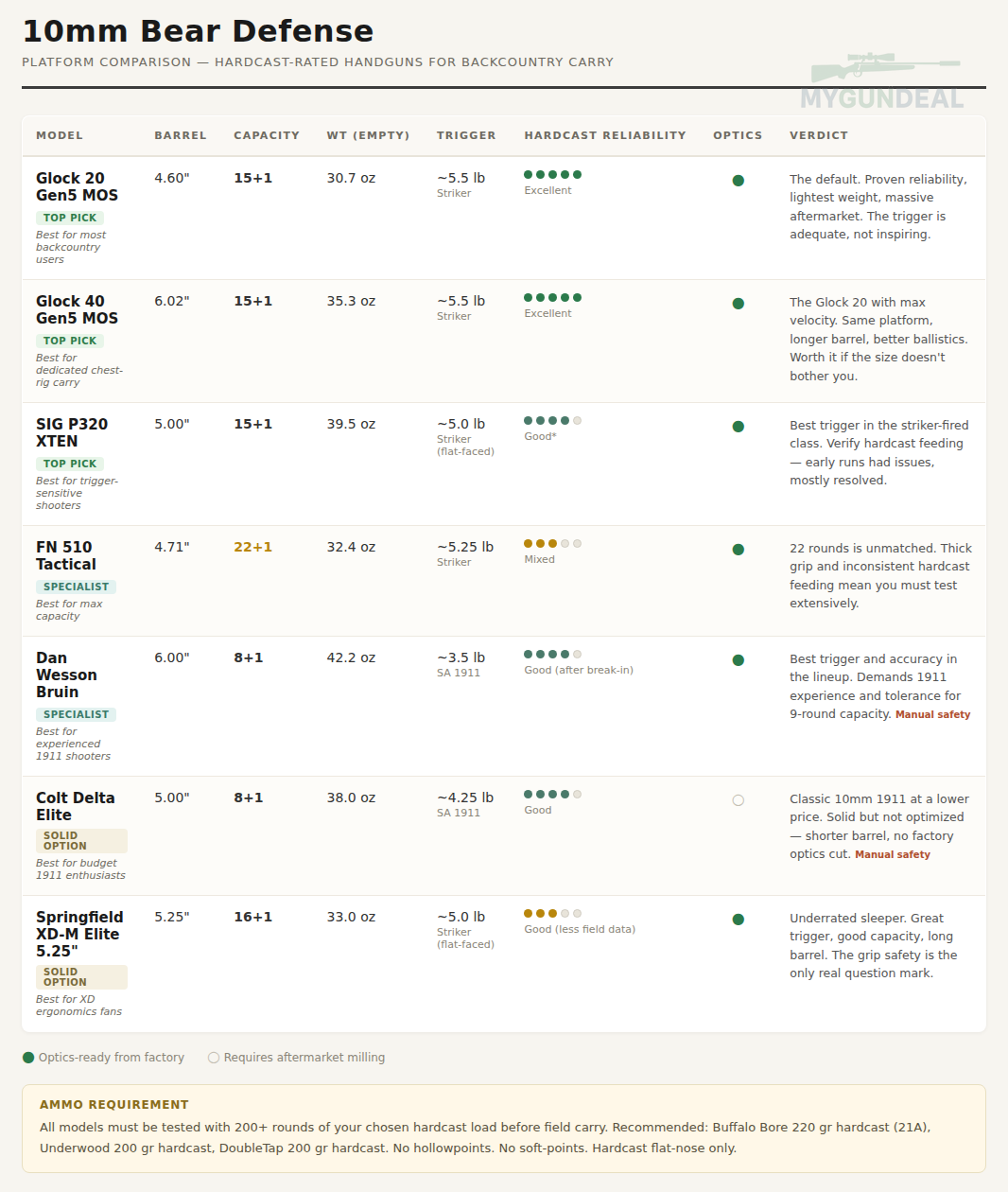
The Glock 20 Gen5 MOS wins on the combination of reliability, capacity, weight, holster availability, and aftermarket support. It's the Toyota Tacoma of bear guns; not the most exciting, not the best at any single thing, but the most proven and the hardest to argue against. If you're buying one 10mm for backcountry carry and you don't have strong platform preferences, this is the default recommendation.
The Glock 40 Gen5 MOS is the better pure bear gun if you're willing to carry the extra length. More velocity, longer sight radius, better recoil management. The capacity and reliability are identical to the Glock 20. If your chest holster accommodates it and you're not doing technical terrain where the extra barrel length catches on everything, the 40 is the upgrade.
The SIG P320 XTEN is the choice for shooters who want a better trigger and grip ergonomics than Glock without going to a 1911. The 5-inch barrel splits the difference on velocity. Capacity matches the Glock. The trigger is noticeably cleaner. Verify hardcast reliability in your specific gun; early production concerns have been largely addressed, but trust and verify.

Springfield Armory XD-M Elite 5.25" 10mm Deals
Prices may change. May contain affiliate links.
The FN 510 Tactical is the capacity play. Twenty-two rounds is a lot of 10mm. The thicker grip and mixed hardcast reliability reports are the trade-offs. Best suited for shooters with larger hands who've confirmed reliable function with their chosen hardcast load.
The Dan Wesson Bruin is the accuracy and trigger king. If you're a 1911 shooter who wants the best possible trigger and the most accurate 10mm platform, and you're willing to accept 9-round capacity, heavier weight, and the maintenance demands of a tight 1911 in field conditions, the Bruin rewards your commitment. Not the right choice for someone who isn't already deeply familiar with the 1911 manual of arms.
The Colt Delta Elite is the traditional choice at a lower price point than the Dan Wesson. Good trigger, proven platform, but limited by 5-inch barrel velocity and lack of factory optics readiness. A solid gun, not the optimized one.
The Springfield XD-M Elite 5.25" is the sleeper pick. Great trigger, good capacity, long barrel. The grip safety is the only real question mark. Underappreciated in the bear-gun conversation.
Setting up your bear-defense rig
The gun and ammo are the core. The rest of the setup matters too.
A chest holster is non-negotiable for backcountry carry. Hip holsters get buried under pack hip belts and are slow to access. Shoulder holsters swing and bounce. A chest holster puts the gun high on your torso, accessible with either hand, clear of your pack straps (if properly adjusted), and visible as a deterrent. The Kenai Chest Holster, Diamond D Guides Choice, and Gunfighters Inc. Kenai are the most popular options. All three use Kydex or hybrid construction with adjustable retention. Make sure the holster has a positive retention mechanism; you'll be bending, climbing, and scrambling, and the gun needs to stay put until you deliberately draw it.
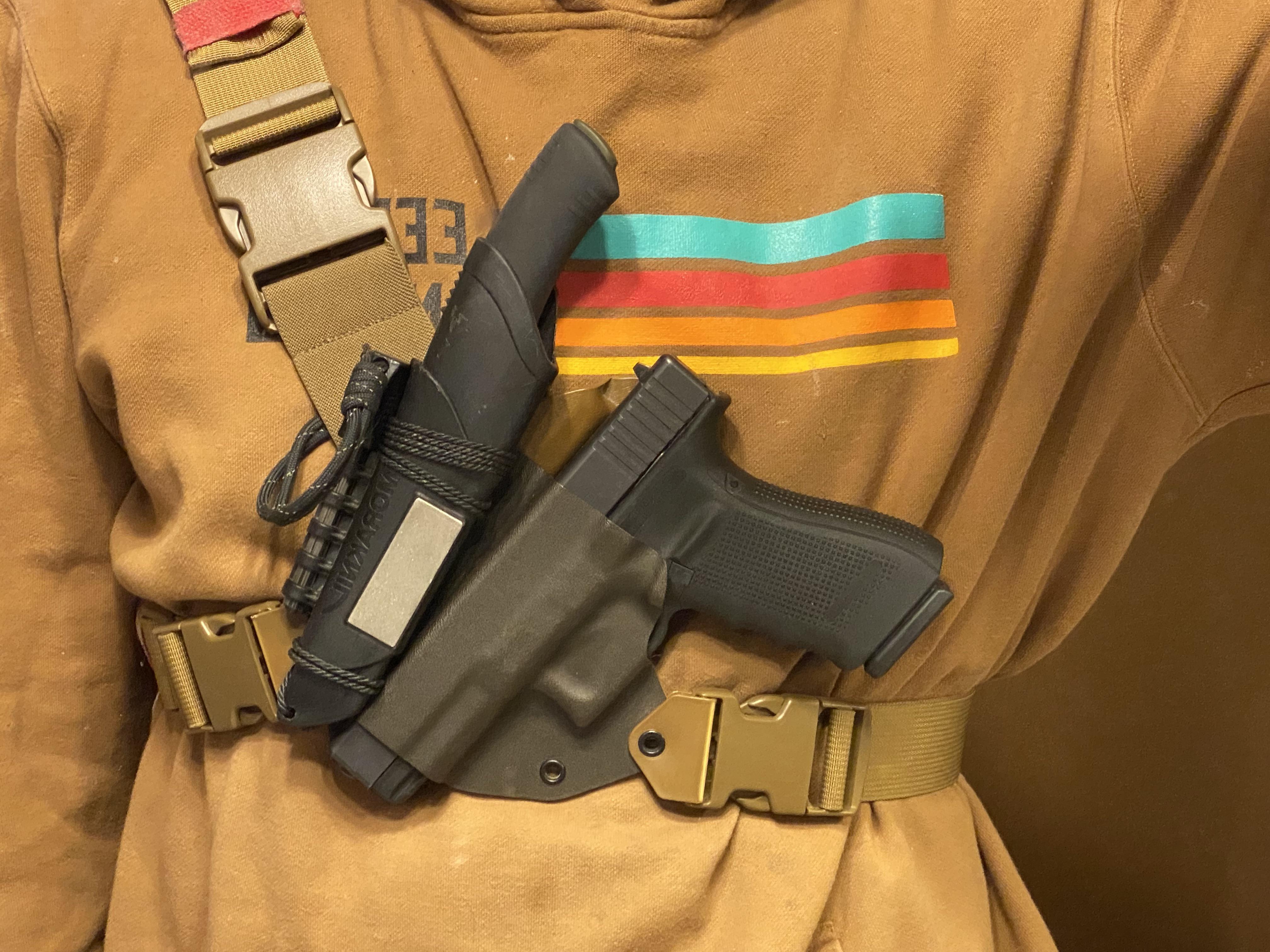
Mount your red dot before the trip and zero it at 15 yards. That's a realistic engagement distance for a bear encounter. Confirm zero with your carry ammo, not range ammo. Different loads hit to different points of impact.
Carry one spare magazine on the chest rig or on your belt. You probably won't need it. But if your primary magazine has a feed issue, or if the encounter is prolonged (multiple bears, a bear that doesn't go down), that spare magazine is the difference between having options and not.
The drill that matters
Here's a specific practice drill for bear-defense preparation. Set up a target; a paper plate works fine, roughly the size of a bear's skull from the front; at 10 yards. Start with the gun holstered in your chest rig, hands at your sides.
On the buzzer (or a buddy's shout), draw and fire 4 rounds into the