You've got a 92FS that's acting up, or you're about to buy one and want to know what breaks and what swaps with what. Maybe you picked up a used M9 and you're wondering if 92FS parts drop in. Either way, the 92 platform has been around since 1976, with over 3 million produced across military and civilian variants. That's a lot of institutional knowledge floating around, and also a lot of conflicting information.

Beretta M9 Deals
Prices may change. May contain affiliate links.
The real problem with the Beretta 92 family isn't reliability. It's that decades of production have created meaningful differences between variants, and a part that drops into a 92FS may not fit a 92X or an early 92S without modification. Pair that with a few well-known failure points that get exaggerated by internet mythology, and you end up with shooters either worrying about things that don't matter or ignoring the maintenance items that actually do. This FAQ covers the compatibility questions, the real failure modes, and the fixes that work.
Platform basics
What models are actually in the 92 family?
The lineage runs deep. The original Model 92 appeared in 1976 and evolved through the 92S, 92SB, and 92F, which was adopted as the U.S. M9 in 1985. The 92FS designation came later as an update after slide failures were addressed, and the current M9 is equivalent to the 92FS. From there, the family branched into military and civilian tracks:

Beretta 92S Deals
Prices may change. May contain affiliate links.

Beretta 92SB Deals
Prices may change. May contain affiliate links.


Beretta M9A1 Deals
Prices may change. May contain affiliate links.
Beretta M9A3 Deals
Prices may change. May contain affiliate links.

Beretta M9A4 Deals
Prices may change. May contain affiliate links.

Beretta Centurion Deals
Prices may change. May contain affiliate links.

Beretta 92A1 Deals
Prices may change. May contain affiliate links.
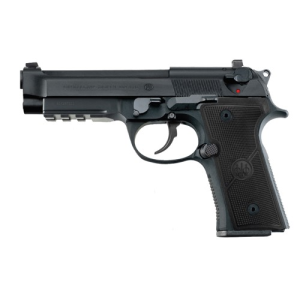
Beretta 92X Deals
Prices may change. May contain affiliate links.
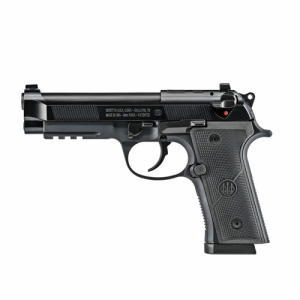
Beretta 92X RDO Deals
Prices may change. May contain affiliate links.

Beretta 92X Performance Deals
Prices may change. May contain affiliate links.


Beretta 92GTS Deals
Prices may change. May contain affiliate links.

Beretta 92XI Deals
Prices may change. May contain affiliate links.
The 92FS is the standard civilian flagship. Open-top slide, DA/SA trigger, manual safety/decocker on the slide, 4.9-inch barrel, 15-round standard capacity. Available in Bruniton or Inox finishes.

The M9, M9A1, and M9A3 are military variants. The M9A1 added a Picatinny rail and checkered backstrap. The M9A3 brought a threaded barrel, improved sights, a Vertec-style straight backstrap, and wraparound grips. The M9A4 and Centurion variants are also available, with the Centurion offering an optic-ready slide.
The 92A1 added a rail and a recoil buffer designed to lessen stress on the frame and increase service life.
The 92X series represents the modernized platform with a replaceable front sight, improved ergonomics, and some internal spring changes. The slide catch and some springs differ from the 92FS. The 92X Performance is the competition-oriented variant, and the 92X RDO comes factory-cut for red dots.

The 96 is the .40 S&W version and uses a different barrel, locking block, and magazine. Don't mix 96 parts into a 92 without verifying compatibility for that specific component.
The newest iterations include the 92GTS and 92XI, which further tune the trigger and controls.
Are the 92FS and M9 basically the same gun?
From a technical standpoint, yes. Their dimensions, internal mechanics, magazine compatibility, and takedown process are the same. The major components (slide, barrel, recoil spring, frame) can often be swapped between the two. Most holsters, accessories, and aftermarket upgrades fit both pistols equally well.

The differences are subtle. The M9 was built to military specification, which meant specific finish requirements and certain dimensional tolerances. The 92FS is the civilian counterpart with essentially identical internals. Some shooters note that the 92FS's grip shape suits most hands slightly better for comfortable trigger engagement, and the three-dot sight system on the 92FS can assist in faster target acquisition compared to some M9 sight configurations. But mechanically, you're looking at the same gun.
What's the deal with standard frames vs. Vertec frames?
This is the single most important compatibility distinction in the 92 family. The platform runs two distinct frame profiles.
Standard frames, found on the 92FS, M9, and 92A1, have the recognizable "hump" backstrap. This gives a fuller grip that works well for larger hands but has always been a complaint for shooters with shorter fingers. The trigger reach in double action is long on these frames.

Vertec frames, used on the 92X, M9A3, M9A4, 92GTS, and 92XI, have a straight backstrap that reduces grip circumference and improves trigger reach for most hand sizes. This was a direct response to decades of criticism about the 92's large grip making it difficult for shooters with small hands.
Grip panels are not interchangeable between the two frame types. Standard-frame grips (92FS style) fit the 92FS, 92A1, M9A1, and 96. Vertec-frame grips fit the 92X, M9A3, M9A4, 92GTS, and 92XI. Buy for your specific frame or you'll be returning parts.

Does my 92FS have a rail?
If it's a standard 92FS or original M9, no. Any model from the M9A1 forward includes an integral accessory rail. The 92A1 also has a rail. For non-railed 92FS and original M9 frames, aftermarket rail adapters from manufacturers like Recover Tactical bolt to the trigger guard to add a short rail section. This works, but rail presence affects holster fit. A railed 92X will not seat correctly in a holster molded for a non-railed 92FS, and vice versa.
Compatibility deep dive
Can I use M9 parts in a 92FS?
Most M9 and 92FS parts are interchangeable. The exceptions are the slide catch lever (M9A1 has a checkered face), some trigger springs, and the locking block on early 92S models. When in doubt, order parts specified for your exact model. Beretta changed internal specs multiple times over the platform's 40-plus year production run, and "close enough" isn't a standard you want to apply to a firearm you depend on.
What about magazines? Do they all cross over?
Standard 92FS 15-round magazines work across the 92FS, M9, M9A1, 92A1, and most 92X models. Eighteen-round flush-fit magazines are also available for the platform. The M9A3 and later variants sometimes ship with sand-resistant magazines that have different follower and floor plate designs, but they'll still function in a standard 92FS.

Mec-Gar 92FS 15-round magazine Deals
Prices may change. May contain affiliate links.
The 96 in .40 S&W uses its own magazines. Don't try to run 96 magazines in a 9mm gun.
For aftermarket magazines, Mec-Gar is the go-to. They're the OEM manufacturer for many Beretta magazines and produce both standard-capacity and extended options. Contract magazines (often sold as surplus or mil-spec) are widely available and tend to cost less than Sig or HK magazines, which is one of the 92 platform's practical advantages.
Will 92FS night sights fit my 92X?
No, and this is where people waste money. The 92 family uses at least three different dovetail cuts for sights.
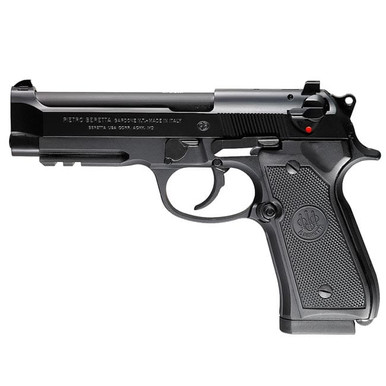
Beretta 96A1 Deals
Prices may change. May contain affiliate links.

Trijicon HD BE113 sight Deals
Prices may change. May contain affiliate links.

The 92FS and M9 use the same older dovetail cut. Meprolight Tru-Dot sights are the default option for these models.
The 92A1 and 96A1 use a different dovetail cut and need a specific sight variant, such as the Trijicon HD (the BE113 model specifically).
The 92X, 92X Performance, and M9A3 use yet another cut entirely.
Always verify your exact model and production year before ordering sights. Beretta changed dovetail specs multiple times, and getting this wrong means you're either sending parts back or paying a gunsmith to recut your dovetail.
Do LTT and Wilson Combat trigger kits work across all 92 variants?
The Langdon Tactical LTT Trigger Job in a Bag and Wilson Combat tune kits are designed to cover every 92 variant: 92FS, 92A1, 92X, M9, M9A1, M9A3, Vertec, and Centurion. The LTT kit includes an optimized trigger bar that dramatically shortens reset and kills overtravel, a selectable hammer spring (12#, 13#, or 14#), and polished internals. The 2025 hammer revision gives faster lock time while maintaining reliable primer ignition with the lighter spring.

These kits are the gold standard for improving the 92's DA/SA trigger, which is the platform's most common complaint after grip size. The DA pull on a stock 92FS is long and heavy. After an LTT kit, the difference in reset alone changes the shooting experience noticeably.
What about red dot mounting?
This depends heavily on your variant. The 92X RDO comes factory-cut for optics with mounting plates. The M9A3, 92X Performance, standard 92FS, and M9 all require slide milling. Providers like Langdon Tactical charge $385 for their RDO cut service, while others such as Dual Hammer Industries offer it for $200. Finding a smith who does quality work on the 92's open-top slide is more involved than milling a Glock slide.
If you want a red dot on a 92-platform gun and don't already own one, buy a model that comes cut from the factory. Retrofitting a 92FS for an optic is expensive enough to question whether you should just buy a 92X RDO instead.
Common failures and what actually breaks
Is the cracked slide thing still a real concern?
This is the most persistent myth around the 92 platform, and it needs context. During 1980s military trials, there were documented cases of slides cracking, particularly under extreme conditions during Navy SEAL testing. These incidents led Beretta to make specific changes: they introduced an enlarged hammer pin that fits into a groove on the underside of the slide as a retention modification (resulting in the 92FS) and redesigned the locking block to reduce the frequency of breakages.
The actual issue was more often with the locking block in the frame, not the slides themselves. The 92FS incorporated the upgraded locking block design. The 92A1 went further by adding a recoil buffer specifically to lessen the amount of stress on the frame, thereby increasing service life.
On modern production 92FS pistols, slide cracking is essentially a non-issue. The U.S. military used the M9 as its service sidearm for decades after those early problems were addressed. In some documented cases, M9s reached over 150,000 rounds during service trials before experiencing significant wear. If the platform had a systemic slide-cracking problem, it wouldn't have survived that long in military service.
That said, the locking block is a wear item. More on that below.
The locking block: the real wear part
Here's what nobody mentions when they talk about 92 durability. The locking block is the component that actually needs attention over the life of the gun. It's the part that locks the barrel to the slide, and it takes tremendous stress with every round fired.

Some shooters have reported needing to replace the locking block well before 22,000 rounds. Others run much longer. The variance seems to depend on the generation of the part, the ammunition used, and whether the recoil spring was maintained on schedule. Beretta claims to have addressed locking block durability in later production models, and upgraded locking block kits with reinforced lugs are available as aftermarket replacements.
The test that matters: inspect your locking block every 5,000 rounds. Look for cracks at the lug bases. If you see any cracking, replace it immediately. Don't wait for it to fail during a range session or, worse, when the gun is actually needed.
Failure to extract: the maddening intermittent problem
This one drives 92 owners crazy. Failure to extract on the 92FS can be intermittent and difficult to diagnose because it doesn't always point to a single cause.
One shooter documented FTE rates of at least one per magazine across five different magazines (three Beretta, two aftermarket), using both Winchester 115-grain FMJ and Federal 115-grain FMJ. The gun had been cleaned and oiled after each use. The extractor, extractor spring, and recoil spring had all been replaced with new parts. The extractor cavity had been cleaned. Multiple shooters fired the gun to eliminate limp-wristing as a factor. The malfunctions continued regardless.
Another experienced 92 owner who has owned 28 Beretta 92 variants reported experiencing FTE issues across multiple guns, roughly once every 300 to 400 rounds, and couldn't isolate the cause.
The troubleshooting checklist for FTE on a 92:
Check magazine spring condition first. Weak magazine springs can cause inconsistent feeding and extraction timing. Even if you have five magazines and they all do it, springs can age similarly if they were bought together.
Verify your recoil spring weight and source. A factory-weight Wolff spring is the baseline. Going lighter can help with some extraction issues but may introduce other problems.
Inspect the extractor claw for wear or damage. Even a new extractor can have manufacturing variance. The claw should snap firmly over the case rim.
Check the locking block. A worn locking block can affect timing between the barrel unlocking and the slide's rearward travel, which directly impacts extraction.
Consider ammunition. While a 92FS shouldn't require specific ammo to function, 124-grain loads generate slightly more pressure and can improve extraction reliability in guns that are marginal with 115-grain loads.
If you've done all of the above and the problem persists, the gun needs to go back to Beretta. Some individual pistols have dimensional issues that aren't visible to the naked eye and require factory intervention.
My 92 jams with hollow points
Probably not a defect. Early 92FS models have a steep feed ramp that can catch on the wider, flat nose of hollow point ammunition. This is more common with older production guns and certain bullet profiles.
The fixes range from simple to involved: try different hollow point brands first (some profiles feed better than others in the 92), have a gunsmith polish the feed ramp, or upgrade to a Langdon Tactical or Bar-Sto barrel that has a more refined ramp geometry. The LTT Elite Stainless barrel and Bar-Sto's semi-fit stainless barrel both address feed ramp geometry while also improving accuracy.

What about frame wear?
Frames on high-round-count 92s can show wear, particularly around the locking block pin area and the slide rails. The 92A1's recoil buffer was specifically designed to address this by reducing the impact force on the frame during cycling. If you're running a standard 92FS at high volume, maintaining your recoil spring on schedule is the single best thing you can do to protect the frame.
Maintenance schedule
How often should I replace the recoil spring?
Every 5,000 rounds. This is cheap insurance. A new recoil spring costs roughly $8, and anyone can install one during routine cleaning. If the spring is dead, there's nothing slowing the slide before it slams into the frame. That accelerates wear on the frame, the locking block, and the slide. For the cost involved, there's no reason to skip this.
What's the full maintenance schedule look like?
Clean and lubricate after every range session. That's baseline.
At 5,000 rounds, replace the recoil spring. Inspect the locking block for cracks.
At 10,000 rounds, replace the locking block as a preventive measure, even if it looks fine. Inspect the extractor and extractor spring. Replace the firing pin spring.
At 20,000 rounds and beyond, have a qualified armorer inspect the frame rails, barrel locking surfaces, and slide for wear. Consider replacing the trigger return spring and the hammer spring if you notice changes in trigger feel.
The 92 platform is legendary for durability, but "legendary" doesn't mean "maintenance-free." The guns that run to 150,000 rounds are the ones that get springs replaced on schedule and locking blocks swapped before they crack.
Upgrades that actually matter
What's the single best upgrade for a 92FS?
The trigger. Specifically, the Langdon Tactical LTT Trigger Job in a Bag. The stock DA/SA trigger on a 92FS is functional but heavy and gritty in double action, with a long reset in single action. The LTT kit's optimized performance trigger bar shortens the reset dramatically, and the 13-pound hammer spring reduces the DA pull weight while the polished internals smooth out the entire stroke.
The Wilson Combat tune kit is the budget alternative and does good work, but the LTT kit is the gold standard for the platform.
Grips: standard vs. Vertec
If you're on a standard-frame 92FS and the grip feels too large, aftermarket thin grips can help. VZ Ultra-Thin LTT grips are compatible with the 92FS and reduce the grip circumference meaningfully. LOK Bogies and Hogue walnut panels are also popular options.

Note that VZ Ultra-Thin LTT grips do not fit the 92X Performance or 92X RDO. Those use Vertec-frame grip panels, which are a separate fitment. Wicked Grips makes panels for both frame types, but you need to order the correct version. Their 92FS-style grips fit the 92FS, 92A1, M9A1, and 96. Their 92X grips fit the straight-frame models including the M9A3.
Night sights
Factory 92 sights are fixed three-dot painted affairs with no tritium. For a home defense gun, night sights are the cheapest meaningful upgrade you can make. As covered above, verify your dovetail cut before ordering. The wrong sights for your model won't fit, period.
The G-conversion
One of the most common modifications in the 92 community is converting an F-model (safety/decocker) to a G-model (decocker only). The F-model safety locks the firing pin and drops the hammer when engaged, which means the safety lever is also your decocker. The G-model eliminates the safety function entirely. Flip the lever down, the hammer drops, and the lever springs back to the ready position. No manual safety to disengage under stress.
This is a popular conversion for shooters who carry the 92 or use it for home defense and prefer a DA first pull as their "safety" rather than a manual lever. Langdon Tactical and Wilson Combat both sell G-conversion kits, and the installation is straightforward for anyone comfortable with detail-stripping the slide.
Weapon lights
For railed models (M9A1 and later, 92A1, 92X), the Streamlight TLR-7A and TLR-7 HL-X are popular choices. They sit flush with the muzzle on full-size models and avoid snagging during holster draws. For the non-railed 92FS, you're looking at aftermarket rail adapters, which add bulk and change the holster equation.

Threaded barrels
Langdon Tactical's Elite Stainless threaded barrel is the top choice for the 92 platform, with 1/2x28 threading for standard 9mm suppressors. Bar-Sto Precision makes a semi-fit stainless barrel that requires minor fitting by a gunsmith but delivers match-grade accuracy. Factory threaded barrels ship on the M9A3, M9A4, and select 92X models, so if suppressor use is planned, buying one of those variants saves the cost of an aftermarket barrel.
Common mistakes
Buying parts without verifying your exact model
This comes up constantly. A 92FS sight won't fit a 92X. A standard-frame grip panel won't work on a Vertec frame. A 96 locking block isn't the same as a 92 locking block. Beretta changed specifications multiple times over the platform's production life. Before you order anything, identify your exact model, production year, and frame type.
Ignoring the recoil spring
At roughly $8 per spring, there's no excuse for running a dead recoil spring. A worn spring accelerates wear on every other component in the gun. Replace it every 5,000 rounds without exception.
Using light springs in a carry or defense gun
Lighter hammer springs improve the DA trigger pull, and competition shooters love them. But lighter springs reduce the force hitting the primer. The LTT kit's 13-pound hammer spring is designed to be the lightest spring that still guarantees reliable ignition across ammunition types. Going lighter than that on a gun you depend on is asking for light primer strikes at the worst possible moment. Save the ultra-light springs for range toys.
Assuming all aftermarket magazines are equal
Mec-Gar is the OEM manufacturer and produces reliable magazines across the board. Random surplus or no-name magazines can cause feeding issues that get blamed on the gun. If you're troubleshooting reliability problems, start with known-good Beretta factory or Mec-Gar magazines before you start replacing parts.
Polishing the feed ramp yourself
A gunsmith can polish a feed ramp to improve hollow point feeding. You with a Dremel can remove too much material and create a dangerous headspace situation. If your 92 won't feed JHP reliably, either try different ammo profiles first or take it to someone who knows the platform.
Range notes
Under recoil, the 92FS shows its strengths. The slide mass and open-top design combine to produce mild recoil and fast sight recovery. Rapid-fire strings are genuinely easier to manage than on many lighter polymer handguns, and the result is faster follow-up shots with better accuracy. The bore axis is higher than a CZ-75 or Sig P226, which gets brought up in every comparison, but in practice the weight of the all-metal gun compensates. Shooters moving from polymer striker-fired guns to the 92 platform often notice immediately how flat the gun shoots.
The DA/SA transition is the learning curve. That first double-action pull is long and heavy on a stock gun, and the transition to a short, light single-action pull for subsequent shots requires deliberate practice. Dry fire this transition until it's automatic. The LTT trigger kit helps enormously, but it doesn't eliminate the need to train the DA-to-SA shift.
At 25 yards, a well-maintained 92FS with decent sights will shoot tighter groups than most shooters can hold. Accuracy is not the platform's weakness. Trigger management is.
Still have questions?
If your 92 has a specific malfunction that isn't covered here, start with Beretta's own troubleshooting resources or contact their customer service directly. Beretta has historically been responsive about warranty repairs and parts support for the 92 platform.

Sig P226 Deals
Prices may change. May contain affiliate links.

CZ-75 Deals
Prices may change. May contain affiliate links.
For deeper upgrades and platform-specific guidance, Langdon Tactical's website is the single best resource for the 92 family. Ernest Langdon has done more to modernize the 92 platform than anyone else in the aftermarket space, and his fitment guides are reliable.
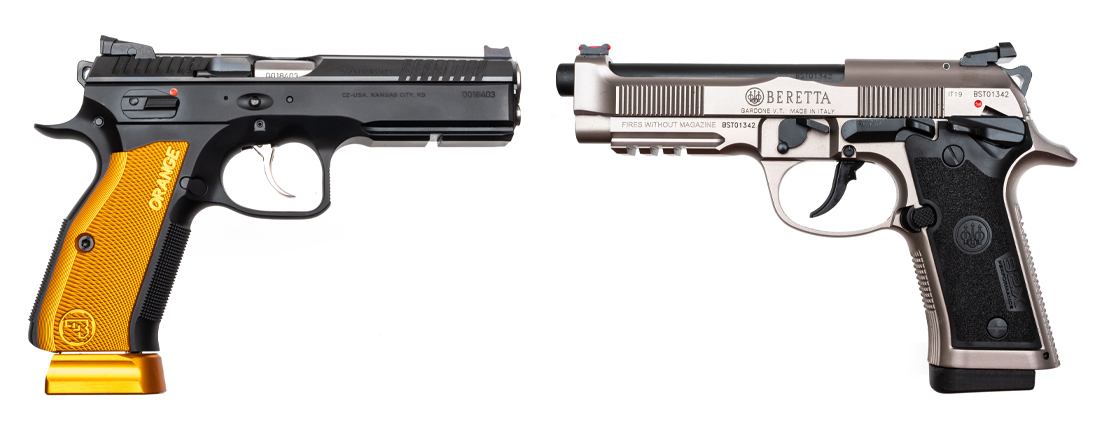
If you're still deciding whether the 92FS is the right platform for you, rent one first. Shoot it back-to-back with a Sig P226 or CZ-75 and see which ergonomics and trigger you prefer. The 92's advantages are real: proven reliability, mild recoil, high capacity, cheap magazines, and a mature parts ecosystem. Its disadvantages are equally real: it's large and heavy for concealment, the DA/SA trigger requires training, and early models lack rails and optics capability. Know what you're buying it for, maintain it on schedule, and the 92FS will outlast you.