You've got a rifle that needs a scope mounted or a thorough cleaning, and you're tired of balancing it on a folded towel or wedging it between sandbags on the kitchen table. A gun vise solves that problem, but the two names that keep coming up occupy very different spaces. Tipton builds cradle-style vises meant to hold just about anything you own. Wheeler's AR Armorer's Vise is purpose-built for one platform. Picking between them isn't really about which is "better." It's about what work you're actually doing.
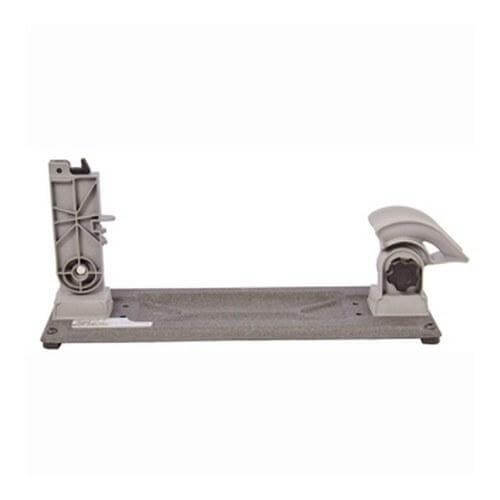
This comparison breaks down the Tipton Best Gun Vise (and its Gen 2 and Ultra variants) against the Wheeler AR Armorer's Vise. We'll cover what each one holds, how stable it is for scope work versus cleaning, where each design falls short, and which accessories close the gaps. By the end, you'll know which vise belongs on your bench and which one doesn't match your workload.
What you're actually choosing between
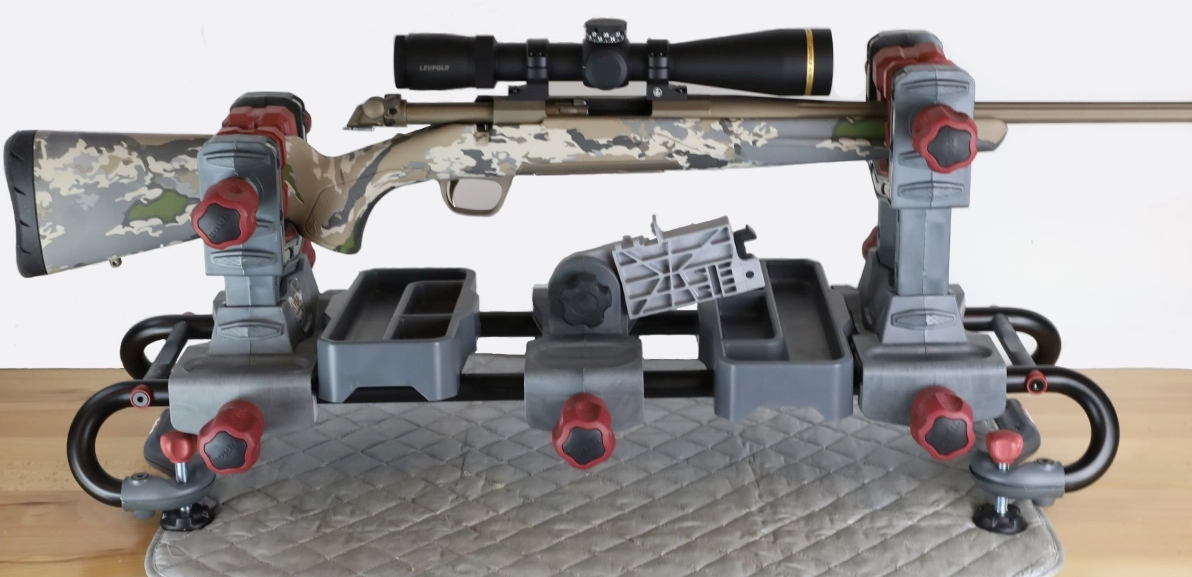
The core decision here is universal cradle versus platform-specific tool. Tipton's lineup (the Best Gun Vise, the Gen 2, the Ultra, and the 360) all share a common philosophy: adjustable supports that reposition along a central channel so you can cradle a bolt-action rifle, a break-open shotgun, an AR-15, or even a handgun. They're designed for cleaning, light maintenance, and scope mounting across your whole collection.

The Wheeler AR Armorer's Vise takes the opposite approach. It holds an AR-15 lower receiver on a magwell post and cradles the upper on an adjustable front support. It will not hold a bolt gun. It will not hold a shotgun. It's not trying to. What it does is give you a stable, purpose-built platform for AR building, handguard swaps, and cleaning work at roughly a third of what a full gunsmithing vise costs.
That distinction matters more than any spec on a comparison chart. If you only work on ARs, the Wheeler might be the smarter buy. If you own bolt guns, break-actions, and an AR or two, a Tipton cradle covers more ground. And if you're doing heavy barrel-nut torque work, neither of these is the right answer anyway.

Quick comparison
A few things jump out. The Wheeler is dramatically cheaper. The Tipton Ultra is heavier and more rigid, which matters for scope work. And none of these bolt to the bench, which means none of them are rated for serious barrel-nut torque. That's a job for a bolted gunsmithing vise like the Real Avid Master Gun Vise, which is rated to 100 ft-lb.

Stability for scope mounting
This is where most people care about the difference, and it's where opinions get heated. On the Nosler forum, one user put it bluntly: the Tipton Best Gun Vise is "great for cleaning but sucks for scope mounting." Another user on the same thread responded that they mount scopes on the Tipton vise with no problems at all, pairing it with the Wheeler Professional Reticle Leveling System.
What actually causes the disagreement is expectations. If you're coming from a bolted bench vise or a heavy machinist's vise with padded jaws, a polymer cradle is going to feel loose by comparison. The Tipton Best Gun Vise holds the rifle on three independently adjustable supports with two offset rear clamps gripping the buttstock. It's stable enough that the rifle won't shift while you're tightening ring screws with a torque wrench. But it's not rigid enough that you can lean into it or apply lateral force without the whole assembly flexing.
What the Tipton cradles do well for optics
The central aluminum channel on the Tipton Best Gun Vise and Gen 2 lets you slide the supports to match your rifle's balance point. Once the rear clamps are snugged onto the buttstock and the front support is positioned under the forend, the rifle sits level and doesn't roll. That's the baseline requirement for scope mounting: the rifle needs to stay put while you level the reticle and torque the ring screws.
The Tipton Ultra takes this further with heavier construction (13.6 lbs versus roughly 8 lbs for the original Best Gun Vise) and a modular clamp system. Forum users who own both consistently call the Ultra "far superior" for this kind of work. The extra weight and wider footprint (10.5 inches wide versus 9 inches) reduce the tendency to tip or shift during ring tightening.
The Tipton Best Gun Vise 360 adds a swiveling ball-head design with non-marring jaw pads. One user on the Nosler forum specifically mentioned using the 360 because the swivel lets them level the gun and confirm that both the rifle and scope are true. That rotational adjustment is genuinely useful during scope mounting because it lets you index the rifle without loosening and repositioning the clamps.
realWhere the Wheeler fits (and doesn't) for scope work
The Wheeler AR Armorer's Vise holds the lower receiver on a magwell post. This is rock-solid for the lower, but the upper receiver and barrel are supported on an adjustable front cradle. For scope mounting on an AR with a flat-top upper, you're working on the upper receiver, which is the part that's less rigidly held.
That said, scope mounting on an AR flat-top is a lower-stress operation than mounting on a bolt gun. You're tightening ring screws on a Picatinny rail, not fighting to level a scope on rounded receiver rings. The Wheeler holds the rifle steady enough for this work, and at $56.99, it's hard to argue with the value if ARs are all you're mounting optics on.
The limitation is obvious: if you also need to mount a scope on a Remington 700 or a Tikka T3, the Wheeler can't help you. It's AR-only by design.

Cleaning: where the cradle wins
For routine cleaning, both designs work. You need the rifle held steady, action open, muzzle pointed in a direction where solvent can drip without ruining your bench. The Tipton Best Gun Vise excels here because the adjustable supports and rear clamps accommodate practically any long gun. Break-open shotguns sit on the L-shaped center support. Bolt guns cradle on the front and rear supports with the bolt removed. Handguns can be positioned in the vise as well, though most people find that less useful.
The Wheeler's magwell post holds an AR lower securely for cleaning, and the front support cradles the upper. For AR cleaning specifically, it's perfectly adequate. The non-marring contact surfaces protect the finish, and the angle-adjustable magwell insert lets you tilt the rifle for better access to the bore.

Where the Tipton line pulls ahead is versatility. If you're cleaning a Mossberg 500 after a duck hunt and then switching to an AR-15, you reposition the supports on the Tipton and keep working. The Wheeler goes back in the closet for the shotgun.
Bench notes: solvent resistance
The Tipton Best Gun Vise shell is made from solvent-resistant polymer. This matters more than it sounds. Hoppes No. 9, CLP, and bore solvents will drip, and over time they'll degrade cheap plastic. The Tipton's material is specifically designed to handle this. The Wheeler's non-marring surfaces protect the gun's finish, but the source material doesn't specify solvent resistance for the vise body itself. If you're a heavy solvent user, lay down a mat under the Wheeler as a precaution.
Common mistakes with both vises
Over-tightening the rear clamps on a Tipton
The offset rear clamps on the Tipton Best Gun Vise grip the buttstock. They're designed to hold, not crush. If you crank them down trying to make the rifle immovable, you can mar the stock finish despite the non-marring surfaces, and you still won't get bench-vise rigidity. Snug is enough. The rifle should resist a gentle push but doesn't need to be locked in a death grip.
Expecting barrel-nut torque from a cradle
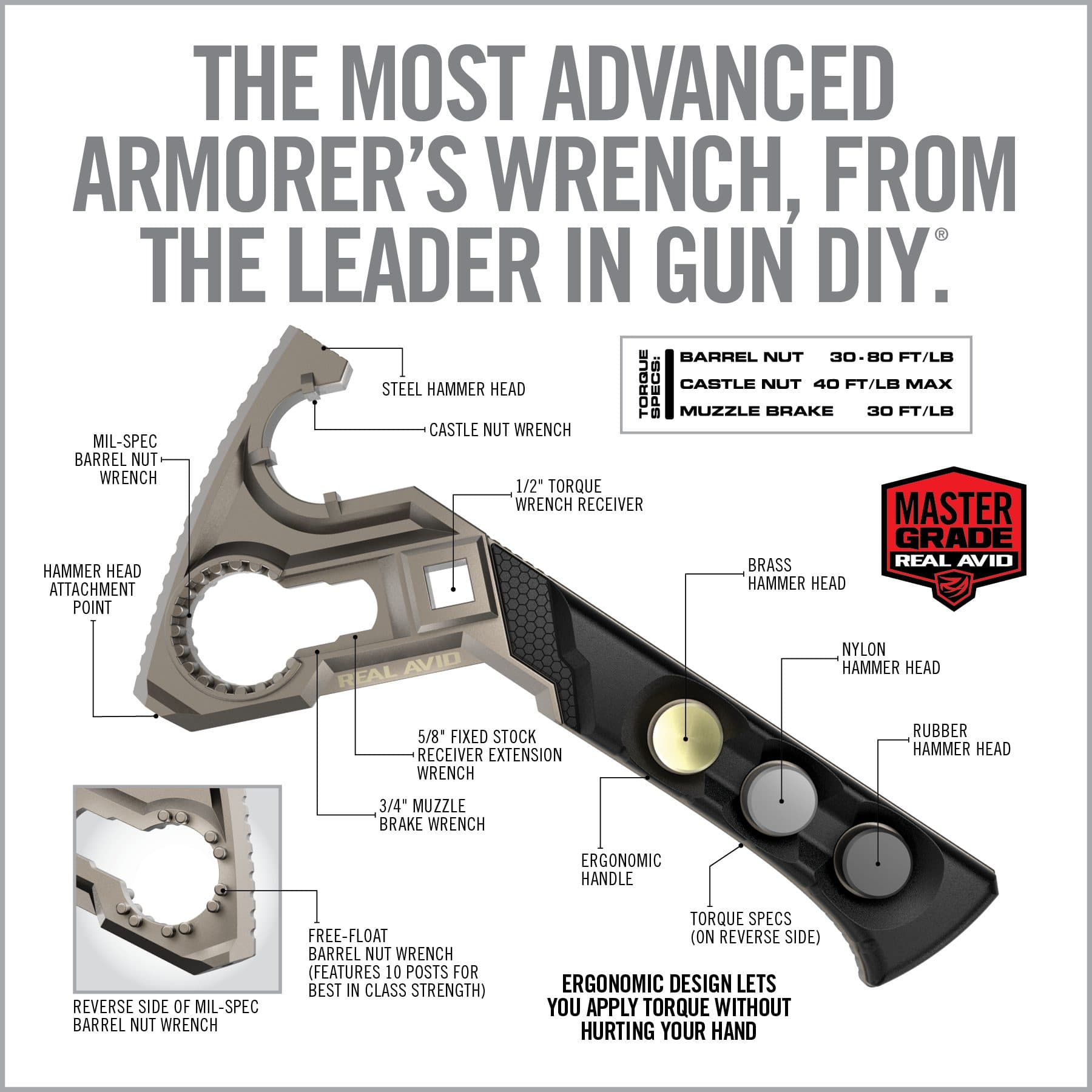
Neither the Tipton cradle vises nor the Wheeler AR Armorer's Vise are designed for heavy torque work. If you're installing a barrel nut or a handguard, proprietary specs may call for values as low as 20 ft-lb or as high as 65 ft-lb, and the receiver needs to be clamped in a bolted vise for that kind of work. The Wheeler's magwell post holds the lower steady for lighter tasks, but as the source material notes, "for the heaviest barrel-nut torque, the receiver grip of a bolted gunsmithing vise is steadier still." The Real Avid Armorer's Master Vise, at $299.99, is rated to 100 ft-lb and bolts to the bench for exactly this purpose.
Skipping the leveling system during scope mounting
A vise holds the rifle. It doesn't level your reticle. You still need a leveling system. The Wheeler Professional Reticle Leveling System pairs with any of these vises and is the tool multiple forum users mention by name. Without it, you're eyeballing reticle cant, and you will get it wrong. Feeler gauges under the scope's flat bottom are another method, and Nightforce specifically recommends that approach for their scopes.
### Using the Wheeler for non-AR guns
This sounds obvious, but the Wheeler AR Armorer's Vise has a magwell insert sized for an AR-15 lower. It will not cradle bolt guns, shotguns, or pistols. If you buy it thinking it's a general-purpose vise because the price is right, you'll be disappointed the first time you try to set a hunting rifle in it.
Not pairing with the right accessories
A vise alone doesn't complete the job. For scope mounting, you need a torque wrench (the Wheeler FAT Wrench is the standard recommendation), a leveling system, and potentially lapping bars and alignment tools if your rings aren't concentric. The Wheeler Scope Mounting Combo Kit bundles the FAT Wrench, alignment and lapping bars, and a storage case for 1-inch and 30mm rings. It runs around $129.99 and covers most of the accessories you'd otherwise buy piecemeal.
Tools and accessories that complete the setup
The vise is the foundation, but scope mounting and serious cleaning require a few more items on the bench.

Wheeler Delta Series AR Armorer's Professional Kit Deals
Prices may change. May contain affiliate links.
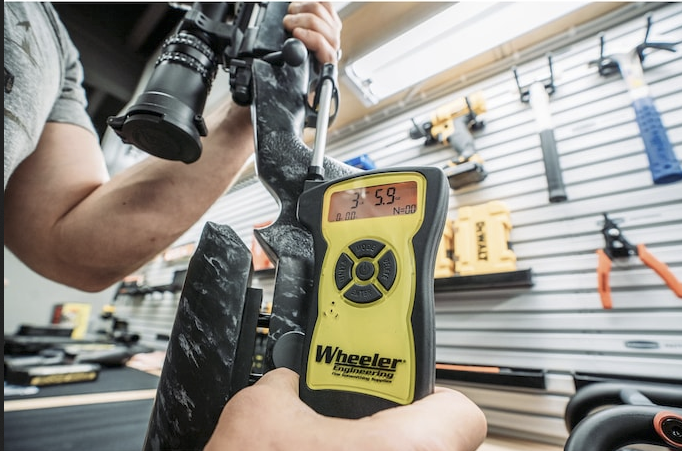
For scope mounting on any of the Tipton vises, the Wheeler Professional Reticle Leveling System is the most commonly recommended leveling tool. It uses a Barrel Clamp Level and a smaller Reference Level, which is placed on the scope base, bottom half of a ring, or on top of the scope's turret cap, to ensure precise reticle alignment. The Wheeler Scope Mounting Combo Kit adds the FAT Wrench (a torque-limiting screwdriver), alignment bars, lapping bars, and bit storage. If you're mounting scopes regularly, the combo kit pays for itself by preventing stripped ring screws and misaligned mounts.

For AR-specific work on the Wheeler vise, the Wheeler Delta Series AR Armorer's Professional Kit ($342.99) includes the AR-15 Armorer's Vise along with 19 tools: a combo tool, torque wrench, upper vise block clamp with gas tube alignment tool, maintenance mat with exploded AR-15 diagram, pivot pin and roll pin installation tool, front sight tool, delta ring tool, strap wrench, bore guide, adjustable receiver link, bore brush, bolt carrier brush, chamber brush, magazine/upper receiver brush, nylon brush handle, double-ended cleaning brush, cleaning pick set, and a custom-fitted carrying case. If you're building ARs from stripped receivers, this kit is the one-stop purchase. If you're just cleaning and mounting optics, the kit is overkill and the standalone vise at $56.99 is the better buy.
For bore sighting after scope mounting, the Sightmark .223 chamber-style bore sight loads like a dummy round and projects a visible red laser. It's caliber-specific (632-650 nm wavelength, less than 5 mW output, two AG5 and three AG3 batteries included) and gets you on paper at the range without burning ammo. The Wheeler Professional bore sight uses a green laser at 532 nm with a magnetic mounting system, which is more visible in daylight but costs more.
Which to choose
If you own multiple platforms and want one vise
The Tipton Best Gun Vise Gen 2 at around $139.99 is the pick. It handles bolt guns, break-actions, ARs, and handguns on the same adjustable platform. The Gen 2 updates the original with improved mounting and accessory storage. Pair it with a Wheeler leveling system and FAT Wrench for scope work.
If you want the most rigid Tipton for scope mounting
The Tipton Ultra Gun Vise at $171.99 is heavier (13.6 lbs), wider, and more stable than the standard Best Gun Vise. Forum consensus leans toward the Ultra being "far superior" for scope mounting and gunsmithing tasks. The extra cost buys meaningful rigidity. If scope work is a primary use case and you're frustrated by flex in lighter cradles, this is the upgrade worth making.
If you want rotational flexibility
The Tipton Best Gun Vise 360 adds a swiveling ball-head design with stainless steel jaws and non-marring jaw pads. The 360-degree rotation lets you index the rifle to any angle without loosening clamps. This is useful for scope leveling and for accessing different parts of the action during cleaning. It's a niche advantage, but if you've ever fought with repositioning a rifle in a fixed cradle, the 360 solves that specific annoyance.
If you only work on ARs and want to spend less
The Wheeler AR Armorer's Vise at $56.99 is the value play. The magwell post and adjustable front support hold the AR steady for cleaning, scope mounting, and handguard work. It won't do anything else, and it won't handle heavy barrel-nut torque, but for the price of a box of match ammo, it turns a workbench into a functional AR station.
If you're building ARs from stripped receivers
Start with the Wheeler AR Armorer's Vise for the magwell hold, but understand that barrel-nut installation and other high-torque tasks will eventually push you toward a bolted vise. The Wheeler Delta Series AR Armorer's Professional Kit bundles the vise with the torque wrench, upper vise block, and 17 other tools for $342.99. If you're doing multiple builds, the kit is more economical than buying tools individually.

If you need serious barrel-nut torque
Neither the Tipton cradles nor the Wheeler AR vise are the right tool. A bolted gunsmithing vise like the Real Avid Armorer's Master Vise ($299.99, rated to 100 ft-lb) is what this job requires. The receiver needs to be rigidly clamped and the vise needs to be anchored to the bench. This is the line between a cleaning/scope-mounting vise and a gunsmithing vise, and it's worth respecting.
The function check that matters
Once you've mounted a scope using any of these vises, here's what to verify before you head to the range. First, check that all ring screws are torqued to the manufacturer's specification (typically 15-25 in-lbs for most rings; check your ring documentation, not a guess). Second, confirm the reticle is level by rechecking with your leveling system after final torque, because screws can shift the scope slightly as they seat. Third, verify the scope has proper eye relief by shouldering the rifle and confirming a full, shadow-free sight picture.
On the first range trip, fire a three-round group at 25 yards before moving to 100. If the group is on paper but off-center, your mount is solid and you just need to dial. If the group is scattered or the scope has shifted, something isn't torqued correctly or the rings aren't seated properly. Go back to the bench.
These vises are maintenance and mounting tools, not precision machining equipment. They hold the rifle steady while you do the work. The quality of the scope mount depends on your leveling, your torque values, and your ring selection. The vise just gives you a third hand. Pick the one that matches the guns you actually own and the work you actually do, and you'll stop fighting the setup and start finishing the job.