A progressive press from a brand better known for case prep tools and scales than for heavy iron. That alone makes the Frankford Arsenal X-10 worth a serious look, not because brand pedigree guarantees quality, but because the design choices here are genuinely different from the Dillon/Hornady/Lee playbook most reloaders already know.
Frankford Arsenal X-10 Progressive Reloading Press Deals
Prices may change. May contain affiliate links.
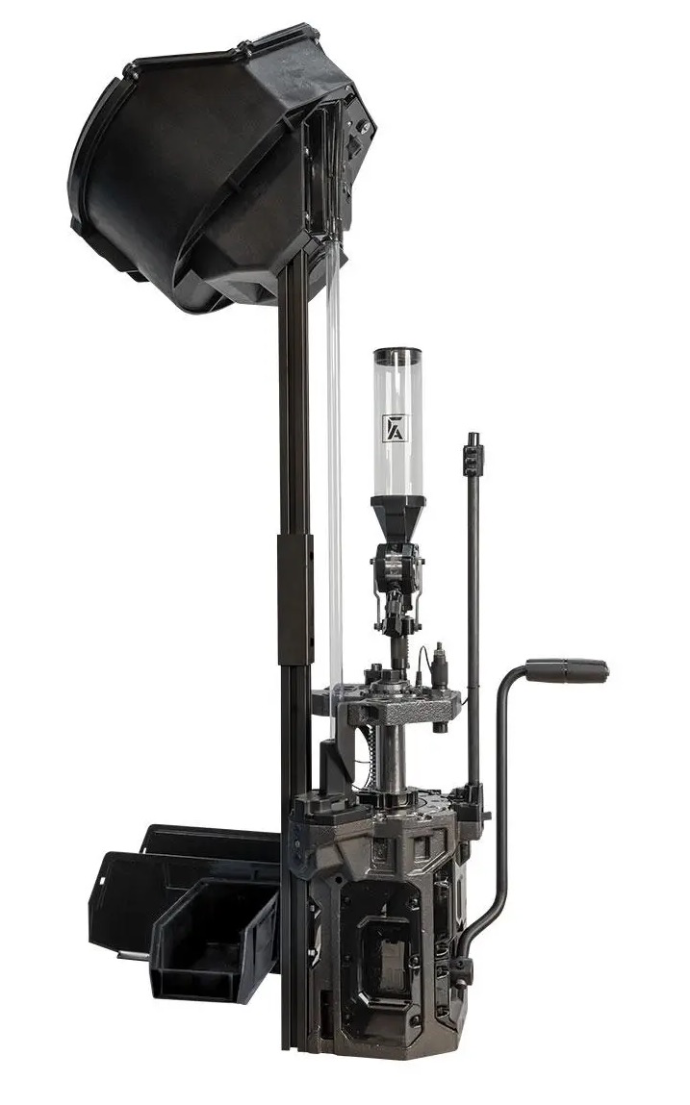
The X-10 landed with a case feeder included at a price point that undercuts comparably equipped competitors by a meaningful margin. It runs on a 10-station platform, uses standard 7/8-14 threaded dies, and ships with enough tooling to start loading pistol rounds out of the box (assuming you supply the dies and components). The question isn't whether it works. The question is how well it works, where the rough edges are, and what you need to know before bolting it to your bench.
This is a first-look breakdown: what's in the box, how setup actually goes, what the specs mean in practice, and where the early user feedback points to real issues versus learning-curve complaints.
Quick summary
The X-10 is Frankford Arsenal's flagship progressive reloading press, built around a 10-station rotating shellplate with an integrated case feeder. It's aimed at volume pistol loaders who want progressive throughput without paying Dillon 750 or Hornady AP money for a comparably equipped setup. The press uses standard dies, accepts aftermarket upgrades from companies like Armanov, and ships with a case feeder and case-actuated powder measure included as a single package.
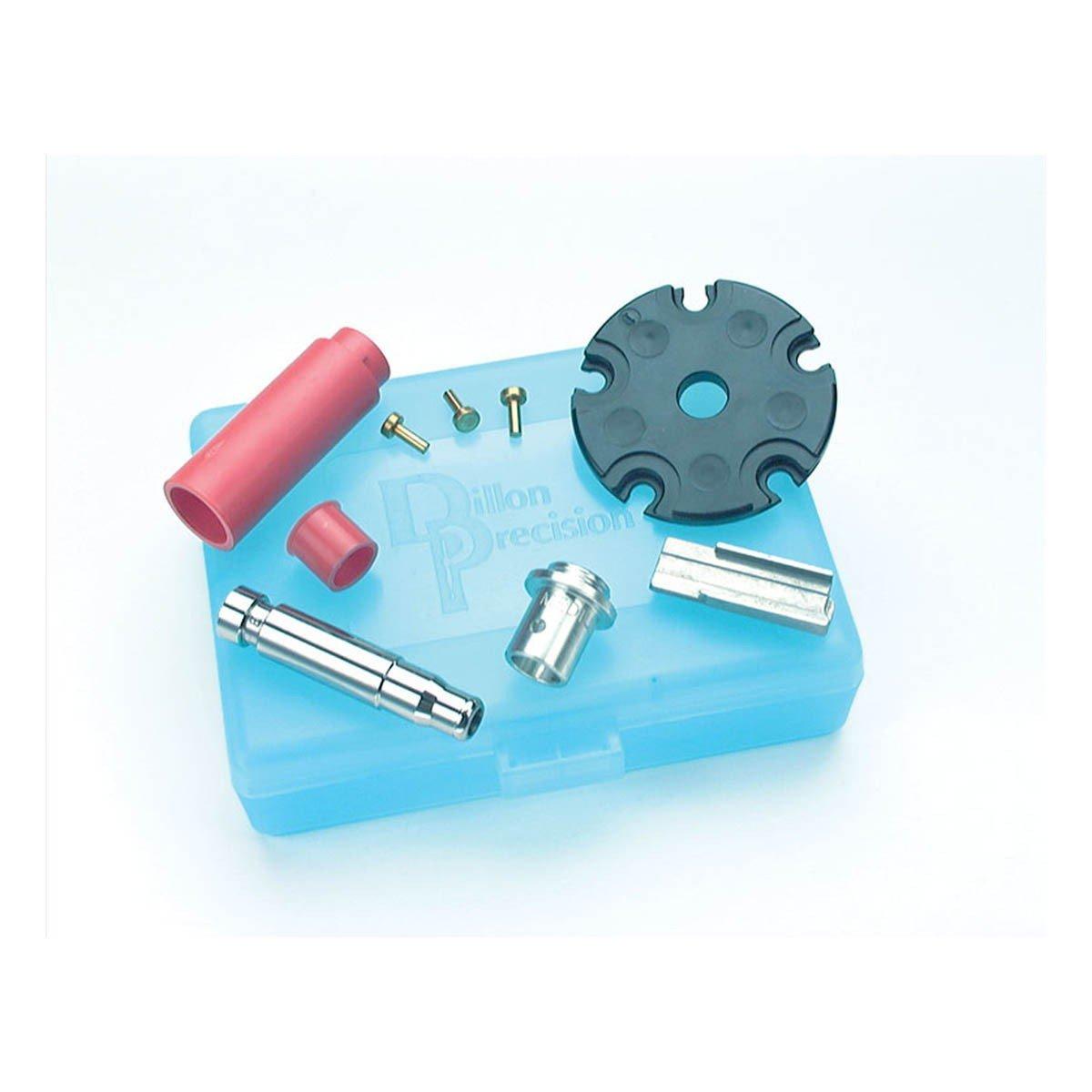
Dillon XL 750 Progressive Press Deals
Prices may change. May contain affiliate links.
Hornady Lock-N-Load AP Progressive Press Deals
Prices may change. May contain affiliate links.
Compared to the current landscape, the X-10 occupies an interesting middle ground. It's more capable than entry-level progressives like the Lee Loadmaster or Frankford's own single-stage offerings, but it's priced below the Dillon XL 750 and Hornady Lock-N-Load AP when those presses are configured with equivalent accessories. The 10-station design gives it more flexibility for adding stations (bullet feeder, powder check die, extra sizing or crimping steps) without running out of room, which is something that matters once you start optimizing a progressive workflow.
The target user is someone loading 9mm, .45 ACP, .40 S&W, or similar pistol cartridges in volume. Rifle loading is possible with the appropriate shellplates and dies, but the press's design and included accessories lean heavily toward pistol work.
Key specs at a glance
The numbers that matter before you start measuring your bench space:
- 10-station rotating shellplate with auto-indexing
- Included case feeder (collator and feed tube assembly)
- Standard 7/8-14 die threading
- Integrated priming system (uses standard primers, not proprietary strips)
- Included powder measure with micrometer adjustment
- Frame material: robust steel build
- Approximate height requirement: 30+ inches of clearance above the bench surface with the case feeder installed
- Weight: roughly 45 pounds fully assembled
- MSRP: $899.99 with the case feeder included
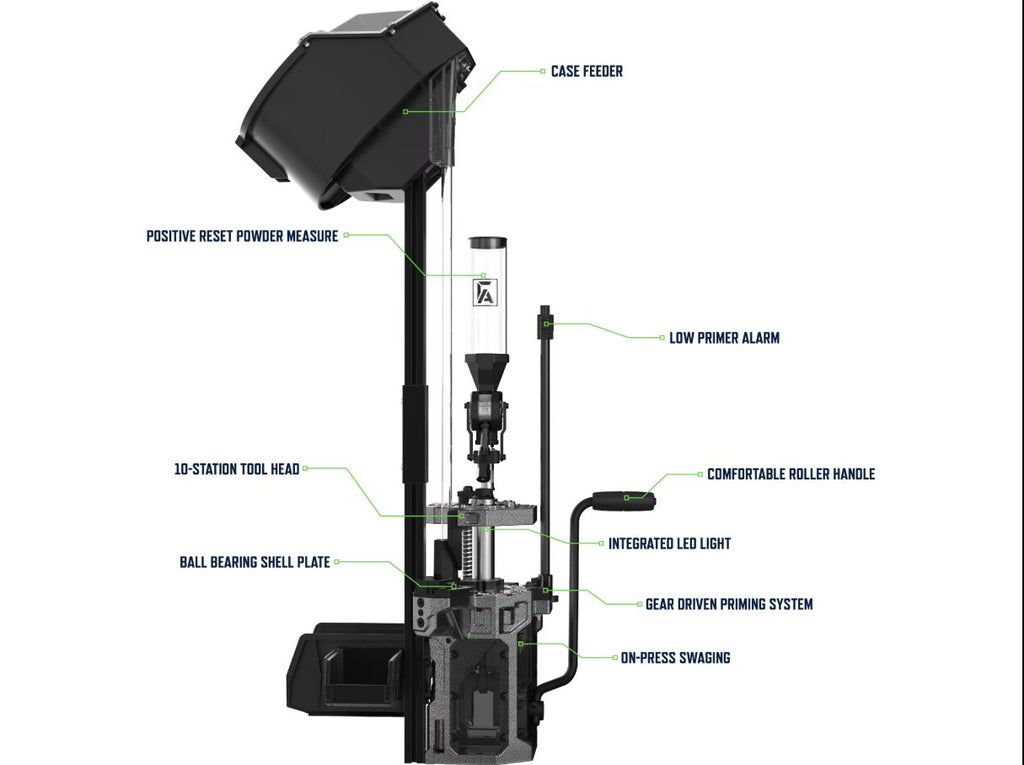
That height requirement is worth flagging early. The case feeder collator sits on top of the press and adds significant vertical footprint. Reloaders with shelving above their bench or a press mounted on a portable stand need to measure before ordering. Several users have reported needing 34-36 inches of total clearance to operate comfortably with the case feeder running.
The MSRP puts the X-10 well below a Dillon XL 750 (which runs around $850 before adding a case feeder at another $370) and roughly comparable to a Hornady Lock-N-Load AP with case feeder, though pricing fluctuates. The included case feeder is the real value differentiator. On competing platforms, that's always an add-on purchase.
What's actually new
The 10-station design is the headline feature, and it's genuinely useful rather than just a marketing number. Most progressive presses run 5 to 7 stations. The Dillon XL 750 has 5 active stations. The Hornady Lock-N-Load AP has 5. The Lee Pro 6000 has 6. Having 10 stations means you can run a sizing die, powder charge, powder check, seating die, and crimp die while still having room for a bullet feeder die and additional stations without needing to combine operations or swap dies between runs.

Frankford Arsenal X-10 Small Primer Tube Kit Deals
Prices may change. May contain affiliate links.
That matters because combined seating-and-crimping in a single die is one of the most common compromises on 5-station presses, and separating those operations almost always improves consistency. With 10 stations, you don't have to make that trade-off.
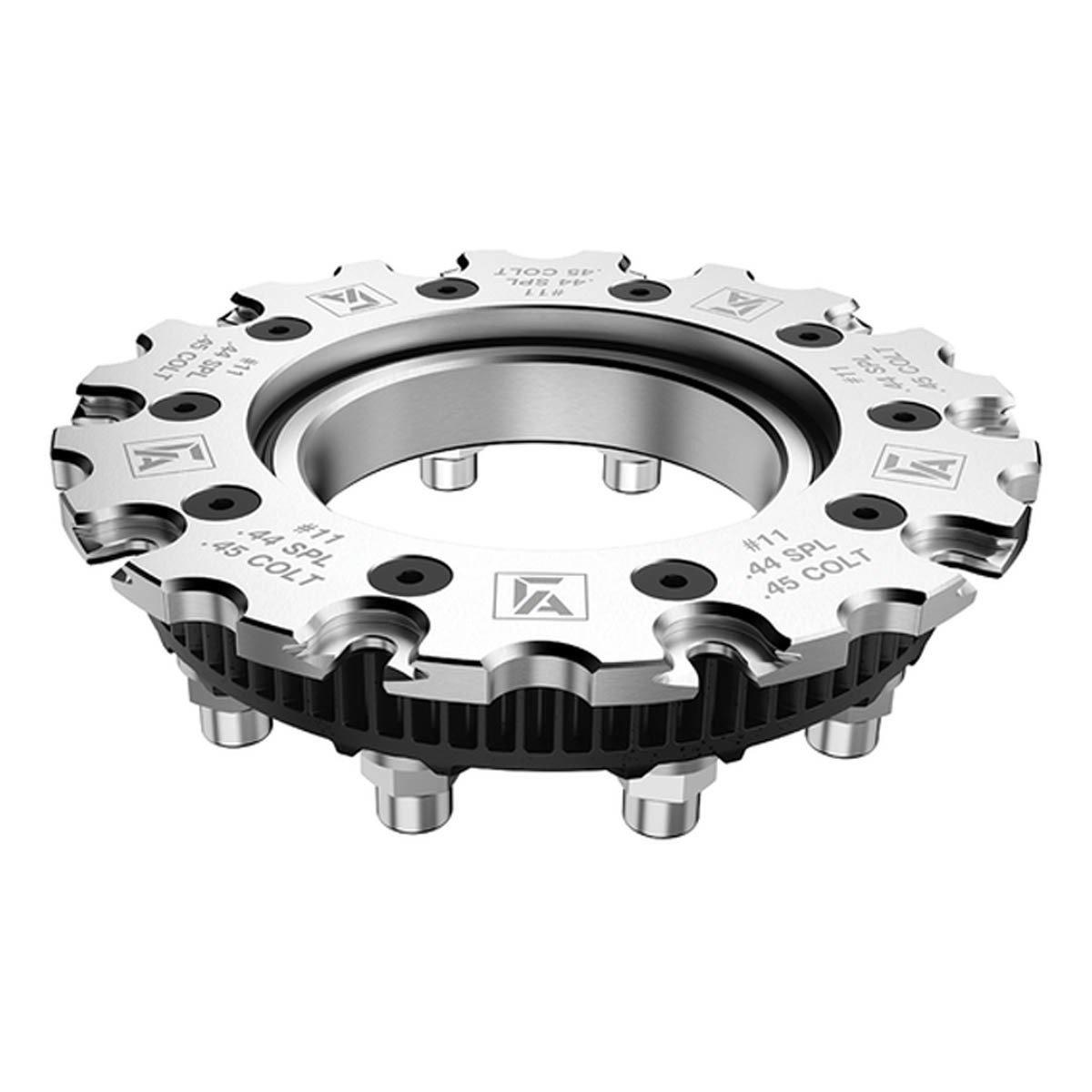
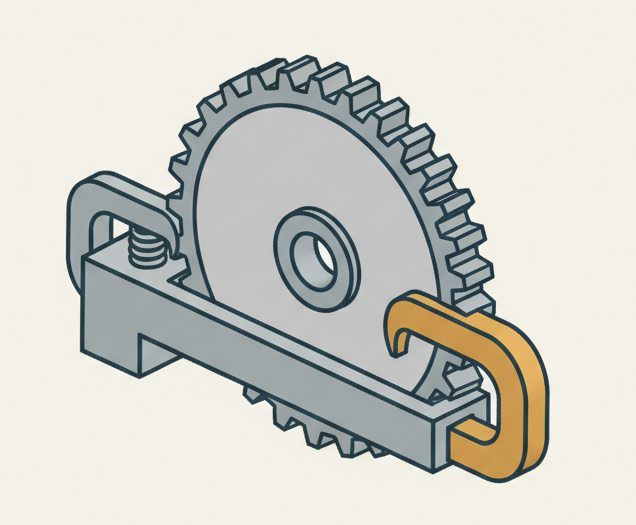
The shellplate design uses a gear-driven rotating system rather than the ball-detent indexing found on Dillon presses. The rotation is driven by the press stroke, and the shellplate advances one station per cycle. Early units had some reports of inconsistent indexing, particularly with the shellplate not locking firmly into position. Armanov now sells a bearing shellplate clamp upgrade specifically for the X-10 that addresses this, which tells you both that the issue is real and that the aftermarket has already responded.
The integrated priming system feeds from primer tubes and seats primers on the downstroke. Frankford Arsenal sells an X-10 Small Primer Tube Kit with 100 primer capacity per tube, available for both small and large primers. The system works, but the feel is different from a Dillon priming system. There's less tactile feedback during the seating stroke, which makes it harder to catch a high primer or an inverted primer by feel alone. This is a common complaint in user reports and something to be aware of during setup and early use.
The powder measure uses a micrometer-style adjustment drum, which is a step up from the basic sliding-bar measures on some competing presses. Throw consistency is reasonable for pistol charges but, like any volumetric measure, it's sensitive to powder type. Ball powders meter more consistently than extruded stick powders. If you're throwing charges of Titegroup or Win 231 for 9mm, expect good consistency. If you're trying to meter Varget for .223, expect more variation.
Intended role
Frankford Arsenal positions the X-10 as a volume pistol press. The marketing materials, included shellplate (typically 9mm/.38 Super/.40 S&W), and case feeder design all point toward a loader cranking out handgun ammunition for range use, competition practice, or stockpiling.
That positioning is accurate. The press excels at high-volume pistol work where you're loading hundreds or thousands of rounds of a single cartridge in a session. The case feeder keeps the workflow moving, the 10 stations let you run every operation separately for maximum consistency, and the auto-indexing means you're pulling the handle and monitoring rather than manually advancing anything.
For rifle cartridges, the press can physically do the work with the right shellplate and dies. But the case feeder isn't designed for bottleneck rifle cases, the powder measure will struggle with the stick powders common in rifle loads, and the lack of fine-tuned neck tension control that comes with bushing dies on a progressive means you're giving up precision. Rifle reloaders chasing sub-MOA accuracy will still want a single-stage or turret press for that work. The X-10 is for volume, not for load development.
Competition shooters loading 9mm minor or .40 S&W major will find the most value here. The ability to set up a complete station layout with sizing, expanding, powder charge, powder check, bullet seating, and crimping as separate operations, plus a bullet feeder if desired, means the press can be configured for a very clean, repeatable workflow that produces consistent ammunition at speed.
Setup: what actually happens
This is where the X-10 experience diverges from the marketing photos. Setup is not a 30-minute process. Plan for an afternoon, especially if this is your first progressive press.
The press mounts to a bench or stand with four bolts. The frame is heavy enough that a flimsy bench will flex, and flex kills consistency on a progressive. Mount it to something solid. A dedicated reloading bench with 3/4-inch plywood top and solid legs is the minimum. A Dillon Strong Mount or similar dedicated press stand works well too.
Shellplate and die installation
The shellplate installs on the ram with a central retaining bolt. Alignment matters here. The shellplate needs to index cleanly into each station, and if it's not seated properly on the ram, you'll get cases that don't align with the dies. Snug the retaining bolt firmly but don't gorilla it. Over-torquing can actually deform the shellplate slightly and cause indexing problems.
Dies thread into the toolhead using standard 7/8-14 threads. The toolhead itself is a separate piece that mounts to the press frame, and you can set up multiple toolheads for different cartridges if you load more than one caliber. Die adjustment follows the same principles as any press: sizing die contacts the shellplate, then back it off slightly and lock the ring. Seating die gets adjusted with a dummy round to the correct overall length. Crimp die gets set separately.
The 10 stations give you room to spread things out. A typical pistol setup might look like: Station 1 for sizing and depriming, Station 2 empty or for case mouth expansion, Station 3 for powder charge, Station 4 for powder check die, Station 5 empty, Station 6 for bullet seating, Station 7 for crimping, and the remaining stations empty or reserved for a bullet feeder. That spacing helps prevent interference between operations and gives you visual access to each step.
Case feeder assembly
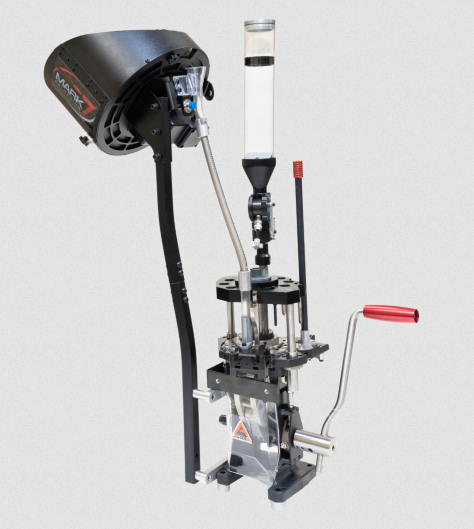
The case feeder is the most involved part of setup. The collator bowl mounts on top of the press via a support bracket, and the feed tube runs down to the shellplate level. The collator uses an electric motor to orient cases and feed them into the tube.
Getting the collator adjusted correctly takes patience. The feed rate, orientation plates, and tube alignment all need to be dialed in for your specific brass. 9mm cases feed differently than .45 ACP cases, and mixed-headstamp brass with slight dimensional variations can cause more feeding issues than single-headstamp lots. Sort your brass if you want the case feeder to run smoothly. This isn't optional advice.
Several users have reported 9mm case jamming in the feed tube, particularly with certain brass brands that have slightly different rim dimensions or case lengths. The fix is usually a combination of adjusting the feed tube angle, ensuring the collator plates are set for the correct case size, and running brass that's been sized and trimmed (if necessary) to consistent dimensions. Unsorted range pickup brass is the most common source of case feeder headaches on any progressive press, and the X-10 is no exception.
Priming system setup
The priming system uses a tray that holds loose primers and feeds them into a shuttle mechanism. Small and large primer setups require swapping the primer punch and feed components. The changeover isn't tool-free on all versions, so have the correct hex keys or wrenches handy.
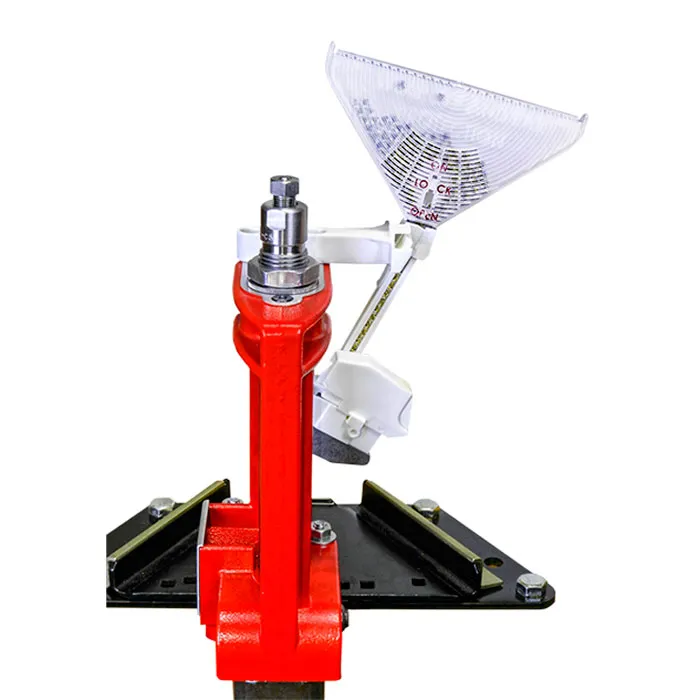
The primer seating depth needs to be set carefully. Primers should be seated flush to slightly below flush with the case head. High primers are a safety issue and a reliability issue. The X-10's priming stroke has less tactile feedback than a Dillon system, so visual inspection of the first 20-30 rounds is critical during initial setup. Check every primer pocket. Once you've confirmed consistent seating depth, you can shift to spot-checking, but the initial verification run is non-negotiable.
Powder measure calibration
The micrometer powder measure needs to be calibrated for your specific powder and charge weight. Set the micrometer to an approximate position based on the reference chart (if included) or start with a conservative setting and weigh throws on a quality scale. Throw 10 charges, weigh each one, and calculate the spread. For pistol loads with ball powder, you should see throw-to-throw variation of 0.1 to 0.2 grains once the measure is broken in and the powder is flowing consistently.
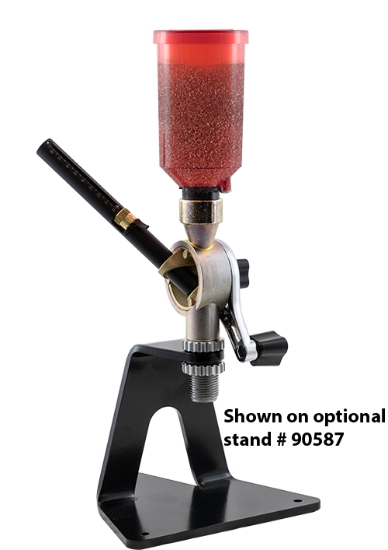
The first 10-15 throws after filling the measure will often be inconsistent as the powder settles. Throw those back into the hopper and start measuring after the powder column has stabilized. This is true of every volumetric measure, not just the X-10's.
Bench notes: what to watch for during first runs
Run the first 50 rounds slowly. One pull of the handle at a time, checking each station's output before advancing. You're looking for:
Cases feeding correctly from the collator into the shellplate. Misfeeds here will jam the press and can damage cases. If you're getting more than one misfeed per 20 cycles, stop and readjust the case feeder before continuing.
Primers seating to consistent depth. Pull a few primed cases and inspect them with a caliper or by feel against a flat surface. The primer should not protrude above the case head.
Powder charges within your acceptable window. Weigh every fifth charge during the first 50 rounds. If your ES on powder throws is above 0.3 grains for a pistol load, something needs adjustment: the measure linkage, the powder baffle, or the operating tempo.
Bullet seating to consistent overall length. Measure the first 10 seated rounds with a caliper. COAL variation of more than 0.005 inches on a pistol cartridge suggests the seating die needs adjustment or the bullets aren't being presented consistently.
Crimp consistency. A roll crimp or taper crimp that varies visibly from round to round means the crimp die station needs attention. Inconsistent crimp affects both feeding reliability and pressure consistency.
Common mistakes with the X-10
Most of the complaints in user forums trace back to a handful of fixable issues rather than fundamental design flaws.
Not securing the shellplate retaining bolt properly is the most common cause of indexing problems. The shellplate needs to be snug but not deformed. If the press is short-stroking or failing to index, check this first before assuming the index mechanism is defective.
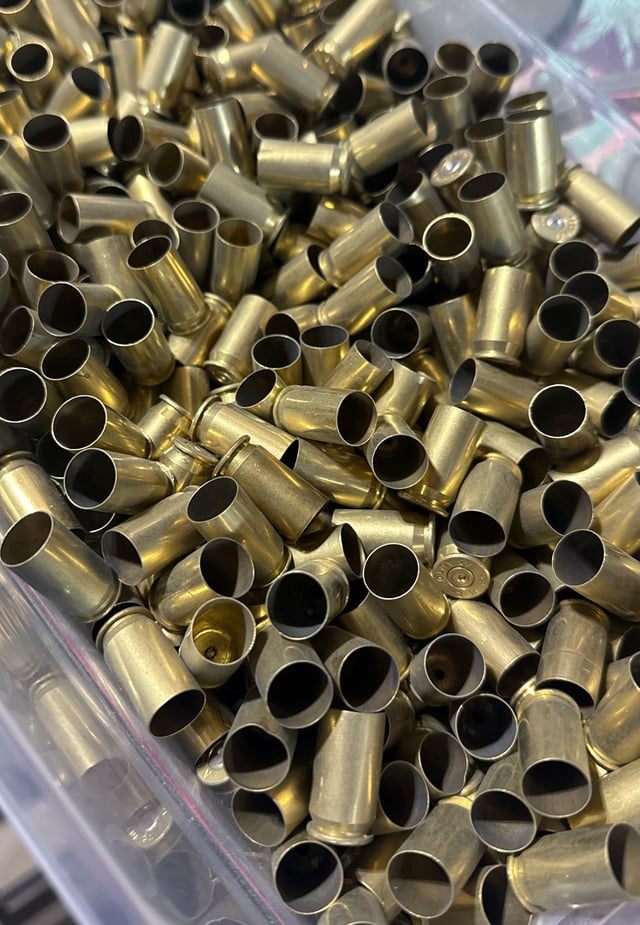
Running unsorted brass through the case feeder causes the majority of feeding jams. Mixed headstamps, corroded cases, cases with dented mouths, and military brass with crimped primer pockets all create problems. Sort and inspect brass before it goes in the collator. The 30 minutes you spend sorting will save you hours of clearing jams.
Skipping the powder measure break-in period leads to inconsistent charges on the first loading session. Every new volumetric measure needs 50-100 throws to wear in the sliding surfaces and establish consistent powder flow. Don't load live ammunition during this break-in. Throw charges into a pan, weigh them, and pour the powder back.
Over-relying on the included tooling instead of upgrading where it matters. The X-10's stock components are functional, but the Armanov bearing shellplate clamp and upgraded index components are widely regarded as worthwhile improvements that smooth out the cycling feel and improve indexing reliability. Budget for at least the shellplate clamp upgrade if you're planning to load in volume.
Not measuring bench clearance before purchase. The X-10 with case feeder installed is tall. Measure your available space. If you're working in a closet reloading setup or under shelving, this press may not physically fit without modifications to your workspace.
How it compares to the competition
Against the Dillon XL 750, the X-10 wins on station count (10 vs. 5) and initial price with case feeder included. The Dillon wins on build quality feel, customer service reputation, aftermarket ecosystem depth, and the decades of progressive press refinement baked into its design. Dillon's lifetime no-BS warranty is also a factor that's hard to quantify until you need it.
RCBS Pro Chucker 7 Progressive Press Deals
Prices may change. May contain affiliate links.
Against the Hornady Lock-N-Load AP, the comparison is closer. Both use standard 7/8-14 dies, both have auto-indexing, and both can be configured with case feeders. The Hornady has a more established track record and the Lock-N-Load bushing system makes die changes faster. The X-10 has more stations and includes the case feeder at purchase.
Against the Lee Pro 6000, the X-10 is a significant step up in build quality and capability. The Lee is a budget progressive that works but requires more fiddling and has tighter tolerances for error. The X-10 is a more serious tool for more serious volume.
The RCBS Pro Chucker 7 occupies a similar mid-tier space but with 7 stations instead of 10 and no included case feeder. It's a solid press with RCBS's typically good build quality, but the X-10 offers more out-of-the-box capability for similar money.
Availability and pricing
The X-10 Progressive Press with Case Feeder is available through major reloading retailers including MidSouth Shooters Supply, various online dealers, and direct from Frankford Arsenal. The standard SKU (1178469) includes the press, case feeder with collator, powder measure, priming system, and one shellplate.

Frankford Arsenal Pistol Bullet Collator Deals
Prices may change. May contain affiliate links.
Frankford Arsenal Caliber Conversion Kit Deals
Prices may change. May contain affiliate links.
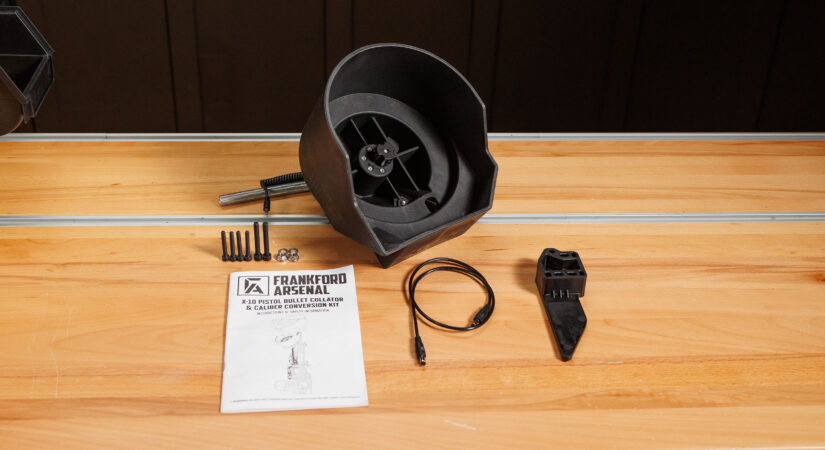
Street pricing has been estimated in the $1,100-$1,200 range by early adopters, with the manufacturer's listed MSRP at $899.99. Additional shellplates for different cartridge families run around $92 each. The bullet feeder system is a separate purchase requiring both the Pistol Bullet Collator at $168.99 and a Caliber Conversion Kit at $196.99, bringing the total bullet feeder investment to approximately $366.
Frankford Arsenal also sells the X-10 index assembly and various replacement parts individually, which is a good sign for long-term supportability. Armanov's aftermarket upgrades (bearing shellplate clamp, upgraded handle, and other components) are available through specialty reloading retailers and Armanov's own site.
Initial thoughts and open questions
The X-10 represents a legitimate entry into the progressive press market from a brand that previously played in the accessories space. The 10-station design is genuinely useful, the included case feeder adds real value at the price point, and the use of standard dies means you're not locked into a proprietary ecosystem.
The concerns are real but mostly addressable. Indexing consistency on stock units varies, and the Armanov shellplate clamp upgrade has become almost standard advice in user communities. The priming system's lack of tactile feedback requires more visual monitoring than a Dillon system. The case feeder needs sorted brass to run reliably, which is true of every case feeder but seems more pronounced here based on user reports.
The open question is long-term durability. Dillon presses have decades of track record. Hornady presses have a generation of users who've put hundreds of thousands of rounds through them. The X-10 is still relatively new, and the cast aluminum frame's longevity under high-volume use hasn't been proven the way a Dillon's cast iron has. The press works. Whether it works as well at round 200,000 as it does at round 2,000 is something only time will answer.
If you're setting one up, here's the protocol: mount it solid, sort your brass, break in the powder measure before loading live rounds, check the first 50 rounds meticulously, and budget for the Armanov shellplate clamp. Do that, and the X-10 is a capable press that can produce consistent pistol ammunition at volume. Skip those steps, and you'll be the next forum post asking why your press keeps jamming. The process matters more than the press. But the press has to hold up its end, and the X-10 appears to do that when it's set up right.