You just spent $700 on a pistol and you're about to cheap out on the thing that lets you identify a threat in the dark. That's the wrong move. A weapon-mounted light isn't a nice-to-have accessory like a flared magwell or a tungsten guide rod. It's the piece of gear that determines whether you can actually use the gun during the hours when violent crime statistically peaks. And yet the pistol light market has gotten so crowded that picking one feels like decoding a spec sheet written by three different marketing departments.

Here's the problem: lumens don't tell you what you think they tell you. Candela matters more than most people realize. Switch ergonomics will affect your shooting more than an extra 200 lumens ever will. And half the lights on the market don't fit half the holsters on the market, which nobody mentions until you've already bought the wrong one. This piece covers every pistol light worth considering right now, organized by size class, with the specs that actually matter laid out side by side.
We're talking full-size duty lights, compacts, subcompacts, and laser combos. Every major player: SureFire, Streamlight, Modlite, Cloud Defensive, SIG Sauer, INFORCE, Nightstick, and Olight. No filler models, no discontinued SKUs, no lights you can't actually buy today.
Lumens vs. candela: the spec that actually affects shooting
Most people shop by lumens. That's backwards. Lumens measure total light output, the entire flood of photons leaving the bezel. Candela measures peak beam intensity at the center, which directly determines how far that light throws a usable spot. A 1,000-lumen light with 20,000 candela will out-identify a target at 50 yards compared to a 1,500-lumen light with 10,000 candela. The high-lumen light might wash a room better, but the high-candela light punches through distance and cuts through ambient light from streetlamps or headlights.
Heckler and Koch VP9L
May contain affiliate links.

Beam distance in meters is derived from candela (roughly the square root of candela times two, following ANSI FL1 standards). So when you see a light rated at 250 meters of beam distance, that's the math telling you where the beam drops to 0.25 lux, about the brightness of a full moon. Usable target identification distance is shorter than that number, usually 60-70% of the rated figure.
Runtime is the other spec people misread. ANSI runtime measures until output drops to 10% of initial. Some lights regulate output flat for most of the runtime and then fall off a cliff. Others start dimming immediately. A light rated at 1.5 hours that holds 90% output for an hour is more useful than one rated at 2 hours that's at half brightness after 20 minutes. The tables below list manufacturer-rated runtime, but keep that caveat in mind.
Full-size duty lights
These are the lights that extend past the muzzle on most compact and full-size handguns. They're heavier, brighter, and have the best switch ergonomics because there's more real estate to work with. If you're running a Glock 17, 19, SIG P320, M&P, or any full-size duty gun and don't care about concealment bulk, this is the category.
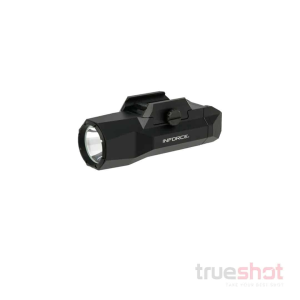
INFORCE WILD2 Deals
Prices may change. May contain affiliate links.
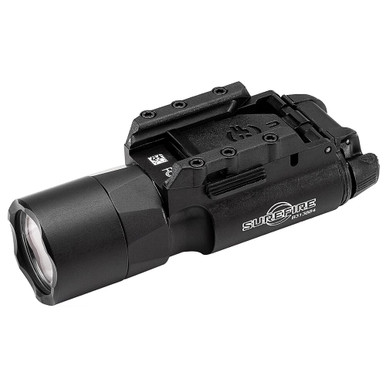
SureFire X300U-A Deals
Prices may change. May contain affiliate links.

Streamlight TLR-1 HL-X Deals
Prices may change. May contain affiliate links.
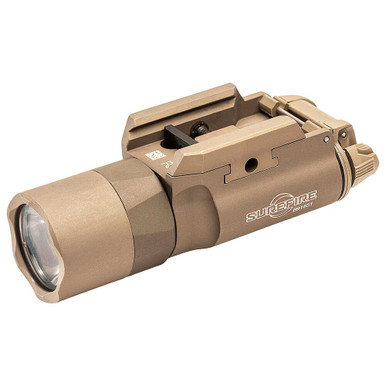
SureFire X300U-B Deals
Prices may change. May contain affiliate links.

Streamlight TLR-1 HL Deals
Prices may change. May contain affiliate links.

SureFire X300T-A Turbo Deals
Prices may change. May contain affiliate links.
May contain affiliate links.
May contain affiliate links.
May contain affiliate links.
May contain affiliate links.
What to read from this table
The SureFire X300U is still the default recommendation, and there's a reason: holster compatibility is unmatched. Nearly every quality holster maker molds for the X300U. The A variant uses a universal rail clamp; the B uses a thumbscrew system optimized for Picatinny and Glock rails. Performance-wise they're identical.

But the X300U's candela is showing its age. At 11,300 candela, it gets outperformed in throw by the Streamlight TLR-1 HL-X (30,000 candela) at almost half the price. The HL-X also accepts an 18350 rechargeable cell, which the SureFire can't do. The TLR-1 HL-X is the best value in the full-size category right now, full stop.
Modlite and Cloud Defensive are playing a different game. The PL350 PLHv3 pushes 69,000 candela with 1,800 lumens, which is a staggering amount of light from a pistol. The OKWv2 hits 115,000 candela with a tighter beam, purpose-built for distance identification. The Cloud Defensive EPL Duty splits the difference nicely at 50,000 candela with better spill than the OKW, and the IPX8 waterproof rating (submersible, not just splash-proof) is the highest in this group. All three run on 18350 rechargeable cells, which is the direction the market is heading.

The Nightstick TWM-30-T Turbo is the sleeper pick. At $170, you're getting 52,000 candela, which puts it in Modlite/Cloud territory for throw. Build quality isn't at that tier, but for a budget-conscious duty setup, it punches way above its price.
The X300T-A Turbo from SureFire is the factory answer to the candela wars: 66,000 candela in the proven X300 body. Holster compatibility stays the same as the standard X300U, which is a huge practical advantage over the Modlite and Cloud bodies that require dedicated holster molds.
The X300V Vampire is a niche tool for night-vision users. If you're not running NODs, skip it.
Compact lights
These lights sit roughly flush with the muzzle on compact and full-size guns, and they're the go-to for concealed carry because they don't add significant length to the holster. The trade-off is less output and smaller switches.
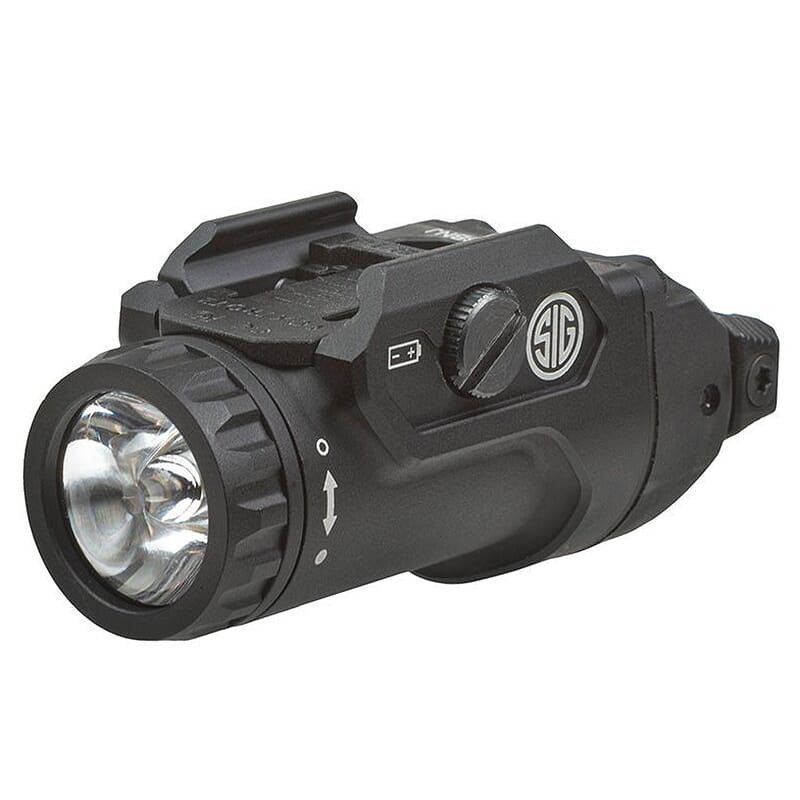
SIG Sauer Foxtrot2R Deals
Prices may change. May contain affiliate links.

SureFire XC3 Deals
Prices may change. May contain affiliate links.
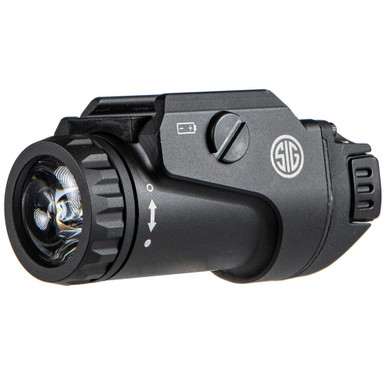
SIG Sauer Foxtrot1X Deals
Prices may change. May contain affiliate links.

Fit and feel
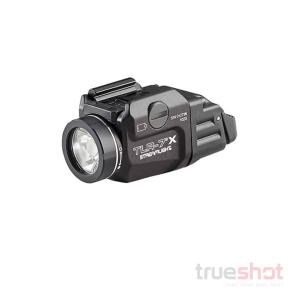
The Streamlight TLR-7 HL-X is the compact light to beat right now. 800 lumens and 28,000 candela from a body that tucks flush with a Glock 19 slide is remarkable. The 18350 rechargeable option means you stop buying CR123As, and the switch has the same rear-paddle ergonomics as the TLR-7A that thousands of shooters already have muscle memory for. The original TLR-7A Flex remains the budget king in this class. Its 500 lumens and 14,000 candela are perfectly adequate for indoor distances, and the included high/low rear switch paddles let you tune the activation to your grip.
May contain affiliate links.

The Modlite PL350 Compact squeezes duty-light performance into a compact body. 30,000 candela is more than the full-size TLR-1 HL, which is wild for something this small. The trade-off is a 45-minute runtime, so keep spare cells.
SIG's Foxtrot2R is interesting because of USB-C charging built into the body. No proprietary cables, no magnetic pucks. 900 lumens and 20,000 candela are solid numbers. The holster ecosystem is still developing, though, which limits its practical appeal for carry.
The Nightstick TCM-10-T Turbo at $120 throws 38,000 candela. For a compact light at that price, the distance performance is absurd. Flood is narrower because of the turbo reflector, so it's a trade-off, but if you want to reach out to 40+ yards from a compact gun, it's hard to argue with the value.
Olight's PL-3S and PL-X are the most affordable compacts with rechargeable batteries. The magnetic charging is love-it-or-hate-it. The IPX6 rating (powerful water jets, not submersion) is a step below the IPX7 on every Streamlight and SureFire. For a nightstand gun that doesn't see rain, that's fine. For duty or outdoor carry, it's worth thinking about.
Subcompact lights
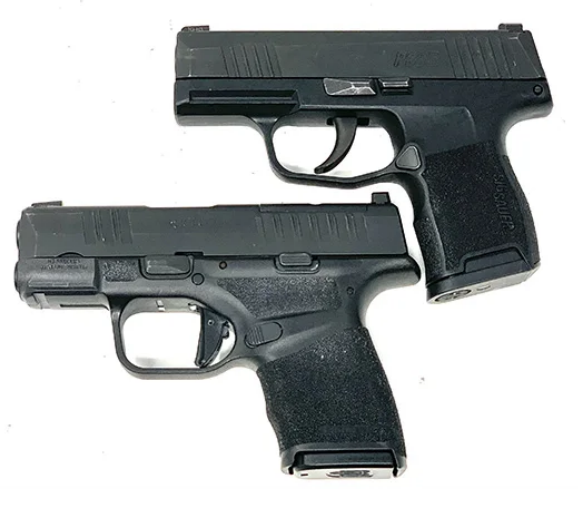
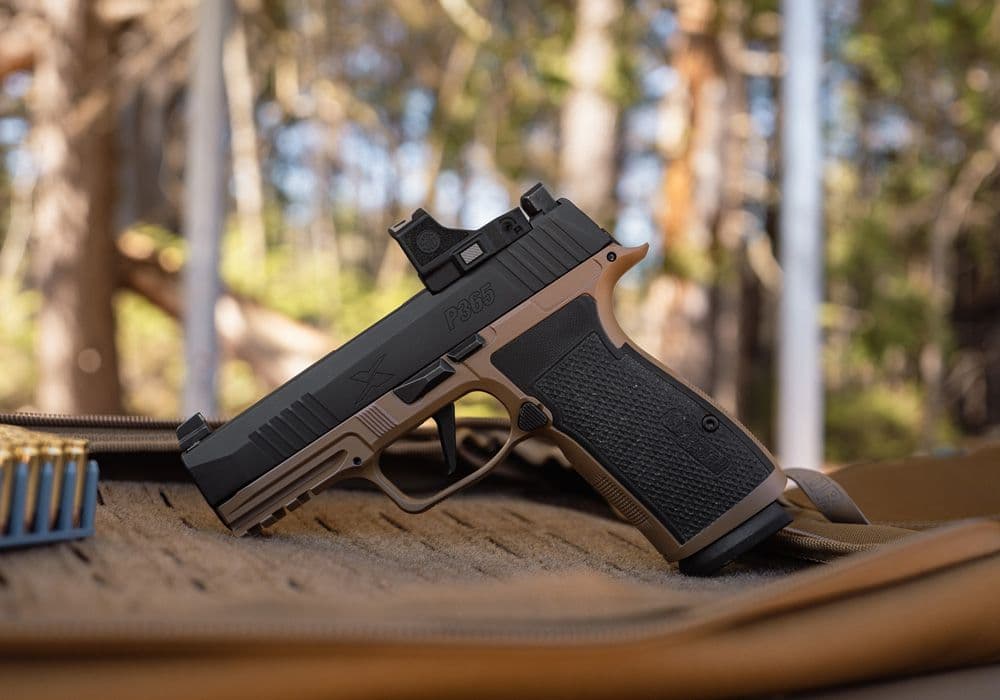
These are built for micro-compact carry guns: Glock 43X, SIG P365, Springfield Hellcat, S&W Shield Plus, and similar. The rail slots are shorter, the grip is shorter, and every fraction of an ounce matters because you're carrying this thing every day.

Streamlight TLR-7 HL-X Sub Deals
Prices may change. May contain affiliate links.


Streamlight TLR-7 Sub Deals
Prices may change. May contain affiliate links.
May contain affiliate links.
May contain affiliate links.
Springfield Hellcat
May contain affiliate links.
Smith & wesson S&W Shield Plus
May contain affiliate links.
May contain affiliate links.

What you'll notice
The subcompact market is thinner than you'd expect. The Streamlight TLR-7 Sub has become the de facto standard because it ships with model-specific rail inserts for Glock 43X/48 MOS, SIG P365XL, Hellcat, and others. Holster support is excellent. The newer TLR-7 HL-X Sub bumps candela to 25,000 and adds 18350 compatibility, which is a significant upgrade in a body that's barely larger.
The SIG Foxtrot365XR only fits SIG's proprietary P365 rail. If you carry a P365, it's a clean, low-profile option. If you carry anything else, it doesn't exist for you.
Nightstick's TCM-365 and TCM-5B are the budget options. At $90, they're half the price of the Streamlight Sub. Output is decent. Build quality is acceptable but not confidence-inspiring for hard daily carry. They work well on a home-defense micro-compact that lives in a quick-access safe.
The Olight Baldr S technically belongs in the laser combo section too, since it integrates a green laser. It's listed here because its form factor is subcompact-specific. The 0.75-hour runtime on the built-in battery is the shortest in this class, so keep the magnetic charger handy.
Laser combo lights
If you want a visible laser integrated with your light, the options are more limited than the pure-light market. Green lasers are far more visible than red in daylight. Every model here uses green unless noted.

SureFire X400U Deals
Prices may change. May contain affiliate links.

Streamlight TLR-8 A G Deals
Prices may change. May contain affiliate links.

The SureFire X400U is the legacy option. It's heavy, expensive, and the laser module adds bulk. Holster compatibility drops compared to the X300U because of the wider profile. Unless you specifically need a SureFire-quality laser combo for duty, the Streamlight TLR-8 series does the same job in a smaller, lighter, cheaper package.
The TLR-8 X is the updated version of the TLR-8 A G with slightly better candela and the newer X-series body. Both use a single CR123A, both integrate a green laser that's easily zeroed with the included tools. The rear paddle switch lets you select light-only, laser-only, or both. These are the most practical laser combos on the market for concealed carry.
Olight's Baldr Pro and Baldr Pro R are the highest-lumen laser combos available. The "R" variant adds a rail-clamp adjustment for easier installation. At $160-170 with rechargeable batteries, they're significantly cheaper than the SureFire X400U. The IPX6 rating is the same caveat as other Olights.
Common mistakes and how to avoid them
The number-one mistake is buying a light before checking holster availability. A Modlite PL350 is an incredible light, but if your holster maker doesn't mold for it, you're either switching holsters or switching lights. SureFire X300U and Streamlight TLR-7A/TLR-1 HL have the deepest holster support. Cloud Defensive EPL support is growing fast but isn't universal yet. Olight holster options exist but are concentrated in the budget tier.
Second mistake: ignoring switch ergonomics. A toggle switch (SureFire, Olight) requires you to push the paddle forward or down. A rear paddle (Streamlight) activates with your support-hand fingers wrapping around the trigger guard. Neither is objectively better, but you need to pick one and train with it. Mixing switch types between guns creates confusion under stress.

Third: chasing lumens over candela for outdoor or mixed-environment use. If you're only using the light inside your house at 3 AM, 500 lumens with modest candela is plenty. If you're walking to your car in a parking garage and need to identify someone at 30 yards, candela is what gets you a clear picture of their hands.
Fourth: skipping the zero check on laser combos. Green lasers drift. Every laser combo needs to be confirmed at your chosen zero distance (usually 10-15 yards) before you trust it. They also need periodic re-checks, especially after the light takes any impact.
Fifth: not testing runtime yourself. Put a fresh battery in, turn the light on high, set a timer, and see when it dims noticeably. Manufacturer ratings are measured in controlled lab conditions at room temperature. Cold weather, older batteries, and rechargeable cells past their prime all shorten real-world runtime.
The holster question nobody talks about
Nobody talks about this, but holster fit is the single biggest practical constraint on light selection. The aftermarket has standardized around a few light bodies: SureFire X300U, Streamlight TLR-1 HL, Streamlight TLR-7A, and Streamlight TLR-7 Sub. If you pick one of those four, you'll have dozens of holster options from Tier 1, Safariland, T.REX Arms, PHLster, and others. The Cloud Defensive EPL Duty and Modlite PL350 are gaining support rapidly, but you'll still find fewer options, especially for less common pistol models.

Olight holster availability has improved, particularly the PL-Mini and Baldr series, but it's mostly concentrated among mid-tier holster makers. If you want a Safariland ALS duty holster with an Olight, your options are extremely limited.
The takeaway: pick your holster maker first, check what lights they support for your specific gun, then buy the light. Doing it the other way around leads to frustration and wasted money.
Rechargeable vs. disposable: the shift is real
The industry is moving to 18350 rechargeable cells. Modlite, Cloud Defensive, and now Streamlight's HL-X series all support them. The advantages are obvious: lower long-term cost, consistent voltage curves, and you stop stockpiling CR123As. The disadvantage is that rechargeable cells degrade over time (expect 300-500 full charge cycles before noticeable capacity loss) and they require you to actually maintain a charging routine.

Olight's built-in rechargeable batteries are a different approach. You can't swap the cell in the field. If the battery dies during a class or, worse, during an emergency, you're done until you find a magnetic charger or USB cable. For a nightstand gun, that's manageable. For a duty gun or a carry gun you depend on daily, user-replaceable cells are the better architecture.
SureFire still runs on CR123A disposables across the X300 line. That's increasingly looking like a legacy decision rather than a deliberate advantage, but there's something to be said for grabbing two CR123As at any gun store in America and being back in business. No charger, no cable, no waiting.
What to do next
Mount the light you chose and dry-fire with it for a week before you go to the range. Practice activating the switch from your normal grip without shifting your hands. If you have to break your grip to reach the switch, the light is wrong for your hand size or the switch type doesn't suit your pistol's trigger guard geometry. This matters more than any spec on a table.
Run a simple drill at the range: at 7 yards, draw and fire two rounds with the light on, then two rounds light off, and compare your splits and group sizes. The light shouldn't slow you down. If it does, the switch needs adjustment or you need more dry-fire reps. Then push to 15 and 25 yards in low light if your range allows it. That's where candela differences become visible and where you'll see whether your light actually lets you identify what you're pointing at.

Swap batteries or charge cells on a set schedule. Once a month for a carry gun, once a quarter for a nightstand gun. Don't wait for the light to dim. By the time you notice reduced output, you've been carrying a compromised tool for who knows how long. Log your battery changes the same way you log range trips. The light is part of the weapon system, not an afterthought bolted onto the rail.