ou threaded a new muzzle device onto your 16-inch AR, fired five rounds, and now you're either grinning or questioning every decision that led to this moment. That's the thing about muzzle devices; they're one of the cheapest parts on the rifle and one of the few that change how the gun actually feels every single shot. And yet most people either leave the factory A2 on forever or pick something based on looks and brand loyalty.
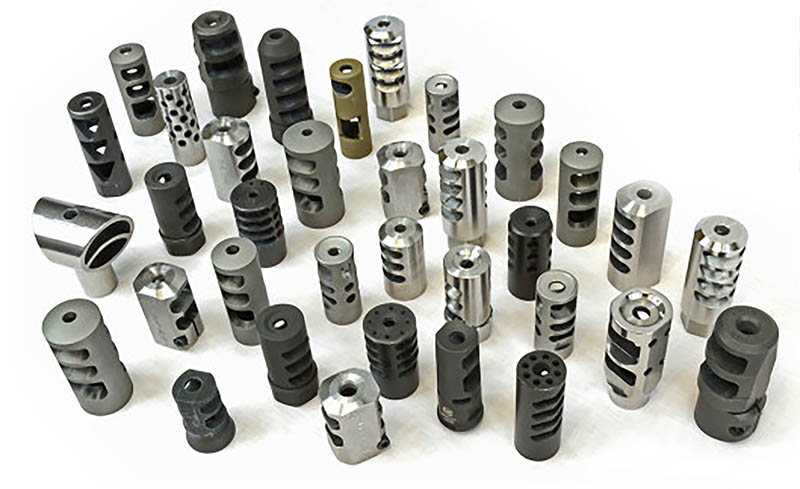
Here's what this covers: flash hiders, compensators, and brakes; how each one works on a 16-inch 5.56 barrel specifically, what the tradeoffs really are, and which devices are worth bolting on right now. Not a survey of every muzzle device ever made. One barrel length, one cartridge, three device families, and the physics that connect them.
The 16-inch barrel matters here more than people think. Dwell time, the distance the bullet travels past the gas port before exiting the muzzle, is substantially longer on a 16-inch barrel than on a 10.5 or 11.5. That means the bolt is already unlocking and the action is cycling before the bullet clears the crown. The gas system has done its job. So anything happening at the muzzle is purely about managing what's left: unburnt powder, expanding gas, felt recoil impulse, and muzzle rise. On a short barrel, a muzzle device has to fight harder because there's more unburnt powder and more violent gas dynamics. On a 16-inch gun, the differences between device types get more subtle, but they're still real, and they still show up on a shot timer.
How each device type actually works
The three categories aren't marketing inventions. They redirect gas in fundamentally different ways, and understanding the mechanics keeps you from buying the wrong thing.
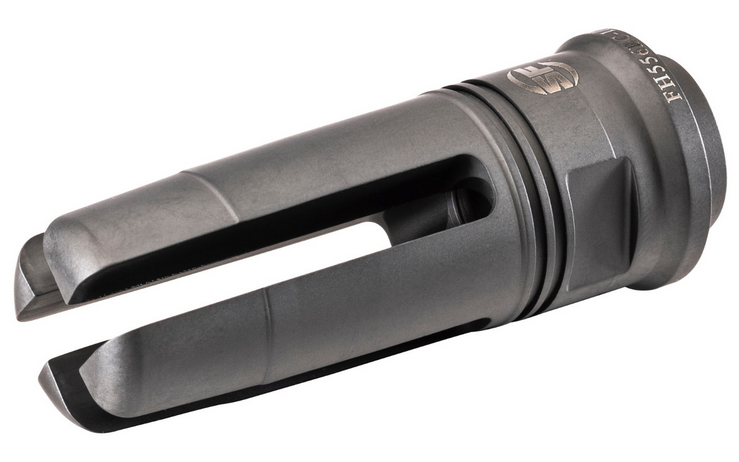
A flash hider's job is simple: mix the hot, unburnt propellant gases with ambient air as quickly as possible so they cool below their ignition temperature before they can produce a visible fireball. The classic A2 birdcage does this with a ring of slots cut into a cylindrical housing. Gas exits through the slots, turbulence mixes it with cool air, and the flash signature drops dramatically compared to a bare muzzle. The prong-style flash hiders, three-prong and four-prong designs, take this further by eliminating the solid bottom section of the A2, allowing gas to disperse in all directions. The tradeoff is that prong-style hiders can ring like a tuning fork when struck, and they're slightly more prone to snagging on gear or barricades.

Surefire Three-Prong Flash Hider Deals
Prices may change. May contain affiliate links.
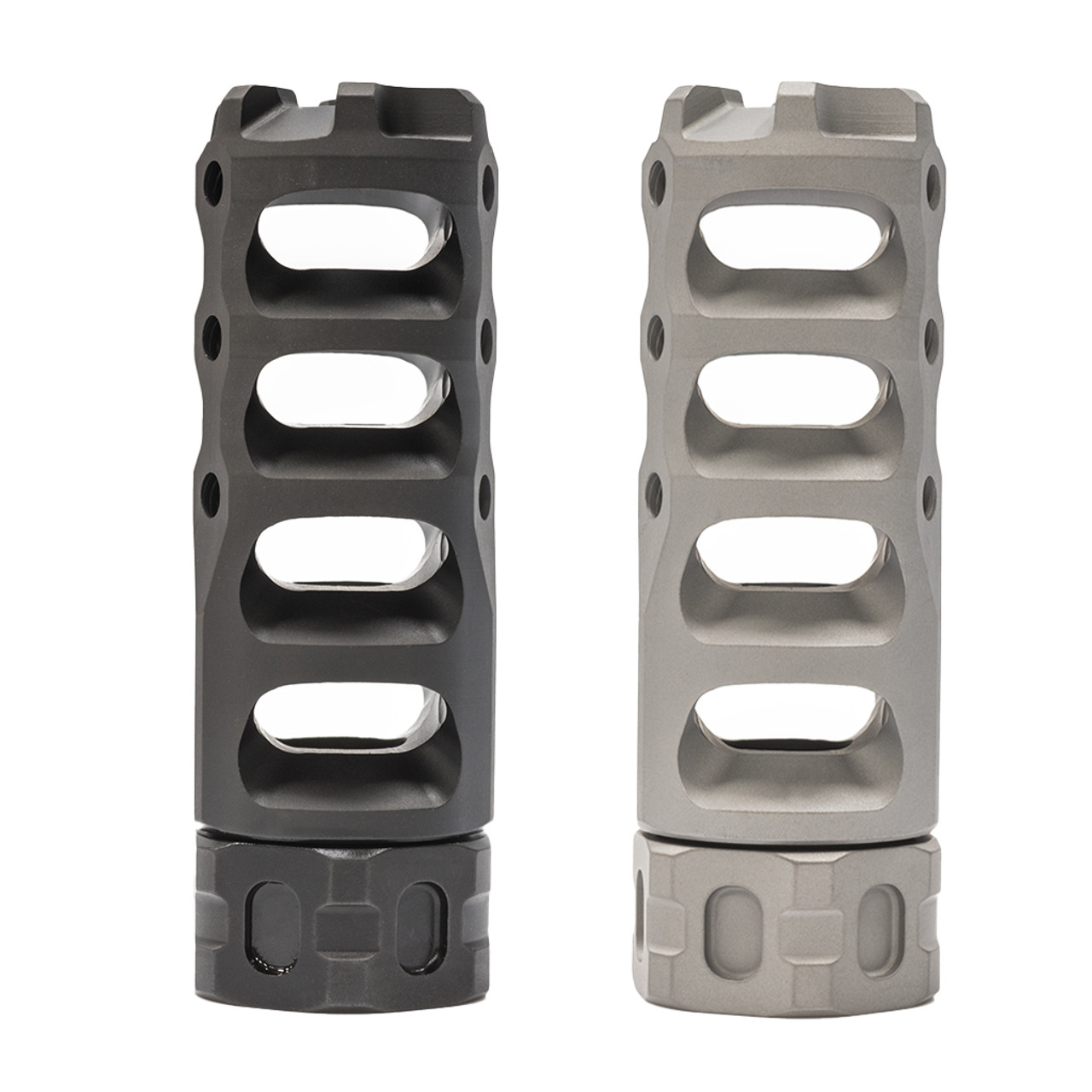
A compensator redirects gas upward through ports cut into the top of the device. When gas jets upward, Newton's third law pushes the muzzle down. The goal is to counteract muzzle rise, the tendency of the barrel to climb during recoil because the bore axis sits above the shooter's shoulder. A well-designed comp keeps the dot or irons tracking flat, which means faster follow-up shots. The cost: gas blasting upward can kick up dust from a prone position, and the flash signature is usually worse than a dedicated flash hider because the gas isn't being cooled, it's being redirected.
A muzzle brake uses baffles or ports angled to the sides (and sometimes rearward) to counteract rearward recoil impulse. The gas hits the baffle faces and pushes forward against them, which pulls the rifle forward and reduces the felt kick into your shoulder. Brakes are the most effective devices for raw recoil reduction. They're also the loudest, the most concussive to anyone standing beside you, and the most likely to get you dirty looks at an indoor range. On a 5.56 rifle, where recoil is already mild, a brake is solving a problem most shooters don't actually have, but there are specific situations where it still makes sense.
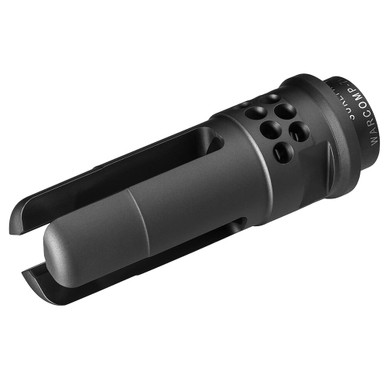
Worth knowing: plenty of modern devices blend these functions. The SureFire WARCOMP, for example, has flash-hiding prongs and compensating ports. These hybrids are popular because they offer moderate performance across multiple categories rather than excelling at one. Whether that compromise works depends entirely on what you're trying to optimize.
What a 16-inch barrel changes about the equation
Most muzzle device discussions ignore barrel length, which is a mistake. The physics shift meaningfully between a 10.5-inch pistol and a 16-inch rifle.
On a 16-inch barrel with a mid-length gas system, you're getting roughly 2,950 to 3,050 fps out of standard 55-grain M193 ammunition. The powder charge is mostly consumed. Compare that to a 10.5-inch barrel where you might see 2,600 fps and a significantly larger fireball of unburnt propellant. The flash-hiding problem on a 16-inch gun is already partially solved by barrel length alone. A bare 16-inch muzzle produces less flash than a bare 10.5-inch muzzle, full stop. That means even a basic A2 flash hider does a surprisingly good job on a 16-inch gun. The marginal gain from upgrading to a premium three-prong hider is real but smaller than it would be on a short barrel.
Recoil tells a similar story. A 16-inch AR-15 in 5.56 generates somewhere around 4 to 5 ft-lbs of free recoil energy. That's nothing. A 12-gauge shotgun is in the 30-40 ft-lbs range. So when someone bolts a massive two-chamber brake onto a 16-inch 5.56 and reports "dramatically reduced recoil," what they're actually feeling is a reduction from almost nothing to slightly less than almost nothing. The real benefit of a brake on this platform isn't about your shoulder, it's about keeping the rifle dead flat for fast splits. And honestly, a comp does that job almost as well on 5.56 without the concussion penalty.
Where the 16-inch barrel does create a meaningful muzzle device decision is the suppressor question. If you're planning to run a can, or even thinking about it for the next year or two, your muzzle device choice right now is really a suppressor mount choice. Dead Air's Xeno system, SureFire's three-prong mount, the HUXWRX (formerly OSS) thread interface, these all require specific muzzle devices. Picking the wrong flash hider today means buying a second muzzle device tomorrow when your Form 4 clears.
Flash hiders: the default for a reason
The A2 birdcage has been the standard flash hider on military and civilian ARs for decades, and the weird thing is... it's actually good. Testing consistently shows the A2 eliminates around 80-85% of visible flash signature compared to a bare muzzle. On a 16-inch barrel where flash is already reduced, that gets you to near-zero visible flash in most lighting conditions. The A2 also acts as a mild compensator because the bottom of the birdcage is solid, gas only exits from the top and sides, creating a slight downward bias. It's not dramatic, but it's measurable.
The three-prong flash hider design, used on the original M16 and revived by companies like SureFire, HUXWRX, and others, typically outperforms the A2 in raw flash reduction by another 5-10%. The open prong design disperses gas more evenly. The classic complaint about three-prong hiders is the tuning fork ring, strike the prongs against a barricade or doorframe and they'll sing. Some manufacturers have addressed this with asymmetric prong spacing or internal modifications that dampen the resonance.
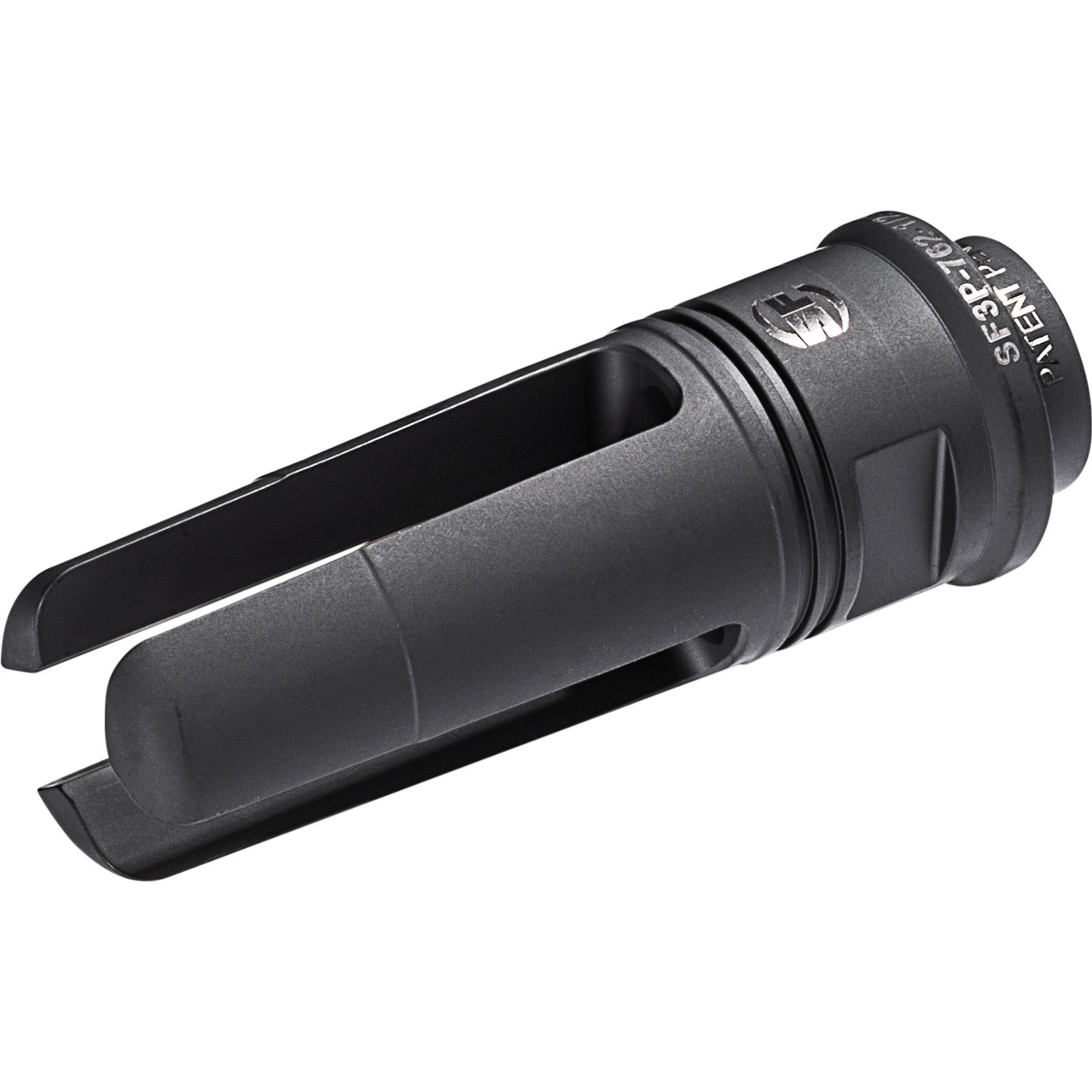
The four-prong design splits the difference. More prongs means each one is thinner, which can reduce the ringing issue while maintaining excellent flash performance. The SureFire four-prong (SF4P) has become a go-to for people who want maximum flash suppression and a suppressor mount point.
Fit and feel
Screwing on an A2 versus a three-prong, the first thing you'll notice is weight, or rather, the lack of difference. Most flash hiders weigh between 2 and 3 ounces. You're not changing the balance of the rifle. What you will notice is the change in muzzle blast direction. An A2 pushes gas slightly upward and to the sides. A three-prong disperses it more evenly. Shooting next to a wall or barricade, the A2's closed bottom means less gas bouncing back at you from below. Small thing, but it matters in competition stages or classes where you're working tight cover.
Sound-wise, flash hiders are the quietest muzzle device category at the shooter's ear. They're not reducing decibels in any meaningful way, they're just not amplifying the blast pattern toward the shooter or bystanders the way a brake does.
The honest take on flash hiders for a 16-inch 5.56: unless you're shooting exclusively in daylight and never plan to suppress the rifle, a flash hider is the most sensible default. The A2 is free (it came with the rifle). A quality three-prong is a genuine upgrade but not a transformative one at this barrel length.
Compensators: the split-time optimizer
Comps are where things get interesting for people who actually track their performance. A compensator's job is to fight muzzle rise, and on a 16-inch 5.56, muzzle rise is the primary "problem" a muzzle device can realistically address. Recoil is already low. Flash is already manageable. But the muzzle still climbs, and that climb is what determines how quickly you can get back on target for a second shot.
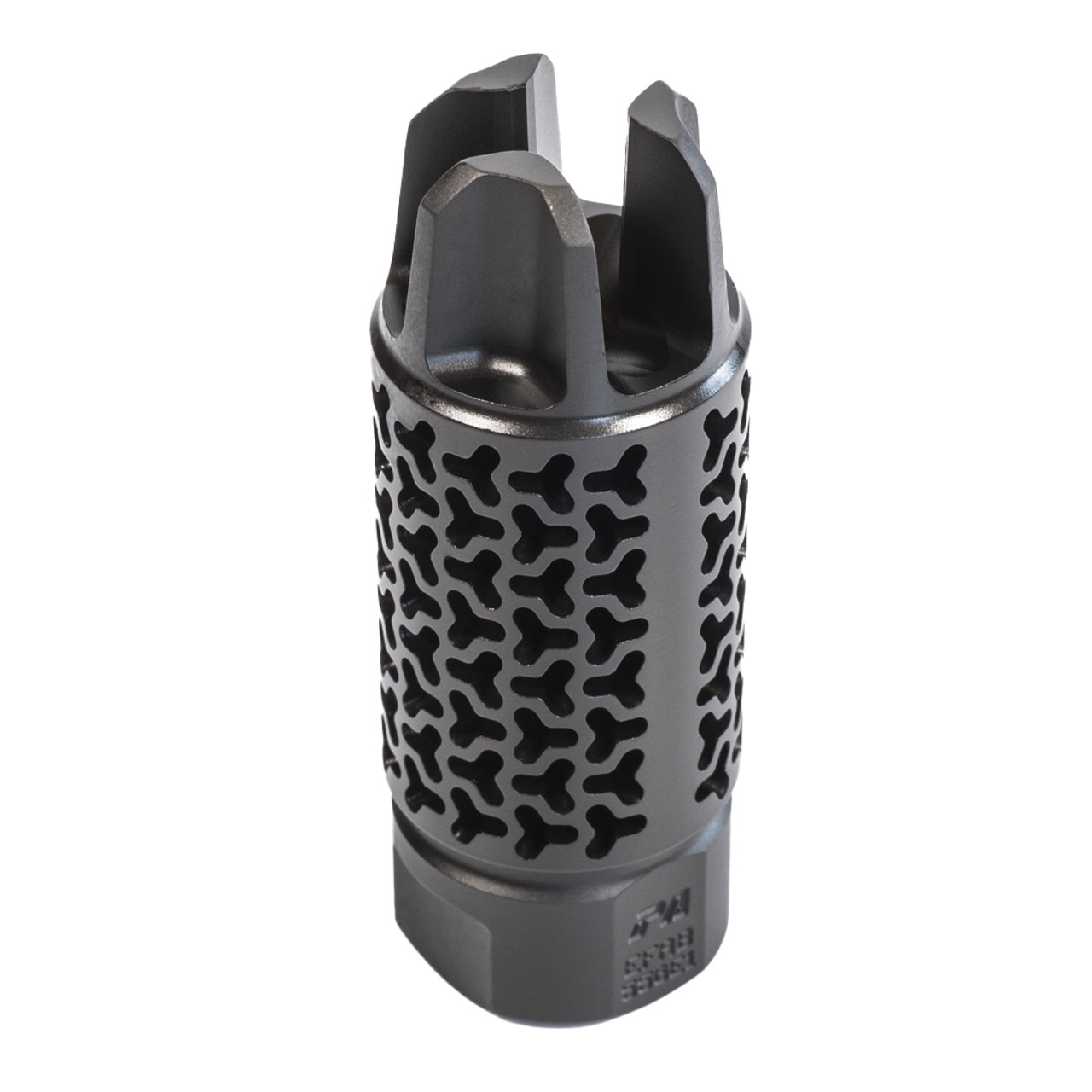
A typical comp has ports machined into the top of the device. When the bullet exits and high-pressure gas follows it, some of that gas gets diverted upward through the ports. The upward gas jet pushes the muzzle down. The more gas you redirect, the flatter the rifle shoots. Simple enough in theory, the execution is where designs diverge.
Single-port comps are the most common. One row of holes or slots across the top. They work, but the effect is moderate on 5.56 because there's less gas energy to work with compared to .308 or 6.5 Creedmoor. Multi-port designs stack two or three rows of ports along the length of the device, giving the gas multiple exit points and extending the duration of the downward force. These are more effective but also longer and heavier.
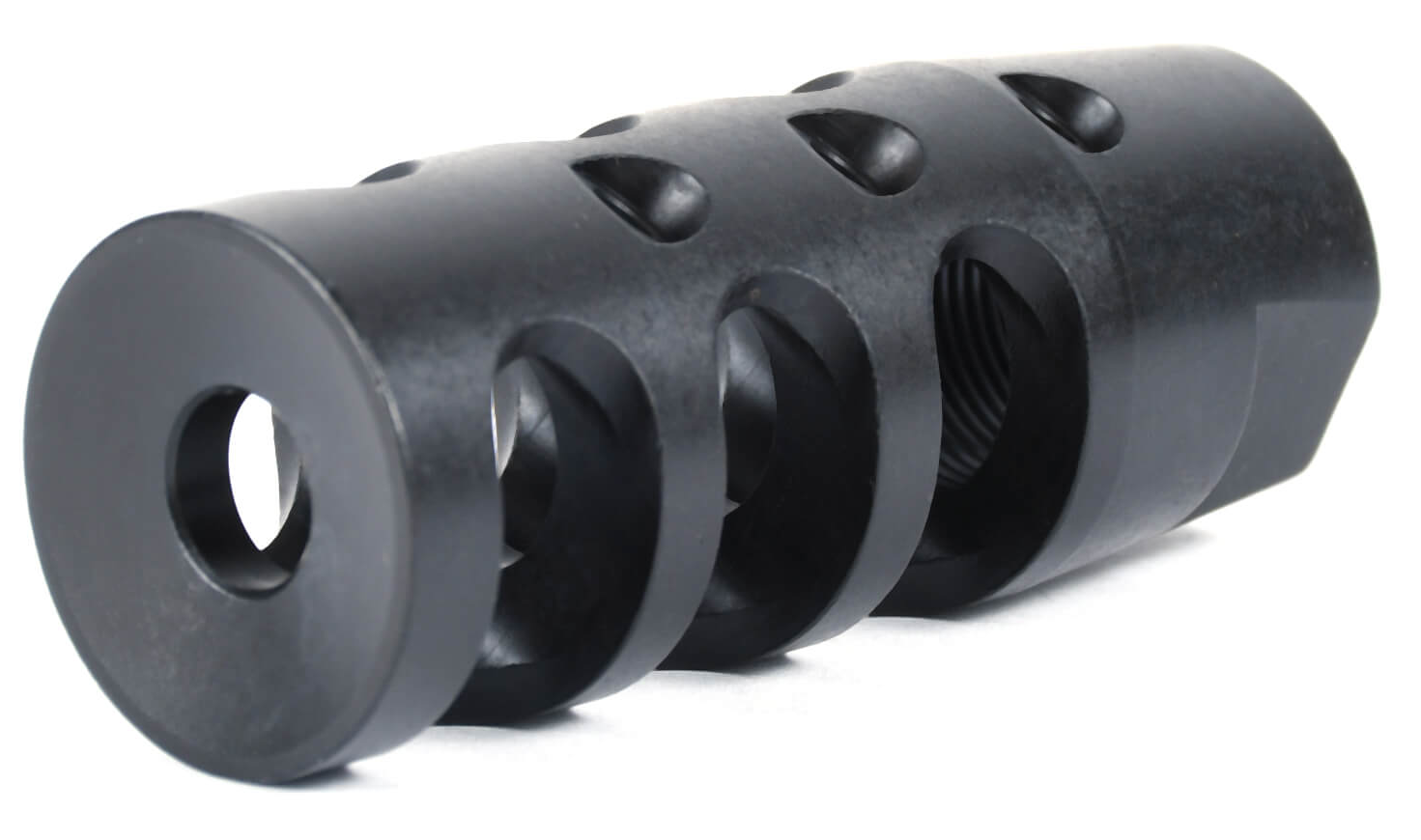
Some comps add side ports to bleed gas laterally, which helps with recoil reduction (a brake function) without directing blast rearward toward the shooter. This hybrid approach is increasingly common and honestly makes a lot of sense on 5.56. You're not generating enough recoil to need a dedicated brake, but capturing some of that lateral gas energy on top of the vertical compensation gives you a noticeably flatter shooting experience.
The spec that actually affects shooting: port angle. Ports angled slightly rearward are more aggressive, they push harder against muzzle rise but also increase perceived concussion. Ports angled straight up are gentler. Most manufacturers don't publish exact port angles, so you're relying on user reports and testing to sort this out.
Nobody talks about this, but comp performance changes with ammunition. A comp tuned for the gas volume of M193 ball might feel different with 77-grain OTM loads, which typically use different powder charges and produce different pressure curves. The difference isn't huge on a 16-inch gun, but if you're chasing the last few hundredths off your split times, consistency in ammo selection matters.
Where comps fall short
Flash suppression. Most comps do almost nothing for flash, and some actively make it worse by creating turbulent gas patterns that burn more visibly. If you're shooting in low light, a comp-only device will give you a noticeable fireball, not the flamethrower show of a short barrel, but enough to affect your night vision momentarily.
Dust signature is the other issue. Shooting prone with a comp, the upward gas jet pulls dust and debris off the ground and into your sight picture. On a flat range this is a minor annoyance. In a field course or a class where you're shooting from dirt, it can genuinely obscure your target for a beat.
Brakes: solving a problem you might not have
Muzzle brakes are the most mechanically effective devices at reducing felt recoil. A well-designed brake on a .308 can cut perceived recoil by 40-50%, which is genuinely transformative. On a 5.56 from a 16-inch barrel? The math is less compelling.
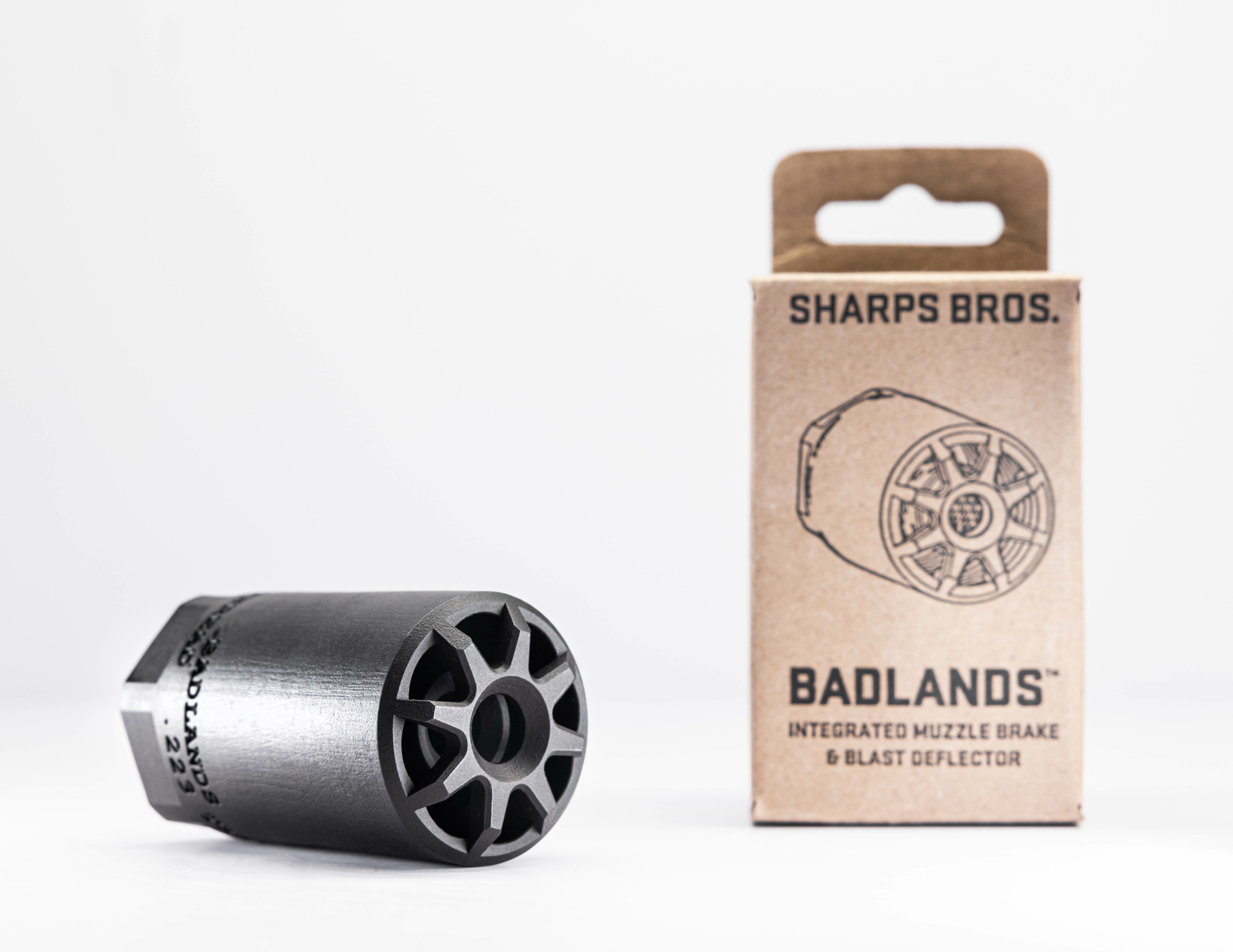
Brakes work by redirecting gas sideways and sometimes slightly rearward against baffle surfaces. The gas impacts the baffles and exerts forward force on the rifle, counteracting the rearward recoil impulse. The bigger and more numerous the baffles, the more recoil reduction you get. Two-chamber and three-chamber brakes are common, with the first chamber doing most of the work and subsequent chambers capturing whatever gas the first one missed.
The recoil reduction on 5.56 is real but small in absolute terms. Going from 4.5 ft-lbs of recoil to 3 ft-lbs isn't something most shooters can feel as a dramatic change. What they can feel is the difference in muzzle movement, a good brake keeps the rifle remarkably flat, even flatter than most comps, because it's fighting both rearward recoil and muzzle rise simultaneously.
Here's what changes with a brake: concussion. This is the dealbreaker for most people, and it should be. A brake on a 16-inch 5.56 redirects a significant volume of high-pressure gas directly to the sides. The shooter barely notices because the gas is going away from them. But anyone standing within about 10 feet to either side gets hammered. The pressure wave is sharp, physically uncomfortable, and, at indoor ranges, borderline antisocial. Forum discussions consistently report that braked 5.56 rifles are noticeably more unpleasant to stand next to than the same rifle with a flash hider, even though the total energy is identical. The brake isn't creating more blast, it's aiming the blast at your neighbors.
The concussion also comes back at the shooter in enclosed spaces. Shooting from inside a vehicle, a doorway, or any confined area with a brake means the redirected gas bounces off nearby surfaces and hits you. This is why most tactical-oriented shooters avoid brakes on fighting rifles.
So who actually benefits from a brake on a 16-inch 5.56? Competition shooters, primarily. In a match environment where everyone is wearing ear protection and you're shooting alone on a stage, the concussion penalty disappears. The flat-shooting benefit translates directly to faster stage times. If you're running USPSA PCC or 3-gun with a rifle, a brake or aggressive comp makes measurable differences.
The other legitimate use case: a brake that doubles as a suppressor mount. Several suppressor manufacturers use brake-style mounts because the baffle surfaces provide a solid mechanical lockup for the can. When the suppressor is attached, it captures all the gas the brake would have sent sideways, so the concussion penalty vanishes. When the suppressor is off, you're stuck with a brake, but if the rifle lives suppressed, that's a non-issue.
Hybrids and the devices that blur the lines
The market has moved heavily toward hybrid devices, and for good reason. Pure flash hiders, pure comps, and pure brakes each have obvious weaknesses. A device that does two things at 70% effectiveness often beats a device that does one thing at 95% but ignores everything else.
The SureFire WARCOMP is the most visible example. It's a three-prong flash hider with compensating ports cut between the prongs. Flash performance is close to a dedicated three-prong hider, not quite as good, but within maybe 10-15%. Compensation is noticeable but less aggressive than a dedicated comp. And it serves as a suppressor mount for SureFire cans. The WARCOMP has become almost a default recommendation for 16-inch builds, and that's not unreasonable. It does nothing poorly.
The criticism of the WARCOMP, and it's a fair one, is concussion. Compared to a standard three-prong flash hider, the WARCOMP's compensating ports direct more gas laterally, increasing the blast felt by people standing nearby. Forum testing with pressure gauges at the shooter's side has shown measurably higher overpressure from the WARCOMP versus a closed-bottom flash hider. It's not brake-level concussion, but it's more than a plain flash hider. On a 16-inch barrel where flash is already manageable, some shooters conclude the comp ports aren't worth the concussion tradeoff and run a standard three-prong instead.
Other hybrids take different approaches. Some designs use a single large expansion chamber, almost like a miniature blast can, to reduce flash and concussion simultaneously, then add top ports for compensation. The HUXWRX (formerly OSS) flow-through designs take yet another philosophy, prioritizing minimal backpressure and gas disruption. These are primarily designed as suppressor mounts, but their unsuppressed performance varies from adequate to quite good depending on the specific model.
The mistake everyone makes with hybrids is expecting them to match a dedicated device in any single category. They won't. A hybrid flash hider/comp won't hide flash as well as a dedicated four-prong, and it won't compensate as well as a dedicated comp. The value is in the combination, acceptable performance across multiple metrics instead of excellence in one and failure in others.
Five devices worth comparing
These are all currently available, commonly stocked, and well-documented enough that the performance claims are backed by actual user data rather than just marketing.
The A2 flash hider is the baseline. It came with your rifle. Flash reduction is genuinely good, around 80-85% on a 16-inch barrel. Minimal concussion, minimal effect on recoil or muzzle rise, and it's essentially free since you already own one. The A2 is not a suppressor mount for any major system, which is its primary limitation. If you never plan to run a can and you're not chasing competition times, the A2 is honestly hard to beat for the money (which is zero dollars, because it's already on your gun).
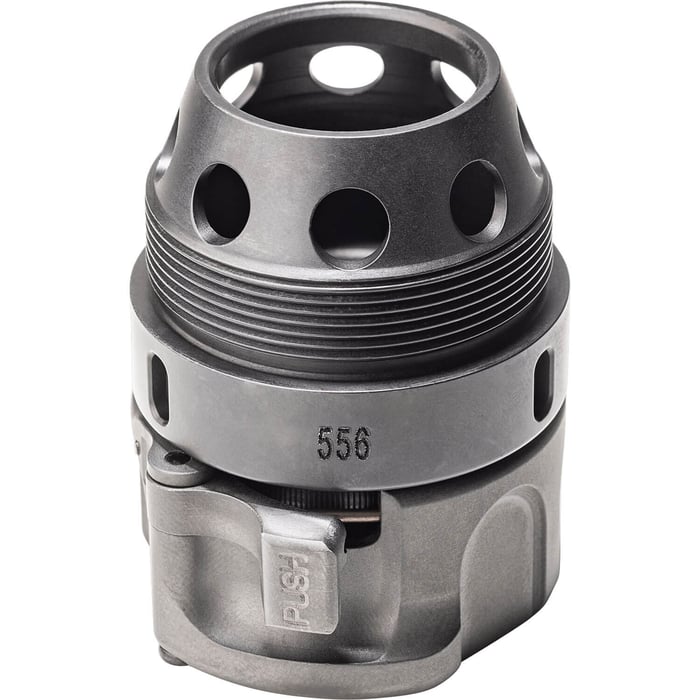
The SureFire WARCOMP (specifically the WARCOMP-556-1/2-28) is the hybrid that everyone knows. Three-prong flash hiding plus top-venting compensation plus SureFire suppressor compatibility. Flash performance is strong, compensation is moderate, and the mount interface is rock-solid for SureFire SOCOM-series cans. The concussion increase over a standard flash hider is the main knock. Weight is around 2.7 ounces, negligible.
The SureFire SF3P (three-prong flash hider) is the device to pick if flash suppression is the priority and you still want SureFire suppressor compatibility. No compensating ports means less concussion than the WARCOMP. Flash hiding is excellent, among the best available. Zero compensation effect, so muzzle rise is unmanaged. On a 16-inch 5.56 where muzzle rise is already moderate, plenty of shooters find this tradeoff acceptable.
The Precision Armament AFAB (Advanced Flash Arresting Brake) is an interesting hybrid that leans more toward the brake side. It combines a ported brake section with a flash-hiding endcap. Recoil reduction is noticeably better than the WARCOMP, and flash performance is decent though not as good as a dedicated hider. The AFAB tends to be louder to bystanders than the WARCOMP but quieter than a pure brake. No proprietary suppressor mount, it's a standalone device.
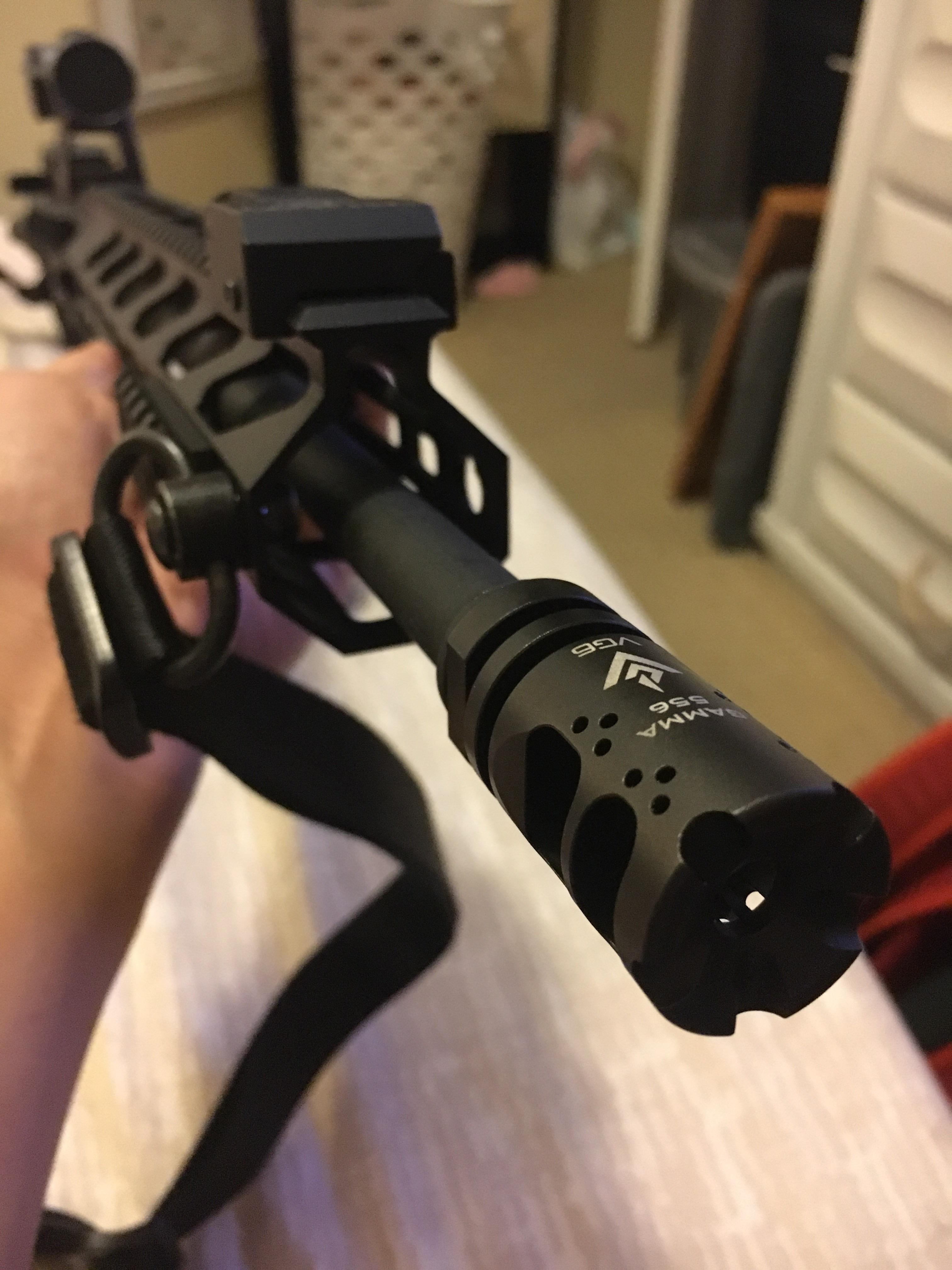
The VG6 Gamma 556 is a dedicated compensator/brake hybrid that's popular in the competition and budget-build world. Aggressive top and side ports make the rifle very flat-shooting. Flash hiding is essentially nonexistent, expect a fireball in low light. Concussion is significant. This is a device for people who know exactly what they want (flat shooting, fast splits) and accept the tradeoffs (blast, flash, angry range neighbors). The VG6 also has a companion blast shield called the CAGE that threads over the device and redirects concussion forward, which partially solves the bystander problem at the cost of adding length and weight.
Common mistakes and how to avoid them
Picking a brake for a home defense rifle is the most frequent error. If there's any chance you fire this rifle indoors without ear protection, and in a home defense scenario, that's exactly what might happen, a brake will make a bad auditory situation catastrophically worse. The redirected gas in an enclosed hallway creates pressure waves that bounce off walls and hit you from multiple directions. A flash hider or a mild comp is a far better choice for a rifle that might be fired in a structure.
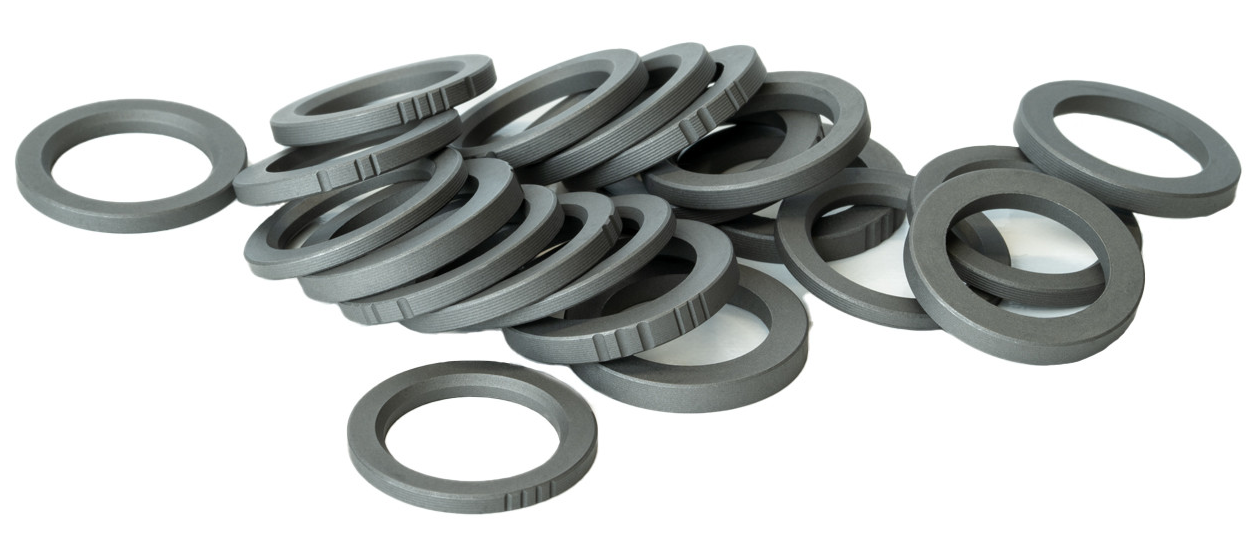
Ignoring the suppressor question is the second mistake. Muzzle devices are annoying to swap. You need a torque wrench, shims or a timing nut, and Rocksett or another high-temp thread locker. If you're even considering a suppressor in the next couple of years, choose your muzzle device based on which mount system you want to buy into. Switching later means re-timing, re-shimming, and probably buying a new crush washer or shim set. Plan ahead.
Over-tightening is surprisingly common. The spec for most muzzle devices is around 15-20 ft-lbs of torque, that's snug, not gorilla-tight. Over-torquing can deform crush washers beyond their useful range, crack shims, or even damage the threads on the barrel. Use an actual torque wrench. A $30 beam-style wrench from any hardware store works fine.
Forgetting to check timing after installation catches people too. A compensator with its ports pointing at 2 o'clock instead of 12 o'clock is pushing your muzzle to the left instead of straight down. Brakes are less sensitive to timing since their baffles are usually symmetrical, but comps and flash hiders with a solid bottom section need to be clocked correctly. Shim kits exist for exactly this reason, use them.
Chasing the "best" device without defining what you're optimizing for is the meta-mistake that contains all the others. "Best" for low-light flash performance is a three-prong hider. "Best" for flat shooting in competition is an aggressive comp or brake. "Best" for suppressor compatibility depends entirely on which can you're buying. There's no universal winner, and anyone who tells you otherwise is selling something.
SureFire SF3P Deals
Prices may change. May contain affiliate links.
Range notes: what you'll actually notice
Swapping from an A2 to a comp or brake on a 16-inch 5.56, the first thing that registers isn't recoil, it's the dot. With a red dot or LPVO at 1x, watch where the dot goes during recoil. With an A2, the dot lifts and comes back. With a comp, the dot stays flatter and returns faster. With a brake, the dot barely moves. The difference between a comp and a brake is smaller than the difference between an A2 and either one. That's the 16-inch 5.56 reality: the baseline recoil is low enough that aggressive devices are fighting over small margins.
Sound is where the differences get dramatic. Shooting an A2-equipped rifle, the sound is mostly directed forward and is relatively uniform around the shooter. Switch to a brake and the shooter's perception barely changes, but the guy one lane over flinches. This isn't subjective. Pressure measurements taken at the 3 o'clock and 9 o'clock positions (directly beside the muzzle) consistently show 3-6 dB higher peak pressure with a brake versus a flash hider. Decibels are logarithmic, so 3 dB is a doubling of sound pressure. Your lane neighbor is getting twice the blast pressure.
Dust and debris tell you immediately what your device is doing with gas. Shoot prone on a gravel or dirt surface with each device type. The flash hider kicks up minimal dust. The comp creates a visible puff directly in front of and above the muzzle. The brake blasts debris to both sides in a fan pattern. If you train in field conditions, this matters.
One thing that rarely gets mentioned: the feel of the recoil impulse changes character, not just magnitude. A flash hider gives you a conventional push, rearward and slightly upward. A brake changes the impulse to feel more like a straight push rearward with less rise, but with a sharper, snappier quality. Some shooters find braked recoil less pleasant even though it's objectively less forceful, because the sharp snap is more jarring than a smooth push. Comps fall somewhere in between. This is genuinely subjective and worth experiencing firsthand before committing.
The suppressor mount question
This deserves its own section because it's the single most consequential factor in choosing a muzzle device for a lot of builders, and it's the one most often treated as an afterthought.
The major suppressor mount ecosystems right now are SureFire (SOCOM series), Dead Air (KeyMo and Xeno), and HUXWRX (formerly OSS, using their proprietary thread-over system). Each requires a specific muzzle device. SureFire cans mount to SureFire muzzle devices. Dead Air KeyMo mounts to Dead Air or KeyMo-compatible brakes and flash hiders. The Dead Air Xeno system uses a simpler thread-on interface with its own adapter. HUXWRX cans thread directly onto their muzzle devices.
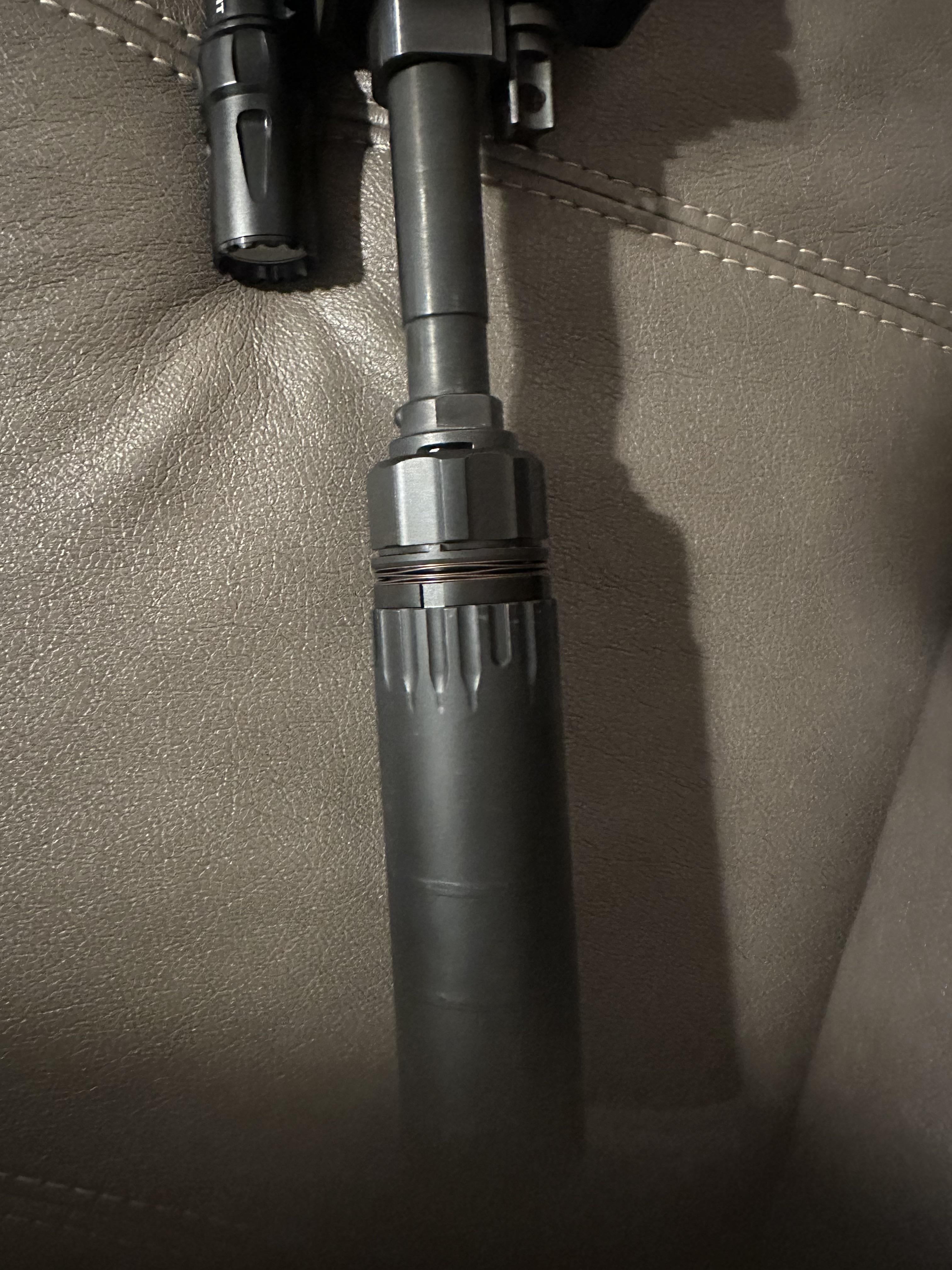
The practical implication: if you buy a SureFire WARCOMP today and then decide to buy a Dead Air Sandman suppressor next year, your WARCOMP is useless as a mount. You'll need to buy a Dead Air-compatible muzzle device, strip the WARCOMP off, and install the new one. This is not the end of the world, it's a $40-80 muzzle device and 20 minutes of work, but it's annoying and avoidable with minimal planning.
If you're genuinely undecided on a suppressor, the Dead Air Xeno system is worth a look because the muzzle device is a simple, low-profile thread adapter that works as a decent flash hider unsuppressed. It's not as good as a dedicated three-prong, but it's unobtrusive and keeps your options open. The SureFire three-prong or WARCOMP is the play if you're committed to the SureFire ecosystem. And if you're buying a HUXWRX can, their muzzle devices are designed specifically for their flow-through suppressor technology, so compatibility is straightforward.
Nobody talks about this, but the length added by a suppressor mount muzzle device matters for overall rifle balance. A SureFire WARCOMP adds about 2.7 inches past the barrel shoulder. A Dead Air Xeno adapter adds about 1.8 inches. On a 16-inch barrel that's already at the legal minimum for rifle length, every fraction of an inch of muzzle device length pushes your overall length further out. If you're building a compact rifle that happens to have a 16-inch barrel (pinned and welded with a shorter barrel is a different conversation), the muzzle device length affects handling.
What to do next
If your rifle still has the factory A2 and you're not sure what you want, leave it. Seriously. The A2 is a genuinely competent flash hider, it's already timed and installed, and swapping to something else without a clear reason is spending money to move sideways. The time to upgrade is when you've identified a specific deficiency, you want suppressor compatibility, you want flatter shooting for competition, or you're building a duty/defensive rifle and want better flash performance than the A2 can deliver.
If you do swap, run a simple test. Set up a target at 10 yards and fire five controlled pairs with each device, filming from the side with a phone in slow motion. You'll see the muzzle movement plain as day. Then run a bill drill (six shots on a USPSA A-zone at 7 yards, from the draw) with each device and compare your times. The difference between a flash hider and a comp on a 16-inch 5.56 is typically 0.1-0.3 seconds on a six-round string, not nothing, but not transformative either. Whether that margin matters depends on what you're doing with the rifle.
Log your results. Write down the device, the ammo, the drill, and the time. Gut feelings about recoil are unreliable. A shot timer doesn't lie, and neither does slow-motion video. That data will tell you more about which muzzle device belongs on your rifle than any article, including this one.