You're standing at the gun counter, and the guy behind the glass is pushing whichever one has a higher margin this month. The Sig P365 and the Springfield Hellcat are the two micro-compact 9mms that redefined what a pocket-sized pistol could do. They look similar on paper; sub-compact frames, double-stack magazines, 10+ round capacity in a package that used to hold seven rounds of .380. But they don't shoot the same. They don't carry the same. And they don't solve the same problems for the same hands.

Springfield Hellcat Deals
Prices may change. May contain affiliate links.
The real question isn't which gun is "better." It's which gun shoots better for the way you actually use a carry pistol; fast draws from concealment, controlled pairs at seven yards, managing recoil with a high grip on a tiny frame, and doing all of it with a gun you'll actually carry every day instead of leaving in the safe because it's uncomfortable. That's what we're breaking down here. Not spec sheets. Not marketing copy. How these two guns perform when you're running them hard.
Both pistols have been on the market long enough now that the early reliability complaints have been sorted, the aftermarket has matured, and there are enough real-world rounds downrange to separate fact from forum hype. Let's get into it.
The guns at a glance
Before we get into the shooting, a quick orientation on what we're actually comparing. The P365 launched in 2018 and basically invented the micro-compact double-stack category. The Hellcat followed in 2019 as Springfield's direct answer. Both have since spawned entire lineups; the P365X, P365XL, P365 XMacro on the Sig side, and the Hellcat Pro, Hellcat RDP, and Hellcat Pro Comp on Springfield's side.
For this comparison, we're primarily talking about the base models: the standard P365 and the standard Hellcat. Where it matters, we'll pull in the XL and Hellcat Pro because a lot of people cross-shop those. But the core comparison is the originals; the guns that started the fight.
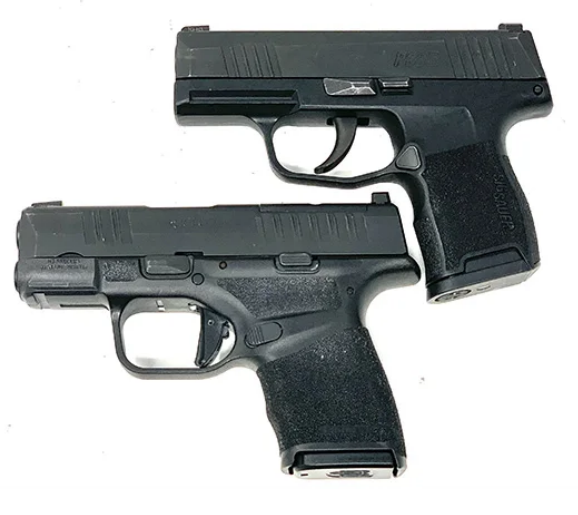
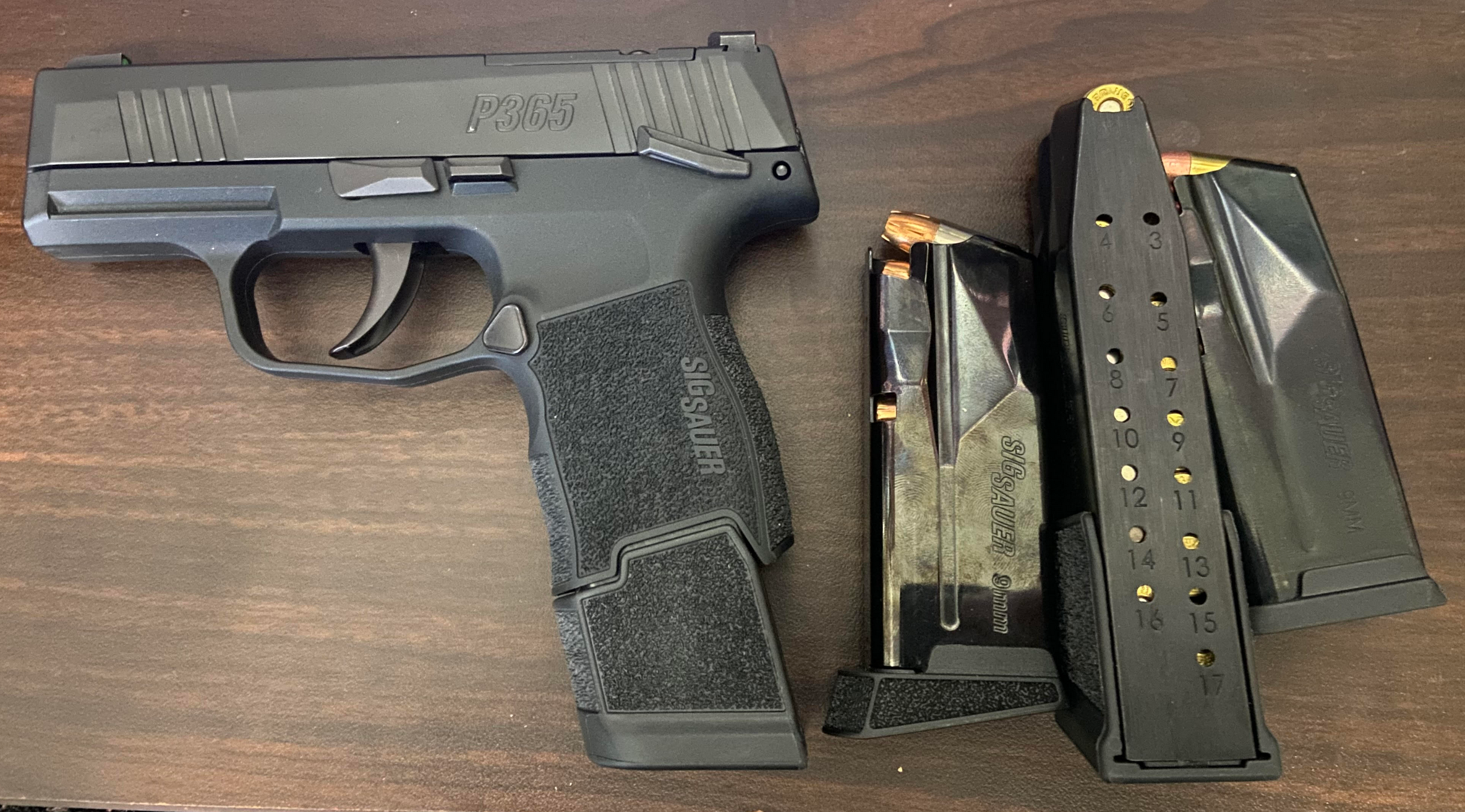
The P365 ships with a 10-round flush magazine and a 12-round extended mag. Overall length is 5.8 inches, height is 4.3 inches with the flush mag, and it weighs about 17.8 ounces empty. The Hellcat ships with an 11-round flush mag and a 13-round extended mag. It's slightly shorter in overall length at 6 inches, stands 4 inches tall with the flush mag, and weighs roughly 18.3 ounces empty. The Hellcat is fractionally wider; 1 inch versus the P365's 1.06 inches, though Springfield lists the Hellcat at 1 inch as well. In practice, the dimensional differences between these two are measured in tenths of an inch. You won't feel a meaningful size difference in a holster.

What you will feel is the difference in how they're shaped, how the triggers behave, and how the grip fills your hand. That's where this comparison actually lives.
Grip and ergonomics: where the split starts
Pick up both guns back to back and the difference is immediate. The P365 has a slightly more rounded grip profile with a gentle palm swell. The Hellcat's grip is more aggressively textured and a touch blockier. Neither is wrong; they're solving the same problem (keeping a tiny gun locked in your hand during recoil) with different approaches.
The P365's texture is moderate. It's enough to maintain purchase during a string of fire, but it won't chew up your skin during all-day carry against a t-shirt. Sig clearly designed it with the assumption that this gun would spend twelve hours a day pressed against someone's body. The Hellcat's texture is more aggressive out of the box, particularly on the sides of the grip. It's closer to what you'd feel on a Glock Gen 5 with a stipple job. Some shooters love it; it locks the gun in place during rapid fire. Others find it abrasive during extended carry, especially appendix.
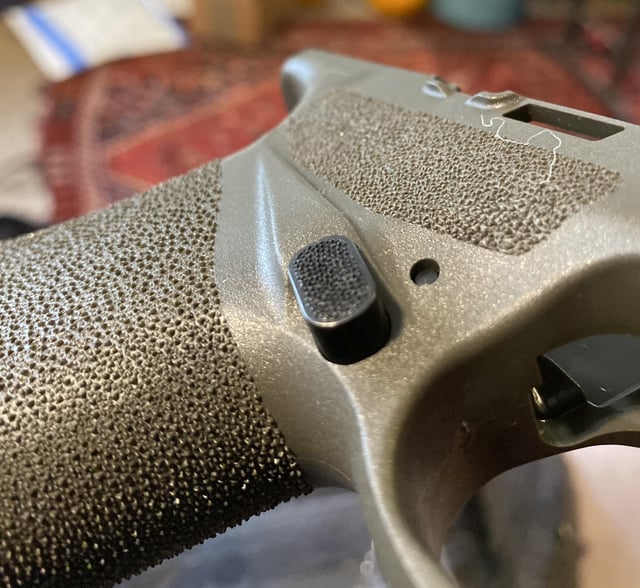

Here's what matters: the trigger reach is different. The P365 has a slightly longer trigger reach, which tends to work better for shooters with medium to large hands. The Hellcat's trigger sits a bit closer to the backstrap, and the overall grip circumference is slightly smaller. Shooters with smaller hands often report that the Hellcat points more naturally for them. This isn't a rule; hand geometry varies wildly; but it's a consistent enough pattern that it's worth paying attention to.
The grip angle on the P365 is more vertical, closer to a 1911-style rake. The Hellcat has a slightly more aggressive grip angle, not quite Glock-steep but noticeable. If you're coming from a Glock, the Hellcat will feel more familiar in your hand during a fast draw. If you're coming from a Sig P226 or P229, the P365 will feel like home.
Carry notes
Both guns disappear in an appendix rig. The dimensional differences are so small that holster selection and belt quality matter more than which gun you pick. That said, the P365 with its flush 10-round mag has a slightly shorter grip, which helps with printing under a fitted shirt. The Hellcat's 11-round flush mag gives you one more round but adds a fraction of grip length. With the extended mags; 12 for the P365, 13 for the Hellcat; both guns print similarly. The grip is always what prints, not the slide.
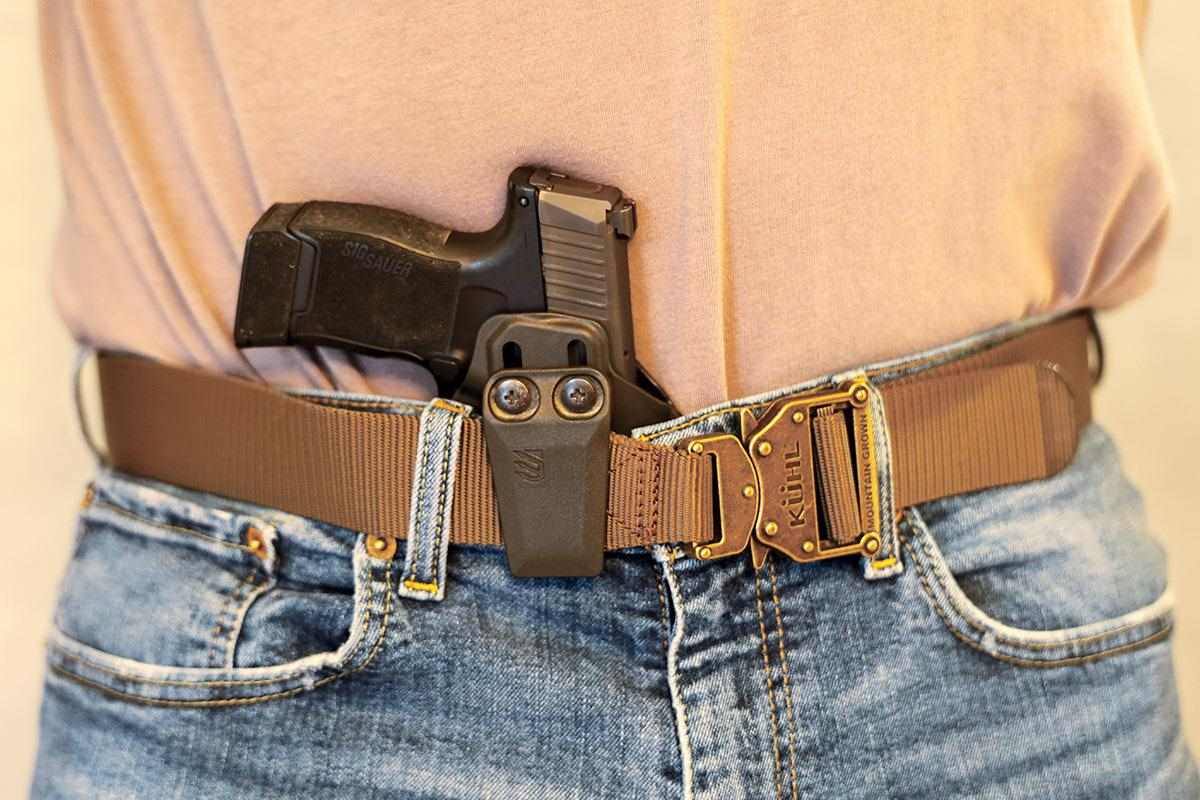
One thing nobody mentions: the Hellcat's slightly wider slide serrations can catch on certain cover garments during the draw. It's not a dealbreaker, but if you're running a tight-fitting concealment shirt, do some draw practice before you commit. The P365's slide is a touch slimmer and smoother in profile, which can make for a marginally cleaner draw from concealment.

Triggers: the detail that changes the experience
This is where opinions get heated, and for good reason; the trigger is the single most important interface between you and the gun. Everything else is secondary to how the trigger breaks and resets.
The P365 runs a flat-faced trigger. It has a short take-up with a bit of slack, then a defined wall before a clean break. Reset is short and tactile; you can feel and hear it click. The pull weight runs around 5.5 to 6 pounds depending on the individual gun. The flat face distributes pressure across your finger pad evenly, which a lot of shooters find reduces the tendency to push shots left (for right-handed shooters) during the press.
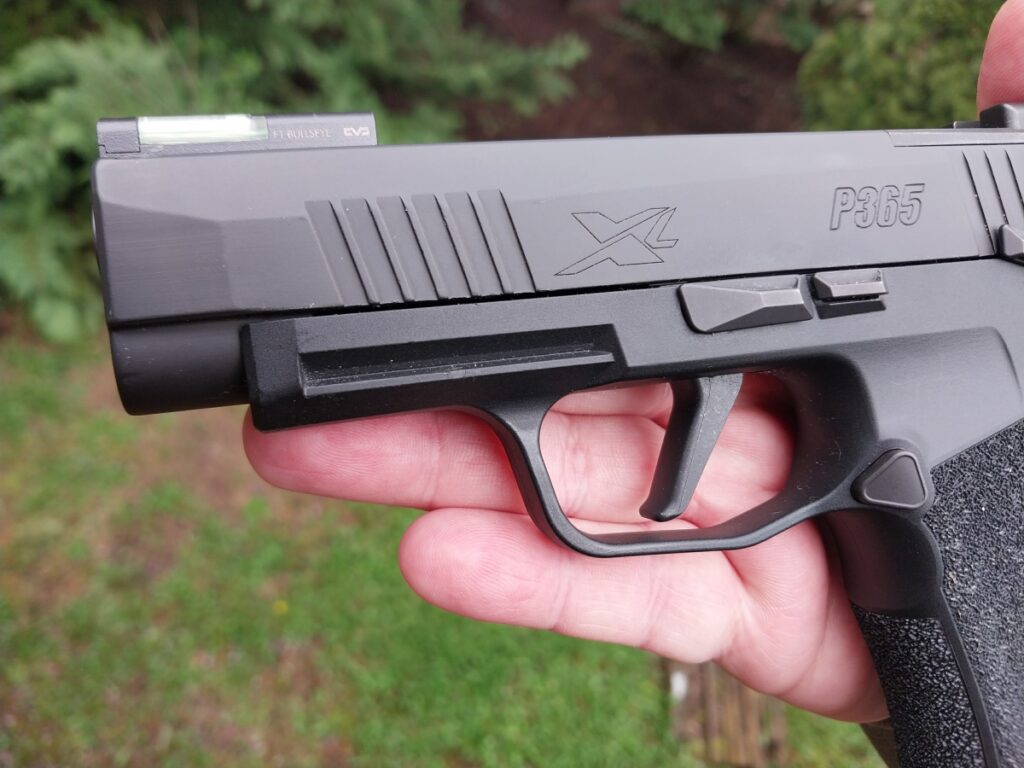
The Hellcat uses a curved trigger with a blade safety. Take-up is longer and has more creep before you hit the wall. The break is adequate but not as crisp; there's a slightly mushy quality to it that some shooters describe as "spongy." Pull weight is in the same neighborhood, roughly 5.5 to 6 pounds, but the longer travel makes it feel heavier than it is. Reset is longer than the P365's and less distinct. You can feel it if you're paying attention, but it doesn't have that same positive click.
The real-world impact: during slow, deliberate shooting at 15 to 25 yards, the P365's trigger makes it easier to press shots without disturbing the sights. The shorter reset also helps during rapid strings; you can ride the reset and fire faster without short-stroking the trigger. The Hellcat's longer reset means you need to let the trigger travel further forward before the next shot, which can slow down split times or cause short-strokes if you're trying to push speed.
This doesn't mean the Hellcat's trigger is bad. It's perfectly functional for defensive shooting distances. But if you're trying to shoot these guns well; and you should be; the P365 has a meaningful advantage here. It's one of the best stock triggers in the micro-compact class, and it's been that way since launch.
What you'll feel
Run a simple drill: five rounds at seven yards, as fast as you can get acceptable hits on an 8-inch circle. With the P365, most experienced shooters can ride that short reset and keep all five in the circle with splits around 0.25 to 0.30 seconds. With the Hellcat, that same drill typically produces splits closer to 0.30 to 0.40 seconds, and there's a higher tendency to throw one shot outside the circle due to the less predictable trigger break. This isn't scientific; individual skill varies enormously; but it's a consistent enough pattern that it shows up across multiple shooters.
Sights and optics: two different philosophies
The base P365 ships with Sig's XRAY3 night sights; a tritium front sight with a green ring and two rear tritium dots. They're genuinely good factory sights. The front sight is easy to pick up, and the tritium is bright enough to be useful in low light without being distracting in daylight. These are sights you can actually use without immediately swapping them out.
The Hellcat ships with a U-Dot sight system; a tritium and luminescent front dot paired with a U-shaped rear notch. The idea is that the U-notch speeds up acquisition by giving you a wider channel to find the front sight. In practice, it works well for fast, close-range shooting. The front dot drops into that U quickly. But for precision shooting at distance, some shooters find the U-notch less precise than a traditional square-notch rear sight because it doesn't give you as tight a reference for centering the front sight.
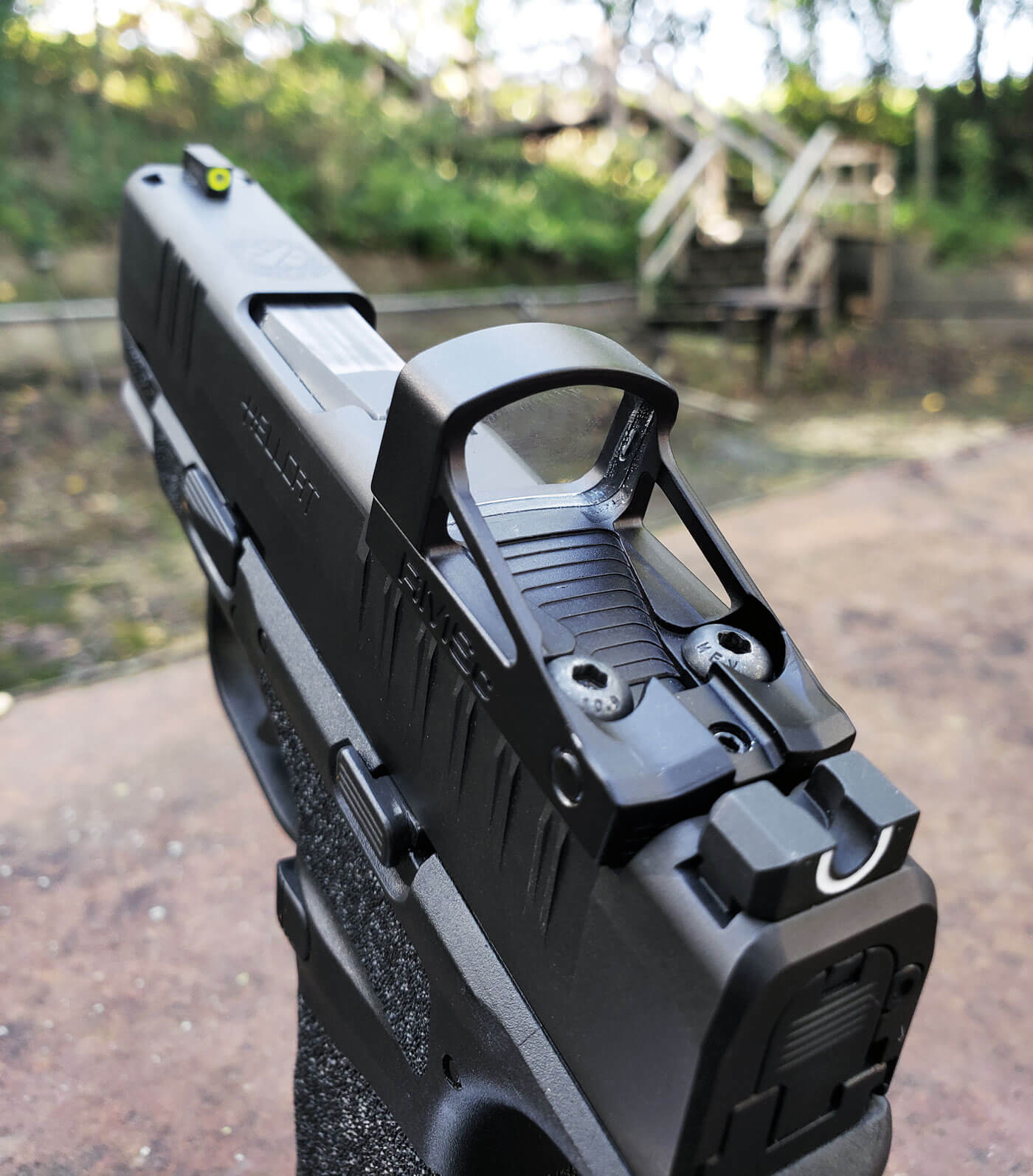
Both guns are available in optics-ready versions, and this is where things get interesting. The Hellcat was actually first to market with a factory optic cut; the Hellcat OSP (Optical Sight Pistol) came with a direct-milled slide for the Shield RMSc footprint. The P365 followed with the P365X and P365XL, which use Sig's proprietary optic mounting system that's since been opened up to accept a wider range of micro red dots.
If you're planning to run a dot, the P365X or P365XL with a Sig Romeo-X Compact or Holosun 507K is a proven setup. The Romeo-X Compact is specifically designed for the P365 platform; it's a closed-emitter micro dot that sits low on the slide and co-witnesses with the iron sights. The Hellcat OSP works well with the Shield RMSc or Hex Wasp, though the mounting system has drawn some criticism for the screws backing out under recoil if you don't use thread locker.
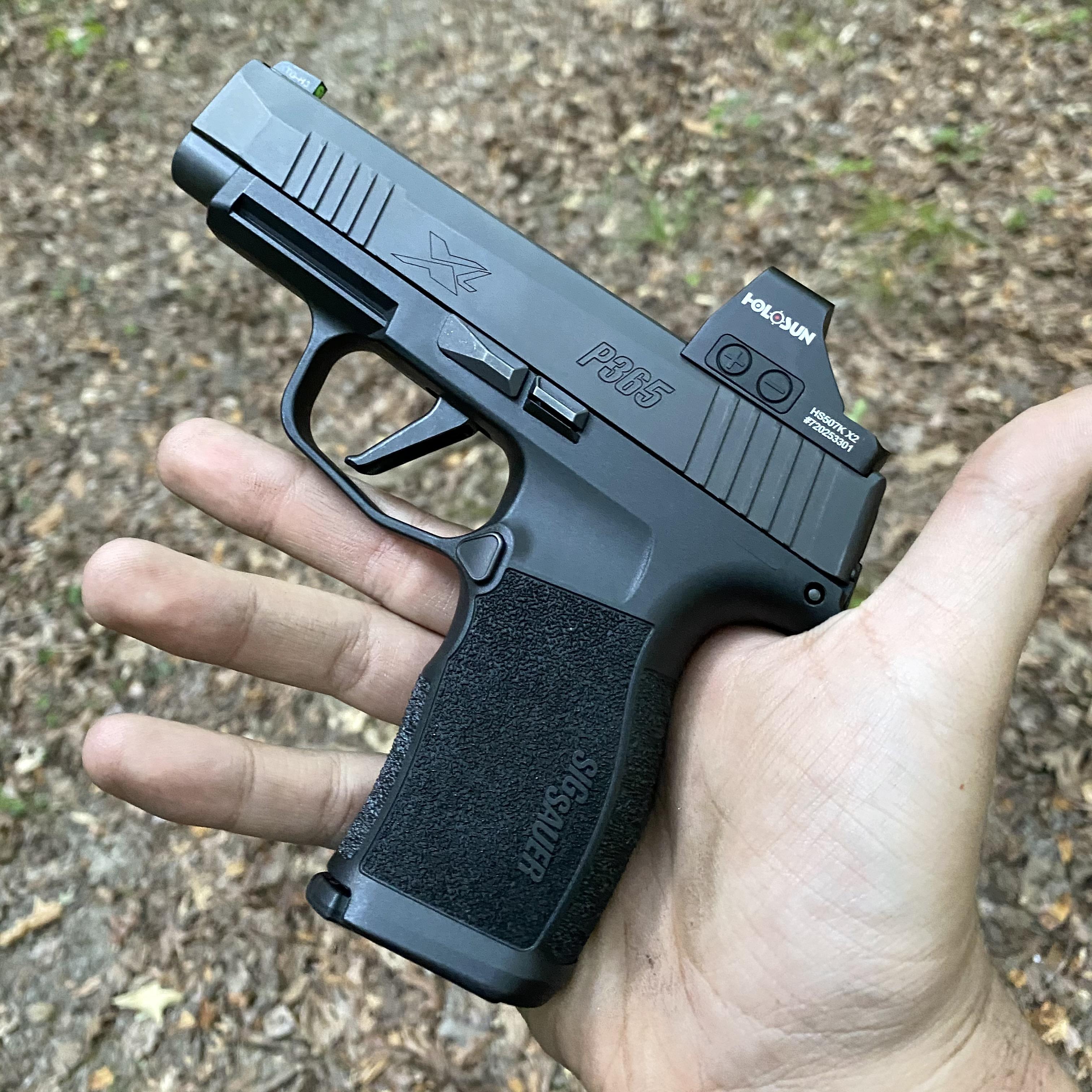
The real question is: are you going to run a dot or not? If yes, both platforms support it, but the Sig ecosystem is more mature at this point. If you're sticking with irons, both factory sight setups are above average for the category. Edge goes to the XRAY3 for precision work, edge goes to the U-Dot for pure speed at close range.
Recoil management and shootability
Here's where the rubber meets the road. You can argue about triggers and sights all day, but recoil management is what determines whether you can actually shoot a micro-compact well or whether it's just a gun you carry and hope you never have to use.
Both guns are snappy. There's no way around it; you're shooting 9mm out of a gun that weighs less than 20 ounces. Physics doesn't care about marketing. But the character of the recoil is different between the two.
The P365 has a slightly lower bore axis, meaning the centerline of the barrel sits closer to the top of your hand. This translates to less muzzle flip and more of a straight-back push into the web of your hand. It's not dramatic; we're talking about small differences; but over a 200-round range session, the P365 tends to be less fatiguing to shoot. The recoil impulse feels more controlled, and the gun settles back on target faster between shots.
The Hellcat has a slightly higher bore axis and a more pronounced snap to the recoil. The muzzle flips a bit more, and the gun takes a fraction longer to settle between shots. Some of this is mitigated by the more aggressive grip texture; the gun doesn't shift in your hand; but the muzzle is still moving more. Shooters with strong grip technique can manage this, but it's more demanding.
Springfield Hellcat OSP Deals
Prices may change. May contain affiliate links.
Under recoil, the difference shows most clearly during rapid-fire drills. Run a Bill Drill (six shots on an IPSC A-zone at seven yards, from the draw) and compare your times. Most shooters will see a measurable difference; not huge, maybe a quarter to half a second total; but it's there. The P365 comes back on target faster, and the trigger's shorter reset lets you break the next shot sooner.
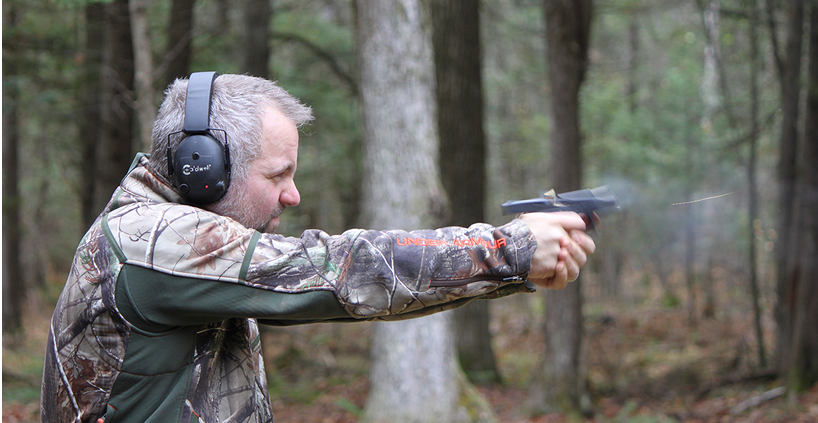
The Hellcat's recoil spring is stiffer than the P365's, which some shooters notice during the racking motion. It's not a problem for most people, but if you have reduced hand strength, the Hellcat can be harder to rack. The P365's slide is easier to manipulate, which matters for administrative handling and malfunction clearance under stress.
Range notes
At seven yards, both guns will shoot into a fist-sized group with decent technique. At 15 yards, the P365 starts to pull ahead for most shooters; the better trigger and lower bore axis combine to produce tighter groups. At 25 yards, the gap widens further. Forum reports from experienced P365 shooters show groups in the 3 to 4 inch range at 25 yards from a bench rest, which is impressive for a gun this size. The Hellcat at 25 yards tends to open up to 4 to 6 inches under similar conditions. Both are more than adequate for defensive accuracy, but if mechanical accuracy and practical precision matter to you, the P365 has the edge.
One thing to watch: both guns can be ammo-sensitive in the first few hundred rounds. Some P365s have shown a preference for 124-grain loads during break-in, while the Hellcat seems to run 115-grain ball reliably from the start. After 500 rounds, both platforms are generally reliable with any quality defensive ammunition. Run your carry ammo through the gun; at least 200 rounds of your chosen defensive load; before you trust it.
The expanded lineups: XL vs Pro
A lot of people who start shopping for a P365 or Hellcat end up looking at the bigger siblings; the P365XL and the Hellcat Pro. These are worth discussing because they change the calculus significantly.
The P365XL adds a longer slide (3.7-inch barrel versus 3.1 inches on the standard), a longer grip that accepts 12-round flush-fit magazines, and an optic-ready slide. It's essentially a compact pistol in a micro-compact's clothing. The added sight radius and grip length make it substantially easier to shoot well. If you can conceal it; and most people can, with a good holster and belt; the XL is the better shooting gun, full stop.
The Hellcat Pro makes similar moves: a 3.7-inch barrel, a longer grip for 15-round flush-fit magazines, and an optic-ready slide. The Pro actually gives you more capacity than the XL in its flush configuration, which is a real selling point. Fifteen rounds of 9mm in a gun that size is remarkable.
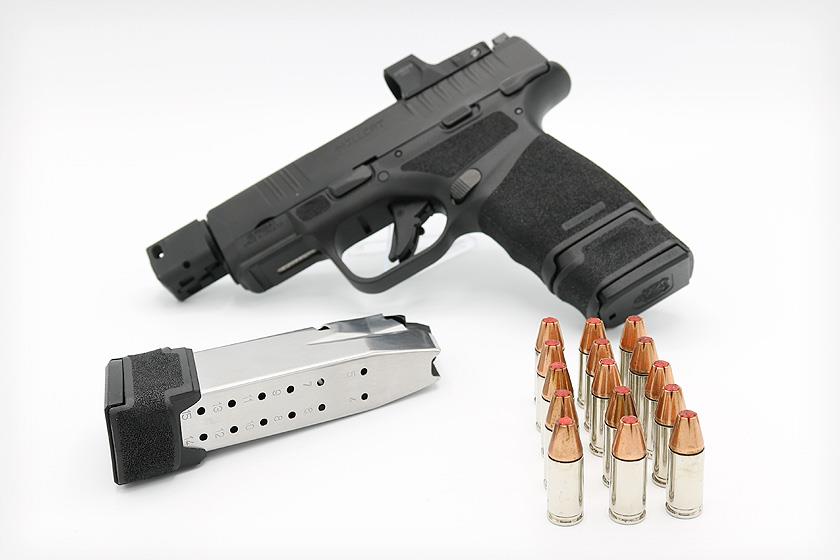
The comparison between the XL and the Pro is closer than the base models. The Hellcat Pro's trigger is improved over the standard Hellcat; still not as good as the P365XL's, but the gap narrows. The Pro's extra capacity is a tangible advantage. The XL's trigger and recoil characteristics are still superior, but the margin is smaller.
If you're choosing between the XL and the Pro, it comes down to whether you prioritize shootability (XL) or capacity (Pro). Both are excellent carry guns. Both conceal well for their size. The XL has the better trigger and the more refined recoil impulse. The Pro has three more rounds in the flush magazine. There's no wrong answer; only trade-offs.
Light and accessory compatibility
Both platforms support weapon-mounted lights, but the implementation differs. The standard P365 doesn't have a rail; you need the P365XL, P365X, or XMacro for a rail. The standard Hellcat also lacks a rail, but the Hellcat Pro has one. If a weapon light is a priority, you're looking at the larger variants of either platform.
For the railed versions, the Streamlight TLR-7 Sub is the go-to light. It's specifically designed for sub-compact frames and fits both the P365XL/XMacro and the Hellcat Pro with the appropriate key. The TLR-7 X Sub is the newer rechargeable version, putting out 500 lumens with a USB-C rechargeable battery. It sits flush with the muzzle on both platforms and doesn't add significant bulk.
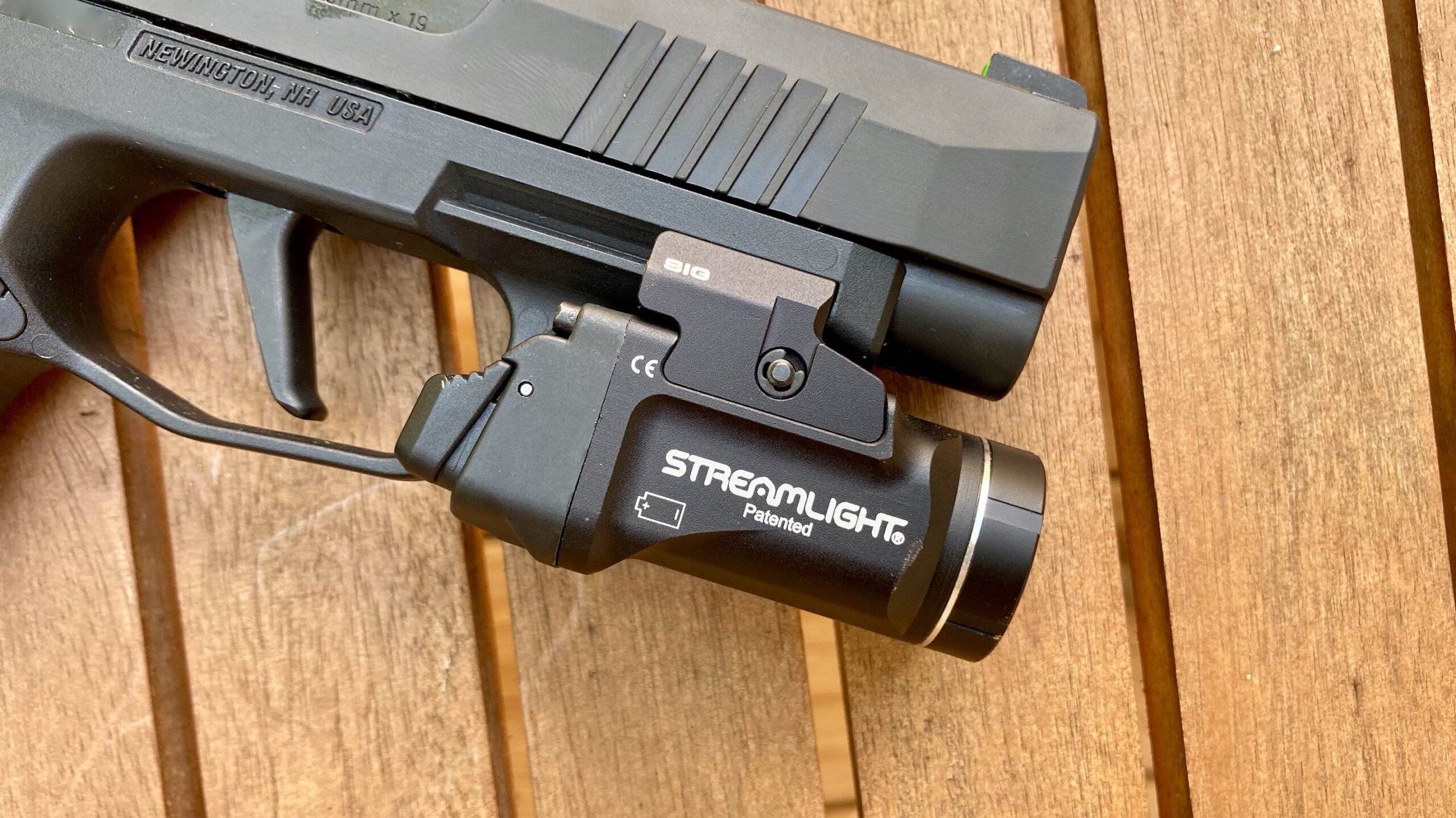
Holster availability is excellent for both platforms, with and without lights. Kydex makers have had years to develop molds for every combination of gun, optic, and light. You won't struggle to find a quality holster for either setup. The P365 family probably has a slight edge in total holster options simply because it's been on the market a year longer and has a larger user base, but the Hellcat is well-supported.
Magazine availability is another consideration. Sig P365 magazines are everywhere; factory mags are readily available, and there are quality aftermarket options. Springfield Hellcat magazines are also available but sometimes harder to find in stock, particularly the 15-round Pro magazines. Both guns use proprietary magazines that aren't interchangeable with each other or with other platforms.
Reliability: separating early issues from current production
Both guns had teething problems. The early P365 pistols; roughly the first year of production; had documented issues with primer drag, broken strikers, and occasional failures to return to battery. Sig addressed these issues through running production changes, and P365s manufactured from mid-2019 onward have been overwhelmingly reliable. The current production guns are solid.
The Hellcat had fewer early reliability complaints, but some users reported light primer strikes with certain ammunition and occasional failures to feed with hollow-point defensive loads during break-in. Springfield made incremental improvements as well, and current production Hellcats are reliable.
At this point, both platforms have millions of rounds of collective real-world use behind them. Reliability is not a meaningful differentiator between current-production examples of either gun. If you get a lemon; and it happens with every manufacturer; the warranty process for both Sig and Springfield is straightforward.
The problem with reliability discussions on forums is survivorship bias and sample size. Someone posts about a failure, it gets amplified, and suddenly "the P365 has striker problems" becomes accepted wisdom even though it was resolved years ago. Judge these guns on current production, not 2018 forum threads.
Common mistakes and misconceptions
There are a few things that consistently trip people up when choosing between these two or when they first start shooting them.
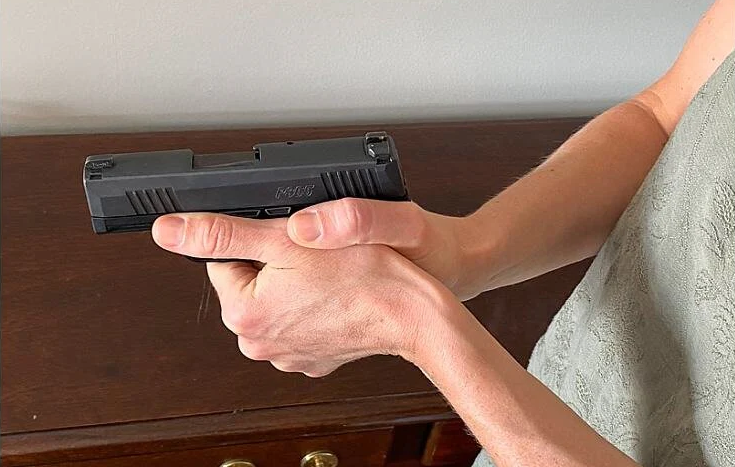
Gripping too low is the most common issue with both guns. Because the grips are so short, there's a natural tendency to let your support hand ride low, which gives the gun room to flip under recoil. You need to get your hands as high as physically possible on both guns. The P365's beavertail gives you a slightly better index point for hand placement. The Hellcat's grip shape is less defined at the top, and it's easier to let your grip slip down without realizing it.
Short-stroking the Hellcat's trigger is the second most common complaint. Because the reset is longer and less distinct than the P365's, shooters who are used to riding a short reset will occasionally not let the trigger travel far enough forward. The gun clicks but doesn't fire. The fix is simple; practice the reset during dry fire until you can feel it consistently; but it catches people off guard, especially under the stress of a timed drill.
Assuming the extended magazine is your carry magazine is a mistake with both guns. The extended magazines on both platforms add grip length and print more. Carry with the flush mag and keep the extended mag as your reload. This seems obvious, but a surprising number of people buy the gun, load the extended mag because it holds more, and then wonder why their concealment is blown.
Neglecting to lube the rails is something that affects the Hellcat more than the P365. The Hellcat's slide-to-frame fit is tighter, and it can get sluggish if you run it dry. A drop of oil on each rail goes a long way. The P365 is slightly more tolerant of running dry, but both guns should be properly lubricated; these are carry guns that accumulate lint, sweat, and debris.
Not shooting enough defensive ammo before carrying is the big one. Both guns can be ammo-picky, especially in the first 200 rounds. You need to run at least 200 rounds of your chosen carry ammo through the gun without a single malfunction before you trust your life to it. Not range ball ammo; your actual carry load. Federal HST, Speer Gold Dot, Hornady Critical Defense, whatever you've chosen. Run it. Confirm it works. Then carry it.
The head-to-head verdict
The P365 is the better shooting gun. The trigger is crisper with a shorter, more tactile reset. The bore axis is lower, producing less muzzle flip. The recoil impulse is more manageable over long strings of fire. The factory sights are excellent. And the overall refinement of the platform; from the smooth slide serrations to the ergonomic beavertail; reflects the extra year of development and iteration that Sig had before Springfield entered the market.
The Hellcat is the better value proposition for shooters who prioritize capacity and aggressive grip texture. You get one more round in the flush mag, two more in the extended mag, and a grip surface that locks the gun in place without aftermarket modification. The Hellcat is also slightly easier to find on sale, and the Hellcat Pro's 15-round flush capacity is genuinely compelling.
If you're a shooter who trains regularly, who cares about split times and trigger control, and who wants the most shootable micro-compact on the market, the P365 wins. If you're a shooter who wants maximum capacity in the smallest package, who prefers a more aggressive grip texture, and who doesn't mind spending some extra dry-fire time learning the trigger, the Hellcat is a strong choice.
Neither gun is a bad choice. Both are light-years ahead of the single-stack .380s and chunky sub-compact 9mms that preceded them. The micro-compact category exists because of the P365, and the Hellcat made it competitive. You benefit from that competition regardless of which one you buy.
How to actually decide
Stop reading reviews and go shoot both guns. Seriously. Rent them at a range that has both available. Here's the specific test to run:
Start at five yards. Shoot five rounds slow-fire at a 3-inch dot with each gun. This tests the trigger; which gun lets you press the shot without disturbing the sights? Then move to seven yards and run five rounds as fast as you can keep them in an 8-inch circle. This tests recoil management and reset speed. Finally, load two rounds in the magazine, fire two, perform a slide-lock reload, and fire two more. This tests the ergonomics under manipulation; how does the slide release work, how does the magazine seat, how quickly can you get back on target?
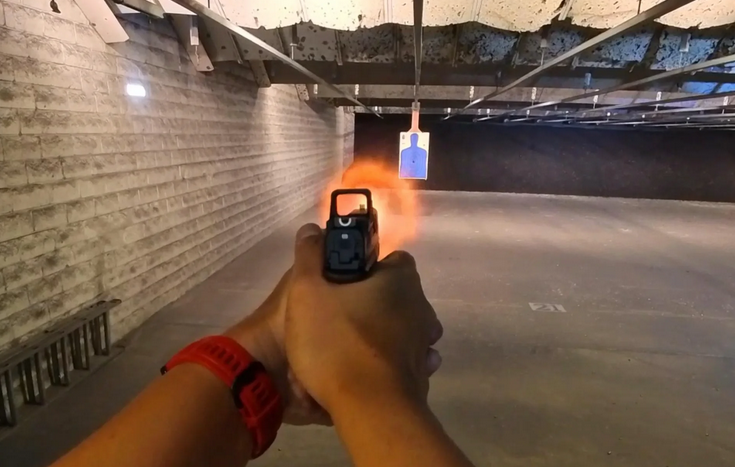
Whichever gun lets you shoot that sequence faster and more accurately is your gun. Not the one that looks better in the case. Not the one your buddy carries. Not the one that won a YouTube comparison. The one that works best in your hands, with your grip, at your skill level.
If you can't rent both, here's the shortcut: if you have medium to large hands and you prioritize trigger quality, buy the P365. If you have small to medium hands and you prioritize grip purchase and capacity, buy the Hellcat. If you're going to run an optic, buy the P365X or P365XL; Sig's optic ecosystem is more mature and the mounting system is more robust.
Then take whichever gun you buy and put 500 rounds through it in the first month. Not all at once; break it up into range sessions of 100 to 150 rounds. Practice your draw from concealment. Practice reloads. Practice shooting at 15 and 25 yards, not just 7. Learn the trigger's reset point until you can find it without thinking. Dry fire for ten minutes every night for a month.
The gun doesn't make the shooter. But the right gun gets out of the way and lets you do your job. Between these two, you can't go wrong. You can only go more right.