You've watched the footage. A small drone loiters over a target 3,500 kilometers behind enemy lines, relays coordinates, and a follow-on strike package hits a refinery with sub-meter accuracy. The operator never sees the target with their own eyes. They're reading telemetry, interpreting sensor feeds, making corrections in real time, and coordinating fires across a distributed network. If that workflow sounds familiar, it should. Strip away the technology layer, and the core problem is the same one a spotter solves at 1,000 yards: acquire, range, read conditions, communicate corrections, and put the shooter on target.

Ukraine's drone campaign has produced the most data-rich spotting and fire-correction environment since the advent of laser rangefinders. Both sides are running thousands of sensor-to-shooter loops per day, compressing the kill chain from minutes to seconds. The tactical lessons being extracted by NATO analysts, the Irregular Warfare Center, and RUSI aren't just about drones. They're about observation, communication under degraded conditions, and the fundamental skill of converting raw environmental data into a firing solution. That's spotting. And the parallels to precision rifle work are more concrete than you'd expect.
This isn't a military tactics article. It's about what the drone-spotting problem can teach you about being a better spotter behind a rifle, reading conditions across depth, managing communication under stress, and building redundancy into your observation process.
The sensor-to-shooter loop, scaled down
The Ukrainian drone kill chain, at its most efficient, works like this: a reconnaissance drone identifies and geolocates a target. That data feeds to a command node. A strike asset, whether an FPV drone, a loitering munition, or an artillery battery, receives the target package and engages. The recon drone then provides battle damage assessment. The entire loop can close in under 90 seconds for FPV operations and under five minutes for longer-range strikes.
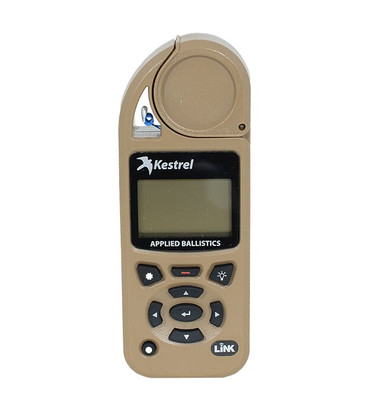
Kestrel 5700 Elite with Applied Ballistics Deals
Prices may change. May contain affiliate links.
Now consider a two-person precision rifle team. The spotter acquires the target, ranges it, reads wind and mirage, builds a firing solution, communicates it to the shooter, and calls corrections after the shot. The loop is the same: sensor (spotter's optic), processor (spotter's brain and ballistic solver), communicator (verbal call), effector (shooter), and then assessment. The time scale is compressed even further. A good team closes that loop in under 10 seconds.

The difference is bandwidth. The drone operator has telemetry, GPS coordinates, altitude data, and sometimes thermal overlay. The spotter has a spotting scope, a Kestrel, and their eyes. But the cognitive task is identical: filter noise from signal, prioritize the data that matters for the shot, and communicate it clearly enough that the shooter can execute without hesitation.
What Ukraine's drone war has demonstrated, repeatedly, is that the quality of the observation link determines the effectiveness of the entire chain. A $500 FPV drone with a good recon feed outperforms a $50,000 loitering munition with bad targeting data. The same principle applies at the range. A skilled spotter with a $1,200 spotting scope will outperform a solo shooter with a $4,000 rifle scope, because the observation and correction loop is where precision actually lives.
Reading conditions across depth
One of the most significant challenges Ukrainian drone operators face is environmental variation across distance. A drone flying a strike corridor of 50 to 100 kilometers encounters different wind layers, thermal conditions, and atmospheric density at different altitudes and positions along the route. Operators have learned to segment their flight path into zones, reading conditions at each waypoint rather than assuming a single set of environmental inputs will hold across the entire distance.
Precision rifle spotters face the exact same problem on a compressed scale. Wind at the firing line is not wind at the target. Mirage at 200 yards tells you nothing definitive about what's happening at 800. The data shows that most missed shots at distance come from misreading conditions in the middle third of the bullet's flight path, the zone where the bullet is slowest relative to the crosswind component and where the spotter has the least direct observation capability.
Ukrainian operators have developed what amounts to a layered sensing approach. They'll use one drone to read conditions near the target while another handles the strike. In PRS and practical field shooting, you don't have that luxury. But the concept translates: you should be reading conditions at multiple points downrange, not just at your position. Mirage bands at different distances, vegetation movement at various depths, and flag or indicator behavior at known points along the bullet's path all feed into a composite wind picture.

The mistake most spotters make is anchoring on the wind call at the firing position. A Kestrel mounted on a tripod next to the rifle tells you exactly what the wind is doing at one point in space. That's useful as a baseline, but it's maybe 20% of the total wind picture at 800 yards and beyond. The remaining 80% comes from reading indicators downrange, and that's a skill that requires deliberate practice, not better equipment.
Range notes: building a wind map
Next time you're at a range with targets at multiple distances, spend an entire session not shooting. Just observing. Bring a notebook. Log mirage direction and intensity at 200-yard intervals. Note vegetation movement, dust, and any other wind indicators. Do this for 30 minutes, recording every two minutes. You'll start to see patterns: wind channels, terrain effects, thermal shifts as the day progresses. That log becomes your wind map for that range, and the process of building it trains the observation skills that make a spotter effective.
Ukrainian drone units keep detailed environmental logs for their operating corridors. The best PRS competitors do the same thing for match venues. The principle is identical: conditions are not uniform across distance, and the only way to read them accurately is to build a mental model from layered observations over time.
Communication under degraded conditions
Electronic warfare has become the defining feature of the Ukraine conflict. Both sides deploy GPS jamming, communications disruption, and signal interference across the battlespace. Ukrainian drone operators routinely lose their control links, have their video feeds degraded, and face spoofed GPS signals that try to redirect their aircraft. The response has been to develop resilient communication protocols: mesh networking between drones, autonomous waypoint navigation that doesn't require continuous operator input, and standardized brevity codes that convey maximum information in minimum transmission time.
The spotter-shooter communication problem is obviously lower-tech, but the underlying challenge is the same. Under match stress, in adverse weather, or in field conditions with environmental noise, communication degrades. The spotter who gives a rambling wind call wastes time and introduces confusion. The spotter who uses a crisp, standardized format gets the shooter on target faster.

Consider the difference between these two calls:
"Okay, I'm seeing about a half mil of wind from the right, maybe a little more, and I think the mirage is showing some updraft, so you might want to hold a little high too."
Versus:
"Right 0.5. Up 0.1. Send it."
The second call contains the same information, stripped of uncertainty language and delivered in a format the shooter can execute immediately. Ukrainian drone operators learned this lesson through attrition: units with sloppy communication protocols lost more drones and hit fewer targets. The data from after-action reviews consistently showed that standardized, compressed communication improved strike accuracy by measurable margins, even when the underlying targeting data was identical.
For rifle teams, the takeaway is to develop and rehearse a communication SOP before you need it under pressure. Decide on your format: adjustment direction, value, confidence level if needed, and the send command. Practice it until it's automatic. A spotter who hesitates or qualifies every call introduces latency into the loop, and at distance, latency costs hits.
Redundancy in observation
One of the most striking tactical adaptations in Ukraine has been the shift from single-drone operations to multi-drone observation networks. Early in the conflict, a single reconnaissance drone would spot for a single strike asset. As electronic warfare and air defense capabilities improved, single-point-of-failure systems became unreliable. The response was redundancy: multiple recon drones covering the same target area from different angles, mesh-networked so that if one is jammed or destroyed, the observation capability persists.

RUSI's analysis of combined arms approaches in Ukraine highlights this distributed observation model as one of the conflict's most important tactical innovations. Units that maintained persistent, redundant observation of their target areas achieved significantly higher hit rates than those relying on single observation points.
The precision rifle parallel is straightforward. A spotter who relies on a single observation method, say, mirage only, or Kestrel only, has a single point of failure in their wind-reading process. The best spotters cross-reference multiple inputs: mirage, vegetation, Kestrel data at the firing line, known wind indicators downrange, and the trace of previous shots. Each input is imperfect. Layered together, they build a much more accurate picture.
Shot trace is the spotter's equivalent of battle damage assessment. Watching the bullet's vapor trail through the scope or spotting scope tells you what the wind actually did to the round, not what you predicted it would do. That feedback loop is how you update your wind model in real time. Ukrainian drone operators do the same thing: they watch the strike, assess the result, and adjust the next engagement. The teams that are fastest at processing that feedback and updating their model are the ones putting rounds on target consistently.
What spotters get wrong: common mistakes
The drone war data, combined with what shows up repeatedly at PRS matches and in field shooting, points to a consistent set of spotter errors.
The first is over-reliance on technology at the expense of observation skills. A Kestrel 5700 with Applied Ballistics is an incredible tool. It's also a single data point at a single location. Spotters who trust the Kestrel output over their own wind reading downrange will get burned every time conditions vary across the bullet's flight path. The tool gives you a starting point. Your eyes give you the correction.
The second is failure to maintain continuous observation. In Ukraine, units that "checked in" on a target intermittently rather than maintaining persistent surveillance missed fleeting engagement windows and failed to detect changes in the target environment. For a spotter, this means staying on the glass between shots. The wind doesn't pause while the shooter cycles the bolt. Conditions at the moment of the shot are what matter, and if you looked away for five seconds, you may have missed a gust that changes the call by 0.3 mils.
Third is poor communication discipline. As discussed above, verbose or uncertain calls slow the loop and reduce hit probability. Every unnecessary word is latency.

Fourth is anchoring on the first wind call and failing to update. Conditions change. The wind at the beginning of a stage is not the wind at the end. Ukrainian operators learned to treat every engagement as a new problem, even within the same target area. Spotters should do the same. Your wind call from 30 seconds ago is historical data, not a current solution.
Fifth is neglecting to log data. The best drone units in Ukraine maintain detailed strike logs that feed back into planning for future operations. The best PRS shooters keep DOPE books that record not just elevation and wind holds, but conditions, time of day, temperature, and what the mirage was doing. Log it. Then trust the log. Over time, that data set becomes your most valuable asset.

Spotting scope and wind meter comparison
The gear that supports the spotter's role matters, but it matters less than the skills. Still, there are meaningful differences between the tools available.

Vortex Razor HD 27-60x85 Deals
Prices may change. May contain affiliate links.
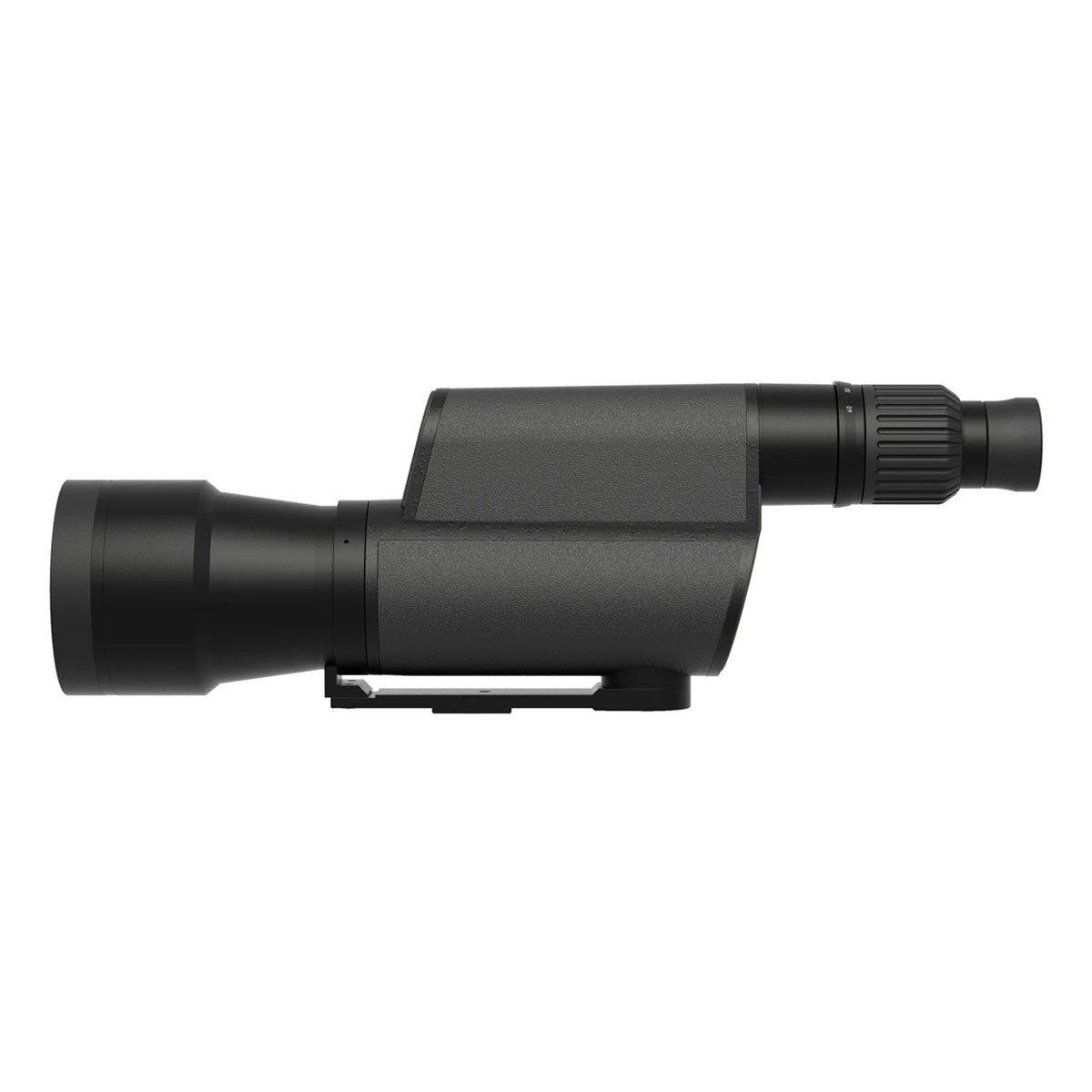
Leupold Mark 4 20-60x80 Deals
Prices may change. May contain affiliate links.
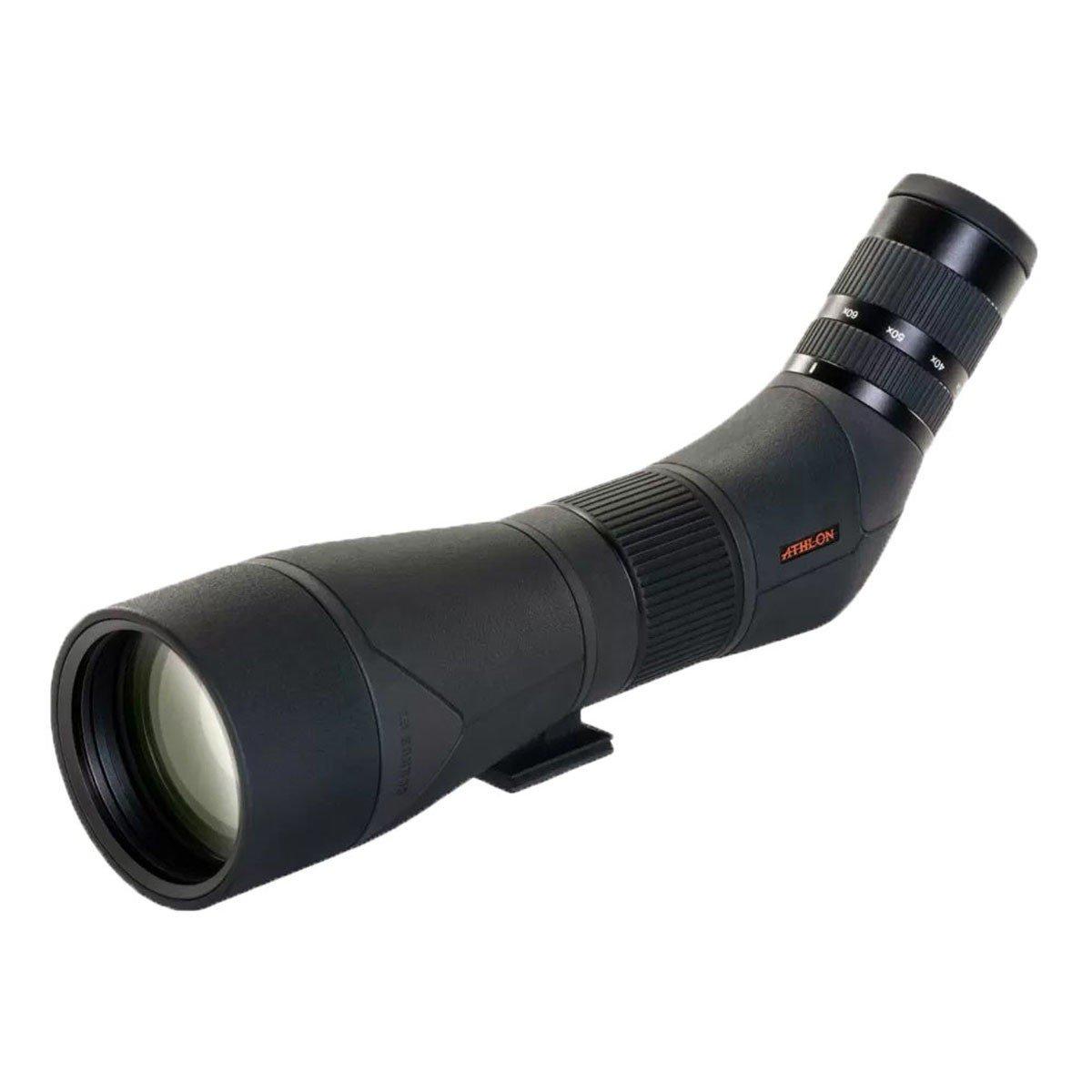
Athlon Cronus 20-60x86 Deals
Prices may change. May contain affiliate links.
For spotting scopes, the Vortex Razor HD 27-60x85 gives excellent optical clarity and a wide field of view at the magnifications most useful for reading mirage and trace. The Leupold Mark 4 20-60x80 is slightly more compact and performs well in low light but gives up some edge sharpness at maximum magnification. The Hensoldt Spotter 60 is the benchmark for optical quality, resolving mirage detail that lower-tier scopes simply can't show you, but the price reflects that. The Athlon Cronus 20-60x86 has closed the gap significantly on the mid-tier options and handles mirage observation well for its price point. For most PRS and field applications, the ability to clearly read mirage at 20x to 40x matters more than maximum magnification. You're rarely cranking a spotting scope to 60x in real conditions.
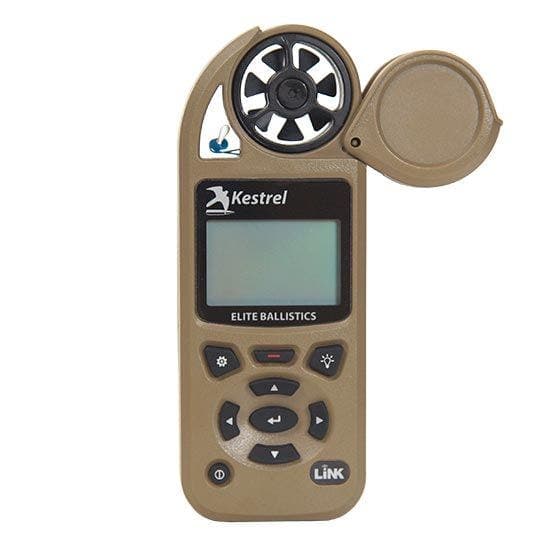
For wind meters, the Kestrel 5700 Elite with Applied Ballistics is the standard for a reason. It integrates environmental data directly into a ballistic solver, giving you a firing solution that accounts for density altitude, Coriolis, spin drift, and measured crosswind at your position. The Kestrel 3000 gives you wind speed, temperature, and humidity without the ballistic integration, which is plenty if you're running a separate solver on your phone or doing the math manually. The WeatherFlow WINDmeter is a budget option that pairs with a smartphone and gives surprisingly accurate wind readings, though it lacks the environmental sensor suite of the Kestrel line. The key differentiator isn't accuracy of the wind measurement itself, which is similar across quality meters. It's the integration with a ballistic solver and the ability to log data over time. The 5700 Elite does both natively.
The Sniper's Hide community has debated wind meters extensively, and the consensus tracks with the data: any quality meter gives you an accurate reading at your location. The skill gap is in what you do with that reading and how you combine it with downrange observation. A $100 wind meter and strong mirage-reading skills will outperform a $700 Kestrel with no observation discipline.
Match notes: applying the drone-spotting model to a PRS stage
Picture a typical PRS stage. You have 90 seconds to engage four targets at distances from 400 to 900 yards, shooting from a barricade. The wind is quartering from the right, maybe 8 to 12 mph, with gusts.
If you're shooting solo, you're doing everything: reading wind, building solutions, managing position, breaking shots, and self-spotting. Your observation loop is fragmented because you can't watch conditions while you're executing the shot.

Now add a spotter running the drone-operator model. They're maintaining continuous observation downrange, reading mirage at multiple depths, watching for condition changes between shots, calling corrections based on trace, and delivering compressed wind updates before each shot. The shooter's cognitive load drops dramatically. They can focus entirely on positional stability and trigger execution.
The spotter segments the engagement like a drone corridor. Targets at 400 and 550 get one wind solution because the conditions are relatively uniform at those distances. The 750 and 900 targets get separate reads because there's a terrain feature at 600 that's channeling wind differently. The spotter communicates this as two distinct wind calls, not one averaged solution. That segmentation, treating different portions of the range as different environments, is exactly what Ukrainian operators do across their strike corridors.
Between shots, the spotter watches trace. If the first round at 750 impacts 0.2 mils right of center, they update the call for the 900-yard target accordingly, because that trace data is the most current and relevant wind information available. They don't re-read the Kestrel. They don't re-evaluate mirage from scratch. They use the feedback from the system itself, the bullet's actual flight path, to refine the next solution.
This is the kill chain operating at maximum efficiency: observe, orient, decide, act, assess, and update. The loop never stops.
Building your own observation discipline
The practical application of all this comes down to training your observation skills with the same rigor you apply to marksmanship fundamentals. Most shooters spend 90% of their practice time behind the rifle and 10% behind the spotting scope. Flip that ratio for a month and watch what happens to your hit rate.
Start with mirage reading. Set up your spotting scope at a range with targets at 300, 500, and 700 yards. Spend time just watching the mirage at each distance. Learn to distinguish a full-value wind mirage (mirage flowing horizontally) from a boiling mirage (rising vertically, indicating calm or head/tail wind). Note how the mirage changes character at different distances and different times of day. Morning mirage behaves differently than afternoon mirage because thermal conditions shift as the ground heats up.
Then add wind estimation. Before you check your Kestrel, estimate the wind speed and direction based on mirage and vegetation. Then check the meter. Track your estimation error over time. The goal isn't to replace the Kestrel. The goal is to calibrate your eyes so that when you're reading conditions at 600 yards where the Kestrel can't reach, your estimates are grounded in experience rather than guesswork.

Practice compressed communication with a partner. Set a timer. Give a wind call in under three seconds. Have your partner repeat it back. If there's any ambiguity, refine the format. Do this until the communication is automatic and frictionless.
Finally, keep a conditions log. Every range session, record wind speed and direction at the firing line, mirage observations at multiple distances, temperature, humidity, and density altitude. Over time, you'll build a dataset that reveals patterns: how conditions at your local range shift through the day, how certain wind directions create predictable effects at specific target distances, and how your own estimation accuracy improves with practice.
The Ukrainian drone war has generated enormous amounts of tactical data about observation, communication, and fire correction under real-world conditions. The technology is different. The scale is different. But the fundamental problem, putting a projectile on a target using layered observation and disciplined communication, is the same problem precision rifle teams have been solving for decades. The drone operators just have better telemetry. You have better fundamentals. The question is whether you're training the observation side of those fundamentals with the same intensity as the shooting side.
Go spend a range day with your notebook and spotting scope. Don't fire a single round. Just watch, read, log, and learn. That session will do more for your hit rate at distance than another 200 rounds of group shooting at 100 yards.