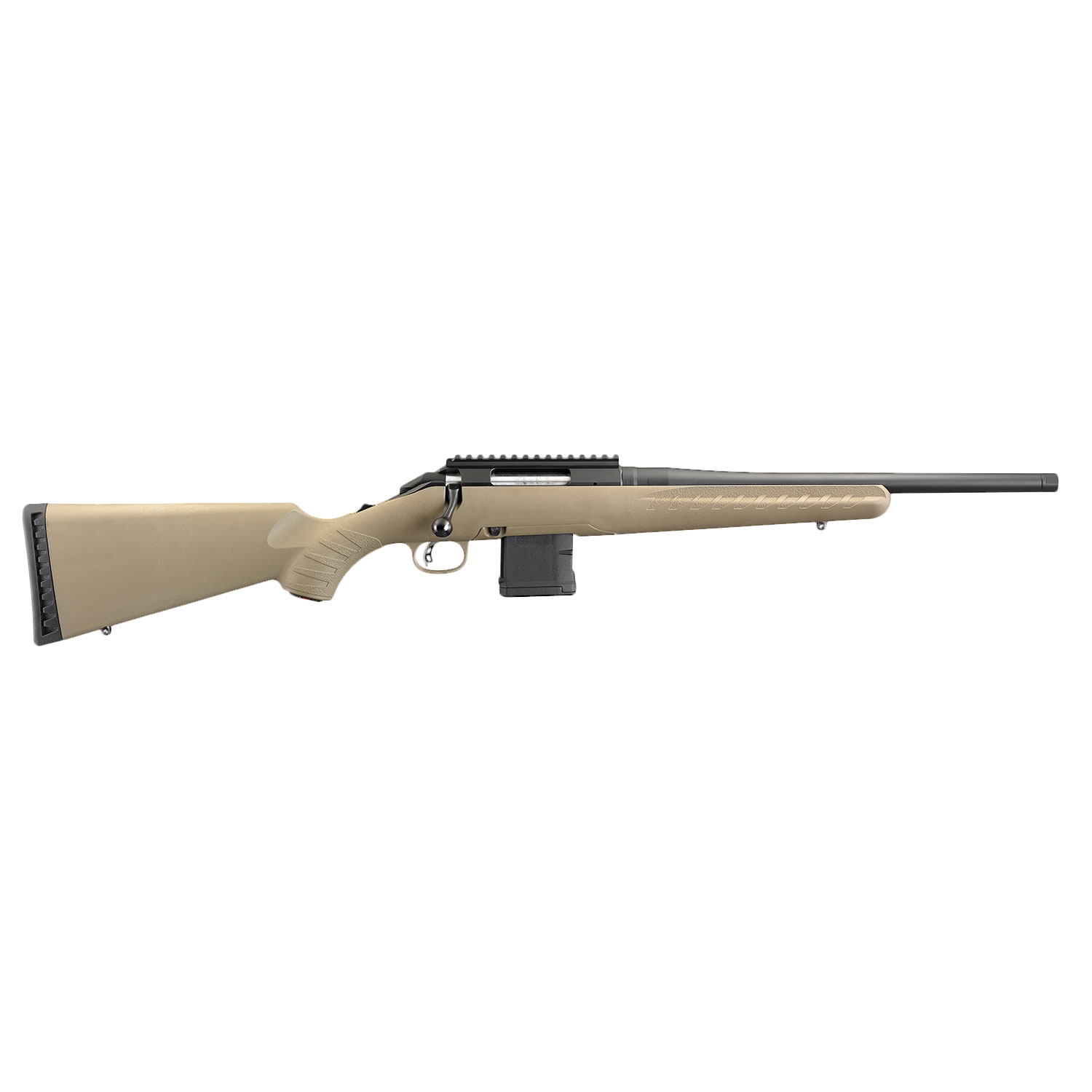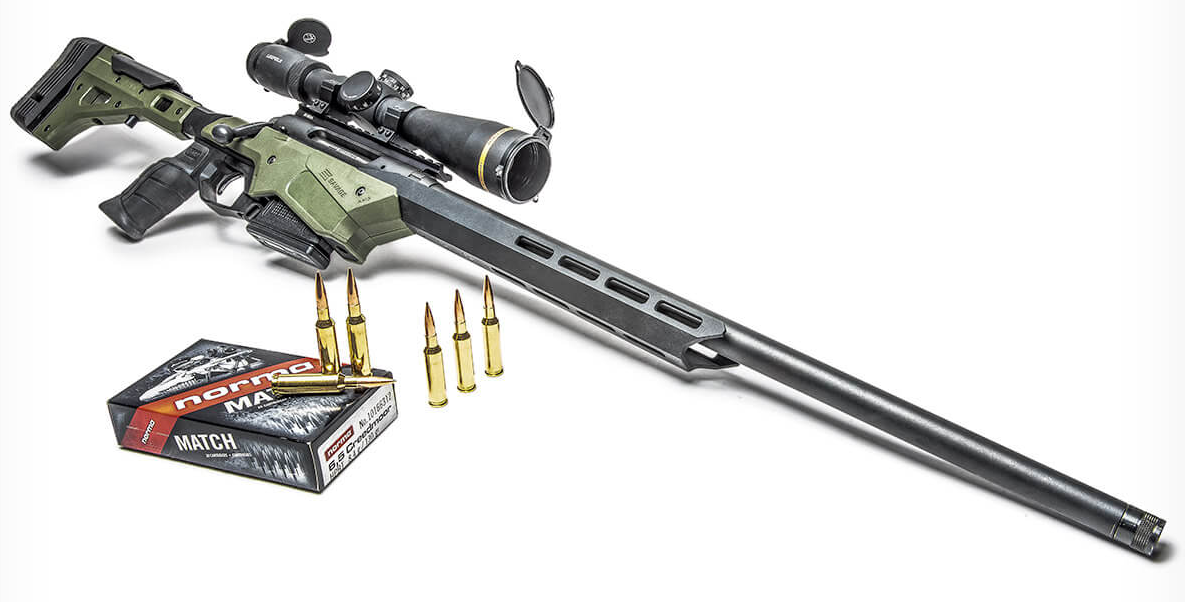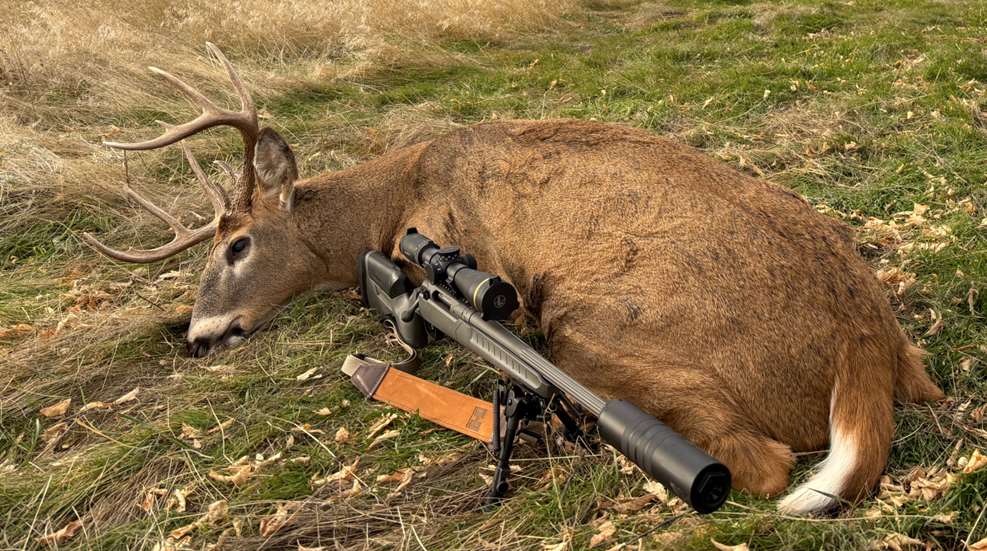
You've got a hog problem, a budget, and two rifles staring at you from the shelf. The Savage Axis II and the Ruger American Gen II are the two bolt actions that come up in every "first real rifle" conversation, and for good reason. Both sit in the $500 to $600 range in most configurations, with the Savage AXIS 2 carrying an MSRP of $539 and the Ruger American Gen II priced around $580, both shoot well enough to drop pigs cleanly inside 200 yards, and both have enough chambering options to match whatever your state allows or your feeder setup demands.

Savage Axis II Deals
Prices may change. May contain affiliate links.

The real question isn't which one shoots tighter groups off a bench rest. It's which one fits the way you actually hunt hogs. That means thinking about caliber options, magazine compatibility, barrel threading, trigger quality, and how much abuse the thing can take getting dragged through Texas brush or Louisiana swamp mud at 2 a.m. This is a direct comparison built around one job: killing pigs without spending more than the cost of a decent optic.
The decision you're actually making
Hog hunting is rough on gear. You're shooting from blinds over feeders, stalking through thick cover, or sitting in a side-by-side bouncing across ranch roads. The rifle gets wet, muddy, banged around, and sometimes left in a truck for days between hunts. You need something that functions reliably when it's filthy, hits hard enough to anchor a 200-pound boar, and doesn't make you cry if it gets scratched.
Both the Savage Axis II and Ruger American Gen II check those boxes on paper. They're synthetic-stocked, bolt-action rifles available in the calibers that matter for hogs. But the details diverge in ways that matter depending on your setup. If you're hunting in a straight-wall-only state like Ohio, you care about 350 Legend availability. If you want to run a suppressor, you care about barrel threading. If you plan to upgrade later, you care about aftermarket support. These are the variables that should drive your pick.


Ruger American Gen II Deals
Prices may change. May contain affiliate links.
Quick comparison
Data drawn from the MeatEater head-to-head comparison of these two rifles in 6.5 Creedmoor. Specs will shift slightly by chambering and SKU.
A few things jump out immediately. The Ruger comes threaded from the factory, which matters if you're running a suppressor or plan to add a brake. The Savage gives you an extra round in the magazine and a wider trigger adjustment range that goes lighter than the Ruger's floor. The Ruger's adjustable length of pull is a genuine advantage if the rifle might get shared between hunters of different sizes, or if you're wearing heavy layers in a cold-weather blind.
Ballistics context: caliber matters more than the rifle
Neither of these rifles is going to be the limiting factor on terminal performance. The barrel does 80% of the work, and both Savage and Ruger produce barrels that shoot well inside what hog hunting demands. The caliber you chamber it in is the bigger decision.
.308 Win
The default hog cartridge for bolt guns, and for good reason. A 150-grain soft point at roughly 2,800 fps from a 22-inch barrel will blow through the shoulder plate of any pig walking. Both rifles are available in .308, and ammo is everywhere. Gas stations, Walmart, your buddy's ammo can. Recoil is moderate and manageable in these lightweight platforms. If you're picking one caliber for a dedicated hog rifle and don't have state restrictions pushing you elsewhere, .308 is the answer that's never wrong.

6.5 Creedmoor
Flatter trajectory and less wind drift than .308, with enough energy to cleanly take any hog you'll encounter. The 6.5 CM has become the darling of the budget bolt-action world partly because both the Axis II and Ruger American shoot it accurately. One forum report describes a Savage Axis II in 6.5 Creedmoor shooting half-MOA groups within 15 rounds of bore-sighting with cheap ammo. That's not guaranteed, but it's not an outlier for these rifles either. The tradeoff is slightly less terminal authority on big boars compared to a .30-caliber, particularly with cheaper soft-point loads. For hogs under 200 pounds at distances under 250 yards, it's a non-issue.
350 Legend
Here's where the rifles diverge meaningfully. The Ruger American Ranch is available in 350 Legend and uses AR-style magazines. The Savage Axis is also available in 350 Legend, but there's a compatibility note worth knowing: at least one ammunition manufacturer (Bear Creek Ballistics) explicitly warns that their 140-grain all-copper 350 Legend load is not recommended for Savage Axis and Apex rifles due to lighter firing-pin strikes that can cause misfires. They make a specific load tuned for Savage and Henry rifles to address this. That doesn't mean all 350 Legend ammo will misfire in a Savage, but it's a data point that suggests the Ruger's firing pin hits harder and feeds the cartridge more reliably across a wider range of loads.
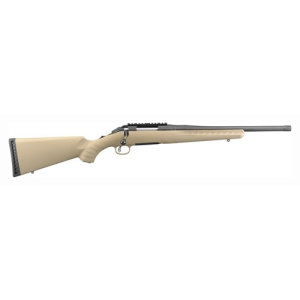
Ruger American Ranch Deals
Prices may change. May contain affiliate links.
If you're in a straight-wall state and 350 Legend is your caliber, the Ruger American Ranch gets the edge on magazine availability and demonstrated ammo compatibility.
.300 Blackout
Both are available in .300 BLK, and it's a legitimate hog cartridge inside 150 yards. The Ruger American Ranch in .300 Blackout was tested by Gun Tests alongside the Savage Axis II in the same chambering. The Savage averaged about 1.75-inch groups (excluding one outlier load) with a best group of 1.09 inches from Frontier 125 FMJs. Gun Tests called the Savage Axis II in .300 Blackout a "Best Buy" at $385. The Ruger in that same test showed slightly larger groups. Both rifles clocked similar velocities with Magtech 123-grain FMJ: the Savage at 2,245 fps and the Ruger at 2,278 fps. Real-world difference? Negligible.
The .300 BLK shines if you plan to suppress the rifle. Subsonic loads through a can make for extremely quiet hog hunting, and the Ruger's factory-threaded barrel means you're ready to go without a trip to the gunsmith.
Use cases
Feeder hunting from a blind
This is the bread and butter of hog hunting across the South. Shots are typically 50-150 yards, often in low light. You want a rifle that's easy to maneuver in a tight blind, cycles smoothly for follow-up shots, and has a decent trigger for precise shot placement on a pig's ear hole.

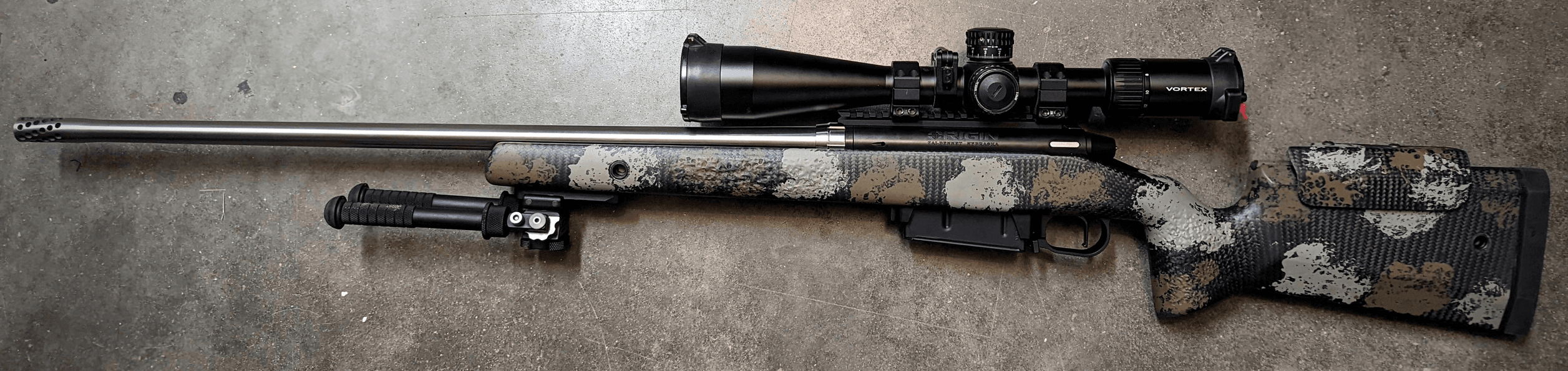
Both rifles work here. The Ruger's shorter overall length (41.25" vs 42.5" in 6.5 CM) and lighter weight make it slightly easier to swing in a box blind. The Savage's AccuTrigger adjusts down to approximately 2.5 to 3.25 pounds on sporter barrels, or as low as 1.5 to 2.25 pounds on varmint and heavy barrels, which is genuinely useful for precise shots on stationary pigs. The Ruger's Marksman Trigger bottoms out at 3 pounds. That half-pound difference is noticeable if you're trying to break a clean shot on a boar that's about to spook.
Spot-and-stalk or ranch truck duty
You're covering ground, the rifle is getting bounced around, and you might need to shoot off sticks or prone at varying distances. Weight and handling matter. Both rifles are under 7 pounds bare, which is about right for a walking rifle. The Ruger's adjustable LOP is a nice touch if you're switching between a t-shirt in September and a heavy jacket in January.
Durability-wise, one forum user described running a Ruger American Ranch through two seasons of "genuinely rough" Ohio deer hunting with "zero trouble." The Savage's synthetic stock is similarly utilitarian. Neither rifle is going to win a beauty contest, and that's the point. The Savage's machining has been described as "more crude and less pretty" than higher-end Rugers, but crude doesn't mean fragile. It means you won't feel bad when it gets a new scratch.
Suppressed hog hunting
This is where the Ruger pulls ahead clearly. Factory-threaded barrels across most of the Gen II lineup mean you're mounting a can the day you buy the rifle. The Savage Axis II's standard barrel is not threaded. You can have it threaded by a gunsmith, but that's $100-150 and a week of turnaround. The Ruger also has an integral Picatinny rail, which makes mounting a scope or night-vision clip-on straightforward without hunting for the right base.

Pew Pew Tactical named the Ruger American Ranch Gen II their pick for "Easiest to Suppress" in their hog rifle roundup, noting the threaded barrel, affordable price point, and the fact that some calibers accept AR magazines.
Night hunting with thermals
Increasingly common where legal, and it changes the equipment calculus. You need a rifle that can host a clip-on thermal or a dedicated thermal scope, which means a solid rail and usually a suppressor to keep the blast manageable. The Ruger's Picatinny rail and threaded barrel make it the more natural platform for this setup. The Savage's two-piece Weaver bases work fine for a conventional scope but add a step if you're trying to mount a heavy thermal unit.
Build notes: what you'll actually want to change
Neither rifle is perfect out of the box for serious hog work. Here's what most people end up upgrading.

Savage Axis II XP Deals
Prices may change. May contain affiliate links.

Vortex Crossfire II 3-9x40 Deals
Prices may change. May contain affiliate links.

Vortex Crossfire II 4-12x Deals
Prices may change. May contain affiliate links.
Vortex Diamondback 3-9x Deals
Prices may change. May contain affiliate links.
Vortex Diamondback 4-12x Deals
Prices may change. May contain affiliate links.
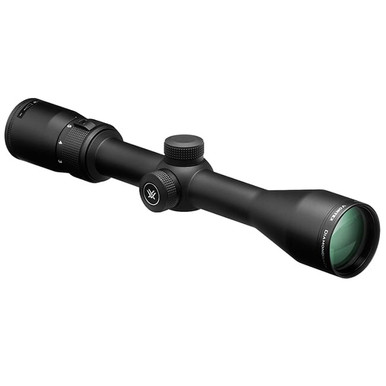
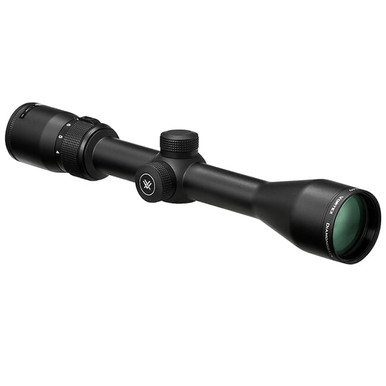
The scope is the first thing. If you buy the Savage Axis II XP package, it ships with a factory-mounted 3-9x40mm scope that's been bore-sighted. It's functional for getting to the range and confirming zero, but it's not a scope you'd want to stake a hunt on in the last 15 minutes of legal light. The Ruger ships without optics in most configurations, which actually saves you money if you already know what glass you want. A Vortex Crossfire II or Diamondback in the 3-9x or 4-12x range is the standard pairing at this price point. Gun Tests specifically recommends a mid-range scope like the Vortex Crossfire II (around $200) as a good match for either rifle.
The trigger is the second consideration. The Savage AccuTrigger is widely regarded as the better factory trigger in this price class. It adjusts lower and breaks cleaner than the Ruger Marksman Trigger. If you buy the Ruger and want a lighter pull, Timney makes a drop-in replacement for the Savage Axis that's adjustable from 1.5-4 pounds at $125-140. That's a Savage-specific upgrade path. The Ruger's trigger is adequate but less adjustable.
The stock is where both rifles show their budget roots. Neither has a cheek riser or meaningful length-of-pull adjustment beyond the Ruger's spacer system. The Savage Axis II's stock has no LOP adjustment at all at its fixed 13.75 inches. If you want to upgrade the Savage's stock, aftermarket options exist from companies like Boyd's, and EABCO notes that many of their Savage 10/110 barrels also fit Axis and Axis II rifles, which opens up a longer-term upgrade path if you want to rebarrel down the road.
Common mistakes with budget hog rifles
Buying the scope package and never re-zeroing. The Savage XP combo ships bore-sighted, not zeroed. Bore-sighting gets you on paper. It doesn't get you on a pig's vitals. Confirm zero at 100 yards with the ammo you'll actually hunt with.
Ignoring the magazine. The Ruger American Ranch in 350 Legend uses AR-style magazines. If you've had feeding issues with certain AR mags in other platforms, those same mags might cause problems here. Stick with quality magazines. One forum user noted that the Savage avoids this issue entirely since it uses its own detachable box magazine.
Skipping the bore cleaning cycle. Budget barrels sometimes have rougher bores that benefit from a proper break-in. Shoot a round, clean, shoot three, clean, shoot five, clean. Twenty rounds of this and the bore will smooth out. Both rifles can shoot well out of the box, but a little attention early pays dividends.
Over-penetration concerns with .308 on small pigs. A 150-grain .308 soft point will blow through a 100-pound shoat and keep going. If you're hunting near structures or other hunters, consider a controlled-expansion bullet or step down to 350 Legend or .300 BLK for closer-range work.
Forgetting to torque your scope rings. These are lightweight rifles with synthetic stocks. Recoil will walk your scope loose if your rings aren't torqued to spec. 15-18 inch-pounds for most aluminum rings. Torque specs exist for a reason.
Chambering availability
The Ruger American Gen II line has significantly more chambering options than the Savage Axis II. Based on the MeatEater comparison:
The Ruger is available in 6.5 Creedmoor, .308 Win, 7mm-08 Rem, .243 Win, .450 Bushmaster, 6mm Creedmoor, 350 Legend, 400 Legend, .223 Rem, 6mm ARC, .204 Ruger, 6.5 Grendel, .30-06 Sprg, .270 Win, .300 Win Mag, 6.5 PRC, 7mm PRC, and 22 ARC.

The Savage Axis II is available in .223 Rem, .22-250 Rem, .243 Win, 6.5 Creedmoor, 7mm-08 Rem, .308 Win, .25-06 Rem, .270 Win, .30-06 Sprg, and .300 Blackout.
For hog-specific calibers, the Ruger wins on options. The 350 Legend, 400 Legend, and .450 Bushmaster are all represented in the Ruger lineup and absent from the Axis II. The Savage counters with .300 Blackout, which the Ruger American Gen II Standard doesn't list (though the Ranch model does). If you want a straight-wall cartridge in a bolt gun under $500, the Ruger is essentially your only option between these two.
Logistics: ammo, barrel life, and long-term cost
Ammo cost for .308 Win is about as cheap as centerfire gets. Bulk 150-grain FMJ runs well under a dollar a round, and hunting loads in the $1.25-1.75 range are everywhere. 6.5 Creedmoor is slightly more expensive but widely stocked. 350 Legend is still finding its footing in terms of shelf availability outside of straight-wall states, though online options are plentiful.
Barrel life is a non-issue for a hog rifle. You're not burning 5,000 rounds a year through this thing. Competitive F-TR shooters commonly report .308 barrel accuracy declining around 2,800–3,800 rounds, though quality barrels (e.g., Krieger) and less demanding accuracy standards like hunting MOA can reach 5,000–6,000 rounds. A 6.5 Creedmoor barrel is good for 2,500-3,000 rounds of accurate life. A 350 Legend barrel, running at lower pressures, will outlast either. For a rifle that sees 200 rounds a year between practice and hunting, barrel life is measured in decades.
Reloading favors the .308 and 6.5 CM due to widely available brass, bullets, and published load data. 350 Legend is reloadable but the data is thinner and the cartridge's rebated rim can be finicky in some dies. If you reload, .308 is the path of least resistance.
The Savage platform has a barrel-nut system that makes barrel swaps relatively straightforward compared to the Ruger's pressed barrel. EABCO sells pre-fit barrels for Savage Axis rifles starting around $299, which means you could theoretically rebarrel a Savage Axis into a different caliber without a full gunsmith visit. The Ruger doesn't offer that same modularity.
Which to choose
If you want a suppressor-ready hog rifle in 350 Legend or .300 BLK, buy the Ruger American Ranch Gen II. Factory threading, AR magazine compatibility in some calibers, and the integral Picatinny rail make it the more versatile platform for night hunting and suppressed work. Pew Pew Tactical listed it at $579 at GrabAGun.
If you want the best trigger out of the box and plan to hunt with a conventional scope over feeders, the Savage Axis II in .308 or 6.5 Creedmoor is hard to beat. The AccuTrigger adjusting down to 2.5 pounds is a real advantage for precise shot placement, and the XP package with a factory scope gets you to the range faster. Gun Tests gave the Savage Axis II XP in .308 an A- Best Buy rating, describing it as 'accurate enough for hunting' and 'affordable,' and recommended it alongside the Ruger as a good starting hog rig.
If you're in a straight-wall state, the Ruger is your rifle. The Axis II doesn't come in 350 Legend, 400 Legend, or .450 Bushmaster.
If you want long-term upgrade potential, the Savage's barrel-nut system gives you more options for rebarreling and caliber swaps. The aftermarket for Savage actions is deeper than for the Ruger American, partly because the barrel-nut design has been around longer and gunsmiths are familiar with it.
If the rifle is getting handed to a newer or smaller-framed hunter, the Ruger's adjustable length of pull (12" to 13.75") is a meaningful ergonomic advantage over the Savage's fixed 13.75" pull.
The bottom line
Both of these rifles will kill hogs dead at any range you should be shooting at them. The Ruger American Gen II is the more modern, more versatile platform with better factory features for suppressed and night hunting. The Savage Axis II is the sharper value if you prioritize trigger quality and don't need a threaded barrel. Buy whichever one matches your hunting style, chamber it in .308 if you have no state restrictions, mount a $200 scope, confirm zero at 100 yards with your hunting load, and go find some pigs. The rifle isn't going to be what holds you back.