A single unsuppressed rifle shot produces impulse noise between 140 and 175 dB at the shooter's ear. A 5.56 AR with a muzzle brake can push past 168 dB. A .300 Win Mag bolt gun cracks 166 dB without a brake. For reference, OSHA and NIOSH set the recognized impulse-noise damage threshold at 140 dB. Every shot above that line kills hair cells in the cochlea, and those cells don't regenerate. The damage is cumulative, permanent, and silent until you notice the ringing that never stops.

This isn't a scare tactic. It's the reason hearing protection is the single most important piece of gear you bring to the range, and the one most shooters spend the least time thinking about. You'll agonize over a trigger upgrade for weeks and then grab whatever earmuffs are hanging by the register. That's backwards. So here's every category of shooting hearing protection available right now, with real specs, real trade-offs, and honest notes on what works and what doesn't.
NRR: what the number actually means
NRR stands for Noise Reduction Rating, and it's tested in a lab under ANSI S3.19 or the newer S12.6 standard. The number on the box is the lab-tested attenuation in decibels. The problem: real-world performance almost always falls short. OSHA's own guidance says to subtract 7 dB from the NRR for earmuffs and subtract 7 then halve the result for plugs when estimating real-world protection. Some agencies use even more aggressive derating.
Why the gap? Fit. Lab subjects get coached on insertion depth and seal. You're shoving foam plugs in your ears between stages at a match while someone's calling "Shooter ready." A muff with an NRR of 26 might deliver 19-22 dB of real attenuation if the seal around your ear is good. Glasses break that seal. A rifle stock pushes the cup off your cheek-side ear. Beard stubble creates gaps.
That's why doubling up, foam plugs under earmuffs, is standard practice for indoor ranges and braked rifles. The math isn't additive (you don't get NRR 26 + NRR 33 = 59 dB of reduction). The accepted formula: take the higher NRR and add 5 dB. So plugs rated NRR 33 under muffs rated NRR 26 gives you roughly 38 dB of effective attenuation. That's the difference between comfortable and painful at an indoor pistol bay.

How electronic protection works
Electronic hearing protection uses external microphones to pick up ambient sound, amplifies it through internal speakers so you can hear range commands and conversation, and then compresses or clips the signal when impulse noise exceeds a threshold, typically around 82-85 dB. The key spec is reaction time, usually listed in milliseconds. Faster is better. Most quality electronic muffs react in under 2 milliseconds. Some budget units are slower, and you can hear the lag as a brief "thump" of uncompressed noise before the circuit kicks in.
Amplification levels matter too. Most electronic muffs amplify ambient sound to somewhere between 18 and 30 dB of gain. Higher gain is useful for hunting when you want to hear footsteps, but it can make a busy public range sound like a cafeteria. The better units let you adjust gain independently per ear or have directional microphones that help you locate sound sources.
One thing nobody talks about: microphone placement and quality vary wildly between price points. Cheap omnidirectional mics pick up wind noise and make everything sound tinny. Better units use wind-cut foam covers and higher-fidelity speakers that make voices sound natural rather than robotic. That difference matters a lot during a four-hour carbine class.
Section 1: Electronic earmuffs
Walker's lineup
Walker's dominates the budget and mid-range electronic muff market, and for good reason. The Razor Slim Electronic is probably the most popular electronic muff in America. NRR 23, two omnidirectional microphones, sound-activated compression with a reaction time listed at 0.02 seconds. It runs on two AAA batteries with roughly 350 hours of battery life. The slim cup design keeps the profile low enough for decent cheek weld on a rifle. At a street price that's often under $50, it's the default recommendation for someone buying their first electronic set. The downsides: audio quality is adequate but not great, the headband padding is thin, and NRR 23 is the bare minimum for outdoor rifle shooting. Not enough for indoor ranges without plugs underneath.

The Razor Compact shrinks the cup further for smaller heads and youth shooters. Same NRR 23, same electronics. The Razor Quad bumps to four microphones for better directional awareness and a slightly fuller sound profile, though the NRR stays at 23. The Razor X-TRM is Walker's enhanced model with improved speakers and a more comfortable headband, still NRR 23.
Where Walker's gets more interesting is the XCEL line. The XCEL 100 adds voice clarity and independent volume controls. The XCEL 500BT is the flagship: NRR 26, Bluetooth connectivity for phone calls and music, four listening modes (universal, power boost, high-frequency boost, clear voice), and digital sound processing that makes voices sound noticeably more natural than the Razor series. It runs on two AAA batteries. The 26 dB NRR is a real step up. If you want Bluetooth and better sound without jumping to the $300+ tier, the XCEL 500BT is the sweet spot in Walker's lineup.
Best for: The Razor Slim is the go-to budget pick for outdoor range days. The XCEL 500BT suits shooters who want Bluetooth and better audio without spending Peltor money.
Howard Leight
The Impact Sport is the other "everybody owns one" electronic muff. NRR 22, two directional microphones, 4-hour auto-shutoff, and an AUX input. Runs on two AAA batteries. The sound quality is slightly better than the base Razor Slim, with a more natural voice tone. The low-profile design works reasonably well with rifle stocks. The NRR 22 is thin, so double up indoors.

Howard Leight Impact Sport Deals
Prices may change. May contain affiliate links.

The Impact Sport Bolt is the updated version with a rubberized finish, slightly thicker headband padding, and the same NRR 22 / same electronics. It's a comfort upgrade, not a performance one. The Impact Pro is the big-cup passive-plus-electronic option at NRR 30. Significantly more bulk, noticeably more attenuation. The trade-off is a much larger profile that will interfere with cheek weld on rifles. It suits indoor range use and pistol shooting where stock clearance isn't a concern.
Best for: Impact Sport is a solid all-rounder for outdoor shooting. Impact Pro is the indoor-range pick if you want high NRR in an electronic muff and don't mind the bulk.
3M Peltor
The Sport Tactical 300 sits at NRR 24 with a clean, comfortable design and clear voice reproduction. It uses AAA batteries. Good sound, good comfort, slightly higher NRR than the budget options. The Sport Tactical 500 is the one that gets recommended on every precision rifle forum. NRR 26, Bluetooth, excellent audio clarity with 3M's SMART technology that adjusts amplification based on ambient noise levels. The microphones are noticeably better than anything in the sub-$100 range, and the ear cups are comfortable for extended wear. Runs on two AAA batteries with around 40 hours of Bluetooth use or several hundred hours without. The reaction time is fast enough that you won't perceive a gap. The 500 is the benchmark mid-tier electronic muff.

Peltor 3M Peltor Sport Tactical 500 Deals
Prices may change. May contain affiliate links.

Peltor 3M Peltor Sport Tactical 300 Deals
Prices may change. May contain affiliate links.

The ComTac VI Hearing Defender is the civilian version of the military ComTac line. NRR 23, but the audio quality is in a different league. Environmental listening is natural and spatial, voices are crisp, and the build quality is tank-grade. It runs on two AA batteries. The price is steep, north of $400, but if you're running comms or spending full days on the range in a professional context, the comfort and audio fidelity justify it for a lot of shooters.
Best for: Sport Tactical 500 is the best all-around electronic muff for the money. ComTac VI is for professional use, comms integration, and all-day classes.
Sordin Supreme Pro-X
NRR 18, which looks low on paper. The Sordin's strength isn't raw attenuation; it's audio quality and build. The waterproof microphones, gel ear cups, and natural-sounding amplification make it a favorite among European military units and competition shooters who prioritize situational awareness. Runs on two AAA batteries with roughly 600 hours of life. The NRR 18 means you'll want plugs underneath for anything louder than a pistol outdoors. The slim profile works well with rifle stocks.

Best for: Competition shooters and hunters who prioritize audio fidelity and will double up when needed.
Safariland Liberator HP 2.0
NRR 26, Bluetooth, and a feature set that directly competes with the Peltor 500. The Liberator HP 2.0 has independent volume controls for each ear, 3D hearing for directional awareness, and a comfortable over-head band. The audio quality is very good. Runs on two AAA batteries. It's slightly less well-known than the Peltor but trades blows with it spec-for-spec and sometimes wins on street price.
Best for: Shooters who want Peltor 500-level performance and are willing to look beyond the big three brands.
Ops-Core AMP
This is the high end. NRR 22, but the AMP is built for helmet integration, comms connectivity (NFMI downlead compatible), and professional tactical use. The sound reproduction is exceptional. Connectorized ear cups let you swap between headband, helmet rail, and ARC rail mounts. It runs on a single AA battery with around 600 hours of life. The price is $800+. Unless you're mounting to a helmet or running comms in a professional capacity, there are better values. But nothing else does what the AMP does in that niche.

Best for: Helmet-mounted use, comms integration, military and LE professionals.
Axil TRACKR and TRACKR Blu
The TRACKR is Axil's entry-level electronic muff at NRR 25. Clean design, decent audio, comfortable for the price. The TRACKR Blu adds Bluetooth. Both run on AAA batteries. They're solid mid-range options that don't do anything wrong but don't particularly stand out against the Peltor 300 or Walker's XCEL line.
Best for: Shooters who want a clean-looking mid-range muff with Bluetooth.
ISOtunes Sport DEFY line
ISOtunes approaches hearing protection from the jobsite/earphone world, and it shows. The DEFY BT is an electronic earmuff with NRR 25, Bluetooth 5.0, and a rechargeable lithium battery with roughly 22 hours of battery life. The DEFY Slim BT drops to a slimmer profile (NRR 22) with the same Bluetooth and rechargeable battery, around 28 hours. The DEFY Slim is the non-Bluetooth version, also rechargeable. The rechargeable battery is a real advantage over AAA-dependent competitors. Audio quality for music and calls is above average because ISOtunes is fundamentally an audio company. The ear cup comfort is good.
Best for: Shooters who want rechargeable batteries and solid Bluetooth audio quality.
Caldwell E-Max Shadows, ShellShock EXO PRO, Earmor M32 Plus, Pyramex Sentinel
The Caldwell E-Max Shadows are ultra-compact electronic muffs at NRR 23. They fold small and weigh very little. Sound quality is acceptable but not impressive. Good for a truck gun bag or backup pair.
The ShellShock EXO PRO has an interesting design with a behind-the-head band option and NRR 24. It's rechargeable via USB-C. The audio is decent and the profile is low. Worth a look if you hate over-the-head bands.
The Earmor M32 Plus is aimed at the tactical/airsoft crossover market but has legitimate NRR 22 protection. It's ARC rail compatible for helmets and runs on a single AAA. Build quality is acceptable for the price, but the audio doesn't compete with Peltor or Sordin at similar price points.
The Pyramex Sentinel is a budget electronic muff at NRR 26 that punches above its weight on raw attenuation. Sound quality is basic. It's a good choice if maximum NRR per dollar is your priority and you don't care about audio fidelity.
Section 2: Passive earmuffs
No batteries, no electronics, no failure modes. Passive muffs just block sound.

The 3M Peltor Optime 105 is the king of passive attenuation at NRR 30. The cups are large and the headband clamp is firm. They're not comfortable for all-day wear, and the profile makes rifle shooting awkward. But for indoor range use, especially doubled with plugs, nothing over-ear blocks more sound for the price.

The Peltor Sport Shotgunner II drops to NRR 24 in a slimmer, lighter package designed specifically for shotgunners. The lower profile works better with a shotgun stock. Comfortable for a couple hours of trap or skeet.
The Howard Leight Leightning L3 hits NRR 30 in a slightly more comfortable package than the Optime 105. The headband padding is better, and the cups are a touch softer. Still bulky, still a pistol-and-indoor-range muff.
The Walker's Razor Slim Passive matches the Razor Slim Electronic's profile at NRR 27 but with no electronics. It's the slimmest high-NRR passive option and works surprisingly well with rifles. If you don't need amplification, this is a great low-profile passive choice.
The ISOtunes Sport DEFY Slim Passive is NRR 25 in a compact, lightweight frame. Simple, comfortable, no frills.
The short version: Passive muffs are backup pairs, indoor-range doublers, or the right choice if you simply don't want to deal with batteries. The Razor Slim Passive and Optime 105 cover the slim and maximum-protection ends of the spectrum.
Section 3: Electronic in-ear
This is where the market has exploded. Electronic earbuds give you amplification and compression in a package that doesn't interfere with cheek weld at all. The trade-off is fit. If the seal isn't right, protection drops dramatically.
Axil
The GS Extreme 2.0 is the most-reviewed electronic earbud in the shooting space. NRR 29 (with the right ear tip and proper insertion), Bluetooth, 25-hour battery life on the rechargeable lithium cells, and a charging case. The sound enhancement is good, with separate ambient and Bluetooth volume controls. The 29 dB NRR is impressive for an in-ear, but that number depends entirely on getting a deep, sealed fit. With the wrong tips, you might get 15 dB. Axil includes multiple tip sizes. The sound quality for music is passable but not audiophile-grade.
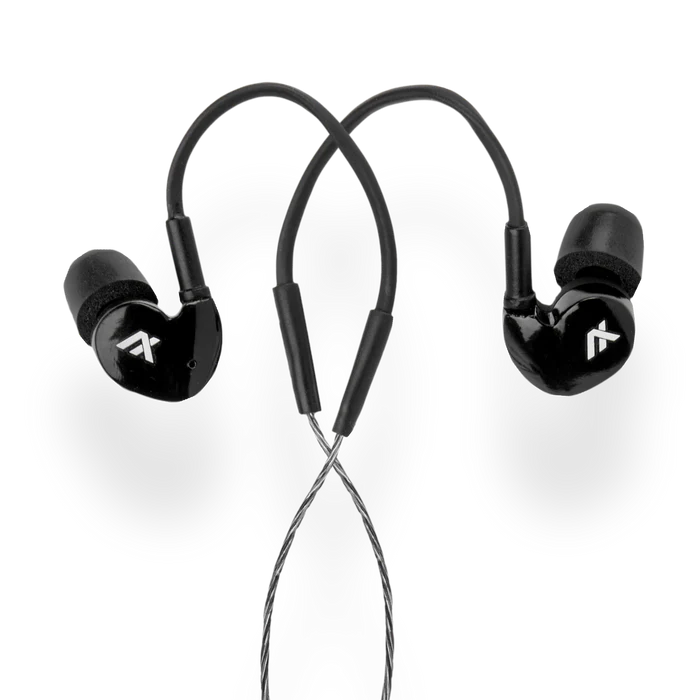
Axil GS Extreme 2.0 Deals
Prices may change. May contain affiliate links.
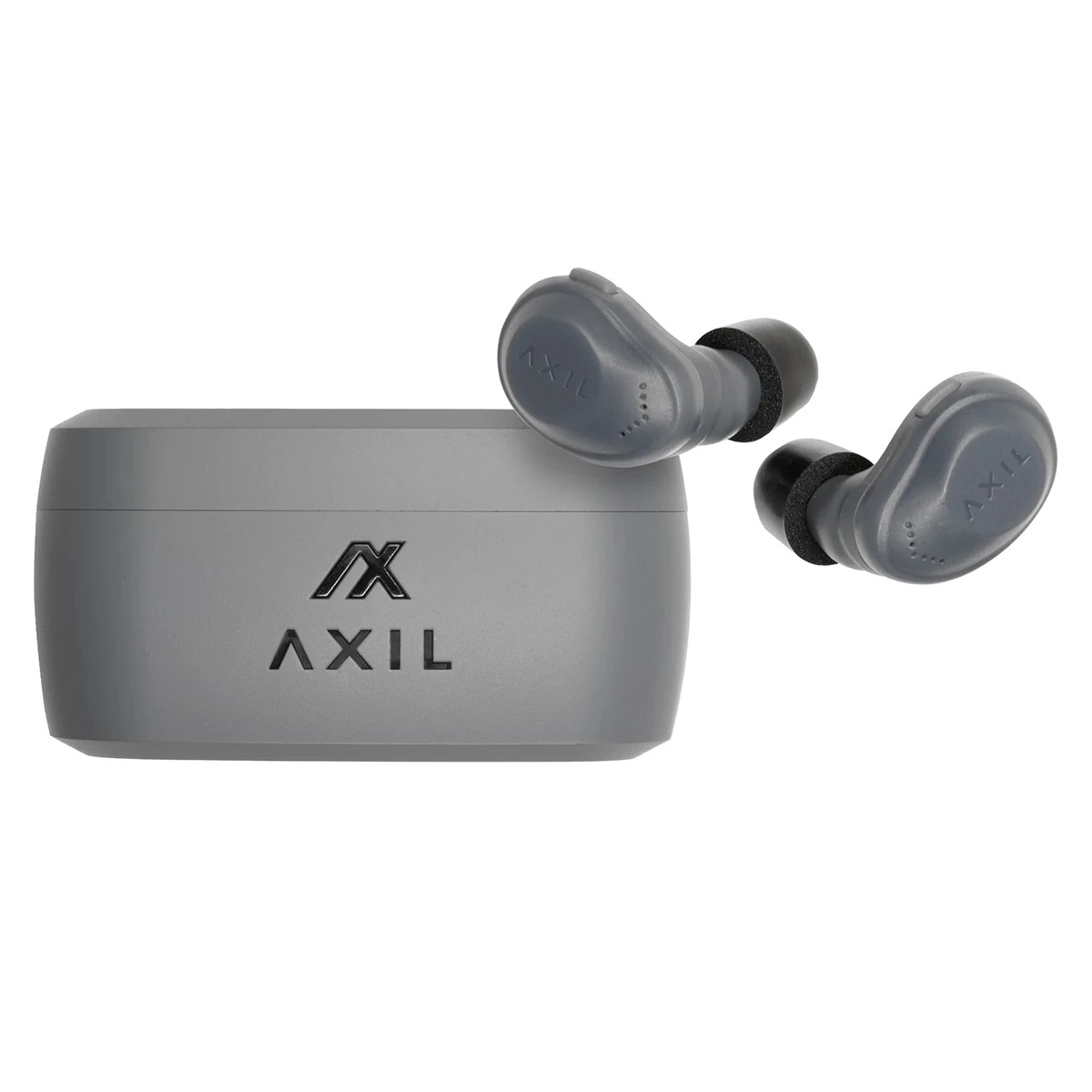
Axil XCOR Deals
Prices may change. May contain affiliate links.


The GS Extreme 3.0 is the updated version with improved Bluetooth codec support, slightly better ambient sound processing, and a refreshed charging case. NRR remains in the same range. The improvements are incremental.
The XCOR is Axil's mid-range electronic earbud with Bluetooth and NRR 29. It uses a different form factor with a more secure in-ear fit and slightly smaller housing. The XCOR Pro adds enhanced directional microphones and improved wind noise reduction. Both are solid options that compete directly with the GS Extreme line at a slightly lower price point.
Best for: Rifle shooters who need zero stock interference, hunters who want Bluetooth and ambient amplification.
ISOtunes Sport
The ADVANCE BT 2.0 is NRR 26 with Bluetooth 5.0, a rechargeable battery lasting around 10 hours, and an IP67 dust/water resistance rating. That water resistance rating is the highest in this category and matters if you're hunting in rain or sweating through a summer class. The fit is secure with multiple tip options.
The CALIBER BT is a true wireless (no connecting wire between buds) electronic earbud at NRR 25 with Bluetooth. Battery life is around 7 hours per charge with additional charges in the case. The true wireless design is convenient but means losing a bud is losing half your protection.
The INSTINCT is ISOtunes' non-Bluetooth electronic earbud at NRR 30. That's the highest electronic in-ear NRR on this list. No Bluetooth means longer battery life and one less thing to go wrong. If you just want hearing enhancement and maximum protection without streaming music, the INSTINCT is the spec leader.
Best for: The INSTINCT is the protection-first electronic in-ear. The CALIBER BT suits shooters who want true wireless convenience.
Walker's
The Silencer 2.0 is Walker's flagship electronic earbud at NRR 25. It uses a modular design with replaceable ear tips and a compact charging case. Sound enhancement is adequate. The Silencer BT 2.0 adds Bluetooth. The Disrupter is the budget option with similar electronics in a simpler package. Walker's in-ears are decent but don't match Axil or ISOtunes on NRR or audio quality at comparable prices.
Best for: Shooters already in the Walker's ecosystem who want brand consistency.
3M Peltor
The EEP-100 is an electronic earplug at NRR 22 with a focus on natural sound reproduction. The levelDependentent technology provides smooth compression rather than hard clipping, which sounds more natural during rapid fire. Runs on a rechargeable battery with about 16 hours of life. No Bluetooth. The TEP-200 adds a behind-the-neck band and Bluetooth connectivity with NRR 23. The TEP-200's audio quality for both ambient enhancement and Bluetooth streaming is excellent, as you'd expect from Peltor. Both are comfortable for extended wear.
Best for: Shooters who prioritize natural sound quality and smooth compression over maximum NRR.
OTTO NoizeBarrier Micro
NRR 26 in a tiny rechargeable package with excellent audio processing. OTTO is a comms company, and the sound quality reflects that heritage. The price is high (north of $400), but the combination of small size, good NRR, and clean audio makes it a favorite among professional shooters and military users. No Bluetooth on the base model.
Best for: Professional and military users who need high-quality electronic in-ear protection.
SoundGear Phantom
These are custom-molded electronic in-ears made from audiologist-taken ear impressions. NRR varies by fit but typically lands around 25-28 dB. The custom fit means consistent, reliable sealing every time you insert them. They're expensive ($1,000+) and require an audiologist visit, but nothing fits better or more consistently.

Best for: Serious competitive shooters and professionals who shoot frequently and want guaranteed fit.
Grizzly Ears
A budget electronic earbud option with NRR around 24-25 and basic sound enhancement. No Bluetooth. The build quality is adequate for occasional use. They're a reasonable entry point into electronic in-ears if you're not ready to spend Axil or ISOtunes money.
Best for: Budget-conscious shooters wanting to try electronic in-ears.
Section 4: Passive and filtered in-ear
Foam plugs
The Howard Leight MAX is the gold standard disposable foam plug at NRR 33. That's the highest NRR of any product on this list. Roll them tight, insert deep, let them expand, and you get outstanding attenuation for pennies per pair. The mistake everyone makes: not inserting them deep enough. Reach over your head with the opposite hand, pull your ear up and back to straighten the ear canal, then insert the rolled plug. The difference between a lazy insertion and a proper one is easily 10 dB.

The 3M E-A-Rsoft is another NRR 33 foam plug with a slightly softer foam that some people find more comfortable for extended wear. Performance is essentially identical to the MAX.
Ear Buddy foam plugs are NRR 32 and marketed as a more comfortable alternative with a tapered shape. They're fine. At this level, the differences between foam plugs are mostly about which shape fits your ear canal best.
Foam plugs are the best protection-per-dollar in existence. Buy them in bulk. Keep a bag in every range bag, every truck, every jacket pocket. They're the foundation of the doubling-up strategy.
SureFire Sonic Defenders
SureFire's flanged polymer plugs are reusable and come in several variants. The EP3 has a filtered port that can be opened for situational awareness or closed for full attenuation (NRR 24 with port closed). The EP4 is the same concept with a slightly different flange design and NRR 24. The EP7 is the full-block version with no filter port, NRR 28, for maximum passive in-ear protection without foam.
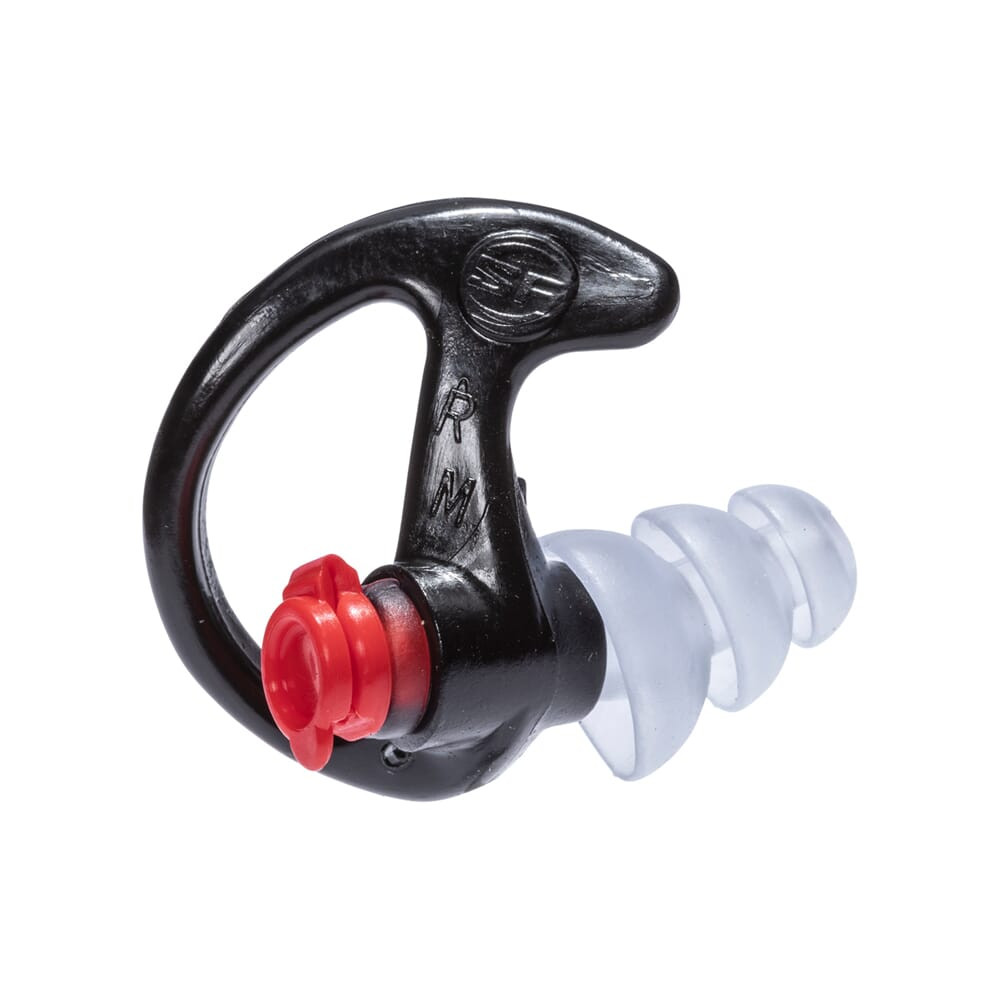

The advantage over foam: consistent fit every time, no rolling and waiting for expansion, and the filtered models let you hear range commands between strings of fire. The disadvantage: NRR is lower than properly inserted foam, and the rigid flanges don't seal as well in every ear canal shape.
Best for: Reusable passive protection with optional situational awareness. Great for doubling under muffs.
Decibullz
Decibullz Custom Molded plugs use thermoplastic that you heat in boiling water and then mold to your ear. NRR 31. The custom fit is better than universal flanged plugs but not as precise as audiologist molds. They're reusable and the molding process can be redone if you don't get it right the first time. The Percussive Filters version adds a mechanical filter that allows some ambient sound through while still blocking impulse noise, similar in concept to the SureFire filtered models.
Best for: Shooters who want a semi-custom fit without the audiologist visit.
Audiologist-made custom molds
The gold standard for passive in-ear protection. An audiologist takes silicone impressions of your ear canals and a lab builds solid or filtered plugs from those impressions. NRR varies by material and design but typically runs 25-32 dB. The fit is perfect, the seal is consistent, and they last for years. Cost runs $100-$300 depending on the audiologist and options. Filtered versions let ambient sound through while attenuating impulse noise.
Most people skip this option because it requires an appointment and feels like overkill. It's not. If you shoot regularly, custom molds are the most comfortable, most consistent passive protection available, and they pay for themselves in a year compared to buying disposable foam.
What you'll notice
The biggest real-world difference between products isn't NRR. It's consistency of seal. A foam plug rated NRR 33 that's poorly inserted gives you less protection than a custom mold rated NRR 26 that's seated perfectly. Electronic muffs with NRR 23 that break seal against your glasses frames might only deliver 15 dB of real attenuation. Every product review and spec sheet assumes perfect fit. Your job is to get as close to that as possible.
For electronic products, the second-biggest difference is audio quality. Cheap muffs make everything sound like a walkie-talkie. Mid-range units sound natural enough for conversation. High-end units sound like you're not wearing protection at all, until a shot goes off. That quality gap matters enormously during classes, matches, and hunting.
Common mistakes
Wearing glasses under muffs without checking the seal. Run your finger around the cup edge while wearing your glasses. If you feel a gap, sound is getting through. Gel ear cup replacements (available for most popular muffs) conform better around glasses temples.

Relying on NRR alone to choose protection. A product with NRR 30 that doesn't fit your head is worse than one rated NRR 23 that seals perfectly.
Not replacing foam ear cups on muffs. The foam degrades over time, gets compressed, and loses its seal. Replace them annually if you shoot regularly.
Using electronic earbuds with the wrong tip size. Most electronic in-ears ship with three to five tip sizes. Try them all. The right tip should feel snug without pain and should block sound noticeably even with the electronics off.
Turning electronic amplification too high. If you're cranking the gain to hear conversations, you're amplifying gunfire too, and the compression circuit has to work harder. Keep gain at the minimum level that lets you hear range commands clearly.