By MyGunDeal Military Desk · 4/5/2026, 7:18:06 PM · Military
Get weekly updates for Military.
We'll email you quick updates when we publish new military articles. No spam, ever.
Bringing a US Army National Guard Unit Up to Speed on the MK22: in a Single Saturday Morning
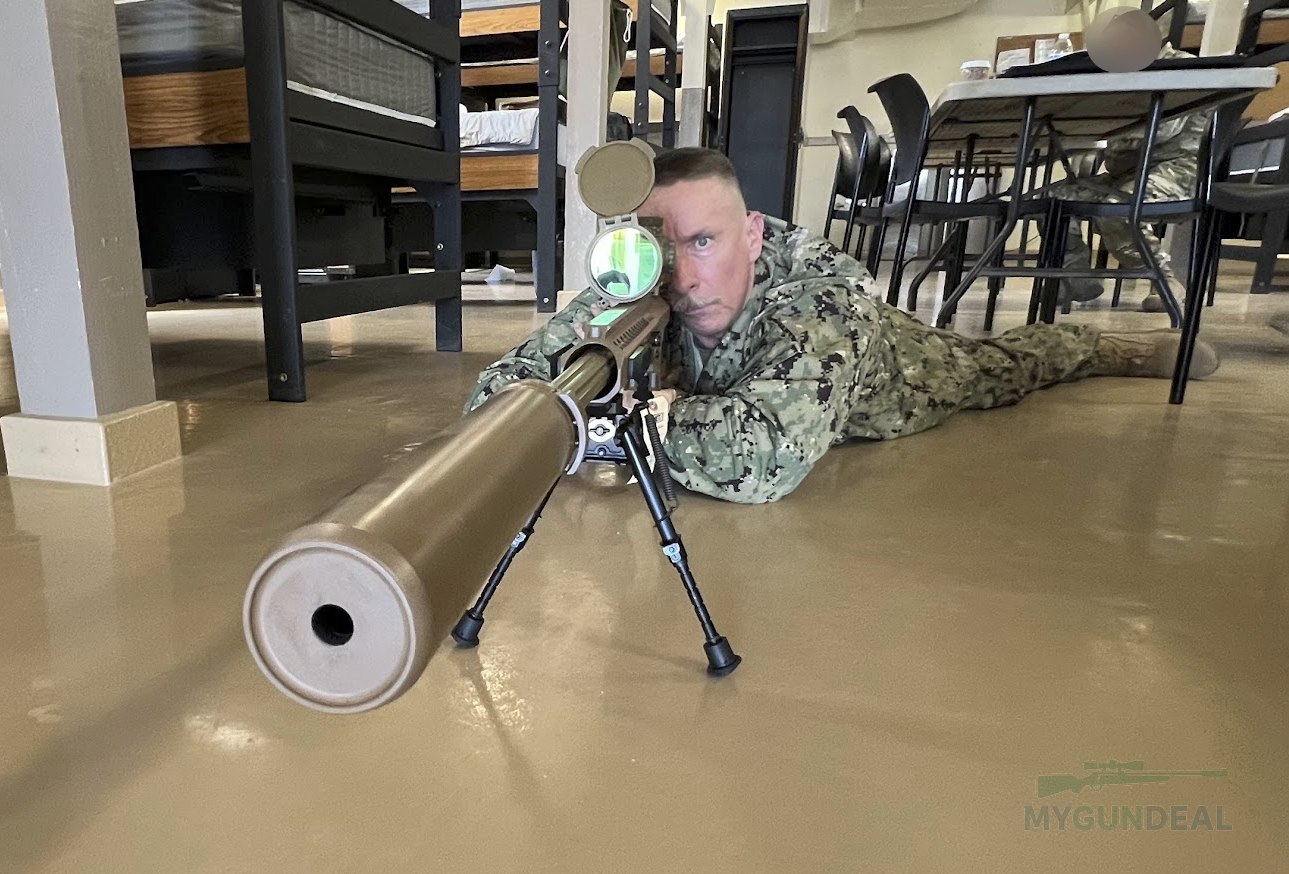
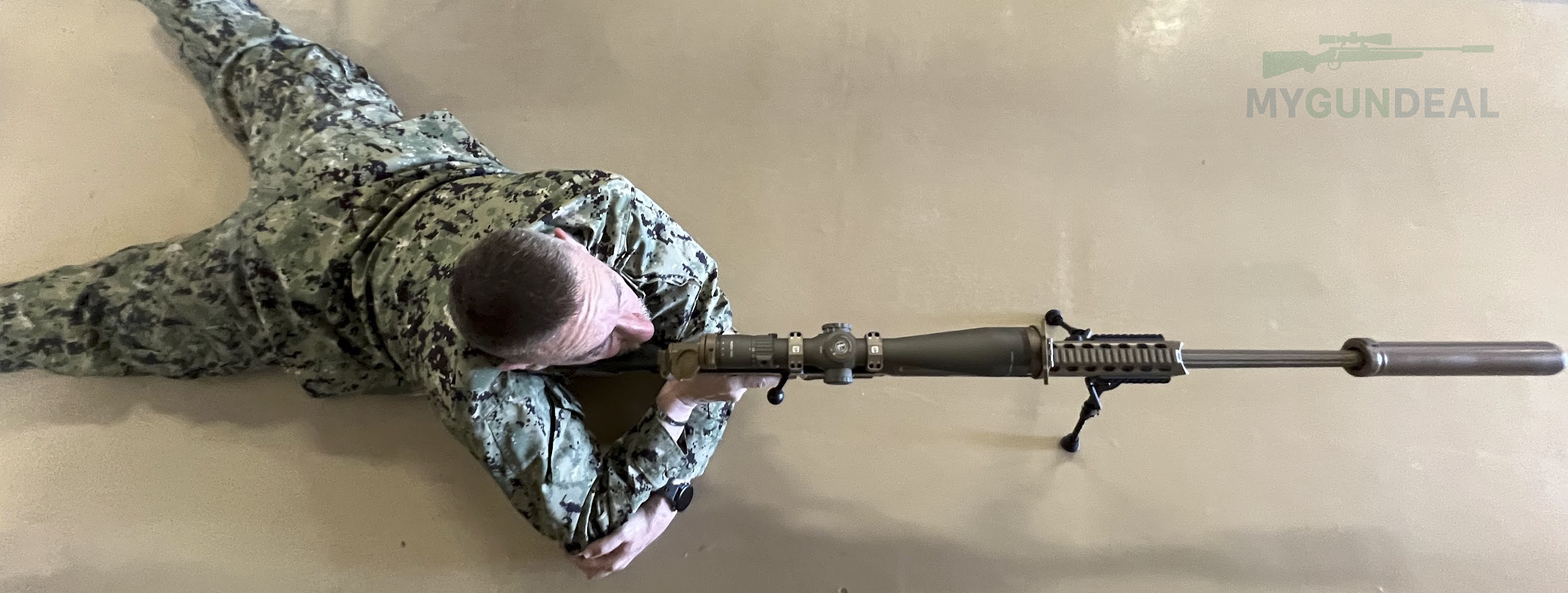
CW3 (CA) Shawn Carter is evaluating the MK22 rifle with suppressor installed. As shown here, the MK22 came with the .300 Norma Magnum barrel and bolt-head.
The rifle showed up at 1400 on Friday, which gave us about eighteen hours to take it apart, learn it cold, match it to the program of instruction, and hand it back ready to teach twenty soldiers how to make it theirs. The weapon was the Barrett MK22: the new Army precision sniper system; and the students were a US Army National Guard unit. The mission was simple to state and harder to execute: turn a case of unfamiliar rifles into a capable overwatch asset by the end of the day on Saturday.
This is how it went.
The Platform: One Rifle, Three Calibers
The MK22 is, on paper, a single weapon system. In practice, it is three rifles hiding inside the same chassis. Known in the civilian world as the Barrett MRAD, Multi-Role Adaptive Design, the MK22 ships with three interchangeable barrels covering 7.62×51 NATO, .300 Norma Magnum, and .338 Norma Magnum. A shooter can swap calibers in the field with a torque wrench and a few minutes of attention. That capability is why the MK22 is replacing not one, but three legacy platforms across the Army:
The M110, the semi-automatic AR-10-pattern rifle from Knight's Armament in 7.62×51.
The M2010, the bolt-action .300 Winchester Magnum system.
And partially the Barrett M107A1, the .50 BMG "Light Fifty", in the anti-materiel role.
Collapsing three rifles into one means fewer armorer specialties, a unified logistics tail, and a shooter who only has to master one chassis, one trigger, and one optic across the entire engagement envelope. It also means a small-arms training team has to teach a weapon that behaves differently depending on which barrel is locked into the receiver that morning.
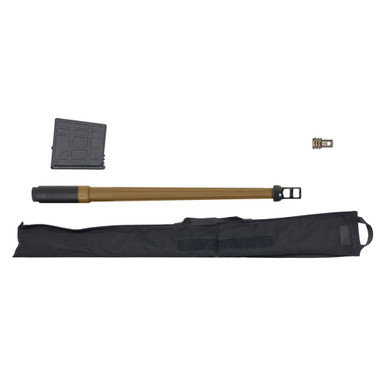
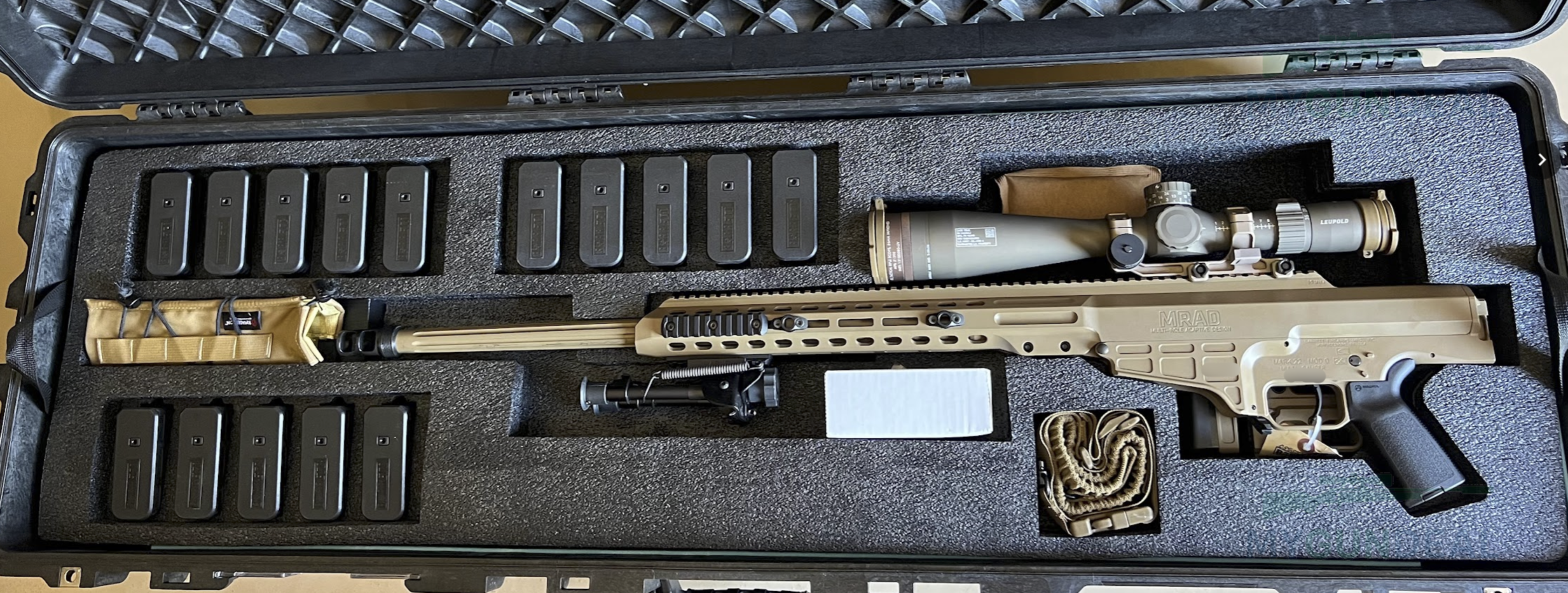
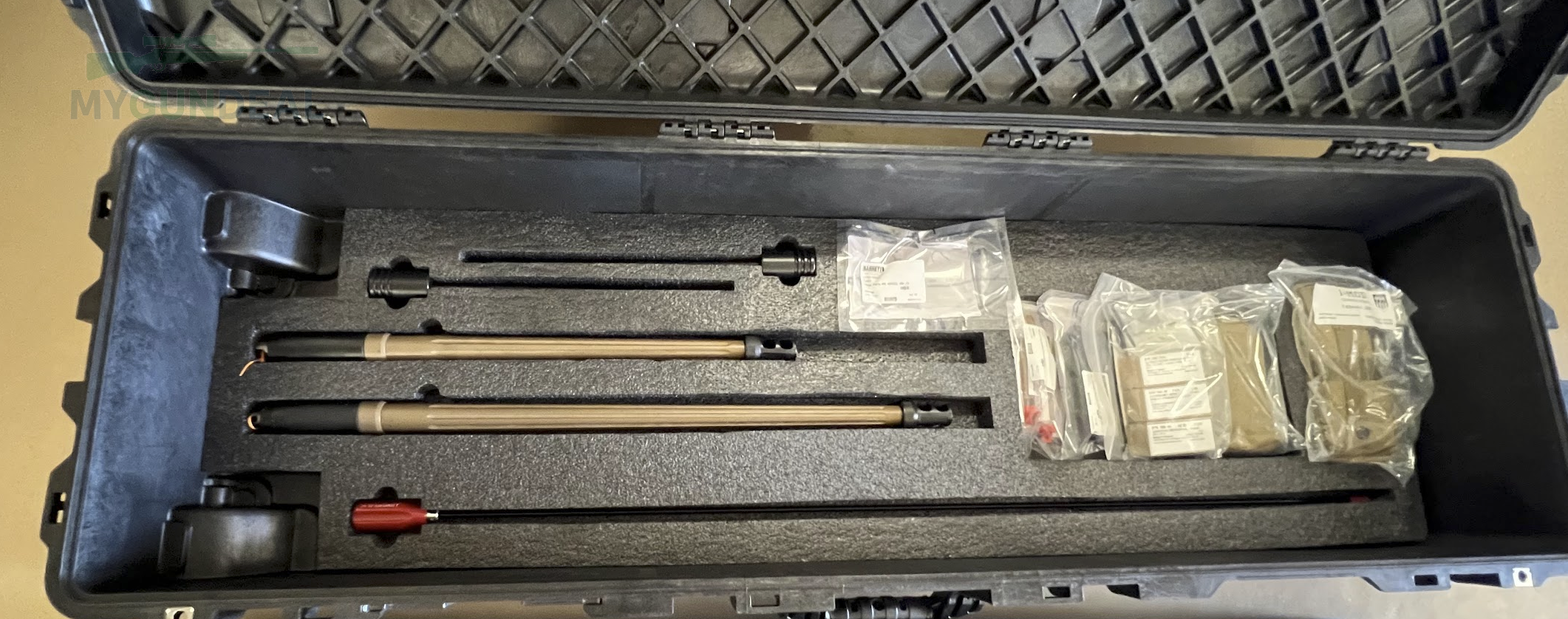
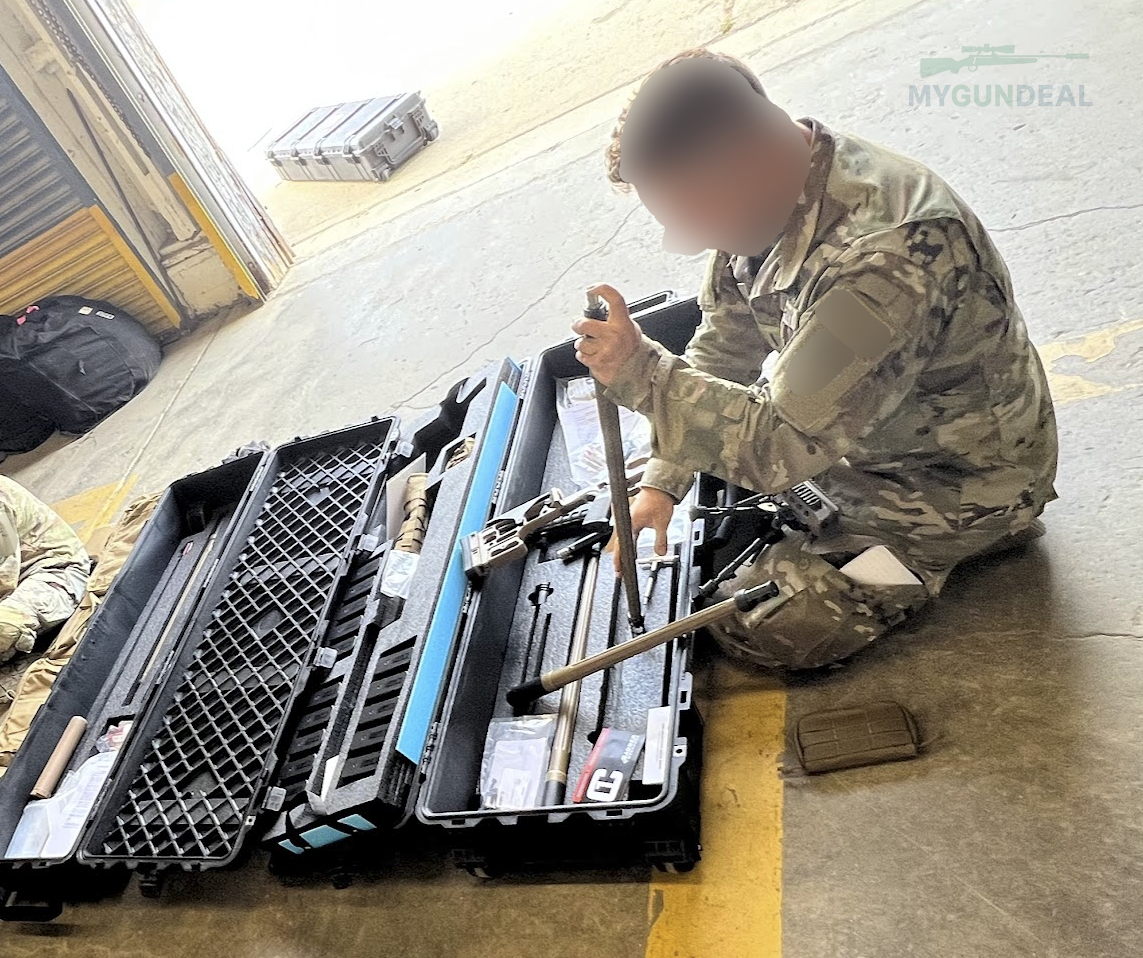
The MK22 system came in a 2-level Pelican 1770 case. The top section contained the rifle, 15 magazines (5 x 7.62x51 and 10 x Norma Magnum), suppressor, suppressor cover and sling.Here is the lower level of the Pelican 1770 case, with storage compartments for the other two caliber barrels (with bolt heads), bore guides, cleaning rod, cleaning kit, tools, cosine indicator, anti-cant device and other accessories.
Friday: The Silent Prep
A two-day mission always lives or dies on day zero. Three of us had been tasked, myself, CW3 Shawn Carter, and a weapons SGT, and none of us were walking into Saturday cold. When the NG team handed us a representative rifle at 1400 Friday, we took it back to the barracks and did what every instructor has to do before they step in front of a class: we made ourselves students first.
We pulled the suppressor. We swapped barrels. We cycled the bolt through a function check, found the folding stock button, walked through the recoil pad LOP adjustment, and dialed the turrets through their full travel and back to mechanical zero. We installed the cosine indicator and the anti-cant device and stared at the Army Mil-Grid 4 reticle. By the time we packed the rifle back into its case that evening, every one of us could do the assembly blindfolded and talk through the trade-offs while doing it.
Chief Carter demonstrating a steady position behind the MK22 after making all the necessary adjustments to the butt-stock and scope.
We arrived back at the NG unit compound Saturday morning with a handout, a plan, and a rehearsed demonstration. The team had ten MK22s and roughly twenty soldiers, a shooter and an assistant for every rifle. The NG unit team leader, an SFC, already had a clipboard of questions ready. Before we got into the program of instruction, he asked for the DODIC numbers of the .300 Norma Magnum and .338 Norma Magnum rounds, so he could get them into the requisition pipeline. Only 7.62×51 was on hand at the base ammunition supply point.
That ammunition reality drove the first task of the day: every rifle in the room was going to start on a 7.62 barrel, whether it came out of the case that way or not. As delivered, the rifles were configured for .300 Norma Magnum. So our first class was the barrel change.
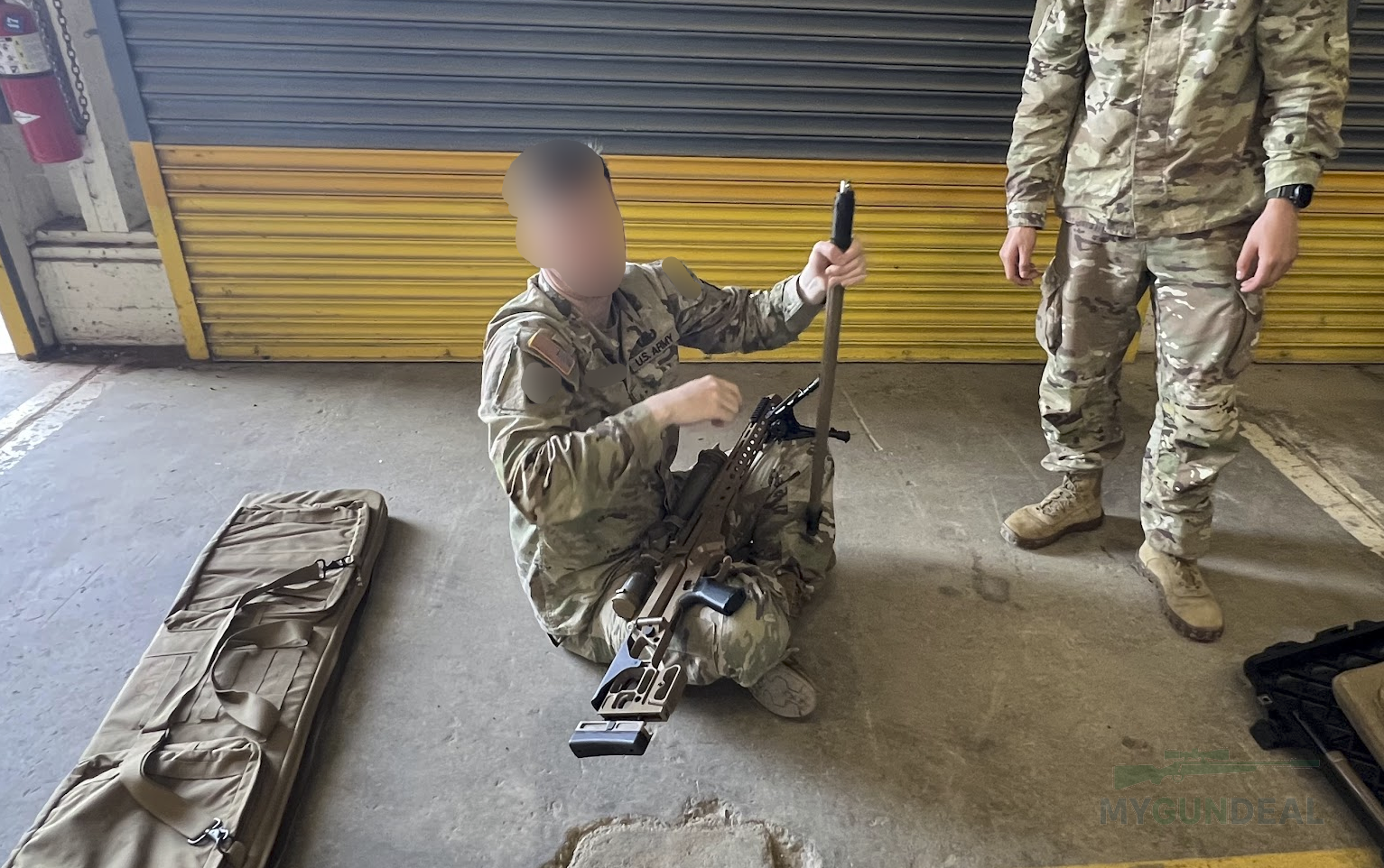
An NG soldier in the middle of changing the barrel on his MK22.
We gave every shooter a hard rule before we touched a tool: write down the serial number of your rifle and the serial number of your suppressor, and from this moment forward, that weapon is yours. Not the team's. Not the arms room's. Yours.
That matters because the MK22 is a precision system, and precision systems only work when they're fit to a specific shooter. Over the next hour we walked every team through the customization that had to happen before a single shot could be fired:
Length of pull. The recoil pad slides on a rail and locks where the shooter needs it. Too long and the shooter crowds the optic; too short and the rifle wanders on recoil.
Cheek piece height. The head should drop onto the stock and find the scope automatically. If the neck is craning, the position is wrong and groups will open up.
Scope eye relief. For three of the twenty shooters, we had to pull the scope and its mounting base off the receiver and walk it back several Picatinny slots. Eye relief is non-negotiable, and moving the rings alone wasn't enough on those rifles.
One of the NG officers with his assigned MK22 rifle performing the barrel change procedure from .300 NM to 7.62x51 caliber.
The Toolkit
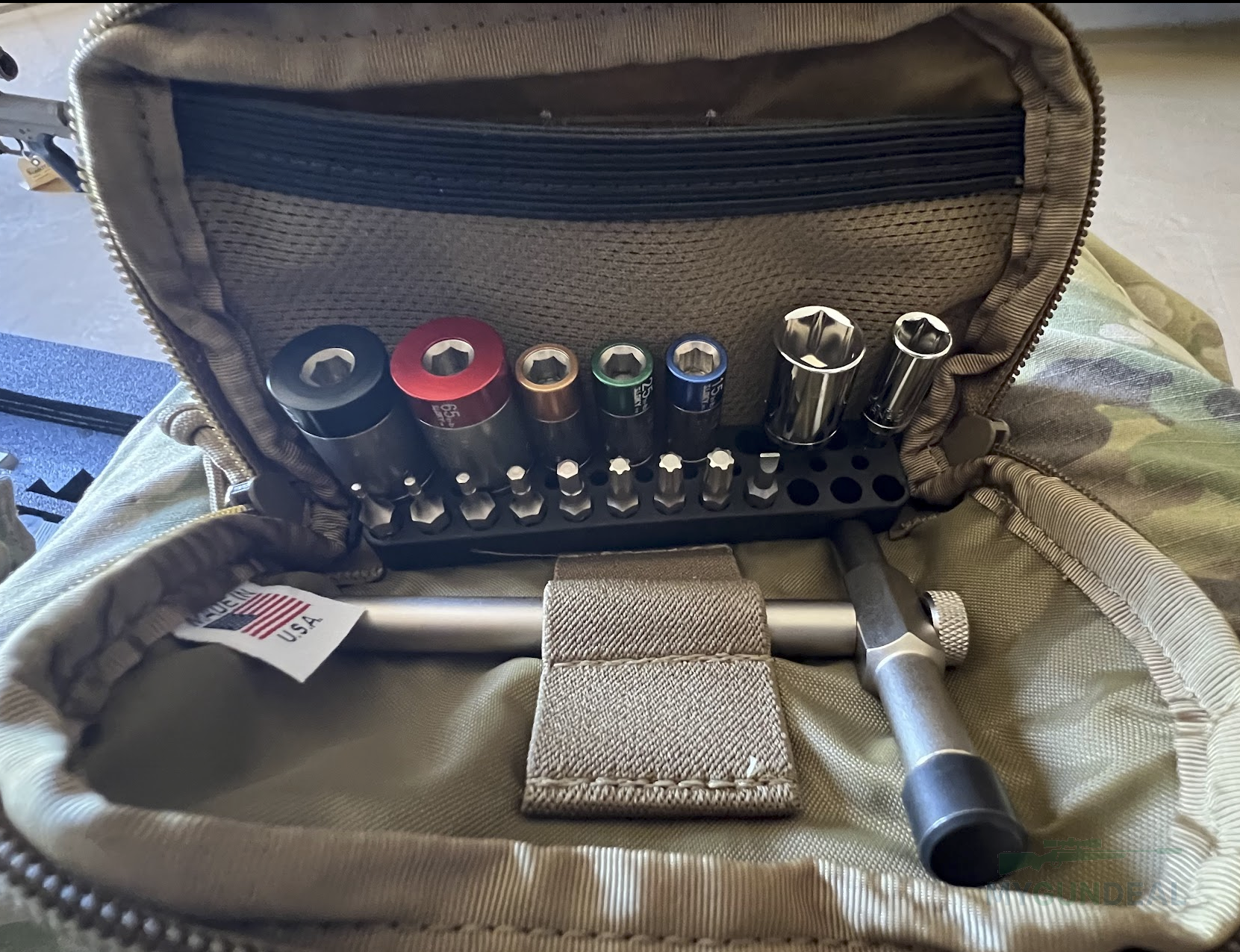
The MK22 ships with what is, frankly, one of the nicer field toolkits in the Army inventory: a Fix It Sticks modular set with color-coded torque limiters at 15, 25, 65, and 140 inch-pounds, plus sockets, bits, and pin punches sized for every fastener on the rifle. We spent real time on the toolkit because a precision rifle without the correct torque is an imprecise rifle, and a shooter who can't identify the right color-coded limiter in the field can't fix a loose scope mount when it matters.
Fix It Sticks modular set with color-coded torque limiters at 15, 25, 65, and 140 inch-pounds, plus sockets, bits, and pin punches sized for every fastener on the rifle.
The Core Instruction
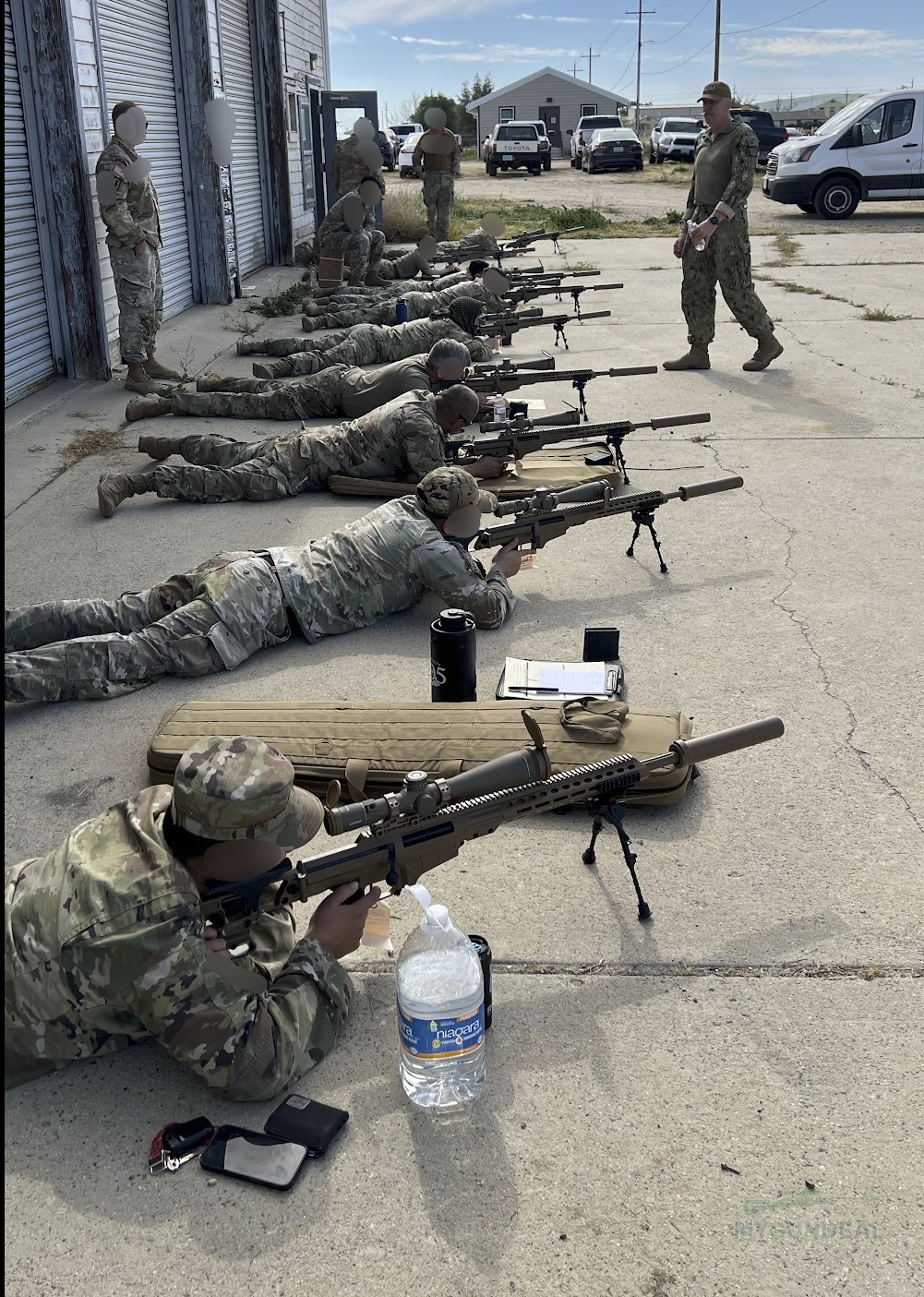
With rifles fitted and toolkits understood, we moved into the main body of the handout. We taught outside, with the rifles on bipods, running through the program in order.
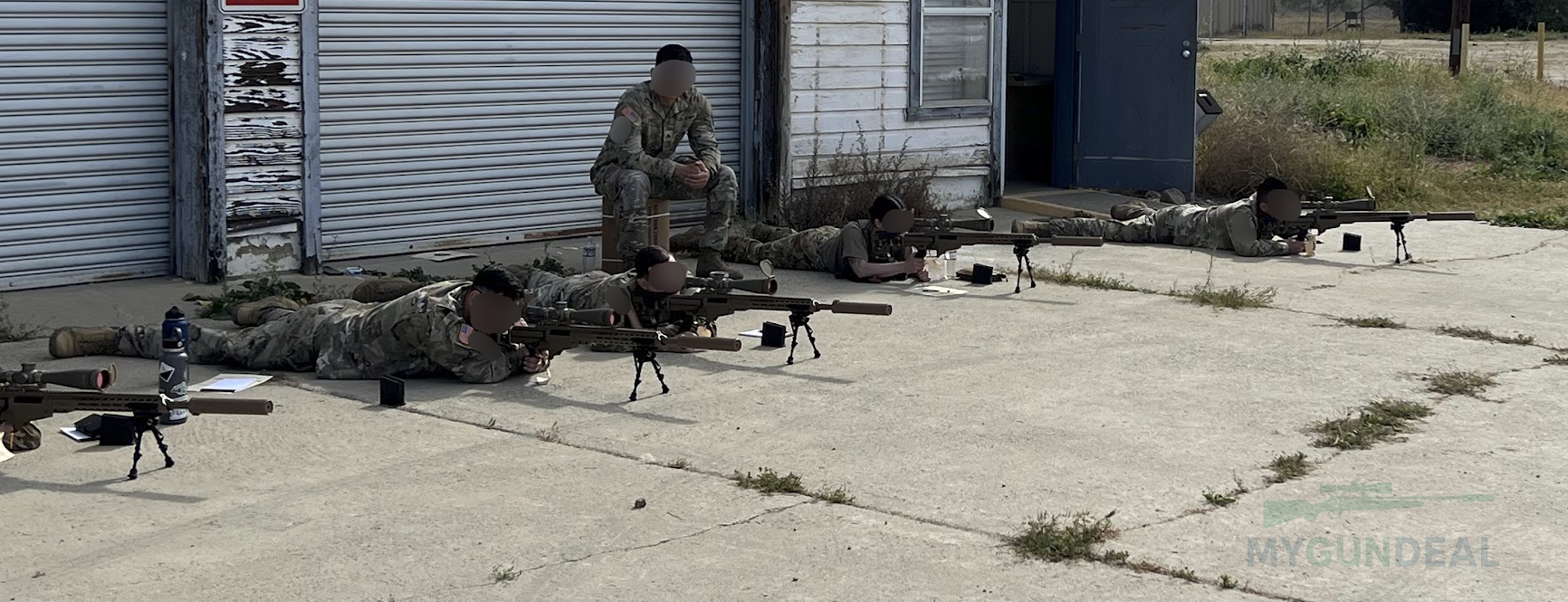
Army National Guard soldiers receiving instructions from members of the Small Arms Training Team (SATT).
Safety and the Function Check
Four rules first, always. Then the function check: safe on, safe off, dry trigger, bolt cycle, verify the firing pin releases on FIRE and does not release on SAFE. Every shooter did it themselves under an instructor's eye.
Sight Picture and the Reticle
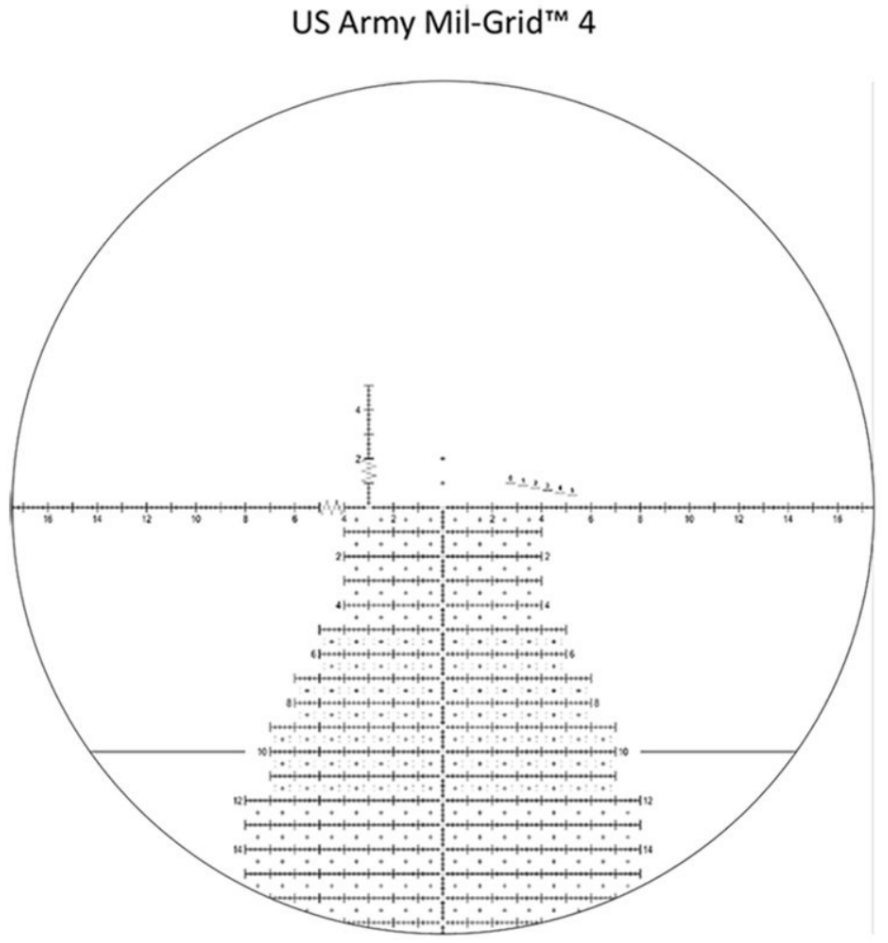
The MK22's day optic uses a MIL-based grid reticle, the Army Mil-Grid 4. To a new shooter it looks busy. To a working sniper it's a calculator. We taught the center crosshair as the primary aiming point, the vertical stadia below center as elevation holdovers, and the horizontal stadia as wind holds. For this unit's mission, they need known distances, fixed positions, stationary targets, most of the reticle's complexity is deliberately unused. The method is: dial elevation on the turret, hold wind in the reticle.
The US Army Mil Grid 4 reticle - which came standard on the Leupold Mark 5 scopes that shipped with the Barrett MK22.
Zeroing the Optic
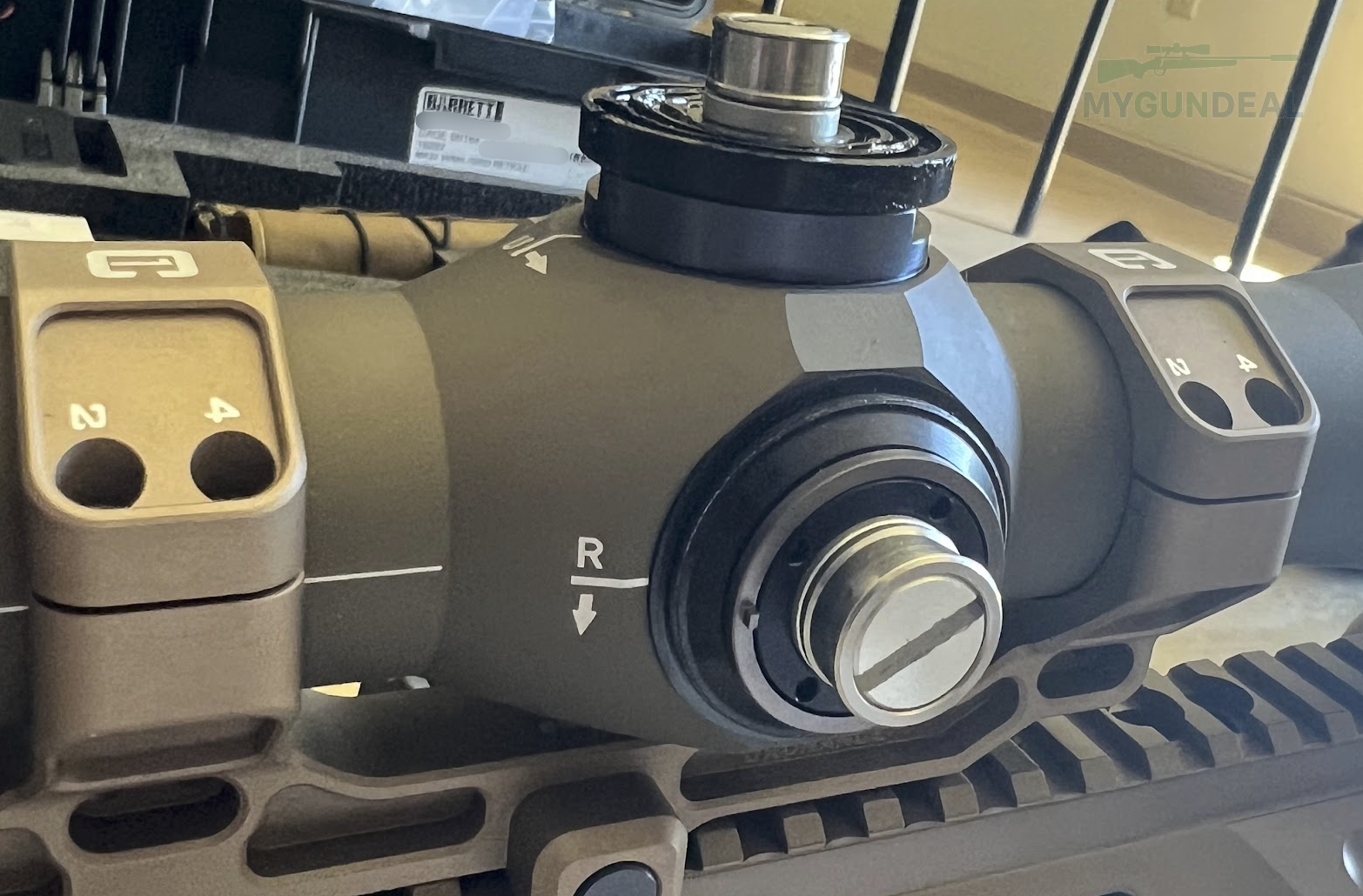
We pulled the turret caps so every shooter could see exactly where the adjustments happen, counted clicks through the full range, and walked through the mechanical-zero procedure: turret all the way to one stop, count the clicks to the other stop, divide by two, come back to center. Live-fire confirmation would come later, when the range was open and the ammunition was on-hand. For now, we put every optic in the right ballpark.
Scope turret covers off - this is the only way to adjust the scope for a rifle zero. Once the rifle is zeroed, the turret covers are replaced and set to "0".
Cosine, Cant, and the Quiet Accessories
We had the teams install their cosine indicators and anti-cant devices themselves. Nobody graduates from sniper marksmanship fundamentals without understanding that the rifle held at a ten-degree cant at 800 meters is already missing, and that a steep uphill or downhill angle changes the effective range the bullet is flying. Installing the accessories isn't the lesson, knowing why you need them is the lesson.
MK22 at a Glance (7.62×51 Configuration)
Specification
Value
Caliber
7.62×51 NATO
Operation
Bolt-action repeater
Barrel
20″ fluted, 1:8″ RH twist
Magazine
10-round detachable box
Weight (suppressed)
~15.5 lb
Length (extended)
~45.2 in
Effective Range
1,000 m (doctrinal)
Civilian Name
Barrett MRAD
The Conversations That Mattered
The part of a training event you can't put on a slide is the questions. The NG team asked good ones, and the answers are worth capturing.
"Turrets or hold the reticle?"
Both work. Turrets are more accurate; reticle holds are faster. For a known-distance overwatch mission from a prepared position, dial elevation on the turret and hold wind in the reticle. For a shot you have to make in the next four seconds, everything goes on the reticle.
"Does the suppressor change the zero?"
Yes. Every can shifts point of impact at least slightly. The answer isn't to zero bare and then hope, it's to shoot with the suppressor on, all the time. Confirm zero with the suppressor attached. Build the DOPE card with the suppressor attached. Treat the suppressor as a permanent part of the rifle, because for this mission, it is.
"What about cold bore?"
The first round out of a cold, clean barrel will land somewhere slightly different from the five-shot group that follows. Track it. Record it. The cold-bore shot is often the shot that matters in an overwatch scenario, so it deserves its own line on the DOPE card. And as the barrel heats up across a string of fire, the group center can walk, usually only a small amount on a quality barrel like this one, but enough to care about past 600 meters.
"Barrel break-in?"
We walked through the FM 3-05.222 procedure: clean completely, fire one round, clean completely, repeat for ten rounds. Then five three-round groups with a cleaning between each group. It's twenty-five rounds of careful work, and it sets the bore up for its full service life.
Army NG soldiers moving through the drills prepared for them by the SATT team.
By 1230
The training wrapped at 12:30. Every rifle in the room had been swapped to 7.62×51. Every shooter had a serial number written down and a stock fitted to their body. Every team had installed their own cosine indicator, performed their own function check, walked their own turrets through mechanical zero, and understood the difference between dialing and holding. Nobody had fired a round, and nobody needed to. The range day, when it comes, will be about confirming what was taught, not discovering it.
That is what the Small Arms Training Team is for; to collapse the learning curve. A week of figuring it out alone, compressed into four hours with someone who has already done the figuring. Done right, the team walks away Saturday afternoon knowing their weapon, knowing their kit, and knowing the why behind every adjustment they just made.
Ten rifles. Twenty shooters. Three barrels per rifle. One morning. Mission complete.
Comments
Loading comments…
Leave a comment
Use a respectful tone. All comments are moderated before appearing.
Get weekly updates for Military.
We'll email you quick updates when we publish new military articles. No spam, ever.