For many serious firearms enthusiasts, there comes a moment when curiosity shifts toward items regulated under the National Firearms Act. Suppressors, short-barreled rifles, transferable machine guns, destructive devices; these categories carry an undeniable mystique.
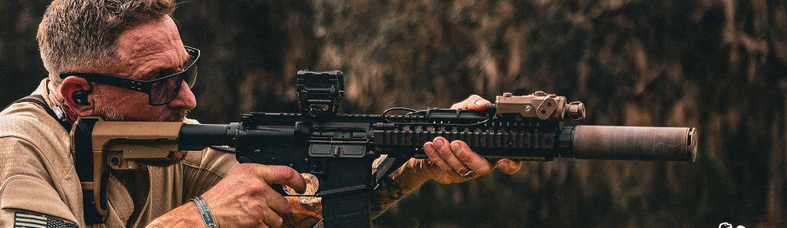
What they also carry is a regulatory framework that demands maturity. Administered by the Bureau of Alcohol, Tobacco, Firearms and Explosives (ATF), the NFA system is not a casual extension of ordinary firearm ownership. It is structured, documentation-heavy, and unforgiving of shortcuts.
After years navigating it, including multi-state moves, trust structuring, and even the occasional dealer education moment, one conclusion stands out: success in the NFA world has far less to do with hardware and far more to do with discipline.
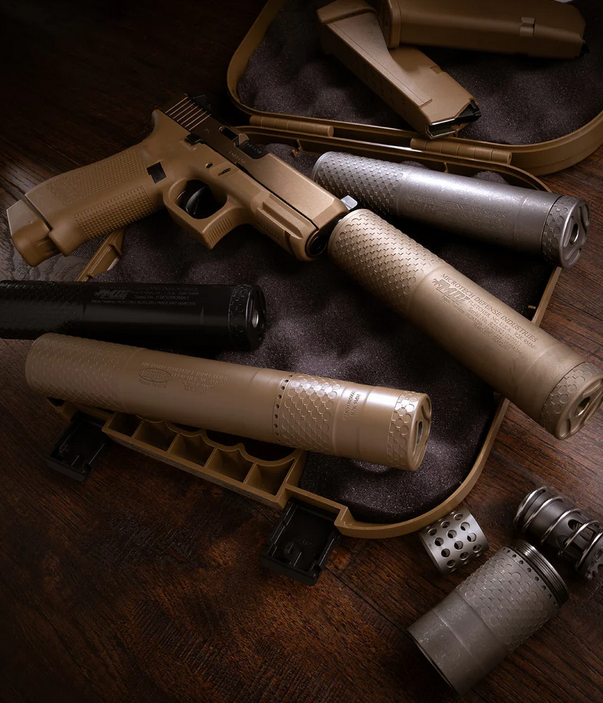
Building the Foundation: The Trust Question
One of the earliest decisions is whether to register NFA items individually or through a trust. For collectors who anticipate long-term ownership or multiple regulated items, a trust often provides practical advantages. It can allow shared lawful possession among designated individuals and simplify succession planning.
There is an assumption in some circles that downloadable trust templates are inadequate. In reality, many collectors have successfully started with reputable templates. The key is validation. Having an attorney review the trust, especially to confirm compatibility with an existing revocable living trust, turns a generic document into a deliberate legal structure.
Equally important is thinking through trustees from the outset. Under ATF Final Rule 41F, individuals who have authority or access to NFA items may qualify as "responsible persons." If a spouse has the combination to the safe, that matters. Adding a spouse as a trustee upfront may create additional paperwork initially, but it removes ambiguity later, particularly in the event of incapacity or death.
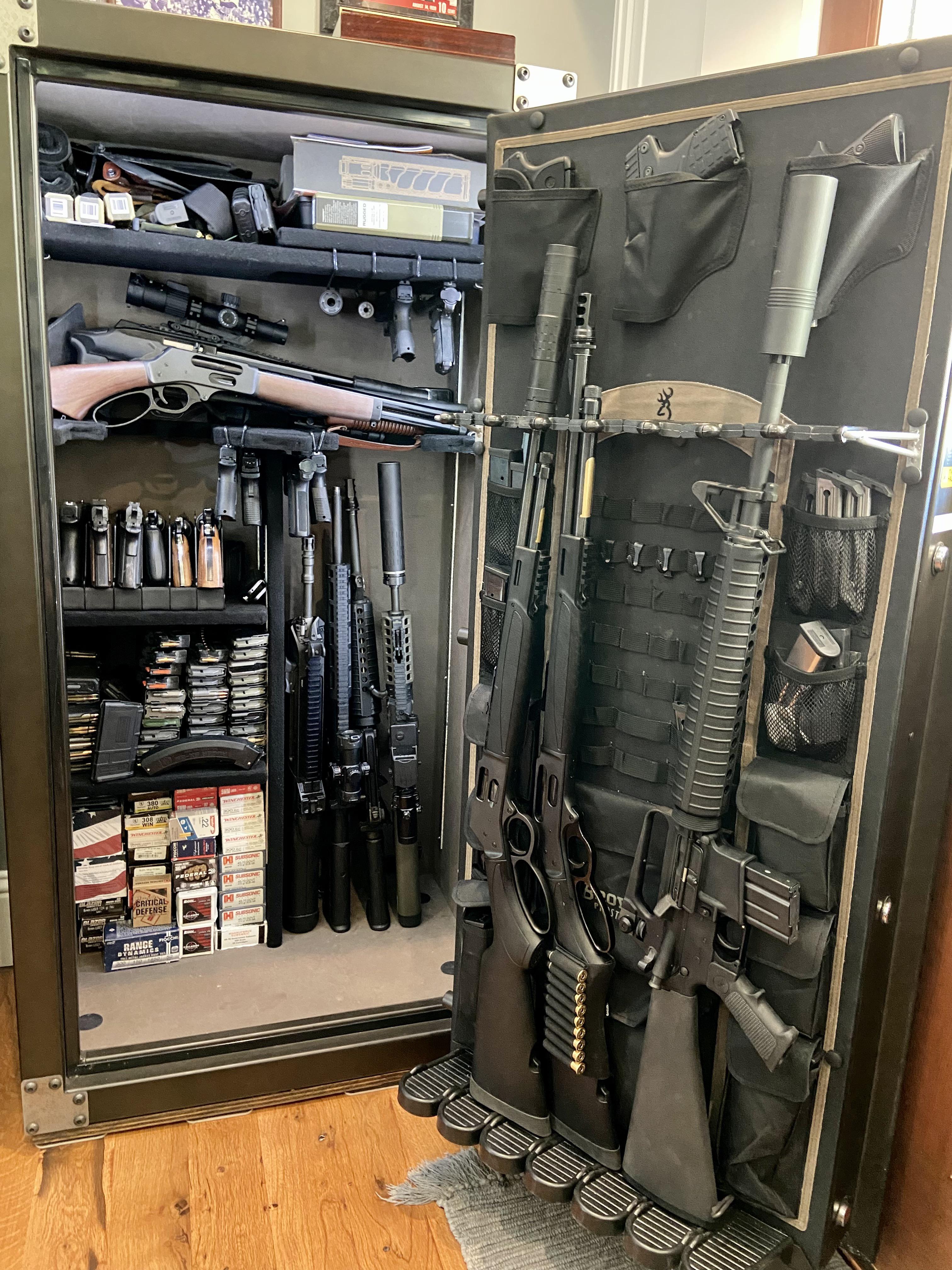
Storage practices also require careful thought. It is permissible under federal rules to store NFA items in a safe located at someone else's residence, provided they do not have access to the safe. Access is the bright line. Co-mingling regulated items in a friend's accessible safe is a compliance risk that seasoned collectors simply avoid.
Primary sources such as ATF Final Rule 41F and the ATF NFA Handbook are essential reading. Collectors who rely on official guidance rather than forum folklore tend to make fewer mistakes.
Moving With an NFA Collection: Planning Ahead
Relocation is where many collectors discover how serious the administrative side of this hobby can be.
When moving to a new address, particularly across state lines, there are typically two layers to address. First, if operating under a trust, the trust document itself should reflect the current address. That may require formally updating and notarizing the document to keep records accurate and defensible.
Second, certain NFA categories require prior ATF approval before interstate movement. Experienced owners file the appropriate transport documentation in advance and carry copies of approvals during the move. Keeping these forms readily accessible during multi-state relocations may feel overly cautious, but it eliminates uncertainty during an already stressful process.
The guiding principle is simple: plan early, document everything, and never assume portability without confirmation.
Destructive Devices: Finding the Right Dealer
Among NFA classifications, destructive devices often present the steepest learning curve, for both collectors and dealers. Insurance limitations, storage concerns, and classification nuances lead many FFL/SOT holders to avoid the category entirely.
In practice, the solution is not persuasion but alignment. Work with dealers who already understand the regulatory framework and are willing to engage with it. In particularly nuanced situations, some collectors have sought written clarification from their local ATF field office to confirm classification details. Clear documentation can provide reassurance to hesitant dealers and establish a clean compliance record.
The lesson is straightforward: the more specialized the item, the more important it is to partner with experienced professionals.
Constructive Possession: Eliminating Gray Areas
One of the most misunderstood concepts in this space is constructive possession. Broadly defined, it refers to possessing components that could readily assemble into an unlawful configuration, even if not currently assembled.
Real-world scenarios, such as a break-in investigation or a domestic incident, are not the time to debate technical nuance. Seasoned collectors reduce risk by eliminating ambiguity. They store regulated components conservatively, maintain clear documentation, and understand the distinctions between classifications under both federal and state law.
This approach is not paranoia; it is risk management. The goal is to ensure that any examination of your storage practices reveals obvious compliance.
Selling, Reconfiguring, and Understanding Status
Over time, most collectors buy, sell, or reconfigure items. Certain registered firearms may, under federal guidance, be returned to a non-NFA configuration and transferred accordingly. However, classification depends on current configuration and documentation history, not memory or assumption.
Before altering or transferring an item, consult official ATF guidance. Understanding the distinction between SBRs, SBSs, machine guns, AOWs, destructive devices, and the legal definitions of pistols versus rifles is foundational knowledge in this arena.
The ATF NFA Handbook remains one of the most comprehensive resources for clarifying these categories.
Resources:
ATF handbook
Transfers
https://www.atf.gov/media/25086/download
A Measured Entry
For newcomers, the typical pathway into NFA ownership, such as pursuing a first SBR, follows a well-documented administrative sequence. The specific mechanics are detailed in official ATF resources and should be reviewed directly.
More important than the steps themselves is the posture you adopt:
Establish your legal structure deliberately.
Keep original notarized documents secure.
Maintain digital backups.
Wait for formal approval before configuration changes.
Preserve approval documentation permanently.
Collectors who treat their first regulated item with extreme care build habits that carry forward into every subsequent acquisition. Example:
Example flow of someone who is just starting out and wants an SBR:
- set up a firearms trust using a online template you feel comfortable with.
1a. Customize the names, beneficiaries. Send to a lawyer to review.
1b. Once complete, take to a notary public to get it notarized (some shipping stores have notaries). Keep this copy safe, you'll need to keep this original forever.
1c. Make a couple of copies of this document. Scan one digitally (to PDF format).
- Get a bare bones lower receiver.
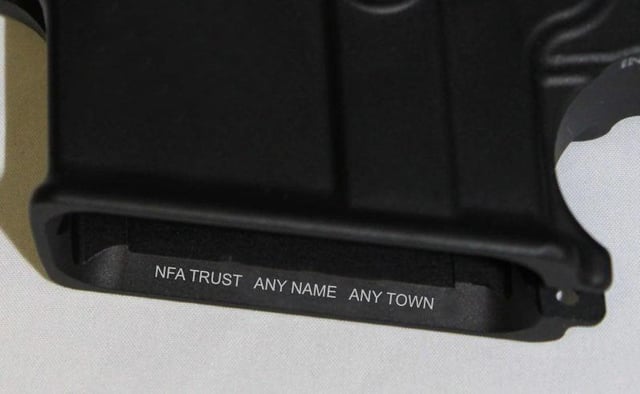
2a. This will need to be engraved with some specific information
2b. You will send your receiver out (or take it to engraver in-town) to get it marked properly.
2c. Once engraved, you will need to store this lower in a manner you cannot assemble it into a SBR, until your stamp comes back.
- ATF
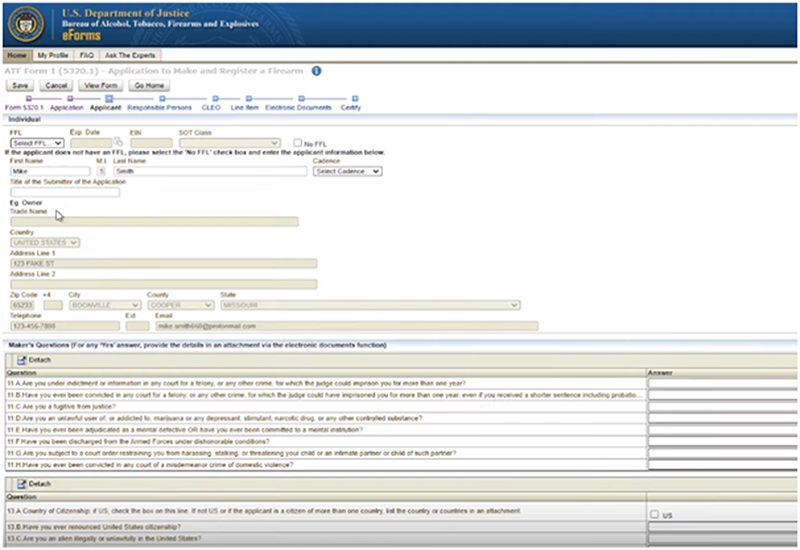
3a. You will set up an account on BATFE website. https://www.atfonline.gov/EForms/
3b. We will complete an eForm 1, which is online form. You will need to know the serial number, make, model of the lower receiver. Also need to know the overall length and barrel length of your SBR.
3c. You will attach the PDF created in step 1c.
3d. You will pay online via credit card or debit card $200.
3e. Once submitted, the ATF will take 1-3 months to process your Form 1.
Once you get your Form 1 back (you'll get via email), you will print that form and keep it safe forever (or until you sell the receiver or cease using the receiver as an SBR). If you decide to sell the reciever some day, you can. You're technically supposed to de-register it w/ATF but it's not mandatory. Whoever you're selling it to will NOT get the SBR status...it's only registered as SBR as long as it's part of your trust/ownership.
Note: You can shop/buy a short upper receiver anytime. Just can't store the upper and lower together.
The Long View
The NFA world carries a certain mystique, but over time it feels less like a thrill and more like stewardship. It requires patience, literacy in federal regulation, and a willingness to think about succession planning earlier than most hobbies demand.
Approached with discipline, it becomes a structured, lawful, and deeply rewarding branch of collecting. Approached casually, it carries risks that far outweigh novelty.
In the end, experience in this space is not measured by the number of tax stamps held. It is reflected in the quality of documentation, the clarity of storage practices, and the foresight applied to life events, moves, sales, and estate transitions alike.
That, more than anything else, defines a seasoned NFA collector.