
The Supreme Court has agreed to hear a case that will determine whether the most popular centerfire rifle in America is protected by the Second Amendment. That's not hyperbole or advocacy framing. It's the literal question before the Court in Viramontes v. Cook County, consolidated with Grant v. Higgins, with one hour allotted for oral argument. If you own an AR-15, build AR-15s, or have been thinking about buying one, this is the case that decides whether state and local governments can ban them outright.

AR-15 Deals
Prices may change. May contain affiliate links.
The stakes here are straightforward. Tens of millions of AR-pattern rifles are in civilian hands, with one Georgetown University study finding 24.6 million Americans own AR-15-style rifles and the total number potentially as high as 44 million. The Supreme Court said in District of Columbia v. Heller (2008) that the Second Amendment protects arms for "traditionally lawful purposes." Whether the AR-15 meets that standard is the core question the Court has never directly answered. Lower courts have gone in opposite directions, some upholding bans, one recently striking one down. The split is now undeniable, and the Court is stepping in.

This isn't a policy debate article. It's a breakdown of what's actually happening in the courts, what legal framework applies, why the timing matters, and what rifle owners should be paying attention to as the case moves forward.
The thesis: this case defines the boundary of the Second Amendment for firearms
Here's the deal: Viramontes v. Cook County is the first time the Supreme Court will directly address whether the Second Amendment protects a specific category of commonly owned rifles. Heller established that handguns couldn't be banned because they were in common use. Bruen in 2022 established the test courts must use: text, history, and tradition. But neither case drew a line around rifles. This case draws that line.
As one legal analyst put it during a SCOTUSblog event, the case's importance "transcends whether semiautomatic weapons can be banned." It's about whether the Court will further define its Second Amendment jurisprudence, which the Congressional Research Service has described as "still in its relative infancy." The Supreme Court remained largely silent on the scope and meaning of the Second Amendment for more than 200 years before Heller. We're still in the early chapters of the Court actually defining what the right covers.
The amicus brief filed by Representative Andrew Clyde and more than 60 House Republicans frames the argument bluntly: "Military small arms that meet the common-use test, of which the AR-15 is a quintessential example, must therefore sit near the heart of the right, not outside it." Whether you agree with that framing or not, that's the argument the Court will evaluate. And the answer will ripple across every state with an existing or proposed ban.

Why now: the circuit split forced the Court's hand
The Supreme Court doesn't take cases because they're important. It takes cases because lower courts disagree and the law needs to be uniform. That's exactly what happened here.
The Seventh Circuit upheld Illinois's assault weapons ban in Bevis v. City of Naperville in 2023. The Fourth Circuit upheld Maryland's ban in Bianchi v. Brown on an en banc rehearing in 2024. Connecticut's ban survived in the Second Circuit. But then the Third Circuit broke ranks and struck down New Jersey's assault weapons ban, creating the first federal appellate ruling to go the other direction. That split made Supreme Court review almost inevitable.
Last June, when the Court denied review in the Maryland case, Justices Thomas, Alito, and Gorsuch all indicated they would have taken it up. Justice Kavanaugh wrote separately, saying the Fourth Circuit's ruling upholding the ban was "questionable" and predicting the Court "should and presumably will address the AR-15 issue soon, in the next Term or two." Just over a year later, that prediction came true. The Court granted certiorari in both Viramontes and Grant v. Higgins, consolidating them for argument.
The timing also matters because of what's happening at the state level. Virginia's SB 749, an assault firearms ban, took effect July 1, 2026. Multiple lawsuits have been filed against it, including a federal case structured to push Bruen analysis toward Supreme Court review. The federal challenge in Virginia was filed jointly by the Firearms Policy Coalition, the NRA, and the Second Amendment Foundation. Meanwhile, New Jersey is seeking Supreme Court review to reinstate its ban after the Third Circuit struck it down. The legal landscape is in motion everywhere, and the Court's ruling will freeze or accelerate all of it.
The legal framework: common use, text, history, and tradition
Understanding what the Court will actually decide requires understanding two prior rulings and the test they created.

Magpul PMAG 30-round 5.56x45 Deals
Prices may change. May contain affiliate links.
Heller (2008) established that the Second Amendment protects an individual right to possess firearms for self-defense, independent of militia service. It also drew a distinction: arms "in common use at the time" for lawful purposes are protected. "Dangerous and unusual weapons" are not. The Court struck down D.C.'s handgun ban because handguns were overwhelmingly the most popular firearm for home defense.
Bruen (2022) formalized the analytical framework. Courts must first ask whether the plain text of the Second Amendment covers the conduct being regulated. If it does, the burden shifts to the government to show that its regulation is consistent with the nation's historical tradition of firearm regulation. This replaced the two-step "means-end scrutiny" test that many lower courts had been using, which allowed judges to balance public safety interests against Second Amendment rights. Under Bruen, that balancing act is gone. The question is historical: did the Founders' generation (or those who ratified the Fourteenth Amendment) have analogous regulations?
The tension in the AR-15 cases comes from Heller's two categories. The challengers argue that AR-15s are plainly in common use. The industry counts more than 30 million in circulation. FBI data cited in the petition shows that rifles of all kinds were used in an average of roughly 380 homicides per year from 2014 to 2023, compared with about 7,043 for handguns. By any statistical measure, the AR-15 is common and its use in crime is a small fraction of overall firearm homicides.

The governments defending the bans argue the other side of Heller's framework: that these rifles are "dangerous and unusual weapons" because of their capacity for rapid, high-volume fire. Cook County urged the Court to deny review, pointing to what it characterized as the lethality of assault rifles. Illinois, in defending its Protect Illinois Communities Act, drew analogies to historical restrictions on weapons like Bowie knives, arguing that the Founders "may have dealt with riots, but they could not have contemplated the problem of individual mass shooters."
The Seventh Circuit, hearing the Illinois case again after a federal judge blocked the ban following a bench trial, pressed attorneys on the appropriate standard of review. Judge Michael Brennan asked directly whether the state faced an uphill battle given the clearly erroneous standard of review that applied to the lower court's factual findings. The legal terrain is genuinely contested, and the Court's job is to resolve it.
Build notes: what "common use" means for the platform
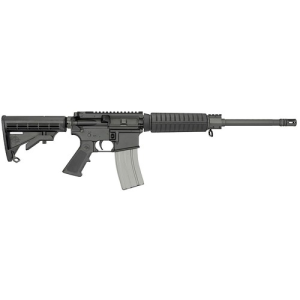
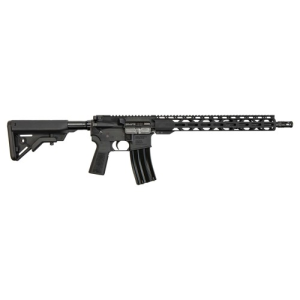
The "common use" argument isn't abstract for anyone who's assembled or maintained an AR-15. The platform's modularity is precisely why it became the most popular centerfire rifle in America. The same lower receiver accepts different uppers, calibers, barrel lengths, and configurations. A 16-inch 5.56 mid-length build for general use, a 6.5 Grendel upper for precision work, a .300 Blackout SBR for home defense: same platform, different missions. More than 30 million of these rifles exist in American hands because the system is adaptable, reliable, and well-supported by aftermarket parts and ammunition.
AR-15 5.56 mid-length Deals
Prices may change. May contain affiliate links.
AR-15 .300 Blackout SBR Deals
Prices may change. May contain affiliate links.

AR-15 6.5 Grendel upper Deals
Prices may change. May contain affiliate links.

AR-15 lower receiver Deals
Prices may change. May contain affiliate links.

AR-15 upper receiver Deals
Prices may change. May contain affiliate links.

AR-15 collapsible stock Deals
Prices may change. May contain affiliate links.

ACOG optic Deals
Prices may change. May contain affiliate links.

The NSSF and Firearms Policy Coalition have documented that between 1990 and 2021, Americans purchased more than 400 million rifle magazines with a capacity of 30 or more rounds. These aren't niche accessories. They're standard-issue components for the most commonly owned centerfire rifle in the country. That's the factual backdrop the Court will evaluate.
The counter-arguments: why some courts upheld the bans
It's worth understanding the other side of the argument honestly, because the Court will weigh it.

AR-15 pistol grip Deals
Prices may change. May contain affiliate links.

AR-15 adjustable stock Deals
Prices may change. May contain affiliate links.
AR-15 threaded barrel Deals
Prices may change. May contain affiliate links.

AR-15 detachable magazine Deals
Prices may change. May contain affiliate links.
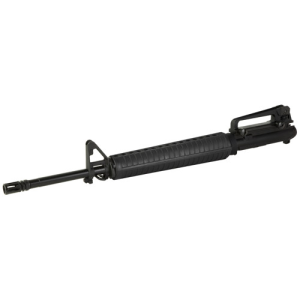
AR-15 carry handle upper receiver Deals
Prices may change. May contain affiliate links.
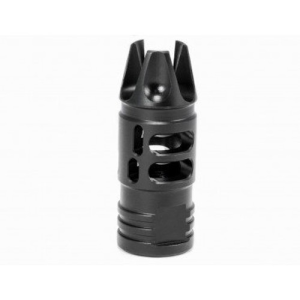
AR-15 muzzle device Deals
Prices may change. May contain affiliate links.
Several circuit courts have upheld assault weapons bans using reasoning that predates Bruen or attempts to work within it. The core argument is that semiautomatic rifles with certain features (pistol grips, adjustable stocks, threaded barrels, detachable magazines over a certain capacity) are functionally distinct from traditional sporting rifles and present unique dangers in mass casualty events. Courts that upheld the bans often focused on the weapons' rate of fire, magazine capacity, and the severity of wounds inflicted by intermediate cartridges at close range.

The Seventh Circuit in Bevis determined that the Illinois assault weapons ban was constitutional, reasoning that these weapons could be analogized to historically regulated arms. The Fourth Circuit in Bianchi reached a similar conclusion about Maryland's ban, a ruling that Justice Kavanaugh publicly questioned.
Illinois's argument in the ongoing Seventh Circuit proceedings leaned on the historical tradition prong of Bruen. The state compared modern restrictions on semiautomatic rifles to 19th-century restrictions on Bowie knives and other concealable weapons considered especially dangerous. The state's brief argued that even if the Founders dealt with civil unrest, they "could not have contemplated the problem of individual mass shooters," suggesting the historical tradition allows for regulation of weapons deemed especially suited to mass violence.
Gun rights advocates respond that this reasoning proves too much. If "dangerous" is enough to remove a weapon from Second Amendment protection, then any effective firearm could be banned, since effectiveness and lethality are inherent to the function of arms. The challengers argue that Heller's "dangerous and unusual" category was meant to cover weapons like machine guns, sawed-off shotguns, and similar arms that are both uncommon and disproportionately associated with criminal use. An AR-15 owned by tens of millions of Americans and used in a statistically tiny fraction of homicides doesn't fit that description, they contend.
The honest assessment is that both sides have arguments rooted in Heller and Bruen. The Court granted cert precisely because the lower courts couldn't agree on how to apply the precedent. That's what makes this case genuinely consequential rather than a foregone conclusion.
What's happening at the state level while the Court decides
The Supreme Court's ruling won't arrive until spring or summer 2027, most likely. In the meantime, state-level action continues at speed.
May contain affiliate links.
Virginia's SB 749 is the most aggressive recent example. The law bans the sale and manufacture of what it defines as assault firearms, effective July 1, 2026. A Spotsylvania County circuit court judge denied a preliminary injunction against the law on June 18, 2026, but the ban's enforcement was significantly disrupted by other rulings: a Lancaster County Circuit Court granted an injunction on June 25, 2026, blocking Virginia State Police from enforcing the ban, and a Washington County Circuit Court extended a statewide preliminary injunction against it on July 7, 2026. Multiple lawsuits remain active, including a federal case in the Eastern District of Virginia filed jointly by the Firearms Policy Coalition, NRA, and Second Amendment Foundation. That federal challenge is structured to push Bruen analysis toward Supreme Court review and is positioned within the Fourth Circuit, which has been historically hostile to Second Amendment challenges to assault weapons bans.

Virginia gun owners who wanted to purchase an AR-15, AK-platform rifle, or any other firearm covered by SB 749 needed to do so before July 1 at a Virginia FFL and retain a dated receipt. Grandfathered firearms, those lawfully owned before July 1, 2026, may be kept and used. But the law creates real compliance questions for FFLs and individual owners that won't be fully resolved until the courts act.
New Jersey is moving in the opposite direction from a litigation standpoint. After the Third Circuit struck down the state's semiautomatic rifle ban, New Jersey sought Supreme Court review to reinstate it. That petition adds another data point to the circuit split and increases pressure on the Court to issue a broad ruling rather than a narrow one.
The practical reality is that gun owners in ban states face a patchwork of conflicting rules. Connecticut's ban is being challenged in Grant v. Higgins, one of the two consolidated cases before the Court. Illinois's ban was blocked by a federal judge after a bench trial, but the Seventh Circuit stayed the injunction while the appeal is pending, meaning the ban remains in effect during litigation. Maryland's ban stands under Fourth Circuit precedent. California's ban remains in effect. The Supreme Court's ruling will either validate or invalidate the legal foundation under all of these laws simultaneously.
Common mistakes: what rifle owners get wrong about this case
There are several misunderstandings circulating about what this case means and what it doesn't.
First, the Court hasn't ruled yet. Granting certiorari means the Court agreed to hear the case. It doesn't signal how the justices will rule. The arguments are scheduled for December 2, 2026. A decision likely won't come until the term ends in June or July 2027. Anyone telling you the AR-15 has already been "saved" or "banned" by the Supreme Court is wrong.
Second, this case is about bans on possession and sale, not about every regulation touching semiautomatic rifles. A ruling that AR-15s are constitutionally protected wouldn't necessarily invalidate waiting periods, age restrictions, background check requirements, or other regulations that don't amount to a categorical ban. The question is whether the government can prohibit civilians from owning an entire class of commonly owned firearms. That's a different question from whether it can regulate the terms of sale.
Third, the Bruen framework doesn't guarantee a pro-gun outcome. Bruen changed the analytical test, but the test still requires courts to evaluate historical tradition. If the government can identify a sufficient historical analogue for banning certain categories of arms, the ban could survive even under Bruen. The Seventh Circuit and Fourth Circuit both attempted to do exactly that. Whether the Supreme Court finds those analogies persuasive is the open question.
Fourth, compliance with existing state law is not optional while the case is pending. Virginia's ban is in effect. Connecticut's ban is in effect. Illinois's ban is the subject of active litigation with shifting injunctions. Gun owners need to know the law in their state as it stands today, not as they hope it will stand after the ruling. FFLs in particular should not rely on anticipated court outcomes as a compliance strategy.
Fifth, the DOJ's position matters. The federal government filed an amicus brief in the case. The positioning of the executive branch can influence the Court's analysis, particularly on questions of historical tradition and the government's interest in public safety regulation. Tracking the government's brief and oral argument presentation will give the clearest signal of how the administration views the constitutional question.
Practical takeaways for rifle owners
Know your state's current law. If you're in a jurisdiction with an existing ban, understand exactly what's prohibited, what's grandfathered, and what the penalties are. Don't assume a pending Supreme Court case provides legal cover for noncompliance.

Colt AR-15 Government model carbine Deals
Prices may change. May contain affiliate links.

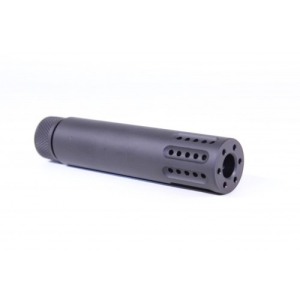
AR-15 flash suppressor Deals
Prices may change. May contain affiliate links.

If you're considering a purchase, the window before new state-level bans take effect is the relevant timeline, not the Supreme Court's decision calendar. Virginia demonstrated that bans can move from legislation to enforcement faster than litigation can produce injunctions.
Document your purchases. Retain dated receipts from FFLs for any firearms that might fall under current or future ban legislation. Grandfathering provisions typically require proof of lawful possession before the effective date.
Follow the case through reliable legal sources. SCOTUSblog's coverage by Amy Howe has been detailed and accurate. The actual filings, briefs, and orders are available through the Supreme Court's docket. Avoid taking legal guidance from social media posts or advocacy organizations that frame every development as either total victory or imminent confiscation.
If you build rifles, understand that the legal definition of "assault weapon" varies by jurisdiction and often turns on specific features: pistol grips, adjustable stocks, threaded barrels, flash suppressors, barrel shrouds. A rifle that's legal in one state may be prohibited in another based on a single feature. The Supreme Court's ruling may or may not address feature-based definitions versus categorical bans on semiautomatic rifles. The narrower the ruling, the more state-level variation will persist.
Where this goes from here
Oral arguments are set for December 2, 2026. The Court will hear Viramontes v. Cook County and Grant v. Higgins together. The Second Amendment Foundation is backing both challenges. More than 60 House Republicans have filed an amicus brief arguing the bans are unconstitutional. The federal government has weighed in. Gun control organizations have filed their own briefs.

The range of possible outcomes is wide. The Court could rule broadly that semiautomatic rifles in common use are categorically protected, which would effectively invalidate every existing assault weapons ban. It could rule narrowly, striking down the specific bans at issue without establishing a clear rule for all semiautomatic rifles. It could uphold the bans, finding that historical tradition supports categorical restrictions on certain classes of arms. Or it could remand the cases with instructions for lower courts to apply Bruen more rigorously, kicking the final answer down the road.
What won't happen is continued silence. The Court took these cases because the lower courts are in open disagreement about how to apply Heller and Bruen to the most popular rifle platform in America. One way or another, the next twelve months will produce the most significant Second Amendment ruling on firearms categories since Heller decided the handgun question in 2008.
The rifle community's job right now is straightforward: stay legal, stay informed, and understand that the system is working through the question. The Court agreed to hear the case. The briefs are filed. The arguments are scheduled. Now it's about watching the process play out and being ready to adapt to whatever the ruling says, not what anyone predicted it would say.