Your per-round cost is the number that actually matters. Not the sticker price on a press, not the "savings" someone quotes from a forum post in 2019, and not the vague promise that reloading "pays for itself eventually." The math either works or it doesn't, and whether it works depends on exactly three things: what caliber you're loading, how many rounds you shoot per year, and what your factory ammo baseline actually costs.
This breakdown covers the real component-level numbers across several common calibers, identifies where the savings gap is wide enough to justify the bench time, and flags the situations where buying factory is the smarter move. The goal is to give you a framework for running your own numbers rather than trusting someone else's spreadsheet from two price cycles ago.
Key findings
- Handloading premium rifle calibers can reduce ammunition costs, but savings vary widely by cartridge and component choices. For 6.5 Creedmoor, handloads running ~$0.69–$0.85 per round compared to ~$2.00 per round factory match ammo can yield $1.00+ in savings, cutting costs roughly in half. For .300 Win Mag, however, savings may be considerably more modest, around ~$0.32 per round compared to factory hunting ammo, making the economics less dramatic depending on the caliber and the factory loads you're comparing against.
- Common high-volume calibers like 9mm and .223 Remington show the smallest per-round savings, sometimes only a few cents, especially when compared against bulk factory pricing.
- Initial equipment costs of roughly $500 to $1,000 mean your first 1,000 rounds of any caliber may cost the same as factory or more.
- The break-even point shifts dramatically by caliber: as few as 741 rounds for .30-30 Winchester, over 2,600 rounds for .223 Remington.
- Brass reuse is the single biggest variable most people underestimate. Amortizing brass cost over five or more firings changes the equation significantly.
- Component prices fluctuate with market conditions, and the ratios between calibers remain more stable than the absolute numbers. The caliber where reloading makes sense today will still make sense next year, even if the dollar figures shift.
- Time cost is real. Reloading 1,000 rounds can take up to 50 hours on a single-stage press, and that labor has value even if you enjoy the process.

Test setup and methodology
This isn't a single controlled test with chronographs and a shot timer. It's a cost analysis drawn from multiple published breakdowns, calculator outputs, and community-reported component pricing across several calibers. The numbers referenced here come from component cost comparisons using specific bullets, powders, and primers at retail pricing, with factory ammo baselines drawn from equivalent loadings (same bullet weight and type where possible).
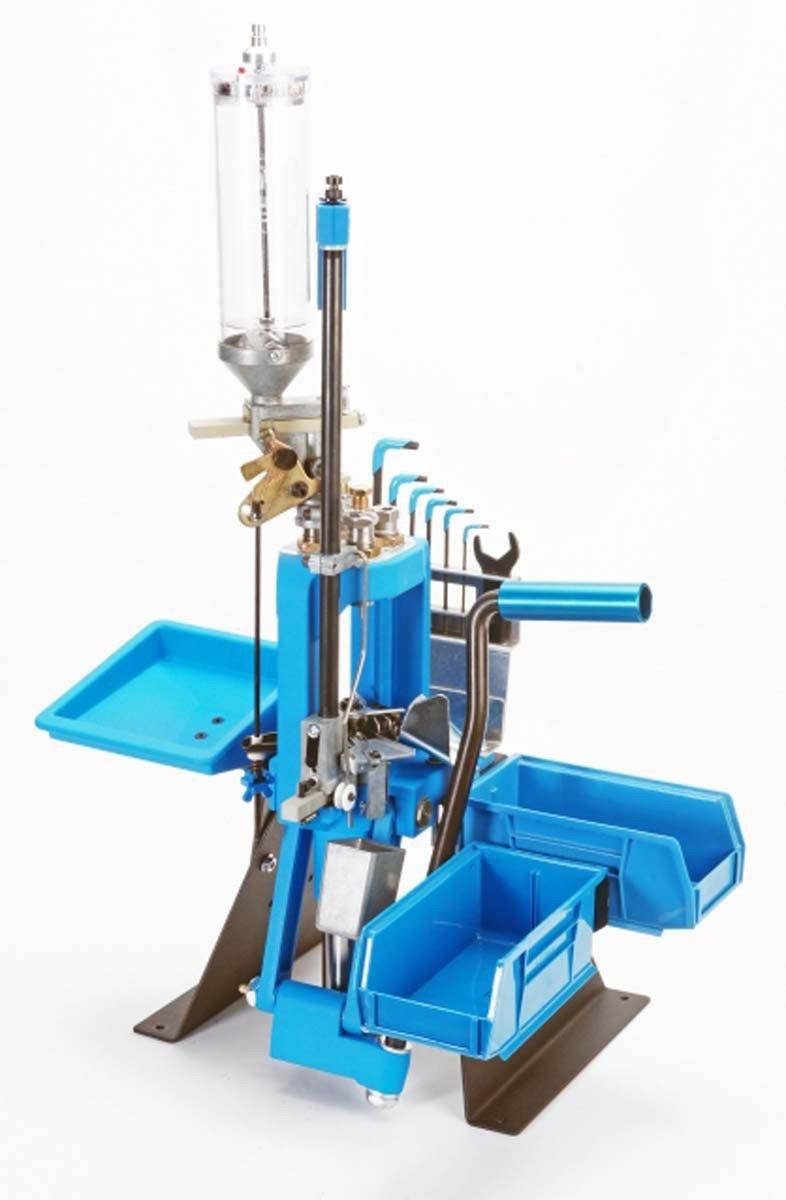
The calibers covered include 9mm Parabellum, .223 Remington, 6.5 Creedmoor, .308 Winchester, .300 Win Mag, .30-30 Winchester, and .300 AAC Blackout subsonic. Equipment cost estimates range from approximately $500 for a basic single-stage setup to around $970 for a more complete bench including case prep tools and an annealer. Progressive press setups like a Dillon 550 push that number toward $1,500 when you include everything needed to actually start loading.
There are limitations worth stating up front. Component prices are snapshots, not permanent fixtures. Powder and primer availability swings with demand cycles and import conditions. The 2021 Hodgdon powder shortage demonstrated how quickly supply disruptions can double prices on auction sites. Any cost-per-round calculation you run today needs to be re-run when you actually buy components. The ratios between calibers hold up better than the absolute numbers.
Brass life assumptions matter enormously. Most of the rifle calculations here amortize brass cost over five firings, which is conservative for low-pressure cartridges and optimistic for hot magnums. Your actual brass life depends on chamber dimensions, sizing method, and load pressure. If you're getting three firings instead of five, your per-round brass cost nearly doubles.
Results by caliber: where the savings actually live
9mm Parabellum
This is the caliber where reloading economics are the thinnest. Factory 9mm in bulk runs cheap because it's produced at military scale, and the per-round gap between handloads and factory narrows fast.

Berry's 124-grain HBRN thick-plated bullets Deals
Prices may change. May contain affiliate links.

Winchester 124-grain FMJ 9mm Deals
Prices may change. May contain affiliate links.
One detailed breakdown using Federal small pistol primers, Hodgdon CFE Pistol powder, and Berry's 124-grain HBRN thick-plated bullets put the reloaded cost at $0.252 per round. Comparable factory ammunition (Winchester 124-grain FMJ) came to $0.47 per round. That's real savings on paper, roughly 46% less per round.

But the picture shifts depending on your component sourcing and your factory baseline. Another analysis put reloading 9mm at around $0.35 per round with factory hollow-points running $0.50 to $0.80, while yet another noted that with popular calibers like 9mm, reloading costs can sit near $0.20 per round versus $0.25 for factory, leaving almost no margin. One forum poster documented a component cost of $129 per 1,000 rounds ($0.129 per round) by buying in bulk at gun shows, but that required existing stocks of powder and primers and aggressive deal-hunting.
The variable most people ignore: your factory ammo baseline. If you're comparing handloads to premium defensive hollow-points at $0.80 each, the math looks great. If you're comparing to bulk FMJ at $0.25, you might be loading for free trigger time and consistency rather than savings.
.223 Remington
Similar dynamics to 9mm but with slightly better margins. Factory .223 runs roughly $0.55 per round for range/practice loads up to $1.25 for premium/defensive offerings in 2026, with an overall median of $0.820 per round. Reloading with Berry's 55-grain FMJ over 26.0 grains of CFE 223 with Federal small rifle primers came to $0.422 per round against $0.52 to $0.699 for factory Winchester 55-grain FMJ depending on quantity purchased. That's a meaningful reduction, but the break-even on a simple setup required 2,632 rounds.

Winchester 55-grain FMJ .223 Deals
Prices may change. May contain affiliate links.
The .223 also introduces a brass prep variable that pistol calibers mostly avoid: crimped primer pockets on military brass. If you're sourcing once-fired 5.56 NATO brass, you'll need a tool to swage or ream those crimps before you can reprime. It's not expensive, but it adds time per case and is easy to forget until you crush a primer.
6.5 Creedmoor
This is where the math starts to get interesting. A detailed component breakdown using Hornady 140-grain ELD-M bullets, H4350 powder (approximately 41.5 grains per charge), large rifle match primers, and brass amortized over five firings put the handloaded cost at $1.00 per round. Factory Hornady 140-grain ELD-M runs $1.75 to $2.00 per round.

Hornady 140-grain ELD-M 6.5 Creedmoor factory ammo Deals
Prices may change. May contain affiliate links.

That's $0.75 to $1.00 saved per trigger pull. At 1,000 rounds per year, you're looking at $750 to $1,000 in annual savings on components alone, which covers most equipment setups in the first year.
The 6.5 Creedmoor is also the caliber where the accuracy argument stacks on top of the cost argument. Competitive PRS and NRL shooters aren't loading to save money. They're loading because they can tune seating depth, chase a velocity node, and produce ammunition with single-digit ES that factory match ammo can't consistently deliver. The cost savings just happen to come along for the ride.
.308 Winchester and .30-30 Winchester
The .308 sits in a middle zone. Component costs for a quality handload run in the $0.40 to $0.80 range depending on bullet choice, with factory match ammo over $1.00 per round. One forum discussion noted that component costs for 7mm-08 (ballistically similar market position to .308) run $0.60 to $0.80 per round reloaded, roughly half of factory prices.

Federal 150-grain Power-Shok Soft Point .30-30 Deals
Prices may change. May contain affiliate links.
The .30-30 shows one of the most favorable ratios in the analysis. Using Federal large rifle primers, Hodgdon LEVERevolution powder, and Berry's .308-caliber 150-grain bullets, reloading cost came to $0.440 per round. Comparable factory ammunition (Federal 150-grain Power-Shok Soft Point) ran $1.25 per round. That's a 65% reduction, and the break-even on a simple setup was only 741 rounds. For a deer rifle cartridge that many hunters consider low-volume, that break-even point is surprisingly reachable within a couple of seasons of practice and hunting combined.

.300 Win Mag and magnum calibers
The bigger the cartridge, the bigger the savings. Reloading .300 Win Mag runs approximately $1.68 per round compared to $2.00 to $3.00 for factory, saving $0.50 to $1.00+ per round. For cartridges like .338 Lapua and .300 PRC, the savings often exceed $2.00 per round.
This is the category where the "reloading pays for itself" argument is hardest to argue against. Even at modest volume, say 200 rounds per year of .338 Lapua, you're saving $400 annually. A complete single-stage setup pays for itself before you finish your second year.
.300 AAC Blackout subsonic
Subsonic .300 Blackout is expensive factory ammunition because heavy 220-grain projectiles cost more to produce and the round is popular enough to command premium pricing. Handloading with Berry's 220-grain TMJ spire point bullets, H110 powder, and Federal small rifle primers came to $0.415 per round. Factory Federal American Eagle 220-grain OTM subsonic runs $1.30 per round. That's a 68% reduction, one of the largest percentage savings in any common caliber.

Berry's 220-grain TMJ spire point .300 Blackout bullets Deals
Prices may change. May contain affiliate links.

Federal American Eagle 220-grain OTM subsonic .300 Blackout Deals
Prices may change. May contain affiliate links.

12-gauge shotshells
Shotshell reloading deserves a mention because the economics have shifted significantly. One analysis of 12-gauge 1-ounce target loads found that reloading components for budget-level loads don't save much compared to cheap factory shells at around $11 per box. But when compared to quality target ammunition at $15 or more per box, the savings become meaningful. A competitive trap or sporting clays shooter burning 500 rounds per month will see the math work out, but a casual shooter putting 100 shells downrange a few times a year probably won't.

Federal Top Gun 12-gauge shotshells Deals
Prices may change. May contain affiliate links.
One forum discussion captured the current state well: components for 250 rounds of 12-gauge ran $110 at a local supplier, while Federal Top Gun was available at $80 per case of 250. At those numbers, factory wins outright. But another poster in the same thread documented loading costs at about $8.47 per box of 25 by shopping smarter for components. The spread between those two experiences shows how much sourcing discipline matters.
Analysis: what the numbers actually mean
The pattern across calibers is consistent. The savings percentage increases as you move from high-volume military-scale calibers toward specialty, magnum, and match-grade ammunition. Here's a rough hierarchy:
Largest savings: magnum rifle (.338 Lapua, .300 PRC, .300 Win Mag), subsonic .300 Blackout, niche or obsolete cartridges with limited factory production.
Moderate savings: mid-caliber rifle with match components (6.5 Creedmoor, .308 Win, .30-30, 7mm-08), any caliber where your factory baseline is premium match ammo.
Smallest savings: high-volume pistol (9mm, .40 S&W) and military rifle (.223/5.56) when compared to bulk factory pricing.
The break-even math reinforces this. At $0.75 to $1.00 saved per round on 6.5 Creedmoor, a $970 equipment investment pays for itself in roughly 1,000 to 1,300 rounds. At $0.05 saved per round on bulk 9mm, that same equipment takes 19,400 rounds to recoup. One of those timelines makes sense for a weekend shooter. The other requires a competitive pistol shooter's volume.
Bench notes: the brass multiplier
Brass reuse is the factor that separates a marginal savings from a significant one. When you buy factory ammo, you're paying for brass you fire once and (if you don't reload) discard. When you reload, that brass cost gets divided across every firing. At $0.75 per case fired five times, your per-round brass cost drops to $0.15. Fired ten times on a low-pressure cartridge with proper annealing, it drops to $0.075.

This means your second, third, and fourth loadings of the same brass are progressively cheaper than your first. The per-round cost numbers cited above already account for amortization, but the real-world effect is that your cost per round decreases over time as your brass inventory matures.
Common mistakes in reloading cost calculations
Not accounting for equipment amortization. Quoting a per-round component cost without mentioning the $500 to $1,500 sitting on your bench is misleading. Your first 1,000 rounds include that cost. After that, you're in the clear, but pretending the press was free doesn't help anyone make an informed decision.
Comparing handloads to the wrong factory baseline. Loading match-quality 6.5 Creedmoor and comparing it to Hornady ELD-M factory pricing makes sense. Loading bulk 9mm FMJ and comparing it to premium defensive ammo pricing does not. Match your comparison to what you'd actually buy.
Ignoring time cost entirely. A single-stage press takes 3 to 5 minutes per round for a new reloader. Even experienced hands on a progressive press need 30 to 60 minutes of setup time before the rounds start flowing at 5 to 15 seconds each. One source estimated up to 50 hours per 1,000 rounds depending on equipment and process. If you value your time at any dollar amount, that changes the math. Reloading for enjoyment is valid. Reloading to "save money" while spending 50 hours you could have worked overtime is a different calculation.
Forgetting component price volatility. The 2021 powder shortage saw prices double on the secondary market. Primers became nearly impossible to find at any price. Your cost-per-round calculation is only as good as today's component prices, and those prices can move fast. Buying components in bulk when prices are reasonable is the reloader's equivalent of dollar-cost averaging.
Overestimating brass life. Five firings is a reasonable average for moderate-pressure rifle cartridges with proper sizing. Hot magnums may give you three. Pistol brass can go much longer. Using an optimistic brass life estimate in your calculation makes the per-round number look better than reality.
Equipment comparison: what the startup cost actually looks like
The entry point for reloading equipment varies significantly based on what you're trying to accomplish.
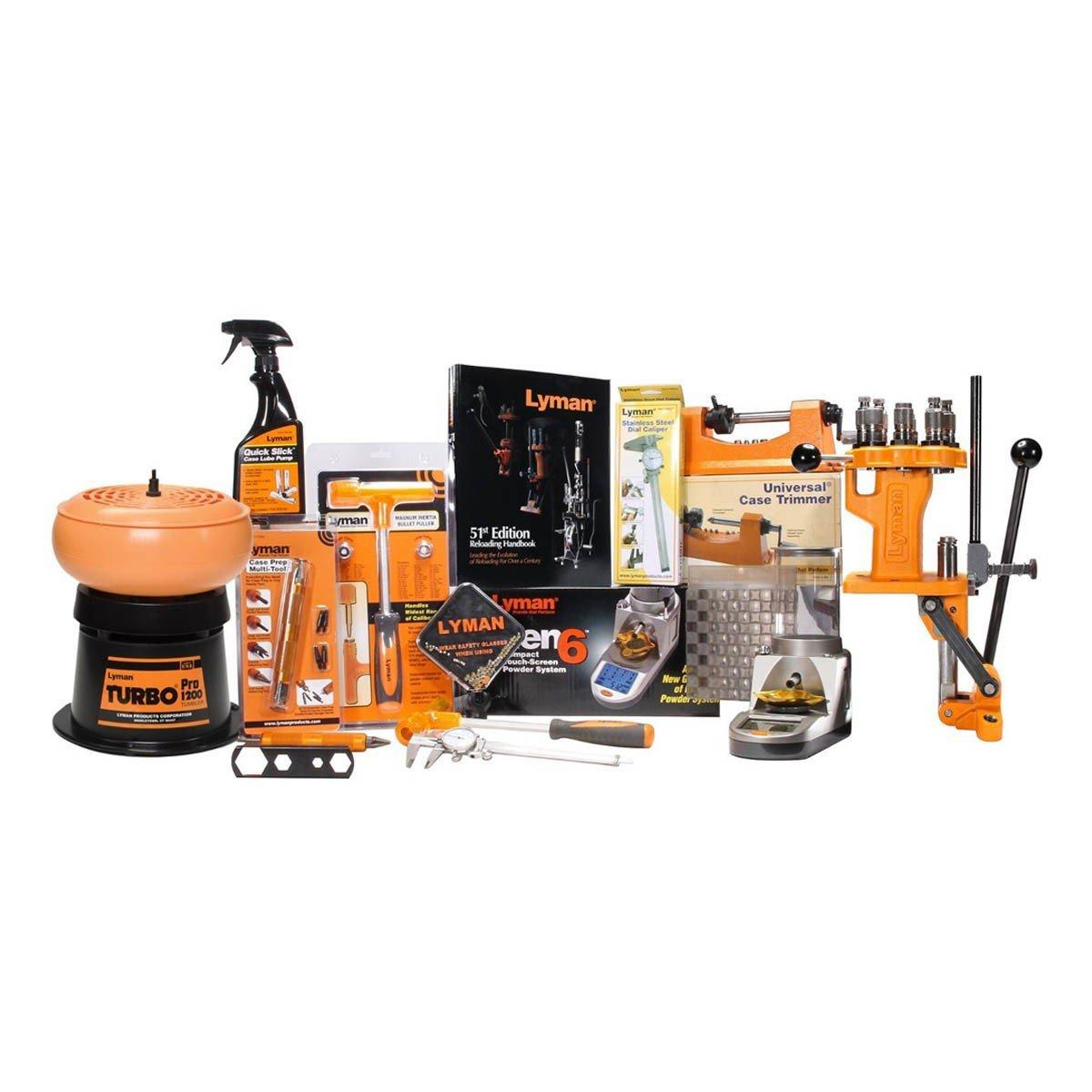
Lyman Ultimate Reloading System Kit Deals
Prices may change. May contain affiliate links.
A basic single-stage setup, including a press, dies for one caliber, a powder scale, calipers, a manual, and small accessories like a powder funnel and case lube, runs around $500 according to multiple sources. This gets you loading ammunition, but slowly. RCBS, Lyman, and Lee all offer starter kits in this range. The Lyman Ultimate Reloading System Kit and the Lyman Brass Smith Ideal C-Frame Press Kit are both referenced as entry-level options that include most of what you need.

A more complete bench with case prep tools, a better powder measure, and an annealer pushes toward $970. This is the setup one source used as the baseline for calculating whether reloading breaks even at 1,000 rounds, and at that equipment cost, the first 1,000 rounds of a mid-price caliber come to roughly $1.95 per round, essentially matching factory pricing.
A progressive press setup like a Dillon 550 with all necessary accessories runs toward $1,500. The higher throughput makes this worthwhile for high-volume pistol and rifle loading, but the break-even point moves further out because of the larger upfront investment. For a 9mm loader shooting 1,200 rounds per year, the payback period on a progressive setup is significantly longer than on a single-stage.
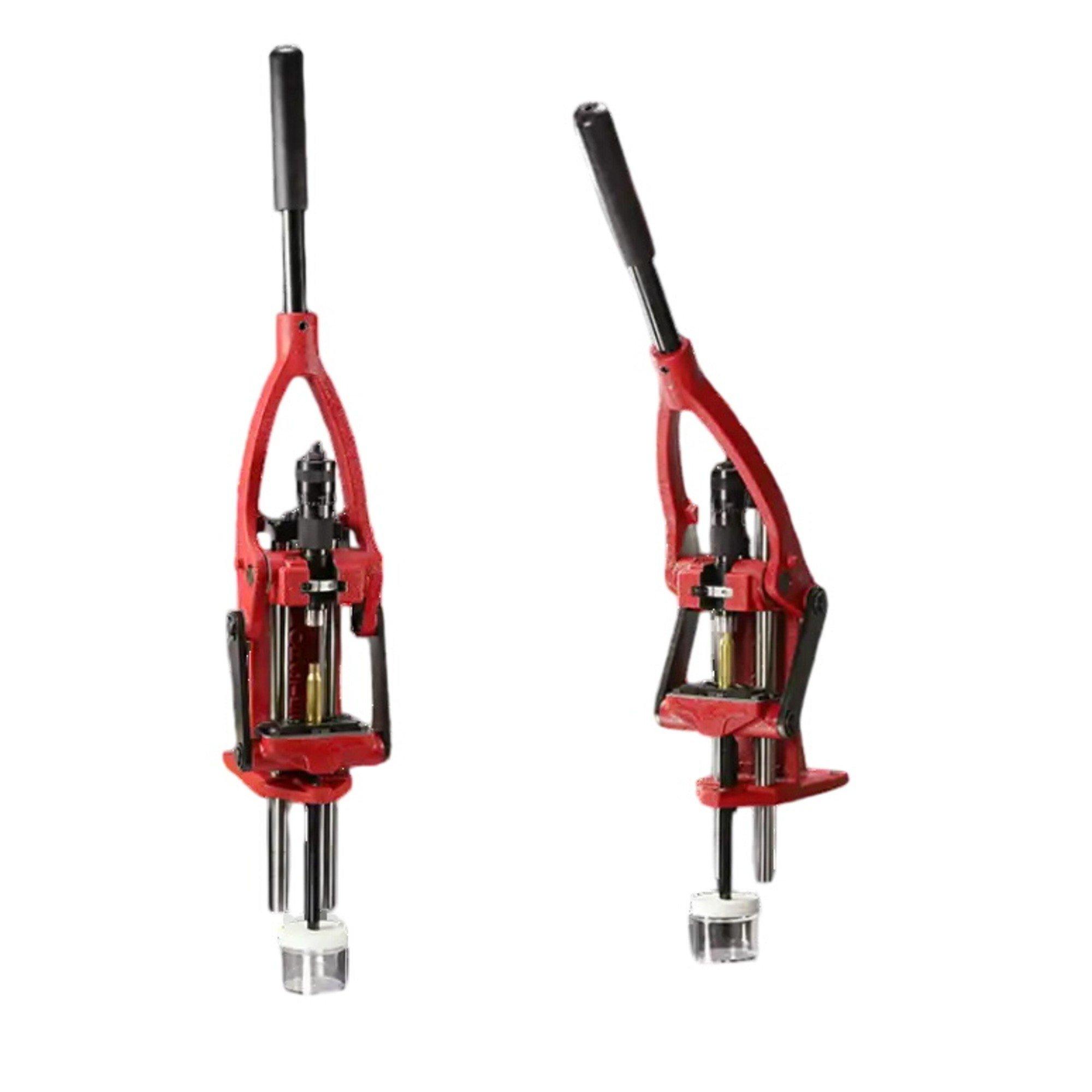
For precision rifle work, the Forster Co-Ax press (starting at $590) paired with Redding or Forster bushing dies represents the higher end of single-stage loading. The Co-Ax's floating shell holder design and consistent ram alignment make it a favorite among competitive shooters who prioritize concentricity. You're paying more up front, but the per-round component cost doesn't change. The equipment cost just takes longer to amortize.

The Berger Bullets equipment guide breaks presses into categories worth understanding: hand dies with an arbor press for maximum control at minimum speed, single-stage presses for precision rifle work, turret presses that hold multiple dies for faster transitions between operations, and high-speed rotary progressive presses with hoppers for brass, powder, bullets, and primers. Most precision shooters favor the arbor or single-stage press. Volume shooters need a progressive.
Limitations and caveats
Component prices are moving targets. Every number cited here reflects a specific moment in the market. Primer prices in particular have been volatile, and powder availability depends on import logistics and domestic production capacity that the end user has zero control over.
The factory ammo baselines used in these comparisons are retail prices, not sale prices. If you catch a deal on factory ammunition, the gap narrows. If you catch a deal on components, it widens. The disciplined reloader who buys powder in 8-pound jugs and primers by the case when prices dip will always beat the reloader who buys one pound at a time at retail.
These calculations don't account for the cost of mistakes. Crushed brass, spilled powder, a round seated too deep that needs to be pulled. These are real costs, especially for new reloaders on the learning curve. They decrease with experience but never reach zero.
The time estimates vary enormously by equipment and experience level. A new reloader on a single-stage press and an experienced competitor on a Dillon 1050 are not having the same experience. Quoting "up to 50 hours per 1,000 rounds" captures the slow end of the spectrum. A dialed-in progressive setup can produce 1,000 rounds in a fraction of that time.
What to do with this information
Run the numbers for your specific caliber at current component prices. Use a reloading cost calculator (Ultimate Reloader and Ultimate Finance Calculator both have free ones) and plug in actual retail prices from Powder Valley, Midsouth Shooters Supply, or wherever you source components. Don't use someone else's numbers from last year.
Identify your factory ammo baseline honestly. If you're shooting bulk FMJ, compare to bulk FMJ prices. If you're shooting match-grade ammunition, compare to match-grade prices. The savings percentage changes dramatically based on this single variable.
Calculate your break-even point by dividing your total equipment cost by your per-round savings. If you're loading 6.5 Creedmoor and saving $0.85 per round, a $970 setup pays for itself in 1,141 rounds. If you're loading 9mm and saving $0.05 per round against bulk factory, that same setup takes 19,400 rounds. Know which side of that line you're on before you buy a press.
If you shoot fewer than 200 rounds per year of a single caliber, factory ammo is almost certainly the better financial choice. If you shoot 1,000+ rounds per year of a rifle caliber, especially anything in the magnum or match category, the equipment pays for itself in the first year and every round after that is cheaper than factory. The middle ground between those two extremes is where you need to actually do the math rather than relying on generalizations.
Start a log. Track every component purchase with date, quantity, and price per unit. Track every loading session with round count and components used. After 1,000 rounds, you'll have your own real cost-per-round number, not an estimate, not a forum post, not someone else's spreadsheet. That number is the one that matters.